Subjects eat food from a plate placed on a scale connected to a computer that records the weight loss of the plate during the meal. Feedback on the computer screen allows the subject to adapt her/his eating behavior to reference curves thus normalizing body weight.
Method Article
Control of Eating Behavior Using a Novel Feedback System
Opens in a new tab
In This Article
Summary
Loading...
$$\rightleftharpoonup{xx}$$
$$\longleftharp{xx}$$,
$$\longrightharp{xx}$$,
Abstract
Loading...
$$\rightleftharpoonup{xx}$$
$$\longleftharp{xx}$$,
$$\longrightharp{xx}$$,
Subjects eat food from a plate that sits on a scale connected to a computer that records the weight loss of the plate during the meal and makes up a curve of food intake, meal duration and rate of eating modeled by a quadratic equation. The purpose of the method is to change eating behavior by providing visual feedback on the computer screen that the subject can adapt to because her/his own rate of eating appears on the screen during the meal. The data generated by the method is automatically analyzed and fitted to the quadratic equation using a custom made algorithm. The method has the advantage of recording eating behavior objectively and offers the possibility of changing eating behavior both in experiments and in clinical practice. A limitation may be that experimental subjects are affected by the method. The same limitation may be an advantage in clinical practice, as eating behavior is more easily stabilized by the method. A treatment that uses this method has normalized body weight and restored the health of several hundred patients with anorexia nervosa and other eating disorders and has reduced the weight and improved the health of severely overweight patients.
Introduction
Loading...
$$\rightleftharpoonup{xx}$$
$$\longleftharp{xx}$$,
$$\longrightharp{xx}$$,
The device presented here is used to restore the body weight and the health of under- and overweight patients by controlling the rate of eating and the intake of food via visual feedback provided on a computer screen during the meal. It consists of a custom made electronic scale and a computer, e.g., a smartphone. An app allows a subject to connect the smartphone to the scale via Bluetooth. Once the smartphone is connected to the scale, the subject puts a plate on the scale and food on the plate and starts eating. At regular intervals, a rating scale appears on the screen and the subject is asked to rate her/his feeling of fullness. The rating scale can be disconnected, depending upon the aim of the experiment or the clinical intervention. For experimental and clinical purposes a reference curve for eating rate and a reference curve for the feeling of fullness are displayed on the screen of the smartphone. The subject can adapt to the reference curves because her/his rate of eating and ratings of fullness appear on the screen during the meal.
The device records the decrease of the weight of the plate as food is consumed and the ratings of fullness over the course of the meal and stores the recordings. The weight loss data are used to yield a quadratic model of the cumulative food intake (CFI) curve: y=kx2+lx, where y=amount of food consumed, k=change in the rate of eating over the course of the meal and l=initial rate of eating1. The CFI curve is based on modelling the following three actions during the meal: bite, food addition, and artifact (weight changes unrelated to food consumption). These actions are mapped on non-terminal symbols of a context-free grammar (CFG)2. The recording, after pre-processing, is partitioned into time intervals corresponding to weight changes (based on forward derivative and delta coefficients), which are then mapped to CFG terminal symbols. The CFG then allows estimation of the most likely interpretation of the meal assuming independence for each event.
The device is used in research as well as in clinical practice. It was first used to treat patients with anorexia nervosa and other eating disorders and subsequently to treat severely overweight patients.
Eating assisted by visual feedback has the following scientific basis. Animals, including humans, have evolved to eat many different foods, but they select what to eat under "buffet" conditions3,4. However, they are equipped, anatomically and behaviorally, to eat whatever foods are available if conditions get compromised3,4 and eating behavior, chewing in particular, has therefore been a main driver of the evolution of the human head, including the brain and the masticatory apparatus3. The pattern of eating may therefore be more important for the control of body weight than the kind of food eaten. In support, diet intervention has minor, if any, effect on normalizing body weight5 and the device described here can e.g., assist school children in eating a normal amount of food when challenged to eat quickly during the school lunch6 and reverse the effect of a brief period of fasting on food intake in young women and men7.
Neuroscience hypothesizes that the cause of weight problems is lodged in the brain8. However, it is unlikely that the hundreds of millions of people in the world, who now weigh too much9, developed the problem because of a neural abnormality before the weight gain. It is more likely that neural abnormalities10, as well as medical abnormalities11, develop as an effect of eating too much12, save, perhaps in some rare genotypes13.
A possible reason why neuroscience fails to explain the problems of body weight is because its basic assumption is incorrect, i.e., that body weight is kept nearly constant via excitatory/inhibitory neural controls exerted over eating behavior8. Whatever inhibition the brain may exert has obviously not prevented hundreds of millions of people to become seriously overweight recently9. A better understanding of the role of brain in eating emerged from the discovery that hypothalamic peptides once thought to stimulate eating act instead to permit the search for food, even at the expense of food intake14,15. These results, which were confirmed recently16,17, support the view that body weight is kept at a healthy level only when the physical price of food is high, a condition referred to as "the human homeostatic phenoptype"18. Considering the multiplicity of brain and genetic networks engaged in eating behavior and other behaviors also19, it would be difficult, if at all possible, to decrease or increase body weight by manipulating a neurotransmitter system or two. Given these consideration, it comes as no surprise that pharmacological intervention has minimal, or no effects on body weight in the seriously overweight20, as well as in the underweight21.
It is ironic that some of these recent findings merely confirm the predictions concerning the role of diets, genes, brain, and physical activity in body weight regulation made by Mayer in 1953 already22. As an alternative, eating behavior may have a causal role in the control of body weight and neuroscience and genetics may have mistaken mechanism for cause. In support, daily eating over the year strives to maximize food intake in humans, pushing body weight upwards to counteract any influence of food shortage23. In the human homeostatic phenotype, the influence of this kind of physiological overeating is counterbalanced by the physical effort needed to obtain food18. Because that effort is close to zero today humans need external support to maintain a healthy low body weight. That support is provided by the present device.
Rather than targeting eating behavior, standard treatments for eating disorders target the patients´ psychological symptoms. On average 30% of the patients drop out of these treatments, fewer than 50% go into remission, although they remain symptomatic, and at least 30% relapse within one year of discharge24. However, it was found long ago that treating eating behavior has a better effect than treating the psychological symptoms25. This finding was replicated more recently by using the device described in this report. By this method, an estimated 75% of patients with eating disorders go into remission and 10% relapse over five years of follow-up26, an improvement over standards of care24.
Although the rate of eating has increased in seriously overweight patients, the cause-effect relationship among rate of eating and body weight has not been clarified and the rate of eating has been determined by questionnaires27. The device described here makes objective measurement of eating rate and food intake possible and when used to reduce these two measures, it has been demonstrated to be more effective in decreasing body weight and improving health than standard diet and exercise intervention in severely overweight adolescents28.
The principle of recording eating behavior utilized in the present device was described long ago29,30,31, and it has since then been used in experiments to record and change the rate of eating1,6,7,32,33. However, it has not been used to treat under- and overweight patients outside of clinical trials and in clinical practice. Part of the clinical program involves using the device at home and in everyday life. It has proven to be user friendly in both laboratory research and in clinical practice.
Protocol
Loading...
$$\rightleftharpoonup{xx}$$
$$\longleftharp{xx}$$,
$$\longrightharp{xx}$$,
All work on experimental subjects and patients has been approved by the Central Ethical Review Board of Stockholm, Sweden.
1. Control of Eating Rate and Food Intake by Visual Feedback
- Download the device application.
- Turn on the scale by pressing the red button on the bottom of the scale (Figure 1).
- Open the application and select a meal by pressing Control to eat without visual feedback or by pressing Training to eat with visual feedback (Figure 2).
- Connect the scale to the smartphone by selecting one of the scales found and pressing CONNECT (Figure 3).
- Place a plate on the scale. Press Done to continue (Figure 4).
- Put food on the plate (0%).
- Put more food on the plate (72%).
- Press Start when ready to eat (100%) (Figure 5).
- Adapt rate of eating to the dashed blue reference curve (Figure 6).
- Rate feeling of fullness when the rating scale appears on the screen. Adapt rating of fullness to the s-shaped dashed purple reference curve. Press Done to continue eating (Figure 7).
- Slow down if eating too quickly (Figure 8).
- With no food left on plate, press No when finished eating (Figure 9).
- As the meal duration is shown when meal is finished, press Done to exit (Figure 10).
Results
Loading...
$$\rightleftharpoonup{xx}$$
$$\longleftharp{xx}$$,
$$\longrightharp{xx}$$,
Five women, who were 17.5 (15-24) (median, min-max) years old, were treated to remission from anorexia nervosa. Figure 11, Figure 12, Figure 13 show the data generated by the device, the appearance of the CFI curve and the quadratic model in two recordings in the early part of treatment and a recording at the time of remission. Note the accelerating rate of eating in the first test without visual feedback, intake of a large meal already three days later with reference curve providing visual feedback and doubling of the rate of eating at the time of remission in comparison with the two recordings in the early part of treatment in one of the patients.
Figure 14A shows that the time to remission was very variable in the five patients. The figure also shows that with a normal Body Mass Index (BMI) at the time of remission (Figure 14B), the patients consumed more food than they did at admission (Figure 14C), and that the duration of the meal, although not reduced, was less variable (Figure 14D). Note that anorexics can consume a relatively large meal at admission with a low BMI (Figure 14C). It is also noteworthy that while three patients ate at an accelerating rate at admission, all but one ate at a decelerated rate when in remission (Figure 14E). Correlatively, the intitial rate of eating had increased at the time of remission (Figure 14F).
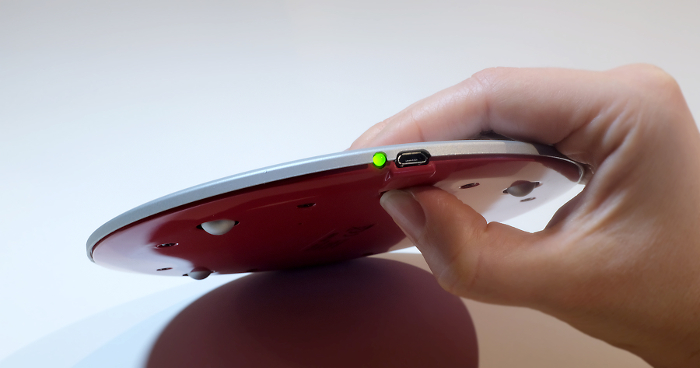
Figure 1: The scale. Press button to turn on the scale. Please click here to view a larger version of this figure.
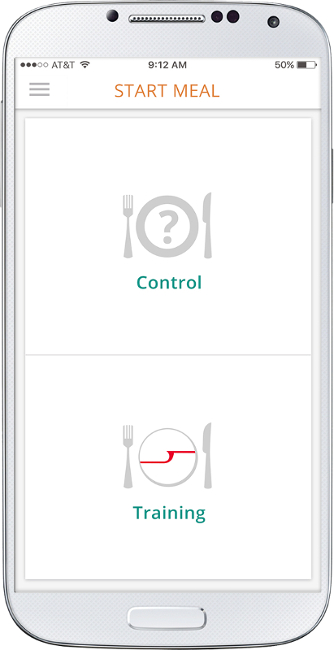
Figure 2: Start meal. Open app to start meal. Press Control to eat without visual feedback. Press Training to eat with visual feedback. Please click here to view a larger version of this figure.
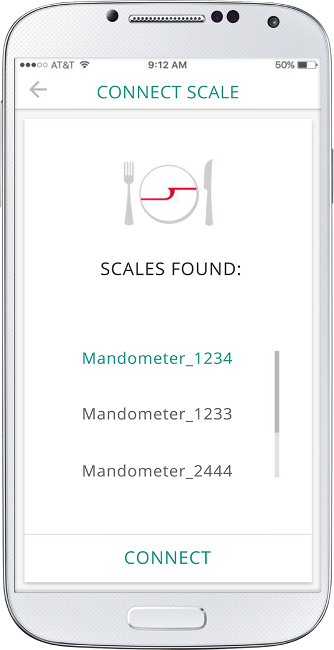
Figure 3: Connect scale and smartphone. Select scale using app. Press Connect to proceed. Please click here to view a larger version of this figure.
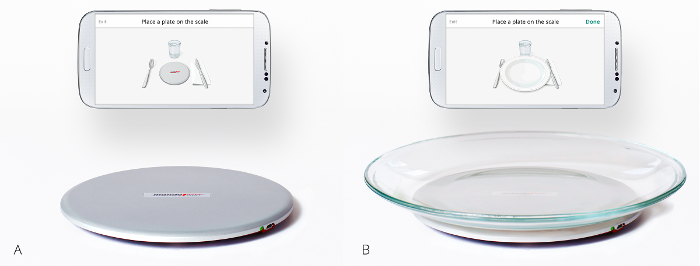
Figure 4: Put plate on scale. Put plate on the scale and press Done to proceed. Please click here to view a larger version of this figure.
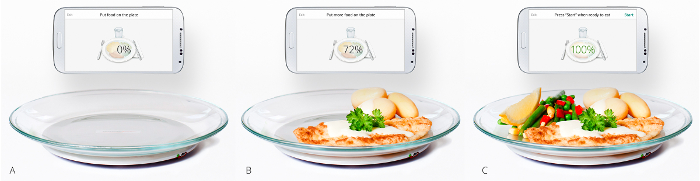
Figure 5: Put food on plate. Put food on the plate until 100% is indicated and press Start when ready to eat. Please click here to view a larger version of this figure.
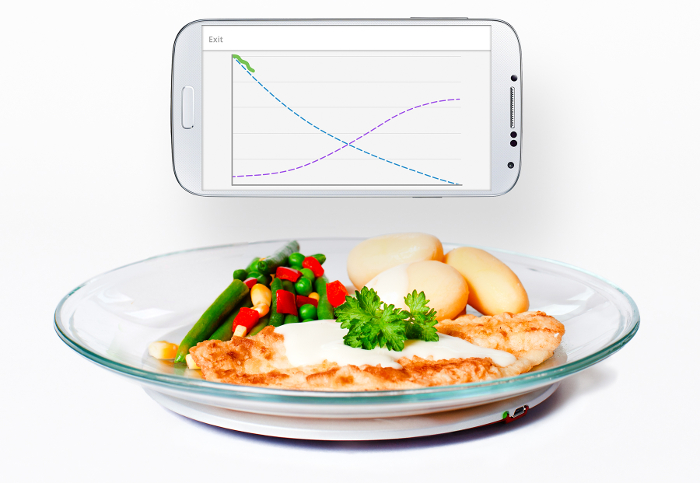
Figure 6: Eating with visual feedback. Adapt rate of eating to dashed blue reference curve. Please click here to view a larger version of this figure.
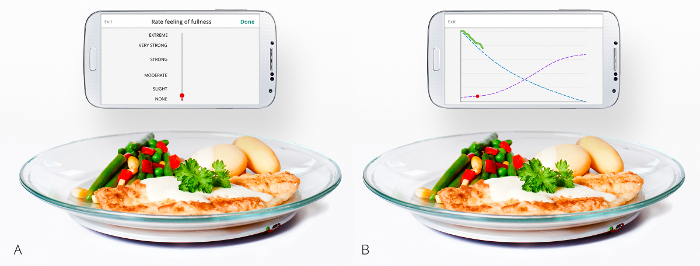
Figure 7: Rating of fullness. Indicate feeling of fullness when rating scale appears. Adapt rating to dashed purple reference curve and press Done to continue eating. Please click here to view a larger version of this figure.
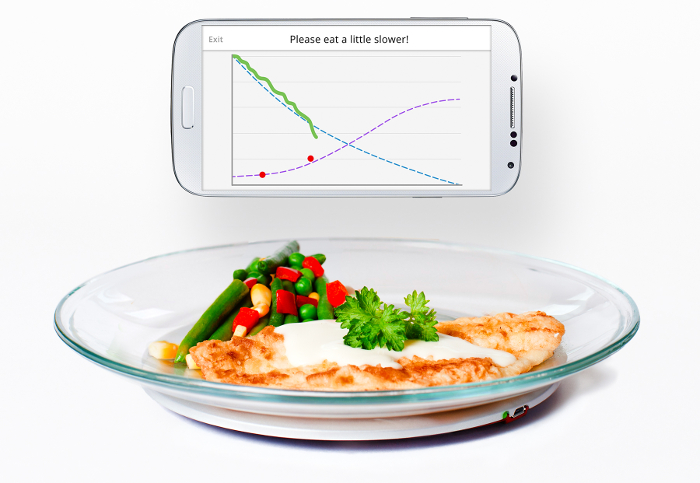
Figure 8: Adapting rate of eating. Modify rate of eating if deviating from dashed blue reference curve. Please click here to view a larger version of this figure.
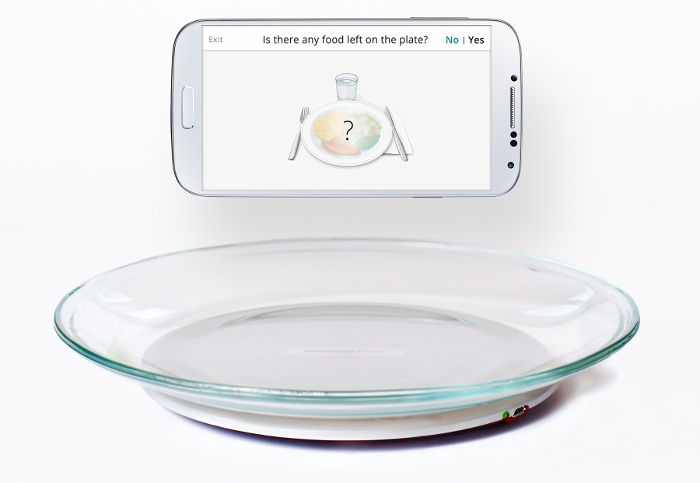
Figure 9: Meal completed. Press No if there is no food on the plate. Please click here to view a larger version of this figure.
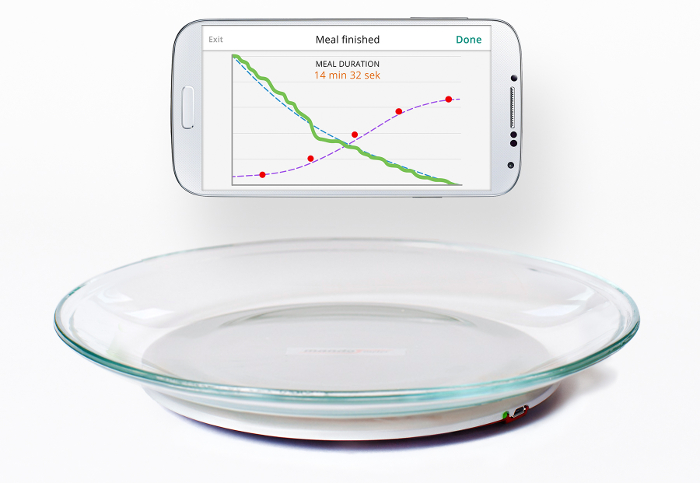
Figure 10: Meal finished. Compliance to references curves and duration of meal displayed. Press Done to exit. Please click here to view a larger version of this figure.
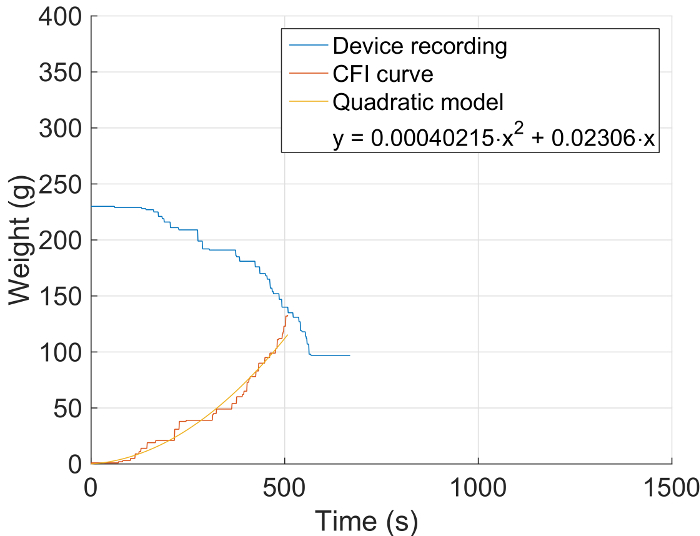
Figure 11: Early cumulative food intake (CFI) curve in anorexia nervosa. Recording (blue line), artifacts removed (red line) and CFI curve modeled by quadratic equation. Data from an anorexic patient on the second day of treatment eating without visual feedback. Please click here to view a larger version of this figure.
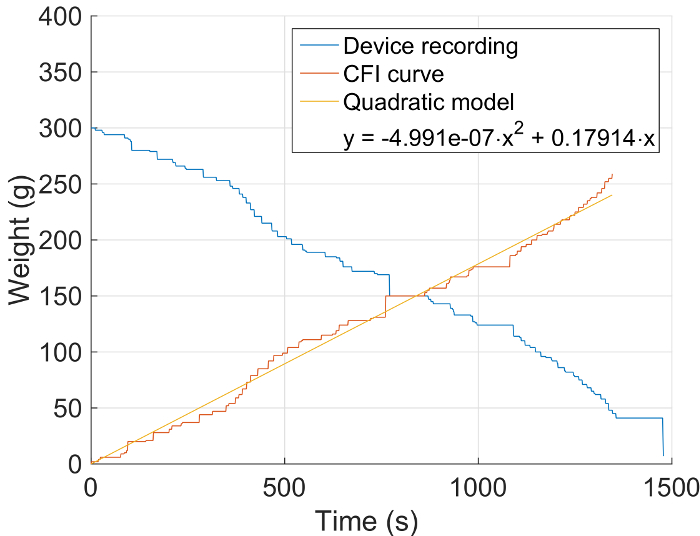
Figure 12: Early response to treatment in anorexia nervosa. Patient adapts to reference curve on the fifth day of treatment. Data from the same patient. Please click here to view a larger version of this figure.
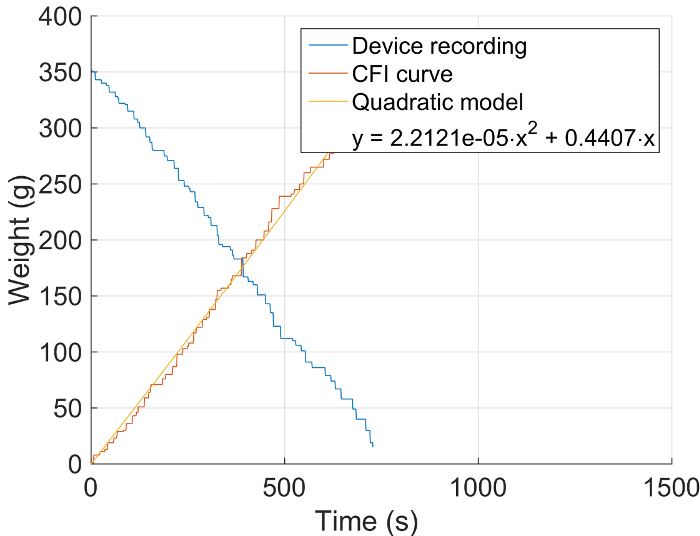
Figure 13: Remission from anorexia nervosa. Increase in the rate of eating at time of remission after 175 days of treatment. Data from the same patient eating without visual feedback. Please click here to view a larger version of this figure.
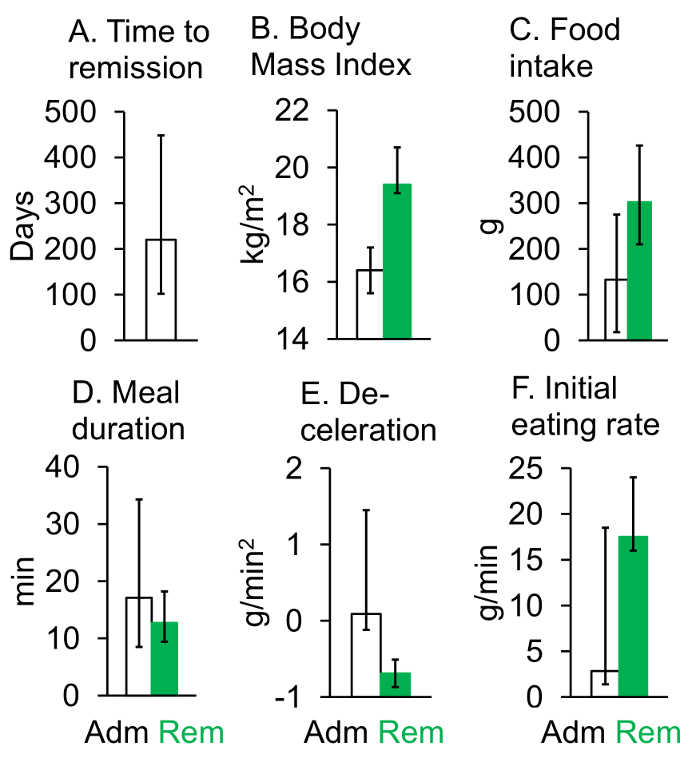
Figure 14: Effect of treating eating behavior in anorexia nervosa. Time to remission highly variable (A) as Body Mass Index (BMI) normalizes (B) in five patients treated to remission from anorexia nervosa. Note variability in food intake (C), meal duration (D), deceleration of the rate of eating (E) and the initial rate of eating (F) at admission (Adm) and normalization of these measures at remission (Rem). Patients eating without reference curve. Data are medians (min-max). Please click here to view a larger version of this figure.
Discussion
Loading...
$$\rightleftharpoonup{xx}$$
$$\longleftharp{xx}$$,
$$\longrightharp{xx}$$,
While the method described here is a major intervention in our treatment of patients with problems of body weight, the treatment has additional interventions, which have been described before, including criteria for admission and remission34 and outcome at three months intervals in each of 1428 patients26. The device, not these additional interventions, is the focus of the present report.
The Control mode of the device is used to record eating behavior in healthy subjects and in under- and overweight patients. The Training mode is subsequently used to change eating behavior for experimental or clinical purposes. Using visual feedback in the treatment of anorexic patients, 100% as indicated on the computer screen, is the amount of food the patient should eat determined individually on the basis of three preliminary tests in the Control mode. 100% is a small amount of food in an anorexic patient, but more food than s/he ate in the three preliminary tests. An anorexic patient pratices eating progressively more food, and s/he is asked to add food until 100% is indicated on the screen. The shape of the dashed blue reference curve, which remains the same over the course of treatment, is based on the finding that normal weight healthy people eat at a progessively decreasing rate, i.e., in a decelerated manner1. The dashed purple reference curve for the feeling of fullness is based on the finding that the cumulative satiety curve is best fitted to a sigmoid curve1. There are no numbers on the axes. The treatment continues until the patient is able to eat about 300-350 g of food in about 10-15 min without a reference curve. These data were obtained from normal weight, healthy subjects. Both under- and overweight patients have a choice between three dishes of ordinary Swedish food in clinical pratice and they are offered water to drink. Experimental manipulation of eating behavior is done in the same manner in healthy subjects1,6,7,32,33. Because re-establishing the normal feeling of fullness using the visual feedback provided by a reference curve is done in the same manner it is not discussed here. Clinically, however, this is an important intervention as anorexic patients rate the feeling of fullness much higher than do healthy subjects.
While patients follow the visual feedback when eating in treatment, they are allowed to add food to the plate during the meal when they eat without feedback. Food additions and other events, including pressure exterted on the plate during sectioning of the food using forks and knives, affect the recording by the device creating artifacts and errors that were previously dealt with manually as described in35. The data generated from eating using the device is collected in a custom made database, from which the clinician can retrieve the results for providing patients with feeback on how treatment progresses and the researcher can use for analysing experimental results.
Anorexic patients eat only little food at a slow rate34. Interestingly, however, they are able to consume normal sized meals even at very low BMI18. For example, the patient reported was able to eat 300 g very early in treatment and long before normalization of her BMI and a mere three days after eating in a disordered manner, i.e., consuming only little food at an accelerating rate. Anorexic patients who start eating at an extremely low rate are likely to increase the rate of eating over the course of the initial meals, as did three of the patients reported here. When patients approach remission, however, the inverse relationship among the rate of deceleration and the initial rate of eating emerges1. Several hundred patients with eating disorders have been treated to remission and the protocol has proven user friendly with no adverse side effects26. Severely obese patients have been similarly treated to lose weight, albeit not to a normal weight28,33. At present there is no method that normalizes the body weight of severely overweight patients.
A limitation of the method is that subjects are likely affected by the device even in the absence of visual feedback. That hypothesis can be tested by comparing data obtained with the device with data obtained from video-recorded meals. Paradoxically, the same limitation may be an advantage in treatment, which aims at normalizing food intake.
While the present method has long been used to record eating behavior, the addition of visual feedback for experimental and clinical purposes has not been used outside our research and clinic. For clinicians aiming at restoring the eating behavior of the patients and for scientists interested in using eating behavior as an experimental variable, the device offers a method. The analysis of the results can now be automated using the present algorithm for computing the CFI curve, alleviating the need for time-consuming manual processing. This makes monitoring and analysis of eating behavior in large groups of subjects possible.
The effectiveness of the algortihm will be further improved. At present it is based on estimations of deviations from true values of bites as dissociated from artifacts.
The device will be used among children to prevent problems of body weight in adulthood. Most of the hardware and software discussed in this report are ready for such large scale use. Possible improvements, including optimizing the visual design of feedback on the screen of the device and expanding the CFG with additional kinds of in-meal actions and the analysis of partially completed meals, must await the outcome of the intended large scale use.
Disclosures
Loading...
$$\rightleftharpoonup{xx}$$
$$\longleftharp{xx}$$,
$$\longrightharp{xx}$$,
Our research is carried out at the Karolinska Institute, where Södersten is a professor. The research is translated clinically by Mando Group AB, a company started by Södersten and Bergh, who have 47.5% of the stock each. Professor Michael Leon of the University of California at Irvine has 5%. Mando Group AB contracts with the County Council of Stockholm every fifth year to treat patients with eating disorders. Mando Groups AB signed its first contract in 1997 with the County Council of Stockholm and, since then, its treatment is one standard of care offered to the citizens of Stockholm. This arrangement is the same as when the County Council of Stockholm contracts with its own clinics to treat patients with all kinds of disease, including eating disorders. That is to say, the County Council of Stockholm provides eating disorders services to the citizens of Stockholm both through a clinic of its own and through Mando Group AB. There is a third provider of care for patients with eating disorders in Stockholm, which is a private clinic. All health care in Sweden is funded through the tax system, private pay is extremely uncommon. However, patients can pay privately for treatment by Mando Group AB and patients from Australia have done that because insurers in Australia have denied reimbursement. It should be added, firstly, that Mando Group AB is in compliance with the recommendation of the International Committee of Medical Journal Editors on “Author Responsibilities-Conflicts of Interest” http://www.icmje.org/recommendations/browse/roles-and-responsibilities/author-responsibilities--conflicts-of-interest.html. Secondly, it should also be added that all profit that Mando Group AB has made has been re-invested in research and development and that there have been no dividends to stock owners. This policy will not be changed. All of the above is declared in all manuscript submissions and so far, journals have judged it necessary to publish only some of the details. It seems, however, that the potential ethical problem when scientists translate research findings into the clinic in a company is not unlike that which arises when any scientist, in an academic setting, is developing a theory and needs further economic funding for her/his work and may receive recognition and financial benefits for the work. The incentive is, in part, economic in this case as well and the ethical “problem” is similar in both cases. However, the more important incentive is the improvement of the treatment of patients with eating disorders. Medical institutes, including the Karolinska Institute, encourage the translation of research into the clinic in companies that aim to generate financial profits to be used for research and development (see: http://ki.se.proxy.kib.ki.se/sites/default/files/summary_strategy2018.pdf).
Acknowledgements
Loading...
$$\rightleftharpoonup{xx}$$
$$\longleftharp{xx}$$,
$$\longrightharp{xx}$$,
Maryam Esfandiari shows how the device works and Vasileios Papapanagiotou describes how the data generated are filtered and fitted to the CFI curve. Per Södersten describes the research on which the clinical intervention relies and Cecilia Bergh discusses its use in the clinic. The work is supported by Mando Group AB, the European Community's ICT Programme SPLENDID (610746) and the European Community's Health, demographic change and well-being Programme (727688).
Materials
| Name | Company | Catalog Number | Comments |
|---|---|---|---|
| Scale | TÜM ELEKTRONIK | no catalogue number | csutm made not comercially available |
References
Loading...
$$\rightleftharpoonup{xx}$$
$$\longleftharp{xx}$$,
$$\longrightharp{xx}$$,
- Decelerated and linear eaters: Effect of eating rate on food intake and satiety. Physiol. Behav. 96, 270-275 (2009).">Zandian, M., Ioakimidis, I., Bergh, C., Brodin, U., Södersten, P. Decelerated and linear eaters: Effect of eating rate on food intake and satiety. Physiol. Behav. 96, 270-275 (2009).
- https://dl.acm.org/citation.cfm?id=549820 (1997).">Lewis, H. R., Papadimitriou, C. H. Elements of the Theory of Computation. , Available from: https://dl.acm.org/citation.cfm?id=549820 (1997).
- Evolution of the Human Head. , Harvard University Press. (2011).">Lieberman, D. E. Evolution of the Human Head. , Harvard University Press. (2011).
- Evolution's Bite: A Story of Teeth, Diet, and Human Origins. , Princeton University Press. (2017).">Ungar, P. S. Evolution's Bite: A Story of Teeth, Diet, and Human Origins. , Princeton University Press. (2017).
- physical activity and behavioural interventions for the treatment of overweight or obese adolescents aged 12 to 17 years. Cochrane Database Syst. Rev. 6, CD012691(2017).">Al-Khudairy, L., et al. physical activity and behavioural interventions for the treatment of overweight or obese adolescents aged 12 to 17 years. Cochrane Database Syst. Rev. 6, CD012691(2017).
- Children eat their school lunch too quickly: an exploratory study of the effect on food intake. BMC Public Health. 12, (2012).">Zandian, M., et al. Children eat their school lunch too quickly: an exploratory study of the effect on food intake. BMC Public Health. 12, (2012).
- A sex difference in the response to fasting. Physiol. Behav. 103, 530-534 (2011).">Zandian, M., Ioakimidis, I., Bergh, C., Leon, M., Södersten, P. A sex difference in the response to fasting. Physiol. Behav. 103, 530-534 (2011).
- Neurotrophic factor control of satiety and body weight. Nat. Rev. Neurosci. 17, 282-292 (2016).">Xu, B., Xie, X. Neurotrophic factor control of satiety and body weight. Nat. Rev. Neurosci. 17, 282-292 (2016).
- N. Engl. J. Med. , 13-27 (2017).">GBD 2015 Obesity Collaborators. Health effects of overweight and obesity in 195 countries over 25 years. N. Engl. J. Med. , 13-27 (2017).
- Diabetes: the diabetic brain. Nat. Rev. Endocrinol. 13, 570-571 (2017).">Morley, J. E. Diabetes: the diabetic brain. Nat. Rev. Endocrinol. 13, 570-571 (2017).
- Obesity: Obesity and cardiometabolic disease - more than meets the eye. Nat. Rev. Endocrinol. 13, 566-568 (2017).">Aslibekyan, S., Garvey, W. T. Obesity: Obesity and cardiometabolic disease - more than meets the eye. Nat. Rev. Endocrinol. 13, 566-568 (2017).
- Obesity and the brain. Med. Hypotheses. 77, 371-373 (2011).">Södersten, P., Bergh, C., Zandian,, Ioakimidis, I. Obesity and the brain. Med. Hypotheses. 77, 371-373 (2011).
- Rare variant analysis of human and rodent obesity genes in individuals with severe childhood obesity. Sci. Rep. 7, 4394(2017).">Hendricks, A. E., et al. Rare variant analysis of human and rodent obesity genes in individuals with severe childhood obesity. Sci. Rep. 7, 4394(2017).
- NPY-leptin: opposing effects on appetitive and consummatory ingestive behavior and sexual behavior. Am. J. Physiol. Regul. Integr. Comp. Physiol. 278, R1627-R1633 (2000).">Ammar, A. A., et al. NPY-leptin: opposing effects on appetitive and consummatory ingestive behavior and sexual behavior. Am. J. Physiol. Regul. Integr. Comp. Physiol. 278, R1627-R1633 (2000).
- Neuropeptide Y facilitates activity-based-anorexia. Psychoneuroendocrinology. 32, 493-502 (2007).">Nergårdh, R., et al. Neuropeptide Y facilitates activity-based-anorexia. Psychoneuroendocrinology. 32, 493-502 (2007).
- Sensory detection of food rapidly modulates arcuate feeding circuits. Cell. 160, 829-841 (2015).">Chen, Y., Lin, Y. -C., Kuo, T. -W., Knight, Z. A. Sensory detection of food rapidly modulates arcuate feeding circuits. Cell. 160, 829-841 (2015).
- Hunger-driven motivational state competition. Neuron. 92, 187-201 (2016).">Burnett, C. J., et al. Hunger-driven motivational state competition. Neuron. 92, 187-201 (2016).
- Behavioral neuroendocrinology and treatment of anorexia nervosa. Front. Neuroendocrinol. 29, 445-462 (2008).">Nergårdh, R., Nergårdh, R., Bergh, C., Zandian, M., Scheurink, A. Behavioral neuroendocrinology and treatment of anorexia nervosa. Front. Neuroendocrinol. 29, 445-462 (2008).
- Functional consequences of neuropeptide and small-molecule co-transmission. Nat. Rev. Neurosci. 18, 389-403 (2017).">Södersten, P., Nusbaum, M. P., Blitz, D. M., Marder, E. Functional consequences of neuropeptide and small-molecule co-transmission. Nat. Rev. Neurosci. 18, 389-403 (2017).
- Drug interventions for the treatment of obesity in children and adolescents. Cochrane Database Syst. Rev. 11, CD012436(2016).">Mead, E., et al. Drug interventions for the treatment of obesity in children and adolescents. Cochrane Database Syst. Rev. 11, CD012436(2016).
- Olanzapine treatment for patients with anorexia nervosa. Can. J. Psychiatry. 62, 506-507 (2017).">Himmerich, H., et al. Olanzapine treatment for patients with anorexia nervosa. Can. J. Psychiatry. 62, 506-507 (2017).
- Genetic, traumatic and environmental factors in the etiology of obesity. Physiol. Rev. 33, 472-508 (1953).">Mayer, J. Genetic, traumatic and environmental factors in the etiology of obesity. Physiol. Rev. 33, 472-508 (1953).
- Patterns in food intake correlate with body mass index. Am. J. Physiol. Endocrinol. Metab. 291, E929-E936 (2006).">Periwal, V., Chow, C. C. Patterns in food intake correlate with body mass index. Am. J. Physiol. Endocrinol. Metab. 291, E929-E936 (2006).
- Cognitive behavior therapy for eating disorders versus normalization of eating behavior. Physiol. Behav. 174, 178-190 (2017).">Bergh, C., Leon, M., Brodin, U., Zandian, M. Cognitive behavior therapy for eating disorders versus normalization of eating behavior. Physiol. Behav. 174, 178-190 (2017).
- Controlled trial of psychotherapy for bulimia nervosa. Br. Med. J. Clin. Res. Ed. 296, 521(1988).">Freeman, C. P. L., Barry, F., Dunkeld-Turnbull, J., Henderson, A. Controlled trial of psychotherapy for bulimia nervosa. Br. Med. J. Clin. Res. Ed. 296, 521(1988).
- Effective treatment of eating disorders: results at multiple sites. Behav. Neurosci. 127, 878-889 (2013).">Södersten, P., Bergh, C., et al. Effective treatment of eating disorders: results at multiple sites. Behav. Neurosci. 127, 878-889 (2013).
- Impact of speed-eating habit on subsequent body mass index and blood pressure among schoolchildren - The Ibaraki Children's Cohort Study (IBACHIL). Circ. J. Off. J. Jpn. Circ. Soc. , (2017).">Yamagishi, K., et al. Impact of speed-eating habit on subsequent body mass index and blood pressure among schoolchildren - The Ibaraki Children's Cohort Study (IBACHIL). Circ. J. Off. J. Jpn. Circ. Soc. , (2017).
- Treatment of childhood obesity by retraining eating behaviour: randomised controlled trial. BMJ. 340, b5388(2010).">Ford, A. L., et al. Treatment of childhood obesity by retraining eating behaviour: randomised controlled trial. BMJ. 340, b5388(2010).
- Psychosom. Med. 28, 836-842 (1966).">Jordan, H. A., Wieland, W. F., Zebley, S. P., Stellar, E., Stunkard, A. J. Direct measurement of food intake in man: a method for the objectiive study of eating behavior. Psychosom. Med. 28, 836-842 (1966).
- Experimental studies on food-intake in obese and normal weight subjects. J. Psychosom. Res. 16, 305-308 (1972).">Meyer, J. -E., Pudel, V. Experimental studies on food-intake in obese and normal weight subjects. J. Psychosom. Res. 16, 305-308 (1972).
- Universal eating monitor for continuous recording of solid or liquid consumption in man. Am. J. Physiol. - Regul. Integr. Comp. Physiol. 238, R14-R22 (1980).">Kissileff, H. R., Klingsberg, G., Itallie, T. B. V. Universal eating monitor for continuous recording of solid or liquid consumption in man. Am. J. Physiol. - Regul. Integr. Comp. Physiol. 238, R14-R22 (1980).
- Linear eaters turned decelerated: reduction of a risk for disordered eating? Physiol. Behav. 96, 518-521 (2009).">Zandian, M., Ioakimidis, I., Bergh, C., Södersten, P. Linear eaters turned decelerated: reduction of a risk for disordered eating? Physiol. Behav. 96, 518-521 (2009).
- Control of Body Weight by Eating Behavior in Children. Front. Pediatr. 3, (2015).">Zandian, M., et al. Control of Body Weight by Eating Behavior in Children. Front. Pediatr. 3, (2015).
- Randomized controlled trial of a treatment for anorexia and bulimia nervosa. Proc. Natl. Acad. Sci. 99, 9486-9491 (2002).">Bergh, C., Brodin, U., Lindberg, G., Södersten, P. Randomized controlled trial of a treatment for anorexia and bulimia nervosa. Proc. Natl. Acad. Sci. 99, 9486-9491 (2002).
- Description of chewing and food intake over the course of a meal. Physiol. Behav. 104, 761-769 (2011).">Ioakimidis, I., et al. Description of chewing and food intake over the course of a meal. Physiol. Behav. 104, 761-769 (2011).
Reprints and Permissions
Request permission to reuse the text or figures of this JoVE article
Request Permission