This article describes the procedures for conducting a verbal operant analysis (VOA), calculating the stimulus control ratio equation (SCoRE), and developing individualized verbal behavior treatment plans, specifically significant to address the deficits characteristic of autism.
Method Article
Modeling Verbal Behavior Deficits with the Stimulus Control Ratio Equation, SCoRE
In This Article
Summary
Abstract
Verbal operant analyses are the extension of functional analysis technology to the field of verbal behavior, of particular relevance to autism spectrum disorders and associated developmental disabilities. Similarly, a verbal operant analysis carefully controls specific environmental factors that influence language, and measures strength of responding across four verbal operant classes: tact, mand, echoic, and sequelic. The frequency of each independent verbal operant is then measured against one another using the stimulus control ratio equation (SCoRE) to summarize the relative strength of the speaker’s repertoire. The verbal behavior SCoRE yields a statistic that can be compared against itself (e.g., for the purposes of pre/post testing) or against others (e.g., for the purposes of randomized controlled trials). The results of this evaluation provide an individualized hierarchy for diverging stimulus control across the verbal operants, from which a treatment plan for errorless language learning may be prescribed.
Introduction
Functional analyses are commonly employed as part of behavior-analytic interventions to identify the environmental variables responsible for maintaining behavioral excesses (problem behavior) and deficits (e.g., communication skills) necessary to developing appropriate and effective individualized behavior intervention plans. The functional independence of verbal operants has provided a revolutionary framework for treating autism and other language disorders1,2,3. Unlike prior attempts to analyze language as a cognitive phenomenon or structural framework, language is better described as operant behavior4, subject to the same principles of reinforcement5,6, extinction7,8, and punishment9. In doing so, six elementary verbal operants were identified, which work in various ways to extend control of the environment for the speaker.
Definitionally, the verbal behavior of a speaker is consequated by another individual as part of a social episode. Individuals who fail to develop a functional speaking repertoire are frequently diagnosed with autism spectrum disorder, of which the core symptoms include persistent deficits in communication and social interaction, in addition to restricted, repetitive behavior patterns10.
Over the past 60 years, behavior-analytic researchers have primarily focused on four of these operants in remediating the communicative deficits of autism spectrum disorder: mands, tacts, echoics, and sequelics. Strengthening each of these four language skills has been shown to be foundational to developing a fluent verbal repertoire for children with autism11. Procedures such as functional communication training have found that increasing language can lead to a corresponding decrease in challenging behavior. Moreover, when compared to neurotypical speech, disproportionality between the four verbal operants is a characteristic of autistic speech patterns12,13.
Mands are verbal behavior under the control of restricted access to reinforcers. Accordingly, the speaker must demand or command access to these items. For instance, to obtain a glass of water, one may state “May I have some water?”, “Would you mind getting us something to drink?”, or “Water, now!”, all of which are consequated similarly, and therefore belong to the same operant class of manding. Research on mand training has demonstrated its use in functional communication training14, removing aversive stimuli5, and requesting information15.
Tacts are verbal behavior under the control of physical properties of the environment with which we come into contact. For instance, taking a bath, feeling a drop of rain, or smelling the ocean air may all occasion the response, “Water.” Verbal responses under the control of nonverbal stimuli are consequated similarly, and therefore belong to the same operant class of tacting. Research on tact training has demonstrated its use in labeling visual stimuli16, interoceptive feelings17, and parts of a whole18.
Echoics and sequelics are both verbal behavior in response to other verbal behavior (i.e., intraverbal). Echoics are verbal behavior that echoes the verbal stimulus. For instance, upon meeting some who says, “Hi,” the individual is more likely to reply, “Hi.” Upon meeting some who says, “Hello,” the individual is more likely to reply, “Hello”. Research on echoic training has demonstrated its use in increasing the mean length of utterance19, prosody20, and use of sign language21. Individuals with autism may demonstrate echolalia, in which scripted vocalizations are repeated after an extended latency. However, these vocalizations are not maintained by reinforcement from a listener, and therefore need not be considered verbal.
On the other hand, sequelics share no such correspondence with its precipitating verbal stimulus. For instance, to the colleague who says, “How are you today?”, the individual may reply, “Fine.” Research on sequelic training has demonstrated its use in conversational turns22, categorization23, and fill-in-the-blanks tasks24. While echoic intraverbals and sequelics intraverbals are consequated similarly, the different antecedent stimuli create distinct operant classes.
Having verified the functional distinction of the primary verbal operants25, verbal behavior interventions have primarily focused on treatments to address each individual operant. The success of each of these individual lines of research has likely perpetuated their narrow scope. However, researchers have recently begun to emphasize the importance of multiple control over verbal behavior. Interdependence among the verbal operants is requisite for developing fluent speech26. Moreover, those who fail to consider multiple controls are unlikely to demonstrate adequate explanations, prediction, and control over verbal behavior27.
The verbal behavior stimulus control ratio equation (SCoRE)12 is a procedure for quantitively synthesizing an individual’s functional speaking repertoire and yielding a statistic comparing the relative proportionality of the four primary verbal operants. The SCoRE analyzes mand, echoic, tact, and sequelics response populations in relation to one another, and allows for idiographic and nomothetic comparisons to be drawn between autistic speech patterns and those of typically developing speakers. Additionally, the SCoRE prescribes an individualized prompt hierarchy for strengthening individual operants in proportion to one another. Accordingly, “The score may be used to predict some aspect of the larger universe of behavior from which the test is drawn”28. The SCoRE also yields a metric for differentiating the repertoire strength of verbal operants across effect sizes. The goal of the SCoRE assessment is to provide a model of language deficit that: (1) pinpoints the degree to which the autistic repertoire differs from a typical speaking repertoire, (2) identifies areas of insufficient stimulus control, and (3) provides an individualized treatment plan for remediation.
Protocol
The following procedures were carried out under the oversight of The University of Texas at San Antonio’s Institutional Review Board.
NOTE: The verbal behavior SCoRE procedure is appropriate for early childhood learners with language deficits who emit topography-based or selection-based verbal behavior. Individuals beyond the early childhood age range, as well as young speakers who emit non-communicative vocalizations are excluded from this analysis.
1. Conduct a verbal operant analysis.
- Arrange tact, mand, echoic, and sequelic conditions to establish functional relations between specific environmental variables and the behavior of the speaker.
- The tact relation
- To assess the tact relation, conduct a free-operant preference assessment in the natural environment29. Allow participants to engage with preferred items of his or her choosing. These items may be any manipulative toys that are common among young children (e.g., trains, dinosaurs, bubbles, etc.). At 30 s intervals, point to the item with which the child is currently engaged, and ask them to name the object. Tally the total number of items labeled by the participant and reinforce with generalized reinforcement.
- Remove access to that particular item and encourage the participant to engage with another stimulus. Repeat the procedures a total of 10 times to evoke up to 10 different labels from the participant.
- The mand relation
- To assess the mand relation, conduct a paired stimulus preference assessment in a controlled setting30. Select any two of the 10 target items identified in the tact condition and offer them to the participant, asking them to, “Pick one”. Allow the participant to play with the selected item for 30 s, then remove the item by placing it out of sight and prompt for a mand. Score whether or not the participant says the name of the stimulus and reinforce with access to the preferred item.
- Select two more remaining target items and ask the participant to, “Pick one”. Repeat the procedures a total of 10 times to evoke up to 10 different requests from the participant.
- The echoic relation
- To assess the echoic relation, engage the participant in a task unrelated to the any of the target items. At 30 s intervals, provide an echoic stimulus for one of the response targets identified in the above conditions. The echoic stimulus may be either the common name of the item, or the label provided by the child during the tact condition. Score whether or not the participant echoes the target response and reinforce with generalized reinforcement.
- Repeat the procedures a total of 10 times to evoke up to 10 different imitations from the participant.
- The sequelic relation
- To assess the sequelic relation, engage the participant in a task unrelated to the any of the target items. At 30 s intervals, provide a fill-in-the-blank stimulus for one of the response targets identified in the above conditions. The fill-in-the-blank frame is specific to how the child played with the item during the tact condition (e.g., You roll the …). Score whether or not the participant fills in the blank with the target response and reinforce with generalized reinforcement.
- Repeat the procedures a total of 10 times to evoke up to 10 different replies from the participant.
- Repeat all four conditions (sections 1.2−1.5) twice more, each time arranging for 10 new response targets to assess a total of 30 novel responses within each of the four conditions at the end of the verbal operant analysis (VOA). This response population provides sufficient power for further statistical analysis.
NOTE: Verbal operant analyses have been shown to have moderate construct validity (r2 = 0.75), strong test-retest reliability (rs = 0.97), and high inter-rater reliability (98%)31.
2. Calculate the verbal behavior stimulus control ratio equation (SCoRE).
- Sum the frequencies obtained for each verbal operant class across all three repetitions of the VOA (Table 1).
| Trials | Tact | Mand | Echoic | Sequelic |
| 1 - 10 | 6 | 2 | 6 | 2 |
| 11 - 20 | 4 | 2 | 10 | 0 |
| 21 - 30 | 4 | 4 | 6 | 2 |
| Totals | 14 | 8 | 22 | 4 |
Table 1: The sum of responses across all three rounds of the assessment provide a sufficient response population for conducting further statistical analyses. Analyzing the variance across operants leads to an individualized prompt hierarchy for errorless language learning.
- Divide the total frequency for each operant by the total frequency for all operants (Table 2).
| Operation | Tact | Mand | Echoic | Sequelic |
| Sum | 14 | 8 | 22 | 4 |
| Divide | 48 | 48 | 48 | 48 |
| Equals | 0.29 | 0.17 | 0.46 | 0.08 |
Table 2: The mathematical operations used to determine the relative strength of each of the four verbal operants. The number of responses for each operant is divided by the sum of responses across all operants to yield a relative value for each operant.
- Multiply the relative strength obtained in step 2.2 by 100 to convert each decimal to a percentage (Figure 1), the sum of which constitutes the complete verbal repertoire (i.e., 100%).
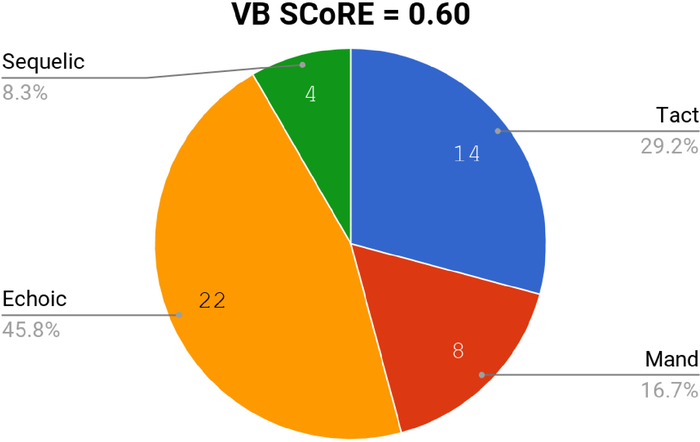
Figure 1: A model of an autistic verbal repertoire demonstrating disproportionate levels of strength across tacts (29.2%), mands (16.7%), echoics (45.8%), and sequelics (8.3%). The four operants combine to account for 100% of the environmental variables that control verbal behavior. Please click here to view a larger version of this figure.
- Compare the assessed verbal repertoire against the null repertoire, in which all four operants are equivalent at 25% apiece (Figure 2).
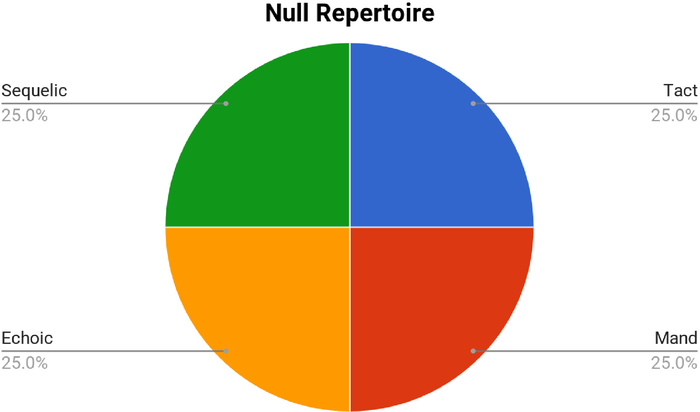
Figure 2: A model of the null verbal repertoire demonstrating proportionate strength across all four verbal operants at 25% each. Typically developing speakers show no variation in strength across tacts, mands, echoics, and sequelics. Please click here to view a larger version of this figure.
- Divide the sum of agreements (A; the smaller of the two numbers) by the sum of agreements and disagreements (A + D; the larger of the two numbers) (Figure 3) using the equation below. The quotient is a statistic reflecting the relative strength of the speaker’s verbal repertoire at the time of the VOA.

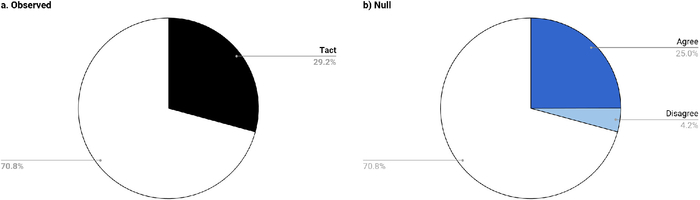
Figure 3: A demonstration of agreement between the observed response strength and the null hypothesis. A primary assumption in the SCoRE calculation is that any overlap between the observed repertoire (a) and null repertoire (25%; b) represents agreement, while nonoverlap represents disagreement. Please click here to view a larger version of this figure.
3. Abstract stimulus control.
- Calculate the strength for all bivergent (mand + tact, mand + echoic, mand + sequelic, tact + echoic, tact + sequelic, echoic + sequelic) and trivergent (mand + tact + echoic, mand + tact + sequelic, mand + echoic + sequelic, tact + echoic + sequelic) sources of multiple control by summing the percentages for each individual operant.
- Starting with the sum of all four verbal operants, rank order the level of stimulus control from greatest to least (Table 3).
| Environmental Variable(s) | Environmental Control (%) |
| METS | 100 |
| MET | 91.67 |
| ETS | 83.33 |
| ET | 75 |
| MES | 70.83 |
| ME | 62.5 |
| MTS | 54.17 |
| ES | 54.17 |
| MT | 45.83 |
| E | 45.83 |
| TS | 37.5 |
| T | 29.17 |
| MS | 25 |
| M | 16.67 |
| S | 8.33 |
Table 3: The strength of each verbal operant is converged with one another in all possible combinations to provide a rank order of strength from greatest to least. By converging various operants we can control a greater amount of the speaker’s environment. M = mand, E = echoic, T = tact, S = sequelic.
- Once the operant strength has been rank ordered across singular and multiple sources of control, extract the fading steps (Table 4) that pertain to each verbal operant while preserving the response strength hierarchy.
| Tact | Mand | Echoic | Sequelic |
| METS (100%) | METS (100%) | METS (100%) | METS (100%) |
| MET (91.67%) | MET (91.67%) | MET (91.67%) | ETS (83.33%) |
| ETS (83.33%) | MES (70.83%) | ETS (83.33%) | MES (70.83%) |
| ET (75.00%) | ME (62.50%) | ET (75.00%) | MTS (54.17%) |
| MTS (54.17%) | MTS (54.17%) | MES (70.83%) | ES (54.17%) |
| MT (45.83%) | MT (45.83%) | ME (62.50%) | TS (37.50%) |
| TS (37.50%) | MS (25.00%) | ES (54.17%) | MS (25.00%) |
| T (29.17%) | M (16.67%) | E (45.83%) | S (8.33%) |
Table 4: To condition each individual operant, mands, echoics, tacts, and sequelics are systematically converged and diverged with one another to provide a framework for most-to-least prompting. Relational flexibility is established by varying the irrelevant variables that help support each of the individual operants. M = mand, E = echoic, T = tact, S = sequelic.
- Condition relational flexibility with referent-based instruction34, carefully ensuring not to omit any steps of prompt fading.
- Converge mand, tact, echoic, and sequelic relata (100%). For example, while engaged with a ball, restrict access to the reinforcer while showing it to the participant. Provide target response followed by intraverbal frame: “You roll the ball. You roll the ____.” Reinforce correct responding with access to the ball and verbal praise.
- When responding is stable with simultaneous mand, echoic, tact, and sequelic control, fade to the subsequent prompt level by converging mand, tact, and echoic relata (91.7%). For example, while engaged with a ball, restrict access to the reinforcer while showing it to the participant. Provide target response: “Say, ‘ball.’” Reinforce correct responding with access to the ball and verbal praise.
- When responding is stable with simultaneous mand, echoic, and tact control, fade to the subsequent prompt level by converging mand, echoic, and sequelic relata (70.8%). For example, while engaged with a ball, hide the reinforcer and provide the target response along with an intraverbal frame: “You roll the ball. You roll the ____.” Reinforce correct responding with access to the ball and verbal praise.
- When responding is stable with simultaneous mand, echoic, and sequelic control, fade to the subsequent prompt level by converging mand and echoic relata (62.5%). For example, while engaged with a ball, hide the reinforcer and provide the target response: “Say, ‘ball.’” Reinforce correct responding with access to the ball and verbal praise.
- When responding is stable with simultaneous mand and echoic control, fade to the subsequent prompt level by converging mand, tact, and sequelic relata (54.2%). For example, while engaged with a ball, restrict access to the reinforcer while showing it to the participant. Provide intraverbal frame: “You roll the ____.” Reinforce correct responding with access to the ball and verbal praise.
- When responding is stable with simultaneous mand, tact, and sequelic control, fade to the subsequent prompt level by converging mand and tact relata (45.8%). For example, while engaged with a ball, restrict access to the reinforcer while showing it to the participant. Reinforce correct responding with access to the ball and verbal praise.
- When responding is stable with simultaneous mand and tact control, fade to the subsequent prompt level by converging mand and sequelic relata (25.0%). For example, while engaged with a ball, hide to the reinforcer and provide an intraverbal frame: “You roll the ____.” Reinforce correct responding with access to the ball and verbal praise.
- Finally, when responding is stable with simultaneous mand and sequelic control, isolate mand function (16.7%). For example, while engaged with the ball, hide the reinforcer. Reinforce correct responding with access to the specified reinforcer.
Results
Figure 4 shows the results of a VOA conducted with Aron, a five-year-old Hispanic male diagnosed with ASD, prior to the onset of intervention. These data confirm the utility of the VOA for assessing disproportionate levels of verbal operant strength. Echoics were found to have the greatest strength and were emitted for half of all trials (48.4%). Tacts showed the next greatest strength with responses for 1/3 of all trials (32.3%). Mands were emitted for 1/6 of all trials (16.1%), while only one sequelic response was recorded (3.2%).
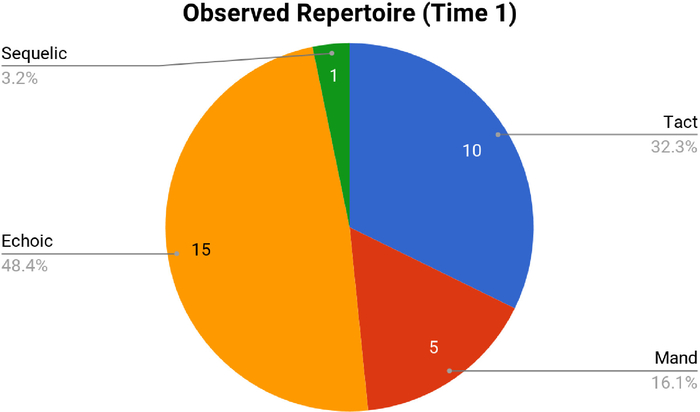
Figure 4: The observed verbal repertoire of a speaker diagnosed with autism spectrum disorder. Data for this model were obtained from a pretest VOA. Each of the four operants were assessed at disproportionate strength ranging from echoic (greatest) to sequelic (weakest). Please click here to view a larger version of this figure.
The strength of each operant was compared against the null repertoire’s proportionate strength of 25% each. For each comparison, the smaller of the two numbers represents agreement and was placed in the numerator, while the larger of the two numbers represents agreement plus disagreement and was placed in the denominator.
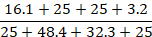
By comparing the observed data against the null repertoire, Aron’s pretest SCoRE was calculated as 0.53.
In addition to summarizing the verbal repertoire, the SCoRE serves as a judgmental aid for making programmatic decisions. Table 5 shows a prompt hierarchy to support Aron’s verbal repertoire across multiple and singular control.
| Controlling Variables | Strength (%) |
| M+E+T+S | 100 |
| M+E+T | 96.8 |
| E+T+S | 83.9 |
| E+T | 80.7 |
| M+E+S | 67.7 |
| M+E | 64.5 |
| M+T+S | 51.6 |
| E+S | 51.6 |
| M+T | 48.4 |
| E | 48.4 |
| T+S | 35.5 |
| T | 32.3 |
| M+S | 19.3 |
| M | 16.1 |
| S | 3.2 |
Table 5: An individualized hierarchy of transference across multiple and singular sources of control derived from Figure 2. M = mand, E = echoic, T = tact, S = sequelic.
The results of Table 5 prescribe an individualized prompt hierarchy to strengthen the singular control of each verbal operant (see Table 6). By systematically programming for multiple arrangements of the target operant through converging combinations, verbal “[b]ehavior may be brought under the control of a single property or a special combination of properties of a stimulus while being freed from the control of all other properties”28.
| Mand | Echoic | Tact | Sequelic |
| M+E+T+S | M+E+T+S | M+E+T+S | M+E+T+S |
| M+E+T | M+E+T | M+E+T | E+T+S |
| M+E+S | E+T+S | E+T+S | M+E+S |
| M+E | E+T | E+T | M+T+S |
| M+T+S | M+E+S | M+T+S | E+S |
| M+T | M+E | M+T | T+S |
| M+S | E+S | T+S | M+S |
| M | E | T | S |
Table 6: A systematic progression for abstracting functional independence across each of the verbal operants. M = mand, E = echoic, T = tact, S = sequelic.
After 13 weeks of referent-based instruction, a posttest VOA was conducted with Aron, using the same procedures described above. In comparison to the pretest, Figure 5 shows greater proportionality across each of the four operants: mand (27.1%), echoic (34.1%), tact (23.5%), and sequelic (15.3%). By comparing these results to the null hypothesis, Aron’s SCoRE was calculated as 0.80. A pre/post analysis of Aron’s verbal repertoire with the SCoRE shows that his language increased by 0.27 over the course of the intervention.

Figure 5: The observed verbal repertoire of a speaker diagnosed with autism spectrum disorder after 13 weeks of referent-based verbal behavior instruction. Data for this model were obtained from a posttest VOA, illustrative of increased proportionality of the four verbal operants. Please click here to view a larger version of this figure.
Discussion
It has been said that “the ‘meaning’ for a speaker of a word or sentence is, of course, defined by the sum total of conditions under which it is emitted”32. In the natural environment, the typically developing speaker’s verbal behavior is simultaneously under multiple sources of strength. Consequently, the dysfunctional speech of individuals with autism and other verbal behavior disorders may be explained as faulty stimulus control that prohibits the convergence of environmental variables.
Functional speech is predicated on behavioral fluency across learning channels33. Typically developing speakers will respond dog in the presence of a dog as well as they will when asked what kind of pet they own. Proportionate strength over various input modalities establishes the relational flexibility of fluent language. On the other hand, a visual stimulus may have a more profound effect than an auditory stimulus on the verbal behavior of individuals with autism. The aforementioned procedures were designed to isolate controlling relations to allow for a relative comparison of verbal operant strength.
Each of the four conditions lasts approximately five minutes in duration. Within the tact condition, access to the object is not restricted, as in the mand condition; the assessor does not name the object, as in the echoic condition; and no other statements are made about the object, as in the sequelic condition.
Of critical importance to this methodology is the isolation of verbal relations during each phase of the VOA. Within the mand condition, the item is not present, as in the tact condition; the assessor does not name the object, as in the echoic condition; and no other statements are made about the object as in the sequelic condition. Notably, the type of stimulus preference assessment employed as part of the mand condition may be substituted for one more suitable to the needs of the individual participant34.
Within the echoic condition, access to the object is not restricted, as in the mand condition; the item is not present, as in the tact condition; and no other statements are made about the object, as in the sequelic condition.
Within the sequelic condition, access to the object is not restricted, as in the mand condition; the item is not present, as in the tact condition; the assessor does not name the object, as in the echoic condition.
The SCoRE assessment prescribes an individualized prompt hierarchy for conditioning proportionate response strength across mands, echoics, tacts, and sequelics. If strength is assessed for all four operants on the VOA, there will be 15 possible combinations, and fading from multiple to isolated control will consist of eight steps for each operant. If strength is assessed for three operants, there will be seven possible combinations, and fading from multiple to isolated control will consist of four steps for each of the assessed operants. If strength is assessed for two operants, there will be three possible combinations, and fading from multiple to isolated control will consist of two steps for each assessed operant. If strength is assessed for only one operant, there is only one possible combination and no fading will occur. Any operants that are not assessed with strength during the VOA may be prompted using the greatest source of multiple control, and subsequently faded using the errorless language learning procedures described above.
By measuring rates of responding against one another, the SCoRE predicts the relative control of converging variables in the natural environment. Its utility for assessing disproportionate stimulus control over the verbal behavior of children with autism has been well demonstrated35. Moreover, SCoRE has implications for idiographic progress monitoring to document the effects of verbal behavior training. Future applications of the verbal behavior SCoRE may show its utility for group comparisons, such as randomized clinical trials, for demonstrating treatment efficacy as a pre- and post-measure, and may also be used to synthesize data in meta analyses.
The primary limitation of the verbal behavior SCoRE is its restriction to participants with non-fluent verbal behavior. Approximately 30% of individuals with autism are considered nonverbal36. For this population, the SCoRE targets may be modified to assess proportionality across manded stimulus selection, motor imitation, matching to sample, and other component skills. Additionally, the verbal behavior of fluent speakers may still show disproportionate strength across levels of derivational stimulus control37. Accordingly, SCoRE targets may be modified to assess reflexivity, symmetry, and transitivity.
As an alternative to the descriptive assessments generally used to measure language, the SCoRE’s experimental analysis affords the advantages of efficiency, objectivity, and quantitative precision. The SCoRE protocol can be readily implemented in a variety of settings (e.g., clinical or educational), making it ideal for use by behavior analysts, educators, and others trained in the use of functional analysis technology. As a data-based judgmental aid, the verbal behavior SCoRE offers a convenient, yet precise way of speaking about language.
Disclosures
The authors have nothing to disclose.
Acknowledgements
The authors would like to acknowledge Mtra. Mariana de los Santos for her assistance with video production.
Materials
| Name | Company | Catalog Number | Comments |
|---|---|---|---|
| VB-MAPP Assessment Kit, without Manual | Different Roads | DRK 701 | 100+ Common Objects, Language Builder, Reinforcer Kit, Counting Bears, Wooden Beads, Peg Board, Shape & Form Box, Color Cubes, Block Design Cards, 3 Peg Puzzles, 4 Jigsaw Puzzles, Dressing Doll, Measuring Manipulative, Timer, Size Sort, 3 Laminated Pictures, 4 Children's Books, Writing and Art Kit, 4 Activity Workbooks, and Flashcards covering: Alphabet, Memory Matching, Shapes, Colors and Numbers, Addition, Subtraction, Community Helpers, Sight Words |
| Excel | Microsoft | Spreadsheet Program |
References
- Drash, P. W., Tudor, R. M. An analysis of autism as a contingency-shaped disorder of verbal behavior. The Analysis of Verbal Behavior. 20, 5-23 (2004).
- Malott, R. W. Autistic behavior, behavior analysis, and the gene. The Analysis of Verbal Behavior. 20, 31-36 (2004).
- Sundberg, M. L., Michael, J. The benefits of Skinner’s analysis of verbal behavior for children with autism. Behavior Modification. 25 (5), 698-724 (2001).
- Skinner, B. F. Verbal behavior. , Appleton-Century-Croft. New York, NY. (1957).
- Groskreutz, N. C., Groskreutz, M. P., Bloom, S. E., Slocum, T. A. Generalization of negatively reinforced mands in children with autism. Journal of Applied Behavior Analysis. 47, 560-579 (2014).
- Shillingsburg, M. A., Bowen, C. N., Valentino, A. L., Pierce, L. E. Mands for information using “who?” and “which?” in the presence of establishing and abolishing operations. Journal of Applied Behavior Analysis. 47, 136-150 (2014).
- Betz, A., Higbee, T., Kelley, K., Sellers, T., Pollard, J. Increasing response variability of mand frames with script training and extinction. Journal of Applied Behavior Analysis. 44, 357-362 (2011).
- Hoffman, K., Falcomata, T. S. An evaluation of resurgence of appropriate communication in individuals with autism who exhibit severe problem behavior. Journal of Applied Behavior Analysis. 47, 651-656 (2014).
- Leaf, J. B., et al. An evaluation of a behaviorally based social skills group for individuals diagnosed with autism spectrum disorder. Journal of Autism and Developmental Disorders. 47 (2), 243-259 (2017).
- American Psychiatric Association. Diagnostic and statistical manual of mental disorders. (5th ed.), Washington, DC. (2013).
- DeSouza, A. A., Akers, J. S., Fisher, W. W. Empirical application of Skinner’s Verbal Behavior to interventions for children with autism: A review. The Analysis of Verbal Behavior. 33 (2), 229-259 (2017).
- Mason, L. L., Andrews, A. The verbal behavior stimulus control ratio equation: a quantification of language. Perspectives on Behavior Science. , 1-21 (2018).
- Sundberg, M. L. The Verbal Behavior Milestones Assessment and Placement Program (VB-MAPP): Field test data from typical children and children with autism. , Paper presented at the meeting of the Association for Behavior Analysis International, San Diego, CA (2007).
- Tiger, J. H., Hanley, G. P., Bruzek, J. Functional communication training: A review and practical guide. Behavior Analysis in Practice. 1 (1), 16-23 (2008).
- Endicott, K., Higbee, T. S. Contriving motivating operations to evoke mands for information in preschoolers with autism. Research in Autism Spectrum Disorders. 1 (3), 210-217 (2007).
- Marchese, N. V., Carr, J. E., LeBlanc, L. A., Rosati, T. C., Conroy, S. A. The effects of the question “What is this?” on tact‐training outcomes of children with autism. Journal of Applied Behavior Analysis. 45 (3), 539-547 (2012).
- Lubinski, D., Thompson, T. An animal model of the interpersonal communication of interoceptive (private) states. Journal of the Experimental Analysis of Behavior. 48 (1), 1-15 (1987).
- Twyman, J. S. The functional independence of impure mands and tacts of abstract stimulus properties. The Analysis of Verbal Behavior. 13 (1), 1-19 (1996).
- Gillett, J. N., LeBlanc, L. A. Parent-implemented natural language paradigm to increase language and play in children with autism. Research in Autism Spectrum Disorders. 1 (3), 247-255 (2007).
- Ishikawa, N., Omori, M., Yamamoto, J. I. Modeling Training of Child’s Echoic Conversational Response for Students with Autism Spectrum Disorder: To Be a Good Listener. Behavior Analysis in Practice. , 1-11 (2018).
- Valentino, A. L., Shillingsburg, M. A. Acquisition of mands, tacts, and intraverbals through sign exposure in an individual with autism. The Analysis of Verbal Behavior. 27 (1), 95-101 (2011).
- Cihon, T. M. A review of training intraverbal repertoires: Can precision teaching help? The Analysis of Verbal Behavior. 23 (1), 123-133 (2007).
- Petursdottir, A. I., Carr, J. E., Lechago, S. A., Almason, S. M. An evaluation of intraverbal training and listener training for teaching categorization skills. Journal of Applied Behavior Analysis. 41 (1), 53-68 (2008).
- Ingvarsson, E. T., Hollobaugh, T. Acquisition of intraverbal behavior: teaching children with autism to mand for answers to questions. Journal of Applied Behavior Analysis. 43 (1), 1-17 (2010).
- Hall, G., Sundberg, M. L. Teaching mands by manipulating conditioned establishing operations. The Analysis of Verbal Behavior. 5 (1), 41-53 (1987).
- Fryling, M. J. The functional independence of Skinner's verbal operants: Conceptual and applied implications. Behavioral Interventions. 32 (1), 70-78 (2017).
- Michael, J., Palmer, D. C., Sundberg, M. L. The multiple control of verbal behavior. The Analysis of Verbal Behavior. 27, 3-22 (2011).
- Skinner, B. F. Science and human behavior. , Simon and Schuster. New York, NY. (1953).
- Roane, H. S., Vollmer, T. R., Ringdahl, J. E., Marcus, B. A. Evaluation of a brief preference assessment. Journal of Applied behavior Analysis. 31, 605-620 (1998).
- Fisher, W. W., Piazza, C. C., Bowman, L. G., Hagopian, L. P., Owens, J. C., Slevin, I. A comparison of two approaches for identifying reinforcers with severe and profound disabilities. Journal of Applied Behavior Analysis. 25, 491-498 (1992).
- Mason, L. L., et al. A comparison of outcomes from curriculum-based and experimental analyses of verbal behavior. Behavioral Development. 23 (2), 118-129 (2018).
- Keller, F. S., Schoenfeld, W. N. Principles of psychology: A systematic text in the science of behavior. , Appleton-Century-Crofts. New York, NY. (1950).
- Lin, F. Y., Kubina, R. M. Learning channels and verbal behavior. The Behavior Analyst Today. 5, 1-14 (2004).
- Kang, S., O’Reilly, M., Lancioni, G., Falcomata, T. S., Sigafoos, J., Xu, Z. Comparison of the predictive validity and consistency among preference assessment procedures: A review of the literature. Research in Developmental Disabilities. 34, 1125-1133 (2013).
- Mason, L. L., Andrews, A. Referent-based verbal behavior instruction for children with autism. Behavior Analysis in Practice. 7, 107-111 (2014).
- Wodka, E. L., Mathy, P., Kalb, L. Predictors of phrase and fluent speech in children with autism and severe language delay. Pediatrics. 131 (4), 1128-1134 (2013).
- Hall, G. A., Chase, P. N. The relationship between stimulus equivalence and verbal behavior. The Analysis of Verbal Behavior. 9 (1), 107-119 (1991).
Reprints and Permissions
Request permission to reuse the text or figures of this JoVE article
Request Permission