In this protocol, the pancreatic islets are reconstructed and analyzed using computational algorithms implemented in a dedicated multiplatform application.
A subscription to JoVE is required to view this content. Sign in or start your free trial.
Method Article
Computational Reconstruction of Pancreatic Islets as a Tool for Structural and Functional Analysis
In This Article
Summary
Abstract
Structural properties of pancreatic islets are key for the functional response of insulin, glucagon, and somatostatin-secreting cells, due to their implications in intraislet communication via electric, paracrine, and autocrine signaling. In this protocol, the three-dimensional architecture of a pancreatic islet is firstly reconstructed from experimental data using a novel computational algorithm. Next, the morphological and connectivity properties of the reconstructed islet, such as the number and percentages of the different type of cells, cellular volume, and cell-to-cell contacts, are obtained. Then, network theory is used to describe the connectivity properties of the islet through network-derived metrics such as average degree, clustering coefficient, density, diameter, and efficiency. Finally, all these properties are functionally evaluated through computational simulations using a model of coupled oscillators. Overall, here we describe a step-by-step workflow, implemented in IsletLab, a multiplatform application developed specifically for the study and simulation of pancreatic islets, to apply a novel computational methodology to characterize and analyze pancreatic islets as a complement to the experimental work.
Introduction
The pancreas is divided into regions referred to as head, neck, body, and tail, each having different structures, functions, and anatomical position1,2. From a functional viewpoint, the pancreas can be divided into endocrine and exocrine systems with the former responsible for the secretion of hormones critically involved in the regulation of glucose homeostasis, while the latter contributes to food digestion via the secretion of enzymes into the duodenum1. Pancreatic islets constitute the endocrine tissue of the pancreas and are responsible for the secretion of glucagon, insul....
Access restricted. Please log in or start a trial to view this content.
Protocol
NOTE: A schematic diagram of the protocol is shown in Figure 1. A step-by-step description is given is as follows (see Supplementary File 1 for details about the control panels used at every step of the protocol).
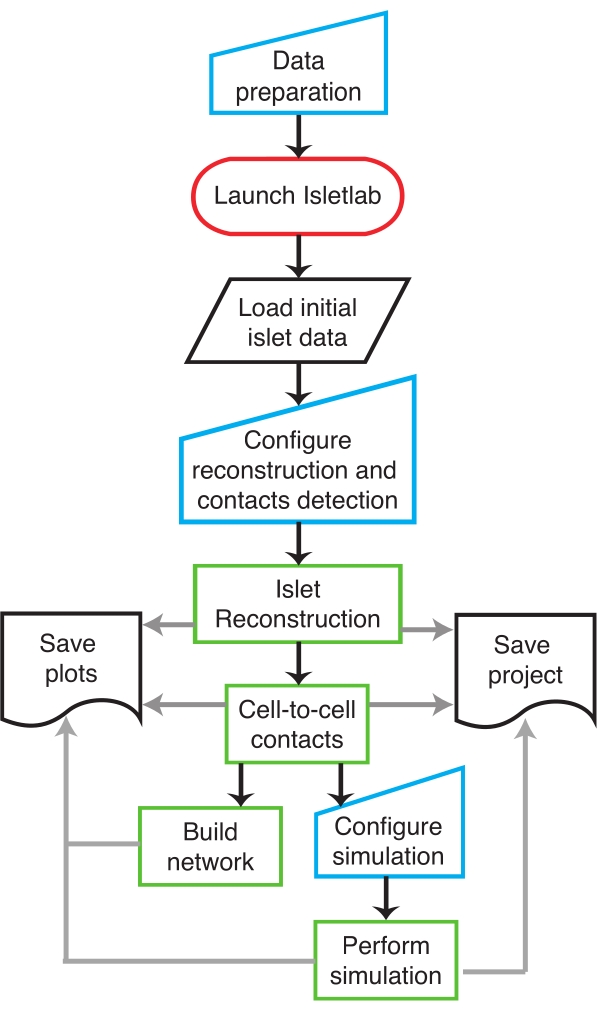
Figure 1: Flow diagram. A flow diagram describing the seque....
Access restricted. Please log in or start a trial to view this content.
Results
The reconstruction of pancreatic islets using the methodology proposed by Félix-Martínez et al.19 is highly dependent on the parameters given to the optimization algorithm (defined in the reconstruction settings). An example of this is shown visually in Figure 3 where reconstructed islets obtained using different sets of parameters are shown. First, in Figure 3A, a reconstruction that included 86.6% of the cells included in the initial d.......
Access restricted. Please log in or start a trial to view this content.
Discussion
The above protocol outlines a practical approach to reconstruct and analyze pancreatic islet architectures using novel computational algorithms. The main objective of this work is to enable the islet research community to derive quantitative metrics to characterize the morphological and connectivity properties of pancreatic islet architectures and to evaluate the possible functional implications of such properties via computational simulations.
While the algorithms adopted in this pro.......
Access restricted. Please log in or start a trial to view this content.
Disclosures
The authors have nothing to disclose.
Acknowledgements
G.J. Félix-Martínez thanks CONACYT (Consejo Nacional de Ciencia y Tecnología, México) and the Department of Electrical Engineering of the Universidad Autónoma Metropolitana (México City) for the support given to this project. We thank Dr. Danh-Tai Hoang, Dr. Manami Hara, and Dr. Junghyo Jo for their outstanding work and generosity in sharing the islet architectures that made this work possible with the research community.
....Access restricted. Please log in or start a trial to view this content.
Materials
| Name | Company | Catalog Number | Comments |
|---|---|---|---|
| CUDA-capable NVIDIA graphics card | Required for the functional simulations | ||
| IsletLab | https://github.com/gjfelix/IsletLab (Follow the instructions to download and install the application.) |
References
- Chen, L., Pan, X., Zhang, Y. H., Huang, T., Cai, Y. D. Analysis of Gene Expression Differences between Different Pancreatic Cells. ACS Omega. 4 (4), 6421-6435 (2019).
- Longnecker, D. S., Gorelick, F., Thompson, E. D., Histology, Anatomy, Histology, and Fine Structure of the Pancreas. The Pancreas. Beger, H. G., Warshaw, A. L., H....
Access restricted. Please log in or start a trial to view this content.
Reprints and Permissions
