A chromatin immunoprecipitation (X-ChIP) assay against the histone mark H3K4me3 for the model organism Exaiptasia diaphana is presented. The specificity and effectiveness of the assay are confirmed by quantitative PCR and next-generation sequencing. This protocol enables the increased investigation of protein-DNA interactions in the sea anemone E. diaphana.
Method Article
Chromatin Immunoprecipitation in the Cnidarian Model System Exaiptasia diaphana
Mascha Fiona Dix*1 , Peng Liu*2 , Guoxin Cui1 , Francesco Della Valle2 , Valerio Orlando2 , Manuel Aranda1
1Red Sea Research Center (RSRC), Biological and Environmental Sciences and Engineering Division (BESE), King Abdullah University of Science and Technology (KAUST), 2KAUST Environmental Epigenetics Program (KEEP), Biological and Environmental Sciences and Engineering Division (BESE), King Abdullah University of Science and Technology (KAUST)
* These authors contributed equally
Opens in a new tab
In This Article
Summary
Loading...
$$\rightleftharpoonup{xx}$$
$$\longleftharp{xx}$$,
$$\longrightharp{xx}$$,
Abstract
Loading...
$$\rightleftharpoonup{xx}$$
$$\longleftharp{xx}$$,
$$\longrightharp{xx}$$,
Histone post-translational modifications (PTMs) and other epigenetic modifications regulate the chromatin accessibility of genes to the transcriptional machinery, thus affecting an organism's capacity to respond to environmental stimuli. Chromatin immunoprecipitation coupled with high-throughput sequencing (ChIP-seq) has been widely utilized to identify and map protein-DNA interactions in the fields of epigenetics and gene regulation. However, the field of cnidarian epigenetics is hampered by a lack of applicable protocols, partly due to the unique features of model organisms such as the symbiotic sea anemone Exaiptasia diaphana, whose high water content and mucus amounts obstruct molecular methods. Here, a specialized ChIP procedure is presented, which facilitates the investigation of protein-DNA interactions in E. diaphana gene regulation. The cross-linking and chromatin extraction steps were optimized for efficient immunoprecipitation and then validated by performing ChIP using an antibody against the histone mark H3K4me3. Subsequently, the specificity and effectiveness of the ChIP assay were confirmed by measuring the relative occupancy of H3K4me3 around several constitutively activated gene loci using quantitative PCR and by next-generation sequencing for genome-wide scale analysis. This optimized ChIP protocol for the symbiotic sea anemone E. diaphana facilitates the investigation of the protein-DNA interactions involved in organismal responses to environmental changes that affect symbiotic cnidarians, such as corals.
Introduction
Loading...
$$\rightleftharpoonup{xx}$$
$$\longleftharp{xx}$$,
$$\longrightharp{xx}$$,
The 2022 report by the Intergovernmental Panel on Climate Change (IPCC) highlights that despite growing awareness and mitigation efforts, increasingly more intense and frequent marine heatwaves are putting coral reefs at high risk of extensive bleaching and mass mortality within the next decades1. In order to inform coral reef conservation and restoration efforts, the current and projected effects of changing environmental conditions on benthic cnidarians are being investigated on multiple biological levels to understand the underlying mechanisms of response and resilience2.
The availability of investigative tools applicable to benthic cnidarians is crucial to meet this challenge, and developing these tools requires an active effort to transfer knowledge and technologies established in other fields to marine organisms3. The obstacles to working with many coral species are partly alleviated by using model systems, such as the sea anemone Exaiptasia diaphana (commonly referred to as Aiptasia)4. These fast-growing, facultatively symbiotic sea anemones are relatively easy to keep in laboratory conditions, reproduce both sexually and asexually, and lack the calcium carbonate skeleton5. The open-access reference genome5 of E. diaphana facilitates the use of epigenetic methods requiring sequencing. However, features such as a high water content, mucus production, and low tissue amounts per individual are challenges to the establishment of replicable protocols, thus curbing epigenetic research on E. diaphana and other cnidarians with similar features.
Epigenetic modifications can alter the phenotype without changing the genomic nucleotide sequence of an organism by regulating chromatin-associated processes6. Cnidarian epigenetic regulation is mostly investigated in the contexts of evolutionary history and development7,8,9,10, symbiosis establishment and maintenance11,12,13, and response to environmental changes14,15. Specifically, variations in patterns of DNA methylation, which, in most cases, involve the addition of a methyl group to a cytosine base, have been observed in response to changing environmental conditions such as warming13 and ocean acidification16. DNA methylation patterns have also been shown to be heritable intergenerationally, emphasizing the role of epigenetics in coral acclimatization to environmental stressors17. Compared to DNA methylation, there have been relatively few studies on other important epigenetic regulators, such as non-coding RNAs11,18,19, transcription factors9,10, or histone post-translational modifications (PTMs) in cnidarians20. The investigation of DNA-associated proteins is especially demanding as the available methods require access to a reference genome of the study organism and are expensive because of the large sample sizes and high-specificity antibodies needed3. With a wide variety of chemical groups that form PTMs at specific histone residues, understanding chromatin modification landscapes in cnidarians, especially in the context of impending environmental stresses, remains a big challenge.
The aim of this work is to advance the investigation of histone PTMs, histone variants, and other chromatin-associated proteins in cnidarians by presenting an optimized chromatin-immunoprecipitation (ChIP) protocol for the coral model E. diaphana (original protocol by Bodega et al.21). ChIP can be combined with quantitative PCR to characterize locus-specific protein-DNA interactions or next-generation sequencing (NGS) to map these interactions across the entire genome. In general, proteins and DNA are reversibly cross-linked so that the protein of interest (POI) remains bound to the same locus that it is associated with in vivo. While the common cross-linking method widely used in the mammalian model system is usually kept to 15 min or below at room temperature, the cross-linking approach was optimized to allow the formaldehyde to penetrate through the mucus produced by E. diaphana more effectively. The tissue is then flash-frozen in liquid nitrogen, homogenized, and lysed to extract the nuclei from the cells. The loss of material in these steps is avoided by using only one lysis buffer and then directly moving on to sonication, which fragments the chromatin into ~300 bp long fragments. These fragments are incubated with an antibody specific to the POI down to PTM-level precision. The antibody-protein-DNA immunocomplex is precipitated using magnetic beads that bind to the primary antibodies, thereby selecting only the DNA segments that are associated with the POI. After cross-link reversal and clean-up of the precipitate, the yielded DNA segments can be used for qPCR or DNA library construction for sequencing to map the segments to a reference genome and, thus, identity the loci the POI is associated with. More detail on considerations for each step can be found in Jordán-Pla and Visa22.
Protocol
Loading...
$$\rightleftharpoonup{xx}$$
$$\longleftharp{xx}$$,
$$\longrightharp{xx}$$,
A procedural overview is provided in Figure 1. The ChIP-Seq data are available in the NCBI Sequence Read Archive (SRA) under BioProject code PRJNA931730 (https://www.ncbi.nlm.nih.gov/bioproject/PRJNA931730).
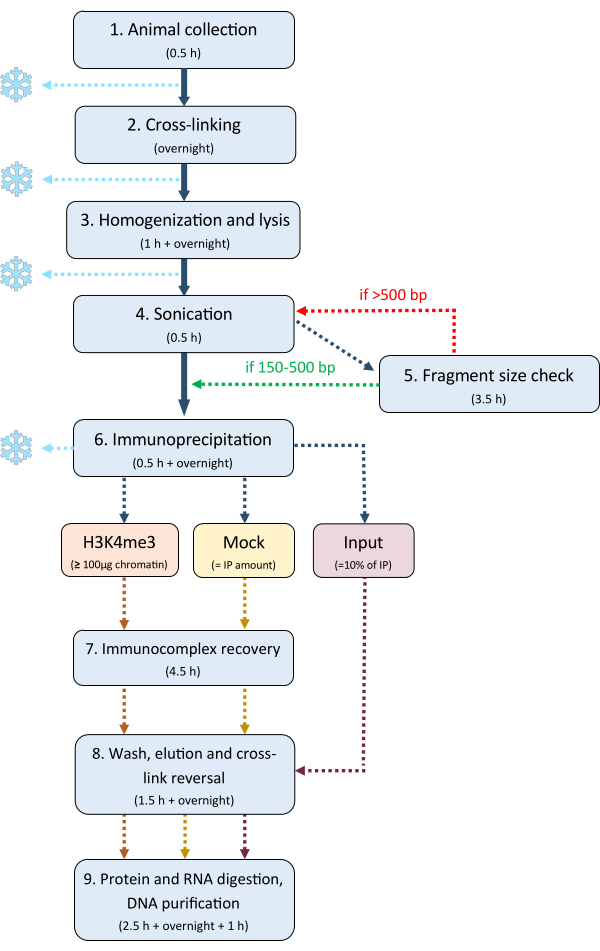
Figure 1: ChIP protocol workflow. Overview of the ChIP protocol workflow, including the estimated duration of each step and optional stop points. Please click here to view a larger version of this figure.
1. Animal collection
- Using a plastic spatula, gently detach 20 symbiotic E. diaphana (strain CC7) with a ~5 mm pedal diameter or larger from the aquarium walls, and pipette them into a 15 mL tube.
NOTE: Optimization of the number of anemones based on their size and how many IPs are intended is recommended. Anemones can be flash-frozen in liquid nitrogen (LN2) and stored at −80 °C for at least 1 month before starting the ChIP. Otherwise, proceeding straight away is recommended to prevent the anemones from settling on the walls of the 15 mL tube.
2. Cross-linking
- Prepare 10 mL of 0.5% cross-linking buffer (Table 1).
- Let the anemones settle to the bottom of the tube, or spin them in a centrifuge for a few seconds, going up to ~3,500 x g at room temperature, and then remove excess seawater with a vacuum pump. Wash them in 1x DPBS by suspending them, and then remove the DPBS.
- Transfer the anemones into the 0.5% cross-linking buffer using tweezers or a plastic spatula to avoid transferring the superfluous buffer. Incubate on a rotator at 12 rpm and 4 °C for 1 h.
- Meanwhile, prepare 10 mL of 1% cross-linking buffer (Table 1).
- As in step 2.2, remove the 0.5% buffer, and refill the tube with the 1% cross-linking buffer. Incubate on a rotator at 12 rpm and 4 °C overnight.
NOTE: Ensure all the anemones are suspended and not adhering to each other by inverting the tube gently. - The next day, prepare 10 mL of quenching buffer from a 2 M glycine stock (Table 1).
- Remove the 1% cross-linking buffer as in step 2.2, and suspend the anemones in the quenching buffer to stop the cross-linking reaction. Incubate on a rotator at 12 rpm and 4 °C for 20 min.
- Remove the quenching buffer as in step 2.2, and wash the anemones twice in DPBS. If handling several samples, keep the anemones suspended in DPBS while working through steps 3.2-3.4 sample by sample.
NOTE: The experiment can be paused by snap-freezing the sample and storing it at −80 °C for at most 1 month at this point. Remove any excess DPBS by emptying the tube onto a paper tissue before freezing and storage.
Table 1: Solutions and buffers used in the ChIP protocol. The ingredients and their respective concentrations are listed for each buffer used in the protocol. Please click here to download this Table.
3. Homogenization and lysis
- Prepare the lysis buffer (Table 1) fresh on the day (2 mL per sample), and add 100x protease inhibitor cocktail (PIC, see Table of Materials) to a final concentration of 1x. Clean a porcelain mortar and pestle with ethanol, and start cooling all the tools with LN2.
- Decant the DPBS, and empty the anemones onto a paper tissue to remove as much liquid as possible. Pour some LN2 into the mortar, and transfer the anemones using tweezers.
- Using the pestle, start by carefully breaking up the tissue, and then grind until the sample is a fine powder. Keep topping up with LN2 as needed to prevent defrosting.
- Place 2 mL of lysis buffer in a 5 mL tube on ice. Collect the sample using a spatula, and transfer it into the lysis buffer, ensuring the sample dissolves in the buffer. Let the sample rest on ice for 1 min, and then mix by inversion. Repeat steps 3.2-3.4 for all the other samples, thoroughly cleaning all the equipment with ethanol between samples.
NOTE: Minimize the loss of sample as much as possible in this step. - Wash a Dounce tissue grinder (see Table of Materials) with lysis buffer, transfer the sample, and dounce 20-30 times with a tight pestle.
- Transfer the sample back into its tube, wash the tissue grinder with ethanol and distilled water, and repeat step 3.5 for all samples.
- Incubate the samples on a rotator at ~14 rpm and 4 °C overnight.
- Use Trypan blue to check for successful lysis under the microscope (20x magnification) by mixing it with 10 µL of sample at a 1:1 ratio. If the dye penetrates the nuclei, the lysis is successful.
NOTE: The experiment can be paused at this point by storing the sample at −80 °C for up to 2 months.
4. Sonication
- Briefly spin the sample in a centrifuge at ~2,000 x g for 3-5 s at room temperature to remove any liquid from the cap and walls.
- Pass the lysate through a 25 G needle and 1 mL syringe 10 times to break up any aggregates.
- Place the sample in an ice bath to keep it as cool as possible during the sonication.
- Clean the sonication needle with ethanol. Place the sample in the sonicator (see Table of Materials) with the needle 1 cm above the bottom of the tube and not touching the walls.
- Set the duty cycle to 50% and the output to 0. Start the sonicator, and ensure no foam is being produced in the sample (otherwise, stop and readjust the needle position). Slowly increase the output power to 2, and then sonicate for 2 min.
- Switch the sonicator off, set the output power back to 0, and let the sample rest and cool down for 2 min.
- Repeat steps 4.5-4.6 for a total of four sonication and cool-down sets per sample. Remove the sample, store it on ice, and then repeat with other samples. Clean the sonicator needle with ethanol between samples and at the end.
NOTE: The sonication intensity and cycle number may need to be optimized to reach the lowest sonication intensity while yielding fragments of 150-500 bp in size.
5. DNA extraction and fragment size check
NOTE: Before moving on to the IP, the size of the fragments needs to be checked. If the fragments are too large (>500 bp), the number of sonication cycles and/or the sonication intensity must be increased; if they are too small (<150 bp), the sonication time and/or intensity must be reduced.
- Keep the sample on ice while performing the fragment size check on a subset of the sample. Transfer a 100 µL subset into a fresh 1.5 mL tube.
- Add 8 µL of RNase cocktail (see Table of Materials), and incubate at 42 °C for 30 min while shaking at 700 rpm.
- Add 2 µL of proteinase K (see Table of Materials). and incubate at 55 °C for 1 h while shaking at 700 rpm.
- Reverse cross-link the sample by incubating it at 95 °C for at least 1 h while shaking at 700 rpm.
- Prepare a 1% agarose gel with 1x TAE buffer and 0.01% ethidium bromide (see Table of Materials) or an alternative gel stain.
- Extract the DNA from the sample using a purification kit following the manufacturer's instructions (see Table of Materials).
- To check the fragmentation size of the extracted DNA, load the agarose gel with a ladder and sample. Mix 4 µL of 1 kbp ladder with 1 µL of 6x purple loading dye, and place it into one well of the agarose gel. Mix 20 µL of DNA with 4 µL of 6x purple loading dye for a final concentration of 1x, and pipette into a well. Repeat for all the samples.
- Run the gel at 100 V for about 30 min, and then image the gel by loading it onto a tray, placing it in the gel imaging system, and following the instructions of the respective system's software (see Table of Materials). Decide whether to move on based on the fragmentation sizes, which should be between 150-500 bp on average (Figure 2).
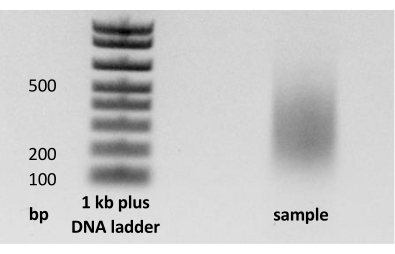
Figure 2: Fragment size check. Following the sonication, a subset of the sample is de-crosslinked, purified, and run on an agarose gel to ensure that the chromatin has been sheared to fragment sizes between 150-500 bp. Please click here to view a larger version of this figure.
6. Immunoprecipitation (IP)
- Using a pipette, check the volume of the main sample that was kept on ice during the DNA extraction. Add 10% Triton X-100 to a final concentration of 1%.
- Spin the sample at 20,000 x g at 4 °C for 10 min, and then transfer the supernatant into a clean tube using a pipette.
NOTE: The experiment can be paused here by freezing the sample at −80 °C for up to 2 months. The details of the following IP steps will need to be adjusted and optimized for each experiment. The amount of antibody per IP may need to be optimized. - Using lysis buffer as a blank, measure the chromatin concentration following the instructions of an available DNA concentration measurement system (see Table of Materials).
- Depending on the sample volume and number of IPs planned, increase the total volume of the sample by adding 10% Triton X-100 and 100x PIC (see Table of Materials) to final concentrations of 1% and 1x, respectively. It is recommended to use 100 µg of chromatin in a total volume of 1,000 µL.
- Distribute the volume for each IP into a separate low-retention 1.5 mL tube (see Table of Materials). For ChIP-qPCR, place the equivalent volume of sample into another 1.5 mL tube as a mock control. Take 10% of the volume of the IPs as the input control, and store it at −20 °C.
- Add 4 µg of antibody (here, H3K4me3 antibody, see Table of Materials) to each respective IP. Add nothing to the mock. Incubate the IP reactions and the mock on the tube rotator at 12 rpm and at 4 °C overnight.
7. Recovery of the immunocomplexes with magnetic beads
NOTE: Always avoid drying out the magnetic beads; keep them covered with liquid, or replenish the solutions as quickly as possible. Always work on one sample after the other.
- Gently invert the magnetic beads (see Table of Materials) to mix.
- Prepare 10 mL of blocking solution (Table 1) fresh on the day, and mix gently.
- Cut off the tip of a pipette tip to increase the diameter, and transfer 50 µL of magnetic beads into separate tubes (one tube per IP and one for the mock).
- Add 1 mL of blocking solution to each tube, and incubate them on a rotator at 12 rpm and 4 °C for 30 min.
- Place the beads in the blocking solution on a magnetic rack, and wait for separation. Meanwhile, spin down the IP reactions at 2,000 x g for 3-5 s at room temperature to remove any residue from the walls.
- Using a pipette, remove and discard the blocking solution supernatant, and then flush the beads off the wall with one of the samples or the mock. Place the mix back into the respective low-retention tube, and then move on to the next sample.
- Incubate all the tubes on a rotator at 12 rpm and 4 °C for 3 h.
8. Wash, elution, and cross-link reversal
- Prepare the wash buffers and TE salt buffer (Table 1) during the immunocomplex recovery incubation.
- After the incubation, place the IPs and mock on the magnetic rack, and wait about 10-20 s for the magnets to separate.
- Discard the supernatant, and add 1 mL of wash buffer with low salt. Repeat with all the reactions, and then remove the tubes from the magnetic rack and mix until the beads are suspended.
- Incubate on a rotator at 12 rpm and 4 °C for 5 min.
- Place the tubes on the magnetic rack, remove the wash buffer with low salt, then add 1 mL of wash buffer with high salt, and incubate as in step 8.4.
- Repeat steps 8.3-8.5 once more for a total of four washes using low and high salt alternately.
NOTE: The wash buffer with high salt is very harsh and should only be used for precisely 5 min in each wash step. - Remove and discard the supernatant using a pipette, and wash with 1 mL of TE salt buffer; repeat once more. After the second wash, flush out any beads from the tube cap.
- Make the elution buffer (Table 1) during the washes. After discarding the second TE salt buffer wash, add 210 µL of elution buffer to each reaction.
- Suspend the magnetic beads, and elute at 65 °C, shaking at 700 rpm for 15 min.
- Place the reactions on the magnetic rack, collect the eluate, and place it in a fresh 1.5 mL tube.
- Repeat the elution process with another 210 µL of elution buffer, and add the eluate to the first batch for a final volume of 420 µL of elute per IP and mock.
- Remove the input from the freezer, and add elution buffer to a total volume of 420 µL.
- Reverse cross-link all the eluates and the input by incubating them at 65 °C and 700 rpm overnight.
9. Protein and RNA digestion and DNA purification
- Dilute the SDS (see Table of Materials) concentration to 0.5% by adding 420 µL of TE salt buffer to the eluate and input.
- For the RNA digestion, add 10 µL of RNase cocktail (see Table of Materials), and incubate at 42 °C at 700 rpm for 30 min.
- For protein digestion, add 8 µL of proteinase K (see Table of Materials) to all, and incubate at 55 °C at 700 rpm for 1 h.
- For DNA purification, follow the "Ren Lab ENCODE Tissue Fixation and Sonication Protocol for MicroChIP"23 with some adjustments:
- Prepare tubes with Phase Lock gel (see Table of Materials) by spinning down the gel to the bottom of the tube at 20,000 x g for 1 min at room temperature.
- Under a fume hood, add one sample and the same volume of phenol:chloroform:isoamyl alcohol (25:24:1) to each tube. Shake the tubes vigorously, and vortex them briefly until they form a frothy white layer.
CAUTION: The mixture is toxic, corrosive, and a health hazard. - Spin for 10 min at 4 °C and 20,000 x g. Check that the aqueous phase is clear.
- Transfer the aqueous phase into a fresh tube using a pipette. Two fresh tubes per sample are required depending on the likely sample volume. In that case, transfer half of the sample from the first into a second tube.
- Add 1/10 of the volume in 3 M sodium acetate (NaAc, e.g., 40 µL for a 400 µL sample) and 10 µL of 5 mg/mL linear acrylamide to each sample, and invert to mix.
- Add 2x the sample volume in 100% ethanol (e.g., 800 µL for a 400 µL sample), and shake vigorously. Do not vortex, as this may damage the DNA.
- Incubate at −20 °C overnight or at −80 °C for 30 min.
- Cool down the centrifuge to 4 °C, and then spin the samples for 30 min at 15,000 x g to pellet the DNA.
- Carefully decant and then wash the pellets with 1 mL of 70% EtOH. Spin at maximum speed for 5 min at 4 °C.
- Carefully decant, and then spin again for a few seconds. Use a pipette to remove all the ethanol. If there is a small bit left, it may help to spin again.
- Resuspend the pellets in 30 µL of nuclease-free water (see Table of Materials).
NOTE: If there are several tubes per sample, resuspend one pellet in 30 µL, transfer to the next tube, and resuspend the next pellet in the same 30 µL.
- Measure the DNA concentration, and then store the sample at −20 °C.
Results
Loading...
$$\rightleftharpoonup{xx}$$
$$\longleftharp{xx}$$,
$$\longrightharp{xx}$$,
Following the above protocol, DNA associated with the trimethylation of histone 3 lysine 4 (H3K4me3) was immunoprecipitated. The ChIP-seq grade antibody was previously used on the sea anemone Nematostella vectensis7 and was validated here by the immunofluorescent staining of E. diaphana tissue sections (Figure 3). While the DNA yield depends on the amount of input material, it was regularly around 100 ng/µL. The obtained DNA fragments were analyzed by sequencing and qPCR (primer list in Supplementary File 1).
A sequencing depth of 40 million reads yielded ~17.6 million uniquely mapped reads. After quality checks, the raw reads were trimmed and mapped to the E. diaphana genome using Bowtie24 (see Table of Materials). The model-based analysis of the ChIP-Seq data with MACS (see Table of Materials) identified a total of 19,107 peaks25. As expected for H3K4me3, most peaks were located near the transcriptional start site (TSS), and the peak count frequency declined sharply on both sides of the TSS, but especially toward the gene body (Figure 4).
Three genes with high peaks around their TSSs were identified from the sequencing data, and qPCR primers were designed to target several loci of high peaks within these genes. The qPCR data were normalized using the percentage of input method (Figure 5). High enrichment of H3K4me3 relative to the input and mock controls was observed. The percentage of input varied between 2.7% to 10.7%, with differences in enrichment observed across genes and between different loci within the same gene.
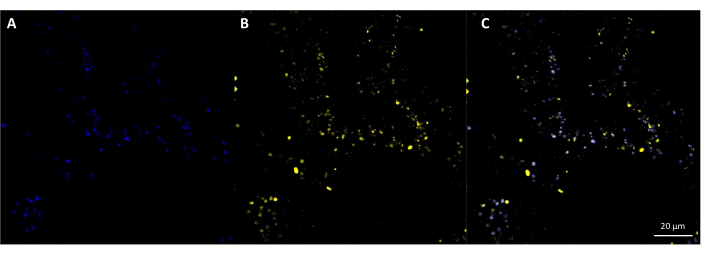
Figure 3: Immunofluorescent staining of H3K4me3. An E. diaphana tissue section was stained with (A) blue Hoechst nucleic acid stain and (B) a yellow fluorophore-labeled secondary antibody against the primary antibody against H3K4me3. (C) An overlap of A and B showing co-localization in the nucleus. Scale bar = 20 µm. Please click here to view a larger version of this figure.
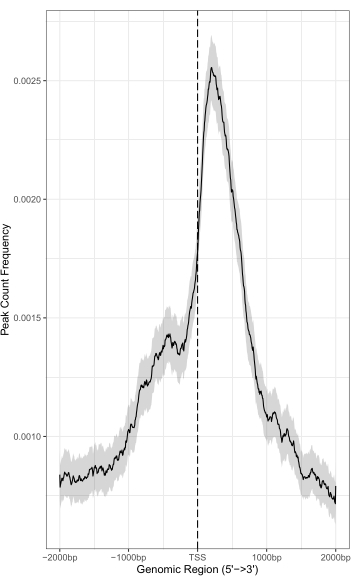
Figure 4: High peak count frequency around the transcriptional start site. The distribution of the peak count frequency of H3K4me3 modification spanning upstream (−) and downstream (+) 2,000bp around the transcriptional start site (TSS). Please click here to view a larger version of this figure.
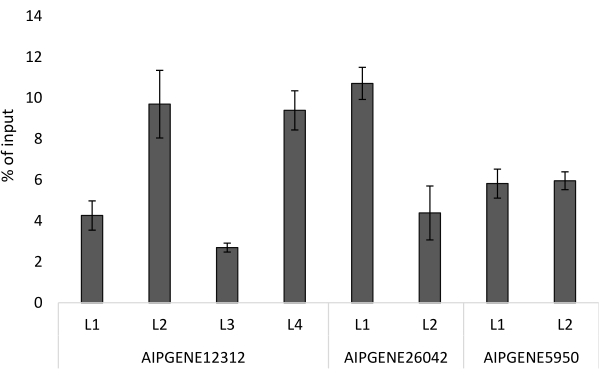
Figure 5: H3K4me3 ChIP-qPCR in Exaiptasia diaphana. The results are represented as a percentage (%) of input. Loci near the transcriptional start site of the respective genes (AIPGENE12312, AIPGENE26042, and AIPGENE5950) were chosen for ChIP-qPCR. Error bars indicate the standard deviation between replicates, n = 3. Please click here to view a larger version of this figure.
Supplementary File 1: List of primers used for qPCR. Please click here to download this File.
Discussion
Loading...
$$\rightleftharpoonup{xx}$$
$$\longleftharp{xx}$$,
$$\longrightharp{xx}$$,
Following the above protocol, the obtained DNA was successfully used for ChIP-qPCR and ChIP-Seq. The same general peak profile for H3K4me3 previously reported from other organisms26,27,28 was obtained here, with the highest peak around the TSS and high enrichment at the expected sites in the ChIP-qPCR. The relatively high number of multiply mapped reads in the ChIP-Seq data might have been caused by PCR duplicates. The amount of uniquely mapped reads could be increased by changes to the DNA library preparation protocol to reduce PCR duplicates. There are several normalization methods for ChIP-qPCR data, with the percentage of input method presented here being more commonly used. This method normalizes the IP and mock samples directly to the input, with the disadvantage that the input is processed differently from the IP and mock samples during the ChIP, which may introduce errors. The alternative fold enrichment method normalizes the signal of the IP based on the signal of the mock using the same primer sets, thus giving a signal-over-background ratio. However, the signal intensity of the mock sample can vary strongly, which, in turn, has large effects on the data. A detailed discussion of ChIP-qPCR and data normalization can be found in Haring et al.29.
A major adjustment in the method presented above compared to common ChIP protocols is the much longer cross-linking time, from around 15 min for histone proteins to an overnight incubation. The major aim of this adjustment is to facilitate the penetration of the fixative formaldehyde through the mucus layer into the deeper tissue of E. diaphana to preserve the protein-DNA interactions inside the nucleus. Optimization of this step is critical to ensure sufficient cross-linking to preserve the protein-DNA interactions without cross-linking so much that the shearing of the chromatin by sonication becomes ineffective. Adding detergents such as SDS can increase the sonication efficiency as well29. In addition, a long incubation with formaldehyde was found to ease the homogenization step and resulted in a more finely and evenly ground sample compared to fresh or frozen anemones that were homogenized before the cross-linking step. The recommended ranges of fragment lengths vary between 100 bp and 1,000 bp29,30 and may depend on the target protein. It is critical that each user optimizes the sonication conditions to reach the desired fragment length with as little sonication power as possible, as over-sonication may denature the proteins and, thus, impact the IP31. Another limitation of ChIP is the amount of material required, which particularly affects relatively small organisms such as anemones; this issue was addressed by reducing the loss of sample between steps. After homogenizing the sample, it was lysed immediately, thereby omitting several common nuclei preparation steps. The sample pool obtained from 20 anemones generally contained enough chromatin for three IPs and both mock and input controls. The amount of starting material (i.e., the number of anemones) could be further reduced in the future, especially when performing a ChIP with only one target protein. Depending on the intended downstream method, the controls should be adjusted; for ChIP-qPCR, it should be considered to include additional controls29, while for ChIP-seq, the mock can be omitted in favor of an input control.
While antibody validation is outside of the scope of this protocol and was, thus, only briefly touched on here, it is a critical step before performing ChIP. Especially when using commercial antibodies on invertebrate species, the availability of specific antibodies for the desired targets can be a limitation. In the first step, the H3 N-terminal tail sequence of E. diaphana and other model organisms, including zebrafish and mice, was compared and found to be highly conserved12. The antibody specificity was then tested using immunofluorescence, which co-localized the signals of the nucleic acid and antibody. The peak profile of H3K4me3 around the TSS obtained from the sequencing data gives further confidence regarding the specificity of the antibody.
Another consideration regarding antibody specificity is the possibility of any interaction with the symbiotic dinoflagellates that E. diaphana, as well as many other anthozoans, host in their cells. Transcriptome analyses in dinoflagellates of the genera Lingulodinium32 and Symbiodinium33 have found histone-encoding genes, including core histone H3 and several H3 variants at low expression levels, and the extent of functional conservation of the histone code is unclear34. Marinov and Lynch34 compared the sequence conservation of H3 variant N-terminal tails within and between dinoflagellate species, and Symbiodiniaceae species showed a high divergence around lysine 4 in the tail sequence, especially when considering the congruence of adjacent amino acids to lysine 4 as a factor. This region has also been shown to diverge from other model species such as Arabidopsis thaliana, Drosophila melanogaster, and Saccharomyces cerevisiae, which match the sequence of E. diaphana12. Therefore, the risk of unintended interaction of the antibody against H3K4me3 with dinoflagellate H3 is low. In addition, the sequences are only aligned to the E. diaphana genome, and the qPCR primers should be specific to E. diaphana sequences, providing an extra layer of filtration of any unintendedly precipitated sequences.
The presented ChIP protocol yields sufficient DNA for qPCR as well as next-generation sequencing, and while individual optimization by each user will likely be required, it provides a starting point for the increased investigation of protein-DNA interactions in benthic cnidarians, possibly in the context of symbiosis and environmental changes.
Materials
| Name | Company | Catalog Number | Comments |
|---|---|---|---|
| 1 kb Plus DNA Ladder | Invitrogen | 10787018 | |
| 100% Ethanol | |||
| 15 mL falcon tubes | |||
| 16% Formaldehyde Solution (w/v), Methanol-free | Thermo scientific | 28906 | |
| 5 mL tube | |||
| 5PRIME Phase Lock tubes | Quantabio | 2302820 | Phase lock gel - light |
| AGANI needle 25 G | Terumo | AN*2516R1 | |
| Agarose | |||
| Bovine Serum Albumin | Sigma-Aldrich | A7030 | |
| Bowtie | open source, available from https://bowtie-bio.sourceforge.net/index.shtml | ||
| Branson sonifier 250 | Branson | Sonicator | |
| Centrifuge | Eppendorf | 5430 R | With rotors for 15 mL and 1.5 mL tubes |
| ChIP-grade antibody (here polyclonal H3K4me3 antibody) | Diagenode | C15410003 | |
| Complete EDTA-free Protease Inhibitor Cocktail | Roche | 11873580001 | 2 tablets/mL water for 100x stock |
| Cover glass | vwr | 48393 194 | |
| Disposable Spatula | vwr | 80081-188 | |
| DNA purification kit (here QIAGEN QIAquick PCR purification kit) | QIAGEN | 28104 | |
| Dounce tissue grinder | Wheaton | tight pestle | |
| Dulbecco's Phosphate Buffered Saline (DPBS) 1x | gibco | 14190-094 | |
| Dynabeads Protein G | Thermo Fisher Scientific | 10004D | |
| EDTA | Sigma-Aldrich | 3609 | |
| EGTA | Sigma-Aldrich | 324626 | |
| Electrophoresis system | |||
| Ethidium bromide | |||
| FASTQC v0.11.9 | software | ||
| Gel Doc EZ Documentation System | Bio-Rad | 1708270 | Gel imaging system |
| Glycine | Sigma-Aldrich | 50046 | |
| Injekt-F Tuberculin syringe 1 mL | B. Braun | 9166017V | |
| Linear acrylamide (5 mg/mL) | Invitrogen | AM9520 | |
| Low-retention 1.5 mL tube | |||
| Magnetic separation rack | for 1.5 mL tubes | ||
| Microscope | |||
| Microscope slide | |||
| Model-based Analysis of ChIP-Seq (MACS) | open source | ||
| Mortar and pestle, porcelain | |||
| NanoDrop 2000c spectrophotometer | Thermo scientific | ND-2000C | |
| N-lauroylsarcosine | Sigma-Aldrich | 61739 | |
| Nuclease-free water | |||
| Pasteur pipette | |||
| Phenol:Chloroform:Isoamyl Alcohol Mixture (25:24:1) | Sigma-Aldrich | 77617 | |
| Proteinase K (20 mg/mL) | Ambion | AM2546 | |
| Purple Loading Dye 6x | New England BioLabs | B7024S | |
| Qubit 2.0 Fluorometer | Invitrogen | ||
| RNase Cocktail Enzyme Mix | Invitrogen | AM2286 | RNase A = 500 U/mL, RNase T1 = 20000 U/mL |
| Sodium acetate | Sigma-Aldrich | S2889 | |
| Sodium chloride | Sigma-Aldrich | S9888 | |
| Sodium deoxycholate | Sigma-Aldrich | 30970 | |
| SYBR Safe DNA Gel Stain | Invitrogen | S33102 | |
| TAE buffer | |||
| Thermomixer | Eppendorf | 5384000012 | |
| Tris base | Sigma-Aldrich | 10708976001 | |
| Triton X-100 solution | Sigma-Aldrich | 93443 | |
| Trypan Blue Stain (0.4%) | Gibco | 15250-061 | Danger: may cause cancer. Suspected of damaging fertility or the unborn child |
| Tube rotator SB3 | Stuart | ||
| UltraPure SDS Solution, 10% | Invitrogen | 15553027 | |
| Vacuum pump |
References
Loading...
$$\rightleftharpoonup{xx}$$
$$\longleftharp{xx}$$,
$$\longrightharp{xx}$$,
- Climate Change 2022: Impacts, Adaptation, and Vulnerability. Contribution of Working Group II to the Sixth Assessment Report of the Intergovernmental Panel on Climate Change. , Cambridge University Press. Cambridge, UK. (2022).">Pörtner, H. -O. 2022: Summary for Policymakers. Climate Change 2022: Impacts, Adaptation, and Vulnerability. Contribution of Working Group II to the Sixth Assessment Report of the Intergovernmental Panel on Climate Change. , Cambridge University Press. Cambridge, UK. (2022).
- The past, present, and future of coral heat stress studies. Ecology and Evolution. 9 (17), 10055-10066 (2019).">Cziesielski, M. J., Schmidt-Roach, S., Aranda, M. The past, present, and future of coral heat stress studies. Ecology and Evolution. 9 (17), 10055-10066 (2019).
- Marine environmental epigenetics. Annual Review of Marine Science. 11, 335-368 (2021).">Eirin-Lopez, J., Putnam, H. Marine environmental epigenetics. Annual Review of Marine Science. 11, 335-368 (2021).
- Using Aiptasia as a model to study metabolic interactions in cnidarian-Symbiodinium symbioses. Frontiers in Physiology. 9 (214), (2018).">Rädecker, N. Using Aiptasia as a model to study metabolic interactions in cnidarian-Symbiodinium symbioses. Frontiers in Physiology. 9 (214), (2018).
- The genome of Aiptasia, a sea anemone model for coral symbiosis. PNAS. 112 (38), 11893-11898 (2015).">Baumgarten, S. The genome of Aiptasia, a sea anemone model for coral symbiosis. PNAS. 112 (38), 11893-11898 (2015).
- The language of covalent histone modifications. Nature. 403 (6765), 41-45 (2000).">Strahl, B. D., Allis, C. D. The language of covalent histone modifications. Nature. 403 (6765), 41-45 (2000).
- Evolutionary conservation of the eumetazoan gene regulatory landscape. Genome Research. 24 (4), 639-650 (2014).">Schwaiger, M. Evolutionary conservation of the eumetazoan gene regulatory landscape. Genome Research. 24 (4), 639-650 (2014).
- A broad survey of gene body and repeat methylation in cnidaria reveals a complex evolutionary history. Genome Biology and Evolution. 14 (2), evab284(2022).">Zhang, X., Jacobs, D. A broad survey of gene body and repeat methylation in cnidaria reveals a complex evolutionary history. Genome Biology and Evolution. 14 (2), evab284(2022).
- An ancestral Wnt-Brachyury feedback loop in axial patterning and recruitment of mesoderm-determining target genes. Nature Ecology & Evolution. 6 (12), 1921-1939 (2022).">Schwaiger, M. An ancestral Wnt-Brachyury feedback loop in axial patterning and recruitment of mesoderm-determining target genes. Nature Ecology & Evolution. 6 (12), 1921-1939 (2022).
- Cnidarian hair cell development illuminates an ancient role for the class IV POU transcription factor in defining mechanoreceptor identity. Elife. 10, e74336(2021).">Ozment, E., et al. Cnidarian hair cell development illuminates an ancient role for the class IV POU transcription factor in defining mechanoreceptor identity. Elife. 10, e74336(2021).
- Evidence for miRNA-mediated modulation of the host transcriptome in cnidarian-dinoflagellate symbiosis. Molecular Ecology. 27 (2), 403-418 (2018).">Baumgarten, S., et al. Evidence for miRNA-mediated modulation of the host transcriptome in cnidarian-dinoflagellate symbiosis. Molecular Ecology. 27 (2), 403-418 (2018).
- DNA methylation regulates transcriptional homeostasis of algal endosymbiosis in the coral model Aiptasia. Science Advances. 4 (8), eaat2142(2018).">Li, Y. DNA methylation regulates transcriptional homeostasis of algal endosymbiosis in the coral model Aiptasia. Science Advances. 4 (8), eaat2142(2018).
- Symbiont shuffling induces differential DNA methylation responses to thermal stress in the coral Montastraea cavernosa. Molecular Ecology. 31 (2), 588-602 (2021).">Rodriguez-Casariego, J. A., Cunning, R., Baker, A. C., Eirin-Lopez, J. M. Symbiont shuffling induces differential DNA methylation responses to thermal stress in the coral Montastraea cavernosa. Molecular Ecology. 31 (2), 588-602 (2021).
- Ocean acidification influences host DNA methylation and phenotypic plasticity in environmentally susceptible corals. Evolutionary Applications. 9 (9), 1165-1178 (2016).">Putnam, H. M., Davidson, J. M., Gates, R. D. Ocean acidification influences host DNA methylation and phenotypic plasticity in environmentally susceptible corals. Evolutionary Applications. 9 (9), 1165-1178 (2016).
- The role of chromatin dynamics under global warming response in the symbiotic coral model Aiptasia. Communications Biology. 2, 282(2019).">Weizman, E., Levy, O. The role of chromatin dynamics under global warming response in the symbiotic coral model Aiptasia. Communications Biology. 2, 282(2019).
- Epigenome-associated phenotypic acclimatization to ocean acidification in a reef-building coral. Science Advances. 4 (6), eaar8028(2018).">Liew, Y. J. Epigenome-associated phenotypic acclimatization to ocean acidification in a reef-building coral. Science Advances. 4 (6), eaar8028(2018).
- Intergenerational epigenetic inheritance in reef-building corals. Nature Climate Change. 10 (3), 254-259 (2020).">Liew, Y. J. Intergenerational epigenetic inheritance in reef-building corals. Nature Climate Change. 10 (3), 254-259 (2020).
- Identification of microRNAs in the coral Stylophora pistillata. PLoS One. 9 (3), e91101(2014).">Liew, Y. J., et al. Identification of microRNAs in the coral Stylophora pistillata. PLoS One. 9 (3), e91101(2014).
- Identification of long non-coding RNAs in two anthozoan species and their possible implications for coral bleaching. Scientific Reports. 7, 5333(2017).">Huang, C., et al. Identification of long non-coding RNAs in two anthozoan species and their possible implications for coral bleaching. Scientific Reports. 7, 5333(2017).
- Coral epigenetic responses to nutrient stress: Histone H2A.X phosphorylation dynamics and DNA methylation in the staghorn coral Acropora cervicornis. Ecology and Evolution. 8 (23), 12193-12207 (2018).">Rodriguez-Casariego, J. A., et al. Coral epigenetic responses to nutrient stress: Histone H2A.X phosphorylation dynamics and DNA methylation in the staghorn coral Acropora cervicornis. Ecology and Evolution. 8 (23), 12193-12207 (2018).
- A cytosolic Ezh1 isoform modulates a PRC2-Ezh1 epigenetic adaptive response in postmitotic cells. Nature Structural & Molecular Biology. 24 (5), 444-452 (2017).">Bodega, B., et al. A cytosolic Ezh1 isoform modulates a PRC2-Ezh1 epigenetic adaptive response in postmitotic cells. Nature Structural & Molecular Biology. 24 (5), 444-452 (2017).
- Chromatin Immunoprecipitation., edited by Visa, N., Jordán-Pla, A. Visa, N., Jordán-Pla, A. , Humana Press. Totowa, NJ. 9-28 (2017).">Jordán-Pla, A., Visa, N. Considerations on experimental design and data analysis of chromatin immunoprecipitation experiments. Chromatin Immunoprecipitation., edited by Visa, N., Jordán-Pla, A. Visa, N., Jordán-Pla, A. , Humana Press. Totowa, NJ. 9-28 (2017).
- https://www.encodeproject.org/documents/ (2023).">ENCODE. Ren Lab ENCODE Tissue Fixation and Sonication Protocol for MicroChIP. , Stanford University. Available from: https://www.encodeproject.org/documents/ (2023).
- Ultrafast and memory-efficient alignment of short DNA sequences to the human genome. Genome Biology. 10, R25(2009).">Langmead, B., Trapnell, C., Pop, M., Salzberg, S. L. Ultrafast and memory-efficient alignment of short DNA sequences to the human genome. Genome Biology. 10, R25(2009).
- Identifying ChIP-seq enrichment using MACS. Nature Protocols. 7, 1728-1740 (2012).">Feng, J., Liu, T., Qin, B., Zhang, Y., Liu, X. S. Identifying ChIP-seq enrichment using MACS. Nature Protocols. 7, 1728-1740 (2012).
- Is H3K4me3 instructive for transcription activation. BioEssays. 39 (1), e201600095(2017).">Howe, F. S., Fischl, H., Murray, S. C., Mellor, J. Is H3K4me3 instructive for transcription activation. BioEssays. 39 (1), e201600095(2017).
- H3K4 tri-methylation breadth at transcription start sites impacts the transcriptome of systemic lupus erythematosus. Clinical Epigenetics. 8, 14(2016).">Zhang, Z., Shi, L., Dawany, N., Kelsen, J., Petri, M. A., Sullivan, K. E. H3K4 tri-methylation breadth at transcription start sites impacts the transcriptome of systemic lupus erythematosus. Clinical Epigenetics. 8, 14(2016).
- High-resolution mapping of epigenetic modifications of the rice genome uncovers interplay between DNA methylation, histone methylation, and gene expression. The Plant Cell. 20, 2-276 (2008).">Li, X. High-resolution mapping of epigenetic modifications of the rice genome uncovers interplay between DNA methylation, histone methylation, and gene expression. The Plant Cell. 20, 2-276 (2008).
- Chromatin immunoprecipitation: optimization, quantitative analysis and data normalization. Plant Methods. 3, 11(2014).">Haring, M. Chromatin immunoprecipitation: optimization, quantitative analysis and data normalization. Plant Methods. 3, 11(2014).
- ChIP-seq guidelines and practices of the ENCODE and modENCODE consortia. Genome Research. 22 (9), 1813-1831 (2012).">Landt, S. G. ChIP-seq guidelines and practices of the ENCODE and modENCODE consortia. Genome Research. 22 (9), 1813-1831 (2012).
- ChIP-Seq: A method for global identification of regulatory elements in the genome. Current Protocols in Molecular Biology. Chapter 21, Unit 21.19.1-Unit 21.19.14 (2010).">Raha, D., Hong, M., Snyder, M. ChIP-Seq: A method for global identification of regulatory elements in the genome. Current Protocols in Molecular Biology. Chapter 21, Unit 21.19.1-Unit 21.19.14 (2010).
- A full suite of histone and histone modifying genes are transcribed in the dinoflagellate Lingulodinium. PLoS One. 7 (4), e34340(2012).">Roy, S., Morse, D. A full suite of histone and histone modifying genes are transcribed in the dinoflagellate Lingulodinium. PLoS One. 7 (4), e34340(2012).
- Symbiodinium transcriptomes: Genome insights into the dinoflagellate symbionts of reef-building corals. PLoS One. 7 (4), e35269(2012).">Bayer, T., et al. Symbiodinium transcriptomes: Genome insights into the dinoflagellate symbionts of reef-building corals. PLoS One. 7 (4), e35269(2012).
- Diversity and divergence of dinoflagellate histone proteins. G3 Genes, Genomes, Genetics. 6 (2), 397-422 (2016).">Marinov, G. K., Lynch, M. Diversity and divergence of dinoflagellate histone proteins. G3 Genes, Genomes, Genetics. 6 (2), 397-422 (2016).
Reprints and Permissions
Request permission to reuse the text or figures of this JoVE article
Request Permission