The moxibustion experimental platform can fix the rats without restriction, and the rats can undergo multi-acupoint moxibustion in the awake state, ensuring the welfare of the rats, protecting the safety of the operators, ensuring therapeutic efficacy, and improving the efficiency of the experiment.
Method Article
Using Herbal-Cake-Separated Moxibustion for the Treatment of Rats with Chronic Renal Failure
* These authors contributed equally
In This Article
Summary
Abstract
In the process of moxibustion in clinical practice, subjects need to be in a stable mood and comfortable posture to avoid problems such as moxa ash falling, scalding skin, and poor curative effect. Such problems also exist in the rat moxibustion experiment. To simulate clinical practice, it is necessary to introduce an experimental instrument in animal experiments, that is, a moxibustion device with fixed rats and moxibustion treatment synchronization, which can make experimental rats receive moxibustion treatment quietly and comfortably under non-anesthesia.
Our research group designed a rat moxibustion experimental platform. The device was framed by a wooden board with a supporting base plate, multiple fixed components, and partitioned components. The device can achieve the operation mode of moxibustion in rats without binding, avoiding anesthesia and scalding and simultaneously exposing multiple acupoints on the back. This operation can avoid physical and mental injury to rats and operators, which improves the research efficiency and further promotes the development and research of moxibustion animal experiments.
The device has a simple structure, is easy to operate and popularize, is comprehensively and innovatively designed, reusable, and is suitable for rat experiments mainly based on moxibustion. This article mainly introduces the structure of the experimental platform device for rat moxibustion, the basic procedure of herbal-cake-separated-moxibustion in experimental rats using the device and describes the establishment of a rat model of chronic renal failure (CRF) and representative experimental results.
Introduction
Moxibustion appeared with the application of fire. Ancient doctors accidentally found that some parts of the fire-burning body could relieve the symptoms of discomfort. After long-term practice, "Artemisiae Argyi Folium" was gradually selected as the main moxibustion material1. Moxibustion is one of the important components of traditional Chinese medicine, and when juxtaposed with traditional Chinese medicine decoction and acupoint acupuncture, these three major traditional Chinese medicine therapies are widely used in many diseases.
Chinese doctors often used moxibustion to treat diseases as early as the period of Huangdi Neijing (Yellow Emperor's Inner Classic). Artemisiae Argyi Folium is a type of Chinese herbal medicine with the function of warming meridians to stop bleeding, dispelling colds, and relieving pain. It is commonly used in the external treatment of traditional Chinese medicine and can also be used in the treatment of traditional Chinese medicine decoction. Moxibustion is a kind of external therapy2 wherein moxa or other drugs are placed on acupoints on the body surface to burn and use the mild heat of moxibustion fire and the effect of drugs to treat diseases3.
As one of the common methods of treatment, moxibustion has been widely used in clinical practice. With the continuous expansion in moxibustion therapy, a growing number of studies have investigated the mechanism of moxibustion and carried out many animal experiments4,5.
The moxibustion method can be classified as direct moxibustion and indirect moxibustion. The method of placing moxibustion on the body's skin is called direct moxibustion. Indirect moxibustion separates the surface of the moxa cone and the acupoints with drugs or other materials. Moxibustion can treat various diseases, such as irritable bowel syndrome6, chronic fatigue syndrome7, and knee osteoarthritis8.
This paper mainly discusses the mechanism of herbal-cake-separated-moxibustion. Herbal-cake-separated-moxibustion belongs to the indirect moxibustion method, in which a moxa cone is placed on the medicinal cake to apply moxibustion. Current studies have shown that the infrared and warming effects produced by moxa cone burning, the chemical composition of moxa leaf tar, and acupoint stimulation can achieve disease prevention and treatment9 by increasing the penetration of drugs into acupoints. Therefore, herbal-cake-separated-moxibustion mainly produces a "comprehensive effect" through moxibustion, drugs, and acupoints10.
Previous studies show that moxibustion is an effective method for treating CRF11,12,13,14,15, but the underlying mechanism is still undefined. We have been working on clinical and animal research on CRF. At present, we are conducting a moxibustion experimental study on CRF rats based on herbal-cake-separated-moxibustion-mediated protein kinase RNA-like endoplasmic reticulum kinase (PERK) signaling pathway of endoplasmic reticulum stress. Through this animal experiment, we aim to preliminarily explain the potential mechanism of moxibustion in treating chronic kidney disease. In this experiment, the treatment of herbal-cake-separated moxibustion of rats is a key operation.
In the previous experiment16, the lid of the rearing cage was used to bind and fix the rats. To protect the operator, the rats need to be anesthetized before binding. However, Sprague-Dawley (SD) rats are easy to fear and startle. The binding operation can easily cause restlessness in the rats. Problems such as poor posture fixation of rats, deviation of acupoint positioning, increased experiment time, and operator injury often occurred.
In addition, if the binding is too tight, it can easily cause breathing difficulties in rats, which is not conducive to animal welfare. If the binding is too loose, the rats are prone to struggle and move their bodies, causing moxibustion cones to fall and burn their skin, which affects the experimental results. Based on the literature, animal experiments still involve binding16,17,18, and most experimental devices can only be fixed, hindering the implementation of other techniques such as moxibustion19. Therefore, achieving the integration of fixation and moxibustion in the experimental device while ensuring animal welfare and experimental specifications and efficiency has become one of the focus areas for investigators.
Protocol
The plan follows the Animal Care Guidelines of the Yunnan University of Chinese Medicine and has been approved by the Animal Ethics Committee of Yunnan University of Chinese Medicine. The experimental animal welfare and ethics review number is R-062021G098.
1. Moxibustion experimental platform device (Figure 1)
NOTE: We designed and constructed the rat moxibustion experimental platform device based on the distance between the hind and front limbs of rats and their behavioral and physiological characteristics.
- The size of the moxibustion device
- Fabricate the device using anti-beaten board material and a wooden board; the overall size is 52 cm L x 23.5 cm W x 64 cm H, and the bottom area of the device is 1222 cm2.
NOTE: The moxibustion operation is carried out on the platform at this height, and the rats can be kept calm.
- Fabricate the device using anti-beaten board material and a wooden board; the overall size is 52 cm L x 23.5 cm W x 64 cm H, and the bottom area of the device is 1222 cm2.
- The main frame of the moxibustion device
- Make the base of the whole device with anti-beaten board material: The base plate is 52 cm L x 23.5 cm W with a white surface. Ensure that the bottom accounts for a large proportion of the device's weight to stabilize the whole device.
- Make the elevated platform of the device with solid wood, 60 cm high.
NOTE: This is the main frame of the whole instrument, which stabilizes the whole device and supports the placement of the rats in a standing position. - Put five placement slots above the elevated platform, with a size of 10 cm L x 6 cm W x 10 cm H. Use interval boards (10 cm L x 1.3 cm W x 10 cm H) to separate the placement slots, corresponding to the distance between the front and rear limbs of the rat in standing position.
- The components of the moxibustion device
- Fix two stainless steel strips on top of the placement slots. Each fixed strip is a right angle equal edge steel bar 40 cm L x 1.4 cm W (both sides have the same width), with 15 holes. Three holes at the fixed strip correspond to each slot, used to fix the plum handle screw and the moving hose. The distance between adjacent holes is 7 cm.
- Place the adjustable plum blossom handle screw at both ends of the heat insulation network made of 304 stainless steel and connect to the fixed heat insulation network and the fixed strip.
- Connect the upper end of each placement slot with a liftable heat insulation network surrounded by a galvanized plate frame. Connect this frame to the plum blossom handle screw at both ends. Place 304 stainless steel circular mesh material in the middle of the heat insulation network to prevent the ash from falling and scalding the rats and to fix the rats to facilitate moxibustion.
- Affix the bottom end of the stainless steel movable hose (34 cm long) with a stainless steel fixed strip and the upper end with the pipe clamp connection plate.
NOTE: The movable hose is convenient for adjusting the position of the moxa stick during the suspension moxibustion operation. - Use the tube clamp made of aluminum alloy to connect the stainless steel movable hose and the moxa clip.
- Connect the stainless steel moxa clip to the pipe clamp connection plate, and fix 8-10 moxa strips simultaneously for moxibustion.
NOTE: The movable hose, tube clamp connecting plate, and moxa clip can be used for suspension moxibustion operation in rats.
2. Establish a rat model of chronic renal failure
- Acclimate 24 specific pathogen-free (SPF) SD male rats (aged 3-4 weeks, weighing 180-200 g) for 1 week. Keep the feeding temperature at 18-24 °C; relative humidity at 40-70%; and a 12 h light and 12 h dark cycle. House six animals in every cage and provide free access to water and common feed.
- Establish the rat model of CRF. According to the random number table and following this protocol, select six rats as the control group and the remaining 18 as the model group. Treat the control group (n = 6) with distilled water (10 mL∙kg-1∙day-1) and normal feed and the model group (n = 18) with adenine suspension (150 mg kg-1∙day-1) and high-protein feed for 21 days.
- Observe and record the body weight, mental status, and diet daily. After the end of 21 days, ensure that all the animals are fasted for 12 h before orbital blood sampling.
- Collect the orbit blood samples.
- Anesthetize the rats briefly with isoflurane. Grab the rat's back with the non-dominant hand, hold the rat's head and face symmetrically between the thumb and forefinger, fully expose one side of the rat's canthus, and hold this position.
- With the dominant hand, hold 3 cm long melting point capillaries between the thumb and forefinger and slowly twist the capillary, entering the rat's inner canthus venous plexus at 45° until the blood slowly flows out of the tube.
- Collect 150-200 µL of blood samples in 0.5 mL blood collection anticoagulant tubes, gently pull out the capillaries, and press the orbit with cotton.
- Shake the anticoagulant tube quickly and thoroughly. Measure plasma serum creatinine (Scr) and blood urea nitrogen (BUN) using an automatic biochemical analyzer.
NOTE: The increase in Scr and BUN indicates the successful establishment of the model of CRF. - Divide the rats into four groups: A: six control rats, no treatment; 18 model rats divided into groups B: (model group: no medication or moxibustion), C: (losartan potassium group: administered 2.33 mg∙kg-1∙day-1 by gavage needle 12 G), and D: (herbal-cake-separated-moxibustion group: herbal-cake-separated-moxibustion applied to bilateral Shenshu [B23] and bilateral Pishu [B20]).
3. Treatment phase
NOTE: Groups A and B are not given any treatment, while groups C and D will be treated once a day for 24 days, with two days off after 12 days of treatment.
- Preparations before treatment
- Prepare 300 g of dried Radix astragali, 300 g of dried Radix Codonopsis, 200 g of dried Radix Rehmanniae Praeparata, 100 g of roasted Shorthorned Epimedium Herb and 100 g of Cornus officinalis. Mix these powders.
- Put 500 g of Artemisiae Argyi Folium into the traditional Chinese medicine crusher (speed of 34,000 rotations/min) for 5 min, transfer the ground powder onto a plate, and then screen with a 600 mesh sieve. After two screening rounds, eliminate the coarse moxa and transfer the fine moxa to a bag for use (Figure 2).
- Prepare the moxa cone by filling the fine moxa into the mold to make a small moxa cone of 0.5 cm diameter and 0.5 cm height. Alternatively, malaxate the moxa between the thumbs and index fingers of both hands to form moxa cones (Figure 3A).
- Prepare the herbal cake mold by cutting a 5 mL syringe into four 0.5 cm thick circular plastic rings and gluing the four rings on the same horizontal plane (on the corners of a square plane with a side length of 26 mm, Figure 3D).
- Make medicine cakes by mixing the powder and water in a 1:1 ratio and filling the mixture into the herbal cake mold (Figure 3E). Leave the medicine cake in the mold and store it in a dry place.
- Marking the acupoints
- Locate the acupoints as follows: Shenshu (B23), both sides of the second lumbar vertebra, one acupoint on each side; Pishu (B20), the intercostal of the 11th thoracic vertebra on both sides, one acupoint on each side (Figure 4).
NOTE: For the location of the acupoints, refer to the Manual of Acupuncture for Experimental Animals20. - Wear a thick rubber glove on the non-dominant hand to gently cover the rat's head, locate the acupoints on the rat's back with the dominant hand, and then mark the acupoints with a color marker.
- Locate the acupoints as follows: Shenshu (B23), both sides of the second lumbar vertebra, one acupoint on each side; Pishu (B20), the intercostal of the 11th thoracic vertebra on both sides, one acupoint on each side (Figure 4).
- Placing the rats
- Wear thick rubber gloves. Use the thumb and the other four fingers of the dominant hand to slightly pinch the skin on the back and the neck of the rat. Use the thumb and index finger of the non-dominant hand to pinch the rat's tail gently.
- Lift the rat, align the head of the rat into the placement slot of the special moxibustion platform, and move the rat slowly forward. Ensure that the front paw of the rat is close to the edge of the placement slot and that the rat climbs into the slot.
NOTE: Disinfect the entire moxibustion platform before starting. Before catching the rat, touch the back of the rat gently or talk to it to calm it. Adjust the height of the insulation network from a low position (when not in use) to the highest, which is convenient for rats to enter.
- Rat fixation
- Place the thumb and index fingers of both hands at the screw of the plum blossom screw at both ends of the heat insulation network. Unscrew the plum blossom screw to lower the heat insulation net to the appropriate position, close to the back of the rat, but not causing compression, and then tighten the screws.
- Placing the moxa cone and medicated cake.
- Place the prepared mold containing the medicine cake on the heat insulation net corresponding to the acupoints of both Pishu (B20) and Shenshu (B23) according to the marks of acupoints on the rats. There are four acupoints, each of which corresponds to a medicine cake.
- Place the moxa cone on the medicated cake smoothly and steadily.
- Moxibustion
- Light the moxa cone with a lighter and start moxibustion till the moxa cone burns out and the residual heat dissipates naturally (the wet medicated cake dries up).
- Replace the burnt-out moxa cone with a new moxa cone and medicated cake on the same acupoint and continue moxibustion till the moxa cone burns out and the medicated cake dries. Repeat this for a total of 5x at each acupoint.
NOTE: Clean and disinfect the liftable heat insulation network before replacing it with a new moxa cone and medicated cake. - Extinguish the moxa cones and the medicated cakes in a water-containing waste tank after burning five moxa cones at each acupoint.
NOTE: Each acupoint receives five cones of moxibustion; each moxa cone can be replaced after burning out.
- Returning the rat to the cage
- Put the empty rearing cage in front of the rat, close to the lower end of the placement slot of the moxibustion platform, and keep still. Pat lightly the rat's buttock so that the rat can move from the placement slot to the feeding cage. After the rat enters, put down the cage. Use the dominant hand to grasp the fur on the back of the rat, hold the rat firmly, and place it on the ground for further observation.
- Observe whether the rats have shortness of breath, whether the mood is stable, and whether the skin surface is scalded. If there is no abnormality, put it back in the cage. If it is scalded, immediately apply the scald ointment on the skin surface and place it in a single cage.
4. Sampling phase
- After 24 days of treatment, prepare the rats for 12 hours of fasting before sampling.
- Pour isoflurane into the gas anesthesia machine and anesthetize the rats with 2-3% isoflurane. After 2-3 min, ensure that reflexes are absent (pinch the tail with surgical tweezers to check that they do not have any reflex) and continued existence of a heartbeat and switch to maintenance anesthesia with 1-1.5% isoflurane.
- Collect 5 mL of blood from the abdominal aorta by inserting the needle into the quasi-abdominal aorta. Let the blood stand for 2 h, centrifuge at 2490 × g for 10 min at 4 °C, and transfer the serum supernatant to a 1.5 mL microcentrifuge tube for further analysis.
- Deeply anesthetize the rats for a long period of time and take blood from the abdominal aorta under maintenance anesthesia. Further, euthanize the rats by cervical dislocation.
- Harvest tissues from both kidneys by stripping the bilateral renal fascia and fat with surgical scissors and tweezers and rinsing with 0.9% normal saline. Weigh the left and right kidneys and record the weight and morphology.
- Preserve the renal tissue by cutting the left kidney into six parts and putting them into a 50 mL centrifuge tube containing 4% paraformaldehyde for soaking, fixation, and preservation. Cut the right kidney into six pieces using a knife in the longitudinal direction and two knives in the transverse direction. Place these pieces into six 2 mL Cryotubes and immediately put them in liquid nitrogen; transfer them to a -80 °C freezer for storage.
5. Detection phase
- Use the right kidney tissue of appropriate size for protein extraction, gel electrophoresis, membrane transfer, blocking, primary antibody incubation, secondary antibody, chemiluminescence, development, fixation, and film scanning.
- Use a gel image data analysis system (e.g., Image-Pro Plus 6.0) to analyze the band's gray value and calculate each protein's content.
- Subject the left kidney tissues to dehydration, clearing, embedding in paraffin, sectioning (thickness of 4 µm), staining with hematoxylin-eosin and Masson's trichrome stain, and observe the pathological changes21 in the renal tissue under a light microscope at 200x magnification.
Results
Kidney morphology
As can be seen from Figure 5, compared with the other groups, the kidneys' size, color, and texture in group D (herbal-cake-separated-moxibustion group) were closer to those of the normal group. The kidney morphology of the model and losartan potassium groups showed different degrees white fibrosis.
Kidney weight
Figure 6 shows that group A's left kidney weight significantly differed from group B's, indicating that the CRF model was successful. The left kidney weight of Group D was closer to that of Group A, while the left kidney weights of Groups B and C were significantly different from those of Group D.
Group B's right kidney weight significantly differed from Group A's, indicating that the CRF model was successful. The weight of the right kidney in group B significantly differed from that in group D.
The results indicate that the weight of the kidney in group D was significantly lower than that in group B after moxibustion treatment. It shows that after the intervention of the moxibustion platform, the moxibustion has a positive treatment effect on group D regarding kidney weight.
PERK and Caspase-3
Figure 7 shows that compared with group A, the levels of PERK and Caspase-3 of group B were significantly increased (P < 0.001). Compared with Group B, the levels of PERK and Caspase-3 of Groups C and D decreased significantly. There was no significant difference between groups C and D.
Bcl-2
Figure 7 shows that compared with group A, the Bcl-2 levels of group B had significantly decreased (P < 0.001). However, compared with group B, Bcl-2 levels of group D had increased significantly (P < 0.001). There was no significant difference between groups C and B, and groups C and D.
These results show that herbal cake-separated moxibustion can upregulate Bcl-2, downregulate PERK and Caspase-3, and reduce renal pathophysiological changes and apoptosis in CRF rats.
Comparison of pathological sections (under 200x magnification, Figure 9)
HE staining
The infiltration of inflammatory cells in the herbal-cake-separated-moxibustion group was reduced compared with that observed in the model group, indicating that herbal-cake-separated-moxibustion could inhibit inflammatory response and ameliorate renal failure.
Masson staining
The deposition of collagen fibers in the losartan potassium and herbal-cake-separated-moxibustion groups decreased compared with the model group, indicating that herbal-cake-separated-moxibustion can play an antifibrotic role, thereby ameliorating renal failure.
The moxibustion platform using herbal-cake-separated moxibustion was effective in the treatment of CRF in rats, and the herbal-cake-separated moxibustion group contained more antiapoptotic proteins than other groups and showed obvious anti-inflammatory and antifibrotic effects. The comfortable and safe treatment provided by the moxibustion platform for rats played a crucial role in the experiment.
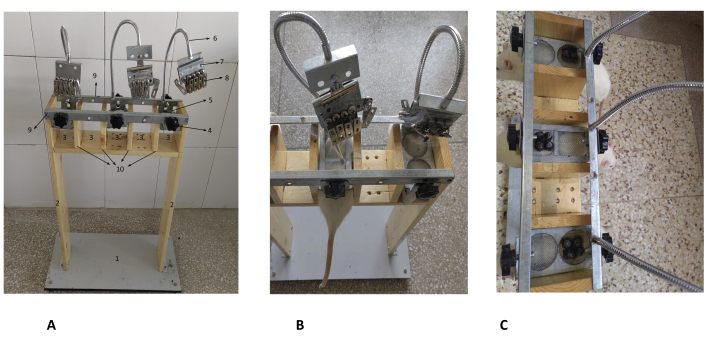
Figure 1: The rat moxibustion experimental platform device and herbal-cake-separated-moxibustion of rats. (A) Moxibustion device. 1. Base plate; 2. Wooden elevated platform; 3. Placement slots; 4. The adjustable screw of the plum handle; 5. Liftable heat insulation network; 6. Movable hose; 7. Pipe clamp connecting plate; 8. Moxa stick clamp. 9. Fixed strips; 10 Interval board. (B) Two rats have undergone suspended moxibustion. (C) Three rats were treated with herbal-cake-separated-moxibustion. Please click here to view a larger version of this figure.

Figure 2: Moxa screening. (A) The mugwort screening process. (B) Fine and coarse moxa after screening. Please click here to view a larger version of this figure.

Figure 3: Moxa cone and herbal cake mold. (A) The operator presses the moxa into a conical shape using the fingertips of both hands. (B) The formed single moxa cone. (C) Some of the moxa cones have been done. (D) Rings made with the 5 mL syringe for (E) Filling the medicine cake sludge. Please click here to view a larger version of this figure.
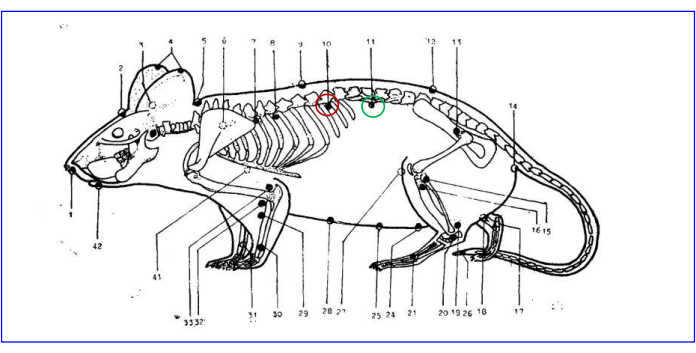
Figure 4: Rat acupoint map. The red circle represents the Pishu; the green circle represents the Shenshu. Please click here to view a larger version of this figure.

Figure 5: Kidney morphology. Compared with other groups, the size, color, and texture of the kidney in group D (herbal-cake-separated-moxibustion group) were closer to those of group A (control group). The renal morphology of rats in groups B (model group) and C (losartan potassium group) showed obvious white fibrosis. The black arrows point to the white fibrosis in the kidney in groups C and D, whereas the whole kidney shows white fibrosis in group B. Please click here to view a larger version of this figure.
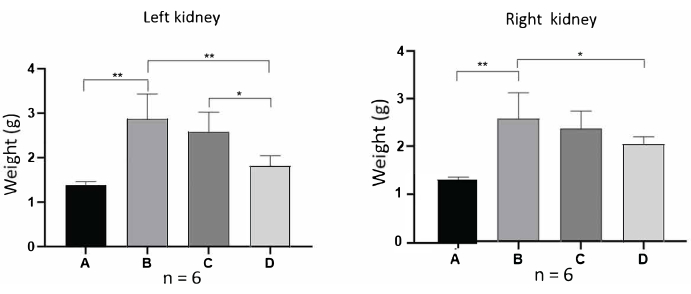
Figure 6: Kidney weights of each group. The weight trends of the left and right kidneys of the rats in each group are similar. Left kidney: There were significant differences between groups B and D and between groups C and D. Right kidney: There were significant differences between groups B and D but not between groups C and D. For both kidneys, the kidney weights of group D are closer to those of group A than the other groups. *P < 0.05; **P < 0.001. Please click here to view a larger version of this figure.
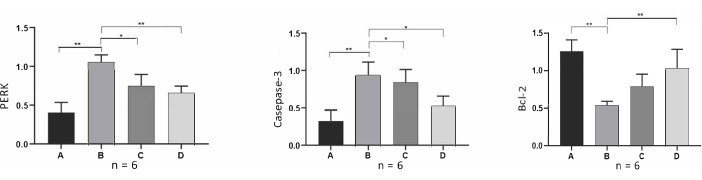
Figure 7: Protein levels of P-ERK, Caspase-3, and Bcl-2. The levels of PERK and Caspase-3 proteins in group D were slightly higher than group A's, whereas Bcl-2 protein levels in group D were lower than but similar to group A's. There were significant differences between group B and group A, group B and group D among the three groups of proteins. *P < 0.05; **P < 0.001. Please click here to view a larger version of this figure.

Figure 8: Western blotting of PERK, Caspase-3, and Bcl-2. Please click here to view a larger version of this figure.
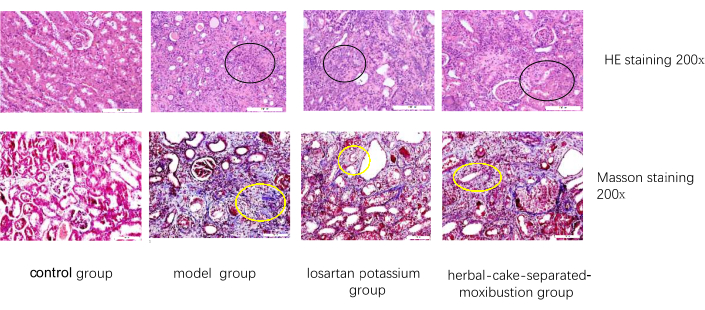
Figure 9: HE and Masson staining. The degree of inflammatory cell infiltration and collagen fiber deposition is shown for each group. The black outlines (HE staining, upper row) show infiltration of renal interstitial cells, and the yellow outlines (Masson's trichrome staining, lower row) show deposition of renal interstitial collagen fibers. Please click here to view a larger version of this figure.
Discussion
Clinically, acupuncture and moxibustion treatment requires patients to be calm and relaxed, avoiding excessive anger and hunger and emphasizing 'peace.' However, the current practice of acupuncture and moxibustion experiments is still based on the premise of binding animals, which is not only contrary to the original intention of the experiment but also does not conform to clinical practice. Binding animals, making animals frightened and angry, will rapidly increase adrenaline and other hormones in experimental animals, affecting the experimental results22. During the experimental operation of acupuncture and moxibustion animals, these problems must be solved urgently to ensure the experiment's accuracy and protect the animals' welfare. Moxibustion has a greater stimulatory effect on rats, which, coupled with its fierce temperament, can cause the operator to be injured, increase the risk of disease, and affect the accuracy of experimental data if the rats cannot be safely and effectively fixed during the experiment. Because of its long treatment time and long course of treatment, herbal-cake-separated moxibustion therapy needs a fixed device that can tolerate long-term moxibustion. The rat moxibustion experimental platform invented by the research group can overcome this difficulty and is closer to clinical practice.
The following points must be kept in mind during the experiment. First, there is no accurate quantitative standard for the degree of moderate dryness and wetness of the mud. The ratio of powder to water in the mud mentioned in the article is ~1:1, which is only an approximate ratio. The specific value depends on the number of rats and the operator's experience. It is necessary to dry the mud without forming blocks and keep it wet without squeezing out water; overwet and overdry mud will affect the experimental results. The moxa cone made using the mold is relatively loose and easy to scatter but still needs to be pinched by force. The tightness of the moxa cone will affect the speed of combustion and the penetration of the drug cake, thus affecting the experimental results. Before placing the rats in the moxibustion platform, rats must be soothed to calm their emotions. In addition, at the end of the experiment, when the rat is removed from the platform, the limbs of the rat will hold the platform board tightly. The rats must be handled gently and soothed to leave the platform without struggle.
The experiment is based on the development of CRF. CRF is a clinical syndrome in the later stage of chronic kidney disease. It has many complications, poor prognosis, and high medical expenses. This study shows that herbal-cake-separated moxibustion can reduce renal fibrosis and delay the progress of CRF. The device has important academic value and social significance for further expanding the application of traditional Chinese medicine in nephropathy to benefit patients.
Although the device is simple in structure and convenient in operation, it is still limited in use. The device is a standing moxibustion platform, mainly based on moxibustion at the back acupoints of rats and has not yet involved moxibustion at the ends of limbs and abdominal acupoints. Because the size of the placement slot is immutable, it is only for 280-380 g rats. In the future, the placement slot will be adjusted to suit more rat species.
Rats can perform moxibustion operation while performing non-bundled fixation is a major feature of the moxibustion platform. Some components of the device can be disassembled according to different experimental requirements. If the liftable heat insulation network and Fixed strips are disassembled, it can become an acupuncture experimental platform so that the rats can stand steadily on the platform and acupuncture can be performed. Therefore, different diseases and different acupoints for treatment can be fine-adjusted according to the treatment plan. However, because this experiment only involves moxibustion treatment, a large-scale acupuncture experimental study has yet to be done. It is expected to carry out relevant acupuncture operations in future animal experiments to expand the application scope of this device further and ultimately benefit the experiment. Due to time, energy, animal welfare, and other factors, our research group has not yet compared this moxibustion platform with conventional moxibustion experimental methods. Bundled moxibustion23,24 and moxibustion under anesthesia25 are currently commonly used methods. In the future, the comparative study of such experimental methods will be carried out to strengthen the evidence argument of the device, further affirm the role of the moxibustion platform, make the acupuncture and moxibustion animal experiment closer to the clinic, and make the mechanism research of acupuncture and moxibustion more conducive to the healthy development of human life.
Disclosures
The authors declare that there are no conflicts of interest. The rat moxibustion experimental platform device's patent number is ZL202320880924.X.
Acknowledgements
We thank Associated Professor Huang and Miss Cui for their strict guidance and support for this paper. The study was supported by: 1. National Natural Science Foundation of China (NSFC), 82160938, "Exploration of mechanism research on renal interstitial fibrosis with cake-separated moxibustion from the interactive effect of ERK and Smad signal pathways mediated by TGF-β1"; 2. The Health Commission of Yunnan Province "2020 High-level TCM Reserve Talents"Incubation Project (Yunwei TCM Development [2021] No.1); 3. Yunnan Provincial Science and Technology Department-Applied Basic Research Joint Special Funds of Chinese Medicine (No.2019FF002-022, No.202101AZ70001-286, No.202301AZ070001-030); 4. Yunnan Province Innovation Team Preventing and Treating cerebropathy with Acupuncture and Tuina (2023).
Materials
| Name | Company | Catalog Number | Comments |
|---|---|---|---|
| 0.5 mL heparin lithium biochemical tube | Shijiazhuang Kangweishi Medical Equipment Co., LTD | 220518 | Blood collection |
| 0.9% normal saline | Kunming Nanjiang Pharmaceutical Co., LTD | / | Rinse |
| 1.5 mL Eppendorf tube | Beijing Lanjieke Biotechnology Co., LTD | 12100024 | Subpackage |
| 2 mL cryopreservation tube | Baroque Biotechnology Co., LTD | 88-0151 | Packaged kidney |
| 4 °C refrigerator | Haier Group Co. LTD | BCD-236WDGL | Store |
| 5 mL syringe | Sichuan New century Medical polymer products Co., LTD | 20211115 | Gavage |
| 50 mL centrifuge tube | Beijing Langeke Biotechnology Co., LTD | CT-002-50A | Packaged kidney |
| 12 G gavage needle | Beijing Zhongke Hengtian Technology Co., Ltd. | 12#55mm | Gavage |
| 96-well plates | Beijing Lanjieke Biotechnology Co., LTD | 11510 | Determination of protein concentration |
| -80 °C freezer | Thermo Fisher Scientific | 991 | Store |
| Adenine | Beijing Boaotuo Technology Co., LTD | A0607 | Molding drug |
| BCA developer | Biyuntian Biological Engineering Co., LTD | P0010 | Determination of protein concentration |
| BCL-2 protein antibody reagent | Abcam Shanghai Trading Co., LTD | ab196495 | Western Blot |
| Caspase-3 protein antibody reagent | Abcam Shanghai Trading Co., LTD | ab184787 | Western Blot |
| Chemiluminescence imaging system | Shanghai Qinxiang Scientific Instrument Co., LTD | 100240073 | Protein banding imaging |
| Chinese medicine powder | The Second Affiliated Hospital of Yunnan University of Chinese Medicine | / | Cure |
| Direct-load Color Prestained Marker | Beijing Kangrunchengye Biotechnology Co., LTD (GenStar) | M221 | Western Blot |
| Disposable blood collection needle | Liuyang Sanli Medical science and technology development Co., LTD | YZB/ Country 0411-2010 | Blood sampling |
| Disposable human venous blood sample collection container | Liuyang Sanli Medical science and technology development Co., LTD | 20210901 | Blood sampling |
| DK-30 Automatic snow ice maker | Henan Brothers instrument equipment Co., LTD | SHDX0023 | Ice-making |
| ECL luminescent substrate kit | Beijing Lanjieke Biotechnology Co., LTD | BL520B | Convert latent images in exposed film into visible images |
| electronic scales | Shanghai Ran Hao Electronics Co., LTD | JCS-31002C | The body weight and kidney weight of rats were measured |
| Freezing microtome | Thermo Fisher Scientific | HM525 NX | Microtome |
| fully automatic biochemical analyser | Tianjin Micro nano core Technology Co., LTD | PV2112001Z02410305 | Renal function test |
| Gas anesthesia system | Zhongshi Technology Co., Ltd | ZS-MV-1 | Anesthesia |
| Glycine | Beijing Soleibao Technology Co., Ltd. | Cat#G8200 | Running buffer, Western transfer buffer |
| HE staining reagent | Beijing Soleibao Technology Co., Ltd. | G1120 | Staining |
| High-protein feed | Jiangsu Synergetics Biological Engineering Co., LTD | XT19008 | Feeding |
| Intelligent laboratory ultra-pure water machine | Chongqing huachuag water treatment engineering co.,LTD | 15L | Filtration |
| Internal reference β-actin | Jiangsu Qinke Biological Research Co., LTD | AF7018 | Western Blot |
| Isoflurane | Jiangsu Zhongmu Beikang Pharmaceutical Co., Ltd | 20220701 | Anesthesia |
| liquid nitrogen | Kunming Botai dry ice sales Co., LTD | / | Renal tissue freezing |
| Losartan potassium tablets | Merck Sharp & Dohme (China) Investment Co., LTD | J20180054 | Cure |
| Low temperature high speed tissue grinder | Wuhan Servicebio technology CO.,LTD | SKZ3F20200191 | Tissue grinding |
| Maason staining kit | Beijing Soleibao Technology Co., Ltd. | G1340 | Staining |
| Methanol | Guangdong Guanghua Sci-Tech Co., Ltd | 20220519 | Western transfer buffer |
| Mini-PROTEAN Tetra | Bole Life Medical Products (Shanghai) Co., Ltd | 552BR 233193 | Electrophoresis |
| Moxa | The Second Affiliated Hospital of Yunnan University of Chinese Medicine | / | Cure |
| Multiskan Spectrum Microplate Spectrophotometer | TECAN | Spark | The absorbance and concentration of tissue protein were detected |
| operating scissors | Zhangjiagang city Jinfeng deer knife cutting factory | 201118 | Cut the skin |
| Paraformaldehyde | Beijing Lanjieke Biotechnology Co., LTD | BL539A | Fixed tissue |
| PERK protein antibody reagent | Shanghai Pumai Biotechnology Co., LTD (CST China Agent) | 3192 | Western Blot |
| Positive fluorescence microscope | Carl Zeiss Suzhou Co.,Ltd. | 5446000456 | Capture picture |
| Prefabricated glue | Derun Cheng (Beijing) Biological Co., LTD (ACE China Agent) | B230418 | Western Blot |
| ProteinFind Goat Anti-Rabbit LgG(H+L), HRP Conjugate | Shanghai Dinran electronic Technology Co., LTD (TRAN) | HS101 | Western Blot |
| pulverizer | Hefei Rongzhida small household appliances Co., LTD | RS-FS1401 | Crushed Chinese medicine |
| PVDF membrane | MerckMillipore Corporation | IPVH00010 | Western Blot |
| Refrigerated centrifuge | Hettich Precision Technology (Zhuhai) Co., LTD | MIKRO 220R | Centrifuge |
| RIPA lysate | Beijing Solaibao Technology Co., LTD (Solarbio) | R0010 | Lytic tissue |
| Sampling capillary | Jiangsu Kangjianhua Medical Supplies Co., LTD | 20160157 | Blood from inner canthus |
| Scald ointment (Zilian ointment) | Yunnan Provincial Hospital of Traditional Chinese Medicine | / | Used for the treatment of scalding from moxibustion |
| Skim milk powder | Guangzhou Saiguo Biotechnology Co., LTD (BIOFROXX) | 1172GR500 | Western blocking buffer |
| surgical blade | Shanghai Medical Equipment Co., LTD | JOBO10 | Incision kidney tissue |
| surgical knife handle | Shanghai Medical Equipment Co., LTD | J11010 | Mounting blade |
| TS-200 Orbital shaker | Haimen Qilin Bell Manufacturing Co., Ltd. | TS-8S | Gel fixation |
| Tween 80 | MedChemExpress | HY-Y1819 | TBST |
| tweezers | Shanghai Medical Equipment Co., LTD | JD1050 | Pick up the moxa |
| Veterinary drugs*Micro core renal function test disc | Tianjin Micro nano core Technology Co., LTD | 47031-35.5-0145-0227-62-220750 | Renal function test |
References
- Run-Ming, Y. The origin and development of Chinese acupuncture and moxibustion. Ancient Science of Life. 4 (4), 224-228 (1985).
- Zhang, Q. W. Moxibustion Theories of Different Schools. , China Press of Traditional Chinese Medicine. Beijing. (2016).
- Ren, H. W., Cai, D. J. Brief discuss on treating febrile diseases with moxibustion. China's Naturopathy. 29 (02), 1-2 (2021).
- Ouyang, X. L., et al. Moxibustion may delay the aging process of Wistar rats by regulating intestinal microbiota. Biomedicine & Pharmacotherapy = Biomedecine & Pharmacotherapie. 146, 112147(2022).
- Qi, Q., et al. Gut microbiome alterations in colitis rats after moxibustion at bilateral Tianshu acupoints. BMC Gastroenterology. 22 (1), 62(2022).
- Wang, G. Y., Meng, Z., Xu, Q. Y., Dou, L., Cui, X. F. Scar moxibustion Zusanli treatment of diarrhea-predominant irritable bowel syndrome 20 cases. Modern Chinese Medicine. 33 (03), 79-80 (2013).
- Xue, K. Y., Fu, J., Lan, L., Tang, J. X., Cui, J. Meta-analysis of the efficacy and safety of barrier moxibustion in the treatment of chronic fatigue syndrome. Journal of Guizhou University of Traditional Chinese Medicine. 44 (03), 53-59 (2022).
- Liu, J. W., Tian, Y., Peng, Y. Y., Ye, Y. Y. Observation on moxibustion sensitivity and curative effect of thermal sensitive moxibustion and knee osteoarthritis. Chinese Acupuncture & Moxibustion. 41 (10), 1063-1068 (2021).
- Liu, W. A., Chang, X. R., Liu, M., Zhang, G. S. Effects of herbal-cake-separated-moxibustion sized cones at different dosages on blood fat and hemorheology in patients with hyperlipemia. Liaoning Journal of Traditional Chinese Medicine. 40 (9), 1787-1790 (2013).
- Zuo, Z., Chen, X. M., Jiang, Y. W., Yang, Y. M., Wang, B. Y. Effect of medicinal cake partition moxibustion on serum TGF-β1 and renal function in chronic renal failure rabbits. Yunnan Journal of Traditional Chinese Medicine and Materia Medica. 38 (04), 82-84 (2017).
- Huang, P. D., et al. Effect of herbal cake-partitioned moxibustion on renal function and expression of renal connective tissue growth factor, integrin-linked kinase and bone morphogenetic protein-7 in chronic renal failure rabbits. Zhen Ci Yan Jiu = Acupuncture Research. 44 (8), 577-582 (2019).
- Li, L. R., Huang, X. X., Wei, T. T., Zhang, P. Research progress of TCM external treatment for chronic renal failure. Journal of Guangxi University of Chinese Medicine. 23 (04), 51-54 (2020).
- Zuo, Z., Jiang, Y. W., Guan, Z. X., Chen, X. M. Observations on the therapeutic effect of herbal cake moxibustion on chronic renal failure. Shanghai Journal of Acupuncture and Moxibustion. 34 (03), 218-220 (2015).
- Wang, H., Zhang, H. M., Xu, J. M., Fan, R. Y., Lu, J. Effect of moxibustion on renal hemodynamics in patients with chronic kidney disease. Zhen Ci Yan Jiu = Acupuncture Research. 43 (11), 722-724 (2018).
- Zhang, X. Q., Zhang, X. Y. External treatment of chronic kidney failure. Clinical Journal of Chinese Medicine. 9 (26), 141-143 (2017).
- He, C., Zhang, C. X., Zhou, S. Q., Fan, Y. S. Using old meshy cage cover to make a rat fixating device for acupuncture study. Zhen Ci Yan Jiu = Acupuncture Research. 46 (4), 348-350 (2021).
- Zhang, H. X., et al. Introduction of a new type of mouse forelimb fixator and two types of batch mice moxibustion device. Zhen Ci Yan Jiu = Acupuncture Research. 46 (7), 616-619 (2021).
- Chen, W., et al. A batch moxibustion device in the mouse abdominal waist. Journal of Chengdu University of Traditional Chinese Medicine. 45 (04), 110-112 (2022).
- Gao, S. Y., Wu, R. N., Wang, M. M., Zhang, S. J. A device for animal experiment. Clinical Journal of Chinese Medicine. 10 (23), 139-140 (2018).
- Hu, Y. L. Manual of acupuncture for experimental animals (second edition). , China Agriculture Press. Beijing. (2014).
- Liang, Y. L., et al. Reflections on animal experiments with moxibustion. China Journal of Traditional Chinese Medicine and Pharmacy. 31 (11), 4379-4381 (2016).
- Madalina, V. N., Jinyang, Z. -B., Malgorzata, W., Liliana, S. Targeting renal fibrosis: Mechanisms and drug delivery systems. Advanced Drug Delivery Reviews. 129, 295-307 (2018).
- Wu, R. N., et al. Design of convenient animal experimental moxibustion therapy device. Shanghai Journal of Acupuncture and Moxibustion. 38 (02), 243-244 (2019).
- Yan, L. G., Zhou, T., Jia, Z. K., Li, J., Wang, C. X. Influence of Panax pseudo-ginseng-partition moxibustion on cartilage damage in rats with traumatic osteoarthritis by regulating AMPK/SIRT1/NF-?B signaling pathway. Hebei Medical Journal. 45 (10), 1450-1454 (2019).
- Xu, Q., et al. Effect of mild moxibustion of 45 °C at "Zusanli" (ST36) of different durations on the inflammatory factors in the abdominal aorta of hyperlipidemia rats. Zhen Ci Yan Jiu = Acupuncture Research. 48 (9), 923-932 (2023).
Reprints and Permissions
