Hemorrhagic shock kills 1.9 million people worldwide every year. Small animals are frequently used as hemorrhagic shock models but are associated with issues of standardization, reproducibility, and clinical significance, thus limiting their relevance. This article describes developing a new clinically relevant hemorrhagic shock model in rats.
Method Article
Developing a Clinically Relevant Hemorrhagic Shock Model in Rats
* These authors contributed equally
In This Article
Summary
Abstract
Over the recent decades, the development of animal models allowed us to better understand various pathologies and identify new treatments. Hemorrhagic shock, i.e., organ failure due to rapid loss of a large volume of blood, is associated with a highly complex pathophysiology involving several pathways. Numerous existing animal models of hemorrhagic shock strive to replicate what happens in humans, but these models have limits in terms of clinical relevance, reproducibility, or standardization. The aim of this study was to refine these models to develop a new model of hemorrhagic shock. Briefly, hemorrhagic shock was induced in male Wistar Han rats (11-13 weeks old) by a controlled exsanguination responsible for a drop in the mean arterial pressure. The next phase of 75 min was to maintain a low mean arterial blood pressure, between 32 mmHg and 38 mmHg, to trigger the pathophysiological pathways of hemorrhagic shock. The final phase of the protocol mimicked patient care with an administration of intravenous fluids, Ringer Lactate solution, to elevate the blood pressure. Lactate and behavioral scores were assessed 16 h after the protocol started, while hemodynamics parameters and plasmatic markers were evaluated 24 h after injury. Twenty-four hours post-hemorrhagic shock induction, the mean arterial and diastolic blood pressure were decreased in the hemorrhagic shock group (p < 0.05). Heart rate and systolic blood pressure remained unchanged. All organ damage markers were increased with the hemorrhagic shock (p < 0.05). The lactatemia and behavioral scores were increased compared to the sham group (p < 0.05). In conclusion, we demonstrated that the protocol described here is a relevant model of hemorrhagic shock that can be used in subsequent studies, particularly to evaluate the therapeutic potential of new molecules.
Introduction
Hemorrhagic shock (HS) is a state of shock characterized by significant blood volume loss, resulting in tissue dysoxia. HS is a complex pathology that associates hemodynamic and metabolic changes along with pro- and anti-inflammatory responses. Approximately 1.9 million deaths worldwide are attributed to the hemorrhage and its consequences each year1. Current guidelines for care primarily involve intravenous fluid administration (supplemented or not with vasoactive molecules) and oxygen therapy. However, these treatments are symptomatic and can be ineffective, which explains why the HS-associated mortality remains high2. This justifies the importance of identifying new molecular and cellular mechanisms and, thus, treatments to reduce mortality.
Animal models allow for deciphering the pathophysiological mechanisms involved in diseases and testing new therapeutic strategies. Numerous animal models of hemorrhagic shock exist in the literature. These models differ not only in the species used but also in the means of inducing HS (e.g., fixed pressure vs. fixed volume) (Table 1, Table 2)3,4,5,6,7,8,9,10,11,12,13. Also, protocols vary within the same type of model (e.g., time of hemorrhage, targeted mean arterial pressure) (Table 3)14,15,16,17,18,19,20. Considering the wide variety of existing hemorrhagic shock models and the complexity of replicating the clinical situation, the preclinical study of this pathology remains limited. The development of a reproducible, standardizable, and easy-to-implement hemorrhagic shock model is in everyone's interest. This would facilitate comparison between the various studies and thus unravel the complex pathophysiology of the hemorrhagic shock. The aim of this protocol was to develop a new clinically relevant model of hemorrhagic shock in rats using two successive phases of hemorrhage with fixed volume followed by a fixed low blood pressure phase.
Table 1: Species used as a model for hemorrhagic shock3,4,5,6,7,8,9,10,11,12,13. Please click here to download this Table.
Table 2: The different types of hemorrhagic shock13. Please click here to download this Table.
Table 3: Example of the diversity of experimental models of hemorrhagic shock in rats induced by a fixed pressure protocol. Summary of parameters for different experimental models of hemorrhagic shock. Vessels shown in red are arteries, and those shown in blue are veins. For resuscitation, the volume of blood sampled is used as a reference (blood: resuscitation with a volume identical to that of blood sampled during shock; x2: resuscitation with a volume twice that of blood sampled during shock; x4: resuscitation with a volume four times that of blood sampled during shock). MAP: Mean Arterial Pressure; RL: Ringer Lactate14,15,16,17,18,19,20. Please click here to download this Table.
Protocol
All the procedures were approved and performed in compliance with the regional ethics committee (protocol (#17858 and #32499, CEEA-Pays de la Loire, France) according to Directive 2010/63/EU of the European Union. The reporting is in accordance with current ARRIVE guidelines and the National Institutes of Health (NIH) Guide for the Care and Use of Laboratory Animals (NIH Pub. No. 85-23, revised 2011).
1. Ethical status and general information on rats
- Male Wistar Han rats (Charles River, Saint-Germain-Nuelles, France) were delivered to the Unité Thérapeutique Expérimentale at 10 weeks of age. House the rats for at least 1 week under standard temperature (21-24 °C), humidity (40%-60%), and 12 h light/dark cycle with a light period starting at 07:30 a.m.
- Provide food and water ad libitum. Use 11-13 weeks-old rats weighing 300-400 g for the protocol.
2. Room set-up and preparation steps
- Switch on the anesthesia station, set the heating mat to 37.5 °C, and cover it with a non-sterile drape.
- Sterilize the surgical instruments required for the protocol: DeBakey atraumatic forceps (1), fine and sharp scissors or scalpel (1), standard pattern forceps (2), needle holders (1), Vannas micro dissecting scissors (1), clamp (1).
- Prepare catheters for the jugular vein and femoral artery.
- For the jugular vein catheter, mount Polyethylene (PE) tubing (PE50) on a 23 G needle with the tip cut off at the end.
- For the femoral artery catheter, prepare the one described in step 2.3.1 and attach a PE10 tubing to the end of the PE50 tubing.
- Prepare the pressure transducer and catheters for the femoral artery and jugular vein by filling it with lactated Ringer's solution heparinized at 100 UI/mL. Place a 2 mL syringe containing lactated Ringer's solution heparinized at 100 UI/mL at the end of the catheters and the pressure transducer. Be careful not to get any bubbles, as these cause signal defects.
- Switch on the software associated with the pressure transducer and calibrate it according to the supplier's instructions.
3. Preparing the rat for surgery
- Anesthetize the rat with an induction box (parameters: sevoflurane 8%, air flow rate: 1 L/min). After checking the depth of anesthesia via pedal reflex, maintain anesthesia at sevoflurane 4%, with an airflow rate of 0.6 L/min. The use of analgesics preoperatively was avoided because of the haemodynamic effects of these molecules.
NOTE: From this step, the depth of anesthesia is assessed every 20 min via pedal reflex. - Weigh the rat, place it in the dorsal decubitus position on a heating mat, and depilate it at the inguinal and neck regions.
- Disinfect depilated areas with alternating 10% and 4% povidone-iodine solutions (3 times each) using nonsterile gauze pads.
- Apply a drop of ophthalmic ointment to the animal's eyes to prevent drying.
- Place the rat on a heating mat on the surgical table (dorsal decubitus). Place the lubricated rectal probe to control the rat's temperature. Maintain anesthesia at sevoflurane 4%, with an airflow rate of 0.6 L/min.
- Change gloves for sterile ones, place the sterile drape on the rat, and cut it at the inguinal and neck regions.
4. Jugular vein cannulation
- Locate the jugular region in the lower right neck region, above the clavicle, by visible pulsation. Utilizing the DeBakey atraumatic forceps, gently grasp the skin, then make a precise incision using fine, sharp scissors or a scalpel.
- Apply a drop of local anesthetic (lidocaine 2%) to the incised area. Gently slash tissue with standard pattern forceps.
- Locate the jugular vein and gently liberate it from its muscular compartment with standard pattern forceps. Place a 4/0 silk suture thread and securely ligate the distal side (toward the head). Use the suture with the needle holders to tension the jugular vein.
- Place a 4/0 suture on the proximal side (toward the heart) and prepare a surgeon knot without tightening it. Make a small incision in the jugular vein using Vannas micro dissecting scissors.
- After carefully grasping the vein wall with small forceps, insert the PE50 catheter in the jugular vein by hand or with a standard pattern forceps. At this stage, use a sterile gauze pad to wipe eventual drops of blood, which may leak from the vein.
- Advance the catheter slightly (0.5 cm) and verify its correct placement in the vein by drawing a small amount of blood and then re-injecting it (blood in the cannula indicates it is in the vein). Tighten the previously prepared knot to secure the catheter.
- Leave the catheter in place, attached to a syringe pre-filled with lactated Ringer's solution, and cover the incised area with a moistened sterile gauze pad.
5. Femoral artery cannulation
- Use DeBakey atraumatic forceps to grasp the skin of the Scarpa triangle of the left leg and make an incision with fine and sharp scissors or a scalpel. Apply a drop of local anesthetic (lidocaine 2%) to the incised area. Gently dilacerate tissue with standard pattern forceps.
- Locate the femoral triad (artery, vein, and nerve). Pass one forceps under the triad and, using the second standard pattern forceps, very gently separate the artery from the nerve and femoral vein.
NOTE: The artery is smaller, pink, and pulsating. This is a critical step; the vein and artery are fragile and can easily rupture. - Place a 4/0 suture and ligate the femoral artery distally (leg side). Take the suture with the needle holders to put in tension the femoral artery. Place a 4/0 suture on the proximal side (heart side) and prepare a knot without closing it. Clamp the artery (place the clamp upstream of the proximal side suture).
- Incise the femoral artery transversely with Vannas micro dissecting scissors (a small volume of blood should flow from the artery). Using standard pattern forceps, gently grasp the artery wall and cannulate the femoral artery with the catheter (PE10 ended), holding it with forceps.
- Gently unclamp to check for leaks and then check the pressure signal (validates that the catheter is in the femoral artery), and check that blood is not flowing back into the catheter (sign of leakage from the valves/pressure transducer).
- If the signal is good (expected values: systolic blood pressure: 120 mmHg, diastolic blood pressure: 80 mmHg) and there are no signs of leakage, advance the catheter slightly (0.5 cm) and tighten the previously prepared surgeon knot.
- Heparinize the animal at 100 UI/kg and apply a moistened sterile gauze pad over the incised area. After surgery, maintain anesthesia at sevoflurane 3% at an air flow rate of 0.6 L/min.
6. Hemorrhagic shock protocol (Figure 1)
- Phase 1: Stabilization (5 min).
- After heparinization, wait 10 min for pressure values to stabilize. Make a 5 min recording for basal hemodynamic values.
- Phase 2: Exsanguination (5 min):
NOTE: This phase corresponds to the fixed-volume phase of the model.- Draw 5 mL of blood from the femoral artery over 5 min (500 µL/30 s) using a 1 mL syringe (expected values: systolic blood pressure: 45 mmHg, diastolic blood pressure: 30 mmHg).
- Prepare a mixture of 50% lactated Ringer's solution with 50% collected blood at room temperature. Place the mixture in a 2 mL syringe and place it at the end of the jugular vein cannula.
- Phase 3: Hemorrhagic shock (75 min)
NOTE: This phase is the fixed-pressure phase of the model.- Maintain mean arterial pressure at an average of 35 mmHg. When mean arterial pressure is over or equal to 38 mmHg, withdraw 200 µL of blood via the femoral artery (mean on n = 12 rats: 10.2 mL).
- If the mean arterial pressure drops below 32 mmHg, inject 200 µL of a 50% blood-50% lactated Ringer's solution mixture via the jugular vein (mean on n = 12 rats: 0.90 mL).
- Measure peripheral blood lactate on a blood drop from the end of the tail using the tip of a needle (26 G) after sterile preparation of the tail with a gauze pad at the end of the hemorrhagic shock phase.
- Phase 4: Intravenous fluid resuscitation (20 min)
- Resuscitate with a lactated Ringer's solution at room temperature (RT) at 10 mL/kg over 20 min (flow rate of 10.5 mL/h for a 350 g rat) with a 20 mL syringe through the jugular catheter with a syringe pump.
7. End of surgery and recovery and post-surgical follow-up
- Clamp the jugular vein and the femoral artery and remove the catheter. Ligate vessels. Check carefully that no blood is leaking out.
- Add a drop of local anesthetic to the incised areas. Suture incised areas with subcutaneous and cutaneous stitches using 5-0 sterile suture. Disinfect with 10% povidone-iodine solution.
- Subcutaneously inject buprenorphine (0.05 mg/kg, 0.3 mL/kg) using a 1 mL syringe with a 26 G needle.
- Wait for the rat to wean from anesthesia while monitoring temperature. When it shows signs of waking up (vibrissae moving, paw movements), remove the rectal probe and place the rat in its cage on a heating mat. 10 min later, return the rat to his accommodation room.
- Administer buprenorphine subcutaneously (0.05 mg/kg, 0.3 mL/kg) every 8 h.
- Evaluate respiration rate, behavior, temperature, and blood lactate 16 h after hemorrhagic shock induction, as described in step 6.3.
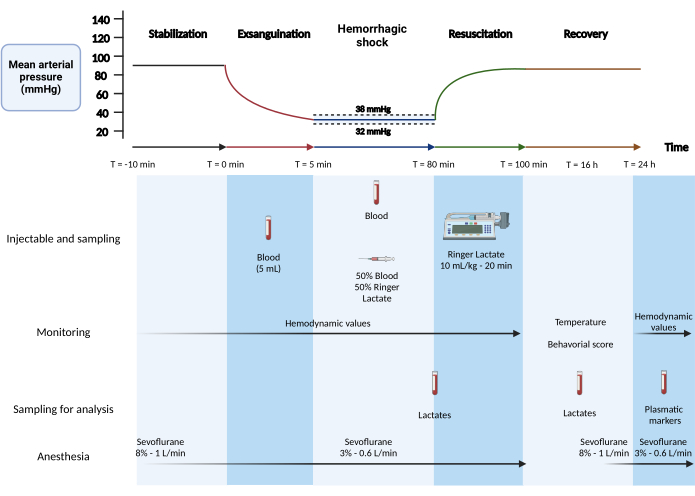
Figure 1: Model of mixed rat hemorrhagic shock. Created with BioRender.com Please click here to view a larger version of this figure.
8. 24 h after hemorrhagic shock induction
- Anesthetize the animal as described in step 3.1. Place the animal on the surgical table and insert the rectal probe as described in step 3.5. Prepare the catheter for carotid artery cannulation as described for the jugular vein in steps 2.3 and 2.4.
- Use DeBakey atraumatic forceps to grasp the skin and make an incision in the middle of the neck with fine and sharp scissors or a scalpel. Apply a drop of local anesthetic (lidocaine 2%).
- Gently dilacerate tissue with standard pattern forceps. Separate the salivary glands, then open the tracheal muscle to reveal the tracheal rings.
- Take the left carotid artery and separate it from the nerve with standard pattern forceps (it is highly likely that the animal's breathing will accelerate). Ligate the carotid artery distally (head side) with 4/0 silk thread.
- Place a suture thread on the proximal side (heart side) and prepare a surgeon knot without closing it. Clamp the artery (place the clamp upstream of the proximal side suture).
- Incise the carotid artery with Vannas micro dissecting scissors (a small volume of blood should flow from the artery). Using standard pattern forceps, gently grasp the artery wall to enlarge the opening and cannulate the carotid artery with the catheter provided, holding it with forceps.
- Unclamp and check the pressure signal to confirm catheter placement, and check that blood is not flowing back into the catheter (a sign of leakage from the valves/pressure transducer).
- If the signal is good and there is no leakage, advance the catheter slightly (0.5cm) and tighten and secure the previously prepared surgeon knot.
- Heparinize the animal at 100 UI/kg and apply a moistened sterile compress over the incision.
- After surgery, maintain anesthesia using sevoflurane 3% at an airflow rate of 0.6 L/min.
- Wait 10 min to record 24 h hemodynamic values (expected values: systolic blood pressure: 120 mmHg, diastolic blood pressure: 60 mmHg).
- To assess plasmatic markers of organ damage, draw 1 mL of blood from the carotid artery and centrifuge at 1600 x g for 10 min. Aliquot and save plasma for further analysis.
- Sacrifice the rat immediately after measuring hemodynamic values at 24 h and collect blood.
NOTE: The method of euthanasia should be adapted to the specific parameters or samples that will be collected afterward. The sham group undergoes surgery only (sections 1-5, 7, and 8) without the procedure of hemorrhagic shock (section 6). Animals were randomly assigned by the experimenter between the sham and hemorrhagic shock groups. Only the experimenter was aware of the group allocation at the different stages of the experiment.
Results
Following the protocol described above, we evaluated several hemodynamics parameters 24 hours after the induction of the hemorrhagic shock. Basal mean arterial pressure (before the start of the hemorrhagic shock protocol) is similar between the sham and hemorrhagic shock groups (Figure 2A). As expected, the mean arterial pressure is significantly decreased with the hemorrhagic shock protocol, which can be explained by the drop in the diastolic blood pressure (Mean arterial pressure: Sham: 92 mmHg ± 3 mmHg; HS: 82 mmHg ± 2 mmHg; Diastolic blood pressure: 73 mmHg ± 3 mmHg; HS: 61 mmHg ± 2 mmHg) (Figure 2B, C). Hemorrhagic shock does not impact systolic blood pressure, pulse pressure, and heart rate (Figure 2D-F). The shock index (heart rate/systolic blood pressure ratio) and the modified shock index (MSI) (heart rate/mean blood pressure ratio) are two predictors of mortality in severe patients14,15. The higher the values are, the greater the risk of mortality. In this model, the shock index is unmodified between the two groups, while the modified shock index tends to increase in the hemorrhagic shock (MSI: Sham: 4.24 ± 0.11; HS: 4.70 ± 0.15) (Figure 2G,H).

Figure 2: Impact of hemorrhagic shock on hemodynamics parameters. (A) Basal mean arterial pressure, (B) mean arterial pressure, (C) diastolic blood pressure, (D) systolic blood pressure, (E) pulse pressure, (F) heart rate, (G) shock index, and (H) modified shock index between Sham and hemorrhagic shock animals. Results are represented as mean ± SEM. Statistical significance was assessed by unpaired t-test. *: p < 0.05; ***: p < 0.001. n = 6-12. Please click here to view a larger version of this figure.
Global metabolic impairment during hemorrhagic shock can be assessed by lactatemia. As expected, the lactatemia increased after the hemorrhagic shock protocol and 16 h after (End of protocol: Sham: 1.13 mmol/L ± 0.14 mmol/L; HS: 5.98 mmol/L ± 0.39 mmol/L; H+16: Sham: 1.95 mmol/L ± 0.23 mmol/L; HS: 2.95 mmol/L ± 0.19 mmol/L) (Figure 3A,B). Temperature and respiration rate are two components of the Systemic Inflammatory Response Syndrome (SIRS), a pro-inflammatory response characteristic of the state of shock. Neither temperature nor respiration rate are modified between the two groups 16 h after the hemorrhagic shock induction (Figure 3C,D). We evaluated the impact of the hemorrhagic shock on a few behavior parameters like posture, activity, etc. (Supplementary File 1). The behavioral score is increased in the hemorrhagic shock group 16 h after the protocol (Sham: 0.33 ± 0.21; HS: 2.27 ± 0.69) (Figure 3E).
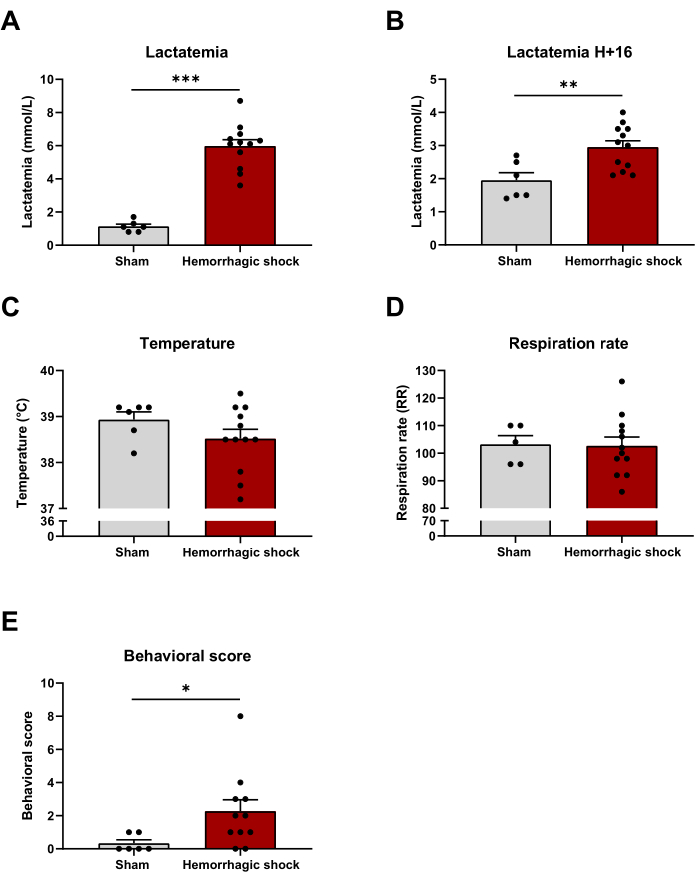
Figure 3: Impact of hemorrhagic shock on lactatemia, temperature, respiration rate, and behavioral score. (A) Lactatemia at the end of the hemorrhagic shock protocol, (B) lactatemia, (C) temperature, (D) respiration rate, and (E) behavioral score 16 h after hemorrhagic shock induction between Sham and hemorrhagic shock animals. Results are represented as mean ± SEM. Statistical significance was assessed by unpaired t-test. *: p < 0.05; **: p < 0.01; ***: p < 0.001. n = 6-12. Please click here to view a larger version of this figure.
The hemorrhagic shock is associated with an organ dysfunction. In order to evaluate if the model could be clinically relevant, we assessed plasmatic markers of organ injury 24 h after the protocol. The creatininemia (Sham: 19.13 µmol/L ± 0.33 µmol/L; HS: 28.88 µmol/L ± 2.69 µmol/L), the cardiac troponin T (Sham: 9.38 ng/L ± 1.87 ng/L; HS: 35.62 ng/L ± 2.28 ng/L), and the aspartate and alanine amino transferase (ASAT: Sham: 221 UI/L ± 48 UI/L; HS: 963 UI/L ± 144 UI/L; ALAT: Sham: 36 UI/L ± 4 UI/L; HS: 323 UI/L ± 13 UI/L) which reflect damages to the kidney, heart and liver respectively are all significantly increased with the hemorrhagic shock (Figure 4).

Figure 4: The hemorrhagic shock model is associated with organ dysfunction. (A) Creatininemia, (B) cardiac troponin T, (C) aspartate aminotransferase, and (D) alanine aminotransferase levels 24 h after hemorrhagic shock induction between Sham and hemorrhagic shock animals. Results are represented as mean ± SEM. Statistical significance was assessed by unpaired t-test. *: p < 0.05; **: p < 0.01; ***: p < 0.001. n = 4 Please click here to view a larger version of this figure.
Supplementary file 1: Behavioral score details Please click here to download this File.
Discussion
In this paper, we described for the first time a representative rat model of hemorrhagic shock based on a mix between the fixed pressure and fixed volume models. We demonstrated that 24 h after the shock induction, our model is associated with an alteration of hemodynamic parameters and metabolism.
Due to its complex pathophysiology, the study of hemorrhagic shock requires the utilization of integrated animal models. Indeed, in vitro approaches cannot mimic all the pathways involved in this disease. Awakening the animals after the hemorrhagic shock protocol is a step that ensures a better replication of the clinical situation. Because of the difficulty involved in waking up the animals, very few studies have included this stage. The rare studies that wake animals up sacrifice them at short times (2 h or 6 h), which does not fully reflect what is happening for patients16,18,23,24. Despite the development of hemorrhagic shock models, only a few studies have evaluated parameters (inflammation, apoptosis, organ dysfunction) 24 h after the shock induction, thus highlighting the difficulty of this kind of protocol25,26,27. The development of computer and mathematical models has revolutionized research. Numerous mathematical models of hemorrhagic shock have been developed, but most of these models do not take into account the full range of body fluid exchanges during hemorrhagic shock and require improvement before potential clinical applicability28. To date, one of the main challenges is the development of an animal model that mimics the pathology in humans as closely as possible.
A large number of hemorrhagic shock models are described in the literature and differ via vascular approaches, volumes of blood drawn, or the targeted pressure13. More generally, the hemorrhagic shock models can be classified into 3 groups: fixed-volume hemorrhage, fixed-pressure hemorrhage, and uncontrolled hemorrhage. The standardization and reproducibility with the fixed-volume hemorrhage are difficult and explained by the blood volume/body weight ratio, which decreases linearly with the rat's weight. The fixed-pressure hemorrhage is widely used, thus explaining that the settings (targeted pressure, duration of shock) are very variable from one study to another, making it difficult to transpose results from one model to another. It is also important to point out that hemodynamic impairment, which plays a pivotal role in the pathophysiology of hemorrhagic shock, is not systematically assessed, which could increase the discrepancy in results between studies. Finally, the uncontrolled hemorrhage model, although clinically relevant, raises questions of reproducibility and ethics. In order to reconcile clinical relevance, standardization, and reproducibility as much as possible, we have developed a mixed model with both fixed-volume and fixed-pressure phases.
In the model described here, the temperature and the respiration rate are not modified 24 hours post-surgery. This can be explained by the fact that surgery is performed under sterile conditions, thus limiting the pro-inflammatory response. Hemorrhagic shock is defined as an acute circulatory failure due to blood loss associated with a drop in blood pressure. As in humans, this model of hemorrhagic shock causes a decrease in the mean arterial pressure, notably due to a decrease in diastolic blood pressure. Interestingly, and as previously described, the heart rate is unchanged after the resuscitation phase in this model of hemorrhagic shock29,30,31. The drop in mean arterial pressure is probably associated with reduced organ perfusion, leading to multivisceral dysfunction, which can be illustrated by the increase in various plasmatic markers in our model (creatininemia, cardiac troponin T, ASAT, and ALAT). The disruption in oxygen supply leads to anaerobic metabolism, which causes an increase in lactatemia32. As previously described, this model of hemorrhagic shock leads to an increase in blood lactate levels30. This increase could be associated with the ischemia caused at the level of the femoral artery. However, considering that the animals in the sham group have physiological lactatemia and underwent the same surgical procedure as the hemorrhagic shock group, it would seem that this increase is linked to hemorrhagic shock protocol. Taken together, all these data confirm that the protocol described in this study allows the development of a new relevant model of hemorrhagic shock in the rat.
The limitation of this model is the use of heparin, which is essential to reduce the natural coagulation of blood when it comes into contact with plastic materials such as cannulas. However, the use of heparin can impact the coagulopathy associated with traumatic hemorrhagic shock33. This study involves healthy male animals aged 11-13 weeks old. Considering that sex, age, and comorbidities (hypertension, diabetes, etc.) can impact the results, it would be relevant to evaluate their impact in our model. In the protocol, the resuscitation step is performed via an injection of Ringer Lactate, a crystalloid that could promote coagulopathy and tissue edema34. Although the use of blood products is optimal, these are scarce and perishable, and it could be difficult to have a sufficient stock of rat blood for the entire protocol. Blood product and crystalloids/colloids-based resuscitation hemorrhagic shock models are two complementary approaches.
The strengths of this model are 1) its high reproducibility (illustrated by the low variability in the results), 2) its ease of application (most of the instruments are classical and vascular approaches are known) and 3) its clinical relevance, notably due the animal awakening and multi-visceral dysfunction. Based on the behavioral score described in Supplementary File 1, limit points have been set up. The sacrifice will be discussed if a score above 9 is reached, according to the attached table. If a score of 11 is reached, the animal will be systematically euthanized. In this study, none of the animals reached a score higher than 8, and therefore, none was excluded from the study. This may explain why the model described here is associated with a mortality rate 3 times lower than that of the other 24 h study (16% vs. 47%)25.
The critical step of the model is the hemorrhagic shock phase. It is important to respect the pressure range of 32-38 mmHg. In fact, we observed that maintaining mean arterial pressures below 32 mmHg resulted in a rapid and abrupt drop in pressure. Conversely, maintaining a pressure above 38 mmHg does not provide a model that is sufficiently close to clinical reality. These observations are in accordance with the interval of mean arterial pressure targeted in other models13.
In conclusion, we demonstrated that the rat hemorrhagic shock model detailed in this study is clinically relevant and could be useful both in understanding pathophysiological mechanisms by identifying new biological actors/pathways and in identifying new therapeutic strategies by testing different candidate molecules.
Disclosures
The authors declare that they have no known competing financial interests or personal relationships that could have influenced the work reported in this paper. The data supporting this study's findings are available from corresponding authors upon reasonable request.
Acknowledgements
This work was supported by "Société Française d'Anesthésie et de Réanimation" (Paris, France), "Fondation d'entreprises Genavie" (Nantes, France), "Fédération française de cardiologie" (France), "Agence nationale de la recherche" (20-ASTC-0032-01-hErOiSmE) (Paris, France) and "Direction Générale de l'Armement" (Paris, France). Thomas Dupas was supported by grants from Direction Générale de l'Armement (DGA), France and Région des Pays de la Loire during his PhD. Antoine Persello was supported by grants from InFlectis BioScience, France during his PhD. We thank the "Agence Nationale de la Recherche" (Paris, France), "Direction Générale de l'Armement" (Paris, France), and "Sauve ton coeur" association (France) to support this work. We thank the UTE IRS-UN core facility (SFR Bonamy, Nantes Université, Nantes, France) and the IBISA core facility Therassay (Nantes, France) for their assistance and technical support.
Materials
| Name | Company | Catalog Number | Comments |
|---|---|---|---|
| 1 mL syringe | TERUMO | MDSS01SE | |
| 2.5 mL syringe | TERUMO | SS*02SE1 | |
| 20 mL syringe | TERUMO | MDSS20ESE | |
| Anesthesia induction chamber | TEMSEGA | HUBBIV4 | |
| BD Microlance 3 23 G needle | Becton Dickinson | 300800 | |
| BD Microlance 3 26 G needle | Becton Dickinson | 304300 | |
| Blood pressure transducer | emka TECHNOLOGIES | BP_T | |
| Buprecare | Axience | N/A | 1 mL vial, buprenorphine 0.3 mg/mL |
| DE BAKEY, Atraumatic Vascular Forceps | ALLGAIER instrumente medical | 09-543-150 | |
| Dermal Betadine 10% | Mylan | N/A | 125 mL bottle |
| Fine Forceps - Curved / Serrated | Fine Science Tools | 11065-07 | |
| GraphPad Prism 8 | GraphPad by Dotmatics | - | |
| Heating mats | TEMSEGA | OPT/THERM_MATELASSTEREORATS | |
| Heparin sodium | PANPHARMA | N/A | 5 mL bottle, 5,000 UI/mL |
| IOX2 software | emka TECHNOLOGIES | IOX_BASE_4c + IOX_FULLCARDIO_4a | |
| Iris Scissors - ToughCut | Fine Science Tools | 14058-11 | |
| Lidocaine | Fresenius | N/A | 10 mL bootle, 8.11 mg, lidocaine hydrochloride |
| MiniHub-V3.2 | TEMSEGA | PF006 | |
| Moria 201/A Vessel Clamp - Straight | Fine Science Tools | 18320-11 | |
| Non sterile compresses | Raffin | 70189 | |
| Non sterile drape | Dutscher | 30786 | |
| Olsen-Hegar Needle Holder with Scissors | Fine Science Tools | 12002-12 | |
| Polyethylene tubing PE10 | PHYMEP | BTPE-10 | |
| Polyethylene tubing PE50 | PHYMEP | BTPE-50 | |
| Rats | Charles Rivers | - | Male WISTAR HAN (10 weeks) |
| Rectal probe | TEMSEGA | SONDE_TEMP_RATS | |
| Ringer Lactates | Fresenius Kabi | 964175 | |
| Scrub Betadine 4% | Mylan | N/A | 125 mL bottle |
| Sevoflurane | Abbott | N/A | 250 mL bottle, gas 100% |
| Sevoflurane Vaporizer | TEMSEGA | SEVOTEC3NSELEC | |
| StatStrip lactate test strips | Nova Biomedical | 47486 | |
| StatStrip Xpress lactate Meter | Nova Biomedical | 47486 | |
| Sterile compresses | Laboratoire SYLAMED | 211S05-50 | |
| Sterile drape | Mölnlycke | 800330 | |
| Steriles gloves | MEDLINE | MSG7275 | |
| Suture | Optilene | 3097141 | |
| Suture for vessels | SMI | 8150046 | |
| Syringe pump | Vial médical | 16010 | |
| usbAMP | emka TECHNOLOGIES | - | |
| Vannas Spring Scissors | Fine Science Tools | 15000-00 | |
| Vaseline | Cooper | N/A | 10 mL vial |
| Vitamin A Dulcis (ALLERGAN) | Allergan | N/A | 10 g tube, Retinol |
References
- Cannon, J. W. Hemorrhagic Shock. New Eng J Med. 378 (4), 370-379 (2018).
- Fox, E. E., Holcomb, J. B., Wade, C. E., Bulger, E. M., Tilley, B. C. Earlier endpoints are required for hemorrhagic shock trials among severely injured patients. Shock. 47 (5), 567-573 (2017).
- Frink, M., Andruszkow, H., Zeckey, C., Krettek, C., Hildebrand, F. Experimental trauma models: an update. J Biomed Biotechnol. 2011, 797383(2011).
- Hauser, C. J. Preclinical models of traumatic, hemorrhagic shock. Shock. 24, Suppl 1 24-32 (2005).
- Kemming, G., et al. Can we continue research in splenectomized dogs? Mycoplasma haemocanis: Old problem - new insight. Eur Sur Res. 36 (4), 198-205 (2004).
- Carroll, R. G., Iamsa, S. G., Pryor, W. H., Allison, E. J. Single hemorrhage: A clinically relevant canine model of hemorrhagic shock. Resuscitation. 16 (2), 119-126 (1988).
- Cheung, A. T., Duong, P. L., Driessen, B., Chen, P. C., Jahr, J. S., Gunther, R. A. Systemic function, oxygenation and microvascular correlation during treatment of hemorrhagic shock with blood substitutes. Clin Hemorheol Microcirc. 34 (1-2), 325-334 (2006).
- Hannon, J. P. Hemorrhage and hemorrhagic shock in swine: A review. , Available from: https://apps.dtic.mil/sti/citations/ADA221297 (1990).
- Lomas-Niera, J. L., Perl, M., Chung, C. -S., Ayala, A. Shock and hemorrhage: an overview of animal models. Shock. 24, Suppl 1 33-39 (2005).
- Redl, H., Bahrami, S. Large animal models: baboons for trauma, shock, and sepsis studies. Shock. 24, Suppl 1 88-93 (2005).
- Marques-Bonet, T., Cheng, Z., She, X., Eichler, E. E., Navarro, A. The genomic distribution of intraspecific and interspecific sequence divergence of human segmental duplications relative to human/chimpanzee chromosomal rearrangements. BMC Genom. 9, 384(2008).
- Schlag, G., Redl, H. R., Till, G. O., Davies, J., Martin, U., Dumont, L. Anti-L-selectin antibody treatment of hemorrhagic-traumatic shock in baboons. Crit Care Med. 27 (9), 1900(1999).
- Fülöp, A., Turóczi, Z., Garbaisz, D., Harsányi, L., Szijártó, A. Experimental models of hemorrhagic shock: A review. Eur Surg Res. 50 (2), 57-70 (2013).
- Zingarelli, B., Ischiropoulos, H., Salzman, A. L., Szabó, C. Amelioration by mercaptoethylguanidine of the vascular and energetic failure in haemorrhagic shock in the anesthetised rat. Eur J Pharmacol. 338 (1), 55-65 (1997).
- Gonzalez, R. J., Moore, E. E., Ciesla, D. J., Nieto, J. R., Johnson, J. L., Silliman, C. C. Post-hemorrhagic shock mesenteric lymph activates human pulmonary microvascular endothelium for in vitro neutrophil-mediated injury: the role of intercellular adhesion molecule-1. J Trauma. 54 (2), 219-223 (2003).
- Hoppen, R. A., Corso, C. O., Grezzana, T. J. M., Severino, A., Dal-Pizzol, F., Ritter, C. Hypertonic saline and hemorrhagic shock: hepatocellular function and integrity after six hours of treatment. Acta Cir Bras. 20 (6), 414-417 (2005).
- Rupani, B., et al. Relationship between disruption of the unstirred mucus layer and intestinal restitution in loss of gut barrier function after trauma hemorrhagic shock. Surgery. 141 (4), 481-489 (2007).
- Cai, B., Dong, W., Sharpe, S., Deitch, E. A., Ulloa, L. Survival and inflammatory responses in experimental models of hemorrhage. J Surg Res. 169 (2), 257-266 (2011).
- Esiobu, P., Childs, E. W. A rat model of hemorrhagic shock for studying vascular hyperpermeability. Methods Mol Biol. 1717, 53-60 (2018).
- Sordi, R., Chiazza, F., Patel, N. S. A., Doyle, R. A., Collino, M., Thiemermann, C. Preconditioning' with low dose lipopolysaccharide aggravates the organ injury / dysfunction caused by hemorrhagic shock in rats. PLoS One. 10 (4), 0122096(2015).
- Liu, Y., et al. Modified shock index and mortality rate of emergency patients. World J Emerg Med. 3 (2), 114-117 (2012).
- Sahu, N., et al. Shock index as a marker for mortality rates in those admitted to the medical intensive care unit from the emergency department. Cureus. 12 (4), e7903(2020).
- Zou, L., et al. Glucosamine improves cardiac function following trauma-hemorrhage by increased protein O-GlcNAcylation and attenuation of NF-κB signaling. Am J Physiol Heart Circ Phy. 296 (2), H515-H523 (2009).
- Nöt, L. G., Marchase, R. B., Fülöp, N., Brocks, C. A., Chatham, J. C. Glucosamine administration improves survival rate after severe hemorrhagic shock combined with trauma in rats. Shock. 28 (3), 345(2007).
- Nöt, L. G., Brocks, C. A., Vámhidy, L., Marchase, R. B., Chatham, J. C. Increased O-linked β-N-acetylglucosamine levels on proteins improves survival, reduces inflammation and organ damage 24 hours after trauma-hemorrhage in rats. Crit Care Med. 38 (2), 562-571 (2010).
- Patel, N. M., et al. Inhibition of macrophage migration inhibitory factor activity attenuates haemorrhagic shock-induced multiple organ dysfunction in rats. Front Immunol. 13, 886421(2022).
- Patel, N. M., et al. Inhibition of Bruton's tyrosine kinase activity attenuates hemorrhagic shock-induced multiple organ dysfunction in rats. Ann Surg. 277 (3), e624-e633 (2023).
- Curcio, L., D'Orsi, L., De Gaetano, A. Seven mathematical models of hemorrhagic shock. Comput Math Methods Med. 2021, e6640638(2021).
- Rönn, T., Lendemans, S., de Groot, H., Petrat, F. A new model of severe hemorrhagic shock in rats. Comp Med. 61 (5), 419-426 (2011).
- Hussmann, B., Lendemans, S., de Groot, H., Rohrig, R. Volume replacement with Ringer-lactate is detrimental in severe hemorrhagic shock but protective in moderate hemorrhagic shock: studies in a rat model. Crit Care. 18 (1), 5(2014).
- Mihara, R., Takasu, A., Maemura, K., Minami, T. Prolonged severe hemorrhagic shock at a mean arterial pressure of 40 mmHg does not lead to brain damage in rats. Acute Med Surg. 5 (4), 350-357 (2018).
- Vincent, J. -L., De Backer, D. Circulatory shock. N Engl J Med. 369 (18), 1726-1734 (2013).
- Halbgebauer, R., et al. Hemorrhagic shock drives glycocalyx, barrier and organ dysfunction early after polytrauma. J Crit Care. 44, 229-237 (2018).
- Chipman, A. M., Jenne, C., Wu, F., Kozar, R. A. Contemporary resuscitation of hemorrhagic shock: What will the future hold. Am J Surg. 220, 580-588 (2020).
Reprints and Permissions
