Here, we introduce three methods for the physical control of pest rodents, four methods for counting their effectiveness against rodents, and the statistics of the effect of building a rodent-proof wall.
A subscription to JoVE is required to view this content. Sign in or start your free trial.
Method Article
Rodent-Proof Wall: An Efficient Physical Method for Controlling Rodents and its Efficiency Statistics
In This Article
Summary
Abstract
Rodent damage poses a significant threat to crops, human life, and health. Compared to chemical rodent control, such as placing poisonous baits, it is more economical and environmentally friendly to use physical methods, such as building a rodent-proof wall. This study introduces a method of physically controlling harmful rodents and four methods of calculating the effect of rodents control. To understand the controlling effect of the rodent-proof wall, an investigation was conducted on the Dongting Lake beach and corresponding farmland in the embankment in April and July 2012. Our findings illustrated that the density of the reed vole Microtus fortis in the farmland with rodent-proof walls was 0.52%, significantly lower than that in the farmland without rodent-proof walls (1.76%) after artificial trapping and drug extermination (χ2 = 3.900, P = 0.048). The density of M. fortis that had migrated into the farmland in dikes with a rodent-proof wall decreased by 98.53%, significantly higher than the decrease of density in dikes without a rodent-proof wall (86.61%) (χ2 = 11.060, P = 0.01). The results demonstrated the effectiveness of rodent-proof wall control. Therefore, building a rodent-proof wall should be advocated and vigorously promoted to prevent the migration of rodents into the Dongting Lake area and similar environments, as they cause harm.
Introduction
Rodent damage is an important biological disaster that causes extensive damage to all aspects of human production and life1,2. In agriculture, rodent infestation of farmland damages crops3; in forestry, rodents eat tree seedlings, roots, bark, and plant seeds, leading to delayed forest regeneration and tree death, which in turn affects forest greening and sand fixation4; and in grasslands, rodents eat roots and seeds, leading to degradation of grassland vegetation and increased sanding, which affects the development of the grassland livestock industry5. In addition, rodents are hosts for many viruses, bacteria, and parasites that can seriously endanger human health6.
Dongting Lake, located in the northeastern region of Hunan Province, is an important water storage and flood-regulating lake in China7. It has many ecological functions, such as flood regulation and detention, biodiversity protection, and water resource supply8,9. In recent decades, there have been many rodent outbreaks in the Dongting Lake area, especially an outbreak of the reed vole Microtus fortis in 2007, which caused enormous economic losses10. During the dry season, M. fortis grows and breeds on the lake beach in the Dongting Lake area. As the water level in Dongting Lake rises during the summer flood season, the habitat of M. fortis shrinks, forcing it to migrate into the embankment by swimming, crossing the flood control embankment, and reaching nearby farmlands, causing great harm to agricultural production11,12. Chen et al. proposed a control measure for building a rodent-proof wall to block the migration pathway of M. fortis, based on the wave-retaining wall method jointly created by Jinpen Farm and Nanda Town in Yuanjiang City, both of which are located in Yiyang City, Hunan Province13,14. In dikes without rodent-proof walls, large numbers of M. fortis can cause devastating damage to crops during and after migration. Dikes without rodent-proof walls are typically manually trapped and drugged to exterminate rodents during and after they enter the farmland. In the case of dikes with rodent-proof walls, many rodents remain outside the dikes during M. fortis outbreaks. Thus, many trapping and elimination operations are carried out outside dikes; generally, farmlands do not need to implement chemical drugs or artificial trapping. This approach can significantly reduce the density of vermin without causing serious harm to farmland crops. Conventional rodent drug prevention methods cannot achieve the expected effects, and there are hidden dangers associated with environmental pollution and human and animal safety15. Considering the characteristics that allow rodents to easily break out and cause disaster, the following protocol introduces three physical rodent control methods, including a permanent rodent-proof wall and two kinds of temporary walls, and presents four statistical methods to measure rodent control effect, providing a scientific basis for rodent control. Instead of the traditional poisonous bait, the rodent-proof wall effectively protects the environment and safeguards the health of humans and animals; thus, it is a more effective and environmentally friendly control method that should be advocated and vigorously promoted.
Access restricted. Please log in or start a trial to view this content.
Protocol
All animal experiments were approved by the Ethics Committee of the Institute of Subtropical Agriculture, Chinese Academy of Sciences.
1. Construction of rodent-proof wall
- Construction of wave-retaining wall
- Build the wave-retaining wall 0.5 m higher than the embankment surface. Smooth the wall surface on the side of the lake with cement, and add a flat plate slightly wider than the wall to the top such that it extends 8 cm, similar to a tongue (Figure 1). This ensures that the rodents cannot climb the wall.
NOTE: The height of the wave-retaining wall and the width of the flat plate can be built according to different rodents.
- Build the wave-retaining wall 0.5 m higher than the embankment surface. Smooth the wall surface on the side of the lake with cement, and add a flat plate slightly wider than the wall to the top such that it extends 8 cm, similar to a tongue (Figure 1). This ensures that the rodents cannot climb the wall.
- Digging a rodent-proof trench
- When some wave-retaining walls have gaps leading to the beach, dig a rodent-proof trench at the gap. The ditch is 0.5 m deep and slightly wider than the gap of the wave-retaining wall.
- Fill soil or cover a thin cement board in the trench to facilitate the passage of pedestrians and vehicles. During the flood season, remove the thin cement board and clear the soil in the trench, thereby completely blocking the rodent's migration path (Figure 2).
- Buried pots barrier method
- First, erect fences along the dike.
- Compose the baffle plate of fiberboard, plastic film, and wood board and support it with timber piles.
- Bury the plate fence 5-10 cm into the soil at a height of 0.5 m. Bury the deep pots between the fixed fences at 50 m intervals.
- Ensure that the pots are 80 cm deep and 60 cm in diameter and buried in the soil immediately next to the baffle plate, with the mouth of the pots set flush to the ground (Figure 3).
- Rodents approach the dike, walk along the fences, and are channeled into the pots. Finally, dredge the pots and clean out the rodents.
2. Methods of efficiency statistics
- Snap-trap method
- Use snap traps throughout the survey period using raw sunflower seeds as bait. Sample three to four plots of approximately 6-10 ha each along a line transect. Ensure that the distance between plots is >150 m, and install between 80-100 traps in each plot, with one trap placed every 5 m.
- After the water rises in late spring and early summer annually, conduct a survey on the farmland of the corresponding survey lake.
- Lay traps along the ridge of the field at 5 m intervals, with >200 traps laid in each area. Place traps in the afternoon and collect them the following morning. Then, count the captured rodents according to species.
- Calculate relative abundance, which is an indication of trap success, using the following equation:
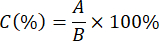
Where A is the number of captured rodents, B is the effective number of traps, and C is the relative abundance of rodents.
- Crop damage statistics
- Use crop damage statistics to control for the effects of rodents should crops be located on the opposite side of the lake beach dike16.
- Sample the rice fields in the survey area randomly at the same time as the rodent relative abundance survey.
- Sample the selected fields according to a single five-point diagonal sampling method, with five sample squares collected from each field. Collect the rice seedlings (10 × 10 plants) in each square sample.
- Record the total number of seedlings and the number of seedlings broken by the rodents to determine the damage rate. Determine the effectiveness of rodent control by calculating the cost incurred by the rodent due to damage before and after rodent control.
- Use crop damage statistics to control for the effects of rodents should crops be located on the opposite side of the lake beach dike16.
- Bait consumption method
- Place bait of the same size in the survey area, and after a certain period, calculate the bait consumption rate as an indicator of rodent density17.
- If the bait used was rice, calculate bait consumption as weight (g). Simultaneously, control the natural decrease in water from the bait to correct bait consumption. If the bait is a large grain or block, such as sweet potatoes, observe and record the number of grains or blocks consumed.
- Place bait of the same size in the survey area, and after a certain period, calculate the bait consumption rate as an indicator of rodent density17.
- Excavation hole method
- Block the original holes to reduce misjudgment of abandoned holes.
- Determine the effectiveness of rodent prevention with or without a rodent-proof wall by comparing the number of holes dug by rodents in farmlands.
NOTE: Plugging the hole should be carried out in a strict manner, preferably before the peak of rat activity, such as for house mice in the evening or ground squirrels in the early morning.
3. Statistical analysis
- Use appropriate data analysis software to analyze the data and determine the significance of each capture rate using the chi-square test (χ2), with statistical significance set at P <0.05.
NOTE: SPSS was used to analyze the data. Other statistical software can also be used for statistical analysis, such as DPS.
Access restricted. Please log in or start a trial to view this content.
Results
To determine the control effect of the rodent-proof wall, surveys were conducted before and after the water rose in April and July 2012, respectively, on the lake beach and corresponding diked farmland15. The survey sites were located in the Dongting Lake area of Hunan Province, namely, the lake beach outside Matangyuan in Yueyang County (29°14.5′ N; 113°03.2′ E), Beizhouzi Town in Datong Lake District (29°10.1′ N; 112°47.7′ E), Shuangfeng Dike in Nanda Town in Yuanjiang City (29°1.3′ N; 112°45.2′...
Access restricted. Please log in or start a trial to view this content.
Discussion
There are several critical steps in the protocol. The width of the tongue-shaped flat plate of the rodent-proof wall should be sufficiently wide, and the height of the wall should be set such that rodents in the area cannot cross it. When wave-retaining walls have gaps leading to the beach, the depth of the rodent-proof trench should be set to a depth that rodents cannot climb, and the width of the ditch should be set to a distance that rodents cannot cross. The height of the baffle plate and pots in the buried-pot barri...
Access restricted. Please log in or start a trial to view this content.
Disclosures
The authors have nothing to disclose.
Acknowledgements
This work was supported by the National Natural Science Foundation of China (U20A20118) and the Open Fund of the Hunan Engineering Research Center of the Ecological Environment Institute Monitoring and Disaster Prevention and Mitigation Technology in Dongting Lake (2023-DTH-04).
Access restricted. Please log in or start a trial to view this content.
Materials
| Name | Company | Catalog Number | Comments |
|---|---|---|---|
| Snap traps | Guixi Mousing Tool Factory, Jiangxi, China | large-sized | 150 mm × 80 mm |
| SPSS | IBM | version 16.0 |
References
- Hinds, L. A., Belmain, S. R. Fertility control of rodent pests: recent developments from lab to field. Integr Zool. 17 (6), 960-963 (2022).
- John, A. Rodent outbreaks and rice pre-harvest losses in Southeast Asia. Food Sec. 6 (2), 249-260 (2014).
- Tomass, Z., Shibru, S., Yonas, M., Leirs, H. Farmers' perspectives of rodent damage and rodent management in smallholder maize cropping systems of Southern Ethiopia. Crop Prot. 136, 105232(2020).
- Imholt, C., Reil, D., Plasil, P., Rodiger, K., Jacob, J. Long-term population patterns of rodents and associated damage in German forestry. Pest Manag Sci. 73 (2), 332-340 (2017).
- Liu, Y., et al. Effects of nitrogen addition and mowing on rodent damage in an Inner Mongolian steppe. Ecol Evol. 8 (8), 3919-3926 (2018).
- Meerburg, B. G., Singleton, G. R., Kijlstra, A. Rodent-borne diseases and their risks for public health. Crit Rev Microbiol. 35 (3), 221-270 (2009).
- Yu, S. C., et al. Spatiotemporal evolution of the Dongting Lake Beach in recent 90 years. Journal of Earth Science. , Available from: http://kns.cnki.net/kcms/detail/42.1788.P.20230822.1321.002.html (2023).
- Wang, W. F., Yuan, W. K., Chen, Y. L., Wang, J. Microplastics in surface waters of Dongting Lake and Hong, China. Sic Total Environ. 633, 539-545 (2018).
- Zhu, L. L., et al. Effects of hydrological environment on litter carbon input into the surface soil organic carbon pool in the Dongting Lake floodplain. Catena. 208, 105761(2022).
- Zhang, M. W., Li, B., Wang, Y. Analysis on causes of population outbreak of Microtus fortis in Dongting Lake region in 2007. Research of Agricultural Modernization. 28 (5), 601-605 (2007).
- Feng, L., et al. Distribution pattern and diversity of rodent communities at beach and lakeside areas in the Dongting Lake region. Acta Ecol Sin. 37 (17), 5771-5779 (2017).
- Wang, Y., Guo, C., Zhang, M. W., LI, B., Chen, A. G. Population dynamics of Microtus fortis in Dongting Lake region and its forecasting. Chinese Journal of Applied Ecology. 15 (2), 308-312 (2004).
- Chen, A. G., et al. Study on the population characteristics and disaster causes of Microtus fortis in the Dongting Lake area. Research on the Biology of Chinese Veterinary Animals. , China Forestry Publishing House. Beijing. 31-38 (1995).
- Chen, A. G., et al. Important ecology and its control in the rice-growing area of the Yangtze River Basin Countermeasures. Ecology of Agriculturally Important Rodents and Control Countermeasures. , Ocean Press. Beijing: China. 114-174 (1998).
- Zhang, M. W., et al. A survey on effect of the rodent-proof wall for controlling Microtus fortis in Dongting Lake area. Plant Protection. 39 (3), 167-172 (2013).
- Wang, Y., Guo, C., Li, B., Wu, Z. J., Chen, A. G. A study on the multiple control criteria of pest rodents in Dongting Lake rice areas. Research of Agriculture Modernization. 18 (3), 58-60 (1997).
- Wang, C. X., Pan, Z. A. Introduction to rodent killing. People's Health Publishing House. , 277-288 (1983).
- Wang, Z., et al. Comparison and analysis of three investigation methods applied for rodent density monitoring at grasslands. Chinese Journal of Hygienic Insecticides & Equipments. 25 (3), 238-240 (2019).
- Khan, A. A., Munir, S., Hussain, I. Evaluation of in-burrow baiting technique for control of rodents in groundnut crop. Pak J Zool. 44 (4), 1035-1039 (2012).
Access restricted. Please log in or start a trial to view this content.
Reprints and Permissions
