The present protocol describes the use of DNA barcoding technology to authenticate plant-based medicinal materials, and the medicinal plant Angelica sinensis (Oliv.) Diels was identified as an example.
Method Article
Application of DNA Barcoding to Identify Medicinal Plants
Opens in a new tab
In This Article
Summary
Loading...
$$\rightleftharpoonup{xx}$$
$$\longleftharp{xx}$$,
$$\longrightharp{xx}$$,
Abstract
Loading...
$$\rightleftharpoonup{xx}$$
$$\longleftharp{xx}$$,
$$\longrightharp{xx}$$,
Medicinal plants are valuable resources globally and are used worldwide to maintain health and treat disease; however, the presence of adulteration obstructs their development. DNA barcoding, a technique for species identification by standard DNA regions, facilitates prompt and accurate identification of traditional medicinal plants. The process of DNA barcoding entails six basic steps: 1) processing the medicinal plants, 2) extracting high-quality total DNA from the medicinal plants using centrifugal column method, 3) amplifying target DNA region internal transcribed spacer 2 (ITS2) with universal primers of plants and performing Sanger sequencing, 4) splicing and aligning sequence to obtain the target sequence, 5) matching the barcode sequence against the barcode library for identification, 6) aligning sequence, comparing intraspecific and interspecific variation, constructing phylogenetic neighbor-joining tree. As shown in the results, the universal primer can amplify the target region. Basic Local Alignment Search Tool (BLAST) demonstrates the percentage identified was 100%, and the neighbor-joining tree demonstrates that the splicing sequences were clustered with the A. sinensis OR879715.1 clade, and the clade support value is 100. This protocol provides a reference for applying DNA barcoding technology as an effective method to identify medicinal plants and adulterants.
Introduction
Loading...
$$\rightleftharpoonup{xx}$$
$$\longleftharp{xx}$$,
$$\longrightharp{xx}$$,
Medicinal plants have a wide range of pharmacological effects and are important substances for the treatment and prevention of diseases. The market demand for medicinal plants in herbal medicines and pharmaceutical products is huge and still growing. With the increasing market for medicinal plants, the problem of adulteration has hindered the development of medicinal plants. Currently, medicinal plant adulteration suffers from these reasons: 1) the similar morphology of medicinal plants makes it difficult to identify and use them correctly1,2,3,4,5, 2) the increasing demand for medicinal plants has led to insufficient supply in the market6,7, 3) medicinal plants are expensive and have fluctuating prices, and the use of cheap herbs instead of economically valuable materials has led to adulteration and market profiteering8,9. To solve the problems of proper identification and use of medicinal plants, there is a need for a technology that allows non-specialists to identify the source10.
There are limitations to properly identifying and using medicinal plants by appearance and odor alone11. For more accurate identification and quality control, physicochemical methods are employed12. Thin-layer chromatography (TLC), for instance, is a rapid method for identifying medicinal herbs and is included in the Chinese Pharmacopoeia. Nevertheless, it requires reference standards to identify the plants13. High-performance liquid chromatography (HPLC) can perform both qualitative and quantitative tests, making it suitable for medicine quality testing. However, this instrument is expensive and requires specialized knowledge to operate14,15. DNA barcoding technology is a rapid and accurate species identification technology that identifies species by using stable DNA sequences to differentiate between plants with similar morphology. Hebert et al. proposed DNA barcoding technology to identify species, which uses a recognized and relatively short DNA sequence within the genome16, Chen et al. proposed ITS2 as a universal sequence for the molecular identification of medicinal plants and identified more than 6600 plants and found a high identification ability17. The study of medicinal plants based on ITS2 and chloroplast gene fragments has demonstrated the ability to distinguish species at the species level, with applications in the fields of resource protection, market regulation, and international trade17,18,19. The application of DNA barcoding can overcome the limitations of traditional identification methods, which is helpful in ensuring the quality and safety of medicinal plants, preventing resource abuse and confusion20. It has proven beneficial for studying medicinal plants, supporting the growth of the herbal industry in a sustainable manner, and providing a guarantee that the consumer uses the correct medication21,22,23,24.
The paper outlines protocols for how to apply DNA barcoding to identify medicinal plants using A. sinensis as an example. DNA barcoding utilizes one or more standardized short genetic markers in an organism's DNA to recognize it as belonging to a particular species. Current methods for identifying medicinal plants have certain limitations. Traditional morphological identification relies heavily on experts' extensive experience, which can be influenced by human factors, while chemical identification is prone to issues like adulteration of key compounds. In contrast, DNA barcoding provides a more accurate means of species identification, offering advantages such as speed, high reproducibility, and stability. Furthermore, this technology enables centralized management and sharing of existing species sequence data through the internet and information platforms, significantly improving the efficiency and reliability of species identification11,12. Due to their similar morphology and medicinal parts, A. sinensis is often confused with other species and is frequently misused or intentionally substituted on the market25. Yang et al. identified A. anomala using DNA barcoding to distinguish it from false drugs26. Yuan et al. collected 23 species of Angelica and used DNA barcoding to differentiate between the various species27. By following the procedures described in this protocol, users will be able to authenticate plant-based medicinal materials from pre-processing to ultimately matching the barcoding sequence with the barcode database (Figure 1).
Protocol
Loading...
$$\rightleftharpoonup{xx}$$
$$\longleftharp{xx}$$,
$$\longrightharp{xx}$$,
1. Sample preparation
- The present study utilized two-year-old A. sinensis with low temperature and long sunshine at an altitude of 2800 m from Min County, Gansu Province, as experimental materials.Three plants were selected from which more than three roots were selected for experimentation. Rinse the roots first with sterilized water and then clean them with an alcohol sprayer or alcohol swabs to prevent contamination that could affect the accuracy of the experimental results. Cut the roots into pieces smaller than 5 mm using a sterilized scalpel and mix for further analysis. (Figure 2).
NOTE: Alternatively, place the roots in liquid nitrogen to crisp up, making them easier to break. Depending on the shape, hardness, and other characteristics of the medicinal plants, use instruments to deal with them. - Prepare three tubes of experimental samples for parallel experiments. Label each sample as AS-1, AS-2, and AS-3. Take about 100 mg fresh or 20 mg dry-weight tissue (air-dried) and place it in a 2 mL centrifuge tube.
- Place two 5 mm stainless steel beads into the 2 mL centrifuge tubes. Transfer the tubes to a high-throughput tissue grinder operating at 60 Hz for 60 s.
2 DNA extraction from sample
NOTE: This study uses a Plant Genomic DNA Extraction Kit, which is based on the CTAB method. DNA extraction is performed following the instruction manual with some modifications, including the addition of a unique Nuclear Isolation Buffer (NIB). The protocol improves DNA purity by first separating the contaminants from the tissue and then adding an initial nuclei isolation step28,29,30.
- Add 800 µL of pre-cooled NIB and place the sample on a vortex mixer, vibrating for 5 min.
- Place in a centrifuge and process at 13,780 x g for 10 min. Remove the supernatant.
- Repeat steps 2.1-2.2 for an additional 3 rounds.
NOTE: NIB extracts higher-quality DNA, and its preparation contains some hazardous chemicals that must be handled in a fume hood, making it more difficult for novices to handle. However, this step is not mandatory. Users may opt to follow this recommendation or skip these steps. Its detailed formulation is in Table 1. - Add 600 µL of Buffer P1 and 5 µL of RNase A (10 mg/mL). Place the sample on a vortex mixer and vortex to mix. Incubate the samples in a water bath at 65 °C for 1.5 h, inverting the tubes 2x-3x during incubation.
- Add 200 µL of Buffer P2, mix thoroughly, place on ice for 15 min, and then centrifuge at 13,780 x g for 10 min.
- Carefully aspirate the supernatant onto a filter column AF, centrifuge at 13,780 x g for 2 min, and transfer the lower filtrate collected in the collection tube to a new 1.5 mL centrifuge tube.
- Calculate the volume of filtrate, add 1.5x the volume of P3, and shake immediately to get a mixed solution.
- Add 650 µL of the prepared mixture to an adsorbent column adsorption column (AC) and incubate for 5 min, then centrifuge at 13,780 x g for 30-60 s.
- Add the filtrate obtained from step 2.8 to the AC again, centrifuge, and discard the waste liquid. Repeat the procedure with the remaining mixed solution from step 2.7.
- Add 600 µL of rinse solution WB, centrifuge at 13,780 x g for 30 s, discard the waste solution, and repeat the procedure 1x.
- Place the column AC back into the empty collection tube, centrifuge at 13,780 x g for 2 min, and leave at room temperature to remove residual ethanol.
- Take the adsorbent column AC and place it in a clean 1.5 mL centrifuge tube. Add 45 µL of sterilized deionized water (ddH2O) to the middle of the adsorbent membrane, which has been heated to 65 °C. Leave at room temperature for 5 min. Centrifuge at 13,780 x g for 2 min.
- Add the resulting solution back to the column and centrifuge at 13,780 x g for 2 min at room temperature.
- Collect the filtered solution. Use a spectrophotometer to determine DNA concentration; OD260 represents the absorbance of nucleic acids. Use the following criteria for DNA quality determination standard: OD260/OD280=1.80-2.00, the normal range; OD260/OD280>2.00; there is a large amount of RNA contamination; OD260/OD280<1.80, there are proteins, phenols, and other contaminants.
3 Target fragment amplification and detection
NOTE: Select appropriate amplification primers based on the plant's proposed DNA barcoding regions; reaction conditions are shown in Table 2.
- Set up the reaction conditions corresponding to primer amplification. Use 0.2 mL centrifuge tubes filled with 9.5 µL of ddH2O, 12.5 µL of 2x PCR Master Mix, and 1 µL each of forward primer, reverse primer, and template DNA for a total volume of 25 µL. Prepare a negative control, replacing the template with water.
- Add 20 mL of 1x Tris Acetate-EDTA (TEA) buffer and 0.2 g of agarose to heat and prepare a 1% agarose gel, then add 2 µL of nucleic acid gel stain (10,000x) and mix thoroughly. Pour the mixture into a gel casting tray and allow it to solidify to obtain the agarose gel. Add 3 µL of the PCR product and 2 µL of DNA marker 5000 bp to the gel.
- Set the voltage at 120 V, the current at 400 mA, and electrophoresis for 40 min. Use a versatile gel image analysis system to view gels and check the results.
4. Data collection and analysis
NOTE: There is a wide range of sequence assembly and analysis software; we use Codon code Aligner V11.0.1 and MEGA11 as examples for illustration.
- Use the aligner to open the sequencing file to observe the peak map and splice the bidirectional sequencing peak map files.
- Select Create a New Project and click OK to go to the software homepage. Select Add Samples under the File menu, select the File to be processed as sequence trace format, and import it directly into the software as the imported file at Unassembled Samples.
- Choose Contig, then, in the section, choose Advanced Assembly, and then choose Assemble in Groups. First-time users, after selecting Assemble in Groups, will see this dialog: Choose Define names. Modify the Define sample name parts according to the file name and click on Assemble. The aligned sequence will be displayed.
- Retrieve the complete ITS2 sequences according to hidden Markov model (HMM)-based model analysis. Use the 5.8s (CGAGGGCACGCCTGCCTGGGCGTCA) and 28s (CGACCCCAGGTCAGGCGGGGCCACC) sequences31 to search the aligned sequence from the beginning to remove the 5.8s and 28s regions.
- Select Go, then, in the section, select Search Sequence and click OK to get the matching sequence. Choose Contig, choose Delete in the section to remove the 5.8s and 28s regions and the low-quality sequences, and then the software will output the splicing sequences for matching.
- Use the splicing sequences obtained from the three parallel experimental steps for identification, select BLAST search using the nucleotide database at The National Center for Biotechnology Information (NCBI), and select the Species Identification Tool and the Specific Primer ITS2 corresponding in the Global Pharmacopoeia Genome Database (GPGD) database.
NOTE: NCBI32 and GPGD33 include the nucleotide sequences of medicinal plants and animals and they are recognized as authoritative databases. Their major methods for identification are the methods based on sequence comparison34 (BLAST). The percentage identity from the identity results is used to determine whether the species with the greatest similarity is the target genus. - Use MEGA11 for sequence alignment, analyze and compare intraspecific and interspecific sequence variation, and construct a phylogenetic neighbor-joining tree.
- Download the sequences of three species of Angelica and one species of Peucedanum praeruptorum as an out-group from NCBI. Analyze these sequences together with the result sequence obtained.
- Click File, choose Open a File/Session to import the file, and a dialog will appear. Choose Align > DNA, and select Align by ClustalW for sequence comparison. Choose Phylogenetic Analysis in Data, then return to the home page. Click Construct/Test Neighbor-Joining Tree in PHYLOGENY. The software generates a phylogenetic tree.
Results
Loading...
$$\rightleftharpoonup{xx}$$
$$\longleftharp{xx}$$,
$$\longrightharp{xx}$$,
Sample DNA quality
The range of OD260/OD280 absorbance ratios was 1.80-1.84. The DNA quantity measured by spectrophotometer for each sample was greater than 100 ng/µL (Table 3), indicating a good quality of sample DNA extraction. This indicates that the samples were not contaminated by protein, RNA, or reagents during the extraction process and that they were of good quality and suitable for downstream PCR amplification.
PCR analysis
Gel electrophoresis was performed on the PCR product of the three parallel experimental samples. The setup was: Marker, samples 1-3 (AS-1, AS-2, AS-3), and negative control (0), as shown in Figure 3. The sizes of AS-1, AS-2, and AS-3 are all between 500 bp with single, bright, clear bands, and there are no bands in the 0, indicating that the extracted DNA was amplified to 500 bp using ITS2 primers.
Database comparison of sequencing results
The sequencing results identified A. sinensis with 100% sequence similarity by combining the BLAST identification results of the NCBI database, which is the same as the species identification results of the GPGD database (Table 4). The BLAST result was determined using the highest percent identity score and the lowest e-value. Species identification was considered successful when the highest maximal percent identity included a single species and scored >99%. If a score is ≤ 99%, check the quality of the sequencing file or whether the PCR product is contaminated.
Phylogenetic tree-based analysis of species identification
The results showed that in the constructed NJ phylogenetic tree, all four species were clustered in separate clades, and the P. praeruptorum as an outgroup was separated from the Angelica clades. The Splicing sequences were clustered with the A. sinensis OR879715.1 clade, and the clade support value (bootstrap) was 100, and then the other two species, A. dahurica, and A. cartilaginomarginata were each clustered in a separate clade, thus proving that the Splicing sequences were A. sinensis (Figure 4).

Figure 1: Medicinal Plant species identification flowchart. (A) Process plant, extraction DNA and sequencing of medicinal plant, (B) comparison of species sequence using databases, and (C) employing phylogenetic trees for taxonomic validation to confirm the phylogenetic relationships among species. Please click here to view a larger version of this figure.

Figure 2: Medicinal Plant DNA extraction workflow. (A) A total of 6 steps are involved in extracting DNA from medicinal plants. (B) PCR instrument amplification and PCR cycling process. (C) Electrophoresis. (D) Sanger sequencing and the sequencing chromatogram. Please click here to view a larger version of this figure.
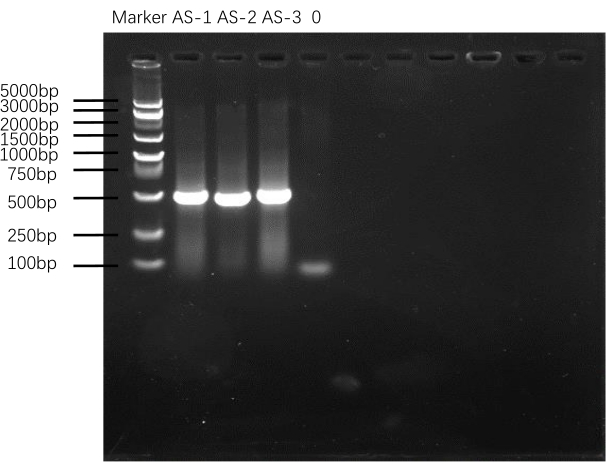
Figure 3: Gel electrophoresis of Angelica sinensis (Oliv.) Diels. Using the DL5000 DNA marker as a molecular marker, AS-1, AS-2, and AS-3 are used as samples, and 0 as the control group. Gel electrophoresis was conducted, and the results showed that the AS-1, AS-2, and AS-3 samples all had bands at 500 bp, while the control showed no bands. Please click here to view a larger version of this figure.
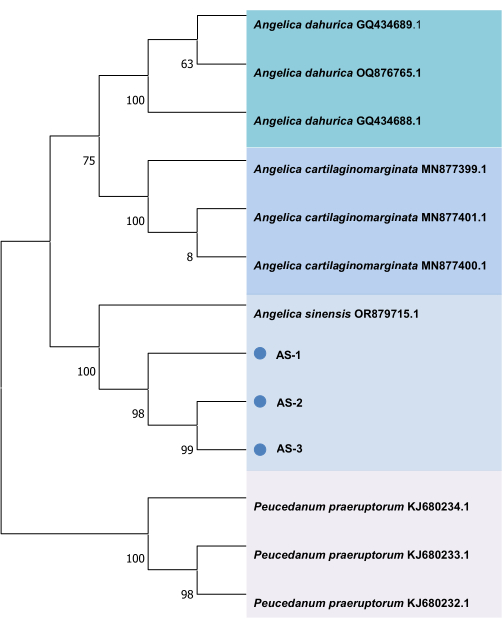
Figure 4: Neighbor-Joining phylogenetic tree created from 13 sequences. A total of 10 sequences from four plant species were downloaded from the NCBI database, and the Splicing sequences were compared to analyze and compare intraspecific and interspecific sequence variation and to construct phylogenetic neighbor-joining trees. Please click here to view a larger version of this figure.
| Name of Material/ Equipment | dose |
| Polyvinyl pyrrolidone | 10 g |
| Tris-HCl | 1 M 50 mL |
| Ethylenediaminetetraacetic acid | 0.5 M 20 mL |
| NaCl | 20.45 g |
| β-mercaptoethanol | 10 mL |
| sterilized deionized water | 500 mL |
Table 1: Nuclear Isolation Buffer formulation reagents.
| Barcode | Primer | Primer Sequence (5'-3') | PCR Amplification Sequencing | |||
| ITS2 | R:3R | GACGCTTCTCCAGACTACAAT | 94°C | 5min | ||
| 94°C | 30s | 40cycles | ||||
| 56°C | 30s | |||||
| F:2F | ATGCGATACTTGGTGTGAAT | 72°C | 45s | |||
| 72°C | 10min | |||||
Table 2: DNA barcode primers and PCR reaction conditions.
| samples | DNA extraction(ng/µL) | OD260/OD280 |
| AS-1 | 124 | 1.84 |
| AS-2 | 184 | 1.81 |
| AS-3 | 164 | 1.82 |
Table 3: Angelica sinensis (Oliv.) Diels extracted DNA quality.
| Samples | Aligned sequence Length(bp) | Splicing sequence Length(bp) | GC(%) | NCBI:Percentage BLAST(%) | GPGD:Percentage Species identification(%) |
| AS-1 | 500bp | 229bp | 55.50% | 100% | 100% |
| AS-2 | 504bp | 229bp | 55.50% | 100% | 100% |
| AS-3 | 499bp | 229bp | 55.50% | 100% | 100% |
Table 4: Database comparison of sequencing results.
Discussion
Loading...
$$\rightleftharpoonup{xx}$$
$$\longleftharp{xx}$$,
$$\longrightharp{xx}$$,
Molecular identification technology is easier to learn and master than traditional identification methods. It overcomes the limitations of traditional medicinal herb identification, as it is not affected by the plant's growth stage and does not rely on subjective judgment or the accumulation of specialized expertise35. Other species are confused with A. sinensis due to its similar morphology and medicinal parts, but with the use of DNA barcoding, it can be definitively identified36.
The key steps in this protocol involve several critical considerations. First, avoiding contamination when handling herbs and extracting DNA is essential to prevent foreign DNA or impurities from compromising the results. Proper cleaning of the samples is necessary to remove external contaminants, while thorough pulverization enhances DNA extraction by increasing the surface area for reagent interaction. It is also important to use an appropriate amount of sample to ensure efficient mixing with the reagents, allowing for better cytolysis and release of DNA. Lastly, controlling the water bath time is crucial, as excessive heating can lead to DNA degradation, affecting the quality of the extracted DNA. Together, these steps ensure the successful extraction of high-quality DNA for analysis.
Medicinal plants contain polysaccharides and polyphenols that affect DNA extraction and amplification. The use of Nuclear Isolation Buffer reduces the effect of these substances and enables Nuclei lysis, resulting in better extraction of high-purity gDNA28,29,30. Currently, there are three primary DNA extraction methods: the centrifugal column method, the CTAB method, and the SDS method. However, this study chose the centrifugal column method for the experiments due to its stability, simplicity, efficiency, and the ability to extract high concentrations of DNA37, and heating the elution buffer can help to elute DNA with better quality. Here, this study chose ITS2-specific primers17,38, the short ITS2 sequence serves as an efficient taxonomic sequence tag in comparison with the other primers39, which have high inter-specific variation and a wider range of identifications. The possible reason for the amplification failure is DNA degradation in some samples; another possibility is that the pair of ITS2 universal primers used may not work for certain species or using the alternative set of universal primers40. The BLAST result was determined using the highest percent identity score and the lowest e-value. Species identification was considered successful when the highest maximal percent identity included a single species and scored >99%40,41, for the score ≤99%, check the quality of the sequencing file or whether the PCR product is contaminated.
In summary, DNA barcoding should play a key role in the quality control of traditional herbal medicine and the international herb trade. This paper provides some insights into extracting plant DNA and a detailed guide on using DNA barcoding technology for identifying medicinal plants. It highlights the key points to note during the experimental process. Thus, this paper provides references for basic herbal identification and helps more people to rapidly master the technology. However, in special cases where the efficiency of single-locus barcode identification is insufficient, it depends on the reference library. Constructing a reference library with high species coverage would be a major step towards identifying species using DNA barcodes42, and many researchers have proposed that multi-locus barcoding technology can improve the efficiency43,44. In addition, with the development of molecular technology, Zheng et al. combined DNA barcoding technology with isothermal DNA amplification technology and RPA-LFD detection to rapidly authenticate poisonous plants45 and some off-the-shelf kits have also been developed46. The DNA barcode database is constantly improving, which plays an important role in promoting the generalization, standardization, and internationalization of the identification methods of herbal medicine.
Disclosures
Loading...
$$\rightleftharpoonup{xx}$$
$$\longleftharp{xx}$$,
$$\longrightharp{xx}$$,
The authors declare that the research was conducted in the absence of any commercial or financial relationships that could be construed as a potential conflict of interest.
Acknowledgements
Loading...
$$\rightleftharpoonup{xx}$$
$$\longleftharp{xx}$$,
$$\longrightharp{xx}$$,
This work was supported by introduces the talented person scientific research start funds subsidization project of Chengdu University of Traditional Chinese Medicine (030040015).
Materials
| Name | Company | Catalog Number | Comments |
|---|---|---|---|
| CTAB Rapid Plant Genomic DNA Extraction Kit | Shanghai Huiling Biotechnology Co. | NG411M | Suitable for rapid extraction of high quality genomic DNA from different tissues of a wide range of plants |
| DL5000 DNA Marker | Nanjing vazyme Bio-technology Co. | MD102-02 | Ready-to-use product, take an appropriate amount of this product directly for electrophoresis when running the gel. |
| Electrophoresis | Beijing Liuyi Biotechnology Co. | DYY-6C | Adopt touch screen design, can display set voltage, set current at the same time, parallel output |
| Ethylenediaminetetraacetic acid | BeijingpsaitongBiotechnologyCo.,Ltd | E70015-100G | Nuclear Isolation Buffer formulation reagents. |
| Goldview Nucleic Acid Gel Stain(10,000×) | Yisheng Biotechnology (Shanghai) Co., Ltd | 10201ES03 | When using agarose gel electrophoresis to detect DNA, it binds to DNA and produces a strong fluorescent signal. |
| High-Speed Tabletop Centrifuge | Changsha High-tech Industrial Development Zone Xiangyi Centrifuge Instrument Co. | H1650 | For fast and efficient separation of samples, this compact and lightweight centrifuge offers reliable safety |
| High-Throughput Tissue Grinder | Shanghai Jingxin Industrial Development Co. | Tiss-48 | A high-frequency vibration instrument for grinding samples |
| http://www.gpgenome.com/ | Institute of Chinese Materia Medica, China Academy of Chinese Medical Sciences | - | HerbGenomics database includes genome sequences, gene sets, organelle genomes, low coverage genome data and DNA barcode sequences. |
| https://www.ncbi.nlm.nih.gov/ | U.S. National Library of Medicine | - | The National Center for Biotechnology Information advances science and health by providing access to biomedical and genomic information. |
| Kylin-Bell | Haimen Qilinbel Instrument Manufacturing Co. | VORTEX-5 | Rapid mixing in the form of a high-speed vortex, mixing speed, uniformity, thoroughness |
| LifeTouch | Hangzhou BORI Technology Co. | TC-96/G/H(b)B | Adoption of advanced thermoelectric refrigeration technology and newly created TAS technology to enhance its overall performance |
| Multi-functional Gel Image Analysis System | Southwest Operation Center of Shanghai Tianneng Life Science Co. | Tanon-Mini Space 2000 | Performs rapid gene amplification experiments with a gradient function for mapping amplification conditions and a gradient temperature range of up to 30°C |
| NaCl | Beijing Solarbio Science&Technology Co.,Ltd. | S8210-100 | Nuclear Isolation Buffer formulation reagents. |
| Nanodrop One | Genes Ltd. | ND ONE | Quantify DNA, RNA and protein samples in seconds with just 1-2 µL of sample |
| Polyvinyl pyrrolidone | Shanghai yuanye Bio-Technology Co., Ltd | S30268-500g | Nuclear Isolation Buffer formulation reagents. |
| Snowflake Ice Maker | Shanghai Zhixin Experimental Instrument Technology Co. | ZX-60X | Adopting rotary extrusion ice making method, fast ice making speed and high efficiency of ice production |
| Stainless Steel Beads for Tissue Homogenizer | Beyotime Biotechnology. | F6623 | Equipment for grinding and mixing of tissue and other samples by vibration |
| Tris Acetate-EDTA buffer | Beyotime Biotech Inc | ST716 | TAE is a commonly used buffer for DNA electrophoresis, frequently employed in agarose gel electrophoresis. |
| Tris-HCl | Beijing Solarbio Science&Technology Co.,Ltd. | T8230 | Nuclear Isolation Buffer formulation reagents. |
| Water bath Kettle | Shanghai Senxin Experimental Instrument Co. | DK-8D | Precise thermostat and temperature regulation, accurate and reliable temperature control |
| β-mercaptoethanol | Shanghai Eon Chemical Technology Co. | R054186-100ml | Nuclear Isolation Buffer formulation reagents. |
References
Loading...
$$\rightleftharpoonup{xx}$$
$$\longleftharp{xx}$$,
$$\longrightharp{xx}$$,
- Chen, S. L., et al. Conservation and sustainable use of medicinal plants: Problems, progress, and prospects. Chin Med. 11, 37(2016).
- Han, J., et al. An authenticity survey of herbal medicines from markets in China using DNA barcoding. Sci Rep. 6, 18723(2016).
- Zhang, W., et al. Integration of high-throughput omics technologies in medicinal plant research: The new era of natural drug discovery. Front Plant Sci. 14, 1073848(2023).
- Ji, C., et al. Determination of the authenticity and origin of panax notoginseng: A review. J AOAC Int. 105 (6), 1708-1718 (2022).
- Parveen, I., Techen, N., Khan, I. A. Identification of species in the aromatic spice family apiaceae using DNA mini-barcodes. Planta Med. 85 (2), 139-144 (2019).
- Techen, N., Parveen, I., Pan, Z., Khan, I. A. DNA barcoding of medicinal plant material for identification. Curr Opin Biotechnol. 25, 103-110 (2014).
- Xiong, Y., et al. Market access for Chinese herbal medicinal products in Europe-a ten-year review of relevant products, policies, and challenges. Phytomedicine. 103, 154237(2022).
- Virk, J. K., Gupta, V., Kumar, S., Singh, R., Bansal, P. Ashtawarga plants - suffering a triple standardization syndrome. J Tradit Complement Med. 7 (4), 392-399 (2017).
- An, Y. L., Wei, W. L., Guo, D. A. Application of analytical technologies in the discrimination and authentication of herbs from fritillaria: A review. Crit Rev Anal Chem. 54 (6), 1775-1796 (2024).
- Li, M., Cao, H., But, P. P. H., Shaw, P. C. Identification of herbal medicinal materials using DNA barcodes. J Systemat Evolut. 49 (3), 271-283 (2011).
- Khan, A., et al. Herbal spices as food and medicine: Microscopic authentication of commercial herbal spices. Plants (Basel). 13 (8), 1067(2024).
- Techen, N., Crockett, S. L., Khan, I. A., Scheffler, B. E. Authentication of medicinal plants using molecular biology techniques to compliment conventional methods. Curr Med Chem. 11 (11), 1391-1401 (2004).
- Sasidharan, S., Chen, Y., Saravanan, D., Sundram, K. M., Yoga Latha, L. Extraction, isolation and characterization of bioactive compounds from plants' extracts. Afr J Tradit Complement Altern Med. 8 (1), 1-10 (2011).
- Wei, Y., et al. Identification techniques and detection methods of edible fungi species. Food Chem. 374, 131803(2022).
- Mehle, N., Trdan, S. Traditional and modern methods for the identification of thrips (thysanoptera) species. J Pest Sci. 85 (2), 179-190 (2012).
- Hebert, P. D., Cywinska, A., Ball, S. L., Dewaard, J. R. Biological identifications through DNA barcodes. Proc Biol Sci. 270 (1512), 313-321 (2003).
- Chen, S., et al. Validation of the its2 region as a novel DNA barcode for identifying medicinal plant species. PLoS One. 5 (1), e8613(2010).
- Li, D. Z., et al. Comparative analysis of a large dataset indicates that internal transcribed spacer (its) should be incorporated into the core barcode for seed plants. Proc Natl Acad Sci U S A. 108 (49), 19641-19646 (2011).
- Raskoti, B. B., Ale, R. DNA barcoding of medicinal orchids in asia. Sci Rep. 11 (1), 23651(2021).
- Chen, S., et al. DNA barcoding in herbal medicine: Retrospective and prospective. J Pharm Anal. 13 (5), 431-441 (2023).
- Pei, Y., et al. Whole-genome sequencing in medicinal plants: Current progress and prospect. Sci China Life Sci. 67 (2), 258-273 (2024).
- Zhu, S., Liu, Q., Qiu, S., Dai, J., Gao, X. DNA barcoding: An efficient technology to authenticate plant species of traditional chinese medicine and recent advances. Chin Med. 17 (1), 112(2022).
- Pang, X., Shi, L., Song, J., Chen, X., Chen, S. Use of the potential DNA barcode its2 to identify herbal materials. J Nat Med. 67 (3), 571-575 (2013).
- Ajmal Ali, M., et al. The changing epitome of species identification - DNA barcoding. Saudi J Biol Sci. 21 (3), 204-231 (2014).
- Peng, H., Chen, G., Ou, L. L., Luo, M., Zhang, C. Development of a new efficient scar marker for authentication of Angelica sinensis, an important traditional Chinese medicine. Scienceasia. 47 (6), 751-757 (2021).
- He, Y., et al. Authentication of Angelica anomala avé-lall cultivars through DNA barcodes. Mitochondrial DNA. 23 (2), 100-105 (2012).
- Yuan, Q. J., et al. Identification of species and materia medica within Angelica l. (umbelliferae) based on phylogeny inferred from DNA barcodes. Mol Ecol Resour. 15 (2), 358-371 (2015).
- Xie, P. J., Ke, Y. T., Kuo, L. Y. Modified ctab protocols for high-molecular-weight DNA extractions from ferns. Appl Plant Sci. 11 (3), e11526(2023).
- Stefanova, P., Taseva, M., Georgieva, T., Gotcheva, V., Angelov, A. A modified ctab method for DNA extraction from soybean and meat products. Biotech Biotechnol Equipment. 27 (3), 3803-3810 (2013).
- Li, Z., Parris, S., Saski, C. A. A simple plant high-molecular-weight DNA extraction method suitable for single-molecule technologies. Plant Meth. 16, 38(2020).
- Keller, A., et al. 5.8s-28s rrna interaction and hmm-based its2 annotation. Gene. 430 (1-2), 50-57 (2009).
- Morgulis, A., et al. Database indexing for production megablast searches. Bioinformatics. 24 (16), 1757-1764 (2008).
- Liao, B., et al. Global pharmacopoeia genome database is an integrated and mineable genomic database for traditional medicines derived from eight international pharmacopoeias. Sci China Life Sci. 65 (4), 809-817 (2022).
- Ghahramanlu, A., Rezaei, M., Heidari, P., Balandari, A. Species survey of iranian barberry genotypes using ITS2 sequences and basic local alignment search tools. Erwerbs-Obstbau. 65, 2491-2499 (2023).
- Han, K., Wang, M., Zhang, L., Wang, C. Application of molecular methods in the identification of ingredients in Chinese herbal medicines. Molecules. 23 (10), 2728(2018).
- Wang, X., Liu, Y., Wang, L., Han, J., Chen, S. A nucleotide signature for the identification of Angelicae sinensis radix (danggui) and its products. Sci Rep. 6, 34940(2016).
- Chen, R., et al. DNA based identification of medicinal materials in Chinese patent medicines. Sci Rep. 2, 958(2012).
- Hou, D. Y., et al. Molecular identification of corni fructus and its adulterants by ITS/ITS2 sequences. Chin J Nat Med. 11 (2), 121-127 (2013).
- Han, J., et al. The short ITS2 sequence serves as an efficient taxonomic sequence tag in comparison with the full-length its. Biomed Res Int. 2013, 741476(2013).
- Trujillo-Argueta, S., Del Castillo, R. F., Velasco-Murguía, A. Testing the effectiveness of rbcla DNA-barcoding for species discrimination in tropical montane cloud forest vascular plants (oaxaca, mexico) using blast, genetic distance, and tree-based methods. PeerJ. 10, e13771(2022).
- Marizzi, C., et al. DNA barcoding brooklyn (new york): A first assessment of biodiversity in marine park by citizen scientists. PLoS One. 13 (7), e0199015(2018).
- Antil, S., et al. DNA barcoding, an effective tool for species identification: A review. Mol Biol Rep. 50 (1), 761-775 (2023).
- Pang, X., et al. Utility of the trnh-psba intergenic spacer region and its combinations as plant DNA barcodes: A meta-analysis. PLoS One. 7 (11), e48833(2012).
- Tripathi, A. M., et al. The internal transcribed spacer (its) region and trnh-psba [corrected] are suitable candidate loci for DNA barcoding of tropical tree species of India. PLoS One. 8 (2), e57934(2013).
- Zheng, X. S., An, W. L., Yao, H., Xu, J., Chen, S. L. Rapid authentication of the poisonous plant Gelsemium elegans by combining filter-paper-based DNA extraction and rpa-lfd detection. Engineering. 7 (1), 14-16 (2021).
- Jiang, C., et al. Barcoding melting curve analysis for rapid, sensitive, and discriminating authentication of saffron (Crocus sativus l.) from its adulterants. Biomed Res Int. 2014, 809037(2014).
Reprints and Permissions
Request permission to reuse the text or figures of this JoVE article
Request Permission