A liquid-liquid extraction (LLE) system involving hollow-fiber membranes was developed to continuously and selectively extract medium-chain fatty acids (MCFAs) from the fermentation broth. The LLE system achieves high MCFA specificities from broths containing short-chain fatty acids and alcohols. Also, MCFAs are concentrated in a stripping solution to facilitate product recovery.
Method Article
Continuous Liquid-Liquid Extraction of Medium-Chain Fatty Acids from Fermentation Broth Using Hollow-Fiber Membranes
In This Article
Summary
Abstract
Medium-chain fatty acids (MCFAs; carbon-lengths: C6-C12) are high-value platform chemicals that serve a variety of industrial applications, including green antimicrobials, food ingredients, animal feed additives, cosmetics, fragrances, pharmaceuticals, and structured lipids. Currently, most MCFAs are produced from palm and coconut oil originating from Southeast Asia and South America. The conventional approach to harvesting palm and coconut fruits causes considerable ecological damage in these regions. Therefore, researchers are developing biological approaches (e.g., precision and open-culture fermentations) to generate MCFAs more sustainably using low-value substrates (e.g., methanol, ethanol, lactate) or organic wastes as feedstock. Microbial chain-elongation (CE) is a rapidly maturing open-culture fermentation platform that converts short-chain fatty acids (SCFAs; carbon lengths: C1-C5) into a subset of these MCFAs at industrially relevant rates. However, continuous in situ extraction of MCFA products is necessary not only to avoid product inhibition but also to facilitate the recovery of MCFAs in a pure and usable form. Liquid-liquid extraction (LLE) using hollow-fiber membranes and targeted extractant mixtures has proven a robust approach to selectively extract MCFA products from fermentation broths containing SCFAs. Here, the application of LLE for continuous MCFA removal is demonstrated using CE as the reference fermentation system and 3% (w/v) trioctylphosphine oxide in mineral oil as the extractant system. Fatty acids ranging from valeric acid (C5) to caprylic acid (C8) are selectively removed from SCFA-containing broths and concentrated to high titers in a semi-batch alkaline stripping solution for downstream processing.
Introduction
Medium-chain fatty acids (MCFAs) are high-value building block chemicals comprising chain lengths ranging from six (C6) to twelve (C12) carbons. MCFAs have industrial applications in foods, animal feeds, pharmaceuticals, cosmetics, fragrances, antimicrobial agents, and chemical synthesis1,2,3. Currently, most MCFAs derive from palm and coconut oil sourced from Southeast Asia and South America4,5. The severe ecological damage associated with palm and coconut oil production is well-recognized by stakeholders and the general public. Researchers are exploring biological approaches (e.g., precision and open-culture fermentations) to generate MCFAs more sustainably using low-value substrates or organic wastes as feedstock6,7. One sustainable way to produce MCFAs is by upcycling organic waste streams using a process called microbial chain elongation (CE). This secondary fermentation bioprocess is similar to anaerobic digestion in that it exploits the versatility of anaerobic open-culture microbiomes, but instead of promoting methane formation, CE systems deliberately suppress the methanogenic pathway. In a microbiome where carbon cannot be maximally reduced to CH4, nor H2 maintained below 10-4 atm by hydrogen-consuming archaea, the β-oxidation reaction that would normally break down longer chain carboxylates to acetate (e.g., C6 → C4 → C2) can be reversed (e.g., C2 → C4 → C6, etc.), so long as a reduced compound (i.e., electron donor) such as ethanol or lactate is supplied8. In this metabolism, the fatty acid molecule undergoing elongation serves as the electron acceptor. Thus, instead of generating a product with a carbon length of one (CH4) as in anaerobic digestion, the CE process generates MCFAs with carbon lengths ranging from six to eight. A large and growing market is ready to receive these green platform chemicals. However, thus far, the CE process has not been shown to produce MCFAs with carbon lengths exceeding eight carbons at appreciable rates.
Efficient extraction of these MCFAs is important not only for the recovery of the desired product but also to prevent product inhibition and push the microbiome toward producing more MCFAs1. As the concentration of MCFAs increases, MCFA metabolism is inhibited and becomes less thermodynamically favorable. By removing the MCFAs continuously, production rates are maintained. Also, because SCFAs serve as the substructures for the chain-elongation process, they should not be removed from the fermentation broth. Targeted extractant mixtures should selectively extract MCFA products from fermentation broths containing SCFAs.
Here, a robust and practical approach is demonstrated to continuously extract MCFAs from SCFA-containing fermentation broth using a liquid-liquid extraction (LLE) system comprising a hydrophobic, polypropylene forward hollow-fiber membrane extractor, a selective organic extractant solution (trioctylphosphine oxide [TOPO]9,10,11), and a backward hollow-fiber membrane extractor. A cell-guard filter upstream of the LLE system is installed to retain biomass and mitigate membrane fouling. The MCFAs are forward extracted, in their protonated form, from the aqueous fermentation broth (typically with a pH set point <5.8) into an organic extractant solution (i.e., 3% TOPO (w/v) in mineral oil) and then backward extracted into an alkaline stripping solution (pH = 9), where they deprotonate and concentrate to high titers for downstream processing. The particular pH set points are essential because they dictate the concentration gradient between each phase of the LLE process, ensuring a net transfer of MCFAs from the fermentation broth to the stripping solution. LLE using forward and backward extraction membranes achieve high extraction rates while minimizing alcohols and SCFAs co-extraction. The organic solvent adjuvant, TOPO, enables the formation of MCFA complexes. These complexes are more soluble in organic phases than water, resulting in high MCFA selectivity. The LLE process also avoids the many disadvantages associated with existing approaches, which will be discussed in the Discussion section. Long-term implementation using this LLE approach has been demonstrated in multiple studies9,10,11. While this approach is particularly suitable for applications involving MCFA production via microbial chain elongation, it is also useful in other applications that require selective separation of compounds possessing similar chemical properties because the organic extractant system can be customized.
Protocol
The reagents, consumables, and equipment used in this study are listed in the Table of Materials.
1. Constructing and integrating the bioreactor and the liquid-liquid extraction system
- Prepare the organic-phase extraction solution and reservoir.
- Prepare 2 L of organic-phase extraction solution by dissolving 60 g of trioctylphosphine oxide (TOPO) in mineral oil using a magnetic stir plate and a stirrer.
- Add the extraction solution to a 2 L glass reservoir (i.e., Schott bottle).
- Place the reservoir on a magnetic stir plate (Figure 1A). The recommended mixing speed during continuous LLE operation is 150-250 rpm.
- Prepare a three-port cap for the extraction solution reservoir.
- Attach a dip tube to the first port to serve as an out-flow port supplying extraction solution to the forward extraction membrane (FEM) (Figure 1B).
- Affix a second port to serve as a return port for the extraction solution from the backward extraction membrane (BEM) (Figure 1C).
- Add a third port, open to the atmosphere, to dampen pressure fluctuations caused by the diaphragm pump.
- Connect the diaphragm pump to the extraction membranes.
- Place a 100 rpm variable speed pump drive equipped with a polytetrafluoroethylene (PTFE) diaphragm pump head adjacent to the reservoir (Figure 1D).
- Connect the extraction solution reservoir out-flow port (Figure 1A) to the inlet of the diaphragm pump and then the outlet of the diaphragm pump to the shell-side inlet at the base of the FEM (Figure 1B) using the flexible pump tubing (e.g., size 16, 18).
- Connect the shell-side outlet at the top of the FEM to the shell-side inlet at the base of the BEM (Figure 1C) using flexible pump tubing (e.g., size 18).
- Connect the shell-side outlet at the top of the BEM to the return port on the extraction solution reservoir (Figure 1A) using flexible pump tubing (e.g., size 16, 18).
NOTE: This system component transfers MCFAs extracted from the fermentation broth in the FEM to the stripping solution in the BEM.
- Prepare the aqueous-phase stripping solution and reservoir.
- Prepare 3.25 L of aqueous-phase stripping solution by taking a 0.5 M boric acid solution and adjusting it to pH 9 using NaOH.
- Pour the solution into a 3.5 L glass reservoir with a magnetic stir bar.
- Place the reservoir on a magnetic stir plate (Figure 1E).
- Prepare a four-port cap for the stripping solution reservoir.
- Attach a dip tube to the first port to serve as an out-flow port supplying stripping solution to the BEM.
- Affix a second port comprising a Y-fitting to (1) serve as the return-flow port of the stripping solution from the BEM and (2) serve as an entrainment stream for NaOH additions from the pH control system.
- Add a third port, open to the atmosphere, to account for the increase in volume caused by NaOH additions and MCFA accumulation.
- Provide a fourth port to accommodate the pH probe of the pH controller.
- Install a pH-control system at the stripping solution reservoir.
- Integrate a pH-control system with a set point of pH 9 with the stripping solution reservoir (Figure 1F). Use 5 M NaOH as a base solution with the pH controller to counteract the collected MCFAs.
- Insert the pH probe through the stripping solution reservoir port and suspend it in the stripping solution.
NOTE: This pH-control system does not require an acid solution.
- Prepare the bioreactor connection ports.
- Designate two ports, an out-flow port and a return-flow port, at the bioreactor for connection with the liquid-liquid extraction (LLE) system (Figure 1G,H).
- Connect a dip tube to the out-flow port. The MCFA-rich broth will be pumped from the bioreactor at the out-flow port into the LLE system.
NOTE: The broth first enters the hollow-fiber membrane filter before the extraction membranes to remove the cells and other solids to prevent fouling. - Insert a tee-fitting at the return-flow port to receive: (1) MCFA-depleted broth recycled from the FEM and (2) cell-containing retentate from the hollow-fiber membrane filter.
- Install the hollow-fiber membrane filter.
- Place a 300 rpm variable-speed pump drive adjacent to the bioreactor (Figure 1I).
- Affix the hydrophilic hollow-fiber membrane (Figure 1J) to a ring stand above the peristaltic pump.
- Stack two peristaltic pump heads on the pump drive, large (e.g., size 17) and small (e.g., size 16).
NOTE: The larger pump head is connected to the hollow-fiber membrane filter to ensure the permeate flow rate is greater than the flow rate feeding into the FEM. If this were not the case, the permeate would be consumed faster than it is produced, causing a vacuum to form. - Connect the out-flow port at the bioreactor to the large pump head inlet using flexible pump tubing (e.g., size 17).
- Connect the large pump head outlet to the hydrophilic hollow-fiber membrane filter at the tube-side inlet at the base of the filter using flexible pump tubing (e.g., size 17).
- Cap the top shell-side port of the filter to prevent the influx of air.
NOTE:The MCFA-rich broth (containing cells) will flow up through the hollow fiber tubes and return to the bioreactor. Clear broth (cell-free) will pass through the 0.2 µm hydrophilic polyethersulfone (PES) membrane and collect on the shell side of the filter.
- Connect the FEM.
- Affix the first hydrophobic hollow-fiber membrane module (FEM) to a ring stand above the pump (Figure 1B).
- Connect the hydrophilic hollow-fiber membrane filter (Figure 1J) at the shell-side outlet to the small pump head inlet using flexible pump tubing (e.g., size 16, 18).
- Connect the small pump head outlet to the FEM at the tube-side inlet at the base of the module using flexible pump tubing (e.g., size 16, 18).
- Connect the pressure gauge (Figure 1K) and flow-restriction valve (Figure 1L) to the tube-side outlet of the FEM using a coupling fitting and tee-fitting.
- Connect the tube-side outlet of the FEM to the return port at the bioreactor using flexible pump tubing (e.g., size 18).
NOTE:This system component transfers the MCFAs from the clear fermentation broth to the extraction solution and then returns the clear broth to the bioreactor.
- Connect the BEM.
- Place a 300 rpm variable speed pump drive equipped with a peristaltic pump head (e.g., size 16) adjacent to the bioreactor (Figure 1M).
- Affix the second hydrophobic hollow-fiber membrane module to a ring stand above the peristaltic pump (Figure 1C).
- Connect the stripping solution reservoir out-flow port to the peristaltic pump inlet and the pump outlet to the tube-side inlet at the base of the BEM using flexible pump tubing (e.g., size 16, 18).
- Connect the pressure gauge and flow-restriction valve to the tube-side outlet of the BEM using a coupling fitting and tee-fitting.
- Connect the tube-side outlet at the top of the BEM to the stripping solution reservoir return-flow port using flexible pump tubing (e.g., size 16, 18).
NOTE: This system component transfers the MCFAs from the extraction solution to the stripping solution in the BEM and then returns the stripping solution to its reservoir.
2. Initiatiing the operation of the liquid-liquid extraction system
- Prime and circulate the aqueous phase lines.
- Turn on the stripping solution peristaltic pump/BEM (Figure 1M) and set the pump speed to achieve a constant flow rate between 25-250 mL·min-1. The BEM can accommodate a relatively large range of flow rates. Start with a conservatively high flow rate initially to ensure sufficient MCFA extraction. The flow rate can be incrementally reduced later during operation to extend the service life of the pump equipment and tubing.
NOTE: The flow speed should not be so low as to allow an accumulation of MCFAs in the bioreactor broth (see Representative Results). - Slowly close the needle valve at the shell-side outlet of the BEM (Figure 1C) to establish a back-pressure of ~5 psig.
- Turn on the bioreactor/FEM peristaltic pump (Figure 1I) and set the pump speed to achieve a constant flow rate between 25-250 mL·min-1. The FEM can accommodate a relatively large range of flow rates. Start with a conservatively high flow rate initially to ensure sufficient MCFA extraction. The flow rate can be incrementally reduced later during operation to extend the service life of the pump equipment and tubing.
NOTE: The flow speed should not be so low as to allow an accumulation of MCFAs in the bioreactor broth (see Representative Results section). - Slowly close the needle valve at the shell-side outlet of the FEM (Figure 1B) to establish a back-pressure of ~5 psig.
- Visually check the return-flow lines to ensure a constant flow and that the lines have been primed.
- Verify that clear broth is collected within the shell side of the hollow-fiber membrane filter (Figure 1J).
NOTE: It will take several hours to fill the FEM and establish a steady flow between the hollow-fiber membrane filter and the FEM. The flow speed should not be so low as to allow an accumulation of MCFAs in the bioreactor broth (see Representative Results section).
- Turn on the stripping solution peristaltic pump/BEM (Figure 1M) and set the pump speed to achieve a constant flow rate between 25-250 mL·min-1. The BEM can accommodate a relatively large range of flow rates. Start with a conservatively high flow rate initially to ensure sufficient MCFA extraction. The flow rate can be incrementally reduced later during operation to extend the service life of the pump equipment and tubing.
- Prime and circulate the organic phase lines.
- Turn on the organic-phase extraction solution diaphragm pump (Figure 1D) and set the pump speed to achieve a constant flow rate between 5.0-50 mL·min-1. Start with a conservatively low flow rate initially to minimize the pressure in the organic-phase extraction and minimize the risk of cross-over. If necessary, the flow rate can be incrementally increased later during operation to improve extraction efficiency
- Wait until the FEM and BEM are filled.
- Visually check the return-flow port at the extraction solution reservoir to ensure constant flow.
- Verify that no organic phase solution is crossing over into the stripping solution or fermentation broth lines. If a cross-over is occurring, small droplets of the organic phase can be seen. If this happens, decrease the diaphragm pump speed and increase the back pressure slightly at the FEM or BEM as appropriate. Do not exceed 10 psig.
NOTE: To prevent membrane cross-over, it is important to establish flow and back-pressure within the aqueous phase lines before priming the organic phase lines.
- Continuously extract MCFAs from the bioreactor.
- The LLE system should be fully operational. Allow the system to run continuously during bioreactor operation.
- Measure MCFA concentrations in the bioreactor daily to ensure sufficient extraction of MCFAs. If elevated MCFA concentrations in the bioreactor occur, that usually indicates insufficient flow rates of the fermentation broth through the FEM. It may also indicate diminished membrane flux due to fouling and the need for maintenance (see step 2.6).
NOTE: SCFA and MCFA concentrations can be measured via gas chromatography according to the method described by Ge et al.11.
- Monitor MCFA accumulation in the stripping solution reservoir.
- Measure the MCFA concentration within the stripping solution daily during the batch cycle. The LLE system continuously transfers MFCAs from the bioreactor to the stripping solution, increasing the MCFA concentration over time. The process can run for extended periods to produce high MCFA titers. The volumetric production rate of MCFAs (mM C·L-1·d-1) can be estimated using Equation 111.
NOTE: Volumetric Production Rate =![Chemical reactor dynamics, equation, [C_{b,n}*V_{b,n}/HRT_n + ((C_{S,n}-C_{S,n-1})*V_{S,n})/(t_n-t_{n-1})]*[1/V_{b,n}].](/files/ftp_upload/66956/66956eq01.jpg "figure-protocol-1") (Eq. 1)
(Eq. 1)
where:
Cb,n= MCFA concentration in the fermentation broth on Day n, mM C
Cs,n= MCFA concentration in the stripping solution on Day n, mM C
Cs,n-1= MCFA concentration in the stripping solution on Day n-1, mM C
Vs,n= Volume of stripping solution on Day n, L
Vb,n= Volume of fermentation broth (bioreactor volume) on Day n, L
HRTn= Hydraulic retention time of bioreactor on Day n, d
Tn= Day n, d
Tn-1= Day n-1, d - To ensure stable operation, periodically calculate the extraction rate (mM C·d-1) of the LLE system by measuring the change in MCFA concentration between measurement time points and applying Equation 211.
NOTE: (Eq. 2)
where:
Cs,n= MCFA concentration in the stripping solution on Day n, mM C
Cs,n-1= MCFA concentration in the stripping solution on Day n-1, mM C
Vs,n= Volume of stripping solution on Day n, L
Tn= Day n, d
Tn-1= Day n-1, d - To maintain adequate transfer rates from the extraction solution, replace the stripping solution with a fresh batch before the MCFA concentration reaches 80% saturation.
NOTE: The maximum solubility of n-caproic acid is 10.3 g·L-1 at 25 °C, and that of n-caprylic acid is 0.67 g·L-1 at 25 °C.
- Measure the MCFA concentration within the stripping solution daily during the batch cycle. The LLE system continuously transfers MFCAs from the bioreactor to the stripping solution, increasing the MCFA concentration over time. The process can run for extended periods to produce high MCFA titers. The volumetric production rate of MCFAs (mM C·L-1·d-1) can be estimated using Equation 111.
- Replace the stripping solution.
- Turn off the diaphragm pump (Figure 1D).
- Turn off the stripping solution peristaltic pump (Figure 1M).
- Use hose clamps to clamp the tube-side inlet and the tube-side outlet of the BEM.
- Turn off the pH control system and remove the stripping solution reservoir cap while keeping the port connections attached (if possible).
- Take away the stripping solution reservoir (Figure 1E).
- Replace the stripping solution reservoir with a fresh batch of aqueous 0.5 M boric acid solution adjusted to pH 9 using NaOH (see step 1.4). Re-affix the cap to the reservoir.
- Remove the hose clamps from the tube-side inlet and the tube-side outlet of the BEM.
- Turn on the stripping solution peristaltic pump (Figure 1M), followed by the diaphragm pump (Figure 1D). System operation is now restored.
- Membrane maintenance.
- Remove the FEM and BEM from the LLE system once every three months for cleaning. Three months is a conservative estimated cleaning frequency.
NOTE: Depending on the application, users may clean the membranes more or less frequently. Signs of diminished membrane performance are described in the Representative Results section. During maintenance, the pumps and pH controller should be turned off. Cleaning instructions should be provided by the membrane manufacturer. - Drain the liquids from the LLE system into separate containers, starting with the organic-phase extraction solution lines, followed by the fermentation broth lines, and the stripping solution lines.
- Once the membranes are cleaned and re-installed, return the liquids to their respective reservoirs.
- Re-initiate the LLE system using the approach described above (see steps 2.1-2.2).
- Remove the FEM and BEM from the LLE system once every three months for cleaning. Three months is a conservative estimated cleaning frequency.
Results
Positive MCFA extraction outcomes are indicated by a steady accumulation of MCFA products in the alkaline aqueous-phase stripping solution (Figure 2) and relatively stable MCFA concentrations in the fermentation broth (data not shown). Figure 2 illustrates three semi-batch cycles of the stripping solution during continuous LLE operation. A cycle comprises two stages: the batch-replacement stage (Figure 2: Day 24, Day 46, and Day 68) and the MCFA accumulation stage (Figure 2: Days 0-24, Days 25-46, Days 47-68). For this particular fermentation and LLE system, the cycle duration was approximately 20-24 days. The cycle duration will vary between applications, however, as it depends on multiple factors, including bioreactor volume, biological productivity, stripping solution volume, hollow-fiber membrane area, and liquid recirculation rates within the LLE system. During a batch cycle, the stripping solution may change color from clear to yellowish-brown due to low-level co-extraction of various small organic acids (e.g., humic acid, fulvic acids) present in the fermentation broth (Figure 3). Negative MCFA extraction outcomes are indicated by a slow accumulation of MCFA products in the stripping solution and elevated MCFA concentrations in the fermentation broth relative to the pre-established baseline.
The biological productivity of caproate is generally higher than caprylate during these fermentation processes; therefore, it is common for caproate to accumulate at a faster rate in the stripping solution compared to caprylate. Also, it is normal for SCFAs, such as acetate and butyrate, to collect in the stripping solution in lower amounts, as seen in Figure 2. The TOPO in the mineral oil has a higher affinity for MCFAs than for SCFAs, which causes selective removal of the MCFAs. Studies by Saboe et al.12, Kaur et al.13, Carvajal-Arroyo et al.14, and Ge et al.11, demonstrated TOPO's high selectivity for fatty acids in multiple applications involving aqueous solutions. The partitioning ratio of MCFAs to SCFAs during the second batch cycle is shown in Figure 4. One can expect MCFA:SCFA partitioning ratios greater than 40:1 several days into a batch cycle. The MCFA:SCFA partitioning ratio will plateau as the extraction process approaches a pseudo-steady state. If ratios >40 cannot be achieved after several days, this suggests the TOPO extractant has degraded or eluted. If this occurs, a new extraction solution should be prepared (see step 1.1). If the ratio decreases following the plateau phase, this suggests the MCFAs have accumulated beyond 80% of their saturation point. If this occurs, a new stripping solution should be prepared (see step 1.4)
Low MCFA extraction efficiency can be caused by insufficient flow rates within the LLE system. In Figure 5, the pumping speed was reduced in the fermentation broth and stripping solution circulation line to illustrate the impact of diminished liquid recirculation rates on MCFA extraction efficiency. Extraction efficiency is defined as the percentage of MCFA extracted in the stripping solution relative to the total MCFAs produced by the bioreactor plus the MCFAs extracted by the LLE. One can expect extraction efficiencies greater than 85% during normal operation (Figure 5, Day 1-14). When the pump speed is low (Figure 5, Day 14), the extraction efficiency decreases in response. When an adequate pump speed is restored, it can take several days for the extraction efficiency to recover. This could be caused by a reduction in the steady-state concentration of MCFAs in the extraction solution caused by the differential in the extraction rates of the stripping solution (higher) than the fermentation broth (lower).
Several other factors can contribute to diminished extraction efficiencies, including (1) membrane fouling, (2) restricted fluid flow at each stage of the LLE system due to blockages, (3) the formation of gas pockets in the membrane contactors, and (4) allowing the MCFA concentrations in the stripping solution to approach their saturation points. Membrane fouling is indicated by a reduction of membrane flux over time relative to initial conditions. While biofilm formation is unlikely in the FEM, fouling can occur due to the accumulation of cell debris and other suspended solids. Also, while the BEM is aseptic, flow can be obstructed due to the precipitation of fatty acid salts within the membrane contactor or tubing over time. However, routine maintenance and cleaning of the membrane contactors (see step 2.6) should preclude fouling and salt precipitation issues from developing. Gas pockets sometimes form on the top shell side of the membrane contactors due to improper positioning. The membrane contactors should be slightly tilted from vertical to ensure that the shell-side outlet port is at the highest point, allowing any gas that forms to escape the contactor. Fluid flow in the LLE system is configured to flow from the bottom to the top of the contractors to help flush out gas pockets. Finally, MCFA transfer from the extraction solution to the stripping solution in the BEM is diminished at very high MCFA concentrations in the stripping solution. This issue can be remedied by replacing the stripping solution more frequently.

Figure 1: Overview of the liquid-liquid extraction system. A diagrammatic rendering showing the major system components, the various fluid circuits, and the flow directions. The major system components are labeled as follows: (A) organic-phase extraction solution reservoir, (B) forward exchange membrane, (C) backward exchange membrane, (D) extraction solution diaphragm pump, (E) aqueous-phase stripping solution reservoir, (F) pH-control system, (G) bioreactor out-flow port, (H) bioreactor return-flow port, (I) forward exchange membrane and hollow-fiber membrane filter peristaltic pump, (J) hollow-fiber membrane filter, (K) pressure gauge, (L) needle valve, and (M) stripping solution peristaltic pump. Please click here to view a larger version of this figure.
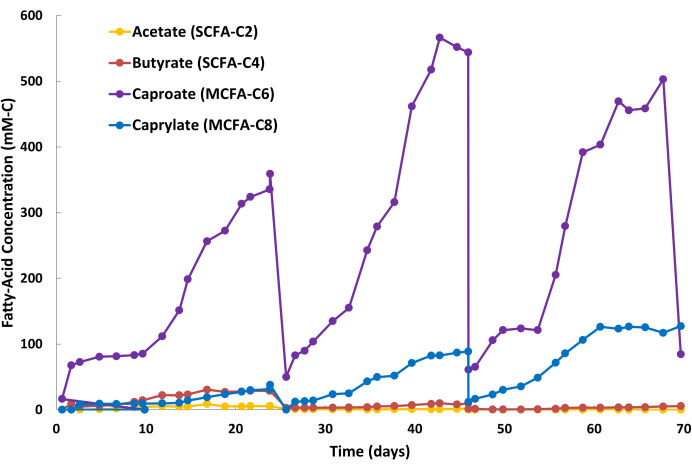
Figure 2: Fatty acid accumulation in the stripping solution. Data showing the short-chain fatty acids and medium-chain fatty acid concentrations during three batch cycles of the stripping solution during continuous liquid-liquid extraction operation. Please click here to view a larger version of this figure.
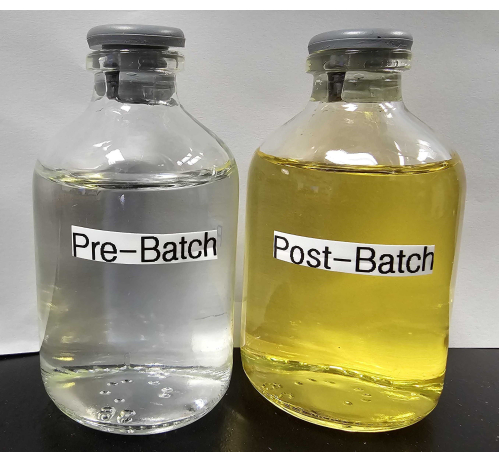
Figure 3: Stripping solution color change after extraction. A photograph showing the color change of the aqueous-phase stripping solution before (i.e., pre-batch) and after (i.e., post-batch) a batch cycle. Please click here to view a larger version of this figure.
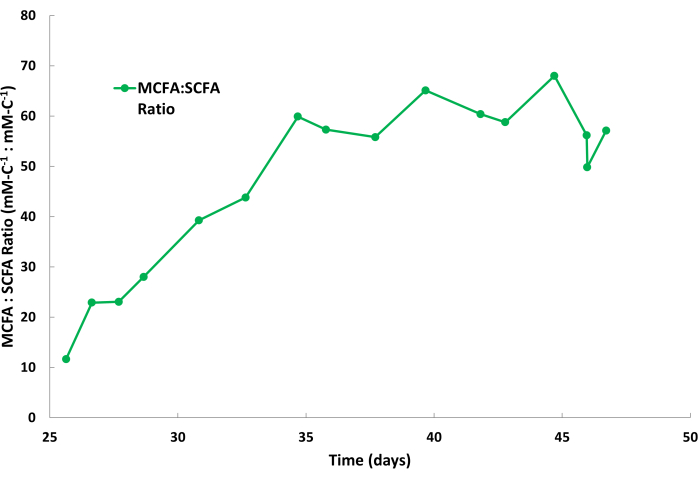
Figure 4: Fatty acid ratios in the stripping solution. Data showing the ratio of medium-chain fatty acids to short-chain fatty acids during a batch cycle of the stripping solution during continuous liquid-liquid extraction operation. Please click here to view a larger version of this figure.
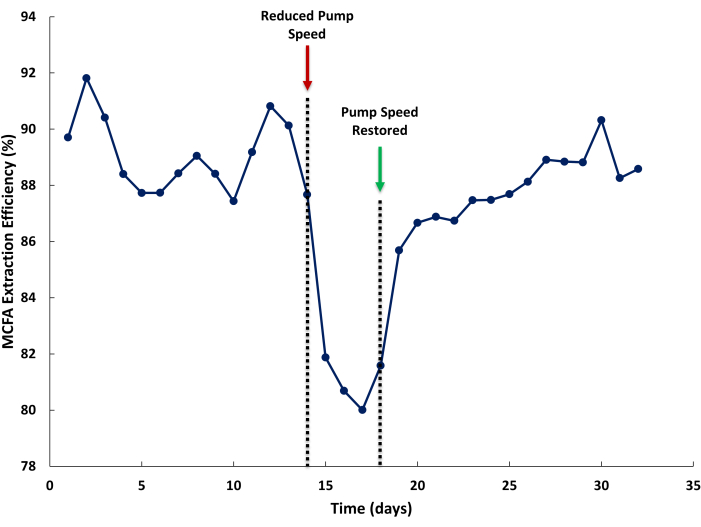
Figure 5: Effect of membrane flow rates on extraction efficiency. Data showing the effect of insufficient flow rates through the forward and backward exchange membrane on medium-chain fatty acid extraction efficiency during operation. Please click here to view a larger version of this figure.
Discussion
Biologically-produced MCFAs are commonly found in mixtures alongside various organic compounds, including SCFAs and alcohols2. Consequently, a selective separation process is necessary to recover and utilize them effectively. The LLE system developed here selectively extracts MCFAs from these mixtures continuously while conserving SCFAs and alcohols. This functionality makes the LLE system particularly suitable for fermentation applications, such as microbial chain elongation, where MCFAs, SCFAs, and alcohols constitute the primary metabolites8. Specifically, the LLE system allows the chain-elongation process to proceed by removing MCFAs, preventing product inhibition1, while leaving the SCFA and alcohol reactants in the fermentation broth for subsequent biological conversion. The LLE system can be customized for other applications by modifying the specific extraction solution. For example, continuous extraction of SCFAs produced during fermentation could be achieved using the same LLE system by removing TOPO from the extractant solution mixture.
Hence, the significance of the LLE method lies in providing a more robust MCFA extraction technique for these bioprocessing and biotechnology applications compared to other methods. In situ biphasic extraction with non-miscible liquids is another approach to extracting MCFAs from fermentation broth15. However, this approach is relatively inefficient. Emulsion layers form between the aqueous phase (i.e., fermentation broth) and the organic phase, severely limiting mass transfer rates. Minimal interfacial fluid mixing between the phase layers also limits mass transfer. Another disadvantage is that microbial cells are in direct contact with the organic phase, causing entrainment, inhibition, and cell death15. Finally, in situ biphasic extraction requires frequent maintenance to remove and replace the organic phase.
Applying high dilution rates within the bioreactor is another method to avoid product inhibition16. High dilution rates can achieve high productivity by maintaining high reactant concentrations in the bioreactor. However, this approach is disadvantageous because it contributes to biomass washout, the generation of large effluent volumes, and high substrate losses (i.e., SCFAs and alcohols), resulting in low yields. These disadvantages can be mitigated using immobilized biomass and effluent recycling, but these interventions add to system complexity17. Finally, the MCFA concentration in the product stream is dilute, making MCFA inefficient and costly.
A new extraction approach could involve continuously distilling the MCFAs with a single forward extraction membrane that physically separates the organic and aqueous phases, thereby retaining and protecting the microbial biomass. The MCFAs would be selectively extracted into the organic phase and then distilled. The raffinate could be continuously recycled to the extraction membrane. Continuous distillation, however, is technically challenging, especially in laboratory settings, and may cause the deterioration or loss of the chemical extractant during long-term operation. Distillation may also cause thermal degradation of the organic phase and MCFA products18.
The LLE process avoids many of the disadvantages associated with these alternative approaches by incorporating several critical features and processing steps. First, the hydrophilic hollow-fiber membrane filter serves the dual purpose of protecting biomass cells (the biocatalysts) from exposure to the extractant solution in the FEB while providing a clear MCFA-rich filtrate that reduces fouling and solid accumulation in the LLE system. Second, to prevent liquid cross-over, we incorporated needle valves to create back pressure on the tube side of each membrane contactor. This precaution maintains a slight transmembrane pressure gradient, preventing undesirable leakage of the hydrophobic organic solvent from the shell side to the aqueous tube side in the FEM and BEM. In addition, the liquid streams are configured to flow in parallel from the base to the top of the FEM and BEM to prevent the entrapment of gas bubbles that could collect inside the membrane modules, reducing the transfer efficiency and causing carry-over. Furthermore, this method uses a diaphragm pump with a chemically resistant PTFE pump head to pump the corrosive MCFA-containing extractant solution, safeguarding the system from corrosion and breakdowns that could compromise the extraction process. Finally, the pH-controlled alkaline stripping solution maintains a pH gradient that allows the continuous transfer of MCFAs through the LLE system at high rates from the bioreactor to the stripping solution reservoir, where the MCFAs deprotonate and accumulate to high titers, facilitating downstream product recovery.
This LLE method is appropriate for continuous MCFA extraction from laboratory-scale bioreactors (up to a 6 L working volume) and has been validated for long-term operation in several studies1,9,11,19. The LLE method can also be applied for larger-scale applications14 (i.e., pilot-scale bioreactors) but requires proportionally scaled membranes and fluid-handling equipment. However, the method does have some limitations, mainly in the area of maintenance and system complexity. Because the process is designed to operate continuously, the membrane modules and pumps must be serviced frequently, resulting in considerable downtimes. Another drawback is that the stripping solution requires relatively large amounts of NaOH and boric acid. Moreover, MCFAs are corrosive and cause certain LLE system components to deteriorate over time. For instance, plastic connectors and the membrane housing may become brittle, requiring replacement during operation. Finally, the fluid handling network in the LLE system is complex, involving many connection points that are liable to develop leaks. Most of these limitations and drawbacks, however, are typical of continuous membrane separation processes and should be expected.
Overall, this LLE protocol offers a robust and efficient approach for selective MCFA extraction, which has implications for advancing research in diverse fields. The method could find many relevant applications in the field of precision fermentation for in-situ recovery of extracellular metabolite products during fermentation. LLE could be a lower-cost alternative to conventional downstream processing (DSP) approaches, such as post-run centrifugation, micro- and ultra-filtration, or solvent extractions performed in batches. Indeed, DSP often represents a major cost driver in industrial fermentation processes. Continuous product extraction using LLE may also enable continuous fermentations, dramatically improving the operations' productivity and run-time efficiencies compared to conventional batch or fed-batch approaches. Also, future research could investigate extractant mediums other than organic solvents, such as deep eutectic solvents or ionic liquids. Lastly, the LLE system described in this protocol was intended for experimental purposes in a laboratory setting; thus, there is still considerable room for optimization studies to reduce energy requirements, membrane area, and overall extraction yields and rates.
Disclosures
There is no conflict of interest.
Acknowledgements
The authors would like to acknowledge the technical and financial support provided by the Agricultural Experiment Station at the University of Georgia. In addition, the authors want to thank Samuel Ogundipe, Dr. Ronald Pegg, and Dr. Joon Hyuk Suh for their help in analyzing process samples.
Materials
| Name | Company | Catalog Number | Comments |
|---|---|---|---|
| 10 L Media Bottle | Duran | 218018658 | |
| 3.5 L Media Bottle | Duran | 218016957 | |
| Boric acid, 99.5%, | ThermoScientific (Fisher Scientific) | 327132500 | |
| Hydrophilic MINIKROS 20CM 0.2UM PES 1MM 1.5TC X 3/4TC | Repligen | N02-P20U-10-N | |
| L/S Variable-Speed Pump Drive; 100 rpm | MasterFlex (VWR) | MFLX07528-10 | |
| L/S Variable-Speed Pump Drive; 300 rpm | MasterFlex (VWR) | MFLX07528-20 | |
| Light Mineral Oil, NF (4 Liters) (CAS: 8042-47-5) | Thomas Scientific | C761Z18 | |
| Liqui-Cel 2.5x8 X50 membrane CO2, PP Housing Viton O-rings (0.5-3 gpm (0.1-0.7 m3/h)), 1/4-in FNPT connections | 3M | LC-02508X50-G453 | |
| Magnetic Stirrer, 20 L Capacity, 110 V | Cole-Parmer | EW-04661-29 | |
| Masterflex L/S Precision Pump Tubing, Tygon, Size 14 | MasterFlex (VWR) | MFLX06402-14 | Specific tubing size will depend on application. |
| Masterflex L/S Precision Pump Tubing, Tygon, Size 16 | MasterFlex (VWR) | MFLX06402-16 | Specific tubing size will depend on application. |
| Masterflex L/S Precision Pump Tubing, Tygon, Size 17 | MasterFlex (VWR) | MFLX06402-17 | Specific tubing size will depend on application. |
| Masterflex L/S Precision Pump Tubing, Tygon, Size 18 | MasterFlex (VWR) | MFLX06402-18 | Specific tubing size will depend on application. |
| MasterFlex L/S Standard Pump Head for Precision Tubing L/S 14, Polycarbonate Housing, CRS Rotor | MasterFlex (VWR) | MFLX07014-20 | Specific pump head size will depend on application. |
| MasterFlex L/S Standard Pump Head for Precision Tubing L/S 14, Polycarbonate Housing, CRS Rotor | MasterFlex (VWR) | MFLX07014-20 | Specific pump head size will depend on application. |
| MasterFlex L/S Standard Pump Head for Precision Tubing L/S 16, Polycarbonate Housing, CRS Rotor | MasterFlex (VWR) | MFLX07016-20 | Specific pump head size will depend on application. |
| MasterFlex L/S Standard Pump Head for Precision Tubing L/S 17, Polycarbonate Housing, CRS Rotor | MasterFlex (VWR) | MFLX07017-20 | Specific pump head size will depend on application. |
| MasterFlex L/S Standard Pump Head for Precision Tubing L/S 18, Polycarbonate Housing, CRS Rotor | MasterFlex (VWR) | MFLX07018-20 | Specific pump head size will depend on application. |
| MasterFlex PTFE-diaphragm pump head, 10 to 100 mL/min | MasterFlex (VWR) | MFLX07090-62 | |
| Oakton 220 pH/ORP/Temperature Controller, 1/8 DIN | Spectrum Laboratory Products | 664-12595-E1 | |
| Oakton 220 pH/ORP/Temperature Controller, 1/8 DIN | Spectrum Laboratory Products | 664-12595-E1 | |
| Oakton Female BNC-to-Stripped Wire Adapter | Spectrum Laboratory Products | 664-12592-E1 | |
| pH Probe with BNC Connector | ThermoScientific | 10010-788 | Any pH probe with a BNC connector will suffice. |
| Precision Flow-Adjustment Valve, White Polypropylene, 1/4 NPT Male x Male | McMaster-Carr | 7792K57 | |
| ProConnex Fittings Kits - A | Repligen | ACPX-KT2-01N | Compatible with Hydrophilic MINIKROS Filter |
| ProConnex Fittings Kits - B | Repligen | ACPX-KT1-01N | Compatible with Hydrophilic MINIKROS Filter |
| Sodium Hydroxide Pellets for Analysis | Sigma Aldrich | 1.06498 | |
| Stainless-Steel Pressure Gauge 0-60 psi Stainless Steel 1/4" NPT 2.5" Face Dial | NA | XJ-219 | Any comparable pressure gauge covering 0-60 psig range will suffice. |
| Trioctylphosphine oxide (TOPO) | Sigma-Aldrich | 346187-100G |
References
- Palomo-Briones, R., et al. Near-neutral ph increased n-caprylate production in a microbiome with product inhibition of methanogenesis. Chem Eng J. 446, 137170(2022).
- Wang, J., Yin, Y. Biological production of medium-chain carboxylates through chain elongation: An overview. Biotechnol Adv. 55, 107882(2022).
- Watanabe, S., Tsujino, S. Applications of medium-chain triglycerides in foods. Front Nutr. 9, 802805(2022).
- Meijaard, E., et al. The environmental impacts of palm oil in context. Nat Plants. 6 (12), 1418-1426 (2020).
- Meijaard, E., Abrams, J. F., Juffe-Bignoli, D., Voigt, M., Sheil, D. Coconut oil, conservation and the conscientious consumer. Curr Bio. 30 (13), R757-R758 (2020).
- Angenent, L. T., Magdalena, J. A., Jeon, B. S., Usack, J. G. Eco-mimicry opens new doors for bioprocess engineers. Joule. 4 (10), 2074-2077 (2020).
- Shahab, R. L., et al. A heterogeneous microbial consortium producing short-chain fatty acids from lignocellulose. Science. 369 (6507), 1214(2020).
- Magdalena, J. A., Angenent, L. T., Usack, J. G. The measurement, application, and effect of oxygen in microbial fermentations: Focusing on methane and carboxylate production. Fermentation. 8 (4), 138(2022).
- Agler, M. T., Spirito, C. M., Usack, J. G., Werner, J. J., Angenent, L. T. Development of a highly specific and productive process for n-caproic acid production: Applying lessons from methanogenic microbiomes. Water Sci Technol. 69 (1), 62-68 (2013).
- Gildemyn, S., et al. Upgrading syngas fermentation effluent using Clostridium kluyveri in a continuous fermentation. Biotechnol Biofuels. 10 (1), 83(2017).
- Ge, S., Usack, J. G., Spirito, C. M., Angenent, L. T. Long-term n-caproic acid production from yeast-fermentation beer in an anaerobic bioreactor with continuous product extraction. Env Sci Technol. 49 (13), 8012-8021 (2015).
- Saboe, P. O., et al. In situ recovery of bio-based carboxylic acids. Green Chem. 20 (8), 1791-1804 (2018).
- Kaur, G., et al. Reactive extraction for in-situ carboxylate recovery from mixed culture fermentation. Biochem Eng J. 160, 107641(2020).
- Carvajal-Arroyo, J. M., et al. Production and extraction of medium-chain carboxylic acids at a semi-pilot scale. Chem Eng J. 416, 127886(2021).
- Choi, K., et al. In situ biphasic extractive fermentation for hexanoic acid production from sucrose by Megasphaera elsdenii NCIMB 702410. Appl Biochem Biotechnol. 171 (5), 1094-1107 (2013).
- Grootscholten, T., Steinbusch, K., Hamelers, H., Buisman, C. Improving medium chain fatty acid productivity using chain elongation by reducing the hydraulic retention time in an upflow anaerobic filter. Bioresour Technol. 136, 735-738 (2013).
- Grootscholten, T., Dal Borgo, F. K., Hamelers, H., Buisman, C. Promoting chain elongation in mixed culture acidification reactors by addition of ethanol. Biomass Bioenergy. 48, 10-16 (2013).
- Cermak, S. C., Evangelista, R. L., Kenar, J. A. Distillation of natural fatty acids and their chemical derivatives. Distillation-Advances from Modeling to Applications Chapter. 5, 109-142 (2012).
- Agler, M. T., Spirito, C. M., Usack, J. G., Werner, J. J., Angenent, L. T. Chain elongation with reactor microbiomes: Upgrading dilute ethanol to medium-chain carboxylates. Energy Environ Sci. 5 (8), 8189-8192 (2012).
Reprints and Permissions
