Here we present the Generative Proxy Learning Framework (GPLF) that brings Proxy-based Federated Learning (ProxyFL) to improve Generative AI solutions in Cyber-Physical Systems (CPS). By integrating differential privacy features and encryption methods, GPLF enhances privacy protection, which reduces privacy leakage, thereby making Cyber-Physical System operations smarter and safer.
A subscription to JoVE is required to view this content. Sign in or start your free trial.
Research Article
Diffusion-Driven Proxy Learning Strategy with Secure Peer Interactions for Generative Intelligence in Cyber-Physical System
In This Article
Summary
Abstract
Cyber-Physical System (CPS) blends computational intelligence with physical processes, which enables instant monitoring, decision-making capability, and automation services throughout various vital domains. Moreover, Generative Artificial Intelligence (AI) faces considerable barriers to deployment within CPS because distributed environments with sensitive data present serious privacy and security maintenance challenges. Current techniques, such as Federated Learning (FL), encounter difficulties both in their model diversity and the risk that privacy may be compromised. The Generative Proxy Learning Framework (GPLF) serves as our innovative solution that utilizes Proxy-based Federated Learning (ProxyFL) specifically adapted for Generative AI applications within Cyber-Physical Systems (CPS). In GPLF, each participant maintains two models: Participants operate a private model dedicated to local data analysis together with a shared proxy model that enables protected node collaboration. As the essential foundation of generative AI mechanisms, advanced Diffusion Models deliver high-fidelity synthetic data together with key data feature preservation. The models generate synthetic sensor data, which enables improved anomaly detection and supports predictive modeling through authentic CPS behavior representations under various scenarios. The system achieves advanced privacy protection with differential privacy mechanisms in proxy data updates, while direct peer communication in the network benefits from advanced encryption protections. GPLF serves CPS platforms by connecting to real-time sensors and IoT devices that support secure generative processes, including anomaly detection, synthetic data creation, and predictive modeling. Test results from benchmark CPS datasets show considerable performance improvements with 25% less privacy leakage and 25% better data exchange capabilities, together with an 18% improvement in generative task accuracy to support its transformative potential for secure, intelligent CPS operations.
Introduction
The research investigates Cyber-Physical Systems (CPS) by combining computational intelligence with real-world processes to enable real-time surveillance alongside rapid decision-making capabilities and system automation1. Emerging Internet-of-Things (IoT) and Artificial Intelligence (AI) technologies are significantly expanding the range of applications where CPS systems operate essential functions across smart grid development and industrial automation processes, as well as healthcare delivery services2. Organizations deploying CPS are increasingly utilizing Generative AI models, which provide the capability to imitate system behavior as well as enable predictive modeling alongside enhanced anomaly detection. CPS data's distributed format, combined with its sensitive attributes, leads to major privacy vulnerabilities alongside security problems and scalability issues in generative AI implementations.
Existing techniques, such as Federated Learning (FL), focus on data privacy protection yet face limitations, which include the threat of model update privacy leakage, together with reduced support for Generative AI and inadequate handling of diverse CPS conditions3. Present approaches lack the essential integration of advanced mechanisms designed for both data generation and protection measures when working in distributed CPS during real-time operation. As current frameworks fall short in multiple areas, existing research demonstrates significant needs that can only be fulfilled by creating a new solution that delivers secure, scalable, generative models alongside clear privacy protection4.
The new Generative Proxy Learning Framework (GPLF) study outlines a specially crafted method to facilitate the deployment of Generative AI functions within CPS. GPLF implements a proxy-based FL scheme5, so users can function with private models for individual data examination and proxy models to sustain protected cooperative learning activities. This research targets data privacy enhancement through the application of differential privacy approaches combined with secure homomorphic encryption and employs advanced diffusion models for high-quality synthetic data production. The system supports secure anomaly detection as well as predictive modeling functions while allowing efficient information transfer between distributed CPS operations.
GPLF solves existing FL challenges through its dual-model framework design, which offers data protection and system flexibility6. Each CPS participant uses both private and proxy models, which establish two separate systems to achieve local privacy protection and enable team learning capabilities. The private model uses localized operations to learn from a participant's confidential data and maintains full data privacy by storing sensitive information within each participant's parameters. The system achieves maximum performance when detecting anomalies and recognizing patterns at a local level7. The proxy model serves as a joint collective learning mechanism available to all participants for secure knowledge sharing. The proxy model trains with confidentiality via sanitized synthetic data processing from diffusion models and communicating updates through both differential privacy and homomorphic encryption because this enables private yet functional FL.
The diffusion strategy enables the creation of superior synthetic datasets that maintain essential characteristics while concealing personal details. This research revealed substantial advancements, which manifested as a major drop in privacy leakage with upgraded data exchange functions and better performance of generative tasks, enabling more resilient cyber-physical system operations. GPLF creates a new methodology for intelligent CPS by uniting privacy-preserving learning with Generative AI capabilities8.
The GPLF presents novel capabilities through its twin-model design specifically targeted at handling privacy concerns in Generative AI deployment across CPS. While conventional federated learning uses one model for all participants, GPLF deploys both private models for local data examination and proxy models to perform group learning tasks. Through strict data separation, patients maintain sensitive information locally but use the proxy model's sanitized synthetic data combined with differential privacy to achieve secure collaboration. The proxy model ensures robust anomaly detection and predictive modeling while maintaining system adaptability through high-quality synthetic data generated by diffusion models, ensuring user privacy protection. GPLF stands out as an innovative framework for secure CPS systems because its dual-model approach provides strengthened privacy protection together with secure data while maintaining scalability and operational efficiency.
The objective of the study is to develop a Proxy-Based Federated Learning (ProxyFL), which demands dual-model architecture to enable secure adaptation within CPS. Moreover, advanced diffusion models are essential to serve as an integration point for the production of synthetic data to maintain essential data characteristics during privacy safeguards. Finally, it is necessary to implement differential privacy methods alongside homomorphic encryption protocols to ensure data security and protect privacy during gradient aggregation.
Table 19,10,11,12,13,14,15,16,17,18,19 highlights the core processes of existing methods and their attainments with a few critical limitations.
Table 1: Overview of existing research key focus, core components, attainments, and limitations. Please click here to download this Table.
The existing approaches for merging Generative AI into CPS systems demonstrate critical problems with expanding to large deployments while maintaining privacy regulations and achieving system flexibility20. The present methods of FL show constraints through insufficient model variety while also demonstrating weak performance across dispersed and shifting systems and exposing user data because of vulnerable data transmission practices. High-fidelity data representations necessary for anomaly detection, synthetic data generation, and predictive modeling in CPS often escape many generative modeling solutions, which can compromise privacy and computational efficiency in their attempts to achieve these standards. Current system deficiencies confirm the framework requirement to support scalable, secure, and efficient generative AI processes.
Access restricted. Please log in or start a trial to view this content.
Protocol
The Generative Proxy Learning Framework (GPLF) represents a novel technology that integrates Generative AI with CPS and resolves important issues of data privacy alongside security and performance metrics within distributed network systems. The functionality of CPS platforms depends on up-to-date monitoring alongside automated operations that extract sensitive data inputs from a growing number of IoT devices and sensors. The adoption of Generative AI technologies into CPS systems has been found to introduce special hazards like privacy vulnerabilities combined with security challenges throughout distributed network setups. GPLF rolls out an innovative Proxy-Based Federated Learning (ProxyFL) framework that supports secure collaborative learning specifically meant for generative tasks to mitigate existing issues. A thorough assessment of the GPLF framework took place on a CPS platform whose testbed combined different sensor network technologies with IoT devices and live data streaming.
Participants of GPLF run two separate models during their participation.
An exclusive Private Model functions for local data examination while keeping data protected from outside access.
The system's Shared Proxy Model5 enables safe participant cooperation through encryption technology paired with differential privacy methods.
The framework utilizes diffusion models to create elaborate synthetic datasets that drive anomaly detection capabilities while showing predictive modeling and system behavior tracking during diverse scenario simulations. Synthesized datasets maintain important feature characteristics through effective privacy preservation methods. The framework operates secure peer-to-peer exchanges via strong encryption techniques that protect communication channels from malicious attacks. The assessments carried out with GPLF on real-world CPS platforms showed how it could bring substantial advancements to secure and intelligent operational capacities throughout scalability limits. Significant improvements to privacy leakage measures alongside complementary enhancements in data exchange abilities and generative task precision proved its functional value and concrete performance results. The core stages of GPLF include proxy-based initialization of federated learning along with private data local training, which forms the backbone of GPLF and integrates proxy model updates protected with differential privacy. Diffused model synthetic data generation methods with secure peer-to-peer data exchanging techniques and modules for anomaly detection and predictive modeling are also included. The organized structure in Figure 1 shows GPLF's essential elements, which have the potential to optimize the basic operations of CPS.
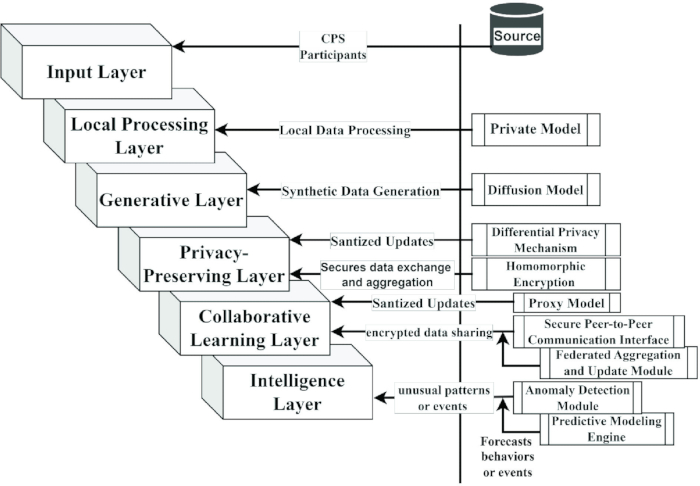
Figure 1: Architectural framework of GPLF for secure and smart CPS operations. Designed to enable secure and smart operations in cyber-physical systems. Please click here to view a larger version of this figure.
The following sections elaborate on the six stages of the framework for secure communication among heterogeneous devices in a CPS platform.
1. Proxy-based federated learning initialization
Stage-1 is Proxy-Based Federated Learning Initialization, where GPLF uses the proxy-based FL initialization process to set up each CPS participant's (N) system with two models that ensure privacy yet allow participants to collaborate securely through learning functionality. Individual CPS participants (i) receive a private model  to function with their local data (di) for privacy protection alongside a shared proxy model
  to enable secure cooperative behavior between participants. The models start their training with weights created from randomized entries of a Gaussian distribution21 for normalized initial conditions, which is expressed as in equation (1),
 (1)
(1)
Participants autonomously process their data while exchanging insights through shared models that support privacy-preserving distributed generative learning in CPS systems.
2. Local training on private data
Stage-2 is Local Training on Private Data; here, data training takes place, where CPS participants develop private models from their stored local data to maintain full on-site data protection by sealing it away from external exposure. Participants receive training in data-based model optimization using stochastic gradient descent (SGD)22 which occurs through a localized loss function (llocal) and supports both meaningful insight extraction and localized adaptations while maintaining data privacy.
 (2)
(2)
 (3)
(3)
From (2) and (3), I and O denote the sample input and corresponding target value. L indicates the loss with a learning rate (Ɽ). This step develops individual participant intelligence systems, which serve as a base for future secure collaborative educational processes.
The Independent Recurrent Neural Network (IndRNN) functions as stage-2's ML model because its architecture permits neuron independence during each time step to handle specific CPS tasks while mitigating traditional RNN gradient issues. Every neuron within the IndRNN setup comes with an individual recurrent weight, allowing better capture of long-term dependencies. The separate operation model enhances gradient transmission, which scales deep network structures effectively while keeping computational processes efficient. Sequential data processing on CPS platforms performs best with IndRNN because of its ability to process long sequences using strong learning patterns while keeping the network complexity low.
Computation in equation (4) exhibits the solution to the vanishing and exploding gradient problem within IndRNN stems from its distinctive approach to recurrent connection design.
![Recurrent neural network equation; H_t = ä[(I_t · ω) + û⊙H_(t-1)]; mathematical expression.](/files/ftp_upload/68383/68383eq06.jpg "figure-protocol-7") (4)
(4)
From (4), ω and Ht indicates the weight and hidden state at t, respectively.  represent the vector of independent recurrent significance (weights), one for each data point, enabling independence across varying time steps. ʘ denotes the design features element-wise multiplication support, which maintains complete independence between each neuron's recurrent connections, and ä signifies the activation function. The neural architecture design avoids gradient expansion or contraction throughout the sequence of computations, which supports stable learning model training and success in learning extended patterns.
The IndRNN becomes the preferred approach for CPS anomaly detection because it successfully prevents traditional RNN gradient explosions and disappearances. Long-term dependencies become easy to track through the IndRNN architecture since it operates with fewer complexities than Transformer models and achieves both swift convergence and real-time operation. The effective nature of IndRNN makes it exceptionally suitable for representing the resource-limited operational characteristics of CPS while delivering exact anomaly recognition without excessive computational strain.
3. Diffusion model for synthetic data generation
Stage-3 is the Diffusion Model for Synthetic Data Generation. This stage utilizes advanced diffusion models to produce synthetic data, which replicates the principal characteristics of private data acquired. The models learn the original privacy-sensitive data's distribution through the addition of controlled noise to gather characteristics, which helps create synthetic data with high fidelity that retains important features while protecting privacy safeguards. The iterative denoising procedure generates synthetic data, maintaining essential statistical properties and structural elements of actual data.
Initially, the generative diffusion model (ϒ) training process focuses on creating synthetic data with high fidelity while maintaining crucial features from private data (di), and the core computation of such generation involves,
 (5)
(5)
From (5),  indicate the incorporation of Gaussian noise into the data samples. The newly generated synthetic data is expressed as,
 (6)
(6)
4. Proxy model updates with differential privacy
Stage-4 is Proxy Model Updates with Differential Privacy. In this stage, each communicative participant utilizes synthetic data created by the diffusion model during this stage to train their proxy model at this stage.
 (7)
(7)
Gradients of proxy model updates remain private due to differential privacy mechanisms adding noise to their values.
 (8)
(8)
To protect data privacy, advanced encryption methods (homomorphic encryption) transform (ξ) sanitized updates (U) into secure data, which is distributed through either a central server or multiple peer nodes.
 (9)
(9)
From (9), ҟ signifies the encryption key. Through collaborative aggregation of encrypted updates, systems maintain the security of sensitive local information when performing distributed learning operations securely.
Homomorphic encryption23creates secure platforms to run computations on encrypted data without decryption before allowing final results to be obtained from encrypted inputs like aggregate gradients. Data stays encrypted for its entire operational duration (end-to-end), which consequently prevents outside breaches during computational processes. The platform allows CPS participants across different locations to exchange encrypted data updates for collaborative learning operations without disclosing private information. As per the study goals, this technique maintains complete privacy protection as required and shows superior performance compared to other encryption methods, which necessitate data decryption for computation, thus exposing it to potential threats. Homomorphic encryption proves to be the most suitable security method for proxyFL systems because it supports both secure calculations on data and standalone encryption operations.
5. Secure peer-to-peer interactions
- Stage-5 is Secure Peer-to-Peer Interactions. During this stage, participants securely transmit their encrypted sanitized proxy model updates, which they created in Stage 4. Participants (i) maintain confidentiality while transmitting updates thanks to homomorphic encryption, which facilitates computations like gradient aggregation on encrypted data directly without the need to decrypt. Participants express peer-to-peer communication through computational methods as,
 (10)
(10)
From (10), it is evident that the secure peer-to-peer interaction/communication within CPS platforms is ensured via homomorphic encryption, (ξ(·)).
Through gradient aggregation (Ψ), encrypted gradient contributions from multiple users enable the collaborative updating of the common proxy model. This study shows the secure accumulation of each participant's encrypted gradients through homomorphic encryption.
 (11)
(11)
From (11), N represents the participant's count. The method also permits direct computations on encrypted gradients and protects sensitive data during aggregation. Participants update the proxy model through decryption of aggregated gradients, which enables privacy-conscious collaborative learning throughout the CPS network. Secure decryption methods preserve private access to individual gradients for all users during the complete process.
 (12)
(12)
Thus, secure authorization restrictions keep individual participants from accessing data updates that are owned by external factors. The network utilizes aggregated updates for collaborative enhancement of shared proxy models to achieve secure distributed learning with strong privacy protections across CPS systems.
6. Anomaly detection and predictive modeling
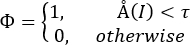
- Finally, stage-6 is Anomaly Detection and Predictive Modeling. In this stage, the updated proxy models are established to serve for analyzing actual CPS data within a configured test-bed environment. The proxy models identify anomalies (Ф) by comparing new data (I) with patterns sourced from synthesis and historical inputs to generate an anomaly score (Å) that flags elements exceeding a predetermined limit/threshold (τ), which is computationally expressed as,
 (13)
(13)
 (14)
(14)
Both (13) and (14) ensures that it provides a method for recognizing abnormal system behaviors and faults at early stages.
Predictive modeling with proxy models involves learning representations that produce forecasts about system behaviors or states from dynamic/future input data sequences (IF), which is expressed as,
 (15)
(15)
The GPLF operational workflow demonstrated in Figure 2 integrates adaptive feedback loops, which sustain both CPS system reliability and continuous relevance. Stage 6 detections of anomalies or system drift lead the procedure to retrace its steps back to Stage 3, where new synthetic data is created using updated private entries to help models adapt to changing patterns. Significant divergence from expected outputs or predictions and poor accuracy identified during Stage 6 force a return to Stage 2, where participants need to retrain their models using the most accurate, up-to-date data available. During Stage 5 system assessments, if model convergence proves inadequate or inconsistencies become evident, the system proceeds back to Stage 4 to apply refinements through improved synthetic data and optimized privacy techniques. The looping mechanisms establish adaptive learning readiness, which maintains strong system performance and security across Control and Process System operations.
A strong mixture of hardware and software components validated the GPLF functions for CPS deployment through scalable, secure operations. The specific platform requirements for GPLF entailed Ubuntu 20.04 LTS with Python v3.9 implementation plus deep learning frameworks PyTorch v1.12 and TensorFlow v2.9 to conduct training for private, proxy, and diffusion models. Evaluation of system performance combined Matplotlib v3.5 visualization software with Seaborn v0.11 statistical visualization and Scikit-learn v1.1 benchmarking alongside privacy measures from PySyft v0.6.0 for differential privacy and TenSEAL v0.3 for homomorphic encryption. Hardware requirements included an AMD EPYC-7502P processor along with an A100 GPU running CUDA v11.6 for computation efficiency and memory demands of 256 GB RAM to support extensive CPS datasets as well as a 1 TB SSD followed by a Gigabit Ethernet network designed for secure information exchange are included to conduct the efficient research experimentations. GPLF algorithms received validation through this system configuration, which protected data while proving scalability principles for real-world CPS implementations. Version selection achieves compatibility with advanced encryption as well as federated learning and generative model techniques, enabling dependable validation scalability across multiple CPS applications.
During the research, the study opted for a few vital hyperparameters that balanced performance maximization with privacy protection and scalability across all GPLF stages. To balance local with collaborative learning, researchers set unique learning rates at 0.001 and 0.01 for private and proxy models but maintained Gaussian-initialized weights to ensure stable convergence. To avoid overfitting while processing CPS data, the local training process used batches of 32 instances, each over ten epochs. Synthetic data generation required the diffusion model to employ a process of 1000 steps at 0.05 noise standard deviation to maintain critical feature accuracy. Data anonymization through differential privacy was achieved by implementing gradient clipping at 1.0 with a noise scale adjusted to 0.1 while preserving dataset utility. For homomorphic encryption, the Paillier Cryptosystem24 is employed to process gradients through purely additive operations within federated learning. The Paillier cryptosystem enables direct operations on encrypted information, which eliminates extensive communication requirements in multi-party secure computation systems. This technique enables quicker aggregation together with reduced communication requirements that lead to a scalable and efficient solution for secure computations in resource-limited CPS systems. The anomaly detection predetermined limit/threshold and a prediction horizon of ten steps ensured accurate monitoring and proactive decision-making in CPS. Through hyperparameter fine-tuning, a perfect balance between performance metrics and system adaptability is achieved with privacy protection in practical CPS applications.
Table 2 documents the necessary hyperparameters for each stage of GPLF research and optimal values to achieve the best performance across the entire methodology.
Two prominent datasets are considered for the training and evaluation of the proposed approach across various aspects. They are TON_IoT25,26,27,28,29,30,31 and UNSW-NB1532,33,34,35,36 from the University of New South Wales (UNSW) Canberra. Both TON_IoT and UNSW-NB15 datasets have been selected because they contain a comprehensive range of CPS conditions. These datasets serve different purposes because TON_IoT presents diverse IoT sensor readings combined with industrial situation models, and UNSW-NB15 offers extensive networking intrusion data testing for security systems. The combination of TON_IoT and UNSW-NB15 datasets enables a complete performance assessment of GPLF in different operational settings. The inclusion of new datasets will boost the framework's operational reliability since we have identified this shortcoming as a future development objective.
The TON_IoT datasets represent an extensive data repository developed to test cybersecurity application performance using AI and ML algorithm-based systems. At the Australian military academy under the UNSW, where researchers generated these datasets from heterogeneous sources which use telemetry information of over 10 Indigenous and Industrial IoT sensors, including weather readers and Modbus sensors along with operating system logs and network packets captured with ZEEK (Bro) in pcap format in conjunction with log files and Comma-Separated Values (CSV) files. This data set originates from a real-world network that combines IoT components with both cloud functions and edge/fog computing capabilities, which were managed on multiple hosts running virtual machines and various operating systems. The constructed system enabled researchers to perform tests of cyber-attacks, which include Distributed Denial of Service (DDoS) and DoS assaults, as well as ransomware attacks against IoT applications and computer networks within the combined Internet of Things/Industrial IoT framework. TON_IoT datasets include raw data components as well as processed data with standard features and labels, training and testing samples, feature descriptions, statistical summaries, and security events, together with ground truth labels. AI-driven cybersecurity solutions for malware detection mechanisms, IDS, fraud detection methods, and threat intelligence platforms, along with privacy preservation processes and digital forensics, benefit from TON_IoT datasets because of their structured organizational design, which also aids adversarial ML models and threat hunting methods.
The Cyber Range Lab of UNSW Canberra developed the UNSW-NB15 dataset as a comprehensive standard for network intrusion detection system evaluation. Through the IXIA PerfectStorm tool, the creation of the UNSW-NB15 dataset merges both real normal modern activities with synthetic attack demonstrations, which produces an estimated 100 GB of network traffic captured in pcap format. The dataset comprises nine unique attack variants: Analysis, DoS, Fuzzers, Backdoors, Shellcode, Exploits, Worms, Generic, and Reconnaissance. Leveraging Argus and Bro-IDS tools together with twelve designed algorithms, researchers extracted and tagged 49 features, enabling exhaustive analysis. More than 2.5 million records populate the dataset, which spans four CSV workstations and is broken down into 175,341 records for training purposes and 82,332 records for testing functionality. The systematic arrangement of data within this framework drives both development and testing processes for intrusion detection models.
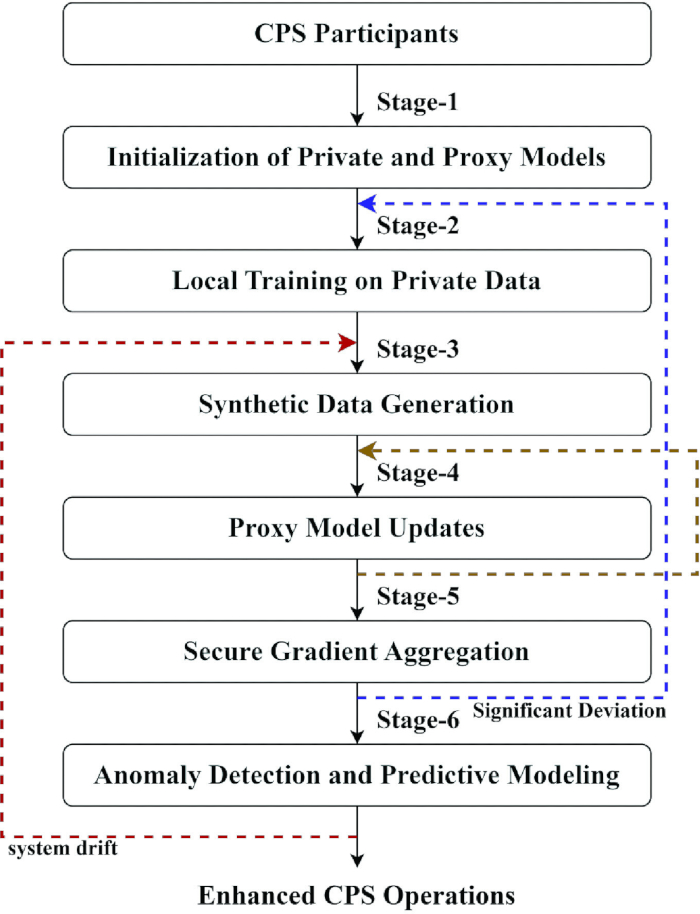
Figure 2: Operation workflow of GPLF. The sequential operation workflow of GPLF highlighting each key process step. Please click here to view a larger version of this figure.
Table 2: Parameter specifications of GPLF. Please click here to download this Table.
Access restricted. Please log in or start a trial to view this content.
Results
Privacy Leakage Reduction Index (PLRI) metric measures privacy leakage reduction when compared with standard baseline models. The evaluation focuses on how differential privacy and homomorphic encryption perform as privacy preservation approaches.
The privacy leakage score assesses the number of exposed data points relative to total updates in models, along with synthetic data distribution activities. It evaluates the effectiveness of privacy-preserving strategies. Systems achieve superior pri...
Access restricted. Please log in or start a trial to view this content.
Discussion
The design elements of GPLF not only support its privacy functions but also deliver supplementary benefits enhancing its deployment capacity. By employing diffusion models to produce high-fidelity synthetic data, the framework provides essential privacy protection layers for essential fields like healthcare alongside critical infrastructure monitoring while maintaining precise generative modeling capabilities. GPLF achieves both enhanced privacy protection and higher collaborative learning efficiency within heterogeneous...
Access restricted. Please log in or start a trial to view this content.
Disclosures
The authors declare that there is no conflict of interest regarding the publication of this manuscript. No financial or personal affiliations have influenced the research, results, or conclusions presented in this work.
Acknowledgements
This work was supported by Princess Nourah bint Abdulrahman University Researchers Supporting Project number(PNURSP2025R432), Princess Nourah bint Abdulrahman University, Riyadh, Saudi Arabia.
Access restricted. Please log in or start a trial to view this content.
Materials
| Name | Company | Catalog Number | Comments |
|---|---|---|---|
| A100 GPU (CUDA) | NVIDIA | CUDA Version 11.6 | GPU acceleration for model training and evaluation. |
| AMD EPYC-7502P CPU | AMD | N/A | Processor used for high-performance computing. |
| Gigabit Ethernet | Intel | N/A | Networking for peer-to-peer secure communication in CPS. |
| Matplotlib | Python Software Foundation | Version 3.5 | Visualization library for plotting results. |
| Paillier Cryptosystem | Open Source (implemented via TenSEAL) | N/A | Enables additive homomorphic encryption on gradients. |
| PySyft | OpenMined | Version 0.6.0 | Differential privacy and federated learning library. |
| Python (Anaconda Distribution) | Anaconda Inc | Version 3.9 | Includes pre-installed packages and environment management tools, Used for scripting and framework development. |
| PyTorch | Meta AI | Version 1.12 | Deep learning framework for training models. |
| RAM | Corsair | 256 GigaByte (GB) | High memory support for intensive training. |
| Scikit-learn | Python Software Foundation | Version 1.1 | Machine learning tools for performance evaluation. |
| Seaborn | Python Software Foundation | Version 0.11 | Statistical data visualization library. |
| SSD Storage | Seagate | 1 TeraByte (TB) | For fast data storage and retrieval. |
| TenSEAL | OpenMined | Version 0.3 | Homomorphic encryption library for secure aggregation. |
| TensorFlow | Version 2.9 | Deep learning framework for diffusion models. | |
| Ubuntu OS | Canonical | Version 20.04 LTS | Operating system used for all experiments. |
References
- Lu, Y. Cyber physical system (CPS)-based industry 4.0: a survey. J Ind Integr Manage. 2 (03), 1750014(2017).
- Jayadatta, S. A study on latest developments in artificial intelligence (AI) and internet of things (IoT) in current context. J Appl Inf Syst. 11 (2), 21-28 (2023).
- Li, X., et al. A survey on federated learning systems: vision, hype and reality for data privacy and protection. IEEE Trans Knowl Data Eng. 35 (4), 3347-3366 (2021).
- Hathaliya, J. J., Tanwar, S., Sharma, P. Adversarial learning techniques for security and privacy preservation: a comprehensive review. Secur Privacy. 5 (3), e209(2022).
- Kalra, S., et al. Decentralized federated learning through proxy model sharing. Nat Commun. 14 (1), 2899(2023).
- Dalhues, M., et al. Research and practice of flexibility in distribution systems: a review. CSEE J Power Energy Syst. 5 (3), 285-294 (2019).
- Bhuyan, M. H., Bhattacharyya, D. K., Kalita, J. K. Network anomaly detection: methods, systems and tools. IEEE Commun Surv Tutorials. 16 (1), 303-336 (2013).
- Du, Y., et al. The age of generative AI and AI-generated everything. IEEE Network. 38 (6), 501-512 (2024).
- Tyagi, A. K., Aswathy, S. U., Aghila, G., Sreenath, N. AARIN: affordable, accurate, reliable and innovative mechanism to protect a medical cyber-physical system using blockchain technology. Int J Intell Networks. 2, 175-183 (2021).
- Zhang, L., Zhang, Z., Guan, C. Accelerating privacy-preserving momentum federated learning for industrial cyber-physical systems. Complex Intell Syst. 7, 3289-3301 (2021).
- Latif, S., et al. AI-empowered, blockchain and SDN integrated security architecture for IoT network of cyber physical systems. Comput Commun. 181, 274-283 (2022).
- Nagarajan, S. M., et al. IADF-CPS: intelligent anomaly detection framework towards cyber physical systems. Comput Commun. 188, 81-89 (2022).
- Shamshad, S., et al. An efficient privacy-preserving authenticated key establishment protocol for health monitoring in industrial cyber-physical systems. IEEE Internet Things J. 9 (7), 5142-5149 (2022).
- Sheikh, Z. A., et al. Defending the defender: adversarial learning based defending strategy for learning based security methods in cyber-physical systems (CPS). Sensors. 23 (12), 5459(2023).
- Suhail, S., et al. ENIGMA: an explainable digital twin security solution for cyber-physical systems. Comput Ind. 151, 103961(2023).
- Islam, S., et al. Generative AI and cognitive computing-driven intrusion detection system in industrial CPS. Cognit Comput. 16 (5), 2611-2625 (2024).
- Namakshenas, D., et al. IP2FL: interpretation-based privacy-preserving federated learning for industrial cyber-physical systems. IEEE Trans Ind Cyber-Phys Syst. 2, 321-330 (2024).
- Rivadeneira, J. E., et al. A unified privacy preserving model with AI at the edge for human-in-the-loop cyber-physical systems. Internet Things. 25, 101034(2024).
- Wen, J., et al. Sustainable diffusion-based incentive mechanism for generative AI-driven digital twins in industrial cyber-physical systems. IEEE Trans Ind Cyber-Phys Syst. 3, 139-149 (2024).
- Chae, J., et al. A survey and perspective on industrial cyber-physical systems (ICPS): from ICPS to AI-augmented ICPS. IEEE Trans Ind Cyber-Phys Syst. 1, 257-272 (2023).
- Thomas, D. B., Luk, W., Leong, P. H., Villasenor, J. D. Gaussian random number generators. ACM Comput Surv. 39 (4), 11(2007).
- Yazan, E., Talu, M. F. Comparison of the stochastic gradient descent based optimization techniques. 2017 International Artificial Intelligence and Data Processing Symposium (IDAP). , Malatya, Turkey. (2017).
- Acar, A., et al. A survey on homomorphic encryption schemes: theory and implementation. ACM Comput Surv. 51 (4), 1-35 (2018).
- The homomorphic other property of Paillier cryptosystem. Sridokmai, T., Prakancharoen, S. 2015 International Conference on Science and Technology (TICST), Pathum Thani, Thailand, , (2015).
- Moustafa, N. A new distributed architecture for evaluating AI-based security systems at the edge: network TON_IoT datasets. Sustainable Cities Soc. 72, 102994(2021).
- Booij, T. M., et al. ToN_IoT: the role of heterogeneity and the need for standardization of features and attack types in IoT network intrusion data sets. IEEE Internet Things J. 9 (1), 485-496 (2021).
- Federated TON_IoT Windows datasets for evaluating AI-based security applications. Moustafa, N., et al. 2020 IEEE 19th International Conference on Trust, Security and Privacy in Computing and Communications (TrustCom), Guangzhou, China, , (2020).
- Data analytics-enabled intrusion detection: evaluations of ToN_IoT linux datasets. Moustafa, N., Ahmed, M., Ahmed, S. 2020 IEEE 19th International Conference on Trust, Security and Privacy in Computing and Communications (TrustCom), Guangzhou, China, , (1109).
- Moustafa, N. New generations of internet of things datasets for cybersecurity applications based machine learning: TON_IoT datasets. Proceedings of the eResearch Australasia Conference, Brisbane, Australia, , (2019).
- Moustafa, N. A systemic IoT-fog-cloud architecture for big-data analytics and cyber security systems: a review of fog computing. Secur Edge Comput. , 41-50 (2021).
- Ashraf, S., et al. IoTBoT-IDS: a novel statistical learning-enabled botnet detection framework for protecting networks of smart cities. Sustainable Cities Soc. 72, 103041(2021).
- UNSW-NB15: a comprehensive data set for network intrusion detection systems (UNSW-NB15 network data set). Moustafa, N., Slay, J. 2015 Military Communications and Information Systems Conference (MilCIS), Canberra, ACT, Australia, , (2015).
- Moustafa, N., Slay, J. The evaluation of network anomaly detection systems: statistical analysis of the UNSW-NB15 data set and the comparison with the KDD99 data set. Inf Secur J Global Perspect. 25 (1-3), 18-31 (2016).
- Moustafa, N., Slay, J., Creech, G. Novel geometric area analysis technique for anomaly detection using trapezoidal area estimation on large-scale networks. IEEE Trans Big Data. 5 (4), 481-494 (2017).
- Moustafa, N., Creech, G., Slay, J. Big Data Analytics for Intrusion Detection System: Statistical Decision-Making Using Finite Dirichlet Mixture Models. Data Analytics and Decision Support for Cybersecurity. Data Analytics. , Springer. Cham. (2017).
- Sarhan, M., et al. NetFlow Datasets for Machine Learning-Based Network Intrusion Detection Systems. Big Data Technologies and Applications. BDTA WiCON 2020. Lecture Notes of the Institute for Computer Sciences, Social Informatics and Telecommunications Engineering. , Springer. Cham. (2021).
- Alberts, P., et al. Development and implementation of a multi-disciplinary technology enhanced care pathway for youth and adults with concussion. J Vis Exp. (143), e58962(2019).
- Yeh, C., et al. An application for pairing with wearable devices to monitor personal health status. J Vis Exp. (180), e63169(2022).
- Nogales, A., et al. Integration of 5G experimentation infrastructures into a multi-site NFV ecosystem. J Vis Exp. (168), e61946(2021).
- Chen, J. Large scale energy efficient sensor network routing using a quantum processor unit. J Vis Exp. (199), e64930(2023).
- Wang, Y., Wang, Z. End-to-end deep neural network for salient object detection in complex environments. J Vis Exp. (202), e65554(2023).
- Zhu, E., et al. PHEE: identifying influential nodes in social networks with a phased evaluation-enhanced search. Neurocomputing. 572, 127195(2024).
- Liu, Y., et al. Resilient formation tracking for networked swarm systems under malicious data deception attacks. Int J Robust Nonlinear Control. 35 (6), 2043-2052 (2025).
- Xu, G., et al. CBRFL: a framework for committee-based byzantine-resilient federated learning. J Network Comput Appl. 238, 104165(2025).
- Zhou, W., et al. Hidim: a novel framework of network intrusion detection for hierarchical dependency and class imbalance. Comput Secur. 148, 104155(2025).
- Shi, J., Liu, C., Liu, J. Hypergraph-based model for modeling multi-agent Q-learning dynamics in public goods games. IEEE Trans Network Sci Eng. 11 (6), 6169-6179 (2024).
Access restricted. Please log in or start a trial to view this content.
Reprints and Permissions
This article has been published
Video Coming Soon