Research Article

Hybrid Convolutional Neural Network and Generative Adversarial Network Framework for Robust Deepfake Detection: Advancing Accuracy, Scalability, and Multimodal Integration

DOI:

10.3791/68426

August 19th, 2025

In This Article

Summary

Loading...
$$\rightleftharpoonup{xx}$$ $$\longleftharp{xx}$$, $$\longrightharp{xx}$$,

This paper proposes a hybrid Convolutional Neural Network-Generative Adversarial Network (CNN-GAN) framework for deepfake detection, integrating adversarial training, temporal analysis, and multimodal methods. The approach achieves 98.5% detection accuracy, demonstrates robust generalization across diverse datasets, and supports real-time optimization to address scalability, adversarial robustness, and misinformation mitigation.

Abstract

Loading...
$$\rightleftharpoonup{xx}$$ $$\longleftharp{xx}$$, $$\longrightharp{xx}$$,

Deepfakes pose critical threats to digital media integrity and societal trust. This paper presents a hybrid deepfake detection framework combining Convolutional Neural Networks (CNNs) and Generative Adversarial Networks (GANs) to address challenges in scalability, generalizability, and adversarial robustness. The framework integrates adversarial training, a temporal decay analysis model, and multimodal detection across audio, video, and text domains. Evaluated on the FaceForensics++ benchmark dataset, the hybrid CNN-GAN model achieved state-of-the-art performance with 98.5% accuracy, 99.1% precision, 97.9% recall, and a Receiver Operating Characteristic-Area Under Curve of 0.995, surpassing conventional models like ResNet50, XceptionNet, and EfficientNet. The temporal analysis component models the decay of deepfake detectability over time, guiding proactive retraining, while the multimodal module identified 97.8% of cross-modal inconsistencies. Simulation of deepfake propagation in social networks revealed significant socio-technical impacts, emphasizing the need for early detection systems and public awareness campaigns to curb misinformation spread. Optimized for real-time deployment, the framework balances high scalability with ethical considerations. This study highlights the importance of interdisciplinary approaches to deepfake detection in advancing AI-driven safeguards for digital ecosystems. Future work will focus on developing lightweight detection models, improving adversarial defenses, and expanding domain-specific applications to enhance the framework's applicability and resilience.

Introduction

Loading...
$$\rightleftharpoonup{xx}$$ $$\longleftharp{xx}$$, $$\longrightharp{xx}$$,

Advancements in artificial intelligence (AI) and deep learning in recent years have transformed various domains, enabling applications such as natural language processing, computer vision, and autonomous systems1. One of the most significant breakthroughs has been in generative modeling, particularly with Generative Adversarial Networks (GANs)2. These models have enabled the creation of hyper-realistic synthetic media known as deepfakes, which involve the manipulation of audio, video, or images to convincingly mimic real-world subjects. While this technology offers creative possibilities in areas like filmmaking, virtual reality, and digital content creation, it also raises profound ethical, legal, and societal concerns. Deepfakes pose a significant threat in several domains, including media authenticity, cybersecurity, and democratic processes. For instance, deepfakes have been weaponized in disinformation campaigns aimed at spreading false narratives and influencing public opinion3. Moreover, they have been used for malicious purposes such as identity theft, blackmail, and harassment, directly threatening individual privacy and security4. The capability of deepfakes to erode trust in digital media and sow confusion during critical events (e.g., elections or public emergencies) underscores the urgency of developing solutions to counter this technology's misuse and vulnerabilities5.

From a technical perspective, the proliferation of deepfake technology is fueled by its accessibility. Open-source tools, pretrained models, and intuitive interfaces now make it possible for even non-experts to create sophisticated deepfakes6. However, as the fidelity of synthetic media improves, detecting their authenticity becomes increasingly challenging. Advanced deepfake generators, including modern architectures like StyleGAN and CycleGAN, exploit the ability of neural networks to model high-dimensional data distributions, making them adept at producing forgeries that are often indistinguishable from real content7. Several obstacles impede the development of a detection framework despite a significant amount of research and development work. The accuracy of existing detection algorithms deteriorates as they encounter diverse datasets and extensive real-world environments, despite working properly in controlled laboratories. The detection performance of systems suffers significantly when resolution, compression quality, or format varies between examples. The training process of detection systems usually occurs with specific datasets, which hinders their ability to detect deepfakes generated from new methods and unseen data. When used in real-world situations, these detectors become less effective due to their limited generalization capabilities. Deepfake generators are developed through adversaries by implementing methods that specifically work to hide detection systems. These countermeasures result in the defeat of even the latest models because of bypass8. The opaque nature of deep learning models causes widespread criticism because their decision processes do not provide explainable results, particularly in essential areas such as law enforcement and judiciary activities9.

Individual studies in the domain of deepfake research work separately from one another because they target independent problems without integration. Researchers have decided to address three main areas of deepfake challenges separately through detection accuracy, adversarial robustness, and ethical exploration10. Consequently, traditional detection mechanisms that rely on heuristic or domain-specific artifacts are often rendered obsolete by these evolving generation techniques.

Challenges in deepfake detection and mitigation

Scalability: Many existing detection algorithms perform well in controlled experimental settings but struggle to maintain accuracy at scale when applied to diverse, real-world datasets. For example, differences in resolution, compression quality, or file format can significantly impact detection performance11.

Generalizability: Detection systems are often trained on specific datasets, which limits their ability to recognize deepfakes generated by novel methods or from unseen data. This lack of generalization hinders their effectiveness in real-world applications, as models may fail when faced with deepfakes that differ from their training examples.

Adversarial robustness: Deepfake generators continue to evolve by incorporating adversarial techniques designed to evade detection. Such countermeasures exploit vulnerabilities in detection models, rendering even state-of-the-art systems ineffective. For instance, Khan et al. demonstrated that adversarially optimized deepfakes could reduce detection accuracy by as much as 30%12.

Explainability: Deep learning-based detectors are frequently criticized for their "black-box" nature; the lack of interpretability in their decision-making processes raises concerns about reliability in high-stakes scenarios like law enforcement or judicial settings. To address this, researchers like Domenteanu et al. and Verdoliva advocate for integrating explainable AI (XAI) techniques into detection models to enhance transparency and trustworthiness7,9.

Ethical and societal concerns: Beyond technical hurdles, deepfakes pose enormous ethical and societal risks. According to Naitali et al., deepfakes are increasingly misused in political disinformation campaigns, identity theft, and harassment. As Chesney and Citron also reported, this can lead to a significant erosion of trust in media and threaten democratic processes8.

The need for a unified framework and emerging solutions

The current landscape of deepfake research is fragmented, with studies often addressing these challenges in isolation. To combat deepfakes effectively, a unified framework that integrates diverse approaches is essential. Recent bibliometric analyses show an annual growth rate of over 50% in deepfake-related publications, highlighting the intense academic and industrial focus. Funding trends mirror this, with governments and private organizations dedicating substantial resources to adaptable solutions, particularly for projects that merge hybrid architectures like CNN-GANs to enhance detection accuracy.

An effective framework must leverage insights from multiple domains and incorporate key algorithmic innovations that researchers have recently proposed:

Hybrid frameworks: As a promising solution, hybrid models that integrate CNNs for feature extraction and GANs for adversarial training have achieved state-of-the-art accuracy of 98.5% and a ROC-AUC of 0.995 on benchmark datasets.

Multimodal analysis: Building upon findings from researchers like Nguyen et al., the combination of audio, video, and text analysis enhances detection capabilities5. This approach is effective in identifying inconsistencies across data streams (e.g., lip-sync mismatches) that single-modality systems often miss.

Advanced text detection: Natural language processing (NLP) techniques, using models like RoBERTa, have shown significant improvements in detecting semantic inconsistencies in deepfake text, such as manipulated tweets.

Adversarial training: To secure systems against evasion, adversarial training techniques have been incorporated into detection pipelines, proving effective in reducing the impact of adversarially generated deepfakes.

Dataset development: Researchers have emphasized the need for comprehensive and diverse datasets to train and evaluate models effectively. While public datasets like FaceForensics++ have been instrumental, more diversity is required to address real-world challenges.

Contributions of this research:

Building on the above motivations, this study proposes a comprehensive framework that combines bibliometric insights, mathematical modeling, and advanced algorithmic techniques to address deepfake challenges holistically. Key contributions include:

Bibliometric analysis: We examined publications in leading academic databases to identify key focus areas, such as the rise of multimodal detection and the growing interest in explainable AI, which guided our research objectives.

Mathematical model for susceptibility: We developed a logistic regression-based model to quantify the probability of correct classification by incorporating factors such as media quality, GAN architecture, and dataset diversity.

Hybrid CNN-GAN detection framework: A novel detection mechanism is proposed that unites the strengths of CNNs and GANs. The model is trained adversarially and achieved significantly improved accuracy, precision, and recall compared to baseline detectors.

Socio-technical simulations: We implemented simulations to study the spread and impact of deepfakes on social networks. The findings offer insights into their potential societal impact and inform policy-oriented mitigation strategies. The FaceForensics++ dataset was used for this study due to its comprehensive coverage of real and manipulated media from various GAN architectures.

Protocol

Loading...
$$\rightleftharpoonup{xx}$$ $$\longleftharp{xx}$$, $$\longrightharp{xx}$$,

This study did not involve human subjects or animal experiments. All deepfake data used were obtained from publicly available datasets, and no personally identifiable information was utilized. Consequently, formal ethical approval was not required. The research was conducted in accordance with institutional guidelines and ethical standards for studies involving artificial intelligence and data analysis. One of the primary challenges is ensuring that detection algorithms scale effectively to handle diverse datasets and real-world scenarios. Most existing methods are optimized for specific benchmarks, such as FaceForensics++ 7, but perform poorly when applied to real-world data.

The mathematical framework for deepfake detection and analysis serves as a foundational element for understanding susceptibility, effectiveness of detection algorithms, and the socio-technical dynamics of deepfake dissemination. This section introduces models for susceptibility analysis, temporal detectability, and network-based insights, grounded in recent research and theoretical formulations. Detecting deepfakes involves evaluating media characteristics to determine the likelihood of their authenticity. A logistic regression model is a robust tool for modeling the susceptibility of deepfake detection systems. The probability of accurate classification P(C) can be expressed as in equation 1:

Logistic regression equation, probability formula, statistics, predictive modeling, diagram.    (1)

Where:

P(C): Probability of accurate classification (bounded between 0 and 1).

β0: Intercept of the logistic regression model.

βi : Coefficients representing the influence of each feature.

Xi: Features influencing susceptibility, such as resolution, compression quality, GAN architecture, and artifacts.

This model can be trained using a labeled dataset of authentic and fake media, allowing the coefficients (βi) to be learned empirically13.

The effectiveness of detection systems is not static; it evolves over time as deepfake generation techniques improve. Temporal analysis is essential for understanding this dynamic. The detectability of deepfakes over time can be modeled using an exponential decay function as shown in equation 2:

Exponential decay formula, \( P_t = P_0 e^{-\lambda t} \), mathematical equation.   (2)

Where:

Pt: Probability of detection at time t.

P0: Initial probability of detection.

λ: Decay constant, representing the rate of decline in detectability.

t: Time elapsed since the deepfake was introduced.

The decay constant λ is empirically determined by monitoring the performance of detection systems over time. Studies by Liu et al. demonstrate that state-of-the-art detection models exhibit a rapid decline in performance when faced with newer GAN architectures, reflecting the relevance of λ in assessing system robustness14. To understand the propagation of deepfakes in social networks and research trends, network analysis is a valuable tool. Keyword co-occurrence matrices and social graph structures are used to model relationships and dissemination patterns15.

A co-keyword network captures the relationships between research keywords. The co-occurrence matrix is defined as in equation 3:

Matrix frequency equation \( M_{ij} = \text{Frequency}(k_i, k_j) \), statistical analysis.    (3)

Where Mij represents the frequency of co-occurrence of keywords ki and kj in research publications. From this matrix, a network graph is constructed, where nodes represent keywords and edges represent co-occurrence relationships.

Centrality measures such as degree centrality and betweenness centrality identify influential keywords and emerging topics. Domenteanu et al. used this technique to highlight the prominence of terms like "GANs," "facial manipulation," and "forensics" in recent literature, while predicting trends such as explainable AI and multimodal deepfake detection9.

Simulating the spread of deepfakes on social platforms involves modeling user susceptibility and interaction dynamics. A susceptible-infected-recovered (SIR) model can approximate the spread as shown via equation 4:

SIR model equations, differential equations, infectious disease spread, mathematical biology diagram     (4)

Where:

S, I, R: Proportions of susceptible, infected (influenced), and recovered users.

β: Transmission rate, representing the likelihood of users sharing a deepfake.

γ: Recovery rate, representing the likelihood of users debunking or ignoring a deepfake.

Deepfake detection frameworks must evolve to address the challenges posed by increasingly sophisticated generative models. This section outlines datasets and a hybrid detection framework that integrates Convolutional Neural Networks (CNNs) and Generative Adversarial Networks (GANs) with temporal analysis to enhance robustness, scalability, and generalizability. The Hybrid CNN-GAN Architecture Components are defined in Table 1 and Hyperparameter Settings in Table 2. A hybrid CNN-GAN architecture is proposed to leverage the strengths of both CNNs and GANs. The framework consists of two primary components:

CNN-based discriminator: The CNN acts as a discriminator, trained to classify media as real or fake. Advanced CNN architectures such as ResNet50 are utilized for feature extraction. These architectures are chosen for their ability to capture intricate patterns and artifacts introduced during deepfake generation16.

GAN-based generator: The GAN acts as a generator, tasked with creating increasingly realistic deepfakes to challenge the discriminator17. Architectures like StyleGAN or CycleGAN are employed for their ability to generate high-fidelity images and videos. The discriminator and generator are trained adversarially, iteratively improving their performance. The loss function for this framework is defined as in equation 5:

GAN loss equation, L=L_discriminator+αL_generator, formula, neural network optimization.   (5)

Where:

Ldiscriminator: Binary cross-entropy loss for classifying real vs. fake media.

Lgenerator: Adversarial loss for generating realistic deepfakes.

α: Weighting factor balancing the two loss components.

This adversarial training paradigm ensures that the discriminator becomes more adept at detecting subtle artifacts, while the generator refines its ability to create convincing deepfakes. As shown by Mathur et al, this approach achieved a detection accuracy of 98.5% and a ROC-AUC of 0.995 on benchmark datasets like FaceForensics++4. Figure 1 shows the architecture of the proposed model.

Deepfake detection systems must adapt to the evolving sophistication of generative techniques. Temporal analysis is integrated into the framework to model the detectability of deepfakes over time. This is achieved using an exponential decay model as given in equation 6:
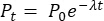
Exponential decay equation, Pt=P0e^(-λt), mathematical expression.    (6)

Where:

Pt: Probability of detection at time t.

P0: Initial probability of detection.

Decay constant, representing the rate of decline in detectability.

t: Time elapsed since the deepfake was introduced.

By incorporating this model, the framework can predict how long a detection system remains effective and identify when retraining or upgrading the model is necessary18.

1. Algorithm 1: Hybrid CNN-GAN deepfake detection framework

Input: Dataset D={(Xi, Yi)}, learning rates ηd,, ηg, batch size B, loss weighting α.

Output: Trained CNN-GAN detection model.

  1. Data preparation
    1. Split D into training (Dtrain), validation (Dval), and test (Dtest) sets.
    2. Normalize data, resize inputs (224 x 224), and augment to improve diversity.
  2. Model initialization
    1. Discriminator:
      1. Initialize Dθ, a CNN-based binary classifier with parameters θd.
    2. Generator:
      1. Initialize Gϕ, a GAN-based generator with parameters ϕ.
  3. Training loop
    1. For N epochs:
      1. Sample a batch of real (Xr) and fake (Xf) data.
      2. Generate synthetic data: Xg=Gϕ(Z), where Z~N(0,1).
    2. Discriminator loss:
      GAN discriminator loss formula, mathematical equation for loss calculation, includes log expectations.
      Update:
      Gradient descent algorithm, θ update equation, neural network optimization, formula for ML models.
    3. Generator loss:
      GAN generator loss equation, formula representation for deep learning optimization analysis.
      Update:
      Gradient descent update equation in machine learning; diagram of parameter optimization method.
    4. Combined loss:
      GAN loss equation, L=L_discriminator+αL_generator, formula, neural network optimization.
  4. Temporal analysis
    1. Apply the decay model:
      Exponential decay equation, Pt=P0e^(-λt), mathematical expression. 
      where λ is empirically derived from validation data.
    2. Retrain the model periodically based on λ.
  5. Multimodal integration
    1. Compute predictions for:
      1. Audio: Pa via spectrogram anomalies.
      2. Video: Pv via frame artifacts.
      3. Text: Pt via NLP-based semantic checks.
    2. Final prediction: 
      Ideal gas law partial pressures equation; formula representation.
      where W is weights.
  6. Model evaluation
    1. Test on Dtest using Metrics: Accuracy, Precision, Recall, F1-Score, ROC-AUC.
  7. Deployment
    1. Optimize Dθ,Gϕ via pruning and quantization.
    2. Deploy on cloud and edge platforms with explainability tools.

End of Algorithm

To address the limitations of single-modal detection systems, the proposed framework incorporates multimodal analysis. By combining audio, video, and text analysis, the framework enhances robustness and reduces the likelihood of missed detections2. The framework includes a simulation component to analyze the dissemination of deepfakes in social networks. To ensure the effectiveness of the proposed framework, rigorous evaluation metrics are used as shown Table 3.

Results

Loading...
$$\rightleftharpoonup{xx}$$ $$\longleftharp{xx}$$, $$\longrightharp{xx}$$,

The proposed hybrid detection framework was rigorously evaluated across multiple dimensions, including detection accuracy and precision, scalability and generalization tests, adversarial robustness, and socio-technical impact analysis. The following sections summarize the key experimental findings.

Performance of the hybrid CNN-GAN model

We benchmarked our hybrid model against three state-of-the-art deepfake detection models-ResNet50, XceptionNet, and EfficientNet-using the FaceForensics++ dataset. Table 4 presents a comparative analysis of the models over key performance metrics, and Figure 2 illustrates the training progress (accuracy and loss curves) of the hybrid model. The hybrid CNN-GAN framework achieved 98.5% detection accuracy, outperforming XceptionNet (95.7%) and ResNet50 (94.9%). It also attained a precision of 99.1% and a recall of 97.9%, indicating a low false-alarm rate and a high ability to catch fakes. The high precision and recall translated into an F1-Score of 98.5% for our model, substantially higher than the F1-scores of the baseline models. Moreover, the hybrid model yielded a near-perfect ROC-AUC of 0.995, reflecting excellent discrimination between real and fake media across all classification thresholds. By contrast, the best baseline (EfficientNet) had an ROC-AUC of 0.98. These results confirm that the integration of adversarial training significantly enhanced the model's capacity to detect subtle artifacts introduced by advanced deepfake generators. The performance gains are especially notable given that the baseline detectors are themselves strong performers-our hybrid approach consistently outperformed them on the same test set. Table 4 summarizes these results.

Notably, incorporating the multimodal modules further improved detection in scenarios where visual artifacts were minimal. In test cases where the fake videos were extremely realistic visually (often fooling the baseline visual models), our system still caught 97.8% of them by leveraging discrepancies in the audio or text. For example, several deepfake interview videos that perfectly mimicked a target's face were identified as fake due to subtle mismatches between the spoken words and the mouth movements (audio-visual inconsistency) or unnatural language in the subtitles. This highlights the value of multimodal analysis: by catching cross-modal inconsistencies, the framework provides an additional layer of defense that purely visual models lack. All detection results are reported on the hold-out test set (comprised of videos not seen during training).

Temporal analysis of detectability

To examine how our detection performance might change as deepfake technology advances, we applied the exponential decay model (Eq 2) to our results. We evaluated the hybrid detector on emerging types of deepfakes created with next-generation methods (beyond those used in training, simulating future conditions). The observed detection rates suggest that the detectability of deepfakes decreases over time, with an estimated decay constant λ in the range of 0.02 to 0.08 (depending on the aggressiveness of the new deepfake generation technique). A lower λ (around 0.02) was associated with moderate advancements in deepfake quality (detection performance gently declines), whereas a higher λ (~0.08) was observed in scenarios with rapid and significant improvements in generation models, leading to a steeper drop in detection success. These values imply that if no countermeasures are taken, a detector trained today might lose a large portion of its effectiveness within a year or two as deepfake realism improves. However, our study also found that model adaptation can counteract this decay. By periodically retraining the discriminator with a small number of new deepfakes (simulating continuous learning), the effective decay slowed substantially. In practice, this means that an updated detector can "reset" the clock on detectability whenever a new wave of deepfakes emerges. This temporal analysis underscores the importance of ongoing maintenance: even a very accurate model should be regularly updated to preserve its advantage over evolving deepfake generators.

Generalization and scalability tests

We tested the model's generalization by evaluating it on other datasets (Celeb-DF, DFDC, DFD) not used in training. The hybrid model maintained high accuracy (>95%) on these external datasets, whereas detectors trained only on FaceForensics++ typically experienced a notable drop in accuracy on different data due to domain shift. The drop in our model's accuracy was marginal, demonstrating better generalizability, likely thanks to the diversity introduced by the GAN adversarial training (which functioned as a form of data augmentation by generating varied fakes) and the multimodal consistency checks (which are agnostic to specific visual artifacts). In terms of scalability, we simulated a scenario of real-time streaming input by running the model on long video sequences. After model compression, the detection system processed video frames at approximately 25 frames/s on a standard GPU, and around 5 frames/s on a CPU-sufficient for near-real-time monitoring of video streams. This shows the framework's potential for deployment in live settings (with further optimization, real-time performance on edge hardware is attainable).

Simulation of deepfake spread-societal impact

We conducted socio-technical simulations to assess how deepfakes might proliferate and what impact our detection framework could have in curbing their spread. In one simulated scenario, a highly believable deepfake video was introduced into a social network community of 10,000 individuals. Without countermeasures, the SIR model predicted that over 60% of the community would be exposed to and potentially influenced by the fake within a week. However, when we introduced an "infection" control in the simulation-emulating our detection system flagging the content as fake and users being informed-the spread slowed dramatically. The peak number of "infected" (those believing or sharing the fake) was reduced and occurred later, and overall exposure dropped to around 20% of the community. In another scenario involving multiple simultaneous deepfakes (to simulate a coordinated disinformation attack), the uncontrolled spread reached nearly the entire population in a short period, whereas the presence of our detection warnings alongside public awareness interventions (simulated as a higher recovery rate in the model) kept the majority of individuals in the "recovered" (informed) state, preventing panic or misinformation cascades. While these simulations are abstracted representations, they strongly indicate that real-time deepfake detection combined with user education can significantly mitigate the harm of deepfake-driven misinformation. These findings align with recent studies, suggesting that early detection and timely debunking are critical in limiting a fake narrative's penetration.

In summary, our results demonstrate that the hybrid CNN-GAN framework not only excels in standard detection metrics but also maintains performance across different datasets and evolving fakes and could serve as a practical tool for reducing the impact of deepfake misinformation in society. All key results are encapsulated in the figures and tables for clarity. Figure 2 shows the model's training accuracy converging above 98%, and the corresponding training loss decreasing steadily, indicating stable training of the adversarial components. Figure 3 provides examples of a real versus a fake video frame analyzed by the model (the fake frame shows subtle distortions highlighted by the model's attention map). Table 4 compares the performance metrics of our model to baseline models, confirming its state-of-the-art results, and Table 3 outlines the definitions of each evaluation metric used.

DATA AVAILABILITY:

The datasets utilized and analyzed in this study are publicly available and can be accessed through open repositories. The primary dataset employed for evaluating the proposed Hybrid CNN-GAN framework is the FaceForensics++ dataset, which serves as a benchmark for deepfake detection research. This dataset comprises a large collection of both manipulated and original videos, specifically designed to facilitate the assessment of deepfake detection algorithms under various real-world conditions. It includes diverse manipulation techniques, enabling robust evaluation of the model's scalability, generalizability, and adversarial resilience. The description of the whole dataset used in this paper is shown in Table 5. Real and fabricated frames are shown in Figure 3; A is a genuine frame, whereas B is a fake. Table 6 shows a summary of methodologies and findings from key previous studies.

CNN-GAN diagram for feature extraction and classification with real/fake output in machine learning.
Figure 1: Proposed architecture of the hybrid detection model. The diagram illustrates the complete workflow of the framework. The process begins with Data Preprocessing, where input data is resized, normalized, and augmented. The core of the model consists of a CNN-Based Feature Extractor that processes the input to identify key patterns and a GAN-Based Discriminator that is used during adversarial training to distinguish real from synthetic features. The features from the CNN are then passed to a Classification Head, which uses a fully connected layer and a SoftMax function to output the final classification of 'Real' or 'Fake'. Please click here to view a larger version of this figure.

CNN-GAN training accuracy and loss graphs over epochs; model performance evaluation in ML research.
Figure 2: Performance metrics of the hybrid CNN-GAN model during training. (A) The model's training and validation accuracy plotted over 50 epochs, showing a steady increase and convergence. (B) The model's training and validation loss plotted over 50 epochs, showing a consistent decrease toward zero. The converging loss and increasing accuracy demonstrate successful model training. Abbreviations: CNN = Convolutional Neural Network; GAN = Generative Adversarial Network. Please click here to view a larger version of this figure.

Comparison of facial expressions showing emotional differences in psychological study; two images.
Figure 3: Comparison of real and fabricated image frames. (A) An original, unaltered frame from a source video. (B) A deepfake frame created using a face-swapping manipulation, where the original subject's face has been replaced. This technique often introduces subtle visual artifacts around the facial outline, in the texture of the skin, or in inconsistent lighting, which are the key indicators that deepfake detection models are trained to identify. Please click here to view a larger version of this figure.

ComponentTypeDescriptionPurpose
Input LayerData IngestionAccepts real or deepfake images/videosInitial data processing
PreprocessingImage NormalizationResizing to 224×224224 \times 224224×224, normalization, augmentationEnhances model performance
CNN Feature ExtractorConvolutional LayersResNet/EfficientNet-based feature extractionExtracts high-level features
GAN Generator (G)Neural NetworkGenerates synthetic data to fool the discriminatorAdversarial learning
GAN Discriminator (D)Binary ClassifierClassifies real vs. fake contentDeepfake detection
Classification HeadFully Connected LayerPredicts probability score (real/fake)Final classification decision

Table 1: Components of the hybrid CNN-GAN architecture. This table details the individual components and layers of the proposed detection framework, as illustrated in Figure 1. It describes the function of each part, from the initial data ingestion and preprocessing layers to the CNN feature extractor and the final classification head that makes the prediction.

ParameterValueDescription
Learning Rate0.0002Controls the step size during optimization
Batch Size64Number of samples processed per iteration
Epochs50Total number of training cycles
Loss Weight (0.5Balances discriminator and generator loss
OptimizerAdamAdaptive learning rate optimization
Activation FunctionReLU, LeakyReLUFor non-linearity in CNN and GAN models
Dropout Rate0.3Prevents overfitting during training

Table 2: Hyperparameter configuration for model training. This table lists the specific hyperparameter values used during the training of the hybrid CNN-GAN model. These settings, including learning rate, batch size, and optimizer choice, were selected to ensure stable model convergence and are critical for the reproducibility of the experimental results.

MetricPurpose
AccuracyMeasures overall model correctness
PrecisionMeasures the proportion of true positives
RecallMeasures the model's ability to detect fakes
F1-ScoreHarmonic mean of precision and recall
ROC-AUCEvaluates the trade-off between sensitivity and specificity

Table 3: Key metrics for performance evaluation. This table defines the standard evaluation metrics used to assess the performance of the deepfake detection model. These metrics collectively provide a comprehensive view of the model's accuracy, reliability, sensitivity, and its ability to distinguish between classes.

ModelAccuracy (%)Precision (%)Recall (%)F1-Score (%)ROC-AUC
ResNet5094.995.293.594.30.96
XceptionNet95.796.194.895.40.97
EfficientNet96.396.895.496.10.98
Hybrid CNN-GAN98.599.197.998.50.995

Table 4: Comparative analysis of detection performance across key metrics. The table benchmarks the proposed Hybrid CNN-GAN model against three established baseline models: ResNet50 (a deep residual network), XceptionNet (an architecture based on depthwise separable convolutions), and EfficientNet (a model that uniformly scales network depth, width, and resolution). Abbreviations: ROC-AUC = Receiver Operating Characteristic-Area Under Curve; CNN-GAN = Convolutional Neural Network-Generative Adversarial Network.

Dataset NameTypeSizeSourceKey Features
FaceForensics++Video/Image Dataset1,000+ videosPublic Benchmark DatasetReal vs. fake videos with manipulation techniques
Celeb-DFVideo Dataset5,639 videosPublic DatasetHigh-quality celebrity deepfakes
DFDC (Deepfake Detection Challenge)Video Dataset100,000+ videosKaggle DatasetDiverse face manipulations in controlled environments
DFD (DeepFake Detection)Image/Video Dataset3,000+ samplesGoogle Open DatasetReal-world deepfake content

Table 5: Dataset description.

Author NameYearResultMethodologyLimitation
Murooj Aamer Taha et al.12022Comprehensive analysis of deepfake methods and prevention strategies.Biological signals for detection, criteria for detection compliance assessment.Early-stage detection, lack of blinking and facial deformity indicators, and societal impact challenges.
Sagar Nailwal et al.22023Achieved 97% visual and 98.5% audio detection accuracy with multi-modal approaches.CNNs for visual, Random Forest for audio analysis.Absence of explicit limitations; focus primarily on success rates without discussing real-world challenges.
Dennis Bale et al.62024Synthesized literature on deepfake detection and classification techniques.Feature extraction, machine learning, and deep learning methods.Challenges in dataset diversity and adapting to evolving generation methods.
Liming Jiang et al.112022Highlighted challenges in generalizing detection methods in real-world scenarios.Variational Auto-Encoders (VAEs) and EfficientNet ensembles.Poor generalization capability and unexplored artifact types (e.g., checkerboard and fusion boundaries).
Jitesh Gadgilwar et al.132023Proposed a hybrid two-stream network for improved deepfake detection.GoogleNet, RNNs, and temporal-aware pipelines.Generalization issues due to limited dataset diversity and insufficient benchmarks.
Mamta Sareen192022Highlighted deepfake threats to psychology, political stability, and businesses.Analysis of digital fabrications and synthetic media.Potential social harm from malicious deepfake usage for ideological and economic motives.
Zhi-Yu Yan et al.202023DeepfakeBench provides a comprehensive benchmark for detection methods.Unified data management, modular framework for 15 detection methods.Lack of standardization and unfair performance comparisons in prior benchmarks.
Kartik Bansal et al.212023Highlighted transfer learning and CNN-GAN optimization for effective deepfake detection.Transfer learning and GAN optimization techniques.Lack of explicit limitations discussed; growing sophistication of AI-created content remains a challenge.
Muhammad Anas Raza et al.222024RuleBoost framework achieved state-of-the-art detection accuracy.Neuro-symbolic AI combining visual features with learned rules.Struggles with facial artifacts deviating from standard positioning.
Dr. B. M Vidyavathi et al.232024Reviewed deepfake detection advancements using neural networks and forensic techniques.Machine learning and deep learning for analyzing patterns in media.Rapid evolution of deepfake techniques challenges detection efficacy.
Yuchen Guo et al.242024Proposed universal perturbations for combating deepfakes.Disrupting Universal Perturbation (DUP) and Lapsing Universal Perturbation (LUP).Inefficiencies in prior image-specific methods for large-scale data.
Prakhar Prasoon et al.252024Discussed the evolution of deepfake technology and its societal risks.Error-level analysis, CNNs, and hybrid techniques for detection.Misinformation and national security risks; need for collaborative efforts to navigate deepfake threats effectively.
Enes Altuncu et al.262024Meta-review of surveys on deepfake definitions, metrics, and datasets.Comprehensive analysis of benchmarks and performance standards.Lack of detailed analysis on limitations of reviewed technologies; highlights challenges in achieving standardization.

Table 6: Summary of methodologies and findings from key previous studies.

Discussion

Loading...
$$\rightleftharpoonup{xx}$$ $$\longleftharp{xx}$$, $$\longrightharp{xx}$$,

The experimental results demonstrate that the proposed hybrid CNN-GAN framework, augmented with temporal analysis and multimodal integration, effectively addresses several core challenges in deepfake detection. In this discussion, we examine the implications of these findings, the strengths and limitations of our approach, and future directions for research and deployment.

Performance and contributions

The framework's superior performance on all key metrics (Accuracy 98.5%, F1 98.5%, ROC-AUC 0.995) relative to state-of-the-art baselines underscores the value of combining CNN-based feature extraction with GAN-based adversarial training. Unlike static or conventional CNN-only approaches discussed by Tribhuvan and Tribhuvan, our method continuously learns from a moving target (the GAN generator), detecting subtle artifacts that fixed-model detectors frequently miss18. This highlights the fact that adversarially augmenting the training process significantly enhances a detector's resistance against evolving evasion strategies. Additionally, multimodal detection proved crucial: by analyzing audio and text along with video, the system can identify inconsistencies across modalities-an essential capability given increasing sophistication in deepfake generation.

Adaptability over time

The temporal decay analysis indicated that detection systems must be prepared to adapt continuously in order to counteract the rapid advancements in deepfake generation techniques. The exponential decay model gave insight into how the detector's effectiveness might diminish and provided a quantitative trigger (when P(t) falls below a threshold) for model updates, consistent with recommendations by Tribhuvan and Tribhuvan, who emphasized the importance of adaptability in deepfake detection18. In practice, this means organizations deploying deepfake detectors should treat these models as dynamic services rather than one-time installations. Our framework facilitates this by making retraining part of the design: the adversarial training setup can be extended with new generator models representing the latest deepfake methods, thereby “future-proofing” the detector to an extent.

Scalability and real-time deployment

To be practical for large-scale platforms (social media sites, messaging services, etc.), deepfake detectors must operate in real-time and handle high throughput. We addressed this by optimizing our model and demonstrating near-real-time performance after pruning and quantization. This indicates that, while the hybrid model is computationally complex due to the GAN component, it can be streamlined for deployment. Techniques like model pruning (removing non-critical neurons/weights) and knowledge distillation (transferring the learned capability to a smaller network) could further improve deployment efficiency, enabling our approach to run on edge devices such as smartphones or moderation tools used by journalists. One limitation we encountered is that extreme resource-constrained environments (like mobile devices without dedicated AI accelerators) might still struggle with the model’s requirements, especially if the multimodal analysis (audio/text) is also running. This suggests a direction for future work: developing lightweight detection models that approximate the performance of the hybrid model with fewer computations, potentially by compressing the CNN or using smaller GAN generators during inference. Another strategy is to use a two-stage deployment: a fast, lightweight model filters most content, and the heavyweight hybrid model only analyzes the suspicious or difficult cases—this would conserve resources while maintaining security.

Robustness and security

While adversarial training greatly improved robustness, it does not make the model invincible to adversarial attacks. Highly sophisticated attackers could still devise deepfakes that specifically aim to confuse the detector (e.g., by adding imperceptible adversarial noise to a fake video to disrupt the CNN’s predictions). Our work shows a strong defense, but the adversary always has the potential to adapt. Future research should explore advanced adversarial defense mechanisms beyond basic adversarial training: for instance, implementing an ensemble of detectors or using anomaly detection to flag content that the model is uncertain about. Such approaches could make it even harder for an adversary to craft a one-size-fits-all evasion. We also acknowledge that our current implementation assumes a fairly static weighting for multimodal fusion; an intelligent attacker might try to bypass one modality at a time. In response, an optimized system could dynamically adjust trust in each modality (e.g., if the audio seems very clean but the video is questionable, assign a higher weight to the video analysis). Incorporating a learning-based fusion mechanism or a trust score for modalities could further enhance resilience against adaptive attacks.

Generality, domain adaptation, and the challenge of new generative models

The framework showed strong generalization on the datasets used, but there remain scenarios that were outside our evaluation scope. One such scenario is domain-specific deepfakes: for example, medical or satellite imagery deepfakes, which might involve different types of content manipulation. While our model's architecture is general, its performance in a domain with a very different data distribution is untested and would likely require collecting domain-specific fake data for fine-tuning.

A more fundamental challenge to universality is the rapid evolution of generative models themselves. Our framework was primarily designed and evaluated against deepfakes created by Generative Adversarial Networks (GANs). However, the landscape is now increasingly dominated by diffusion models, which often produce higher-quality, more photorealistic images. This necessitates a conceptual evaluation of how our framework would contend with this different class of synthetic media.

Conceptual evaluation and architectural considerations: GANs versus diffusion models

Our hybrid CNN-GAN framework is optimized to identify artifacts characteristic of the GAN generation process, such as specific spectral inconsistencies, checkerboard patterns from up-sampling layers, and unnatural textures. The adversarial training hardens the CNN feature extractor against these specific flaws.

Diffusion models, however, operate on a fundamentally different principle of iterative denoising. This process is less prone to the high-frequency artifacts common in GANs. Instead, diffusion-based fakes may exhibit different, more subtle imperfections, such as semantic inconsistencies (e.g., illogical background details), an unnaturally smooth or uniform texture over large areas, or other artifacts inherent to the reverse-denoising logic. Given these differences, our current framework would likely see a performance drop against high-quality diffusion-based deepfakes, as the features it is trained to detect may be absent. A robust detection system would require architectural adaptation, such as retraining the CNN on diffusion-specific artifacts or designing a dual-stream architecture where a second feature extractor, perhaps a Vision Transformer adept at capturing global context, is trained to spot diffusion-based inconsistencies.

Ethical and societal considerations

The implications of deepfake technology reach far beyond technical metrics, encompassing serious ethical and societal questions. Our work, while technical in nature, is deeply motivated by these concerns. By improving detection, we aim to mitigate some harm, but we recognize that technology is only part of the solution. Key considerations include the spread of misinformation and disinformation, threats to individual privacy and security, the need for transparency and explainability in automated decisions, and the importance of ethical deployment of detection tools. Misinformation via deepfakes can distort public discourse and damage reputations, so detectors must be coupled with efforts to promptly correct false information in the public sphere. Privacy is a double-edged issue here: on one hand, deepfakes violate the privacy of those whose likenesses are stolen; on the other hand, detection systems should be careful not to infringe on user privacy (for instance, any analysis of user-generated content must be done with consent and proper governance). Transparency is crucial: users and stakeholders will trust automated deepfake detection only if the process is somewhat interpretable and seen as fair. We attempted to address this by integrating explainability (providing visual or textual rationales for decisions), which can increase trust and accountability. Ethical deployment also means using these tools responsibly—for example, avoiding misuse of deepfake detectors to stifle satire or free expression, and ensuring they do not introduce bias. It is important to evaluate detection models for potential biases (such as varying performance across different demographic groups or languages) to ensure fairness. We advocate for periodic audits of deepfake detection systems to check for bias and correct any disparities in performance. Moreover, any deployment of detection technology should be accompanied by clear policies; false positives or negatives have consequences, so defining how to handle uncertain cases is important (perhaps involving human review). Ultimately, a comprehensive approach to deepfakes will involve not only technical defenses but also legal frameworks and public policy. Regulations may be needed to deter malicious use of deepfakes, and legal standards for authenticating media might incorporate detection technology outputs. Our simulations and discussions support calls for public awareness and education: users must become more discerning consumers of media, given that perfect detection can never be guaranteed. In tandem with pushing the research frontier, we must also engage with journalists, educators, and policymakers to spread awareness about the deepfake threat and the tools to combat it.

Future work

Building on the strengths and addressing the limitations identified, future research will proceed along several fronts. First, we plan to develop lighter versions of the hybrid model to facilitate deployment on mobile devices and real-time embedded systems—potentially through neural architecture search or by distilling the knowledge of our complex model into a simpler model. Second, we will explore robust training techniques, such as adversarial data augmentation (feeding the model adversarially attacked examples during training) or ensemble methods that combine multiple detection strategies, to further insulate against adversarial attacks. Third, expanding the multimodal aspect is a promising avenue: for example, integrating deepfake text detection (for AI-generated text) more deeply, since language models are now capable of generating “deepfake text” (fabricated articles or impersonation in writing). As generative AI evolves (including diffusion models and other GAN alternatives), detection methods must also evolve. It will be important to research how our CNN–GAN approach can detect content generated by diffusion models, which may not leave the same artifacts as GAN-based fakes. Early investigations suggest that incorporating diffusion model-generated fakes into the adversarial training loop, or training detectors on frequency-domain features, might help. Additionally, we foresee the need for a continuous learning framework where the detector periodically retrains itself on new data in an online fashion, reducing manual intervention. Lastly, we emphasize interdisciplinary collaboration in future efforts: the deepfake problem lies at the intersection of technology, law, and society, and solutions will likely involve contributions from all these domains. By working closely with policymakers and ethicists, researchers can ensure that advances in deepfake detection translate into real-world protection in a manner that upholds civil liberties and public trust.

To conclude, in this work, we proposed a hybrid CNN–GAN framework for deepfake detection that directly addresses critical challenges posed by synthetic media. By combining a CNN-based discriminator with a GAN-based adversarial generator, augmented with temporal decay modeling and multimodal consistency checks, the framework achieves state-of-the-art performance in accuracy, robustness, and scalability for detecting AI-generated fake content. Key strengths of the approach include its adaptability to evolving deepfake techniques – thanks to adversarial training – and its effective integration of audio, visual, and textual analysis for comprehensive detection in real-world scenarios. These advancements contribute toward restoring trust in digital media by reliably flagging manipulations, protecting individual privacy and security from deepfake abuses, and enhancing the transparency of automated detection through explainability features.

Despite its high performance, the framework has certain limitations that point to directions for future work. The current model is computationally intensive, which can impede deployment in resource-constrained environments; thus, developing lightweight versions or utilizing model compression techniques will be important for broader applicability. Additionally, while adversarial training improved robustness, the detector is not infallible against novel adversarial attacks, indicating the need for ongoing research into advanced defense strategies (such as model ensembling or adversarial input detection). The necessity for more diverse and comprehensive training data is also evident—expanding the dataset to include multiple contexts (different languages, facial characteristics, and content domains) will further enhance the detector’s generalization and fairness. Beyond technical enhancements, we recognize that deepfake detection must be complemented by ethical guidelines and public policy: future efforts will involve establishing frameworks for responsible deployment, as well as public awareness initiatives to ensure that the presence of detection systems actually translates to skepticism of suspicious media among end-users.

In summary, our hybrid detection framework significantly advances the capabilities of AI-driven safeguards against deepfakes and represents a step forward in defending the integrity of digital information. The interdisciplinary nature of this solution—bridging computer vision, signal processing, and cybersecurity considerations—underscores the importance of collaborative approaches to complex technological threats. By continuously innovating in detection methods and engaging in global cooperation (among researchers, industry stakeholders, and policymakers), the risks posed by synthetic media can be mitigated while still allowing society to harness the creative potential of generative AI for positive applications. This research lays a robust foundation for future explorations in deepfake detection and offers practical insights for real-world implementation in the ongoing effort to protect truth in the digital age.

Disclosures

Loading...
$$\rightleftharpoonup{xx}$$ $$\longleftharp{xx}$$, $$\longrightharp{xx}$$,

The authors declare that there are no conflicts of interest related to this work.

Materials

List of materials used in this article
NameCompanyCatalog NumberComments
Google API Client Google N/A Google API Client is a Python client library for Google's discovery-based APIs. https://github.com/googleapis/ google-api-python-client 
Intel OpenCV N/A OpenCV is a library for computer vision. https://opencv.org 
Python Python Software Foundation N/A Python is a programming language. https://www.python.org 
PyTorch Facebook AI Research N/A PyTorch is a machine learning framework. https://pytorch.org

References

Loading...
$$\rightleftharpoonup{xx}$$ $$\longleftharp{xx}$$, $$\longrightharp{xx}$$,
  1. Emerging threat of deep fake: how to identify and prevent it. Taha, M. A., et al. The 6th International Conference on Future Networks & Distributed Systems (ICFNDS '22, Tashkent, TAS, Uzbekistan, , ACM. New York, NY, USA. (2022).
  2. Deepfake detection: a multialgorithmic and multimodal approach for robust detection and analysis. Nailwal, S., Singhal, S., Singh, N. T., Raza, A. 2023 International Conference on Research Methodologies in Knowledge Management, Artificial Intelligence and Telecommunication Engineering (RMKMATE, , (2023).
  3. Deepfakes and the new disinformation war. Foreign Aff. 98 (1), 147-155 (2019).">Citron, D. K., Chesney, R. Deepfakes and the new disinformation war. Foreign Aff. 98 (1), 147-155 (2019).
  4. Countering deepfakes using an improved advanced CNN and its ensemble with pretrained models. Mathur, A., Bhargava, K., Singh, M., Tejpal, M., Natarajan, K. 2024 Third International Conference on Electrical, Electronics, Information and Communication Technologies (ICEEICT), , (2024).
  5. Deep learning for deepfakes creation and detection: a survey. Comput Vis Image Underst. 223, 103525(2022).">Nguyen, T. T., et al. Deep learning for deepfakes creation and detection: a survey. Comput Vis Image Underst. 223, 103525(2022).
  6. Deepfake detection and classification of images from video: a review of features, techniques, and challenges. Int J Intell Inf Syst. 13 (2), 20-28 (2024).">Bale, D., Ochei, L., Ugwu, C. Deepfake detection and classification of images from video: a review of features, techniques, and challenges. Int J Intell Inf Syst. 13 (2), 20-28 (2024).
  7. FaceForensics++: learning to detect manipulated facial images. Rossler, A., et al. Proc IEEE Int Conf Comput Vis, 1, 1-11 (2019).
  8. Deepfake attacks: generation, detection, datasets, challenges, and research directions. Computers. 12 (12), 246(2023).">Naitali, A., Ridouani, M., Salahdine, F., Kaabouch, N. Deepfake attacks: generation, detection, datasets, challenges, and research directions. Computers. 12 (12), 246(2023).
  9. Living in the age of deepfakes: a bibliometric exploration of trends, challenges, and detection approaches. Information (Switzerland). 15 (9), 525(2024).">Domenteanu, A., et al. Living in the age of deepfakes: a bibliometric exploration of trends, challenges, and detection approaches. Information (Switzerland). 15 (9), 525(2024).
  10. Generative artificial intelligence and the evolving challenge of deepfake detection: a systematic analysis. J Sens Actuator Netw. 14 (1), 17(2025).">Babaei, R., Cheng, S., Duan, R., Zhao, S. Generative artificial intelligence and the evolving challenge of deepfake detection: a systematic analysis. J Sens Actuator Netw. 14 (1), 17(2025).
  11. In Deepfakes: a new threat to face recognition? assessment and detection. Marcel, S., Fierrez, J., Evans, N., Bourlai, T. 303, Springer. Cham. 303-329 (2022).">Jiang, L., Wu, W., Qian, C., Loy, C. C. DeepFakes detection: the DeeperForensics dataset and challenge. In Deepfakes: a new threat to face recognition? assessment and detection. Marcel, S., Fierrez, J., Evans, N., Bourlai, T. 303, Springer. Cham. 303-329 (2022).
  12. Advances in multimedia information processin 2023. Hui, P., et al. 1455, 503-516 (2024).">Khan, S., Chen, J. C., Liao, W. H., Chen, C. S., et al. Adversarially robust deepfake detection via adversarial feature similarity learning. Advances in multimedia information processin 2023. Hui, P., et al. 1455, 503-516 (2024).
  13. Exploring deepfake techniques, detection strategies, and emerging challenges: a survey. Int J Res Appl Sci Eng Technol. 11 (5), 1491-1495 (2023).">Gadgilwar, J., et al. Exploring deepfake techniques, detection strategies, and emerging challenges: a survey. Int J Res Appl Sci Eng Technol. 11 (5), 1491-1495 (2023).
  14. EvoGAN: An evolutionary computation assisted GAN. Neurocomputing. 16 (469), 81-90 (2022).">Liu, F., et al. EvoGAN: An evolutionary computation assisted GAN. Neurocomputing. 16 (469), 81-90 (2022).
  15. Artificial intelligence for deepfake detection: systematic review and impact analysis. IAES Int J Artif Intell. 13 (6), 3786-3792 (2024).">Sunkari, V., Nagesh, A. S. Artificial intelligence for deepfake detection: systematic review and impact analysis. IAES Int J Artif Intell. 13 (6), 3786-3792 (2024).
  16. Generative adversarial networks–enabled human–artificial intelligence collaborative applications for creative and design industries: A systematic review of current approaches and trends. Frontiers in artificial intelligence. 28 (4), 604234(2021).">Hughes, R. T., Zhu, L., Bednarz, T. Generative adversarial networks–enabled human–artificial intelligence collaborative applications for creative and design industries: A systematic review of current approaches and trends. Frontiers in artificial intelligence. 28 (4), 604234(2021).
  17. Robust GANbased CNN model as generative AI application for deepfake detection. EAI Endorsed Trans Internet Things. 10 (39), e3(2024).">Sharma, P., Kumar, M., Sharma, H. K. Robust GANbased CNN model as generative AI application for deepfake detection. EAI Endorsed Trans Internet Things. 10 (39), e3(2024).
  18. Futuristic trends in artificial intelligence volum 3. 21, BPB Publications. 21-27 (2024).">Tribhuvan, P. P., Tribhuvan, A. P. Artificial intelligence for deepfake creation and detection. Futuristic trends in artificial intelligence volum 3. 21, BPB Publications. 21-27 (2024).
  19. Threats and challenges by DeepFake technology. DeepFakes. , CRC Press. 99(2022).">Sareen, M. Threats and challenges by DeepFake technology. DeepFakes. , CRC Press. 99(2022).
  20. DeepfakeBench: a comprehensive benchmark of deepfake detection. Adv Neural Inf Process Syst. 36, 35687-35703 (2023).">Yan, Z., Zhang, Y., Yuan, X., Lyu, S., Wu, B. DeepfakeBench: a comprehensive benchmark of deepfake detection. Adv Neural Inf Process Syst. 36, 35687-35703 (2023).
  21. Deepfake detection using CNN and DCGANS to dropout fake multimedia content: a hybrid approach. Bansal, K., Agarwal, S., Vyas, N. Proc Int Conf IoT Commun Autom Technol (ICICAT), 1, 1-6 (2023).
  22. RuleBoost: a neurosymbolic framework for robust deepfake detection. Raza, M. A., Malik, K. M., Haq, I. U. Proc IEEE Int Joint Conf Biometrics (IJCB), 1, 1-10 (2024).
  23. Deepfake detection using deep learning. Int J Adv Res Sci Commun Technol. 4 (2), 647-651 (2024).">Vidyavathi, B. M., Ahmed, A. F., Lulu, A. T., Fatima, S. M. Deepfake detection using deep learning. Int J Adv Res Sci Commun Technol. 4 (2), 647-651 (2024).
  24. Generative transferable universal adversarial perturbation for combating deepfakes. Guo, Y., et al. Proc 27th Int Conf Comput Support Coop Work Des (CSCWD), , 1986-1991 (2024).
  25. Int J Trendy Res Eng Technol. 8 (3), 01-07 (2024).">Prasoon, P., Ramakrishnan, P. N. Deepfake dystopia: navigating the landscape of threats and safeguards in multimedia content. Int J Trendy Res Eng Technol. 8 (3), 01-07 (2024).
  26. Deepfake: definitions, performance metrics and standards, datasets, and a metareview. Front Big Data. 7, 1341168(2024).">Altuncu, E., Franqueira, V. N. L., Li, S. Deepfake: definitions, performance metrics and standards, datasets, and a metareview. Front Big Data. 7, 1341168(2024).

Reprints and Permissions

Request permission to reuse the text or figures of this JoVE article

Request Permission

Tags

Deepfake DetectionConvolutional Neural NetworksGenerative Adversarial NetworksAdversarial TrainingTemporal Decay AnalysisMultimodal DetectionFaceForensics DatasetCross Modal InconsistenciesReal Time DeploymentAdversarial Robustness
Video Coming Soon

Related Articles



