We present evidence-based preoxygenation strategies that demonstrate the use of oxygen masks and noninvasive positive pressure ventilation to optimize oxygenation in critically ill patients undergoing emergent tracheal intubation, thereby reducing the risk of hypoxemia, extending safe apnea time, and minimizing complications.
Method Article
Preoxygenation Techniques for Tracheal Intubation in Critically Ill Adults Utilizing Oxygen Mask and Noninvasive Ventilation
In This Article
Summary
Abstract
Preoxygenation is a critical step in airway management aimed at reducing the risk of hypoxemia, a potentially life-threatening complication, during emergency tracheal intubation in critically ill patients. Challenges with ventilation and intubation are unpredictable, making it essential to optimize oxygenation prior to induction to improve patient safety. During the preoxygenation phase of intubation, a patient receives 100% fraction of inspired oxygen (FiO2) to replace alveolar nitrogen, increasing oxygen reserves, and arterial oxygen partial pressure (PaO2) to prolong safe apnea time. Preoxygenation strategies primarily rely on two categories of oxygen delivery systems: noninvasive ventilation (NIV) and oxygen masks. Each has unique advantages and limitations, and both have been studied in various clinical trials. When used effectively, these techniques optimize oxygenation, enhance first-pass intubation success, and reduce peri-intubation complications. This article reviews the physiological basis and technical application of oxygen masks and NIV-based preoxygenation strategies, discusses their comparative efficacy, and provides practical guidance on selecting and implementing the optimal approach based on patient condition and resource availability. By integrating best practices, clinicians can reduce complications and improve outcomes during emergency airway management in critically ill patients.
Introduction
Tracheal intubation is the third most common procedure performed in US hospitals, involving more than 1.6 million patients annually1. Successful tracheal intubation requires attention to multiple factors, including patient positioning, preoxygenation, apneic oxygenation, use of an induction agent, neuromuscular blockade, choosing a laryngoscope and endotracheal tube, laryngoscopy, endotracheal tube placement, confirmation of successful intubation, and initiation of mechanical ventilation2,3. In critically ill patients, tracheal intubation is a high-risk intervention. Despite advances in airway management, severe hypoxemia occurs during 10 to 20% of intubations performed in the emergency department (ED) and intensive care unit (ICU)4,5,6. The rapid onset of hypoxemia in this group of patients is primarily attributed to reduced functional residual capacity, impaired gas exchange, and high oxygen consumption7. Critically ill patients who develop hypoxemia during intubation are at increased risk of cardiac arrest and death6,8. Preoxygenation aims to replace alveolar nitrogen with oxygen to create an oxygen reservoir that prolongs the safe apnea period during laryngoscopy and intubation7. The absence of preoxygenation is associated with increased risk of peri-intubation cardiac arrest7,8.
Two primary preoxygenation techniques are widely used in clinical practice: oxygen masks and noninvasive ventilation (NIV)6,9,10. Oxygen masks, including non-rebreather masks and bag-valve masks (BVM), are simple and widely accessible tools capable of delivering up to 100% fraction of inspired oxygen (FiO2) at flow rates up to 15 L/min. However, their effectiveness is dependent on mask seal integrity and patient cooperation. In contrast, NIV enhances oxygenation by delivering oxygen under positive-end-expiratory pressure (PEEP) that helps to recruit atelectatic alveoli, improving gas exchange. Additionally, NIV can support ventilation in the apneic period through the addition of inspiratory positive airway pressure (IPAP) and the ability of the machine to provide a set respiratory rate. Patients requiring rapid intubation, who cannot tolerate setup delays or have limited apnea tolerance, are best served by oxygen mask-based preoxygenation, while those with severe hypoxemia, underlying parenchymal lung disease, or shunt physiology may derive greater benefit from preoxygenation with noninvasive ventilation due to its ability to improve alveolar recruitment and gas exchange.
Oxygen mask technique
Oxygen masks remain a mainstay for pre-oxygenation in critical care settings due to their simplicity and accessibility6,9. Preoxygenation using an oxygen mask can be performed with either a bag-mask or a non-rebreather mask6.
A bag-mask device consists of a self-filling bag connected to an oxygen source, an exhalation port to which a valve can be attached to add PEEP, and a tight-fitting face mask. Manual compression of the bag delivers oxygen-rich air to the patient, and passive oxygen delivery occurs during spontaneous breathing when the bag is not compressed. The addition of a PEEP valve during preoxygenation increases ventilation in the dependent lung regions, increases alveolar recruitment, and improves the fraction of expired oxygen, thereby potentially increasing the duration of safe apnea11.
A non-rebreather mask features a self-filling reservoir, a one-way inspiratory valve to prevent room air entrainment, and a loosely fitting face mask with two exhalation ports. This configuration allows for the delivery of high concentrations of inspired oxygen while minimizing dilution with ambient air.
Under optimal conditions, both devices are capable of delivering up to 100% FiO2, assuming a proper mask seal and adequate oxygen flow. However, their effectiveness may be compromised by patient agitation, poor mask fit, and the presence of airway obstruction.
Given their lower cost, ease of use, and rapid setup, oxygen masks are particularly useful in emergency situations and resource-limited settings. However, in patients with severe respiratory failure or those at high risk for desaturation, alternative preoxygenation methods, such as noninvasive ventilation, may provide superior oxygenation and extend the duration of safe apnea time.
Noninvasive Ventilation (NIV) technique
Preoxygenation can also be effectively achieved using NIV, which can deliver up to 100% FiO2 through a dedicated bilevel positive airway pressure (BPAP) machine, or a mechanical ventilator configured for noninvasive use. In addition to delivering high FiO2 through a tight-fitting mask, NIV can also provide assisted breaths at a set rate, enhancing ventilation and oxygenation.
A dedicated BPAP machine connects to the patient using a single limb design with an active exhalation port. BPAP machines use distinct nomenclature for the settings during inspiration and expiration. The IPAP represents the pressure delivered during inspiration to provide tidal volume and oxygenation. The expiratory positive airway pressure (EPAP) is the pressure delivered during expiration and is analogous to PEEP on a conventional ventilator that prevents alveolar collapse and improves gas exchange. NIV with BPAP pre-oxygenation is particularly beneficial for patients with severe hypoxemia, obesity, or underlying lung disease, as it improves alveolar recruitment and prolongs safe apnea time9,10,11.
In contrast, an invasive mechanical ventilator uses a dual-limb design with a closed circuit. Using an invasive mechanical ventilator for noninvasive ventilation requires a different type of mask from a dedicated BPAP machine. Specifically, when using a ventilator, the mask must be equipped to be compatible with the inhalation and exhalation limbs that connect to the ventilator. While some invasive ventilators feature a dedicated "NIV" mode with identical settings as the conventional BPAP machine, many ventilators can only perform modes of ventilation traditionally used for intubated patients. When a conventional ventilator does not have an "NIV" mode, a pressure mode of ventilation can be configured for preoxygenation. In this situation, PEEP is identical to EPAP. However, the inspiratory pressure (IP) on an invasive mechanical ventilator is the pressure provided in addition to PEEP during inspiration (IP = IPAP-BPAP). For example, to achieve a BPAP with IPAP 15 cm H2O and EPAP of 5 cm H20 using pressure control ventilation would require an inspiratory pressure of 10 cm H2O and a PEEP of 5 cm H2O (since inspiratory pressure is delivered in addition to PEEP).
Key factors influencing the efficacy of pre-oxygenation include FiO2, duration of pre-oxygenation, and preservation of a patient's functional residual capacity. While both face mask oxygenation and NIV are effective, NIV may offer added benefits in select populations, particularly those with respiratory distress, reduced oxygen reserves or impaired pulmonary mechanics10.
This article describes the techniques, clinical considerations, and supporting evidence for both preoxygenation methods, providing clinicians with essential knowledge to optimize airway management in critically ill patients.
Protocol
The procedures described in this protocol were implemented in previously published studies, each of which received approval from the relevant Institutional Review Board (IRB) /Ethics Committee (EC). In those source studies, informed consent was obtained from participants or their legally authorized representatives, or a waiver of consent was granted by the approving IRB/EC, in accordance with applicable regulations and the Declaration of Helsinki. This article involves no new data collection by the authors and was not considered human subjects research by our institutional IRB. No identifiable individual data, images, or recordings are included in this article; therefore, consent for publication was not required. Individuals participating in the associated videos provided informed consent. The consumables and equipment used are listed in the Table of Materials.
1. Oxygen mask preoxygenation
NOTE: This procedure describes the use of an oxygen mask, either a non-rebreather or BVM, to achieve effective preoxygenation prior to induction and intubation.
- Position the patient supine in bed with the head of the bed elevated ≥30 degrees in a semi-fowler position as shown in Figure 1.
NOTE: If tolerated, a head-tilt, chin-lift position can further optimize airway patency. - Ensure continuous cardiac monitoring and pulse oximetry (SpO2) devices are in place, and the blood pressure cuff is set to cycle at regular intervals (3-5 min) to monitor hemodynamic stability through the procedure.
NOTE: Whenever possible, ensure the SpO2 monitor and blood pressure cuff are on opposite extremities to prevent transient loss in SpO2 monitoring during cuff inflation. - Prepare the oxygen delivery system by connecting a non-rebreather mask or BVM to a high flow oxygen source and allow the oxygen reservoir to fully inflate before applying the mask to the patient.
NOTE: If using a BVM, connect a PEEP-valve and set the PEEP to 8 cm H2O. - Set the oxygen flow rate to at least 15 L/min. If using wall-mounted oxygen, turn the regulator to its highest setting (flush rate) to maximize delivered FiO2.
- Secure the mask on the patient's face and ensure there is a tight seal.
NOTE: Consider holding the mask with a two-handed "C-E" grip for optimal effectiveness, especially in patients with facial hair, obesity, or poor mask fit. - Maintain preoxygenation for at least 3 min prior to induction of anesthesia to allow adequate denitrogenation and build up of oxygen reserves.
- During the preoxygenation phase, continuously monitor for preoxygenation failure, including hypoxia with declining SpO2, patient apnea, and patient desynchrony.
- After 3 min of preoxygenation, administer medications for the induction of anesthesia.
- Perform a jaw thrust immediately following induction of anesthesia to ensure airway patency, and maintain oxygen support throughout induction, and up to laryngoscopy.
- Continuously monitor the patient's oxygen saturation and adjust oxygen delivery as needed.
NOTE: If necessary, switch to manual bag mask ventilation to maintain oxygenation before endotracheal intubation.
2. NIV preoxygenation
NOTE: This procedure describes the use of bilevel positive airway pressure (BPAP) or a mechanical ventilator configured for NIV to perform preoxygenation prior to induction and intubation. The protocol for NIV-based preoxygenation is shown in Figure 2.
- Position the patient supine in bed with the head of the bed elevated ≥30 degrees in the semi-fowler position.
NOTE: If tolerated, a head-tilt, chin-lift position can further enhance upper airway patency. - Apply standard monitoring, including continuous cardiac monitoring and pulse oximetry (SpO2) devices are in place, and the blood pressure cuff is set to cycle at regular intervals (3-5 min) to monitor hemodynamic stability through the procedure.
NOTE: Whenever possible, ensure the SpO2 monitor and blood pressure cuff are on opposite extremities to prevent transient loss in SpO2 monitoring during cuff inflation. - Apply a tight-fitting NIV mask to prevent oxygen leakage and connect it to the bilevel positive airway pressure (BPAP) machine or mechanical ventilator configured for NIV use.
- Ensure the equipment is properly configured with a tight connection to the mask and the selected preoxygenation device, adequate oxygen supply, and that the circuit is free of leaks to optimize effective preoxygenation.
- Set the FiO2 to 100%. Adjust the expiratory pressure (EPAP/PEEP) to >5 cm H2O. Set the inspiratory pressure (IPAP or equivalent pressure support) to >10 cm H2O. Set the respiratory rate to ≥10 breaths/min to support ventilation.
- Preoxygenate the patient for at least 3 min prior to induction of anesthesia to allow for denitrogenation and increase oxygen reserves prior to apnea.
- During the preoxygenation phase, continuously monitor for markers of preoxygenation failure including hypoxia with declining SpO2, apnea, and patient desynchrony.
- After 3 min, administer medications for the induction of anesthesia.
- Perform a jaw thrust after induction of anesthesia to ensure airway patency, and maintain oxygen support throughout induction, and up to the initiation of laryngoscopy.
- Continuously monitor SpO2 and assess the patient's tolerance of NIV.
NOTE: If oxygenation does not improve, or patient distress occurs, adjust ventilator settings or switch to an alternative preoxygenation method such as manual bag-mask ventilation.
Results
Comparative preoxygenation efficacy
Preoxygenation using a BVM is a widely used, safe, and effective approach, particularly when assisted ventilation is needed. In a study by Casey et al.5, the use of BVM was associated with higher median lowest oxygen saturations and fewer instances of severe hypoxemia compared to passive techniques. Adding a PEEP valve to the BVM may provide further advantages, with Baillard et al.12 finding that this increased the fraction of expired oxygen and optimized preoxygenation.
The protocols outlined by Baillard et al. and Gibbs et al. and others provide a standardized approach to preoxygenation prescribing a 30 min period using a nonrebreather or BVM with 100% oxygen flowing at 15 L/min, or NIV set to 100% FiO2, a PEEP set at 5 cm H2O, an IPAP set to at least 10 cm H2O, and a respiratory rate set to 10 breaths/min9,10,11,12. A trial by Gibbs et al. directly compared preoxygenation using oxygen masks and NIV for preoxygenation10. Their findings showed that SpO2 fell below 90% in 12.2% of patients during preoxygenation with oxygen masks, and 10% of patients during preoxygenation with NIV. More critically, the rate of peri-intubation hypoxemia (SpO2 <80%) occurred in 13.2% of patients in the oxygen mask group compared to 6.2% of patients in the NIV group10. Baillard et al. found similar results, reporting that 30.8% of patients during preoxygenation with oxygen masks failed to achieve oxygen saturations above 92% compared with 3.7% of patients in the NIV group, and peri-intubation hypoxemia (SpO2 <80%) in 46% of the oxygen mask group compared with 7% in the NIV group12. A follow-up trial by Baillard et al. found peri-intubation hypoxemia to occur in 2% of patients preoxygenated with oxygen masks and 1% in patients preoxygenated with NIV, but noted preoxygenation failure in 5.3% of patients preoxygenated with oxygen masks and 0% of patients in the NIV group13. Furthermore, pooled data from Chiang et al. suggest that NIV exhibited a significantly more favorable safe apnea time than conventional preoxygenation14.
Hemodynamic stability and safety outcomes
Preoxygenation with both oxygen masks and NIV is safe, and failure to preoxygenate prior to intubation of critically ill patients increases the risk for cardiac arrest6. Examining exploratory outcomes from Gibbs et al. demonstrated that 17.5% of patients in the NIV group experienced cardiovascular collapse (SBP <65, new or increased vasopressor requirement, or cardiac arrest) during the interval between induction of anesthesia and 2 min after intubation compared with 19.4% of patients preoxygenated with oxygen masks10. Baillard et al. reported a broader range of adverse events, defined as SpO2 <80%, arrhythmia with hemodynamic failure, regurgitation, myocardial ischemia, and preoxygenation failure, occurring in 41.3% of patients preoxygenated with oxygen masks compared to 17.8% of patients preoxygenated with NIV13. Importantly, no significant differences in the rates of aspiration events were observed in patients preoxygenated with NIV, and first-pass success rates were similar between groups, confirming NIV's safety profile for preoxygenation9,10,11,12,13,14.
Summary of key findings
NIV preoxygenation was associated with higher final pre-intubation SpO2 levels and may extend the duration of safe apnea time, as shown in Figure 3. The incidence of oxygen desaturation was lower with NIV compared to oxygen mask-based preoxygenation10,12,13, as shown in Figure 3. No significant difference in aspiration rates was observed between NIV and oxygen mask techniques (see Figure 4).
Adverse events, including SpO2 <80%, arrhythmia with hemodynamic failure, regurgitation, myocardial ischemia, and preoxygenation failure, were more common in patients preoxygenated with oxygen masks10,12,13, as shown in Figure 4. NIV preoxygenation may also improve first-pass intubation success10,12(see Figure 5). Table 1 and Table 2 further summarize these key findings. These findings support the efficacy and safety of NIV as a preferred preoxygenation strategy for critically ill patients, particularly those with baseline hypoxemia or high-risk clinical features10,12,13,14,15,16,17.
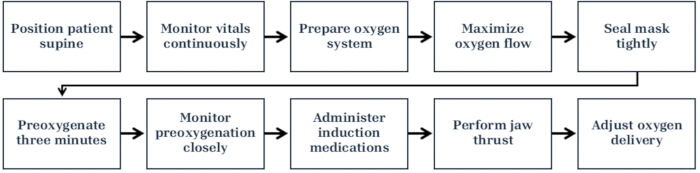
Figure 1: Oxygen mask preoxygenation protocol. A visual summary of key steps for oxygen mask preoxygenation prior to intubation, including patient positioning, monitoring setup, mask application, oxygen delivery, preoxygenation, jaw thrust, and continuous SpO2 monitoring. Please click here to view a larger version of this figure.
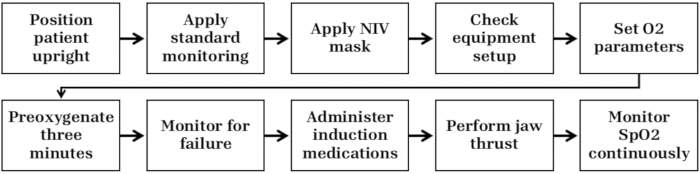
Figure 2: NIV-based preoxygenation protocol. This diagram outlines the stepwise approach to preoxygenation using noninvasive ventilation (NIV), including patient positioning, monitoring, mask application, ventilator setup, FiO2 and pressure adjustment, preoxygenation, jaw thrust, and continuous oxygen saturation monitoring. Please click here to view a larger version of this figure.
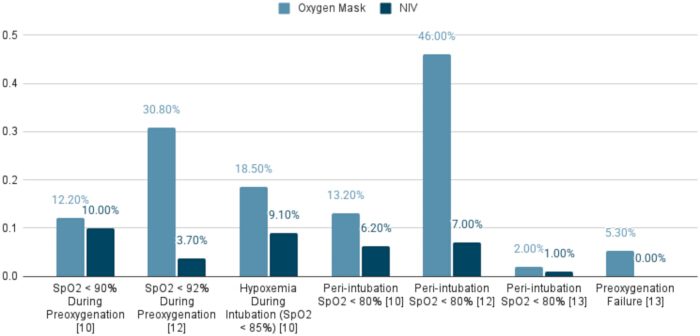
Figure 3: Efficacy of preoxygenation with oxygen mask vs. noninvasive ventilation (NIV). This bar graph compares key preoxygenation outcomes between oxygen mask and NIV techniques across three studies. Outcomes include failure to maintain oxygen saturation during preoxygenation (SpO2 <90% and <92%), hypoxemia during intubation (SpO2 <85%), peri-intubation hypoxemia (SpO2 <80%), and preoxygenation failure. NIV consistently demonstrated lower rates of desaturation and hypoxemia compared to oxygen masks, supporting its effectiveness in critically ill patients. Please click here to view a larger version of this figure.
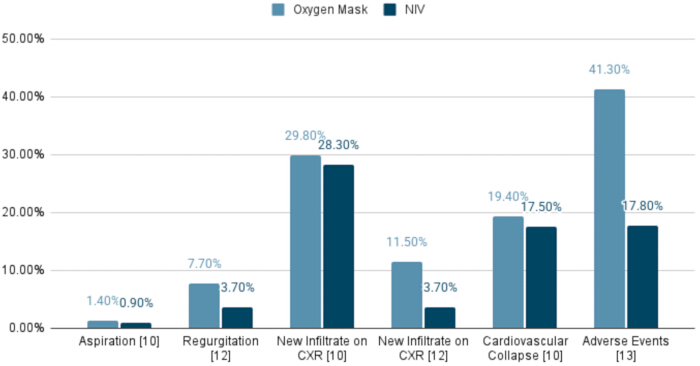
Figure 4: Adverse peri-intubation events associated with oxygen mask vs. noninvasive ventilation (NIV) preoxygenation. This figure compares the incidence of adverse peri-intubation events between oxygen mask and NIV preoxygenation methods. Reported outcomes include aspiration, regurgitation, new infiltrates on chest X-ray (CXR), cardiovascular collapse, and a composite of adverse events. Overall, NIV was associated with lower rates of regurgitation, new infiltrates, and composite adverse events compared to oxygen masks, with similar rates of aspiration and cardiovascular collapse. These findings support the safety profile of NIV in critically ill patients undergoing intubation. Please click here to view a larger version of this figure.
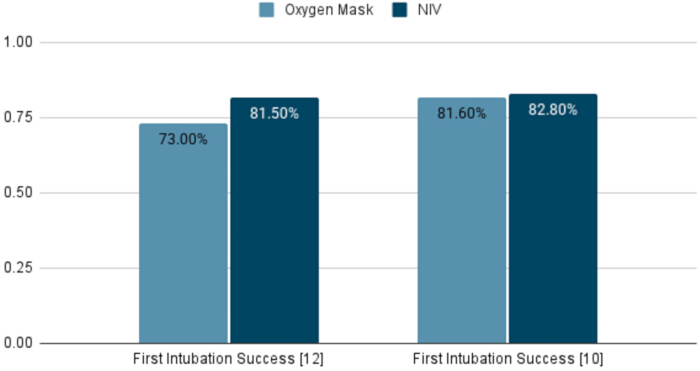
Figure 5: First-pass intubation success with oxygen mask vs. noninvasive ventilation (NIV) preoxygenation. This figure displays the rates of first-attempt (first-pass) intubation success among patients preoxygenated with either oxygen masks or NIV. In both studies shown, NIV was associated with slightly higher first-pass success compared to oxygen mask preoxygenation, suggesting that improved oxygenation strategies may contribute to procedural efficiency and reduced risk of complications. Please click here to view a larger version of this figure.
| Baillard, et al12 | Balliard, et al13 | Gibbs, et al10 | |
| Inability to Maintain Oxygen Saturation During Preoxygenation with Oxygen Mask | SpO2 < 92% | SpO2 < 90% | |
| 30.8% (8/26) | 12.2% (77/631) | ||
| Inability to Maintain Oxygen Saturation During Preoxygenation with NIV | SpO2 < 92% | SpO2 < 90% | |
| 3.7% (1/27) | 10% (63/627) | ||
| Peri-intubation Hypoxemia (SpO2 < 80%): Preoxygenated with Face Masks | 46% (12/26) | 13.2% (84/637) | |
| Peri-intubation Hypoxemia (SpO2 < 80%): Preoxygenated with NIV | 7% (2/27) | 6.2% (39/624) | |
| Preoxygenation Failure with oxygen masks | N/A | 5.3% (5/102) | |
| Preoxygenation Failure with NIV | 0% (0/99) | ||
| Aspiration/Regurgitation in patients Preoxygenated with Face Masks | 7.7% (2/26) | 1.4% (9/656) | |
| Aspiration/Regurgitation in patients Preoxygenated with NIV | 3.7% (1/27) | 0.9% (6/645) | |
| New Infiltrate on Post-Intubation Chest X-ray in patients Preoxygenated with Face Masks | 11.5% (3/26) | 29.8% (148/497) | |
| New Infiltrate on Post-Intubation Chest X-ray in patients Preoxygenated with NIV | 3.7% (1/27) | 28.3% (144/509) | |
| Cardiovascular Collapse (SBP < 65, new or increased vasopressor requirement, or cardiac arrest) in Patients Preoxygenated with Face Mask | No Data | 19.4% (127/656) | |
| Cardiovascular Collapse (SBP < 65, new or increased vasopressor requirement, or cardiac arrest) in Patients Preoxygenated with NIV | No Data | 17.5% (113/645) | |
| Adverse events (SpO2 < 80, arrhythmia with hemodynamic failure, regurgitation, myocardial ischemia, preoxygenation failure) in the peri-intubation period in patients preoxygenated with oxygen masks | 41.3 % (19/46) | ||
| Adverse events (SpO2 < 80, arrhythmia with hemodynamic failure, regurgitation, myocardial ischemia, preoxygenation failure) in the peri-intubation period in patients preoxygenated with NIV | 17.8% (8/45) | ||
| First Intubation Success in patients preoxygenated with oxygen masks | 73% (19/26) | 81.6% (535/656) | |
| First Intubation Success in patients preoxygenated with NIV | 81.5% (22/27) | 82.8% (534/645) |
Table 1: Key quantitative outcomes: Oxygen mask vs. NIV preoxygenation. This table presents data from three studies comparing oxygen mask and noninvasive ventilation (NIV) for preoxygenation before intubation. Reported outcomes include failure to maintain target oxygen saturation, peri-intubation hypoxemia (SpO2 <80%), aspiration, new infiltrates, cardiovascular collapse, adverse events, and first-pass intubation success. Values are shown as percentages with counts (n/n) where available.
| Study | Clinical Question | Study Population | Findings |
| Baillard, et al- 200612 | Is NIV as a preoxygenation method more effective at reducing desaturation than usual preoxygenation during intubation in hypoxemic, critically ill patients? | 53 critically ill adults, control (n = 26) and NIV (n = 27) similar in age, disease severity, diagnosis at admission, and pulse oximetry values before preoxygenation | At the end of preoxygenation SpO2was higher in the NIV group as compared with the control group (98 + 2 vs. 93 + 6%). |
| During the intubation lower SpO2 values were observed in the control group (81 + 15 vs. 93 + 8%). | |||
| 46% of patients in the control group had SpO2 values below 80% compared to 7% in the NIV group. | |||
| 5 minutes after intubation SpO2 values remained higher in the NIV group (98 +2 vs. 94 + 6%) | |||
| Baillard, et al- 201813 | Does preoxygenation using NIV reduce the incidence of organ dysfunction in hypoxemic, critically ill patients in the ICU? | 201 critically ill adults receiving NIV (n = 99) vs. face mask (n= 102) preoxygenation for 3 minutes before intubation. | Median (interquartile range) values of the maximal value of the Sequential Organ Failure Assessment score within 7 days post-intubation were not significantly different between groups. |
| In patients treated by NIV prior to randomization a significant increase in the occurrence of adverse events in patients randomized to face mask was observed (odds ratio = 5.23). | |||
| Frat, et al- 201915 | Is preoxygenation with NIV more efficient than preoxygenation with high-flow oxygen in reducing the risk of severe hypoxemia during intubation? | 313 patients randomized to receive NIV (n = 142) or high-flow oxygen therapy (n = 171) | Severe hypoxemia (SpO2 < 80%) occurred in 23% of patients after preoxygenation with NIV, and 27% of patients after preoxygenation with high-flow oxygen. |
| In 242 patients with moderate to severe hypoxemia (PaO2/FiO2 < 200 mm Hg) severe hypoxemia occurred less frequently after preoxygenation with NIV (24%) compared to high-flow oxygen (35%). | |||
| Bailly, et al- 201916 | Is there an association between preoxygenation device and pulse oximetry values during endotracheal intubation? | Post hoc analysis of data from a multicenter randomized controlled superiority trial comparing videolaryngoscopy to Macintosh laryngoscopy for endotracheal intubation in critical care including data from 319 critically ill adults requiring intubation. | Factors independently associated with minimal pulse oximetry value were Simplified Acute Physiology Score II severity score, baseline pulse oximetry, baseline PaO2/FiO2 ratio, and number of laryngoscopies. |
| The only independent predictors of SpO2 less than 90% were baseline SpO2, and preoxygenation device. With bag-valve- mask as the reference odds ratios for SpO2 < 90% were 1.1 with non-rebreather mask, 0.1 with NIV, and 5.75 with high-flow nasal oxygen. | |||
| Casey, et al- 20197 | Does positive-pressure ventilation with a bag-mask device during intubation of critically ill adults prevent hypoxemia without increasing the risk of aspiration? | 401 adults undergoing tracheal intubation were randomly assigned to receive ventilation with a bag mask (n = 199) or no ventilation (n = 202) between induction and laryngoscopy. | The median lowest oxygen saturation was 96% in the bag mask ventilation group and 93% in the no ventilation group. |
| 10.9% of patients in the bag mask group experienced severe hypoxemia (SpO2 < 80%) compared with 22.8% in the no ventilation group. | |||
| Operator-reported aspiration occurred during 2.5% of intubations in the bag mask ventilation group and during 4% in the no ventilation group. | |||
| Fong, et al- 201917 | Meta-analysis summarizing the efficacy and safety of preoxygenation methods in adult patients with acute hypoxemic respiratory failure. | Included 7 RCTs (959) patients | Patients preoxygenated with NIV had significantly less desaturation than patients treated with conventional oxygen therapy and high-flow nasal cannula. |
| Both NIV and high-flow nasal cannula resulted in a lower risk of intubation related complications compared with conventional oxygen therapy. | |||
| Chiang, et al- 202214 | Meta-analysis using random effects models to calculate the pooled effect size of randomized controlled trials comparing the outcomes of NIV or face mask ventilation for preoxygenation in patients scheduled for surgeries. | 13 trials included, but excluded critically ill patients with acute respiratory failure that required emergency intubation | The pooled results showed that NIV exhibited a significantly more favorable safe apnea time than conventional preoxygenation. |
| NIV exhibited significantly more favorable PaO2 than conventional preoxygenation. | |||
| NIV exhibited a significantly favorable PaO2 and lower PaCO2 after preoxygenation than conventional preoxygenation. | |||
| Gibbs, et al- 202410 | Does preoxygenation with NIV reduce the incidence of hypoxemia (oxygen saturation less than 85%) compared to preoxygenation with oxygen-masks during intubation in critically ill adults during the interval between induction of anesthesia and 2 minutes after tracheal intubation? | 1301 critically ill adult patients randomized to receive NIV (n = 645) for preoxygenation, or oxygen-mask (n = 656) preoxygenation with 73.2% of intubations occurring in the ICU, and 26.8% of intubations occurring in the ED. | Hypoxemia (SpO2 < 85%) occurred in 9.1% of patients in the NIV group, and 18.5% in the oxygen-mask group. |
| Cardiac arrest occurred in 0.2% of patients in the NIV group, and 1.1% of patients in the oxygen-mask group. | |||
| Aspiration occurred in 0.9% of patients in the NIV group, and 1.4% of patients in the oxygen mask group. |
Table 2: Summary of clinical evidence supporting preoxygenation strategies. This table summarizes findings from key clinical studies evaluating the efficacy and safety of different preoxygenation methods, primarily noninvasive ventilation (NIV), oxygen masks, high-flow nasal oxygen, and bag-valve-mask ventilation, in critically ill adults undergoing tracheal intubation. Included are randomized controlled trials, post hoc analyses, and meta-analyses. Each entry outlines the clinical question, study population, and main findings related to hypoxemia, peri-intubation complications, and comparative effectiveness of preoxygenation techniques.
Discussion
Preoxygenation is a critical component of airway management in critically ill patients, aimed at reducing the risk for severe hypoxemia and its associated complications3,7,10,14. Both oxygen masks and NIV are commonly used techniques to achieve this goal, each with distinct advantages and limitations.
Oxygen masks, including non-rebreather masks and bag valve masks, are low-cost, widely available, simple, and rapidly deployed in emergency settings. When used with proper technique, including high-flow oxygen delivery and an adequate mask seal, these devices can deliver near 100% FiO2 and provide effective preoxygenation. Using a (BVM) for preoxygenation additionally allows providers to provide manual ventilation during the apnea period after induction of anesthesia, and this can help maintain higher oxygen saturations while decreasing the risk for severe hypoxemia5. However, their effectiveness is limited by mask seal quality, oxygen flow, patient cooperation, and facial anatomy, which may be challenging in some critically ill patients. In contrast, NIV physiologic advantages for patients with select high-risk characteristics, such as hypotension (mean arterial pressure <65 mmHg, or systolic blood pressure <90 mmHg), hypoxemia prior to intubation, obesity, or age over 75 years8. NIV provides both oxygenation and ventilatory support, improves alveolar recruitment through PEEP, and has been shown to prolong safe apnea time and reduce the incidence of severe hypoxemia.
Multiple studies have demonstrated the efficacy of NIV in this context. In 2006, Baillard et al. showed that NIV resulted in higher oxygen saturations at the end of preoxygenation and observed that fewer patients preoxygenated with NIV experienced severe hypoxemia, defined as SpO2 less than 80%, when compared to standard oxygen masks12. A follow-up study by Baillard et al. in 2018 supported the continuation of NIV for patients already on BPAP finding that discontinuing NIV in the peri-intubation period resulted in a higher incidence of severe hypoxemia in patients already receiving it13. Patients with moderate to severe hypoxemia, defined as PaO2/FiO2<200, warrant special attention. Frat and colleagues compared NIV to high flow nasal oxygen and found that severe hypoxemia (SpO2 <80%) occurred in 24% of patients in the NIV group compared with 35% of patients in the high flow nasal oxygen group, with sensitivity analyses confirming that NIV preoxygenation reduced the risk of peri-intubation hypoxemia after adjusting for PaO2 at randomization15. A similar finding was observed by Bailly et al. in post hoc analysis of data examining preoxygenation, and they concluded that NIV may deserve preference in patients experiencing hypoxemia prior to intubation16. These findings are further supported by two meta-analyses that concluded that NIV was safe and likely the most effective pre-oxygenation method for preventing peri-intubation hypoxemia14,17. More recently, Gibbs et al compared pre-oxygenation with an oxygen mask and NIV, with results favoring NIV9,10. In this large trial of 1302 patients, they reported that an oxygen saturation < 95% occurred less commonly in the NIV group as compared to the oxygen mask group (8.3% vs. 18.5%)9,10. In addition, NIV did not appear to increase the incidence of aspiration.
The increasing body of evidence supporting NIV as a safe, effective preoxygenation strategy is starting to be reflected in society's clinical guidelines as well. Guidelines now suggest preoxygenation with NIV for patients with severe hypoxemia3,18. A draft of clinical policy examining critical issues in managing endotracheal intubation in the emergency department, the American College of Emergency Physicians includes "a level B recommendation for NIV stating that when feasible, providers should preoxygenate with NIV over conventional oxygen masks to avoid peri-intubation hypoxemia19.
Despite its benefits, NIV requires provider familiarity with ventilator settings and patient tolerance. Tight-fitting masks and high inspiratory pressures may cause discomfort, anxiety, or agitation. Strategies to improve tolerance include upright positioning, gradual pressure titration, and the judicious use of anxiolytics or sedatives such as dexmedetomidine or ketamine. Oxygen masks, while less physiologically robust, remain an important tool for preoxygenation, especially in settings where NIV is unavailable, contraindicated, or poorly tolerated. Clinicians must also address common technical challenges in both methods, such as air leaks due to poor mask seal. Techniques like the two-person mask hold, mask straps, or the use of anatomically contoured cushions can improve seal integrity and preoxygenation efficacy.
While current evidence supports the use of NIV as an effective and safe preoxygenation strategy in high-risk populations, several important knowledge gaps remain. Future research should focus on identifying which subgroups derive the greatest benefit from NIV, such as patients with underlying cardiopulmonary disease, sepsis, or altered mental status, and whether personalized preoxygenation strategies based on physiologic variables (e.g., lung ultrasound, oxygen reserve index) improve outcomes. Comparative effectiveness studies are also needed to evaluate NIV versus emerging technologies such as high-flow nasal oxygen with apneic oxygenation or dual-mode systems combining oxygenation and ventilation.
Additionally, implementation research is needed to address real-world barriers to adoption, including provider familiarity with equipment, time constraints in emergency settings, and variability in institutional protocols. In this context, video-based educational tools, such as those developed in this study, may serve as valuable resources to improve clinician training and promote consistent, evidence-based practice. Standardized video protocols can enhance knowledge translation, support just-in-time learning, and facilitate the dissemination of best practices across institutions with varying levels of expertise.
Finally, future work should also explore patient-centered outcomes such as comfort, anxiety, and mask tolerance during preoxygenation. These factors are critical in guiding sedation strategies and optimizing the safety and effectiveness of airway management in critically ill patients.
Conclusion
Effective preoxygenation is a cornerstone of safe tracheal intubation in critically ill patients, significantly reducing the risk of hypoxemia and its associated complications. A thorough understanding and proficiency in both NIV and oxygen mask techniques allow clinicians to individualize preoxygenation strategies based on patient-specific physiology and clinical context. Evidence increasingly supports the use of NIV, particularly in high-risk patients, as a superior method for optimizing oxygenation and prolonging the duration of safe apnea. Integrating these evidence-based practices into routine airway management can enhance patient safety and improve outcomes during emergency intubation. As critical care environments grow more complex, applying best practices in preoxygenation represents a practical and impactful intervention to reduce complications and support high-quality, reliable airway management.
Disclosures
The authors declare no conflicts of interest.
Acknowledgements
We would like to acknowledge Riya Mathew for providing administrative assistance.
Materials
| Name | Company | Catalog Number | Comments |
|---|---|---|---|
| Bag Mask with PEEP valve | Ambu A/S | 520 211 001 | Bag Mask Ventilation for oxygen mask technique |
| BPAP | Philips | DSX700S11 | BPAP for Noninvasive ventilation technique |
| Mechanical Ventilator | Hamilton | 159001 | Mechanical Ventilator for Noninvasive ventilation technique |
| Non-Rebreather mask | Medline | HCS4600B | Non-Rebreather mask for oxygen mask technique |
References
- Pfuntner, A., Wier, L. M., Stocks, C. Healthcare Cost and Utilization Project (HCUP) Statistical Briefs. , Agency for Healthcare Research and Quality (US). (2013).
- Frerk, C., et al. Difficult Airway Society 2015 guidelines for management of unanticipated difficult intubation in adults. Br J Anaesth. 115 (6), 827-848 (2015).
- Acquisto, N. M., et al. Society of critical care medicine clinical practice guidelines for rapid sequence intubation in the critically Ill adult patient. Crit Care Med. 51 (10), 1411-1430 (2023).
- Simpson, G. D., Ross, M. J., McKeown, D. W., Ray, D. C. Tracheal intubation in the critically ill: A multi-centre national study of practice and complications. Br J Anaesth. 108 (5), 792-799 (2012).
- Casey, J. D., et al. Bag-mask ventilation during tracheal intubation of critically ill adults. N Engl J Med. 380 (9), 811-821 (2019).
- Russotto, V., et al. Intubation practices and adverse peri-intubation events in critically ill patients from 29 countries. JAMA. 325 (12), 1164-1172 (2021).
- Casey, J. D., Semler, M. W. Ventilation before intubation: How to prevent hypoxaemia. Lancet Respir Med. 7 (4), 284-285 (2019).
- De Jong, A., et al. Cardiac arrest and mortality related to intubation procedure in critically ill adult patients: a multicenter cohort study. Crit Care Med. 46 (4), 532-539 (2018).
- Gibbs, K. W., et al. Protocol and statistical analysis plan for the pragmatic trial examining oxygenation prior to intubation of preoxygenation with noninvasive ventilation vs. oxygen mask in critically ill adults. Chest Crit Care. 1 (2), 100014(2023).
- Gibbs, K. W., et al. Noninvasive ventilation for preoxygenation during emergency intubation. N Engl J Med. 390 (23), 2165-2177 (2024).
- Roveri, G., et al. Preoxygenation with and without positive end-expiratory pressure in lung-healthy volunteers: A randomized clinical trial. JAMA Netw Open. 8 (5), e2511569(2025).
- Baillard, C., et al. Noninvasive ventilation improves preoxygenation before intubation of hypoxic patients. Am J Respir Crit Care Med. 174 (2), 171-177 (2006).
- Baillard, C., et al. Effect of preoxygenation using noninvasive ventilation before intubation on subsequent organ failures in hypoxaemic patients: a randomised clinical trial. Br J Anaesth. 120 (2), 361-367 (2018).
- Chiang, T. L., et al. Noninvasive ventilation for preoxygenation before general anesthesia: a systematic review and meta-analysis of randomized controlled trials. BMC Anesthesiol. 22 (1), 306(2022).
- Frat, J. P., et al. Noninvasive ventilation versus high-flow nasal cannula oxygen therapy with apnoeic oxygenation for preoxygenation before intubation of patients with acute hypoxaemic respiratory failure: A randomised, multicentre, open-label trial. Lancet Respir Med. 7 (4), 303-312 (2019).
- Bailly, A., et al. Compared efficacy of four preoxygenation methods for intubation in the ICU: retrospective analysis of McGrath Mac videolaryngoscope versus Macintosh laryngoscope (MACMAN) trial data. Crit Care Med. 47 (4), e340-e348 (2019).
- Fong, K. M., Au, S. Y., Ng, G. W. Y. Preoxygenation before intubation in adult patients with acute hypoxemic respiratory failure: a network meta-analysis of randomized trials. Crit Care. 23 (1), 319(2019).
- Higgs, A., et al. Guidelines for the management of tracheal intubation in critically ill adults. Br J Anaesth. 120 (2), 323-352 (2018).
- Godwin, S. A., et al. Clinical policy: Critical issues in the management of adult patients requiring endotracheal intubation in the emergency department. Ann Emerg Med. 86 (2), e29-e68 (2025).
Reprints and Permissions
