This protocol presents a scalable method for converting food waste into biodegradable polyhydroxyalkanoate (PHA) bioplastics. It utilizes arrested anaerobic digestion for food waste pretreatment, halophilic microbial fermentation for PHA biosynthesis, and a chemical-free downstream process for PHA recovery.
A subscription to JoVE is required to view this content. Sign in or start your free trial.
Method Article
Scalable Step-by-Step Approach of Sustainable Bioplastic Production from Food Waste
In This Article
Summary
Abstract
The global microplastic crisis, coupled with the growing challenges of food waste disposal, necessitates innovative solutions to address these environmental issues together. Polyhydroxyalkanoates (PHAs) are unique bioplastics that are fully biodegradable in all environments, including marine ecosystems, offering a sustainable alternative to petroleum-based plastics. At the same time, utilizing food waste as a feedstock for PHA production provides an effective strategy for mitigating the challenges of food waste disposal while producing high-value biodegradable plastics. This study provides a step-by-step protocol for producing PHA from food waste, emphasizing the critical care required to ensure high cellular PHA content and quality. The process begins with arrested anaerobic digestion, which converts food waste into microbially assimilable volatile fatty acids (VFA) by maintaining an anaerobic environment and optimizing parameters, such as solid retention time, to maximize VFA production, a key precursor for PHA synthesis. The VFA-rich digestate is then used to cultivate Haloflex mediterranei, a halophilic microorganism capable of accumulating PHA up to 66% ± 5% of its dry cell weight. The high salinity cultivation environment of H. mediterranei prevented culture contamination, ensuring optimal PHA production. Cell growth is monitored by measuring optical density to determine the ideal time for PHA harvesting. Cells are lysed using a chemical-free, water-based method leveraging an osmotic pressure gradient, achieving 93% ± 3% PHA recovery, followed by solvent-based PHA purification to obtain a PHA purity of 96% ± 2%. Each step is vital to ensure the production of high-quality, biodegradable plastics. This paper provides detailed methods for arrested anaerobic digestion, pure culture fermentation, chemical-free cell lysis, and solvent-based PHA purification, offering a scalable and sustainable approach for converting food waste into biodegradable bioplastics suitable for pilot- and full-scale applications.
Introduction
Plastic pollution and food waste disposal are growing environmental concerns, highlighting the need for innovative approaches that address both challenges through sustainable waste management and material development1. Conventional petroleum-based plastics are major contributors to environmental pollution and microplastic contamination, persisting in landfills and aquatic ecosystems for centuries2. Polyhydroxyalkanoates (PHAs), a class of microbial bioplastics, offer a fully biodegradable alternative with mechanical properties comparable to conventional plastics while ensuring complete degradation in natural environments3. However, the high production costs of PHAs remain a significant barrier to widespread commercial adoption4. One promising approach to overcoming this limitation is leveraging organic waste as a cost-effective carbon source for microbial PHA biosynthesis, as feedstock accounts for approximately 50% of total production expenses in current industrial processes that rely on pure carbon sources such as corn starch or glucose5. By valorizing waste, this approach not only diverts organic material from landfills but also transforms it into a sustainable alternative to petroleum-based plastics, simultaneously addressing waste accumulation and plastic pollution issues.
H. mediterranei, a halophilic microorganism, demonstrates great potential for utilizing waste-derived feedstocks for PHA production due to its ability to thrive in high-salinity conditions (2-5 M NaCl), which naturally prevents contamination by inhibiting the growth of non-halophilic microbes6. This high-salinity environment eliminates the need for strict sterilization in industrial fermentation, reducing operational costs. Unlike traditional bacterial PHA producers, H. mediterranei efficiently metabolizes a diverse range of waste-derived carbon sources and has been reported to accumulate PHA up to 70% of its dry cell weight (DCW) as a stress response mechanism7,8. Additionally, its high-salinity environment enables simple downstream processing, as osmotic shock induced by water immersion effectively disrupts the cells, allowing for PHA release without the need for enzymatic or chemical treatments9. These advantages position H. mediterranei as an ideal candidate for scalable, waste-based bioplastic production.
Existing studies have explored various waste materials, including cheese whey, olive mill wastewater, and agro-industrial residues, for PHA fermentation by H. mediterranei6,10,11,12,13,14,15,16,17,18. The high variability of waste composition presents a significant challenge, requiring different pretreatment strategies, such as enzymatic hydrolysis, acid hydrolysis, or thermal processing, before microbial assimilation11,17,19,20. Here, arrested anaerobic digestion (aAD) provides a scalable solution by converting diverse food waste into a homogeneous volatile fatty acid (VFA)-rich digestate, serving as a direct precursor for PHA synthesis by H. mediterranei21,22. This process enhances feedstock consistency and mitigates substrate variability while improving microbial fermentation efficiency.
Despite its potential, only a few studies have successfully demonstrated this two-stage process integrating aAD and microbial PHA fermentation for general food waste-to-bioplastic conversion by H. mediterranei23,24,25. This study provides a detailed step-by-step protocol covering food waste pretreatment, VFA production by semi-continuous aAD, and pure culture fermentation of H. mediterranei for PHA production. Furthermore, while previous studies have validated water-based PHA extraction from H. mediterranei, none have quantified PHA recovery efficiency and purity using this method11,18. This study addresses this gap by demonstrating the chemical-free PHA recovery method utilizing osmotic lysis with water and quantifying its recovery efficiency in comparison to traditional sodium hypochlorite (NaClO)-based PHA recovery methods26. Additionally, this study assesses the purity of water-recovered PHA, providing a comprehensive evaluation of its effectiveness for scalable bioplastic production.
To bridge the gap between laboratory-scale feasibility and industrial implementation, this protocol is designed for scalability in industrial applications, incorporating pilot-scale aAD and PHA fermentation, along with disc centrifugation for cell separation, a widely used technique in bioprocessing and large-scale microbial fermentation27. By optimizing food waste-to-bioplastic conversion, this method supports the industrialization of large-scale waste valorization, advancing circular bioeconomy initiatives. The integration of waste-derived feedstocks, halophilic fermentation, and an environmentally friendly PHA recovery strategy enables efficient waste-to-biopolymer conversion, reducing reliance on fossil-fuel-based plastics while promoting sustainable bioplastic production.
Access restricted. Please log in or start a trial to view this content.
Protocol
1. Food waste collection and preparation
- Collect food waste from local restaurants, as shown in Figure 1A. Assess the waste obtained visually. Observations revealed that the waste primarily consisted of vegetable peels, discarded raw meat, and carbohydrate-rich components such as rice and noodles. The carbon-to-nitrogen (C: N) ratio may need to be measured as detailed in steps 5.1 and 5.2, and adjusted if the food waste is predominantly carbon-rich, with an optimal C: N ratio near 20:128.
- Put 10 kg of food waste into a 5-gallon bucket and add 2.5 L of water. Connect the blender to a power source. Submerge the blade into the food waste and water mixture, then press the Start button to begin blending. Blend for at least 30 min until fully homogenized (Figure 1B). Move the blade up and down to ensure thorough blending of the food waste.
CAUTION: To prevent overheating, the blender's start button may need to be released for 1 min after every 2 min of operation. - After blending, remove the blender and clean it with hot water and dish soap. Cover the bucket with a lid, label the bucket with the sample name and preparation date, and store it at 4 °C, if not used immediately.
NOTE: Due to variations in food waste properties collected from different sources and times, the basic parameters of the prepared slurry, such as total solids (TS) and volatile solids (VS), should be measured based on step 5.1 after each preparation to ensure accurate TS and VS inputs for later use. In this protocol, 4 °C is for short-term storage (less than 7 days), and -20 °C is used for long-term storage.

Figure 1: Visual comparison of restaurant food waste before and after homogenization. Photographs show (A) raw food waste and (B) homogenized food waste slurry. Please click here to view a larger version of this figure.
2. VFA production through aAD
- Operation of a pilot-scale (100 L) aAD digester (Figure 2A) for food waste-to-VFA conversion.
- Check the power connection and airtightness of the pilot aAD digester. Set the digester temperature at 35 °C and the stirring speed at 150 rpm.
- Press the Raise button to lift the digester lid. Stop once the lid rises about 40 cm by pressing the Stop button.
- Add the culture collected from a seed aAD digester into the pilot aAD digester until it reaches a working volume of 80 L. Detailed information about the seed digester can be found in a previous study25.
- Press the Lower button until the lid is fully closed, then secure it with the clamps. This ensures the digester maintains anaerobic conditions.
- In this study, a solid retention time (SRT) of 9 days was maintained in the aAD digester. Feed and discharge 1/3rd of the digester's working volume (roughly about 26.7 L) every 3 days as described below.
NOTE: Traditional anaerobic digestion is operated with an SRT of 14-30 days for methane production29,30. A short 9-day SRT is employed here to inhibit methanogenesis, promoting VFA accumulation for successful aAD. - Discharge of a portion of the aAD contents prior to feeding. To assist easy discharge and prevent clogging, temporarily increase the digester stirring speed from 150 rpm to 200 rpm and maintain this speed for 20 min before discharging.
NOTE: Increasing the stirring speed ensures an even distribution of solid particles in the digestate, facilitating easier discharge and homogenous sampling. - Open the discharge valve at the bottom of the pilot aAD digester and discharge 1/3rd of the working volume of digestate. Collect the discharged digestate in buckets and store them at 4 °C for VFA analysis and subsequent solid-liquid separation in step 2.2.
- Use an organic loading rate (OLR) of 2.5 g VS/L-day, and the VS of the food waste slurry averaged to ~14.5% (Table 1). For this, 4.1 kg wet weight of the food waste slurry is required based on Equation 1 to achieve the designed OLR. Sample this 4.1 kg slurry and place it in a separate bucket for later feeding.
Wet weight of food waste slurry to be fed = (1)
(1)
in which the OLR is 2.5 g VS/L-day, feed interval is 3 days, working volume is 80 L, and VS is 14.5%. - Add water to a separate bucket containing the aforementioned 4.1 kg wet weight food waste slurry until reaching the volume calculated from Equation 2, which is 26.7 L in this example.
 (2)
(2)
Where the feed interval is 3 days, working volume is 80 L, and SRT is 9 days. - Use a peristaltic pump to feed this 26.7 L food waste slurry into the aAD digester in Figure 2A. Ensure the inlet tubing of the peristaltic pump remains submerged in the feeding bucket liquid until all liquid is transferred.
NOTE: During the intake process, the tubing may vibrate slightly, which is normal. - Turn off the pump and unplug the power.Reset the stirring speed of the pilot digester to 150 rpm for 30 min to homogenize the new feed with the existing digestate.
- Discharge 3 L homogenized digestate into a bucket for the purpose of pH adjustment. Dispense 100 mL of the digestate out of the 3 L homogenized digestate into a beaker and measure the pH.
- Gradually add NaOH pellets into the 100 mL digestate until its pH reaches 5.5. To calculate the weight of NaOH pellets added, calculate weight loss of the NaOH pellet container before and after pH adjustment.
- Add NaOH pellets in proportion to the digestate volume into the pilot digester in Figure 2A to adjust the pH to 5.5. For example, if it takes 0.09 g NaOH pellets to adjust 100 mL homogenized digestate to pH 5.5, 72 g NaOH pellets need to be loaded into the pilot aAD digester because its working volume is 80 L, i.e., 80 L / 0.1 L × 0.09 g = 72 g.
NOTE: Because the ideal pH range for aAD is 5-5.531, after each feeding, the pH must be adjusted to 5.5. During the aAD, the pH will always drop due to the acidification reaction. Hence, it is highly recommended to follow steps 2.1.13 to 2.1.16 to check and adjust the pH daily, if necessary. - Check the pilot digester to make sure all valves are closed and adjust the stirring speed at 150 rpm to provide intermittent mixing for the next cycle of aAD operation.
NOTE: The pilot aAD digester in this study is operated in a semi-continuous mode to mimic industrial processes32.
- Supernatant separation for recovering VFA for PHA fermentation
- Turn on the main power switch of the disc centrifuge.
- Wait until the STANDSTILL text shows up on the Human-Machine Interface (HMI) system screen. Verify that the lubricant oil level is above the minimum threshold.
- Open the valve of the water utility line and adjust the pressure to 45 psi. Open the valve of the air utility line and adjust the pressure to 90 psi.
- Press the Green button on the HMI system screen to start the production process of the disc centrifuge. Wait for the system to complete its checks.
- Monitor until the system reaches the full set speed, which is indicated by STANDBY on the HMI system screen.
NOTE: The speed of the disc centrifuge is set at its maximum capacity for high-efficient separation. - Ensure the inlet hose is submerged in the discharged digestate container. Connect the supernatant outlet pipe of the disc centrifuge to an empty 5-gallon bucket for collecting the supernatant, which will be used for subsequent PHA fermentation. Connect the solid outlet to a separate empty bucket for collecting the residual solids from the digestate (Figure 2B).
- Use the peristaltic pump to feed the digestate to the inlet of the disc centrifuge. In the meantime, click the PROD button on the HMI system screen. PROD stands for Production.
- Adjust the inlet valve to maintain a flow rate between 0.2-0.5 m3/h and a back pressure between 0.5-1 bar.
NOTE: Supernatant is circulated to get higher separation ratio during the production process, which refers to the solid-liquid separation stage of the disc centrifuge, while solids are accumulated in the disc centrifuge. - After 30 min of the production process, press the Discharge button on the HMI system screen to discharge the solids and the supernatant into the respective bucket (Figure 2B).
NOTE: This step is based on a visual check, as separation efficiency in terms of TS cannot be instantly measured. Typically, 30 min of operation is sufficient to achieve the desired separation of supernatant and solid residue. - Store the collected supernatant at 4 °C for subsequent PHA fermentation. Dispose of the residual solids according to biowaste disposal regulations or recirculated back to the aAD digester for further digestion.
- Start the clean-in-place (CIP) cycle by selecting the CIP button on the HMI screen. Wash the disc centrifuge following the steps specified in Table 2.
NOTE: A peristaltic pump is used to feed and discharge washing media. This washing step is important for equipment maintenance. - After completing the washing, turn off and disconnect the peristaltic pump, and then press the PROD button to make sure the disc centrifuge discharges everything from the separation tank. Reduce the rotation speed gradually.
- Press the Red button on the HMI system screen to halt operations. Turn valves of the water and air utility line to the OFF position. Switch off the main power.
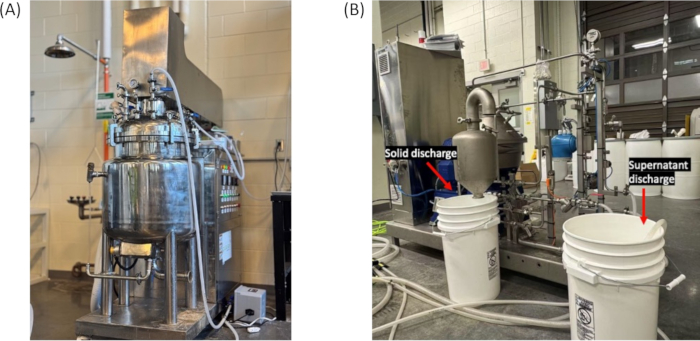
Figure 2: Equipment used for VFA production and solid-liquid separation. (A) 100 L pilot-scale aAD digester. (B) discharge of supernatant and solids into respective buckets from the separation tank of the disc centrifuge. Please click here to view a larger version of this figure.
| Parameters | Food waste |
| TS (%) | ~16.5 |
| VS (%) | ~14.5 |
| C:N | ~17:1 |
Table 1: Characteristics of example food waste.
| Step | Media | Temperature | Purpose | Time Period (min) | Discharge Volume (L) | Notes | ||
| 1 | Water | Cold | For primary flushing | 5 | 1 | Used water usually passes to drain. | ||
| 2 | Water | Hot (70 °C) | For thermos lysis of yeast, if applicable | 5 | 1 | Used water normally either passes to drain or is circulated. | ||
| 3 | 2% NaOH solution | Hot (70 °C) | For dissolving protein deposits, if applicable | 20 | 1 | The solution is normally circulated. | ||
| 4 | Water | Hot (70 °C) | For flushing | 5 | 1 | Used water normally either passes to drain or is circulated. | ||
| 5 | 1% Nitric acid solution | Hot (70 °C) | For dissolving inorganic deposits | 10 | 1 | If soft water is used, acid washing is only required a few times a year. In this case the return can pass to drain. If hard water is used, acid washing may be required at every CIP. In this case a circulating system should be used. | ||
| 6 | Water | Hot (80–95 °C) | For flushing and sterilizing | 5 | 1 | If the turbidity of the discharge from this step is high, repeat from Step 2. | ||
Table 2: Washing instructions for the disc centrifuge.
3. PHA fermentation using VFA-rich digestate supernatant
- Bench-scale PHA fermentation for determining the optimal conditions for scale-up.
- Add water to dilute the digestate supernatant collected in step 2.2.9 to a gradient of concentrations to identify the optimal dilution time that minimizes the inhibitory effects of potential toxic compounds present in the food waste digestate supernatant while ensuring minimal compromise to cell growth23.
NOTE: A minimum of 2-time dilution is typically required to mitigate these inhibitory effects25. - Supplement the diluted digestate supernatant with salt and nutrients, specifically, 156 g/L NaCl, 5 g/L yeast extract, 13 g/L MgCl26H2O, 20 g/L MgSO47H2O, 1 g/L CaCl22H2O, 4 g/L KCl, 0.2 g/L NaHCO3, and 0.5 g/L NaBr, and NH4Cl as needed33.
- Measure the salinity of the digestate supernatant using a conductivity probe before adding NaCl. Food waste digestate typically has negligible salinity; however, if high salinity is present, adjust NaCl dosing based on Equation 3.
NaCl addition (g) = 156 g/L NaCl × total volume of prepared medium - × added digestate supernatant volume (3)
 - Maintain the C:N ratio of the medium made from digestate supernatant at 15. Determine NH4Cl addition based on the indigenous C:N ratio of the digestate supernatant measured in terms of total organic carbon (TOC) and total nitrogen (TN) as specified in steps 5.2 and 5.3.
- Stir the medium using a magnetic stir plate at 200 rpm until all supplements are fully dissolved. Adjust the medium pH to 7.0 ± 0.05 using 1 N NaOH or 1 N H2SO4.
- Allocate the prepared medium into sterile Erlenmeyer flasks, filling only 1/5 of the volume to maintain a large headspace for adequate air transfer during cultivation (Figure 3A). Cover the flask with cotton or any type of breathable material with sufficient porosity to allow gas exchange during cultivation.
- Thaw the H. mediterranei seed culture (activated from commercial American Type Culture Collection (ATCC) 33500 that is stored at -80 °C) by gentle agitation in a water bath that is set to a normal growth temperature of H. mediterranei strain (e.g., 37 °C). Thawing should be rapid, i.e., approximately 2 min or until all ice crystals have melted.
- Inoculate 0.2% (v/v) H. mediterranei seed culture with OD600nm of ~0.5 into the prepared medium. Prepare a positive control flask with inoculation and a negative control flask without inoculation with ATCC medium 117633.
NOTE: The ATCC medium has the same nutrient composition as detailed in Step 3.1.2, except that the digestate supernatant is replaced with 1 g/L glucose, and no additional nitrogen source is added. - Incubate all flasks at 37 °C with shaking at 150 rpm in an orbital shaker. Measure optical density (OD600nm) daily until it stabilizes at the stationary phase, then stop cultivation. Collect the pinkish broth (Figure 3B) for downstream PHA recovery.
- Add water to dilute the digestate supernatant collected in step 2.2.9 to a gradient of concentrations to identify the optimal dilution time that minimizes the inhibitory effects of potential toxic compounds present in the food waste digestate supernatant while ensuring minimal compromise to cell growth23.
- Pilot-scale PHA fermentation in 50 L glass fermenter.
- Connect the PHA pilot fermenter (Figure 4) and water circulation heater to the power supply.
- Turn on the water bath heating switch. Set the temperature to 37 °C. Turn on the stirrer and set it to 150 rpm.
- Add the food waste digestate supernatant, prepared using the optimal dilution factor, along with the salt and nutrient supplements identified in step 3.1.2, to achieve a working volume of 40 L.
- Adjust the pH value to 7. Inoculate 10% (v/v) H. mediterranei seed culture with OD600nm of ~0.5 into the prepared medium.
- Turn on the air pump of the pilot fermenter and set the aeration rate at 110 m3/h. Collect the sample and measure OD600nm on a daily basis. When OD600nm reaches the stationary phase, stop the fermentation, and store the fermentation broth at 4 °C for downstream PHA recovery.
- Wash the fermenter with tap water and 70% ethanol.
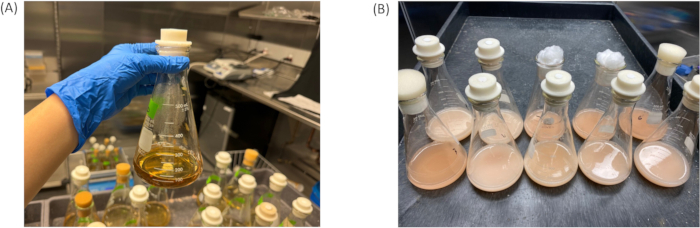
Figure 3: Pre- and post-fermentation flasks of PHA production by H. mediterranei. (A) Medium in flasks made from food waste digestate supernatant before incubation/fermentation. (B) Pinkish PHA-rich H. mediterranei culture after fermentation. Please click here to view a larger version of this figure.
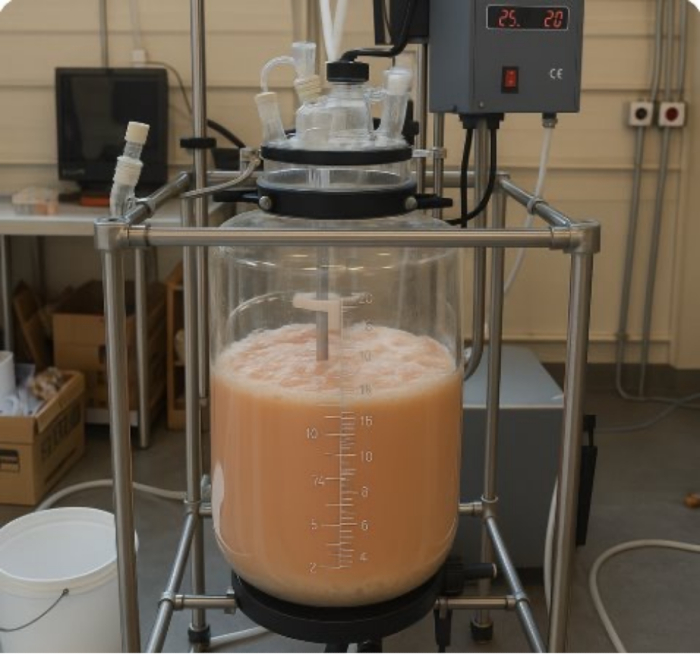
Figure 4: 50 L pilot-scale PHA fermenter. Please click here to view a larger version of this figure.
4. PHA downstream recovery
- Feed H. mediterranei fermentation broth to the disc centrifuge to separate the salty supernatant and H. mediterranei cells. Collect the harvested cell (Solid Out part in Figure 5) for subsequent cell lysis. Dispose of the Liquid Out fraction according to biowaste disposal regulations.
NOTE: The operation of the disc centrifuge here is the same as steps in 2.2. - Resuspend the harvested cells collected in water at 100 mL/g wet cells and mix at 150 rpm for 2 h at room temperature to allow cell lysis by osmotic pressure shock.
- Resuspend a small portion (50 mL) of harvested cells collected in step 4.1 in 4% NaClO solution (2 mL of 4% NaClO solution per g wet cells) and mix for 5 min.
NOTE: NaClO treatment is used to provide a baseline that can presumably recover 100% PHA from H. mediterranei cells. This assumption is made based on the fact that this NaClO treatment is the most broadly adapted method for PHA recovery34. This NaClO treatment is usually regarded aggressive enough for complete cell lysis and PHA recovery regardless of the cell species.
CAUTION: NaClO is a strong oxidizing agent. It can cause severe skin burns, eye damage, and respiratory irritation. Always handle NaClO in a well-ventilated area or under a fume hood, while wearing appropriate personal protective equipment (PPE), including gloves, safety goggles, and a lab coat. In case of skin contact, immediately rinse the affected area with copious amounts of water and seek medical attention if irritation persists. Dispose of NaClO-containing waste in accordance with local hazardous waste regulations to prevent environmental contamination. - Centrifuge the lysed suspension at 10,000 x g for 30 min to collect PHA granules.Dispose of the supernatant according to biowaste disposal regulations in the lab.
- Freeze-dry the PHA granules at -50 °C for ~48 h until constant weight is achieved to obtain crude PHA powder (Figure 6A).
- Add ethanol to crude PHA powder at 10 mL/g to remove residual impurities. Centrifuge at 10,000 x g for 30 min to collect purified PHA granules. Dispose of the supernatant according to chemical waste disposal regulations.
- Freeze-dry the PHA pellet at -50 °C for ~48 h until constant weight is achieved to obtain purified PHA powder (Figure 6B).
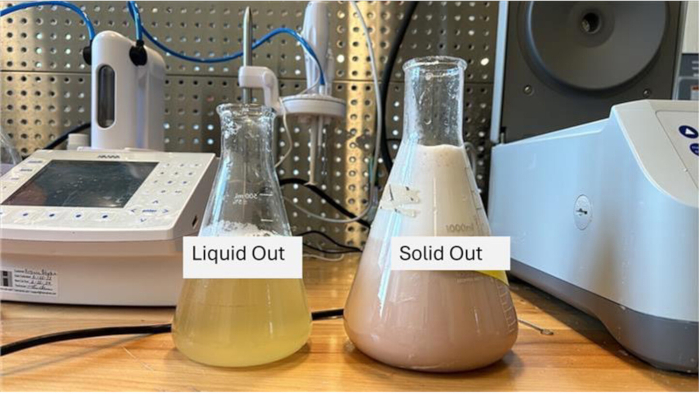
Figure 5: Separated salty supernatant (left) and cells (right). Please click here to view a larger version of this figure.
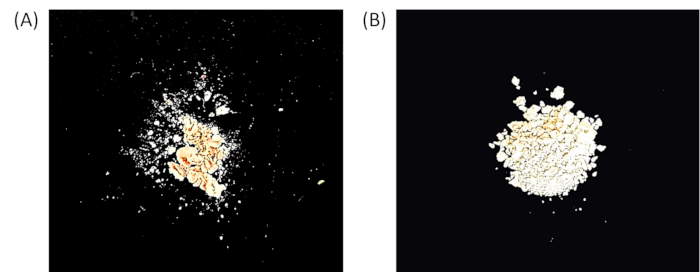
Figure 6: PHA powder. (A) Crude PHA powder and (B) purified PHA powder. Please click here to view a larger version of this figure.
5. Analytical methods
- Measure TS and VS following standard methods35. Determine TN by the Hach testing kits following the standard method using a spectrophotometer35.
- Measure TOC by a TOC analyzer following the methods described in a previous study25. Measure pH by a benchtop pH meter.
- Determine VFA quantification by using a kit36. Monitor OD600nm using a microplate reader.
- Estimate DCW from the volatile suspended solids (VSS) of the cell broth measured following the standard VSS measurement method25,35. Briefly, centrifuge 50 mL of cell broth at 8,000 x g for 15 min and transfer the pellet to a crucible for VSS analysis.
NOTE: Use VSS to estimate DCW, as it reflects the organic biomass and avoids overestimation due to salt content in H. mediterranei23. - Conduct PHA quantification by a gas chromatography (GC) following methods in a previous study25, in which freeze-dried biomass is methanolysed in chloroform and acidified methanol at 105 °C for 2 h, and the resulting monomers are quantified using GC with methyl benzoate as an internal standard. Calculate PHA recovery using Equation 4 and PHA purity is using Equation 5. Determine all mass of PHA from GC.
PHA recovery (%) = (4)
(4)
PHA purity (%) = (5)
(5)
CAUTION: Chloroform and sulfuric acid used in PHA quantification are hazardous and must be handled with extreme care. Chloroform is a volatile organic solvent that poses inhalation toxicity risks and may cause liver and kidney damage upon prolonged exposure. Sulfuric acid is a strong corrosive chemical that can cause severe burns upon skin or eye contact. Always handle these chemicals inside a fume hood to prevent inhalation exposure. Ensure the use of appropriate PPE, including chemical-resistant gloves, safety goggles, and a lab coat. Properly dispose of all chloroform and sulfuric acid waste according to local hazardous waste regulations to maintain safe laboratory practices.
Access restricted. Please log in or start a trial to view this content.
Results
Food waste characteristics and VFA production from aAD
An example of TS, VS, and C:N ratio in prepared food waste slurry is shown in Table 1. Due to the inherent variability in food waste composition across different sampling sources and time, fluctuations in TS, VS, and C:N ratio values are expected. While the variability is acceptable, regular TS, VS, and C:N ratio measurements are essential for process monitoring, microbial balance, and overall aAD system optimization
Access restricted. Please log in or start a trial to view this content.
Discussion
VFA production from aAD
VFA plays a crucial role as key precursor for H. mediterranei in converting food waste into PHA. Therefore, maintaining a high VFA concentration during aAD is essential. Several strategies can be employed to enhance VFA production in aAD25. One effective approach is SRT optimization, with an ideal duration of 8 days or less, which promotes the washout of methanogens while maximizing hydrolysis and acidogenesis, thereby preventing excessive VF...
Access restricted. Please log in or start a trial to view this content.
Disclosures
The authors have nothing to disclose.
Acknowledgements
This study was supported by Department of Energy-Office of Energy Efficiency and Renewable Energy (Prime Award No. DEEE0009268) and United States Department of Agriculture National Institute of Food and Agriculture (Award No. 2023-79000-38973).
Access restricted. Please log in or start a trial to view this content.
Materials
| Name | Company | Catalog Number | Comments |
|---|---|---|---|
| Air | Airgas | AI UZ300 | Used for GC operation |
| Air pump | Cloudray | Hailea ACO-009D | |
| Ammonium chloride | Acros Organics | A0396560 | |
| Autoclave | STERIS | AMSCO Lab 250 | Used in ATCC medium preparation |
| Balance | METTLER TOLEDO | ME204TE/00 | |
| Blender | VEVOR | IB750LV+BLD300+WB-1 | |
| Bucket | Lowe's | Model 50640 | 5-Gallon BPA-Free Plastic General Bucket |
| Calcium chloride dihydrate | Acros Organics | A0362932 | |
| Chloroform | Millipore Sigma | C2432 | |
| Desiccator | Any type that can be used in TS, VS, VSS measurement | ||
| Digestion tubes, screw cap with PTFE liner | Millipore Sigma | CLS982613 | |
| Digital Reactor Block | Hach Company | DRB200 | Used in Hach VFA quantification methods |
| Digital stirrer | SCILOGEX | SCI550-Pro | |
| Disc centrifuge | Alfa Laval Inc. | Clara 20 | |
| Erlenmeyer flasks | Amazon | B07V3JPQMM | |
| Ethanol | Amazon | B09DGVL4ML | |
| Freeze dryer | Labconco | 10030133, 1027319, and 0109621 | FreeZone 2.5 Liter Freeze Dry Systems |
| Fume hood | Kewaunee Scientific Corporation | Supreme Air LV | |
| Furnace | Thermo Scientific | Model F30428C | |
| Gas chromatography (GC) | Agilent | Model 8890 | |
| Haloferax mediterranei | ATCC | 33500 | |
| Hydrogen | Airgas | HY UHP300 | Used for GC operation |
| Knife | Any type used for cutting food waste | ||
| Lubricant oil | Fisher Scientific Company | NC9844626 | |
| Magnesium chloride hexahydrate | Fisher Scientific Company | BP214-500 | |
| Magnesium sulfate heptahydrate | Millipore Sigma | M1880 | |
| Methonal | Millipore Sigma | 34860 | |
| Methyl benzoate | Millipore Sigma | 93583 | Used as internal standard in PHA quantification |
| Microplate reader | BioTek Synergy | Synergy H1 | |
| Nitrogen | Airgas | NI UHP300 | Used for GC operation |
| Oven | Thermo Scientific | OMH750 | |
| Peristaltic pump | Simply Pumps Inc. | PM6000 AC | High-flow, self-priming pump with excellent dry-running capability, capable of handling high-particulate slurries and designed for 1/8-inch wall tubing. |
| pH meter | Fisher Scientific Company | AE150 | |
| PHA standard | Millipore Sigma | 403105 | |
| Pilot aAD digester | Quasar energy group, Independence, Ohio, USA | Stainless-steel fermenter with a total volume of 100 L and a working volume of 80 L | |
| Pilot PHA fermenter | manukatree | SF-50l ISO 9001 CE | Double Layer Jacketed Glass Reactor |
| Potassium Chloride | G-BIOSCIENCES | 162006 | |
| Pump tubing | Any brand of silicone tubing with a 1/8'' ID and a 3/8'' OD | ||
| Sodium Bicarbonate | Fisher Chemical | 241787 | |
| Sodium Bromide | Carolina | 21139-45 | |
| Sodium chloride | Amazon | B0787CFHF3 | |
| Sodium hydroxide, Pellets | Fisher Bioreagents | 236088 | |
| Sodium hypochlorite | Millipore Sigma | 425044 | |
| Sorvall LYNX 4000 Superspeed Centrifuge | Thermo Scientific | 75006580 | Used for PHA granule collection in downstream PHA recovery |
| Spectrophotometer | Hach Company | DR3900 | Used in Hach VFA quantification methods |
| Sulfuric acid | Millipore Sigma | 258105 | |
| Syringe filter | Amazon | B06X6GTKVY | |
| TOC analyzer | Shimadzu | Model TOC-LCSN | |
| Volatile Acids TNTplus Vial Test | Hach Company | TNT 872 | Capable to measure VFA in the range of 50 - 2,500 mg/L Acetic Acid. |
| Water heater | Bosch Inc. | Tronic 3000 T 7-Gallon (ES8) | |
| Yeast extract | Fisher Scientific Company | AAJ6028736 |
References
- Sabapathy, P. C. Recent developments in polyhydroxyalkanoates (phas) production-a review. Biores Tech. 306, 123132(2020).
- Koller, M., Simon, K. M. R. Haloarchaea as emerging big players in future polyhydroxyalkanoate bioproduction: Review of trends and perspectives. Curr Res Biotechnol. 4, 377-391 (2022).
- Atarés, L., Chiralt, A., González-Martínez, C., Vargas, M. Production of polyhydroxyalkanoates for biodegradable food packaging applications using haloferax mediterranei and agrifood wastes. Foods. 13 (6), 950(2024).
- Kusuma, H. S., et al. Waste to wealth: Polyhydroxyalkanoates (pha) production from food waste for a sustainable packaging paradigm. Food Chem Mol Sci. 9, 100225(2024).
- Li, M., Wilkins, M. R. Recent advances in polyhydroxyalkanoate production: Feedstocks, strains and process developments. Int J Biol Macromol. 156, 691-703 (2020).
- Alsafadi, D., Al-Mashaqbeh, O. A one-stage cultivation process for the production of poly-3-(hydroxybutyrate-co-hydroxyvalerate) from olive mill wastewater by haloferax mediterranei. New Biotechnol. 34, 47-53 (2017).
- Amaro, T. M., Rosa, D., Comi, G., Iacumin, L. Prospects for the use of whey for polyhydroxyalkanoate (pha) production. Front Microbio. 10, 992(2019).
- Sharma, K., Gillum, N., Boyd, J. L., Schmid, A. The rosr transcription factor is required for gene expression dynamics in response to extreme oxidative stress in a hypersaline-adapted archaeon. BMC Genomics. 13, 1-18 (2012).
- Mitra, R., Xu, T., Xiang, H., Han, J. Current developments on polyhydroxyalkanoates synthesis by using halophiles as a promising cell factory. Micro Cell Factories. 19, 1-30 (2020).
- Alsafadi, D., Alhesan, J. S. A., Mansoura, A., Oqdeha, S. Production of polyhydroxyalkanoate from sesame seed wastewater by sequencing batch reactor cultivation process of haloferax mediterranei. Arabian J Chem. 16 (4), 104584(2023).
- Pais, J., Serafim, L. S., Freitas, F., Reis, M. A. Conversion of cheese whey into poly (3-hydroxybutyrate-co-3-hydroxyvalerate) by haloferax mediterranei. New Biotechnol. 33 (1), 224-230 (2016).
- Koller, M., et al. Potential of various archae-and eubacterial strains as industrial polyhydroxyalkanoate producers from whey. Macromol Biosci. 7, 218-226 (2007).
- Bhattacharyya, A. Integration of poly-3-(hydroxybutyrate-co-hydroxyvalerate) production by haloferax mediterranei through utilization of stillage from rice-based ethanol manufacture in india and its techno-economic analysis. World J Microbiol Biotechnol. 31, 717-727 (2015).
- Bhattacharyya, A., et al. Utilization of vinasse for production of poly-3-(hydroxybutyrate-co-hydroxyvalerate) by haloferax mediterranei. AMB express. 2, 1-10 (2012).
- Khamplod, T., Wongsirichot, P., Winterburn, J. Production of polyhydroxyalkanoates from hydrolysed rapeseed meal by haloferax mediterranei. Biores Tech. 386, 129541(2023).
- Montemurro, M., et al. Exploitation of wasted bread as substrate for polyhydroxyalkanoates production through the use of haloferax mediterranei and seawater. Front Microbio. 13, 1000962(2022).
- Alsafadi, D., Ibrahim, M. I., Alamry, K. A., Hussein, M. A., Mansour, A. Utilizing the crop waste of date palm fruit to biosynthesize polyhydroxyalkanoate bioplastics with favorable properties. Sci Total Environ. 737, 139716(2020).
- Raho, S. Production of the polyhydroxyalkanoate phbv from ricotta cheese exhausted whey by haloferax mediterranei fermentation. Foods. 9 (10), 1459(2020).
- Aliyu Salihu, M. Z. A. Pretreatment methods of organic wastes for biogas production. J Appl Sci. 16 (3), 124-137 (2016).
- Khomlaem, C., et al. Defatted chlorella biomass as a renewable carbon source for polyhydroxyalkanoates and carotenoids co-production. Algal Res. 51, 102068(2020).
- Li, Y., Jin, Y., Borrion, A., Li, H., Li, J. Effects of organic composition on mesophilic anaerobic digestion of food waste. Biores Tech. 244, 213-224 (2017).
- Giduthuri, A. T., Ahring, B. K. Current status and prospects of valorizing organic waste via arrested anaerobic digestion: Production and separation of volatile fatty acids. Fermentation. 9 (1), 13(2022).
- Wang, K., Zhang, R. Production of polyhydroxyalkanoates (pha) by haloferax mediterranei from food waste derived nutrients for biodegradable plastic applications. Journal of Microbio Biotech. 31 (2), 338-347 (2021).
- Wang, K., Chen, C., Zhang, R. Process development of polyhydroxyalkanoates production by halophiles valorising food waste. Bioengineering. 9 (11), 630(2022).
- Zhang, X. Long-term effects of cycle time and volume exchange ratio on poly(3-hydroxybutyrate-co-3-hydroxyvalerate) production from food waste digestate by haloferax mediterranei cultivated in sequencing batch reactors for 450 days. Biores Tech. 416, 131771(2024).
- Getino, L., Martín, J. L., Chamizo-Ampudia, A. A review of polyhydroxyalkanoates: Characterization, production, and application from waste. Microorganisms. 12 (10), 2028(2024).
- Esmaeilnejad-Ahranjani, P., Hajimoradi, M. Optimization of industrial-scale centrifugal separation of biological products: Comparing the performance of tubular and disc stack centrifuges. Biochem Engineering J. 178, 108281(2022).
- Tennison-Omovoh, C. A., Fagbohungbe, M. O., Bankole, P. O., Semple, K. T. The effect of different cn ratios on volatile fatty acid (vfas) production from acidogenic fermentation of sucrose in continuous-stirred tank reactors. Biomass Convers Biorefinery. 13, 9339-9351 (2023).
- Epa, U. Biosolids technology fact sheet, multi-stage anaerobic digestion. Natl Serv Center Environ Publi. , 1-13 (2006).
- Schnaars, K. What every operator should know about anaerobic digestion. Water Environ Tech. 24, 82-83 (2012).
- Sun, J., Zhang, X., Guan, J., He, Z. Volatile fatty acid production through arresting methanogenesis by electro-synthesized hydrogen peroxide in anaerobic digestion and subsequent recovery by electrodialysis. ACS ES&T Eng. 4 (12), 2964-2973 (2024).
- Bhatia, P., et al. Effect of semi-continuous anaerobic digestion on the substrate solubilisation of lignin-rich steam-exploded ludwigia grandiflora. Appl Sci. 11 (10), 4452(2021).
- Product sheet of haloferax mediterranei (rodriguez-valera et al.) torreblanca et al. , American type culture collection (atcc). https://www.atcc.org/products/33500 (2025).
- Pagliano, G., Galletti, P., Samorì, C., Zaghini, A., Torri, C. Recovery of polyhydroxyalkanoates from single and mixed microbial cultures: A review. Front Bioeng Biotechnol. 9, 624021(2021).
- Rice, E. W., Bridgewater, L. Standard methods for the examination of water and waste water. 10, American Public Health Association. Washington, DC. (2012).
- Kaur, H., Kommalapati, R. R. Optimizing anaerobic co-digestion of goat manure and cotton gin trash using biochemical methane potential (bmp) test and mathematical modeling. SN Appl Sci. 3, 1-14 (2021).
- Yi, J., Dong, B., Jin, J., Dai, X. Effect of increasing total solids contents on anaerobic digestion of food waste under mesophilic conditions: Performance and microbial characteristics analysis. PloS One. 9 (7), e102548(2014).
- Velivela, A., et al. Biogas: Converting waste to energy. Innovation Mang Intelligent World Cases Tools. , 285-298 (2020).
- Cui, Y. W., Shi, Y. P., Gong, X. Y. Effects of c/n in the substrate on the simultaneous production of polyhydroxyalkanoates and extracellular polymeric substances by haloferax mediterranei via kinetic model analysis. RSC Adv. 7 (31), 18953-18961 (2017).
- Ghosh, S., et al. Macroalgal biomass subcritical hydrolysates for the production of polyhydroxyalkanoate (pha) by haloferax mediterranei. Biores Tech. 271, 166-173 (2019).
- Bold goals for us biotechnology and biomanufacturing: Harnessing research and development to further societal goals. , The White House Office of Science and Technology Policy. (2023).
- Nienow, A. W. Reactor engineering in large scale animal cell culture. Cytotechnology. 50 (1), 9-33 (2006).
- Goodhead, L. K., Macmillan, F. M. Measuring osmosis and hemolysis of red blood cells. Adv Physiol Educ. 41 (2), 298-305 (2017).
- Cai, S., et al. Identification of the haloarchaeal phasin (phap) that functions in polyhydroxyalkanoate accumulation and granule formation in haloferax mediterranei. Appl Environ Microbio. 78 (6), 1946-1952 (2012).
- Giani, M. Haloferax mediterranei cells as c50 carotenoid factories. Marine Drugs. 19 (2), 100(2021).
- Tanvir, R. U., Ahmed, M., Lim, T. T., Li, Y., Hu, Z. Arrested methanogenesis: Principles, practices, and perspectives. Adv Bioener. 7, 1-66 (2022).
- Lukitawesa,, Patinvoh, R. J., Millati, R., Sarvari-Horvath, I., Taherzadeh, M. J. Factors influencing volatile fatty acids production from food wastes via anaerobic digestion. Bioengineered. 11 (1), 39-52 (2020).
- Cabrera, F., et al. The accumulation of volatile fatty acids and phenols through a ph-controlled fermentation of olive mill solid waste. Sci Total Environ. 657, 1501-1507 (2019).
- Koller, M., Obruca, S., Pernicova, I., Braunegg, G. Physiological, kinetic, and process engineering aspects of polyhydroxyalkanoate biosynthesis by extremophiles. Polyhydroxyalkanoates Biosynth Chem Struct Appl. 2013, 1-70 (2018).
- Schiraldi, C., De Rosa, M. The production of biocatalysts and biomolecules from extremophiles. Trends Biotech. 20 (12), 515-521 (2002).
- Lorantfy, B., Seyer, B., Herwig, C. Stoichiometric and kinetic analysis of extreme halophilic archaea on various substrates in a corrosion resistant bioreactor. New Biotech. 31 (1), 80-89 (2014).
- Hezayen, F., Rehm, B., Eberhardt, R., Steinbüchel, A. Polymer production by two newly isolated extremely halophilic archaea: Application of a novel corrosion-resistant bioreactor. Appl Microbio Biotechnol. 54, 319-325 (2000).
- Mahler, N., Tschirren, S., Pflügl, S., Herwig, C. Optimized bioreactor setup for scale-up studies of extreme halophilic cultures. Biochem Eng J. 130, 39-46 (2018).
- Bondi, C. A., et al. Human and environmental toxicity of sodium lauryl sulfate (sls): Evidence for safe use in household cleaning products. Environ Health Insights. 9, S31765(2015).
- Najim, A. A., Ismail, Z. Z., Hummadi, K. K. Biodegradation potential of sodium dodecyl sulphate (sds) by mixed cells in domestic and non-domestic actual wastewaters: Experimental and kinetic studies. Biochem Eng J. 180, 108374(2022).
- Zhao, F., Wang, Z., Huang, H. Physical cell disruption technologies for intracellular compound extraction from microorganisms. Processes. 12 (10), 2059(2024).
Access restricted. Please log in or start a trial to view this content.
Reprints and Permissions
