This protocol describes a robot-assisted partial splenectomy for a benign splenic tumor. The robotic approach optimizes spleen preservation by enhancing surgical precision, minimizing blood loss, and improving postoperative outcomes. Key surgical steps include meticulous splenic hilum dissection, selective vascular ligation, intraoperative ultrasonography, and controlled parenchymal transection.
In This Article
Summary
Abstract
Partial splenectomy (PS) has emerged as a viable alternative to total splenectomy for the management of benign splenic lesions, aiming to preserve immunological function while minimizing surgical morbidity. Robot-assisted surgery facilitates PS by providing three-dimensional visualization and precise dissection, leading to improved hemostatic control. We present the case of a 38-year-old woman with an incidental finding of a growing mass in the spleen suspected of a sclerosing angiomatoid nodular transformation (SANT) of the spleen, managed with robot-assisted PS. Intraoperative ultrasonography allowed for the accurate determination of the resection margin. The procedure included meticulous splenic hilum dissection with selective ligation of three vascular pedicles. Parenchymal transection was performed using a combination of robotic cautery, bipolar energy, and a laparoscopic harmonic device, minimizing blood loss. The patient was discharged on postoperative day 3 without complications. This case highlights the technical feasibility and advantages of robot-assisted PS in preserving splenic function while minimizing surgical morbidity.
Introduction
A Sclerosing Angiomatoid Nodular Transformation (SANT) is a rare, benign vascular tumor of the spleen, first described in 20041. It typically presents as a demarcated solitary mass characterized by angiomatoid nodules embedded within a fibrosclerotic stroma, predominantly involving the red pulp of the spleen2. Although its etiology remains unclear, SANT appears to predominantly affect middle-aged adults but shows no clear link to sex or underlying health conditions3.
SANT is often discovered incidentally during imaging for unrelated conditions. However, it may occasionally present with non-specific symptoms such as abdominal discomfort, vomiting, or anemia. Due to its radiological similarities, SANT is frequently misdiagnosed as other vascular splenic lesions, including hemangiomas or hamartomas3,4.
Despite its benign nature, SANT carries a potential risk of spontaneous rupture and the possibility of misinterpreting the lesion as malignant, thereby warranting surgical intervention. Therefore, splenectomy is recommended to confirm the diagnosis and prevent potential complications3.
Historically, total splenectomy has been the standard treatment for benign splenic lesions. However, increasing awareness of the spleen's immunological function and the associated risk of postoperative complications has led to the adoption of spleen-preserving techniques as a valuable alternative in the management of benign splenic diseases5,6,7,8.
Partial splenectomy (PS) presents specific challenges due to the need for meticulous dissection of the splenic hilum and the inherent risk of intraoperative bleeding. Although PS has been reported laparoscopically9, the introduction of robot-assisted surgery has significantly advanced the feasibility and safety of complex procedures, such as PS, by offering enhanced visualization, improved dexterity, and greater stability during dissection in challenging vascular areas7.
We present the case of a 38-year-old woman with a medical history of two cesarean sections. A splenic SANT presented as an incidental finding on CT during follow-up of a splenic adenoma without any signs or symptoms. During the follow-up of 2 years with ultrasonography, the size of the lesion slowly increased from approximately 2 cm to 5 cm, leading to diagnostic doubt. Preoperative imaging, CT and MRI, revealed an exophytic lesion on the anterior surface of the spleen, measuring 4.0 cm, as shown in Figure 1 and Figure 2. After informed consent, the patient underwent a robot-assisted PS.
Protocol
The patient gave written and oral informed consent to use medical data and the operative video for education and scientific purposes. This research was performed in compliance with all institutional, national, and international guidelines for human welfare. Written informed consent was obtained from the patient for publication of this manuscript and any accompanying images.
1. Operative setting and trocar placement
- Place the patient in a right lateral decubitus position, with the left arm abducted to optimize exposure of the surgical field. Place a flank cushion or a bean bag under the right flank and adjust the operating table with a 20-30° tilt in both the cephalad and caudad directions.
- Check all the required safety procedures and create a sterile field using chlorhexidine antiseptic solution.
- Perform insufflation to create pneumoperitoneum by placing a Veress needle in the left hypochondrium. Place four 8 mm robotic trocars (R1-4) and two assistant trocars for the tableside surgeon (A1-2) as shown in Figure 3. Place R1 in the left mid-clavicular line, R2 in the left anterior axillary line, R3 in the left middle axillary line, and R4 in the left posterior axillary line. Place the A1 trocar of 5 mm at approximately 8 cm caudally between R1 and R2, and the A2 trocar of 12 mm at approximately 8 cm caudally between R2 and R3.
- Place the robot on the patient's left side (optional: right side) and dock the arms to their respective trocars. The tableside surgeon is sitting on the patient's right. R1 holds a bipolar forceps, R2 the camera, R3 a cautery hook, and R4 cadiere forceps. A1 holds a laparoscopic harmonic scalpel and A2 laparoscopic forceps.
2. Surgical technique
- Spleen mobilization
- Completely mobilize the hepatic flexure of the colon using the robotic cautery hook and the laparoscopic harmonic device controlled by the tableside surgeon.
- Divide the splenocolic, gastrosplenic, and fully phrenosplenic ligaments to mobilize the spleen and provide access to the splenic hilum.
- During the division of the gastrosplenic ligament, carefully transect the short gastric vessels to fully mobilize the spleen.
- Divide the phrenicosplenic ligament to complete the mobilization of the spleen and allow unobstructed access to the hilum.
- Intraoperative ultrasonography
- Introduce the ultrasound probe through a tableside surgeon port and identify the splenic lesion.
NOTE: The ultrasound is integrated into the robotic console and controlled through a grabbing point intended for a robotic grasper. - Demarcate the tumor margins with the cautery hook, with the guidance from intraoperative ultrasonography, as shown in Figure 4.
- Introduce the ultrasound probe through a tableside surgeon port and identify the splenic lesion.
3. Management of the splenic hilum
- Place a 10-15 cm long vessel loop around the splenic hilum to have complete in- and outflow control (i.e., at this time, all vascular connections between spleen and stomach have already been transected).
- After complete mobilization of the spleen, identify the lesion at its inferior pole. Introduce an ultrasound probe through an assistant port and identify the splenic lesion.
- Demarcate the tumor margins using the cautery hook.
- Identify the splenic vascular pedicles.
NOTE: In our case, three pedicles were identified as previously noticed on the CT, shown in Figure 2. - Identify and mobilize the pancreatic tail to avoid inadvertent injury.
- Mobilize the splenic artery and place a bulldog clamp.
- Dissect the inferior splenic pedicle and selectively isolate its vascular branches using the robotic cautery hook on arm 3 and the laparoscopic harmonic scalpel.
- Carefully dissect and isolate the splenic vein of the inferior pedicle. Ligate the splenic vein using non-absorbable, radiolucent, vascular ligation clips to ensure secure vascular control.
- Isolate and expose the splenic artery; clip it using non-absorbable, radiolucent, vascular ligation clips to achieve effective arterial control and minimize the risk of intraoperative bleeding.
- Carefully isolate the remaining vascular elements of the inferior splenic pedicle. Once adequately exposed, ligate them using non-absorbable, radiolucent, vascular ligation clips to secure vascular control.
- Demarcate the area of macroscopic splenic ischemia using the robotic cautery hook.
- Apply a bulldog clamp on the splenic hilum to obtain full inflow control.
NOTE: Due to incomplete ischemia following hilar clamping, the lesser sac was accessed to expose the splenic artery. Although optional, this step provides enhanced vascular control in cases of incomplete ischemia and helps anticipate potential bleeding complications.
4. Parenchyma transection
- Transect the splenic parenchyma with a tumor-free margin using the robotic cautery hook and a bipolar and laparoscopic harmonic scalpel controlled by the tableside surgeon.
- Achieve hemostasis using the bipolar forceps on robotic arm 1.
NOTE: The surgeon must follow the demarcated ischemic line with precision to avoid injury to the adjacent vascular structures. This will help preserve as much of the splenic parenchyma as possible, maintaining sufficient tissue volume to support immunological function postoperatively. - Place a hemostatic patch over the splenic parenchymal transection site. Place one wet 10 x 10 cm gauze on top and remove the gauze after 3-5 min.
NOTE: Placement of a patch is optional. - Extract the specimen in a retrieval bag through one of the tableside surgeon ports.
- Remove both bulldog clamps and confirm adequate perfusion of the remaining spleen.
- Fix the remaining spleen using an absorbable 4-0 polyglactin suture to prevent rotation and ischemia.
Results
The operation time was 145 min, with a measured blood loss of 400 mL. The postoperative course was uneventful, and the patient was discharged in good condition on postoperative day 3. These findings are consistent with previously published series, as shown in Table 17,10,11, supporting the safety and feasibility of the procedure. The patient was evaluated in the clinic, reporting only mild right-sided back pain. The surgical wounds were observed to be in good condition, as shown in Figure 5.
Histopathological analysis revealed a 3.8 cm lesion characterized by a central nodule with a sclerosing capsule. Histologically, angiomatoid nodular structures with blood vessels were identified. Immunohistochemical staining was positive for factor VIII and showed a low proliferation index (Ki-67). No evidence of malignancy was observed. These findings are consistent with a diagnosis of SANT.
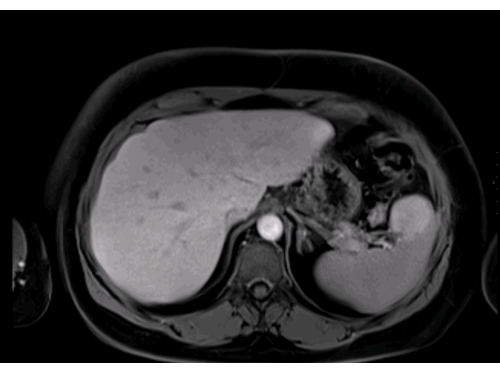
Figure 1: Splenic lesion on the anterior splenic surface, shown on MRI. Preoperative MRI of the spleen showing an exophytic lesion on the anterior surface measuring 4.0 cm, detected incidentally and later confirmed as SANT. Abbreviation: SANT = Sclerosing Angiomatoid Nodular Transformation. Please click here to view a larger version of this figure.

Figure 2: Three splenic vascular pedicles, shown on the CT. Preoperative CT demonstrating three distinct splenic vascular pedicles, a key anatomical finding that enabled selective pedicle ligation during the robot-assisted partial splenectomy. Please click here to view a larger version of this figure.

Figure 3: Trocar placement. Trocar placement for robot-assisted partial splenectomy: four 8-mm robotic trocars (R1-R4) and two assistant trocars (A1-A2). R1 holds a bipolar forceps, R2 the camera, R3 a cautery hook, and R4 cadiere forceps. A1 holds a laparoscopic harmonic scalpel and A2 laparoscopic forceps. Please click here to view a larger version of this figure.
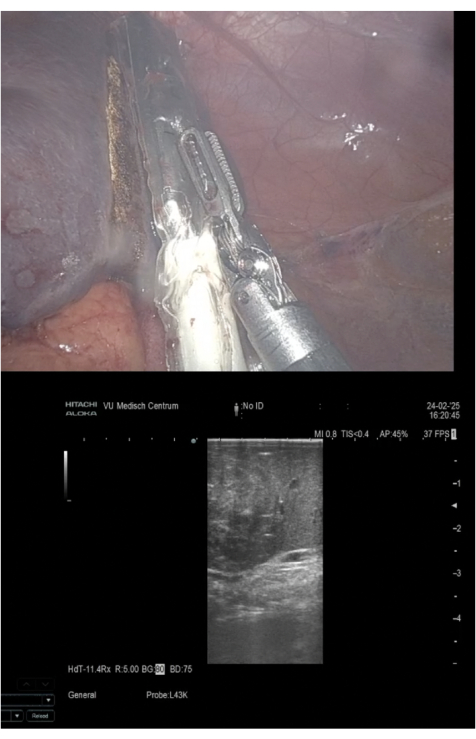
Figure 4: Demarcation of tumor margins using intraoperative ultrasonography. Intraoperative ultrasonography used to localize the lesion and demarcate tumor margins. The cautery hook is used to demarcate the intended transection line. Please click here to view a larger version of this figure.

Figure 5: Surgical wounds. Postoperative appearance of the surgical wounds after robot-assisted partial splenectomy. Please click here to view a larger version of this figure.
| Study | Approach | Number of Cases | Operative Time (min) | Blood Loss (mL) | Length of Stay (days) | Notes |
| Gómez et al. (2025) | Robotic PS | 1 | 145 | 400 | 3 | SANT |
| Xue HM et al. (2024) | Robotic PS | 4 | 120-180 | 20-100 | 6.2 | Benign Tumors |
| Li Y et al. (2024) | Laparoscopic PS | 87 | 142.5 | 105.2 | 5.9 | Benign Tumors |
| Lin J et al. (2024) | Laparoscopic PS | 20 | 162.25 | 93 | 7 | Being Tumors |
Table 1: Comparison of surgical outcomes in partial splenectomy. Comparison of surgical outcomes in PS for benign splenic lesions, including a recent series of minimally invasive PS. Abbreviations: PS = Partial Splenectomy; SANT = Sclerosing Angiomatoid Nodular Transformation.
Discussion
This report describes the use of robot-assisted PS, aimed at preventing total splenectomy and thus preserving splenic immunological function. Retaining 20-25% of functional parenchyma is sufficient to mitigate risks associated with overwhelming postsplenectomy infections and thromboembolic complications, supporting the growing recognition of organ-preserving techniques in benign splenic disease12.
Robotic-assisted surgery provides superior three-dimensional visualization, surgical precision, increased dexterity, and precise instrument control, especially in anatomically challenging areas such as the splenic hilum13,14. In this case, the robotic approach facilitated meticulous dissection and selective ligation of the inferior vascular pedicle, ensuring hemostatic control, reduced blood loss, and shorter vascular dissection time compared to laparoscopy15.
Despite its advantages, robotic PS presents specific technical challenges, including the higher cost and a learning curve, which may limit the accessibility and generalization16. In centers with established laparoscopic expertise, the choice between approaches, without clear evidence of superiority, should consider not only the complexity of the case but also institutional resources and surgical proficiency. Therefore, these procedures should ideally be performed in high-volume centers by experienced surgeons to ensure optimal outcomes and patient safety17.
Intraoperative ultrasonography is essential as a critical adjunct for accurate lesion localization and margin assessment. Double splenic clamping, defined as the simultaneous temporary occlusion of both arterial and venous splenic vessels, may be used to obtain complete temporary splenic ischemia. Additionally, fixation of the spleen, in this patient, the upper splenic pole may prevent splenic rotation after complete mobilization. One could argue whether complete mobilization is required, but it was performed to facilitate hilar dissection and obtain full control of the spleen in case of hemorrhage.
The decision between partial and total splenectomy depends on several factors, including lesion size, location relative to vascular structures, malignancy, and the feasibility of preserving adequate vascularization of the remaining splenic tissue. In benign and peripherally located tumors, PS is a viable alternative to retain immune function. While short-term outcomes are encouraging, longer follow-up is needed to confirm splenic function preservation, immune competence, and oncologic safety, as well as to develop clinical guidelines10.
Patient outcomes included minimal blood loss, a short hospital stay, and an uncomplicated postoperative course, which underscores the feasibility and safety of the robot-assisted PS in a center experienced with robotic surgery. Histopathological confirmation of SANT and successful preservation of splenic parenchyma reinforce the clinical value of this approach in selected patients.
In conclusion, robot-assisted PS emerges as a safe and effective surgical strategy for the management of benign splenic tumors such as SANT. It integrates the benefits of minimally invasive surgery with the precision and dexterity of robotic technology. However, as this report describes a single case, the generalizability of the findings is limited. Further studies and long-term follow-up are warranted to validate the adoption of this approach in clinical practice.
Disclosures
MG, FD, and SF are proctors for Intuitive Surgical.
Materials
| Name | Company | Catalog Number | Comments |
|---|---|---|---|
| Absorbable Polyglactin 4-0 Suture | Ethicon | N/A | Used for splenic parenchyma fixation |
| Bulldog Clamps | Aesculap | N/A | Used for temporary vascular occlusion |
| CO2 Insufflator | Various | N/A | For creation and maintenance of pneumoperitoneum |
| Da Vinci Surgical System | Intuitive Surgical | N/A | Robotic platform used for all robotic instruments |
| Endoscopic Specimen Retrieval Bag | Applied Medical | N/A | For specimen extraction |
| Hemostatic Patch - ETHIZIA | Ethicon | N/A | Used at the transection site to aid in hemostasis |
| Laparoscopic Harmonic Scalpel | Ethicon | N/A | Ultrasonic energy device used by the tableside surgeon |
| Robotic Cautery Hook | Intuitive Surgical | N/A | Used on arm 3 for dissection |
| Robotic Bipolar Forceps | Intuitive Surgical | N/A | Used on arm 1 for hemostasis |
| Robotic Cadiere Forceps | Intuitive Surgical | N/A | Used on arm 4 for tissue traction |
| Robotic Endoscope (Camera) | Intuitive Surgical | N/A | 3D visualization system used on arm 2 |
| Silicone Vessel Loops | Various | N/A | Temporary control of splenic hilum |
| Ultrasound Probe (Laparoscopic) | BK Medical | N/A | For intraoperative localization and margin assessment |
| Vascular Clips | Teleflex | N/A | Non absorbable clips used for vascular ligation |
References
- Martel, M., et al. Sclerosing angiomatoid nodular transformation (SANT): report of 25 cases of a distinctive benign splenic lesion. Am J Surg Pathol. 28 (10), 1268-1279 (2004).
- Jin, Y., Hu, H., Regmi, P., Li, F., Cheng, N. Treatment options for sclerosing angiomatoid nodular transformation of spleen. HPB (Oxford). 22 (11), 1577-1582 (2020).
- Chikhladze, S., et al. Sclerosing angiomatoid nodular transformation of the spleen, a rare cause for splenectomy: two case reports. World J Clin Cases. 8 (1), 103-109 (2020).
- Vigorito, R., Scaramuzza, D., Pellegrinelli, A., Marchianò, A. Sclerosing angiomatoid nodular transformation (SANT) of the spleen: a case report on CT and MRI. BJR Case Rep. 5 (2), 20180036(2019).
- Tahir, F., Ahmed, J., Malik, F. Post-splenectomy sepsis: a review of the literature. Cureus. 12 (2), e6898(2020).
- Attinà, G., et al. Role of partial splenectomy in hematologic childhood disorders. Pathogens. 10 (11), 1436(2021).
- Xue, H. M., Chen, P., Zhu, X. J., Jiao, J. Y., Wang, P. Robot-assisted partial splenectomy for benign splenic tumors: four case reports. World J Clin Oncol. 15 (10), 1366-1375 (2024).
- Esposito, F., et al. Partial splenectomy: a case series and systematic review of the literature. Ann Hepatobiliary Pancreat Surg. 22 (2), 116-127 (2018).
- De Pastena, M., et al. Laparoscopic hemi-splenectomy. Surg Today. 48 (7), 735-738 (2018).
- Li, Y., et al. The safety and feasibility of laparoscopic partial splenectomy: analysis of perioperative indications from different vascular subtypes and improvement of surgical approach. Surg Endosc. 38 (12), 7329-7340 (2024).
- Lin, J., et al. Ten-year experience of laparoscopic partial splenectomy for patients with splenic benign lesions. Asian J Surg. 48 (1), 245-249 (2024).
- Di Sabatino, A., Carsetti, R., Corazza, G. R. Post-splenectomy and hyposplenic states. Lancet. 378, 86-97 (2011).
- Reddy, K., et al. Advancements in robotic surgery: a comprehensive overview of current utilizations and upcoming frontiers. Cureus. 15 (12), e50415(2023).
- Kirih, M. A., et al. Robot-assisted partial splenectomy for splenic epidermoid cyst. Case Rep Surg. 2020, 6245909(2020).
- Vasilescu, C., Stanciulea, O., Tudor, S. Laparoscopic versus robotic subtotal splenectomy in hereditary spherocytosis: potential advantages and limits of an expensive approach. Surg Endosc. 26, 2802-2809 (2012).
- Gelmini, R., et al. Laparoscopic splenectomy: conventional versus robotic approach-a comparative study. J Laparoendosc Adv Surg Tech A. 21 (5), 393-398 (2011).
- Habib, N. A., Spalding, D., Navarra, G., Nicholls, J. How we do a bloodless partial splenectomy. Am J Surg. 186, 164-166 (2003).
Reprints and Permissions
