This article presents a clinical protocol for repetitive transcranial magnetic stimulation (rTMS) with individualized symptom provocation in obsessive-compulsive disorder (OCD), following parameters from protocols cleared by the FDA.
Method Article
Protocol for Repetitive Transcranial Magnetic Stimulation with Symptom Provocation to Treat Obsessive-compulsive Disorder
In This Article
Summary
Abstract
Obsessive-compulsive disorder (OCD) is a chronic, debilitating neuropsychiatric disorder characterized by the presence of obsessions and/or compulsions that are time-consuming and cause significant functional impairment. Pharmacotherapy and cognitive-behavioral therapy are standard first-line treatments but often fail to provide satisfactory symptom relief, making treatment resistance a significant clinical challenge. Over the last decade, transcranial magnetic stimulation (TMS), a non-invasive brain stimulation technique that allows for focal cortical neuromodulation in humans, has emerged as a promising treatment for OCD. In 2018, the US Food and Drug Administration (FDA) cleared TMS as an adjunctive treatment for adults with OCD, based on procedures to target the anterior cingulate cortex and dorsomedial prefrontal cortex (ACC/dmPFC), while incorporating symptom provocation at the start of each session. Here, a step-by-step TMS protocol for OCD that adheres to the FDA-cleared protocol is detailed, namely an acute cycle of 30 repetitive TMS sessions over 6 weeks with high-frequency stimulation (20 Hz) at 100% of leg motor threshold over the ACC/dmPFC. Treatment consists of 50 trains of 2 s with 20 s of interval between trains, in a total of 2000 pulses per session. Additionally, since each session starts with an individualized symptom provocation task to elicit moderate obsessional distress, a structured description for this procedure is provided, as developed at the Champalimaud Clinical Centre, in Lisbon, Portugal. This article provides guidance on patient preparation, coil targeting, stimulation settings, and symptom provocation, offering a clear framework for clinicians and researchers to implement this neuromodulation approach for OCD.
Introduction
Obsessive-compulsive disorder (OCD) is a chronic neuropsychiatric disorder characterized by the presence of recurrent, intrusive thoughts or impulses (obsessions), and/or of repetitive behaviors or mental acts (compulsions) performed to alleviate distress, and frequently complicated by significant avoidance behaviors1. It affects an estimated 1.3% of the population over their lifetime, with a typical onset in childhood or early adulthood and a waxing-and-waning course2,3. First-line treatments for OCD consist of high-dose serotonin reuptake inhibitors (SRIs) and/or cognitive-behavioral therapy with exposure and response prevention (CBT-ERP)4. However, first-line treatments yield insufficient response in approximately 50% of patients, with a substantial proportion of patients experiencing persistent symptoms despite treatment5,6.
Transcranial magnetic stimulation (TMS) has emerged over the last decade as an effective non-invasive neuromodulation technique for OCD. TMS uses focused, time-varying magnetic fields to induce electrical currents in targeted brain regions, thereby modulating cortical excitability and activity within neural circuits7. It does not require anesthesia, and is generally safe and well-tolerated, with no significant systemic side effects8. Initially cleared for the treatment of treatment-resistant episodes of major depressive disorder, TMS has since gained further regulatory clearance and is used widely in various neuropsychiatric conditions9,10,11. In 2018, the United States Food and Drug Administration (FDA) cleared a repetitive TMS (rTMS) protocol for OCD as an adjunctive treatment for adults, following a pivotal multi-center randomized controlled trial, involving 100 patients, where those allocated to active stimulation had significant symptom improvement when compared to sham stimulation12.
The FDA-cleared rTMS protocol for OCD targets the dorsomedial prefrontal cortex (dmPFC) and anterior cingulate cortex (ACC), cortical regions consistently implicated in the neurobiology of obsessive-compulsive disorder3. This repetitive TMS protocol employs high-frequency stimulation (20 Hz) for 30 daily sessions (up to 6 weeks on weekdays), delivered through coils capable of reaching deeper cortical structures (this technique is also referred to as deep TMS, dTMS). Currently, there are three coils cleared for OCD, one H-coil, used in the clinical trial leading to clearance, and two double-cone coils13,14,15. A defining element of the protocol used in the original trial used for clearance of TMS for OCD is the incorporation of symptom provocation immediately prior to stimulation initiation12. This procedure was proposed as an approach to transiently activate symptom-relevant neural circuits, towards enhancing the efficacy of TMS through state-dependent plasticity mechanisms16. Importantly, greater levels of distress during symptom provocation have been associated with stronger treatment-related improvements in active, but not sham, protocols17. Similar state-dependent strategies have been incorporated into other FDA-cleared indications for TMS, such as major depressive disorder, and smoking cessation, and have also been explored in off-label applications, including alcohol use disorder, with interesting results18,19,20,21. Following clearance of TMS for OCD, additional studies have shown clinical utility and cost-efficiency of treatment in real-world settings22,23,24. Importantly, while there are increasing numbers of alternative protocols implemented in clinical research and off-label settings for the same indication25, the original protocol targeting the dmPFC/ACC remains the only one with regulatory clearance.
TMS is thus currently cleared as an adjunctive treatment in adult patients with OCD, to be used in combination with standard treatments, namely psychotropic medications and/or CBT-ERP26. Indeed, rather than a replacement for conventional therapies, TMS is an additional therapeutic modality, suitable for patients whose symptoms persist despite conventional care, or for those with limited tolerability and/or access to first-line treatments. Despite growing clinical adoption, detailed procedural descriptions of the FDA-cleared TMS protocol for OCD, including methods for individualized symptom provocation, remain limited in the literature. In an effort to reduce this literature gap, a guide for professional training in symptom provocation during TMS has been previously published27. Here, a comprehensive protocol aligned with current regulatory approvals is presented to guide the delivery of TMS for OCD in clinical settings. Compared to other TMS approaches for OCD that are experimental or off-label, the main advantage of this protocol is that it has regulatory clearance from the FDA for OCD, based on randomized controlled trial evidence. This protocol aims to provide clinicians with a standardized, reproducible method that has demonstrated efficacy and safety, facilitating broader clinical adoption.
Protocol
This section outlines a standardized protocol to deliver rTMS for treatment of OCD, following FDA clearance for high-frequency stimulation (20 Hz) over the ACC/dmPFC, including individualized symptom provocation immediately prior to stimulation, as per regulatory requirements26. All procedures have been performed in compliance with institutional, national, and international guidelines for human welfare.
1. Baseline physician assessment
- Collaboratively assess the patient's prior treatment history, comorbid medical and psychiatric conditions, and personal preferences before prescribing TMS.
- Assess contraindications for TMS before prescription.
- Exclude patients with ferromagnetic or electronic implants near the stimulation area (e.g., cochlear implants, intracranial electrodes)26.
- Assess other potential contraindications, which include epilepsy, recent head injury, unstable systemic illness, and pregnancy, due to limited safety data28. Individual risk-benefit assessment and clinical judgment are essential when considering these factors.
- Explain TMS safety profile and possible side effects, which are discussed in-depth in the updated international guidelines published by Rossi et al. (Clin Neurophysiol, 2021)28.
- Explain that TMS is generally well tolerated.
- Explain that common side effects are mild and typically resolve spontaneously, including scalp discomfort, mild headaches, transient dizziness, and brief anxiety8,29,30.
- Address that severe TMS-related side-effects are very rare but possible, such as generalized convulsions or treatment-emergent hypomania.
NOTE: Caution is necessary for patients taking pro-convulsant medication (e.g., clomipramine), requiring attention to established safety recommendations28. Treatment-emergent hypomania has been reported in TMS for mood disorders, but not for OCD. Nevertheless, it should remain a point of clinical attention, especially in patients with comorbid bipolar disorder28.
- Obtain informed consent, explaining rationale, procedure (including symptom provocation), benefits, and risks, emphasizing transparency and patient autonomy8,29.
- Explicitly communicate and justify any use of off-label modifications.
- Actively encourage questions and address concerns thoroughly.
2. Baseline psychological appointment
NOTE: The baseline psychology appointment is scheduled after a medical referral. This session is intended to assess OCD severity, characterize symptom profiles, and define the symptom provocation hierarchy to be used during TMS sessions. The session usually lasts between 90 to 120 min. While most of the procedure is done during the session with the patient, the Internal and External Provocation Item List (section 2.2.5) is often done asynchronously by the psychologist, while preparing the treatment team briefing. For ease of summarization, all steps are described here and are intended for the psychologist conducting the assessment.
- Introduce yourself and address any questions about rTMS that may remain even after the medical appointment where TMS was prescribed. Explain the rationale and procedure for symptom provocation, including the following key points:
- Symptom provocation involves intentional activation of obsessive symptoms prior to rTMS, to enhance the effectiveness of treatment.
- The goal is to elicit moderate anxiety (rated 4-7 on a 0-10 visual analog scale (VAS)), rather than maximal distress. It is essential that patients provide honest ratings and notify the clinician if their symptoms are not adequately provoked or if the anxiety becomes intolerable.
- Patients must refrain from performing compulsions or anxiety-reducing behaviors until the session ends, to allow for anxiety/distress level to be maintained as much as possible throughout the TMS session.
- Although challenging, the discomfort induced by provocation is temporary and intended to improve outcomes.
- Symptom provocation items are arranged from least to most anxiogenic. The symptom hierarchy is defined collaboratively with the patients and will be used to design the provocation item list, to be applied by the TMS technician at the beginning of each treatment session.
- The psychologist will brief the TMS technician on the case and remain in contact throughout the treatment course to ensure continuity and coordination.
- Symptom provocation design: Develop the symptom provocation following a 5-step process adapted from the systematic methodology developed by Tendler et al. (Frontiers in Psychiatry, 2019)16.
- Y-BOCS-II symptom checklist: Administer the Yale-Brown Obsessive-Compulsive Scale Second Edition (Y-BOCS-II) symptom checklist to identify active obsessions and compulsions31. Ask for details and examples to understand the primary symptoms.
- Primary symptoms list: Create a draft list of primary symptoms (obsessions, compulsions, and avoidance behaviors).
- Ask the patient to rate each symptom using the VAS and note the score next to each target symptom.
- Discuss and adjust ratings collaboratively if they appear inconsistent.
- Y-BOCS-II severity scale: Complete the clinician-rated Y-BOCS-II severity scale based on the past week using the symptoms list and other relevant information gathered during the appointment regarding the patient's functioning31. This provides a baseline measure for comparison after the TMS cycle.
- Create a symptom hierarchy: In collaboration with the patient, build a symptom hierarchy using the primary symptoms list, selecting the most prominent target symptoms to create provocations that elicit moderate levels of distress.
- Internal and external provocation item list: Create a tailored list of internal and external provocation stimuli based on the hierarchy.
- Provide internal provocations that are structured verbal prompts aimed at eliciting obsessional thoughts, doubts, or uncertainty. They typically relate to intrusive cognitions, mental imagery, or impulses.
NOTE: Example prompts include "Did you make sure that... this morning?"; "When was the last time you checked...?"; "Is it possible that you forgot...?"; "How uncomfortable is it to think that...?"; "Are you sure that...?"; "Could there be any chance that...?"; "How can you be certain that...?"16. - Provide external provocations that involve physically presenting the patient with stimuli or tasks that elicit obsessional anxiety.
NOTE: Examples include showing the patient an anxiety-inducing image or word written on paper; asking the patient to touch a "contaminated" object like a trash can or a public doorknob; placing an ambiguous object nearby to create uncertainty about whether it is touching them; asking the patient to initiate a list, email, or text message and then interrupting before completion; instructing the patient to start a compulsion and then stopping them before they finish it. After presenting a stimulus, the clinician asks questions to provoke anxiety through increasing doubt or perceived risk related to the patient's primary obsessions (e.g., "How much does this bother you?", "Is it possible that…", or "Could there be any uncertainty about…")16.
- Provide internal provocations that are structured verbal prompts aimed at eliciting obsessional thoughts, doubts, or uncertainty. They typically relate to intrusive cognitions, mental imagery, or impulses.
- Closing remarks: Reiterate that the assessment will be used to prepare a list of internal and external provocations that will be employed at the beginning of each TMS session to provoke symptom distress. Inform that after completing the acute TMS cycle, a post-treatment assessment will occur.
3. Pre-treatment team briefing
NOTE: The psychologist holds a dedicated case briefing with the treatment team, namely the TMS technicians who will be delivering the treatment for that patient during the cycle. This meeting ensures that the team is fully briefed on the patient's clinical history and can execute symptom provocation effectively and safely.
- Provide a concise summary of the patient's clinical history, with particular emphasis on the nature and severity of obsessive-compulsive symptoms.
- Review the individualized symptom provocation list, including specific internal and external provocations to be used, annotations indicating which items are particularly effective, and provocations to avoid due to excessive distress potential.
- Provide clinical notes or contextual tips to facilitate smooth delivery of provocations (e.g., preferred phrasing, patient sensitivities, rapport-building strategies).
- Ensure that all technicians delivering TMS for the treatment of OCD received prior training on the principles and rationale of symptom provocation, clinical communication techniques tailored to patients with OCD, basic strategies for anxiety regulation, and de-escalation. Please see Maia et al (Frontiers in Psychiatry, 2022)27 for details.
- Before the first treatment session, ensure that the technician carefully reviews the symptom provocation list, to familiarize themselves with the materials, and thus ensure they can conduct provocations seamlessly. While undergoing symptom provocation, the goal is to be able to use natural and conversational language rather than rigid scripting, thereby promoting patient engagement and adherence16.
4. Initial TMS session
- Check-in
NOTE: Upon arrival, the patient checks in at the administrative counter, where the staff confirms the patient's identity and reviews the necessary documentation for admission, including the TMS prescription, signed informed consent, and completed safety screening. Then, the patient is introduced to the TMS technician who will conduct the session.- Provide a clipboard to the patient with the assessment materials to collect sociodemographic and psychometric data, to be filled out before the session begins. These include:
- Sociodemographic questionnaire: A self-report form used to collect information such as age, gender, education, occupation, handedness, mode of transport to and from treatment, and lifestyle habits, among other context-relevant variables.
- Obsessive-Compulsive Inventory-Revised (OCI-R): An 18-item self-report questionnaire that evaluates the severity of obsessive-compulsive symptoms across six symptom dimensions32.
- Beck Depression Inventory - II (BDI-II): A 20-item self-report questionnaire that assesses the severity of depressive symptoms33.
NOTE: Other self-report instruments may be included depending on the clinical needs or research of each center, such as additional measures of obsessive-compulsive or depressive symptomatology, or instruments assessing other symptom domains.
- Provide a clipboard to the patient with the assessment materials to collect sociodemographic and psychometric data, to be filled out before the session begins. These include:
- Introduction and orientation
- Guide the patient into the treatment room.
- Offer a clear explanation of the treatment rationale, expected sensations during stimulation, and possible side effects before beginning the session, to foster the patient's comfort and engagement28.
- Demonstrate the tapping sensation using a single low-intensity pulse (e.g., 30-40% MSO) on the patient's forearm to help the patient anticipate the experience.
- Initial procedures
NOTE: The following steps are appropriate for TMS using double-cone coils, cleared for OCD treatment in 202014. Systems using H-coils may follow a distinct protocol34.- Place a lycra cap on the patient's head, aligned according to the patient's eyebrows and the apex of the helix on each ear, ensuring consistent reference points for cap placement in subsequent sessions. This cap will be used to mark areas of interest on the scalp needed across sessions.
- Provide earplugs to the patient to minimize discomfort from stimulation sounds.
NOTE: Guidelines recommend that the TMS technician also use earplugs during the procedure35. - Determine the leg motor hotspot (MH). The goal of this step is to locate the primary motor cortex region that elicits a response (i.e., contraction) of the tibialis anterior muscle.
- Sit the patient comfortably with legs uncrossed and barefoot, with both feet either resting on a cushioned leg support or hanging freely. The shin and feet must be fully visible to ensure clear observation of lower limb movement.
- Use a measuring tape to trace the mid-sagittal line by measuring the distance from the nasion, at the bridge of the nose, to the inion, the raised area at the lower back of the skull.
- Identify the intertragal line by measuring the distance between the left and right tragus, the small cartilage nub located in front of each ear canal. The intersection of these two lines defines the cranial vertex (Cz), which serves as the reference point.
- Position the coil just posterior (approximately 0.5-2 cm) to Cz, along the midline, with the handle oriented posteriorly, perpendicular to the sagittal plane.
- Change stimulator settings to single-pulse mode.
- Deliver initial stimulation pulses at lower intensities (e.g., 20-30% MSO) to familiarize the patient with the tapping sensation and assess tolerability.
- Set intensity to 50% MSO and deliver single pulses with an interstimulus interval of at least 3 s.
- Increase the intensity gradually in steps of 5% MSO until a motor response is observed.
NOTE: Stimulation is considered successful when a clear, visible dorsiflexion of the foot or toes is observed, indicating activation of the tibialis anterior muscle. Due to the bilateral proximity of the lower limb motor areas at the Cz, a motor response in either lower limb is acceptable for MH determination. - Once a motor response is detected, confirm visible foot dorsiflexion by delivering another pulse in the same location.
- If confirmed, explore nearby positions to identify the location producing the strongest and most consistent visible contraction. This is defined as the leg motor hotspot.
- Determining the leg resting motor threshold (rMT)
- Mark the anterior edge of the coil on the patient's cap while keeping the coil steady in the position determined in step 4.3.3. This mark ensures consistent placement across sessions.
- Decrease the stimulation intensity gradually in small steps (e.g., 1-2% MSO in each step) to identify the lowest intensity at which a visible muscle contraction occurs in at least 3 out of 5 consecutive single pulses. Record this value in the patient's file as the leg rMT.
- Determining the treatment site (TS)
- Locate the treatment site (TS), defined as a point 4 cm anterior to the MH along the sagittal midline, which anatomically corresponds to the ACC/dmPFC36,37,38.
- Using a flexible ruler or measuring tape, measure this distance from the marked MH coil location and mark the TS clearly on the patient's cap. This mark will serve as the coil placement reference for subsequent treatment sessions.
- Symptom provocation
- Initiate the symptom provocation procedure before positioning the coil and delivering the treatment.
- Begin with general questions about the patient's day to establish rapport and gather contextual cues, useful in guiding provocations.
- Follow the individualized list developed by the psychologist as a conversational guide, not as a script to be read aloud. Elicit a moderate level of obsessional anxiety before the start of stimulation.
- Use provocations on the list as a flexible guideline, starting with items perceived to be less anxiogenic, then progress gradually toward more distressing ones.
- As each provocation is delivered, ask the patient to report their current anxiety level on a VAS 0-10 scale (0: no anxiety; 10: maximum possible anxiety).
- Move along the hierarchy whenever repeated provocations (or multiple approaches to the same provocation) fail to elicit a self-reported anxiety level of at least 4.
NOTE: Internal and external provocations can be used interchangeably, as long as the overall anxiety trajectory is upward. In some cases, combining internal and external elements (e.g., thought-based and object-based triggers) is necessary to reach the target anxiety range. - Ensure fluid transitions between provocations, ideally embedded in natural conversation.
- If the patient becomes excessively anxious (self-reported anxiety level of 8 or higher), use techniques to de-escalate the situation, without allowing for compulsive behaviors16,27. Employ supportive redirection strategies, changing the topic or stepping out of the room briefly, if needed.
- Once the desired level of subjective anxiety is reached (between 4 and 7), proceed with coil placement and prepare to initiate the TMS session.
- Record the item from the hierarchy that elicited the desired level of distress.
- Ask the patient to keep thinking about this item throughout the stimulation protocol.
- Preparing to start
- Set the treatment protocol in the stimulator: high-frequency stimulation (20 Hz) at 100% of leg motor threshold, with 50 trains (2 s on, 20 s off) in a total of 2000 pulses per session, lasting around 18 min.
- Select the treatment protocol before starting each treatment.
- Ensure that the coil orientation matches the previously marked alignment. Hold the coil in place using either the TMS system's mechanical arm or through manual positioning by the technician.
- Confirm with the patient that they are comfortable and have earplugs properly placed before starting the session.
- Verify that hearing protection is in place also for technicians and others in the room.
- Inform the patient that the session is about to begin.
- Use ramping for patients unfamiliar with TMS or those who are more sensitive to stimulation, to reduce discomfort in the initial treatment sessions.
NOTE: Ramping refers to starting stimulation at a reduced percentage of the motor threshold, with stepwise increase of stimulation intensity over the course of the session or the following TMS sessions, towards the full target dose.
- During the treatment
- Visually confirm that the coil is accurately placed over the TS.
- Initiate the treatment protocol in the stimulator.
- Ensure accurate coil placement throughout the procedure.
- If the patient reports discomfort, provide reassurance, make minor adjustments to positioning or intensity as needed, and ensure the patient remains comfortable. The session can be paused or stopped at any point upon the patient's request.
- Remind the patient to keep thinking about the provocation to ensure adequate levels of obsessive-compulsive distress.
- Post-treatment procedures
- After the stimulation ends, carefully remove the coil, then the cap, and instruct the patient to take out their earplugs.
- Instruct the patient to stand up slowly and monitor for signs of dizziness or imbalance.
- Assess any reported discomfort or side effects.
NOTE: Consider using a structured questionnaire whenever assessing TMS-related side-effects, such as the one proposed by Guistiniani et al. (Clin Neurophysiol, 2022)39. Additionally, over-the-counter analgesics or physician contact may be suggested for severe or persistent symptoms.
5. Following TMS sessions
NOTE: Subsequent treatment sessions follow the same procedures as outlined for the first session, with a few streamlined adjustments.
- Pre-session check: Skip the initial introduction and demonstration. At the beginning of each session, ask the patient whether they experienced any side effects from the previous session.
- rMT re-assessment: Monitor medication changes carefully and re-evaluate rMT if needed.
NOTE: Certain medications can alter cortical excitability and influence the motor threshold. For this reason, significant medication changes prompt a re-evaluation of the leg rMT before continuing treatment28. - Hotspot confirmation: Check the MH to ensure that previously marked regions remain accurate. If adjustments are needed, re-determine MH and TS following the procedures described in First TMS Session (step 4.3).
- Symptom provocation, treatment and post-treatment care: Follow the procedures outlined in First TMS Session (steps 4.4-4.7).
6. Assessment TMS sessions
NOTE: Reassessments of MH and rMT are routinely conducted at variable intervals depending on the protocol adopted by each center and the patient's needs. While some sites perform a full evaluation only at baseline, and others reassess parameters daily, an evidence-based approach recommends repeating all motor threshold and localization procedures every five sessions (i.e., approximately weekly) to ensure accurate targeting and dosing throughout the acute treatment phase40. A somewhat standardized approach is to conduct these evaluations weekly, at sessions 6, 11, 16, 21, 26 and 30, in line with what was done in Carmi et al (Am J Psychiatry, 2019)12.
- Pre-session self-report questionnaires: Prior to starting the TMS session, hand over to the patient the self-reported questionnaires, the same as provided during baseline at check-in.
- Symptom provocation rationale review: Revisit the rationale for symptom provocation, in addition to conducting the procedure as outlined before.
- During the TMS protocol: Repeat the procedures outlined for First TMS Session (step 4.3), including reassessment of MH, rMT, and TS, except on session 30.
7. Post-treatment psychological assessment
NOTE: Once the acute cycle ends, the patient undergoes a final psychological assessment, ideally within the following 2 weeks. This session is ideally conducted by the same clinician who completed the baseline psychological assessment, to ensure consistency in evaluation.
- Re-administer the Y-BOCS-II to assess treatment response as a factor of change in symptom severity.
NOTE: Current expert consensus defines treatment response as a ≥ 35% reduction in total Y-BOCS-II score relative to baseline, partial response as a 25-34% reduction, and remission as a post-treatment Y-BOCS-II score ≤ 1241. However, these thresholds are not uniformly applied across clinical trials and remain a topic of ongoing debate. A recent individual-patient data meta-analysis suggests that a 30% reduction in Y-BOCS may offer greater sensitivity and specificity for defining treatment response, while a threshold of < 14 may more accurately capture remission status42.
8. Post-treatment physician assessment
NOTE: Depending on the clinical resources and workflow at each TMS center, medical appointments with the physician may occur periodically throughout the acute treatment phase. These visits are used to monitor treatment progress and tolerability, address any adverse effects or patient concerns, discuss potential mitigation strategies for discomfort, and to adjust session frequency or stimulation parameters if clinically indicated.
- Schedule a mid-treatment medical assessment, commonly after the 20th rTMS session, serving as a clinical checkpoint to evaluate progress.
- Schedule a final medical consultation after completing the full acute protocol and once the post-treatment psychological assessment is completed, to assess the overall therapeutic response and determine next steps.
Results
The protocol described here is based on the randomized controlled trial conducted by Carmi et al. (Am J Psychiatry, 2019), which led to FDA clearance of rTMS for OCD. The study was conducted at multiple sites and approved by local institutional review boards. All patients provided written informed consent. In this study, adult patients with treatment-resistant OCD received 29 sessions of high-frequency rTMS (20 Hz) over the dmPFC/ACC, preceded by individualized symptom provocation12. The results showed that 38.1% of participants in the active treatment group achieved a full response (defined as ≥ 30% reduction in Y-BOCS score), compared to 11.8% in the sham group (p = 0.003)43. To visualize these effects, a figure from Carmi et al.12 is reproduced, which summarizes response rates at week 6 of treatment.
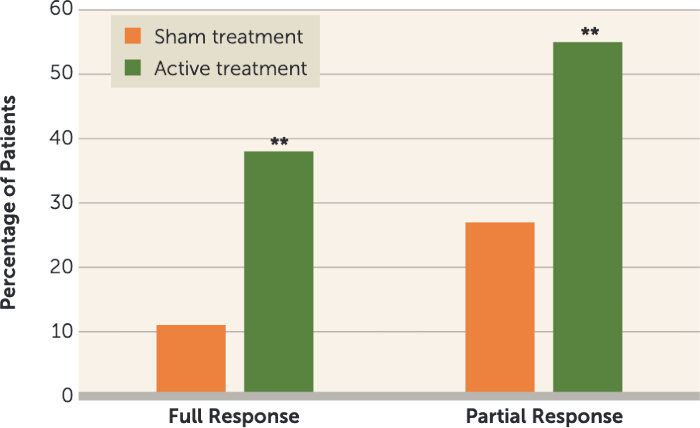
Figure 1: Percentage of full and partial responders according to Y-BOCS score at week 6 in the active and sham TMS treatment groups. Criteria for full response was Y-BOCS score reduction of ≥ 30%, and partial response as a ≥ 20% reduction. **p < 0.01. Y-BOCS: Yale-Brown Obsessive Compulsive Scale. Reprinted with permission from The American Journal of Psychiatry, Volume 176, Number 11, "Efficacy and Safety of Deep Transcranial Magnetic Stimulation for Obsessive-Compulsive Disorder: A Prospective Multicenter Randomized Double-Blind Placebo-Controlled Trial" by Carmi et al. (Copyright © 2019)12. American Psychiatric Association. All Rights Reserved.Please click here to view a larger version of this figure.
More recently, a meta-analysis aggregating results from multiple randomized trials applying the FDA-cleared parameters has confirmed the clinical benefit of this approach. Across a pooled sample of 252 patients with treatment-resistant OCD over 4 clinical trials, active rTMS significantly outperformed sham stimulation in terms of response rates, consolidating the protocol's efficacy across independent cohorts44.
Discussion
This protocol provides a standardized and replicable approach to deliver rTMS for OCD, incorporating procedures consistent with current regulatory clearances and best-practice recommendations. Through a comprehensive, step-by-step guide, it addresses key procedural gaps in the clinical application of TMS for OCD.
First, it is important to discuss team composition, infrastructure, and emergency preparedness. The successful delivery of TMS for OCD depends on a coordinated multidisciplinary team. Core personnel should include a licensed psychiatrist responsible for clinical oversight, psychologists with experience in symptom provocation and exposure-based interventions, and TMS technicians trained in both the technical and interpersonal aspects of stimulation delivery. TMS technicians must undergo structured training covering device operation, safety monitoring, emergency protocols, and basic life support8,29,45. For OCD-specific protocols, additional training in symptom provocation is essential, including how to elicit moderate distress, maintain engagement, and manage patient responses sensitively27. Although psychologists may contribute to training and supervision, their systematic involvement in symptom provocation at every session is rarely feasible in most clinical settings, and was not included in the pivotal clinical trial that established efficacy and regulatory clearance12. Instead, published methods for technician training in provocation procedures have been developed to allow for consistent and reproducible delivery of symptom provocation27. This approach balances the need for standardized implementation with the practical demands of treatment scalability to better ensure access. Additionally, when TMS is delivered in clinical or research settings involving trainees or observers, patient consent in this regard must be obtained in advance. To ensure consistent treatment quality, regular supervision and adherence audits are recommended.
TMS treatment should be delivered in appropriately equipped clinical settings using cleared or approved stimulation devices46. Essential infrastructure includes a dedicated treatment room that accommodates comfortable patient positioning, typically involving a reclining chair or bed. The room should be maintained at an appropriate temperature to prevent the TMS device from overheating47. Sites offering TMS must also have protocols in place to manage acute and potentially serious adverse events, such as syncope or seizures. These protocols should follow the specific recommendations in Rossi et al (Clin Neurophysiol, 2009)8. Although comprehensive resuscitation equipment is not mandatory for standard outpatient treatments, facilities must maintain basic medical tools for airway management and efficient procedures to contact external emergency medical services8.
A critical aspect of implementation is troubleshooting during execution of the protocol. Common challenges include difficulties in reliably identifying the leg motor hotspot and determining the resting motor threshold, which are discussed in detail elsewhere48. Coil stability can also be problematic, as small deviations in angle or position reduce targeting accuracy. The use of mechanical arms and repeated verification of scalp markings are essential. During symptom provocation, insufficient distress induction can be an obstacle, especially in patients who minimize symptom disclosure or habituate quickly to stimuli. This may be addressed by expanding the provocation hierarchy, combining internal and external triggers, and maintaining close psychologist-technician communication throughout treatment16. Excessive anxiety or escalation to compulsive behaviors may also occur. These situations require technicians to de-escalate while preventing reinforcement of compulsions, for example, by redirecting conversation, pausing briefly, or switching to less distressing stimuli16. Finally, patient discomfort from stimulation (e.g., scalp pain or headaches) can usually be mitigated through ramping procedures, slight coil adjustments, or the use of over-the-counter analgesics. Anticipating these challenges in advance is crucial to ensure protocol fidelity and enhance patient tolerability.
The integration of symptom provocation in TMS for OCD is a defining feature, covered in detail here. Although randomized controlled trials specifically assessing its effect in TMS for OCD are lacking, a recent meta-analysis by Bello et al (JAMA Psychiatry, 2025)49 found that while the added benefit of symptom provocation was not statistically significant when compared to active TMS without provocation, the effect size was numerically stronger relative to sham stimulation, suggesting provocation might potentiate the clinical effects of TMS49. Additionally, indirect evidence from related neuropsychiatric conditions supports its clinical relevance18,19. Provoking obsessive-compulsive symptoms is thought to engage the cortico-striato-thalamo-cortical circuitry, particularly in the right hemisphere50,51. Activating these circuits immediately prior to stimulation may enhance the specificity of TMS-induced plasticity, preferentially modulating symptom-relevant neural populations. A recent study has demonstrated that greater pre-treatment right amygdala activation, as measured through functional magnetic resonance imaging (MRI) during symptom provocation, predicted better treatment response to combined rTMS and exposure and response prevention, lending support to a state-dependent neuromodulation model52. Taken together, these findings indicate that symptom provocation may potentiate rTMS effects, but current evidence does not establish a clear superiority over rTMS delivered without provocation.
The post-treatment medical assessment is critical to establish treatment response and define next steps. For patients classified as non-responders, treatment planning should shift toward alternative or adjunctive strategies, including optimization or escalation of pharmacotherapy, referral for structured CBT-ERP, or, in treatment-refractory cases, consideration of invasive neuromodulation approaches such as deep brain stimulation4. Since TMS for OCD is approved as an adjunctive treatment, the optimal combination with other available therapies must be assessed on a case-by-case basis within a multidisciplinary framework. Conversely, for patients classified as responders, the question becomes how to best sustain clinical benefit. Evidence regarding maintenance treatment in OCD is scarce. To date, only a single study has systematically examined durability: in a secondary analysis of the pivotal trial by Carmi et al. (Am J Psychiatry, 2019), 86.7% of responders who were followed longitudinally maintained benefit for at least one year53. While this suggests substantial durability, the absence of controlled data does not allow for a clear definition of the optimal approach to continuation, maintenance, or retreatment schedules.
While the protocol described here follows FDA-cleared parameters, the choice of stimulation hardware may vary. H-coils, designed for deep transcranial magnetic stimulation, deliver broad and diffuse fields that penetrate deeper cortical and subcortical structures. In contrast, double-cone coils may induce a more focal field geometry and higher intensity along the midline. Computational models and electric field measurements comparing these coils suggest that both can stimulate the cortical target for OCD (the dmPFC/ACC), although their E-field distributions differ in depth, intensity, and spatial specificity38. These physical differences may influence clinical response profiles, tolerability, and the capacity for individualized targeting. However, no direct comparative trials between coils have been conducted, and further research is necessary to determine the extent to which coil-specific properties affect treatment outcomes.
Ongoing research is exploring alternative cortical targets. A recent network meta-analysis reported that rTMS over the dorsolateral prefrontal cortex and supplementary motor area ranked among the highest in terms of efficacy25. Although small sample sizes limit generalizability, these regions may represent promising targets for TMS. Nonetheless, it is important to emphasize that the dmPFC/ACC targeted through dTMS remains the only site with regulatory clearance and is the focus of this protocol. Furthermore, although this protocol describes a scalp-based measurement approach to targeting, systems based on individual neuroimaging data are increasingly used to improve anatomical precision. Image-guided targeting has the potential to increase accuracy and reduce variability in coil positioning, though its widespread implementation remains limited due to cost, infrastructure, and training demands54. Regarding dosing, this protocol delivers high-frequency stimulation at 100% of the individual's motor threshold. However, motor threshold-based dosing does not necessarily reflect the actual induced dose at the cortical target, and recent work using E-field modeling has shown that electric-field guided dosing may provide a more accurate and individualized approach to TMS application55. Future iterations of this protocol may incorporate such updates on target and dosing as evidence grows.
In addition to the open questions regarding symptom provocation, targeting, dosing, and maintenance strategies discussed above, important practical challenges remain. Coordinating a multidisciplinary team, including physicians, psychologists, and TMS technicians, can be logistically complex and requires clear communication and structured workflows to ensure fidelity and patient safety. Furthermore, the optimal timing of rTMS prescription within a patient's treatment pathway is not yet well defined and likely varies according to prior treatment response, comorbidities, and access to care. Future research should clarify when this intervention is most effective and how best to streamline team coordination for wider implementation.
Alongside a detailed explanation of the FDA-cleared treatment protocol, this protocol offers a practical framework to facilitate team coordination in delivering complex interventions such as rTMS for OCD. By formally incorporating structured psychological assessments and team briefings into the symptom provocation workflow, this protocol aims to enhance homogeneity in care, ensure alignment across clinical roles, and enable systematic monitoring of treatment response56. In sum, the protocol described here is intended as a practical contribution to the ongoing clinical implementation of TMS for OCD. As the field moves forward, the continued refinement of targeting strategies, stimulation parameters, and team-based delivery models will be essential to improve outcomes and broaden access to care.
Disclosures
AJO-M was recipient of a grant from Schuhfried GmBH for norming and validation of cognitive tests, and national coordinator for Portugal of medication trials for treatment-resistant depression, sponsored by Compass Pathways, Ltd (EudraCT number 2017-003288-36 and 2020-001348-25) and Janssen-Cilag, Ltd (EudraCT NUMBER: 2019-002992-33). He has received payment, honoraria, or support for attending meetings and participating in advisory boards from MSD, Neurolite AG, Janssen Pharmaceuticals, Angelini Pharma, and the European Monitoring Centre for Drugs and Drug Addiction, and has received consultancy fees from Bioprojet Pharma and NaturalX Health Ventures (all outside the submitted work). He is Vice President of the Portuguese Society for Psychiatry and Mental Health, head of the Psychiatry Working Group for the National Board of Medical Examination at the Portuguese Medical Association and Portuguese Ministry of Health, President of the Ethics Committee for the Institute for Addictive Behaviors and Dependence and President of the Scientific Council of the Portuguese Obsessive Compulsive Disorder Foundation. The remaining authors declare that they have no potential conflicts of interest involving this work, including relevant financial activities outside the submitted work and any other relationships or activities that readers could perceive to have influenced, or that give the appearance of potentially influencing what is written. None of these agencies had a role in the design and conduct of the study, in the collection, management, analysis, and interpretation of the data, in the preparation, review, or approval of the manuscript, nor in the decision to submit the manuscript.
Acknowledgements
ND (2022.12871.BD), DRS (2023.05754.BD) and FFV (2024.00723.BD) are supported by doctoral fellowships from Fundação para a Ciência e Tecnologia (FCT, Portugal). GC is supported by a 2023 NARSAD Young Investigator Grant from the Brain & Behavior Research Foundation. AJO-M is supported by a Starting Grant from the European Research Council (grant agreement no. 950357), and by the PsyPal project (grant agreement no. 875358), both funded by the European Union's Horizon 2020 Research and Innovation Programme. GC and AJO-M are supported by a Proof-of-Concept Grant from the European Research Council (grant agreement no. 101158262). The content of this study is solely the responsibility of the authors and does not necessarily represent the official views of any of the funding agencies.
Materials
| Name | Company | Catalog Number | Comments |
|---|---|---|---|
| BrainsWay H7 Coil and Helmet | BrainsWay | https://www.brainsway.com/products/ | Deep TMS coil approved for OCD treatment |
| CloudTMS DCC-03-125-C Coil | Neurosoft (CloudTMS) | https://neurosoft.com/en/catalog/accessory/1452 | Double-cone coil for deep TMS |
| D-B80 Butterfly Coil, OR alternatively | MagVenture | 9016E046 | Double-cone coil approved for OCD treatment |
| Earplugs | Generic/irrelevant | N/A | Hearing protection for patients and technicians |
| Flexible Measuring Tape | Generic/irrelevant | N/A | Used to measure head landmarks for coil positioning |
| Lycra Cap | Generic/irrelevant | N/A | Head cap used for coil placement marking |
| Reclining Chair | Generic/irrelevant | N/A | Used for comfortable patient positioning during treatment |
| Transcranial Magnetic Stimulation (TMS) MagPro X100 | MagVenture | 9016D0041 | TMS operating system for OCD treatment |
References
- American Psychiatric Association. Diagnostic and Statistical Manual of Mental Disorders. , American Psychiatric Association. Washington, D.C. (2013).
- Fawcett, E. J., Power, H., Fawcett, J. M. Women are at greater risk of OCD than men: a meta-analytic review of OCD prevalence worldwide. J Clin Psychiatry. 81 (4), 19r13085(2020).
- Stein, D. J., et al. Obsessive-compulsive disorder. Nat Rev Dis Primers. 5 (1), 52(2019).
- Obsessive-compulsive disorder and body dysmorphic disorder: treatment. NICE guidance. , The National Institute for Health and Care Excellence (NICE). https://www.nice.org.uk/guidance/CG31/chapter/1-Guidance#steps-35-treatment-options-for-people-with-ocd-or-bdd (2005).
- Erzegovesi, S., et al. Clinical predictors of drug response in obsessive-compulsive disorder. J Clin Psychopharmacol. 21 (5), 488-492 (2001).
- Belotto-Silva, C., et al. Group cognitive-behavioral therapy versus selective serotonin reuptake inhibitors for obsessive-compulsive disorder: a practical clinical trial. J Anxiety Disord. 26 (1), 25-31 (2012).
- Klomjai, W., Katz, R., Lackmy-Vallée, A. Basic principles of transcranial magnetic stimulation (TMS) and repetitive TMS (rTMS). Ann Phys Rehabil Med. 58 (4), 208-213 (2015).
- Rossi, S., Hallett, M., Rossini, P. M., Pascual-Leone, A. Safety, ethical considerations, and application guidelines for the use of transcranial magnetic stimulation in clinical practice and research. Clin Neurophysiol. 120 (12), 2008-2039 (2009).
- Pascual-Leone, A., Rubio, B., Pallardó, F., Catalá, M. D. Rapid-rate transcranial magnetic stimulation of left dorsolateral prefrontal cortex in drug-resistant depression. Lancet. 348 (9022), 233-237 (1996).
- George, M. S., et al. Daily repetitive transcranial magnetic stimulation (rTMS) improves mood in depression. NeuroReport. 6 (14), 1853-1856 (1995).
- Mutz, J., et al. Comparative efficacy and acceptability of non-surgical brain stimulation for the acute treatment of major depressive episodes in adults: systematic review and network meta-analysis. BMJ. 364, I1079(2019).
- Carmi, L., et al. Efficacy and safety of deep transcranial magnetic stimulation for obsessive-compulsive disorder: a prospective multicenter randomized double-blind placebo-controlled trial. Am J Psychiatry. 176 (11), 931-938 (2019).
- FDA permits marketing of transcranial magnetic stimulation for treatment of obsessive compulsive disorder. FDA News Release. , Food and Drug Administration. https://www.fda.gov/news-events/press-announcements/fda-permits-marketing-transcranial-magnetic-stimulation-treatment-obsessive-compulsive-disorder (2018).
- MagVenture TMS Therapy - for adjunctive treatment of OCD, MagVenture TMS Therapy system. , Food and Drug Administration. (2020).
- CloudTMS for OCD. , Food and Drug Administration. (2023).
- Tendler, A., Sisko, E., Barnea-Ygael, N., Zangen, A., Storch, E. A. A method to provoke obsessive compulsive symptoms for basic research and clinical interventions. Front Psychiatry. 10, 814(2019).
- Guzick, A. G., Schweissing, E., Tendler, A., Sheth, S. A., Goodman, W. K., Storch, E. A. Do exposure therapy processes impact the efficacy of deep TMS for obsessive-compulsive disorder. J Obsessive-Compuls Relat Disord. 35, 100756(2022).
- Isserles, M., et al. Cognitive-emotional reactivation during deep transcranial magnetic stimulation over the prefrontal cortex of depressive patients affects antidepressant outcome. J Affect Disord. 128 (3), 235-242 (2011).
- Isserles, M., et al. Effectiveness of deep transcranial magnetic stimulation combined with a brief exposure procedure in post-traumatic stress disorder - a pilot study. Brain Stimul. 6 (3), 377-383 (2013).
- Zangen, A., et al. Repetitive transcranial magnetic stimulation for smoking cessation: a pivotal multicenter double-blind randomized controlled trial. World Psychiatry. 20 (3), 397-404 (2021).
- Harel, M., et al. Repetitive transcranial magnetic stimulation in alcohol dependence: a randomized, double-blind, sham-controlled proof-of-concept trial targeting the medial prefrontal and anterior cingulate cortices. Biol Psychiatry. 91 (12), 1061-1069 (2022).
- Roth, Y., et al. Real-world efficacy of deep TMS for obsessive-compulsive disorder: post-marketing data collected from twenty-two clinical sites. J Psychiatr Res. 137, 667-672 (2021).
- Hussain, S., et al. Royal Australian and New Zealand College of Psychiatrists professional practice guidelines for the administration of repetitive transcranial magnetic stimulation. Aust N Z J Psychiatry. 58 (8), 641-655 (2024).
- Gregory, S. T., Goodman, W. K., Kay, B., Riemann, B., Storch, E. A. Cost-effectiveness analysis of deep transcranial magnetic stimulation relative to evidence-based strategies for treatment-refractory obsessive-compulsive disorder. J Psychiatr Res. 146, 50-54 (2022).
- Fitzsimmons, S. M. D. D., et al. Repetitive transcranial magnetic stimulation for obsessive-compulsive disorder: a systematic review and pairwise/network meta-analysis. J Affect Disord. 302, 302-312 (2022).
- De novo classification request for Brainsway deep transcranial magnetic stimulation system. De Novo Summary (DEN170078). , Food and Drug Administration. https://www.accessdata.fda.gov/cdrh_docs/reviews/DEN170078.pdf (2018).
- Maia, A., et al. Symptom provocation for treatment of obsessive-compulsive disorder using transcranial magnetic stimulation: a step-by-step guide for professional training. Front Psychiatry. 13, 924370(2022).
- Rossi, S., et al. Safety and recommendations for TMS use in healthy subjects and patient populations, with updates on training, ethical and regulatory issues: expert guidelines. Clin Neurophysiol. 132 (1), 269-306 (2021).
- Perera, T., et al. The Clinical TMS Society consensus review and treatment recommendations for TMS therapy for major depressive disorder. Brain Stimul. 9 (3), 336-346 (2016).
- Chen, L., et al. Treating depression with repetitive transcranial magnetic stimulation: a clinician's guide. Am J Psychiatry. 182 (6), 525-541 (2025).
- Storch, E. A., et al. Development and psychometric evaluation of the Yale-Brown Obsessive-Compulsive Scale-Second Edition. Psychol Assess. 22 (2), 223-232 (2010).
- Foa, E. B., et al. The Obsessive-Compulsive Inventory: development and validation of a short version. Psychol Assess. 14 (4), 485-496 (2002).
- Arnarson, ÞÖ, Ólason, D. Þ, Smári, J., Sigurðsson, J. F. The Beck Depression Inventory second edition (BDI-II): psychometric properties in Icelandic student and patient populations. Nord J Psychiatry. 62 (5), 360-365 (2008).
- Feifel, D., Pappas, K. Treating clinical depression with repetitive deep transcranial magnetic stimulation using the Brainsway H1-coil. J Vis Exp. (116), e53858(2016).
- Koponen, L. M., Goetz, S. M., Tucci, D. L., Peterchev, A. V. Sound comparison of seven TMS coils at matched stimulation strength. Brain Stimul. 13 (3), 873-880 (2020).
- Carmi, L., et al. Clinical and electrophysiological outcomes of deep TMS over the medial prefrontal and anterior cingulate cortices in OCD patients. Brain Stimul. 11 (1), 158-165 (2018).
- Fiocchi, S., et al. Modelling of the electric field distribution in deep transcranial magnetic stimulation in adolescence, adulthood, and old age. Comput Math Methods Med. 2016, 1-9 (2016).
- Tzirini, M., et al. Detailed measurements and simulations of electric field distribution of two TMS coils cleared for obsessive compulsive disorder in the brain and in specific regions associated with OCD. PLoS One. 17 (8), e0263145(2022).
- Giustiniani, A., et al. A questionnaire to collect unintended effects of transcranial magnetic stimulation: a consensus-based approach. Clin Neurophysiol. 141, 101-108 (2022).
- Cotovio, G., et al. Day-to-day variability in motor threshold during rTMS treatment for depression: clinical implications. Brain Stimul. 14 (5), 1118-1125 (2021).
- Farris, S. G., McLean, C. P., Van Meter, P. E., Simpson, H. B., Foa, E. B. Treatment response, symptom remission, and wellness in obsessive-compulsive disorder. J Clin Psychiatry. 74 (7), 685-690 (2013).
- Ramakrishnan, D., et al. An evaluation of treatment response and remission definitions in adult obsessive-compulsive disorder: a systematic review and individual-patient data meta-analysis. J Psychiatr Res. 173, 387-397 (2024).
- Tolin, D. F., Abramowitz, J. S., Diefenbach, G. J. Defining response in clinical trials for obsessive-compulsive disorder: a signal detection analysis of the Yale-Brown Obsessive Compulsive Scale. J Clin Psychiatry. 66 (12), 1549-1557 (2005).
- Li, K., et al. Deep transcranial magnetic stimulation for treatment-resistant obsessive-compulsive disorder: a meta-analysis of randomized-controlled trials. J Psychiatr Res. 180, 96-102 (2024).
- Ventura, F., Cotovio, G., Frias, P., Oliveira-Maia, A. J. Training in transcranial magnetic stimulation: experience from a clinical and research centre. Rev Port Psiquiatr Saúde Ment. 9 (3), 77-84 (2023).
- Cotovio, G., et al. Regulatory clearance and approval of therapeutic protocols of transcranial magnetic stimulation for psychiatric disorders. Brain Sci. 13 (7), 1029(2023).
- McClintock, S. M., et al. Consensus recommendations for the clinical application of repetitive transcranial magnetic stimulation (rTMS) in the treatment of depression: consensus statement. J Clin Psychiatry. 79 (1), 35-48 (2018).
- Groppa, S., et al. A practical guide to diagnostic transcranial magnetic stimulation: report of an IFCN committee. Clin Neurophysiol. 123 (5), 858-882 (2012).
- Bello, D., et al. Symptom provocation and clinical response to transcranial magnetic stimulation: a systematic review and meta-analysis. JAMA Psychiatry. 82 (8), 768-777 (2025).
- Saxena, S., Bota, R. G., Brody, A. L. Brain-behavior relationships in obsessive-compulsive disorder. Semin Clin Neuropsychiatry. 6 (2), 82-101 (2001).
- Husted, D. S., Shapira, N. A., Goodman, W. K. The neurocircuitry of obsessive-compulsive disorder and disgust. Prog Neuropsychopharmacol Biol Psychiatry. 30 (3), 389-399 (2006).
- Houben, M., et al. Increased amygdala activation during symptom provocation predicts response to combined repetitive transcranial magnetic stimulation and exposure therapy in obsessive-compulsive disorder in a randomized controlled trial. Biol Psychiatry Cogn Neurosci Neuroimaging. 10 (3), 295-303 (2025).
- Harmelech, T., et al. Long-term outcomes of a course of deep TMS for treatment-resistant OCD. Brain Stimul. 15 (1), 226-228 (2022).
- Caulfield, K. A., et al. Neuronavigation maximizes accuracy and precision in TMS positioning: evidence from 11,230 distance, angle, and electric field modeling measurements. Brain Stimul. 15 (5), 1192-1205 (2022).
- Numssen, O., Kuhnke, P., Weise, K., Hartwigsen, G. Electric-field-based dosing for TMS. Imaging Neurosci. 2, (2024).
- Mallon, S., Walker, K., Bayley, Z., Griffiths, C. Practitioner perspectives on best practice in non-treatment factors that support the delivery of repetitive transcranial magnetic stimulation (rTMS) for depression. J Psychiatr Ment Health Nurs. 29 (3), 463-471 (2022).
Reprints and Permissions
