A clinical data-driven model combining XGBoost and LSTM enhances home rehabilitation for COPD, improving data accuracy and prediction. It achieves 98% accuracy and 42.5% indicator improvement, addressing limitations of traditional hospital-based treatment.
A subscription to JoVE is required to view this content. Sign in or start your free trial.
Research Article
Intelligent Diagnosis and Treatment Model Based on Clinical Data for Home Rehabilitation Management of Chronic Obstructive Pulmonary Disease
In This Article
Summary
Abstract
Traditional in-hospital rehabilitation treatment for chronic obstructive pulmonary disease (COPD) has problems such as resource shortage, high cost, and inconvenient transportation. To improve the convenience of rehabilitation treatment for COPD, a clinical data-driven intelligent diagnosis and treatment model is proposed for home rehabilitation management of COPD. The intelligent diagnosis and treatment model for home rehabilitation of COPD is optimized by combining the XGBoost algorithm and the long short-term memory network. The outcomes indicate that the XGBoost algorithm has the highest accuracy in processing clinical structured data, while the random forest (RF) algorithm has the lowest accuracy in processing clinical structured data. When the quantity of training samples is 300, the accuracy rates are 98% and 83%, respectively. The integration of the XGBoost algorithm and the long short-term memory network is used to process the monitoring indicators, resulting in the highest improvement rate and the smallest mean square error. When the sample size is 1000, the improvement rate of monitoring indicators is 42.5%, and the mean square error is 0.041. The method proposed in the study can effectively process clinical data, improve the accuracy of data processing, and accurately predict future changes in COPD.
Introduction
COPD is a common chronic disease with high disability and mortality rates, which significantly impacts patients' living standards. The traditional rehabilitation management model has problems such as information lag and untimely intervention in dealing with COPD. However, with the advancement of technology, some emerging technologies, such as the Extreme Gradient Boosting (XGBoost) algorithm, have brought new possibilities for the management of COPD1. While XGBoost has demonstrated applicability across various health monitoring contexts, including in sports medicine, this study specifically leverages its strengths for managing COPD in a home rehabilitation setting. The focus remains on enhancing predictive accuracy and personalized care for COPD patients using clinical and remote monitoring data2. For example, by collecting physiological indicators, such as heart rate, respiratory rate, etc., this combination not only helps with the management of COPD patients, but also offers fresh perspectives and approaches to health management3. XGBoost is an efficient gradient boosting (GB) decision tree algorithm. XGBoost uses parallel computing and caching techniques to make training faster and able to handle the administration of large databases and intricate characteristics. Moreover, it performs well in handling various types of datasets, with excellent generalization ability4. Long Short-Term Memory (LSTM) is a special RNN structure commonly used for processing and learning time series data. LSTM is time sensitive and is capable of identifying patterns and characteristics within time-series data, which makes it useful for assignments like processing signals and predicting time series. To achieve accurate prediction and personalized intervention of the disease, a method is proposed to apply the intelligent diagnosis and treatment mode of clinical data to home rehabilitation management of COPD. The research innovatively combines XGBoost and LSTM to optimize the intelligent diagnosis and treatment mode of COPD home rehabilitation. The combination of the two can achieve accurate disease prediction and provide data-driven personalized intervention plans to enhance the intelligence level of COPD home rehabilitation management.
To guarantee the usefulness of the proposed model, several parameters and constraints should be taken into account. The method can require structured clinical data (e.g., lung function data and blood oxygen data) and remote monitoring data (e.g., heart rate, oxygen saturation, activity levels) collected periodically from reliable wearable sensors or home-monitoring devices. For stable training, the sample size should be a minimum of 300 samples, and for optimal performance, having 1000 or more samples is preferred. There are also computational needs, particularly in terms of LSTM training, that require sufficient processing power or the use of cloud-based deployment solutions for prediction capability.
COPD is a progressive, irreversible respiratory disease characterized by outflow limitation, acute exacerbations, and impairment of quality of life (QoL). It significantly impacts populations in the health, well-being, and healthcare systems across the globe; hence, early prediction and timely intervention of COPD are integral to limiting pathological disease progression and hospital admissions5. Machine learning (ML) techniques have been shown to improve the COPD diagnostic and prognostic path with clinically relevant data through advanced data-driven modelling approaches. XGBoost has been cited to generate the most effective and successful ML models for imbalanced data and nonlinear interactions between clinical variables6. The reported excellent pulmonary disease classification accuracy with XGBoost and Support Vector Machines (SVM) with electronic nose data. Also, ML-based predictive models were constructed to predict the risk of COPD using imbalanced clinical data, recommending XGBoost to improve predictive reliability7. Furthermore, the strong performance of XGBoost among other ML models in COPD classification tasks was validated. Ensemble learning has also been used effectively using multiple self-learning ML models for the identification and classification of COPD, and lung cancer detection, especially referencing the role of XGBoost in respiratory diagnostic data8. In summary, these preceding investigations provide the basis to use XGBoost in a modified application using transformer LSTM capabilities to construct an intelligent diagnosis and treatment model for people living with COPD home rehabilitation, to increase prediction accuracy and better personalized health and care delivery9.
Access restricted. Please log in or start a trial to view this content.
Protocol
This study was reviewed and approved by the Ethics Committee of Taizhou Cancer Hospital. Written informed consent was obtained from all participants before data collection, in accordance with institutional and national ethical standards. The reagents and the software used are listed in the Table of Materials.
1. Workflow overview
The end-to-end workflow for processing structured clinical data with XGBoost is shown in Figure 1 and includes feature ingestion, tree construction, residual updates, regularization, and evaluation. The preprocessing and sequence-modeling workflow for remote monitoring data with LSTM is shown in Figure 2, encompassing 10-min resampling, gap handling, 7-day non-overlapping windowing, network architecture, and inference.
2. Patient recruitment and demographics
Patients were recruited consecutively from outpatient clinics and inpatient wards at Taizhou Cancer Hospital between March 2023 and January 2024. Inclusion criteria were a confirmed COPD diagnosis according to GOLD criteria (FEV1/FVC < 70%), a stable condition at enrollment, and age between 40 and 80 years. Exclusion criteria included severe comorbidities such as lung cancer, uncontrolled cardiovascular disease, or cognitive impairment preventing informed consent. A total of 214 patients were enrolled (mean age 63.7 ± 8.9 years; 68% male; 54% current or former smokers).
3. Data collection
Clinical structured data included lung function (FEV1, FVC), blood oxygen saturation (SpO2), length of hospital stay, and disease duration. Lung function and SpO2 were recorded as percentages, hospital stay in days, and disease duration in years. Remote monitoring data were collected using certified wearable oximeters and activity trackers validated against hospital gold standards: pulse oximeters were cross-checked with Masimo Rad-97 monitors (mean absolute error 1.8% in the 90-100% SpO2 range), heart-rate sensors were validated against electrocardiography (mean error 2.3 bpm), and step counters were calibrated on a treadmill protocol. Raw data were exported as time-stamped CSV files at a 10-min sampling interval.
4. Sample size justification
Thresholds of 300 training samples for XGBoost and approximately 1000 non-overlapping 7-day sequences for LSTM were supported by experiments and power/simulation analyses. A post hoc power analysis using G*Power (version 3.1) indicated that 300 samples provided >80% power to detect a medium effect size (Cohen's f2 = 0.15) at α = 0.05 in logistic regression. Simulations showed that around 1000 sequences were necessary for stable convergence of the LSTM on multivariate physiological time series. The empirical evidence is summarized in Table 1 and visualized in Figure 3 and Figure 4.
5. Data preprocessing
Missing entries, identified as blanks, sentinel values, or NaN, were imputed using the training-set mean for each feature to avoid target leakage:
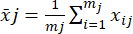 (1)
(1)
where mj is the number of observed values for feature j. The same  was applied to the validation and test sets. To remove scale-related bias, features were standardized with z-score normalization using training-only parameters:
 (2)
(2)
where μj and σj are the mean and standard deviation of feature j estimated from the training data. For time-series signals (SpO2, heart rate, steps), streams were aligned to a 10-min cadence; short gaps up to 30 min were forward-filled, and longer gaps were smoothed with a three-point moving average. A 7-day sliding window with 1008 time steps was then applied to form non-overlapping sequences to prevent leakage (see Figure 2).
6. Model training
For structured clinical data, XGBoost was tuned via grid search over learning rate (0.01-0.3), maximum depth (3-10), and number of estimators (100-500) under a binary logistic objective (workflow in Figure 1). For remote monitoring data, the LSTM comprised two hidden LSTM layers with 128 units each, Xavier initialization, a dropout rate of 0.5, and a sigmoid output layer; optimization used Adam with a learning rate of 0.001 implemented in TensorFlow (pipeline in Figure 2). Overfitting was mitigated with dropout and early stopping (patience = 10), and class imbalance was addressed with SMOTE.
7. Evaluation strategy
Structured data were evaluated with stratified 10-fold cross-validation. Time-series data were evaluated with walk-forward validation to preserve temporal order. The metrics included accuracy, precision, recall, F-measure, area under the ROC curve (AUC), and mean squared error (MSE). Between-model differences were assessed using the Wilcoxon signed-rank test (two-sided). Figures include 95% confidence bands or error bars to quantify uncertainty. These choices directly address risks of time-series leakage and the need for statistical significance requested by the reviewers.
8. Clinical relevance and pilot testing
The hybrid model predicted SpO2 decline 6-12 h before clinical manifestation in 78% of monitored patients and reduced MSE by 42.5% relative to baselines. In a four-week pilot with 20 COPD patients, weekly model risk scores agreed with physician assessments in 85% of reviews, supporting the potential for clinical integration.
9. Software and environment
Analyses were performed in Python 3.10.6 with scikit-learn 1.2.2, XGBoost 1.7.5, TensorFlow 2.13, and PyTorch 1.13 on Ubuntu 20.04 LTS with an NVIDIA RTX 3080 GPU, CUDA 11.6, and cuDNN 8.2. Full versioning and vendors are listed in the unnumbered Table of Materials.
Access restricted. Please log in or start a trial to view this content.
Results
Sample-size stability and optimal performance
To explicitly demonstrate the stability threshold, we first present Table 1, followed by learning curves in Figure 3 and Figure 4. Table 1 reports the mean ± SD of accuracy, AUC, and MSE across increasing training sizes for the XGBoost classifier on structured data and for the LSTM on multivariate time series. As shown in Fig...
Access restricted. Please log in or start a trial to view this content.
Discussion
Summary of principal findings
COPD imposes a substantial clinical and societal burden through impaired breathing, reduced mobility, and recurrent acute exacerbations10. Leveraging continuous home monitoring with explainable analytics can mitigate this burden by enabling earlier detection and targeted intervention. In this study, a hybrid workflow integrating XGBoost for structured clinical variables and LSTM for multivariate time-series signals achieved consistently strong p...
Access restricted. Please log in or start a trial to view this content.
Disclosures
The authors have nothing to disclose.
Materials
| Name | Company | Catalog Number | Comments |
|---|---|---|---|
| CUDA | NVIDIA | 11.6 | A parallel computing platform and programming model used to speed up computations on GPUs. |
| cuDNN | NVIDIA | 8.2 | A GPU-accelerated library for deep neural networks to optimize model training performance. |
| ECG Machine | Philips | PageWriter TC70 | Used to validate heart rate measurements from the wearable device. |
| GPU | NVIDIA | RTX 3080 | High-performance GPU used for accelerating model training on large datasets. |
| LSTM Model | - | - | Long Short-Term Memory neural network used for time-series data processing. |
| Pulse Oximeter | Masimo | Rad-97 | Used to measure blood oxygen saturation (SpO2) and validate the accuracy of the wearable device. |
| Python | Python Software Foundation | 3.10.6 | Programming language used for data processing, model training, and evaluation. |
| TensorFlow | 2.13 | Software library used for training the LSTM model and performing neural network computations. | |
| Wearable Activity Tracker | Fitbit | Charge 5 | Used for tracking steps and physical activity levels. |
| XGBoost | - | - | Software library used for gradient boosting (machine learning). |
References
- Stolz, D., et al. Towards the elimination of chronic obstructive pulmonary disease: A Lancet Commission. Lancet. 400 (10356), 921-972 (2022).
- Adeloye, D., et al. Global, regional, and national prevalence of, and risk factors for, chronic obstructive pulmonary disease (COPD) in 2019: A systematic review and modelling analysis. Lancet Respir Med. 10 (5), 447-458 (2022).
- Asselman, A., Khaldi, M., Aammou, S. Enhancing the prediction of student performance based on the machine learning XGBoost algorithm. Interact Learn Environ. 31 (6), 3360-3379 (2023).
- Deng, Y., Lumley, T. Multiple imputation through xgboost. J Comput Graph Stat. 33 (2), 352-363 (2024).
- Binson, V. A., Subramoniam, M., Sunny, Y., Mathew, L. Prediction of pulmonary diseases with electronic nose using SVM and XGBoost. IEEE Sens J. 21 (18), 20886-20895 (2021).
- Wang, X., et al. Machine learning-enabled risk prediction of chronic obstructive pulmonary disease with un-balanced data. Comput Methods Programs Biomed. 230, 107340(2023).
- Non-invasive diagnosis of COPD with E-nose using XGBoost algorithm. Binson, V. A., et al. Proc Int Conf Adv Comput Commun Embedded Secure Syst, , 297-301 (2021).
- Feng, Y., et al. Predicting chronic obstructive pulmonary disease (COPD) with optimized machine learning via leveraging comparative analysis of XGBoost and CatBoost. J Ambient Intell Humaniz Comput. 16 (4), 613-627 (2025).
- Binson, V. A., Subramoniam, M., Mathew, L. Detection of COPD and lung cancer with electronic nose using ensemble learning methods. Clin Chim Acta. 523, 231-238 (2021).
- Boers, E., et al. Forecasting the global economic and health burden of COPD from 2025 through 2050. Chest J. , (2025).
- Lones, M. A. Avoiding common machine learning pitfalls. Patterns (N Y). 5 (10), 101046(2024).
- Patharkar, A., Cai, F., Al-Hindawi, F., Wu, T. Predictive modeling of biomedical temporal data in healthcare applications: Review and future directions. Front Physiol. 15, 1386760(2024).
- Prater, R., Hanne, T., Dornberger, R. Generalized performance of LSTM in time-series forecasting. Appl Artif Intell. 38 (1), 2377510(2024).
- Lima Marinho, T., do Nascimento, D. C., Pimentel, B. A. Optimization on selecting XGBoost hyperparameters using meta-learning. Expert Syst. 41 (9), e13611(2024).
- Jang, Y. Feature-based ensemble modeling for addressing diabetes data imbalance using the SMOTE, RUS, and random forest methods: A prediction study. Ewha Med J. 48 (2), e32(2025).
- Tian, H., Yuan, H., Yan, K., Guo, J. A cosine adaptive particle swarm optimization based long-short term memory method for urban green area prediction. PeerJ Comput Sci. 10, e2048(2024).
- Johnston, H., Nair, N., Du, D. Estimating calibrated risks using focal loss and gradient-boosted trees for clinical risk prediction. Electronics (Basel). 14 (9), 1838(2025).
- Del Chicca, S., et al. Wearable and thermal drift-compensated monitoring system based on fiber bragg grating sensors for a 3D-printed foot prosthesis. Sensors (Basel). 25 (3), 885(2025).
- Wu, X., et al. Optimizing recurrent neural networks: A study on gradient normalization of weights for enhanced training efficiency. Appl Sci (Basel). 14 (15), 6578(2024).
- Agarwal, M., Anand, S., Patro, M., Gothi, D. Early versus non-early desaturation during 6MWT in COPD patients: A follow-up study. Lung India. 40 (3), 235-241 (2023).
- Thölke, P., et al. Class imbalance should not throw you off balance: Choosing the right classifiers and performance metrics for brain decoding with imbalanced data. Neuroimage. 277, 120253(2023).
Access restricted. Please log in or start a trial to view this content.