This protocol describes the methods for using a novel dry aerosolized hydrogen peroxide (aHP) fogging disinfection technology that provides smart-hospital connectivity, allowing integration within data platforms to provide historical data on equipment usage, verification of aHP dosages, room coverage, disinfection times, and locations to reduce healthcare-associated infections (HAIs).
Method Article
Automated Hospital Room Disinfection Utilizing a Novel Aerosolized Hydrogen Peroxide Microdroplet Disbursing Technology
In This Article
Summary
Abstract
Traditional, manual and UV disinfection methods have left gaps in achieving thorough whole-room disinfection for hard-to-reach or shadowed areas, increasing the risk of healthcare-associated infections (HAIs). Effective environmental disinfection is a core component of a comprehensive infection prevention program. Traditional limitations include incomplete disinfection, exposure risk for healthcare personnel, and cost of labor requirements, which warrant the adoption of newer technologies. An automated aerosolized hydrogen peroxide (aHP) dry fogging technology designed to overcome these limitations has recently entered the market, potentially offering a more clinically and economically effective solution. This novel technology provides micron-sized hydrogen peroxide droplets to the entire room, ensuring optimal disinfection of all surfaces. The system also allows integration within data platforms to provide historical data on equipment usage, verification of aHP dosages, room coverage, disinfection times, and locations to provide quality assurance and auditable records. The dispersion of microdroplet aHP via dry fogging offers uniform coverage, providing greater germicidal efficacy for modern healthcare settings. The objective of this protocol is to outline the methods of use of the automated aHP dry fogging system, including the contribution of real-time tracking and auditing capabilities to the management of infection risk. Representative results are then provided demonstrating coverage efficacy as well as the consequent impact on the reduction of transmission, direct cost, and productivity associated with carbapenem-resistant Acinetobacter baumannii (CRAB), a multidrug-resistant organism that has been deemed an "urgent threat" by the CDC. Compared to the lowest per-admission reproduction number of 0.40, where a total of 9.6 patient in-facility transmissions would be expected, application of the dry fogging technology as part of a robust carbapenem-resistant organism (CRO) mitigation strategy demonstrated a statistically significant reduction in the actual rate of transmission compared to the expected rate.
Introduction
Contaminated surfaces play a critical role in the transmission of pathogens that cause healthcare-associated infections (HAIs)1. HAIs are infections that are not present or incubating at the time of hospital admission and can be acquired by patients, healthcare staff, and visitors2. For the purpose of reporting, we utilized surveillance definitions provided by the national healthcare safety network (NHSN), providing a standardized definition to identify infections in hospitalized patients. HAIs are defined as those occurring 48 h or more from admission and are the major cause of increasing deaths and adverse outcomes3. The pathogens that cause HAIs can spread through contact with infected surfaces, such as door handles, beds, faucets, telephones, and shared clinical equipment4,5. Common HAIs, including Clostridium difficile (C. diff), methicillin-resistant Staphylococcus aureus (MRSA), vancomycin-resistant enterococci (VRE), norovirus, and more, all contain the ability to shed from infected patients, survive on dry surfaces for extensive periods of time, are difficult to remove via manual cleaning and disinfection, and require a relatively low dose for infection1. The mechanism by which pathogens can survive for extended periods of time is suggested through the discovery of biofilms that allow vegetative bacteria to live in colonies without a nutrient source. Biofilms are multicellular communities held together by a self-made extracellular matrix and are much more resistant to biocides than free-floating bacteria6. Therefore, proper and thorough methods for disinfecting surfaces are crucial in limiting the risk of HAI acquisition and transmission.
Traditional cleaning methods are usually performed several times a day to ensure visible cleanliness of the patient environment. Terminal cleaning, a deeper cleaning of the rooms, is typically performed upon patient discharge to ensure a safe environment for subsequent patients. However, environmental sampling performed following terminal disinfection frequently identifies surfaces that are still contaminated with pathogens, and that even multiple rounds of bleach may not be sufficient to kill some pathogens, such as MRSA1. One study found that bacteria can survive on disinfectant wipes, leading to the spread rather than eradication of these microbes7. The challenge of repeatedly achieving proper disinfectant distribution across the room and adequate contact time further contributes to inconsistencies in reliable disinfection. To supplement manual disinfection methods, novel technologies have been implemented, such as ultraviolet C light (UVC) disinfection. However, there are limitations to the efficacy of UV light technology, including the inability to properly penetrate surfaces that are not directly exposed to light (shadowing) and decreasing dose intensity with distance from the source8. Most of these technologies do not measure dose, without which the actual efficacy of the application cannot be known. Shadowing and ensuring adequate dosage can thereby require multiple rounds of repositioning, adding to labor costs.
Thus, aerosolized hydrogen peroxide (aHP) dry fogging disinfection systems serve as an attractive and novel method of offering consistent and successful whole-room disinfection. An aHP system uniformly fills the space with micron-sized hydrogen peroxide droplets and alleviates the need for operator interventions; one of the benefits of this is reducing staff load and offering quicker room turnover rates. A recent study found that the addition of touchless aHP whole room disinfection systems has resulted in a significant reduction in C. diff infection compared to traditional manual methods alone9. Hydrogen peroxide is also considered an "ideal" biocide across multiple industries for its efficacy, safety, environmental impact, ease of use, stability, and compatibility with surface materials6. Hydrogen peroxide has the additional benefit of being unstable once aerosolized, breaking down efficiently in an exponential decay into oxygen and water, and leaving no residual toxic byproducts after evaporation. If entering the room during fogging or immediately after, then personal protective equipment is required; however, after the dissipation and breakdown of the hydrogen peroxide (15 min after treatment), residual hydrogen peroxide is below levels that would cause any health hazards, and below the occupational safety and health administration, or OSHA, thresholds, which are a maximum exposure limit of <75 parts per million (ppm), and an 8 h time-weighted average (TWA) limit of <1 ppm.
This protocol describes the methods of utilizing a novel aHP disinfection system utilizing a 5% hydrogen peroxide solution (Figure 1) that additionally provides integration into smart hospital environments to provide historical data on equipment usage, aHP dosages, room coverage, disinfection times, and locations, thereby allowing improvement to processes, verification, and auditable records.
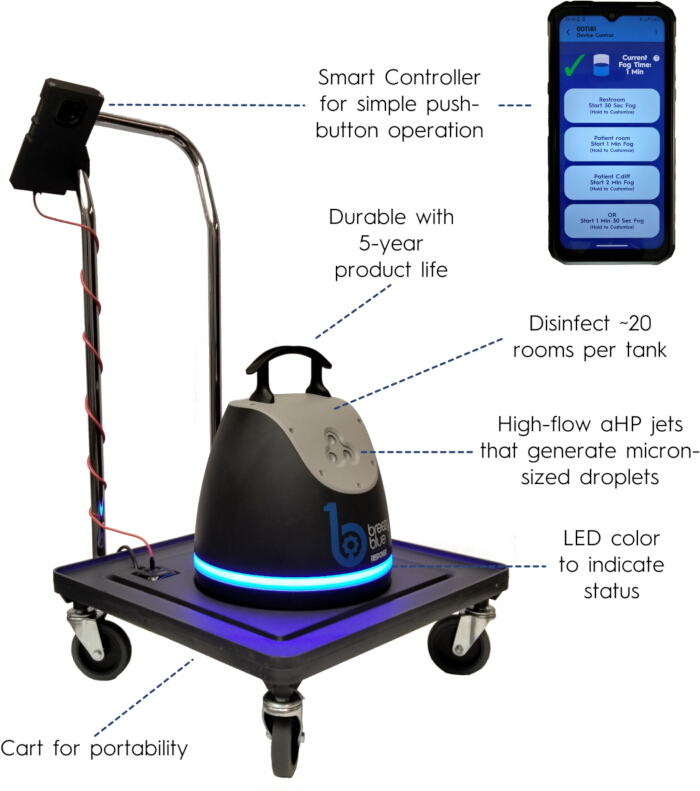
Figure 1: The dry aerosolized hydrogen peroxide fogging disinfection system. The machine that is used for dry aerosolized hydrogen peroxide fogging. Please click here to view a larger version of this figure.
Protocol
1. Smart controller initial setup
- Install the smart controller in the controller holder on the handle of the cart that supports the fogging unit. The smart controller is the mobile device that controls the fogging unit, and the controller holder is located on the handle of the cart.
- Plug the controller cable into the controller charge port and the USB receptacle on the mobile cart. Use cable clips or ties supplied by the manufacturer to hold the cable in place.
2. Aerosolized hydrogen peroxide (aHP) disinfecting fogger initial setup
- Plug the power cable included in the mobile cart into the receptacle at the bottom of the aHP disinfecting fogger and install it into the depression in the mobile cart.
- Fill the aHP disinfecting fogger tank with 1 gallon of hydrogen peroxide 5% solution by unscrewing the vacuum-sealed cap on the tank and pouring in sufficient solution.
- The unit will alert when the solution depletes, and the tank requires refilling. It is recommended to wear gloves and goggles when filling the tank.
3. Dashboard initiation
- Set up a cloud account using the email invitation previously sent to the user. If you haven't received an invitation, request one from info@breezymed.com. For more details of materials used in the study, please refer to table of materials.
- Log in to https://cloud.breezymed.com/
- Select Devices in the left Navigation menu on the cloud webpage dashboard to see the aHP disinfecting fogger devices. If you have more than one fogger, each will be listed, otherwise, only one fogger will be shown.
- Press the VIEW ALL DATA button to see an overview of disinfection activity on the home screen (Figure 2) and details of the disinfection events.
NOTE: Successfully completed disinfection events are logged onto the Breezy Cloud dashboard. If a fog event is interrupted or there is insufficient disinfectant fluid, these errors will be logged on the dashboard as unsuccessful fog events.
4. Initial configuration of the aHP disinfecting fogger
- Plug the aHP disinfecting fogger power cord (powering the fogger and controller on the cart) into a wall outlet.
- Verify the waistband light on the aHP disinfecting fogger is illuminated. If the waistband light is yellow, press the button on top of the device to toggle the waistband light to blue.
- Power on the Smart Controller and verify its battery is charging.
- Sign in to the Smart Controller if needed, using your cloud account username and password. The Controller should display the Scanning screen if it is signed into an account on the site.
- Verify the aHP disinfecting fogger device on the cart is shown in the list of devices. The serial number of the bottom of the aHP disinfecting fogger will be shown as the name in the list.
- Press + Add Favorite Device button and select the aHP disinfecting fogger on the cart from the list and press Continue.
- From the Scanning screen, press the button with the aHP disinfecting fogger to be controlled. It should be shown in the Favorite device now.
- Press Pair in the pop-up window if needed.
5. Disinfecting with the aHP disinfecting fogger
- Position the aHP disinfecting fogger in the corner of the room to be treated, with the aHP disinfecting fogger facing the center of the room, with no objects within 5 feet of the jets that would obstruct the droplet flow.
- Plug the mobile cart cord into a wall outlet in the room to be disinfected.
- Press the button on the Smart Controller Screen that corresponds to the aHP disinfecting fogger that is on the mobile cart. It should be the favorite device shown on the Smart Controller Screen.
- Press the button for the appropriate fog time and leave the room within the 7 s countdown. Refer to the FAQ accompanying the aHP disinfecting fogger for specific fog times. For reference, here are some fog time examples:
- 30 s fog time for a 5-log (99.999%) pathogen reduction in a 120 square foot exam room.
- 45 s fog time for a 5-log (99.999%) pathogen reduction in a 250 square foot patient room.
- 100 s fog time for a 6-log (99.9999%) pathogen reduction in a 200 square foot patient room.
- 125 s fog time for a 5-log (99.999%) pathogen reduction in a 500 square foot operating room.
- After fogging completes, leave the room closed and unoccupied for the 10 min disinfectant contact time. After the 10 min contact time, the room may be ready for re-entry immediately or up to 15 min, depending upon the dosage and disinfectant used.
NOTE: Refer to the FAQ accompanying the aHP disinfecting fogger for specific re-entry times. Door signs that can be placed on the door handles are provided with the system to facilitate notification of fogging in progress. Personal protective equipment is recommended if entering the room prior to completion of the 15 min dissipation time after fogging but otherwise it is not necessary.
6. Mathematical modelling
NOTE: Mathematical modelling can be achieved through various methods, but the most straightforward is to utilize existing software packages. COMSOL Multiphysics is a widely used software system, and with the use of the additional particle tracing module package, it provides an efficient means of analyzing physical phenomena such as aerosolized droplet distribution.
- Code verification
Use commercial software COMSOL Multiphysics version 6.3 with computational fluid dynamics (CFD) and particle tracing modules. The code verification is available on COMSOL verification and validation models web page (https://www.comsol.com/verification-models). - System configuration
NOTE: The simulated system is composed of the droplet aerosolizer inside a test room with specified dimensions, objects inside, and device positioning as used in the physical experimental situation. The device geometry is simplified while keeping the effective inlet/outlet area and positioning.
Set the airflow inlet to the system the same as the device outlet, with the outlet of the system in the device recirculation inlet. Build the computational domain using the COMSOL CAD tools. - Governing equations/constitutive laws
Model the turbulent airflow inside the room using the turbulent k-epsilon model.
NOTE: To allow computational efficiency, consider the stationary air flow to be the background velocity for dragging the droplets. Use the droplet spraying interface from the COMSOL particle tracing module to track the time-dependent velocity and position of the particles under the drag and gravity forces. It is not necessary to consider the droplet evaporation and breakup for this approximation. - System properties
Establish the air density and dynamic viscosity at a temperature of 20˚C and atmospheric pressure with values of 1.204 kg⋅m-3 and 1.81×10⁻⁵ Pa⋅s. Droplet density and diameter taken from the system are 1.015 g/mL and 5 µm, respectively. - Set the stationary airflow conditioned at the system inlet to 25.8 cm/s, with a zero-pressure condition at the system outlet. The room, device, and object walls are set to non-slip condition. A total of 10,000 particles is randomly injected at the inlet in bunches of 50 particles, evenly distributed in time during one minute of spraying.
- System discretization
- Utilize a mesh consisting of 9,15,104 tetrahedral elements, with boundary layers in the walls and refinement at the inlet and outlet.
- Use the GMRES iterative method for the stationary fluid and turbulent variables, as well as for the time-dependent droplet tracking, with the constant (Newton) nonlinear method for all of the analyses.
7. Efficacy analysis
- Perform an efficacy analysis by measuring the number of specific infections occurring after the introduction of hydrogen peroxide fogging and comparing this number to the expected or historical number of infections. If historical rates of infections are not readily available in the hospital system, expected rates based on patient volumes and comorbidities can be utilized.
- Use a statistical method comparing two proportions, such as a chi-square statistic using a typical threshold of p < 0.05, to determine the significance of the difference.
- Obtain the expected number of infections arising from exposure to a patient infected with organisms from published literature, which is generally reported as the reproduction number, R012.
8. Economic analysis
- Perform an analysis of economic impact, particularly direct costs and productivity impacts. An average US hospital has 129 staffed beds (https://www.definitivehc.com), with total US daily hospital discharges derived from AHA annual survey data of total discharges (https://www.aha.org/), and the total US average daily census derived from 2023 total discharges and 2023 average LOS.
- Utilizing a typical daily hospital discharge rate, the hourly cost for environmental services staff at the user's site, and the mean time reduction encountered after incorporating the use of hydrogen peroxide dry fogging, determine specific costs of operation. Use of a method such as time-driven activity-based costing (TDABC) is an efficient method that assigns resource costs to activities based on the exact time required to perform them.
- Leveraging data on typical room turnaround times, compare productivity across disinfection methods.
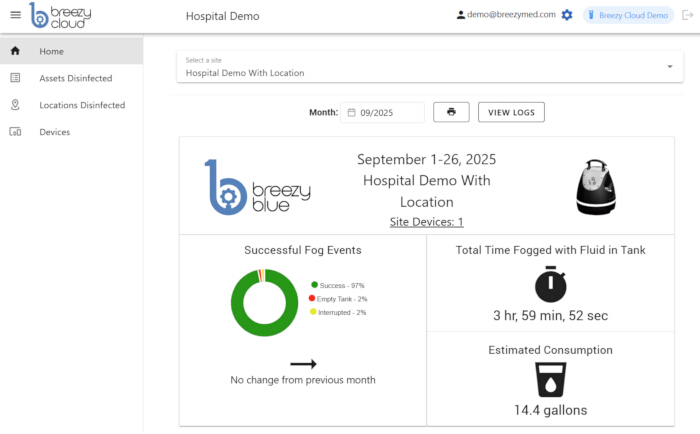
Figure 2: Home page view showing disinfection activity. Successfully completed disinfection events are logged onto the Breezy Cloud dashboard. If a fog event is interrupted or there is insufficient disinfectant fluid, these errors will be logged on the dashboard as unsuccessful fog events. Please click here to view a larger version of this figure.
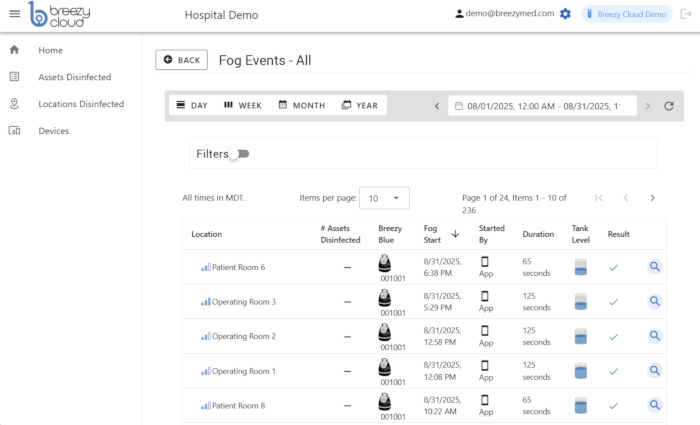
Figure 3: Details of the disinfection events. The events are seen by pressing the VIEW ALL DATA button. Please click here to view a larger version of this figure.
Results
Mathematical modelling
To better visualize the use of dry fogging utilizing aHP, a mathematical model offers a means of quantifying droplet dispersion and determining room coverage10. This is particularly useful since the dry fogging is otherwise invisible to the naked eye. Droplet dispersion and room coverage were quantified in a standardized room geometry (Figure 4) using typical settings of the dry aHP fogging system. Room dimensions were set to 11 feet x 12 feet (132 square feet), with an 8 foot ceiling. Stationary turbulent air flow was assumed in the room, with time-dependent droplet sprays in fluid flow, including drag forces and gravity, but neglecting breakup or evaporation.
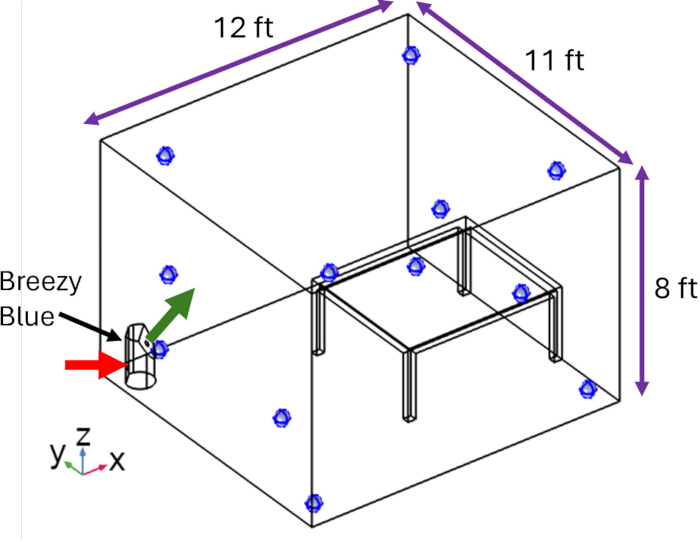
Figure 4: Room geometry of standardized simulation. Room dimensions were set to 11 feet x 12 feet (132 square feet), with an 8 foot ceiling. Please click here to view a larger version of this figure.
Results of the model showed that aerosolized hydrogen peroxide particle velocity ranged from 0.2 m/s to over 25 m/s. The stationary velocity streamlines shown in Figure 5 represent the drag force acting on the droplets.
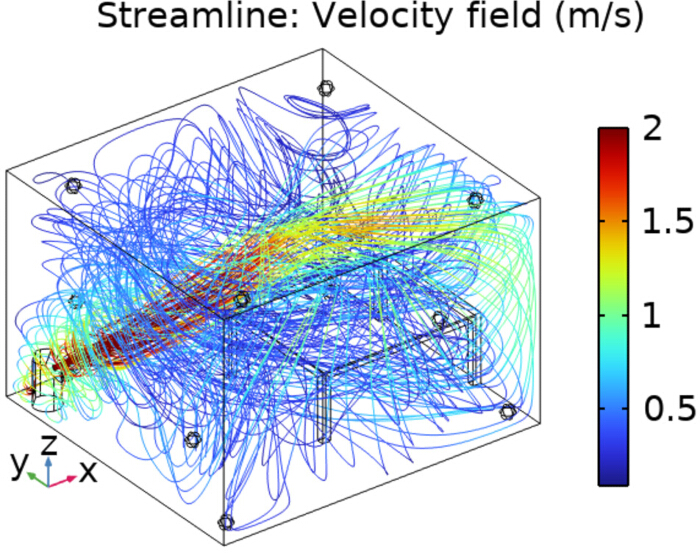
Figure 5: Particle velocity fields. Aerosolized hydrogen peroxide particle velocity ranged from 0.2 m/s to over 2 m/s. Please click here to view a larger version of this figure.
At these velocities, room coverage from surface contact with hydrogen peroxide was completed at 1 min into the treatment course (Figure 6).
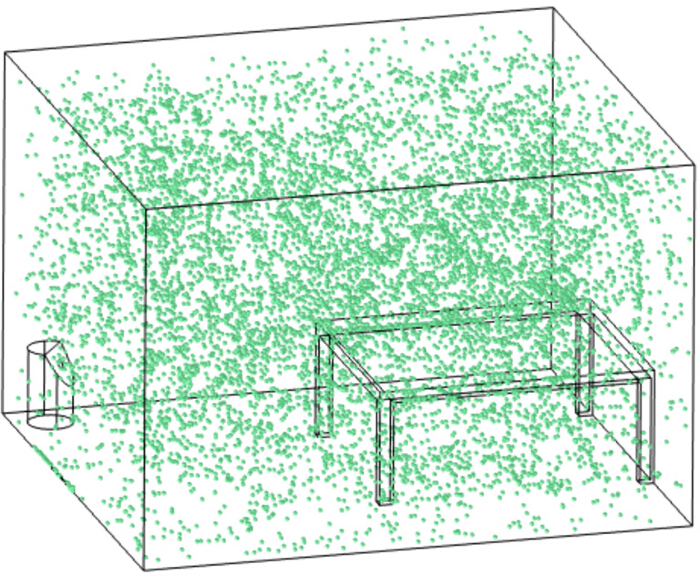
Figure 6: Room coverage. Map of room coverage of aerosolized hydrogen peroxide droplets after one minute of dispersion, showing complete room coverage in a standardized hospital room model. Please click here to view a larger version of this figure.
An animation of the dispersion and coverage process is available in the accompanying protocol video. These results highlight that the automated aerosolized hydrogen peroxide fogging system provides complete room coverage in 1 min in a standardized hospital room model, suggesting rapid and effective disinfection potential.
Efficacy analysis
This technology has been utilized as part of a robust carbapenem-resistant organism (CRO) mitigation strategy11. Providing high-quality post-acute services to chronically critically ill patients in a long-term acute care hospital (LTACH) who are recovering from serious illness is often complicated by the potential for HAIs and the transmission of multidrug-resistant organisms (MDRO) such as carbapenem-resistant Acinetobacter baumannii (CRAB). The majority of CRAB isolates in the U.S. produce carbapenemases (enzymes that deactivate carbapenems and other β-lactam antibiotics), rendering these treatments ineffective.
After implementation of a process improvement program utilizing automated aerosolized hydrogen peroxide fogging, the number of patients known to be colonized or infected with CROs admitted to the facility over a 24 month period was measured, and the number of in-facility transmissions that occurred over this timeframe was analyzed. The process improvement program included increased involvement of the pharmacist-driven interdisciplinary antimicrobial stewardship team, and core elements of the project included staff education and training, data collection and reporting, real-time monitoring and feedback, compliance audits, and environmental cleaning protocols utilizing the novel aHP disinfection system. Over the 24 month timeframe from January 2023 to July 2025, 24 patients known to be colonized or infected with CROs were admitted. During this time, only two cases were detected after admission, with one of these determined after epidemiologic investigation to have been unlikely in-facility transmission. Compared to the lowest per-admission reproduction number of 0.4012, where a total of 9.6 patient in-facility transmissions would be expected, this represents a significant reduction in transmission rate compared to expected (p < 0.004), shown in Figure 7. These findings suggest that a comprehensive multidisciplinary process improvement program, including the incorporation of novel aerosolizing hydrogen peroxide dry fogging disinfection technology, was associated with a statistically significant reduction in transmission of carbapenem-resistant organisms.
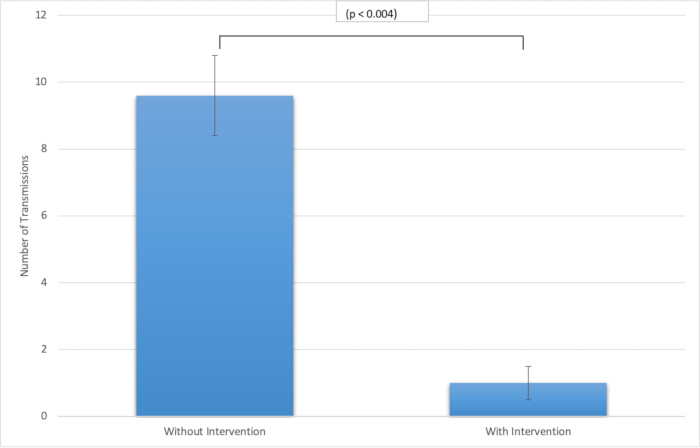
Figure 7: Comparison of transmission rates. Reduction in transmission rate of CROs from the expected rate after initiation of a comprehensive multidisciplinary process improvement program, including the incorporation of novel aerosolizing hydrogen peroxide dry fogging disinfection technology. Abbreviation: CRO; Carbapenem-resistant organism Please click here to view a larger version of this figure.
Economic analysis
Analyses of direct costs and productivity impacts have been performed for this technology. To estimate costs, a US hospital with an average of 129 staffed beds and an occupancy of 0.73 patients per bed per day was modeled. A daily hospital discharge rate of 17%, an hourly rate for environmental services staff of $22.81, and the mean time reduction reported from the use of hydrogen peroxide dry fogging of 10 min was assumed. With this, a cost savings of $3.80 per bed turned over were realized. At a rate of 16 daily bed turnovers, daily cost savings of $61 and an annual cost savings of $22,165 took place.
Using average data from 2023 covering a total of 33 locations, showing a room turnaround time of 132 min prior to implementing any streamlining systems as a baseline, the productivity impact was estimated. Using this value as the standard productivity of one environmental service (EVS) team member for complete turnover of a patient room (inclusive of disinfection, linen change, waste removal, etc.), and a 12 h shift, with a 1 h break (11 h workday), the standard productivity is the complete turnover of 12 rooms per shift. Disinfection times using automated hydrogen peroxide dry fogging have been reported to be reduced by anywhere from 10 to 35 min per room. Although the manual "cleaning" step is always required to remove soil and debris, cleaning typically leaves behind microorganisms on surfaces that are not visible to the human eye. For isolation patients, there is typically a second "supplemental disinfection" step that is done (A) by hand with more thorough wiping, (B) with UV, or (C) with aHP, with the latter option offering a time savings over the other two. As such, UV or aHP are options for supplemental disinfection after isolation terminal cleaning. With a range from 10-35 min saved per room utilizing automated hydrogen peroxide dry fogging, as many as 420 additional minutes become available across a standard productivity of 12 rooms. As a result, three additional rooms can be cleaned during a 12 h shift utilizing automated hydrogen peroxide dry fogging. In comparison, UVC disinfection requires an average of 50 min for three locations.
Discussion
Infection prevention is largely a quality improvement discipline that relies on data-driven approaches to improve and monitor infection rates. A critical step in the protocol is to ensure that the technology generates the specific aHP dosage, measured in ppm-min, for the 10 min contact time necessary to achieve a 4-log to 6-log pathogen reduction. Validation of each disinfection cycle ensures both efficacy and reliability. Moreover, automated logging of operational data reduces labor and provides a simple method to monitor terminal clean locations, times, and dosages for process improvement and audits. This is a distinct advantage over environmental disinfection technologies that cannot validate key operational parameters or that rely on manual logs.
A chief barrier to adoption of aHP in the past has been the need to seal the room to prevent leakage into other areas, an addition to workflow time and complexity that has proven largely unacceptable. Despite sealing, instances of leakage have also been reported. Hydrogen peroxide evaporates rapidly when aerosolized, so the initial 10 min offers most of the germicidal efficacy. An aHP system that can generate and fill a room with the desired dosage extremely quickly (<4 min) is not only more effective from a germicidal perspective but also eliminates the need to seal the room because droplets evaporate quickly as they encounter surfaces and dry air. Previous generations of aHP systems that fill a room more slowly than 10 min or longer are much more prone to leakage. Because the aerosolized hydrogen peroxide evaporates quickly and breaks down into water and oxygen, leaks do not pose a major problem in terms of health hazard. Likewise, because of the gradient in humidity from a room undergoing fogging (which is high during the short timeframe of fogging) and the space outside the room (which is typically much lower), the ability of the hydrogen peroxide to remain aerosolized is severely limited, as any escaping droplets are rapidly evaporated.
Critical steps of the protocol and potential modifications/troubleshooting of the method include the above-mentioned need to ensure appropriate contact time for the aerosolized hydrogen peroxide to achieve the targeted log reduction in pathogens. As described in section 5.4, setting fogging time according to room size ensures this goal is attained. Mathematical modelling critical steps include utilizing correct physical variables (room dimensions) with the appropriate module of the modelling software to yield accurate output and allow logical inferences, such as room coverage time. Efficacy analysis critical steps include determining either the historic infection exposure and transmission rate or identifying from the literature the expected transmission rate for the given pathogen of interest. Critical steps of economic analysis include identifying current site-specific costs of labor and task completion times to serve as baselines for comparison.
Limitations of the method include the upper limit on the size of the room. The maximum room size for a single fogger is approximately 1000 square feet, with a maximum single dimension of approximately 40 feet. Rooms larger or longer than this will cause uneven droplet distribution. Modifications to the method to address this would include the use of multiple aHP foggers running simultaneously. High ceilings will require additional fogging time because the droplets disperse over the available room volume. Rooms that are open without doors or walls present an issue with even distribution of the aHP fog. Very high air movement due to HVAC systems may complicate the distribution and evaporation of droplets. In this situation, the aHP dosage measured in ppm-minutes over a 10 min contact time can be used to adjust the fog time for the desired pathogen log reduction. Very high humidity above the recommended 60% relative humidity (RH) for a hospital environment may affect the droplet dispersion and evaporation cycles. Hospitals typically control humidity below 60% RH to minimize bacterial growth. If a room needs to be entered prior to the specified re-entry time, use goggles and a respiratory mask to avoid irritation from the hydrogen peroxide. Biofilms and other soil loads should be removed by the cleaning process prior to disinfection with aerosolized hydrogen peroxide. If there is an excess of organic material that can be oxidized, a situation could develop in which the available hydrogen peroxide is insufficient to disinfect all the intended space, although this is not a common scenario in the hospital setting.
There are other factors that influence the success of disinfection, for example, the particle distribution of the disinfectant being impacted by electrical devices that generate heat or windowpanes that can be hot or cold (potentially inducing condensation). Contact between the disinfectant and the surfaces of interest is crucial, especially when the goal is to prevent infections caused by pathogens that adhere to surfaces. Substantial deviations from typical hospital room environmental conditions may require consideration of adjustments to fogging parameters; however, these are not commonly encountered in the hospital setting.
The significance of this method with respect to existing/alternative methods lies in both the coverage, which provides disinfection of the entire space, and operational efficiency. Unlike UV-based systems, aHP dry fogging treats the entire space without any shadowing effect, eliminating the potential for harmful pathogens to remain after treatment or the need for time-consuming repositioning and reapplication to treat hard-to-reach areas. The output of the lamps also decreases over time, requiring scheduled replacement8. Most importantly, the efficacy of UV-based systems remains uncertain, since the intensity of the UVC dose is inversely proportional to the squared distance between the light source and the surface, such that the UV intensity received by a surface decrease significantly the further the surface is from the UV source8. One of the first cluster randomized cross-over design studies to evaluate UVC light disinfection (a mobile device emitting UVC light at a wavelength of 254 nm via 157.7 cm (62 inch) maximum-output mercury lamps) found that the addition of daily and discharge UVC disinfection to standard patient room cleaning did not significantly reduce new VRE or C. difficile infection rates in cancer and transplant in-patient units in a US academic tertiary referral center13. A systematic review found a significant decrease in C. difficile infection rates associated with ultraviolet light room disinfection when data from 13 studies were pooled, but subgroup analysis demonstrated a significant reduction only in settings with high C. difficile infection rates (≥1.5 cases per 1,000 patient days)14. Other studies have likewise shown mixed results15,16, with a recent review concluding that UVC disinfection should currently be considered a solution for low-level rather than high-level disinfection8
Potential applications of aHP for infection prevention are myriad, offering a rich agenda for additional research. With the increasing necessity to reduce the development and transmission of drug-resistant pathogens, the method of using an automated aHP dry fogging disinfection system will be important to both outcomes and the ability to quantify reductions in a wide range of HAIs. Current applications include the use of this system to disinfect public bathrooms, staff on-call rooms, and offices before they are cleaned by environmental services (EVS), opening further avenues for research into optimizing operational parameters and workflow. Employees have reported feeling safer cleaning rooms after use of automated aHP dry fogging to reduce infectious organism exposure potential, and note that cleaning time can be further reduced for complex surfaces, such as curtains, which otherwise would require manual removal and replacement, and the consequent safety risk from aerosolization of pathogens, as well as the use of ladders or step-stools.
Disclosures
Catherine Lazarus, Christopher Joseph, Erik Kulstad, and Kathy Warye: consulting for Breezy Med; Meghan Johnson: None; Timothy Short: None; Savannah Stevenson: None; Marcela Montoya and Tatiana Bustamante: consulting with IN SILICO STEM S.A.S.; Ranya Sikka: None; Kristin Grimes: None; Barbara Hawkins: None.
Acknowledgements
The authors thank the team at Bedwatch, LLC, Austin, TX, for providing room turnaround time data.
Materials
| Name | Company | Catalog Number | Comments |
|---|---|---|---|
| Breezy Biopure | BreezyMed | BBPURE-4GAL | 7% hydrogen peroxide and 93% water disinfection solution, 4-gallon case |
| Breezy Blue aHP Dry Fogging System | BreezyMed | BBR01 | Smart Disinfecting Fogger, 110V AC |
| Breezy Buggy | BreezyMed | BB-CART | Cart for Breezy Blue and Smart Controller |
| Breezy HaloSpray | BreezyMed | BHSPRY-4GAL | 5% hydrogen peroxide and 0.01% sliver compounds disinfection solution, 4-gallon case |
| Breezy Smart Controller | BreezyMed | BB01-WC | Controller for Breezy devices, Gen2 |
References
- Otter, J. A., Yezli, S., Salkeld, J. A. G., French, G. L. Evidence that contaminated surfaces contribute to the transmission of hospital pathogens and an overview of strategies to address contaminated surfaces in hospital settings. Am J Infect Control. 41 (5), S6-S11 (2013).
- Haque, M., Sartelli, M., McKimm, J., Abu Bakar, M. Health care-associated infections - an overview. Infect Drug Resist. 11, 2321-2333 (2018).
- Latham, R. H., Mayhall, C. G. Hospital epidemiology and infection control, 2nd ed Lippincott Williams & Wilkins. Infect Control & Hosp Epidem. 21 (4), 285-286 (2000).
- Shaughnessy, M. K., et al. Evaluation of hospital room assignment and acquisition of Clostridium difficile infection. Infect Control Hosp Epidemiol. 32 (3), 201-206 (2011).
- Nseir, S., et al. Risk of acquiring multidrug-resistant Gram-negative bacilli from prior room occupants in the intensive care unit. Clin Microbiol Infect. 17 (8), 1201-1208 (2011).
- Ayub, A., Cheong, Y. K., Castro, J. C., Cumberlege, O., Chrysanthou, A. Use of hydrogen peroxide vapour for microbiological disinfection in hospital environments: a review. Bioengineering. 11 (3), 205(2024).
- Williams, G. J., Denyer, S. P., Hosein, I. K., Hill, D. W., Maillard, J. Y. The development of a new three-step protocol to determine the efficacy of disinfectant wipes on surfaces contaminated with Staphylococcus aureus. J Hosp Infect. 67 (4), 329-335 (2007).
- Demeersseman, N., Saegeman, V., Cossey, V., Devriese, H., Schuermans, A. Shedding a light on ultraviolet-C technologies in the hospital environment. J Hosp Infect. 132, 85-92 (2023).
- Truitt, C. L., et al. Evaluation of an aerosolized hydrogen peroxide disinfection system for the reduction of Clostridioides difficile hospital infection rates over a 10 year period. Am J Infect Control. 50 (4), 409-413 (2022).
- Montoya, M. M., et al. APIC South Dakota Annual Education Conference, October 2-3, South Dakota, , (2025).
- Johnson, M., Short, T., Stevenson, S., Kulstad, E., Warye, K. APIC South Dakota Annual Education Conference, October 2-3, South Dakota, , (2025).
- Dal Ben, M. F., et al. A model-based strategy to control the spread of carbapenem-resistant enterobacteriaceae: simulate and implement. Infect Control Hosp Epidemiol. 37 (11), 1315-1322 (2016).
- Rock, C., et al. Ultraviolet-C light evaluation as adjunct disinfection to remove multidrug-resistant organisms. Clin Infect Dis. 75 (1), 35-40 (2022).
- Marra, A. R., Schweizer, M. L., Edmond, M. B. No-touch disinfection methods to decrease multidrug-resistant organism infections: a systematic review and meta-analysis. Infect Control Hosp Epidemiol. 39 (1), 20-31 (2018).
- Anderson, D. J., et al. Enhanced terminal room disinfection and acquisition and infection caused by multidrug-resistant organisms and Clostridium difficile (the benefits of enhanced terminal room disinfection study): a cluster-randomised, multicentre, crossover study. Lancet. 389 (10071), 805-814 (2017).
- Attia, F., Whitener, C., Mincemoyer, S., Houck, J., Julian, K. The effect of pulsed xenon ultraviolet light disinfection on healthcare-associated Clostridioides difficile rates in a tertiary care hospital. Am J Infect Control. 48 (9), 1116-1118 (2020).
Reprints and Permissions
