This study highlights the importance of assessing how commonly consumed fruit juices affect the color stability of primary teeth and whether toothbrushing can help mitigate these changes. Understanding these interactions is essential for developing preventive strategies and maintaining esthetic oral health in pediatric patients.
A subscription to JoVE is required to view this content. Sign in or start your free trial.
Method Article
Impact of Common Fruit Juices and Toothbrushing on the Discoloration of Primary Teeth
In This Article
Summary
Abstract
Tooth discoloration is a common esthetic concern that may influence psychosocial development and peer interactions during childhood. This in vitro study aimed to compare the discoloration potential of fruit juices frequently consumed by children—black mulberry, organic pomegranate, and organic orange—and to evaluate whether brushing with fluoridated or non-fluoridated toothpastes reduces these changes in primary teeth. Eighty sound primary teeth extracted due to trauma, orthodontic indications, or natural exfoliation and free of caries, restorations, enamel defects, or pre-existing discoloration were included. Samples were divided into four immersion groups (n = 20): saline (control), black mulberry juice, organic pomegranate juice, and organic orange juice. Each group was further divided into brushed and unbrushed subgroups, with brushed specimens treated using either fluoridated or non-fluoridated toothpaste (n = 10). All teeth were immersed for 28 days, and color measurements were obtained at baseline, day 7, and day 28 using a dental spectrophotometer according to the CIELab system. All fruit juices produced clinically perceptible discoloration (ΔE > 3.3), and each juice caused higher staining than the saline control. Black mulberry and pomegranate produced the greatest total discoloration, while orange juice resulted in markedly lower ΔE values. Brushing consistently reduced discoloration across all groups; however, no significant difference was found between fluoridated and non-fluoridated toothpastes, indicating that the mechanical action of brushing—rather than fluoride content—was primarily responsible for stain reduction. These findings reinforce the susceptibility of primary enamel to pigment-rich beverages and highlight the importance of effective brushing habits in minimizing extrinsic discoloration in children. Clinically, these findings suggest that despite the high staining potential of these fruit juices, strict adherence to daily brushing routines can effectively mitigate esthetic degradation in primary teeth, regardless of the toothpaste's fluoride content.
Introduction
An attractive smile constitutes a fundamental component in the development and enhancement of interpersonal relationships, holding significant importance for both adults and children. Therefore, esthetics has become a central focus in contemporary dentistry1. Tooth discoloration is one of the major factors that adversely affect dental esthetics, and its occurrence is closely associated with dietary patterns and oral hygiene habits. Frequent consumption of soft drinks, especially among children, contributes to tooth discoloration due to the presence of aromatic additives such as chocolate, grape, and strawberry flavorings2. Tunç et al.3 reported that the staining potential of children's beverages varies according to their composition, pH, and other characteristics, with grape juice and cola causing greater tooth discoloration compared to distilled water.
In recent years, fruit juices have increasingly been perceived as a healthier alternative to carbonated beverages and are frequently preferred by parents for children's daily consumption. However, despite their nutritional value, these beverages contain chromogenic compounds, natural pigments, and acidic components that may contribute to extrinsic tooth discoloration and enamel surface alterations. Their frequent intake during early childhood may therefore represent an underrecognized risk factor for esthetic changes in the primary dentition4,5,6.
Colorants present in children's fruit juices can either deposit on tooth surfaces or penetrate the organic phase during adsorption and absorption, and those adhering to the surface may be partially or totally removed through toothbrushing7. Sarembe et al.8 demonstrated that while brushing with toothpaste enhances stain removal effectiveness, it does not alter the relative staining potential of the tested dietary substances. Toothbrushing has been reported to have a positive influence on reducing discoloration caused by beverages on restorative materials commonly used in pediatric dentistry1,7,8. However, no study has investigated the effect of fluoridated and non-fluoridated toothpastes on discoloration caused by fruit juices commonly consumed by children.
Fluoride-containing toothpastes have been shown to promote remineralization and enhance enamel resistance to acid challenges, potentially modifying surface roughness and porosity. Changes in enamel surface characteristics may, in turn, influence the adhesion and retention of staining agents. In contrast, non-fluoridated formulations may provide mechanical plaque and stain removal without altering enamel mineral dynamics9,10. Evaluating their comparative effectiveness may therefore provide insight into the preventive role of fluoride in controlling extrinsic discoloration in primary teeth.
Color perception is a complex phenomenon that depends on individual physiological and psychological factors, leading to variations among observers. Because the limits of perceivable and acceptable color differences are not identical, the use of objective assessment techniques is preferred1. Several approaches can be applied to determine the color of teeth or restorative materials, including visual shade comparison, spectrophotometric measurement, colorimetry, spectroradiometry, and digital image-based analyses11. Among these options, the spectrophotometer is commonly employed, as it enables accurate and reproducible color evaluation by quantifying the reflection or absorption of light at different wavelengths by the tested surface7.
Although previous studies have examined beverage-induced discoloration in restorative materials and permanent teeth1,2,3,4,5,6,7,8,9,10,11,12, the impact of fluoridated and non-fluoridated toothpastes on fruit juice–induced discoloration in primary teeth has not yet been evaluated. It is important to distinguish the mechanisms of discoloration between restorative materials and natural enamel. While restorative materials primarily undergo discoloration due to water sorption and matrix degradation, enamel discoloration is largely driven by the adsorption of chromogens onto the acquired pellicle and diffusion into the hydroxyapatite structure13. Furthermore, primary enamel differs significantly from permanent enamel in terms of structure and composition, which influences its interaction with extrinsic stains. Primary enamel is less mineralized, more porous, and has a lower microhardness compared to permanent enamel. The hydroxyapatite crystals in primary enamel are smaller and less tightly packed, creating a surface that may be more susceptible to rapid pigment diffusion and retention compared to permanent teeth2,9.
Therefore, this protocol may be particularly useful for researchers aiming to investigate extrinsic discoloration processes in primary teeth and to evaluate the effectiveness of preventive oral hygiene interventions. This study aims to quantitatively assess the extent of discoloration caused by fruit juices that are commonly and safely consumed by children—orange, black mulberry, and pomegranate—on primary teeth, and to evaluate the comparative effect of brushing with fluoridated versus non-fluoridated toothpastes in reducing these color changes.
Access restricted. Please log in or start a trial to view this content.
Protocol
The study was conducted in accordance with the approval of the institutional Human Research Ethics Committee of the University of Health Sciences (2025/4, Decision No: 4/24). Individuals and families provided consent for the use of extracted primary teeth in this research.
NOTE: To investigate the color changes caused by fruit juices in primary teeth, mulberry, pomegranate, and orange juices — commonly consumed by children and preferred by parents as healthy options — were selected. Two different toothpastes, one fluoridated and one non-fluoridated, were used to examine whether toothbrushing influences the discoloration caused by these beverages. The list of materials used is provided in the Table of Materials.
1. Selection of sample primary teeth
- Perform an a priori statistical power analysis to determine the required sample size for the study.
- Collect a total of 80 sound primary teeth extracted due to trauma, orthodontic reasons, or excessive mobility related to natural exfoliation, assigning 20 specimens to each fruit juice group and the control group (Figure 1).
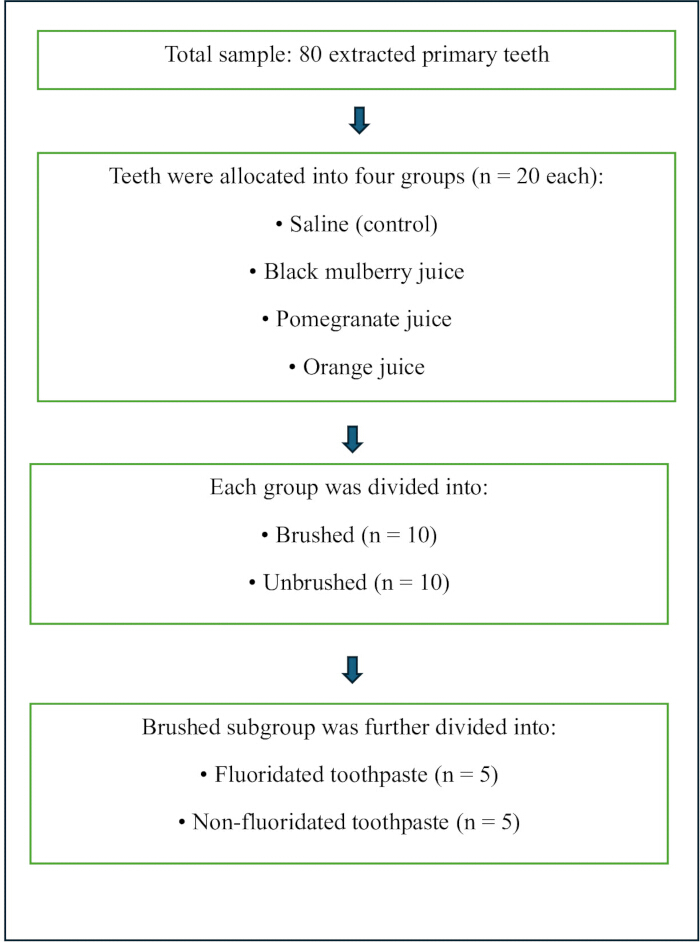
Figure 1: Sample allocation flow diagram. The grouping of the 80 specimens and the step-by-step experimental procedure are presented in a schematic flow diagram. Please click here to view a larger version of this figure.
- Remove any remaining gingival tissue and debris from the teeth using a periodontal scaler, and then clean them by polishing.
- Store the teeth in saline solution until the experiments begin, but replace the solution daily.
- Create a 4 × 4 mm square window on each specimen using red nail polish (Figure 2).
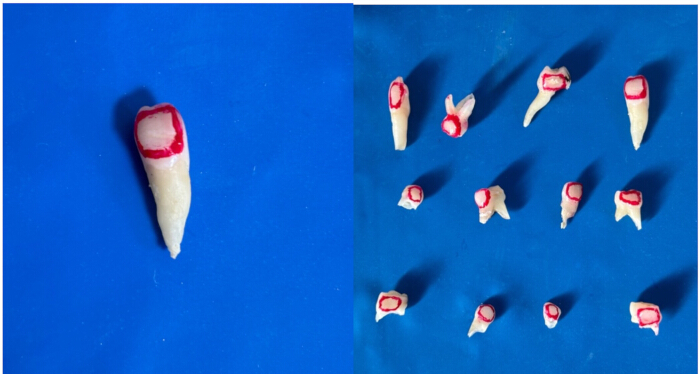
Figure 2: Preparation of tooth samples. Sound primary teeth were collected and cleaned of residual gingival tissue using a periodontal scaler, followed by polishing. A 4 × 4 mm square measurement window was delineated on the buccal surface of each tooth using red nail polish to standardize the area of spectrophotometric evaluation. Teeth were stored in saline solution with daily renewal until the start of the experiment. Please click here to view a larger version of this figure.
- Place each tooth into a container labeled with its specimen number on the outside to fill the container with the assigned fruit juice before conducting baseline color measurements.
- Divide the samples into brushed and unbrushed subgroups. Then, further divide the brushed group into two subgroups: fluoridated and non-fluoridated toothpaste. Place each sample into numbered containers accordingly.
- Use a spectrophotometer to evaluate the baseline color measurements of all groups, following the Commission Internationale d’Eclairage Lab* (CIELab) coordinates relative to a standard illuminant.
- Use a white background for the initial color measurements.
- Calibrate the spectrophotometer before each measurement following the manufacturer’s instructions.
- Take color measurements three times for each specimen to ensure accuracy.
2. Staining process and brushing
- Immerse the prepared specimens in mulberry, pomegranate, orange juice, or saline solution for the control group (Figure 3).
- Incubate all samples at 37 °C for 7 and 28 days (based on previous studies4,11), refreshing the juice daily.
- Dilute each toothpaste with distilled water at a 1:1 weight ratio (1g:1g) to obtain a standardized slurry that approximates intraoral dilution during toothbrushing.
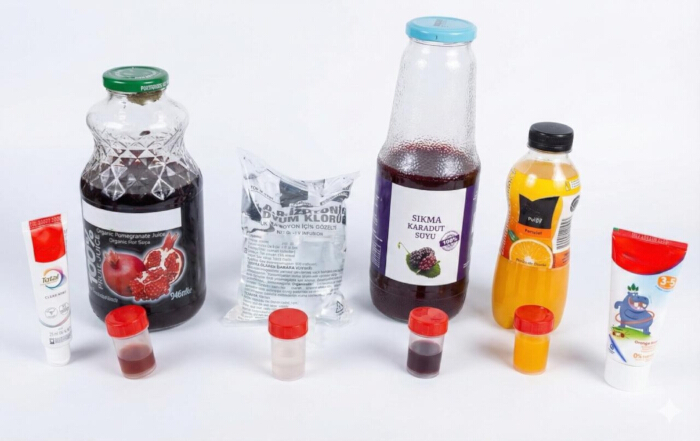
Figure 3: Materials used in the study, including the applied toothpastes and prepared solutions. Commercial fruit juices used for immersion (black mulberry, organic pomegranate, and organic orange) are shown alongside the two toothpaste formulations evaluated: a fluoride-containing toothpaste and a fluoride-free toothpaste. Each toothpaste was diluted 1:1 by weight in distilled water prior to use in the brushing protocol. Full details of all materials, including brand names and catalog numbers, are provided in the Table of Materials. Please click here to view a larger version of this figure.
- Brush the specimens in the brushing subgroups once a day on each surface for 5 seconds using an electric toothbrush with either fluoridated toothpaste or non-fluoridated toothpaste.
- At the end of the experimental period (7th and 28th day; Figure 4), thoroughly rinse the teeth with distilled water and dry them with tissue paper before conducting color measurements.
- Apply the same procedure used for the initial color measurements using the dental spectrophotometer.
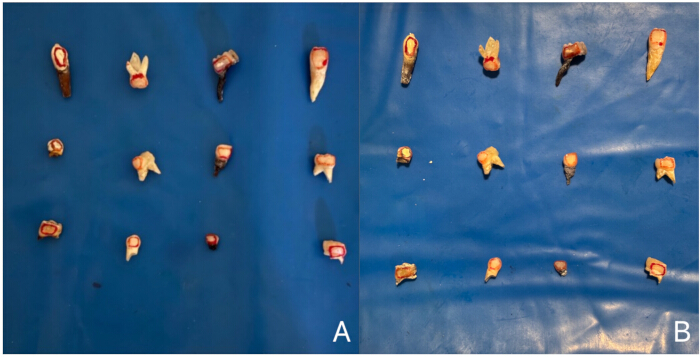
Figure 4: Discolored appearance of the samples. At the end of (A) Day 7 and (B) Day 28. Representative images of tooth specimens immersed in black mulberry, pomegranate, and orange juice groups are shown at each time point, alongside the saline control. Progressive surface discoloration is visible across the 28-day period, with the greatest color changes observed in the black mulberry and pomegranate groups. Please click here to view a larger version of this figure.
3. Color difference measurements
- For color difference determination (ΔE), calculate the average values of ΔL, Δa, and Δb for each specimen. Use the following equation to calculate color variation:
ΔE = [(ΔL*)2+(Δa*)2+(Δb*)2]1/2
NOTE: In this context, L* represents the lightness of color, ranging from 0 (black) to 100 (white). The a* value indicates the position on the green-red axis, with positive a* values indicating red and negative a* values indicating green. The b* value represents the blue-yellow axis, where positive b* values indicate yellow and negative b* values indicate blue. - Based on previous studies14,15, consider a noticeable color change with a ΔE value greater than 1 acceptable, provided it does not exceed ΔE = 3.3.
- Record color measurements for the groups immersed in mulberry, pomegranate, and orange juice and for the control group.
4. Statistical analysis
- Calculate descriptive statistics for each variable and present them as mean ± standard error of the mean (SEM).
- Assess normality using the Shapiro–Wilk test and evaluate homogeneity of variances with the Levene test to verify the assumptions of parametric analyses.
- Perform a three-way mixed-design ANOVA using the general linear model procedure for repeated measurements to examine differences across "juice type" and "brushing" groups over time.
- Include "Juice Type (JT)," "Brushing Type (BT)," and "Time (T)" as main effects, along with all possible two-way and three-way interaction terms.
- Subject the data to a two-way analysis of variance (ANOVA) using the general linear model procedure to examine differences between the "juice type" and "brushing" groups.
- Include "Juice Type (JT)" and "Brushing Type (BT)" as main effects, and incorporate the "JT × BT" interaction term into the model.
- Apply simple effects analysis with Sidak adjustment to explore any significant interaction.
- Set the level of statistical significance at p < 0.05 unless otherwise specified.
- Use a statistical analysis software to conduct all statistical analyses.
Access restricted. Please log in or start a trial to view this content.
Results
Color change values (ΔE) were analyzed separately for the early (Δ1: t0–t7) and late (Δ2: t7–t28) intervals. Three-way ANOVA showed significant effects of time and juice type on discoloration (p < 0.001), while the effect of brushing type approached significance. All interaction terms (JT × BT, t × JT, t × BT, and t × JT × BT) were significant (p < 0.05), indicating that discoloration patterns varied according to brushing condition and exposure period.
Access restricted. Please log in or start a trial to view this content.
Discussion
Dental discoloration is a significant concern as it compromises the natural appearance of teeth and may adversely affect psychological well-being and social functioning16. Although dental discoloration is widely studied because of its clinical and psychosocial implications, most in vitro research has focused on restorative materials, endodontic cements, or artificial models rather than on human teeth3,4,
Access restricted. Please log in or start a trial to view this content.
Disclosures
The authors declare that they have no competing interests.
Acknowledgements
The authors acknowledge and appreciate the cooperation of the individuals and families who provided consent for the use of extracted primary teeth in this research.
Access restricted. Please log in or start a trial to view this content.
Materials
| Name | Company | Catalog Number | Comments |
|---|---|---|---|
| Black Mulberry Juice | Ancora, Turkey | 4140294200 | 100% black mulberry juice, no added sugar, preservatives, or colorants |
| Colgate Kids Toothpaste (fluoride-free) | Colgate-Palmolive, USA | https://www.colgate.com/en-us/products/toothpaste/colgate-kids-toothpaste | Glycerin, sorbitol, hydrated silica, water, mild surfactant, thickeners, orange flavor, preservatives, colorants |
| Colgate Total Toothpaste (fluoridated) | Colgate-Palmolive, USA | https://www.colgate.com/en-us/products/toothpaste/colgate-total | Contains sodium fluoride 1450 ppm F, hydrated silica, SLS, glycerin, sorbitol, thickeners, flavor, titanium dioxide, zinc citrate |
| Distilled Water | Laboratory grade | Not applicable - standard laboratory reagent | Used for toothpaste dilution (1:1 by weight) |
| Electric Toothbrush | Oral-B Kids, Procter & Gamble, OH, USA | https://oralb.com/en-us/products/kids-electric-toothbrush | Used for standardized brushing protocol |
| Incubator | Standard laboratory incubator | Not applicable - standard laboratory equipment | Maintained at 37 °C throughout immersion period |
| Nail Polish (red) | Standard cosmetic-grade | Not applicable - standard cosmetic product | Used to demarcate 4 × 4 mm measurement window on buccal surface |
| Orange Juice | Cappy Pulpy Orange, The Coca-Cola Company, Turkey | 5449000147417 | Water, sugar/fructose-glucose syrup, orange pulp 5%, orange juice concentrate, acidity regulators (citric acid, sodium citrate), stabilizers (acacia gum, glycerol ester of wood resin), flavorings, antioxidant (ascorbic acid), coloring (beta-carotene) |
| Polishing Disk | 3M Sof-Lex Finishing and Polishing Discs, 3M ESPE, USA | https://www.3m.com/3M/en_US/p/d/b00016836/ | Medium grit, used for cleaning extracted teeth prior to immersion |
| Pomegranate Juice | Benorganic, Turkey | TR-51-K-000170 | 100% pomegranate juice, organic, no added sugar, preservatives, or colorants |
| Saline Solution (0.9% NaCl) | Polifarma Ilac, Tekirdag, Turkey | https://www.polifarma.com.tr/urunlerimiz/serum-ve-cozeltiler | Isotonic sodium chloride solution (0.9 g NaCl per 100 mL sterile water for injection), used for tooth storage |
| Spectrophotometer | VITA Easyshade, VITA Zahnfabrik, Germany | https://www.vita-zahnfabrik.com/en/VITA-Easyshade-V-27917.html | Used for CIELab color measurements |
| SPSS Software | IBM SPSS Statistics Version 30 | https://www.ibm.com/products/spss-statistics | Used for statistical analysis |
References
- Verma, J., Padhye, L., Verma, S. Effect of brushing on the color stability of nanohybrid composite after immersion in brewed beverages: an in vitro study. Med Pharm Rep. 94 (4), 465-470 (2021).
- Maladkar, S. R., et al. Erosive effect of acidic beverages and dietary preservatives on extracted human teeth: an in vitro analysis. Eur J Dent. 16 (4), 919-929 (2022).
- Tunc, E. S., Bayrak, S., Guler, A. U., Tuloglu, N. Effects of children's drinks on the color stability of various restorative materials. J Clin Pediatr Dent. 34 (2), 147-150 (2009).
- Almutairi, M., et al. Effects of different pediatric drugs and brushing on the color stability of esthetic restorative materials used in pediatric dentistry: an in vitro study. Children (Basel). 9 (7), 1026(2022).
- Shalan, H. M., Alagami, R. A., Hasan, M. A. Effect of coloring beverages on different esthetic restorative materials in primary teeth. Acta Sci Dent Sci. 3, 64-68 (2019).
- Doğu Kaya, B., YılmazAtalı, P., Özmen, S., Öztürk, S., Tarçın, B. Effect of an effervescent multivitamin on color and surface roughness of micro-hybrid dental resin composites. Materials (Basel). 17 (5), 1040(2024).
- Bezgin, T., Özer, L., Tulga Öz, F., Özkan, P. Effect of toothbrushing on color changes of esthetic restorative materials. J Esthet Restor Dent. 27 (Suppl. 1), S65-S73 (2015).
- Sarembe, S., Kiesow, A., Pratten, J., Webster, C. Impact of dental staining caused by beverages in combination with chlorhexidine digluconate. Eur J Dent. 16 (4), 911-918 (2022).
- Fernandes, N. L. S., et al. Effectiveness of fluoride-containing toothpastes associated with different technologies to remineralize enamel after pH cycling: an in vitro study. BMC Oral Health. 22 (1), 489(2022).
- Orilisi, G., et al. Multidisciplinary evaluation of the remineralization potential of three fluoride-based toothpastes on natural white spot lesions. Clin Oral Investig. 27 (12), 7451-7462 (2023).
- Beltrami, R., et al. Effect of different surface finishing/polishing procedures on color stability of esthetic restorative materials: a spectrophotometric evaluation. Eur J Dent. 12 (1), 49-56 (2018).
- Limvisitsakul, A., et al. Color stability of artificial white spot lesions treated with resin infiltration after exposure to staining beverages. BMC Oral Health. 24 (1), 940(2024).
- Gawriołek, M., et al. Investigating the mechanisms of discoloration in modern dental materials: a comprehensive characterization approach. J Funct Biomater. 15 (9), 246(2024).
- Jrady, A., Ragab, H., Algahtani, F. N., Osman, E. In vitro study on the impact of various polishing systems and coffee staining on the color stability of bleach-shaded resin composite. BMC Oral Health. 24 (1), 712(2024).
- Paolone, G., et al. Color stability of resin-based composites: staining procedures with liquids–a narrative review. J Esthet Restor Dent. 34 (6), 865-887 (2022).
- Hattab, F. N. Tooth discoloration: treatment and prevention–Part II. J Oral Health Community Dent. 18 (2), 76(2024).
- Vahedi, P., Bagheri, N., Khoramian Tusi, S., Mohammadian, M. Comparative evaluation of the effects of four types of iron supplements on primary teeth discoloration: an in vitro study. BMC Oral Health. 25 (1), 1428(2025).
- Nasha, D., et al. Effect of enamel surface coating on staining capability due to iron-containing supplements on primary teeth: an in vitro study. J Pharm Bioallied Sci. 16 (Suppl. 4), S3616-S3618 (2024).
- Elbahary, S., Bercovich, R., Flaisher-Salem, N., Azem, H. Quantifying coronal primary tooth discoloration caused by different pulpotomy materials. J Clin Pediatr Dent. 44 (3), 142-147 (2020).
- Amalavathy, R. K., Sahoo, H. S., Shivanna, S., Lingaraj, J., Aravinthan, S. Staining effect of various beverages and surface nano-hardness of a resin-coated and a non-coated fluoride-releasing tooth-coloured restorative material: an in vitro study. Heliyon. 6 (6), e04000(2020).
- Lepri, C. P., Palma-Dibb, R. G. Surface roughness and color change of a composite: influence of beverages and brushing. Dent Mater J. 31 (4), 689-696 (2012).
- Butera, A., et al. Evaluation of the efficacy of low-particle-size toothpastes against extrinsic pigmentations: a randomized controlled clinical trial. Dent J (Basel). 11 (3), 82(2023).
- Turkistani, A., Hasanain, F. A. Investigating the impact of whitening toothpastes on bioactive resin-based restorative materials: a comparative analysis. BMC Oral Health. 24 (1), 1527(2024).
- Fırıncıoğullar, E. C., Urdinç, A. M. Effects of fluoride-containing biomimetic agents on remineralization and color change of enamel white spot lesions: an in vitro study. Oper Dent. 50 (1), 78-92 (2025).
- Lobito, A., et al. In vitro evaluation of surface roughness and color variation after two brushing protocols with toothpastes containing different whitening technologies. Appl Sci. 14 (10), 4053(2024).
- Muntean, A., et al. Toothpaste composition effect on enamel chromatic and morphological characteristics: in vitro analysis. Materials (Basel). 12 (16), 2610(2019).
Access restricted. Please log in or start a trial to view this content.
Reprints and Permissions
