This study successfully uses MIL-96(Al) Metal-Organic Frameworks particles to stabilize Pickering emulsions, which serve as templates to form mechanically robust, hierarchically porous monolithic materials. This method allows scalable MOF shaping while preserving crystal integrity. Tuning formulation is key to controlling pore size, interconnectivity, permeability, and robustness.
Method Article
Assembly of Porous Monolithic Materials Using a Pickering Emulsion Strategy Stabilized by Metal–Organic Framework (MOF) Particles
In This Article
Summary
Abstract
Metal–Organic Frameworks (MOFs) are highly porous, crystalline materials of great interest for applications ranging from gas adsorption to catalysis. However, the industrial scalability and application of MOF powders are hindered by the challenge of finding a shaping method that preserves their inherent porosity and surface chemistry. Traditional techniques often compromise these crucial properties through mechanical stress or the use of pore-blocking binders. This study presents a protocol for the assembly of mechanically robust, hierarchically porous monolithic materials using MOF particles as stabilizers for Pickering emulsions. The goal of this work is to overcome the limitations of MOF shaping by utilizing an emulsion-based template method, thereby yielding a solid structure that is macroporous and retains accessible MOF microporosity. The protocol involves synthesizing MIL-96(Al), an aluminum-based MOF, using a sustainable method by using recycled Li-ion battery waste as metal sources. This MOF is then used to stabilize high internal phase Pickering emulsions (HIPE). Upon solidification, the emulsion template yields macroporous monoliths. The incorporation of Polyvinyl alcohol (PVA) or polymer precursors into the aqueous phase is shown to be decisive. Their addition significantly reduces droplet sizes and enhances pore interconnectivity (PolyHIPE). The resulting monoliths retained the MIL-96(Al) framework’s integrity, confirmed by XRD and FTIR. While some inherent loss of microporosity occurs during the process, the careful tuning of PVA concentration allows control over pore morphology and enhanced permeability, demonstrating that MOF/polymer monoliths competitive with literature standards can be obtained. This strategy offers a promising route for the scalable shaping of MOFs for applications in fluid processing and adsorption.
Introduction
Metal–organic frameworks (MOFs) are a hybrid class of crystalline porous materials comprised of inorganic nodes or clusters and organic linkers1. Their modularity, high surface areas, and tunable chemistry2 make them appealing for a variety of applications, ranging from gas adsorption and catalysis to separation processes and even drug delivery in the medical field3,4,5,6,7,8,9. However, one issue persists. The industrial-scale use of MOF powders is still limited, and finding a shaping method that doesn’t compromise the MOF’s porosity, accessible surface chemistry, or overall initial properties still poses a challenge. Traditional shaping approaches, such as compression into pellets10 or extrusion11, frequently induce mechanical alterations or require the introduction of binders, which in turn will block the MOF’s pores12,13. Although relatively few studies have been published to date, the field is expanding rapidly in terms of techniques and the understanding of the stability of MOFs and their accessibility in hierarchically porous materials rather than just powders. Consequently, interest has shifted towards technics that yield a mechanically robust, hierarchically porous solid while preserving accessible microporosity. This solid can be a monolith obtained via Pickering Emulsion using MOFs as stabilizers, an interesting technique because it is easy to set up and quick to perform14. A Pickering emulsion is a type of emulsion (a mixture of two immiscible liquids, like oil and water) that is stabilized by solid particles instead of the conventional molecular surfactants (or emulsifiers).
In this study, MIL-96(Al), a robust aluminum-based trimesate MOF, is successfully incorporated into monolithic porous structures using the Pickering emulsion approach. Pickering emulsion allows the formation of a system comprised of two immiscible phases: oil and water. Particles are then added to the mixture and will position themselves on the interfaces of these two phases. By removing the liquids, only the solid particle network is left behind, forming a porous solid (a monolith). Recent studies have shown that Pickering emulsions can act as templates for solids with relatively high mechanical resistance, notably polyHIPEs (Polymerized High Internal Phase Emulsions)15, which exhibit a macroporous network with a high degree of interconnectivity.
Pickering emulsion is a simple and quick method to shape materials. The tuning of the formulation to increase the mechanical properties of the monolith is also explained in this study.
The MIL-96(Al) used in this study is obtained from recycled Li-ion battery waste, which is used as the metal source as proposed in a previous report16. The batteries used for the synthesis stem from industrial waste and are not pretreated. Batteries are used as an abundant metal source to produce large quantities of MOFs that are required to develop a method for the shaping of MOFs. These waste batteries contain the following list of elements determined by Inductively coupled plasma optical emission spectroscopy analysis (ICP-OES): Cu (18%–25%), Al (10%–15%), Mn (14%–17%), Ni (2.5%–3.5%), Co (0,6%–1%), Li (1.5%–2%), F (0.5%–2%) and P (0.2%–0.5%). A protocol has been developed to form the Al-based MOF selectively.
In order to obtain a stable emulsion, a Water-proof Metal-Organic Framework (WMOF) of 1% to 5% is fixed. The organic phase (oil) used in the emulsion consists of paraffin oil. Emulsions are prepared at a fixed internal phase fraction φ = 0.75. Formulation variables used in this study have been optimized in a previous study17. A high-shear process is essential to rapidly adsorb MIL-96(Al) particles onto newly formed oil droplets and to produce stable monodisperse droplets.
Different monoliths are synthesized to evaluate the effect of MOF concentrations, polymeric precursors (acrylamide, AM, and methylene bisacrylamide), and the presence of an adhesive binder (polyvinyl alcohol, PVA) on porosity. Each monolith is designed as M[MOFs]/[AM]/[PVA]. For example, M100/10/0.5 corresponds to a material obtained with [MOFs] = 100 mg.mL−1 in H₂O, [AM] = 10 wt.% relative to H₂O, and [PVA] = 0.5 wt.% relative to H₂O.
Protocol
The reagents and the equipment used are listed in the Table of Materials.
1. Preparation of MIL-96(Al)
- Dissolve 15 g of batteries in a 150 mL solution comprised of a 1:1 ratio of ultrapure water and 37% HCl in a beaker.
- Place the solution under stirring at 60 × g for 24 h at room temperature.
- Filter the solution to remove carbon and plastic residues.
- Dissolve 2 g of benzene-1,3,5-tricarboxylic acid (BTC) in 500 mL of Dimethylformamide (DMF).
- Place the solution in an ultrasound bath at 37 kHz at room temperature for 30 min.
- Mix the two solutions in a ratio of 1:2 metallic solution and organic solution.
- Place the mixture in an ultrasound bath at 37 kHz at room temperature for 30 min.
- Place the mixture in an oven at 90 °C for 24 h.
- Wash the MOF 3 times with DMF and 3 times with EtOH via Büchner filtration.
- Dry the MOF in an oven at 40 °C for 72 h.
2. Preparation of Pickering emulsions using MIL-96(Al) (HIPE)
- Dissolve 1.1 g of MIL-96(Al) in 10 mL of ultrapure water in a glass vial.
- Add 13.35 mL of paraffin to the solution.
- Homogenize the mixture at 15,000 × g for 2 min to form the emulsion using a homogenizer with a single rotor (S25N-10 G).
3. Preparation of Pickering emulsions using MIL-96(Al) and polymers (PolyHIPE) with a ratio of M100/10/0.5
- Dissolve 375 mg of MIL-96(Al), 375 mg of acrylamide, 18.75 mg of methylene bisacrylamide, and 18.75 mg of KPS (potassium persulfate) in 3.02 mL of ultrapure water in a beaker.
- Homogenize using a homogenizer with a single rotor (S25N-10 G) at 15,000 × g.
- While stirring, add 0.73 mL of PVA and 11.25 mL of oil (paraffin) at a fixed ratio of 0.75 v/v.
- Maintain homogenization at 15,000 × g for 2 min to form the emulsion.
- Place the mixture in an oven at 80 °C for 24 h to polymerize.
- Wash the polymer obtained from an emulsion templating process using a high internal phase emulsion (PolyHIPE) using a continuous solvent extraction apparatus with ethanol for 48 h to remove the oil, excess polymer precursors, and PVA.
3.7. Dry the material under vacuum at 100 °C.
4. Preparation of samples for analysis
- For the BET analysis at 77 K, use an adsorption of 20 cm3/g til P/P0 = 0.10, 60 cm3/g til P/P0 = 0.90, and a desorption of 40 cm3/g between 0.90 and 0.30.
- For PXRD, use a range of 5°–70° at 0.5s/step at a wavelength of 1.54 Å.
- For the infrared spectroscopy, use a range of 615–4,000 cm-1 with a scan time of 1 min and a number of scans of 4.
Results
Regarding the characterization of the materials, optical microscopy is used to observe droplet size distributions of emulsions. Nitrogen adsorption–desorption (BET) measurements provide specific surface area data. X-ray diffraction (XRD) assesses the crystallinity of MIL-96(Al) after incorporation into the polymer matrix. Infrared spectroscopy confirms the retention of functional groups. Mechanical properties are evaluated by applying increasing loads to monoliths until deformation is observed. Hydrodynamic properties are assessed through Darcy flow experiments, measuring pressure drop as a function of flow rate.
The obtained MOF material from battery waste dissolution is based on Aluminum from the contactors of the batteries. Even in the presence of various metals after battery dissolution, selective precipitation (MIL-96(Al)) is obtained by adding the precipitating agent to the solution.
Pickering emulsion is a type of emulsion stabilized by solid particles adsorbed at liquid–liquid interfaces. In this case, MOF particles, thanks to their amphiphilic nature and interfacial activity, can efficiently adsorb at oil–water interfaces and form stable water-in-oil (W/O) or oil-in-water (O/W) emulsions.
The emulsions are formulated by first dispersing MIL-96(Al) particles in an aqueous phase of ultrapure water. The amount of MOF dissolved in the solution heavily depends on the volume of the liquid phases used in the emulsion. The amount of MOF used for the Pickering Emulsion is specifically given in %w, which is defined as the ratio of the total mass of MOF and the total mass of liquid used in the emulsion. The amount of MOF (WMOF) is thus defined by the following formula:

where:
Voil = volume of the organic phase (paraffin)
Vwater = volume of aqueous phase
ρoil = density of the organic phase (paraffin)
ρwater = density of aqueous phase
mMOF = masse of MIL-96(Al)
Originally, 375 mg of MIL-96(Al) was used for the preparation of the polyHIPE. Subsequent experiments show that scalability is possible. The amount of MOF added can be increased 10-fold and still produce stable monoliths.
Pickering emulsions formed with MIL-96(Al) display characteristics consistent with previous observations. They produced stable Oil/Water emulsions where droplets are densely packed due to the high internal phase fraction. In formulations containing PVA and polymer precursors, droplet sizes are substantially reduced, with average diameters near 20 µm compared to 55–75 µm for simpler emulsions lacking PVA (Figure 1).
This reduction is attributed to the increased viscosity of the aqueous phase and the adsorption of PVA at the oil–water interface. Rheological measurements reveal pseudoplastic behavior across all samples. The presence of polymer precursors increases viscosity and introduces a higher yield stress, consistent with the formation of a dense droplet network18. These rheological signatures indicate that emulsions behave as gels and would retain their structure during polymerization. Increasing PVA concentration from 0–0.5 wt.% results in smaller pores but greater pore interconnectivity. Pore sizes decrease by a factor of 5 across this range, while window density increases significantly19. The concentration of MOF particles had minimal effect on pore size but influenced the deposition of MOFs at pore surfaces. Higher MOF content results in more MOF particles becoming embedded in the polyacrylamide walls or exposed at the surface, thereby affecting the composite’s specific surface area (Figure 2).
Surface area values range from low m2.g-1 for materials lacking PVA to higher m2.g-1 for samples containing 0.5 wt.% PVA. Increasing the amount of PVA enhances network openness, improving access to MOF surfaces. However, incorporation into a polymer matrix inherently reduces microporosity compared to the pristine MOF (650 m2.g-1). Losses of 74%–94% are observed depending on formulation. These results are consistent with the literature, where shaping MOFs into monoliths commonly yields substantial surface losses due to occlusion within polymeric frameworks20.
XRD diffractograms retain the characteristic peaks of MIL-96(Al), demonstrating that neither emulsification nor polymerization compromises framework integrity. Lower-intensity peaks for low-MOF-content samples are attributed to the reduced MOF accessibility rather than structural degradation. FTIR spectra confirm the presence of MIL-96 functional groups, especially carboxylate stretches indicative of intact metal–ligand coordination.
Hydrodynamic behavior is strongly influenced by PVA content. Darcy flow experiments demonstrate that pressure drop increases with flow rate for all samples, consistent with tortuous pore geometries21,22. The monolith lacking PVA exhibits significantly higher pressure drops due to poor interconnectivity.
In contrast, PVA-containing monoliths display a plateau in pressure drop at low flow rates, indicating unobstructed flow through interconnected pores23. A critical Darcy velocity is identified for each formulation, marking the transition between low-pressure and pressure-increasing regimes24. Higher PVA content correlates with higher critical velocities due to enhanced pore openness (Figure 3).
Another strategy to make the accessibility of MOFs more efficient during the process of shaping is also presented. This research proposes a novel method based on stabilizing a paraffin-in-water Pickering emulsion using a fluorinated Zr MOF combined with the polyHIPEs strategy. After polymerization and paraffin removal, a hierarchically structured monolith is obtained with the MOF particles typically embedded in the polymer wall, potentially blocking pores. The key innovation to prevent this pore blocking is modifying the MOFs' hydrophilic/hydrophobic balance by controlled adsorption of hydrophobic molecules (Fluorinated molecules). This modification induces a displacement of the MOF position at the paraffin–water interface during emulsification. This results in particles being less embedded in the polymer wall. This process successfully yields hierarchically structured monoliths integrating highly accessible MOF particles suitable for fixed-bed processes (Figure 4).
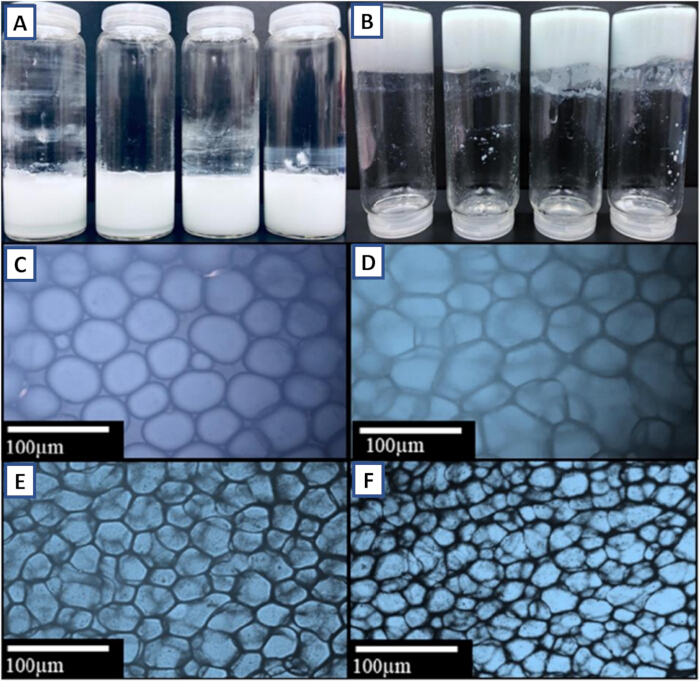
Figure 1: Images and optical microscopic images of different Pickering emulsions. (A) Pickering emulsions with 2.5wt.% MIL-96(Al) and different paraffin volume ratios: from left to right, φv = 0.5, 0.6, 0.7, and 0.8. (B) Pickering emulsions with φv = 0.8 and different concentrations of MIL-96(Al): from left to right, wMOF = 1, 2, 3.5, and 5wt.%. Optical micrographs of emulsions with 5wt.% MIL-96(Al) and paraffin volume ratios of (C) 0.5, (D) 0.6, (E) 0.7, and (F) 0.8. This figure is reproduced with permission from Lorignon et al.17. Please click here to view a larger version of this figure.
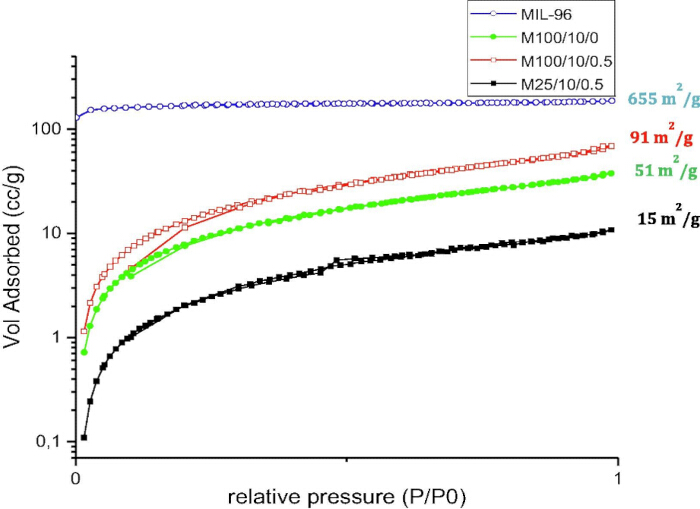
Figure 2: Nitrogen isotherm adsorption/desorption of the corresponding MIL-96(Al) powder, M100/10/0.5, M100/10/0 and M25/10/0.5. This figure is reproduced with permission from Lorignon et al.15. Please click here to view a larger version of this figure.
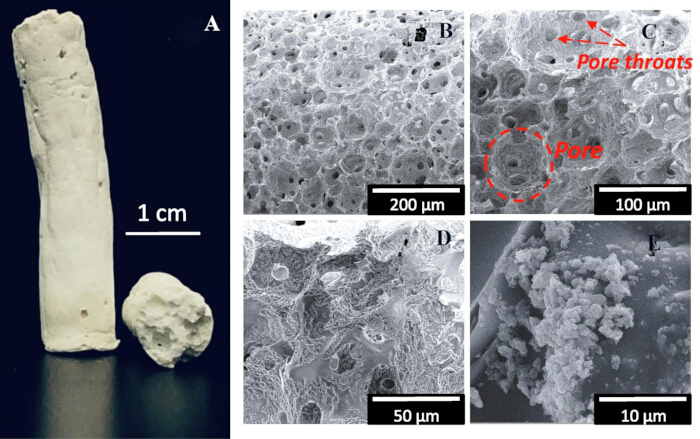
Figure 3: Photograph of the M100/10/0.5 monolith seen from the front and from below. (A) and SEM images of the M100/10/0.5 monolith at different magnifications (B–E). This figure is reproduced with permission from Lorignon et al.15. Please click here to view a larger version of this figure.
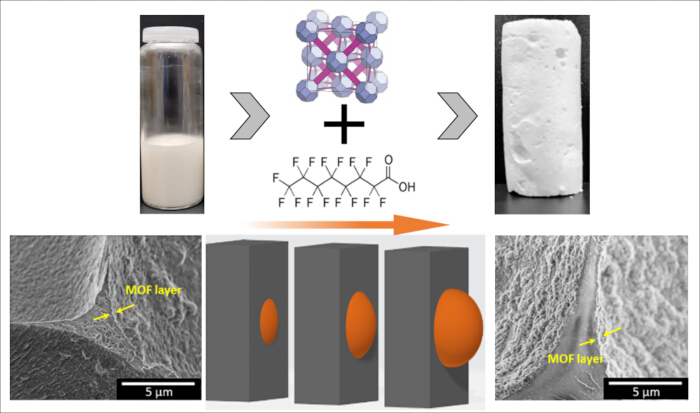
Figure 4: Strategy to make MOFs particles more accessible after the shaping process. This figure is reproduced with permission from Lorignon et al.18. Please click here to view a larger version of this figure.
Discussion
This novel shaping strategy relies on stabilizing a Pickering High Internal Phase Emulsion (HIPE) using the MOF particles themselves. However, even if it’s a simple way to shape the porous MOFs, by using just MOFs particles to stabilize the emulsion, the resulting monolith presents low resistance to mechanical stress.
Indeed, the resulting emulsion template can also subsequently be solidified by polymerizing the aqueous continuous phase, followed by the elimination of the organic internal phase, leading to the formation of a stronger porous monolith (PolyHIPE). The formulation can be tuned by adding some molecules before the emulsion step to change the mechanical properties of the monolith18. For example, the formulation can contain polymer precursors, the aqueous phase exhibits significantly higher viscosity when adding PVA (Polyvinyl alcohol) and acrylamide, resulting in smaller droplets, enhanced stability, and finally a monolith that has better mechanical behavior under pressure23,25.
The findings indicate that the inclusion of small amounts of additive polymers is crucial for rigidifying the monolithic structure. Furthermore, the strategic use of an adhesive binder is implemented to improve the final network porosity of the material by effectively creating well-defined pore throats. This optimized structure ensures that the MOFs are accessible at the internal surfaces of the monolith after shaping, thereby preserving a portion of their original microporous properties18.
To maximize performance, a systematic screening of various parameters, specifically the ratio of MOF, polymer, and adhesive binder, is conducted. This optimization aims to retain the MOF's intrinsic properties while ensuring structural integrity. Overall, this research highlights the exceptional capacity of MOFs to act as both active material and stabilizing agents in Pickering emulsions. The methodology yields a solid polymer-MOF composite monolith with highly promising properties, and it is hypothesized that this technique can be generalized and applied successfully to a broad range of other MOF materials26,27.
This study demonstrates that MIL-96(Al) particles can effectively stabilize Pickering emulsions and act as both interfacial stabilizers and active fillers in monoliths.15 The use of MOFs in the continuous phase produces a mechanically robust monolith with a high degree of interconnectivity17. MOF accessibility can be finely controlled by adjusting PVA and MOF concentrations. PVA plays a decisive role in controlling pore morphology and enhancing permeability28,29. Although microporosity loss is inevitable during monolith formation, careful tuning of formulation parameters minimizes this loss and yields materials competitive with literature-reported MOF/polymer monoliths. This loss in microporosity could potentially influence or even reduce its adsorption capacities. To avoid a potential decrease in its industrial applicability, further treatments before emulsion regarding the MOF could be considered. One such treatment could be an increase of the MOF’s hydrophobicity, therefore decreasing the chances of it interacting with the synthesis environment18. Another treatment could be the coating of MOF with a thin polymeric material film, all while keeping the porosity relatively unaltered30. Other than the resulting MIL-96(Al)-HIPE, which combines structural robustness with hierarchical porosity and represents a promising route for scalable shaping of MOFs for applications in adsorption, catalysis, and fluid processing. This study provides a simple and single-step Pickering emulsion using MOFs as stabilizers. The MIL-96(Al) used stems from recycled batteries and requires no further alterations for it to be used in the emulsions. This method gives rise to hybrid materials with different types of porosity, ranging from micro- to macro. This hierarchical porosity and the morphology can be altered using PVA, giving gases and solutions access to the MOF within the emulsion, all while the microporosity of the MOF remains for the most part unaltered, allowing separated molecules to remain within the structure.
MOFs are particles that can stabilize Pickering emulsions and can lead to the formation of a monolith. By adding polymers in solution (PolyHIPE), the material becomes mechanically more resistant and can be used directly in a column. It seems that changing the formulation by adding polymers is of interest to obtain monoliths with high mechanical strength. Another solution could be to replace polymers with silicon to form Si-HIPE with MOFs, known to form very strong materials by this Pickering emulsion method31,32.
Disclosures
The authors declare that they have no known competing financial interests or personal relationships that could have appeared to influence the work reported in this paper.
Acknowledgements
This work is in part supported (for the gas sorption study that has been performed on these materials) by the French government’s “France 2030″ initiative through the DIADEM program, which is managed by the Agence Nationale de la Recherche (Pilotage and Governance of the DIADEM Program, ANR-22-PEXD-0009).
Materials
| Name | Company | Catalog Number | Comments |
|---|---|---|---|
| Acrylamide | Merck | A9099 | 99% |
| Alcool polyvinylique | Merck | P1763 | |
| Ethanol | Merck | 459836 | Absolute |
| Hydrochloric acid | Merck | 258148 | 37% |
| IKA C-Mag magnetic stirrers | Merck | Z671886 | |
| IKA ULTRA-TURRAX | Merck | Z732443 | T-25 |
| N,N′-méthylènebis(acrylamide) | Merck | 146072 | 99% |
| N,N-Diméthylformamide | Merck | 227056 | |
| Oven | Binder | BD | |
| Paraffin | Merck | 1496904 | |
| Potassium persulfate | Merck | 216224 | 99% |
| Trimesic acid | Merck | 482749 | 95% |
References
- Wang Q, Astruc D. State of the art and prospects in metal-organic framework (MOF)-based and MOF-derived nanocatalysis. Chem Rev. 2020;120(2):1438-1511.
- Furukawa H, Cordova KE, O’Keeffe M, Yaghi OM. The chemistry and applications of metal-organic frameworks. Science. 2013;341(6149):1230444.
- Li H, Eddaoudi M, O’Keeffe M, Yaghi OM. Design and synthesis of an exceptionally stable and highly porous metal-organic framework. Nature. 1999;402(6759):276-279.
- Ma L, Abney C, Lin W. Enantioselective catalysis with homochiral metal-organic frameworks. Chem Soc Rev. 2009;38(5):1248-1256.
- Navarro Amador R, Cirre L, Carboni M, Meyer D. BTEX removal from aqueous solution with hydrophobic Zr metal organic frameworks. J Environ Manage. 2018;214:17-22.
- Perez E, et al. Recovery of metals from simulant spent lithium-ion battery as organophosphonate coordination polymers in aqueous media. J Hazard Mater. 2016;317:617-621.
- Taylor-Pashow KML, Della Rocca J, Xie Z, Tran S, Lin W. Postsynthetic modifications of iron-carboxylate nanoscale metal-organic frameworks for imaging and drug delivery. J Am Chem Soc. 2009;131(40):14261-14263.
- Genesio G, Maynadié J, Carboni M, Meyer D. Recent status on MOF thin films on transparent conductive oxides substrates (ITO or FTO). New J Chem. 2018;42(4):2351-2363.
- Laeim H, et al. Porosity tunable metal-organic framework (MOF)-based composites for energy storage applications: Recent progress. Polymers (Basel). 2025;17(2):130.
- Peng Y, et al. Methane storage in metal-organic frameworks: Current records, surprise findings, and challenges. J Am Chem Soc. 2013;135(32):11887-11894.
- Küsgens P, Zgaverdea A, Fritz H, Siegle S, Kaskel S. Metal-organic frameworks in monolithic structures. J Am Ceram Soc. 2010;93(9):2476-2479.
- Wickenheisser M, Herbst A, Tannert R, Milow B, Janiak C. Hierarchical MOF-xerogel monolith composites from embedding MIL-100(Fe,Cr) and MIL-101(Cr) in resorcinol-formaldehyde xerogels for water adsorption applications. Microporous Mesoporous Mater. 2015;215:143-153.
- Wickenheisser M, Janiak C. Hierarchical embedding of micro-mesoporous MIL-101(Cr) in macroporous poly(2-hydroxyethyl methacrylate) high internal phase emulsions with monolithic shape for vapor adsorption applications. Microporous Mesoporous Mater. 2015;204:242-250.
- Liu M, Tie L, Li J, Hou Y, Guo Z. Underoil superhydrophilic surfaces: Water adsorption in metal-organic frameworks. J Mater Chem A. 2018;6(4):1692-1699.
- Lorignon F, Gossard A, Carboni M, Meyer D. From wastes to interconnected porous monolith: Upcycling of Al-based metal organic framework via Pickering emulsion template. Mater Lett. 2021;296:129931.
- Cognet M, et al. An original recycling method for Li-ion batteries through large scale production of metal organic frameworks. J Hazard Mater. 2020;385:121603.
- Lorignon F, Gossard A, Carboni M, Meyer D. Microstructural and rheological investigation of upcycled metal-organic frameworks stabilized Pickering emulsions. J Colloid Interface Sci. 2021;586:305-314.
- Lorignon F, Gossard A, Medjouel S, Carboni M, Meyer D. Controlling polyHIPE surface properties by tuning the hydrophobicity of MOF particles stabilizing a Pickering emulsion. ACS Appl Mater Interfaces. 2023;15(25):30707-30716.
- Lankveld JMG, Lyklema J. Adsorption of polyvinyl alcohol on the paraffin-water interface. III. Emulsification of paraffin in aqueous solutions of polyvinyl alcohol and the properties of paraffin-in-water emulsions stabilized by polyvinyl alcohol. J Colloid Interface Sci. 1972;41(3):475-483.
- Yang S, et al. Tailoring the morphology and epoxy group content of glycidyl methacrylate-based polyHIPE monoliths via radiation-induced polymerization at room temperature. Colloid Polym Sci. 2018;296(6):1005-1016.
- Liao Y, et al. Experimental study of pressure drop-flow rate characteristics of heated tight porous materials. J Fluids Eng. 2016;138(7):071102.
- Du Plessis P, Montillet A, Comiti J, Legrand J. Pressure drop prediction for flow through high porosity metallic foams. Chem Eng Sci. 1994;49(21):3545-3553.
- Fourie JG, Du Plessis JP. Pressure drop modelling in cellular metallic foams. Chem Eng Sci. 2002;57(14):2781-2789.
- Bréard J, Henzel Y, Trochu F, Gauvin R. Analysis of dynamic flows through porous media. Part II: Deformation of a double-scale fibrous reinforcement. Polym Compos. 2003;24(3):409-421.
- Nguyen D, Balsamo V. Emulsification of heavy oil in aqueous solutions of poly(vinyl alcohol): A method for reducing apparent viscosity of production fluids. Energy Fuels. 2013;27(4):1736-1747.
- Parsapour F, Moradi M, Safarifard V, Sojdeh S. Polymer/MOF composites for metal-ion batteries: A mini review. J Energy Storage. 2024;82:110487.
- Gao ML, Liu S, Liu L, Han ZB. Superhydrophobic MOF/polymer composite with hierarchical porosity for boosting catalytic performance in a humid environment. Nanoscale. 2024;16(22):10637-10644.
- Delfim Da Silva W, et al. Influence of polyvinyl alcohol space holders on the microstructure and porosity of sintered powder metallurgy electrodes. J Mater Res Technol. 2026;41:6963-6969.
- Gonzalez-Ortiz D, et al. Development of novel h-BNNS/PVA porous membranes via Pickering emulsion templating. Green Chem. 2018;20(18):4319-4329.
- Hasan MZ, et al. Coating metal-organic frameworks (MOFs) and associated composites on electrodes, thin film polymeric materials, and glass surfaces. Nanomaterials (Basel). 2025;15(15):1187.
- Frelichowska J, Bolzinger MA, Chevalier Y. Pickering emulsions with bare silica. Colloids Surf A Physicochem Eng Asp. 2009;343(1-3):70-74.
- Sommer-Marquez A, Mansas C, Talha N, Rey C, Causse J. Reinforced silica monoliths functionalized with metal hexacyanoferrates for cesium decontamination: A combination of a one-pot procedure and skeleton calcination. RSC Adv. 2016;6(77):73475-73484.
Reprints and Permissions
