This prospective controlled study evaluated an ePRO-guided symptom management pathway during breast cancer adjuvant radiotherapy. Compared with usual care, the intervention reduced acute symptom burden, improved recovery trajectories, and preserved quality of life through automated alerts and nurse-led stratified interventions.
A subscription to JoVE is required to view this content. Sign in or start your free trial.
Research Article
ePRO-Guided Symptom Management In Breast Cancer Adjuvant Radiotherapy: A Prospective Controlled Study
In This Article
Summary
Abstract
Postoperative adjuvant radiotherapy for breast cancer is frequently associated with acute treatment-related symptoms that negatively affect quality of life (QoL). This prospective controlled study evaluated the efficacy of an electronic patient-reported outcome (ePRO)-guided symptom management pathway integrated into routine radiotherapy care. A total of 117 patients were enrolled, and 105 completed radiotherapy and were included in the final analysis (usual care, n = 52; usual care plus ePRO-guided management, n = 53). The primary endpoint was the longitudinal trajectory of acute symptom burden, while the secondary endpoint was change in QoL during treatment. Validated symptom and QoL instruments were administered longitudinally, and outcomes were analyzed using linear mixed-effects models adjusted for prespecified baseline covariates. Compared with usual care, the ePRO-guided group demonstrated significantly lower peak symptom severity, faster symptom recovery toward the end of treatment, and more favorable longitudinal trends in global and breast cancer-specific QoL domains (all P < 0.05). The ePRO-guided pathway integrated weekly monitoring, automated alert generation, and nurse-led stratified interventions into a closed-loop management workflow. These findings suggest that integrating ePRO-triggered symptom management into routine radiotherapy practice may reduce acute symptom burden and support patient-centered care during breast cancer radiotherapy.
Introduction
Breast cancer is one of the most common malignancies among women worldwide, and its global incidence continues to rise1. With the widespread implementation of screening programs and continuous advances in multidisciplinary treatment, an increasing number of patients are entering long-term survivorship2. Consequently, clinical attention has shifted beyond survival outcomes toward comprehensive survivorship care, including symptom burden management and preservation of quality of life (QoL)3. Postoperative adjuvant radiotherapy remains a cornerstone of breast cancer treatment for reducing local recurrence risk and improving local control4. In recent years, optimization of fractionation strategies, including the widespread adoption of hypofractionated regimens, has substantially shortened treatment duration and improved accessibility, as demonstrated in landmark trials such as FAST-Forward5,6. However, these advances also highlight the need for patient-centered management strategies that balance treatment efficacy with tolerability7.
Despite technological advances in radiotherapy delivery, acute treatment-related toxicities remain common during postoperative breast radiotherapy, particularly skin reactions (radiodermatitis), pain, fatigue, sleep disturbance, and emotional distress8,9. Although these toxicities are generally mild to moderate, they frequently accumulate throughout treatment and negatively affect daily functioning and social well-being10,11. Importantly, acute radiation-related symptoms are often underestimated in routine clinical practice. Previous studies have demonstrated substantial discordance between clinician-graded toxicities, such as those assessed using the Common Terminology Criteria for Adverse Events (CTCAE), and patient-reported outcomes, with clinicians under-recognizing subjective symptoms, including pain, pruritus, and fatigue, by as much as 50%12,13. During the condensed radiotherapy treatment course, under-documentation resulting from infrequent clinical assessments or delayed patient reporting may lead to missed opportunities for timely supportive interventions14. In breast cancer radiotherapy, even subtle changes in symptoms and functional status may influence treatment adherence and long-term psychological well-being15.
Current supportive care strategies commonly rely on standardized pretreatment education and symptom management initiated during outpatient follow-up visits. However, these approaches largely depend on passive patient reporting and may fail to capture dynamic fluctuations in symptom severity over time16. Electronic patient-reported outcomes (ePROs) have emerged as valuable tools for symptom monitoring and supportive oncology care17. Although landmark studies have demonstrated survival and symptom-management benefits of ePRO monitoring primarily in metastatic disease and chemotherapy settings18,19, application within radiation oncology offers a unique opportunity for high-frequency, real-time toxicity monitoring during a relatively short but symptom-intensive treatment period20,21. Patients undergoing adjuvant breast radiotherapy may particularly benefit from ePRO-guided monitoring because of the predictable yet highly dynamic symptom trajectories involving both localized toxicities, such as radiodermatitis and breast pain, and systemic symptoms, including fatigue8,16.
Although previous studies have demonstrated the feasibility of ePRO implementation in radiation oncology22, significant barriers to clinical integration remain. Existing workflows are frequently limited by inconsistent symptom selection, poorly defined alert thresholds, and inadequate integration into routine clinical practice23,24. To address these limitations, an ePRO-guided workflow was developed that mapped breast radiotherapy-specific symptom domains to a standardized three-tier alert system (routine, moderate, and red-flag alerts) supported by predefined nurse-led intervention algorithms. This workflow was designed to integrate symptom monitoring directly into routine outpatient radiotherapy care.
Accordingly, a closed-loop, ePRO-guided symptom management pathway was implemented within standard radiotherapy practice. It was hypothesized that this standardized, alert-triggered workflow would reduce peak acute symptom severity and attenuate treatment-related deterioration in QoL compared with conventional on-demand management. Therefore, this prospective, controlled study evaluated the effects of the ePRO-guided pathway on longitudinal symptom trajectories and QoL outcomes during postoperative breast cancer radiotherapy, aiming to provide reproducible, clinically actionable evidence for patient-centered radiation oncology care.
Access restricted. Please log in or start a trial to view this content.
Protocol
The study was conducted in accordance with the ethical principles of the Declaration of Helsinki. The study protocol, including the ePRO-based symptom monitoring workflow and patient confidentiality safeguards, was reviewed and approved by the Ethics Committee of Shandong Second Medical University for Human Life Science and Medical Research Approval (IRB No. 2026YX173). Written informed consent was obtained from all participants before enrollment. All electronic patient-reported outcome data were collected, transmitted, and stored through a secure, encrypted, and access-controlled institutional platform to protect patient privacy and confidentiality. The research tools used in the study are listed in the Table of Materials.
1. Study design and flow
This study employed a pragmatic, prospective, parallel-controlled design to compare the effects of two management strategies on symptom burden and quality of life during adjuvant radiotherapy in a real-world outpatient setting. Patients undergoing adjuvant radiotherapy for breast cancer were randomly assigned in a 1:1 ratio to either the standard outpatient management pathway or the ePRO-guided symptom management pathway. Randomization was performed using a computer-generated sequence, and allocation was concealed using sequentially numbered, opaque, sealed envelopes. Because of the nature of the behavioral and workflow interventions, blinding of patients and treating healthcare professionals was not feasible; however, statistical analysts were blinded to group allocation. The study focused on continuous patient-centered assessment by integrating symptom monitoring, automated alert generation, and stratified interventions into a standardized, closed-loop management process to ensure reproducibility of interventions and facilitate clinical translation.
Figure 1 illustrates participant flow throughout the study. During the study period, 117 patients were assessed for eligibility. Following screening, 12 patients were excluded from the final analysis because of noncompliance with inclusion criteria, refusal to participate, withdrawal of consent, missing baseline assessments, or loss to follow-up before the first weekly evaluation. The final analysis included 105 patients allocated to two study groups. The routine management group included 52 patients who received standard education and on-demand outpatient care. The ePRO-guided symptom management group included 53 patients who received additional weekly electronic patient-reported outcome assessments, predefined threshold alerts, and nurse-led stratified interventions with referral, when necessary, thereby establishing a continuous management pathway integrating assessment, intervention, and re-evaluation.
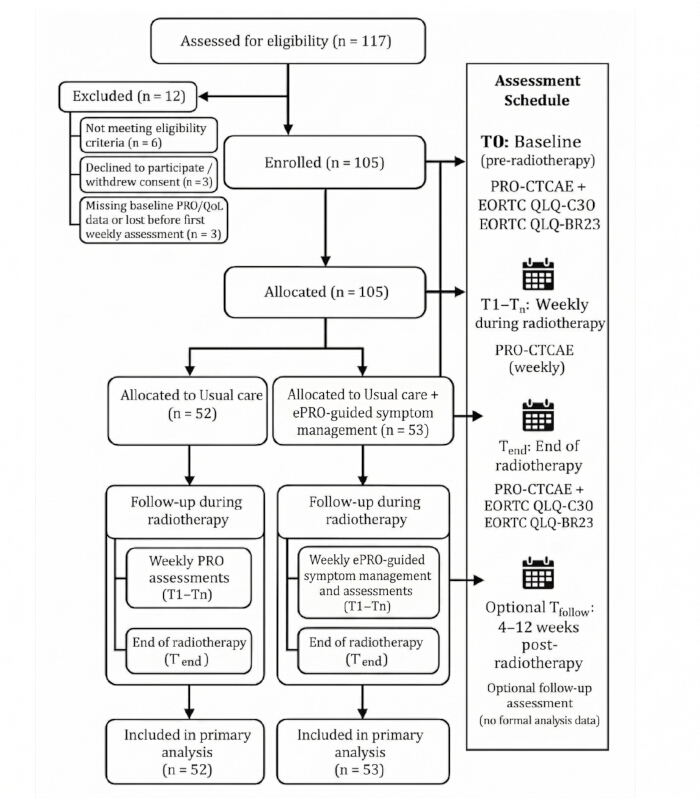
Figure 1: Participant flow and assessment schedule during postoperative adjuvant radiotherapy. ePRO, electronic patient-reported outcome; QoL, quality of life; PRO-CTCAE, Patient-Reported Outcomes version of the Common Terminology Criteria for Adverse Events; EORTC QLQ-C30, European Organization for Research and Treatment of Cancer Quality of Life Questionnaire Core 30; EORTC QLQ-BR23, European Organization for Research and Treatment of Cancer Breast Cancer–Specific Quality of Life Questionnaire; T0, baseline; T1–Tn, weekly assessments; Tend, end of radiotherapy. Please click here to view a larger version of this figure.
To ensure the interpretability of longitudinal comparisons, standardized assessment time points were established. Baseline symptom and quality-of-life assessments were completed before radiotherapy initiation, followed by weekly symptom monitoring throughout treatment and endpoint evaluations at completion of radiotherapy. These assessment schedules and measurement time points are presented in Figure 1, which illustrates participant flow, group allocation, and longitudinal follow-up procedures.
2. Participants
Patients receiving postoperative adjuvant radiotherapy for breast cancer at the study center were enrolled consecutively. Eligibility criteria included pathologically confirmed breast cancer, completion of radical mastectomy or breast-conserving surgery, planned postoperative adjuvant radiotherapy, ability to comply with study follow-up requirements, and sufficient literacy to independently complete questionnaires or complete them with assistance. Participants were additionally required to complete baseline assessments before radiotherapy initiation and weekly symptom self-assessments during treatment.
Exclusion criteria included evidence of recurrence or distant metastasis, severe psychiatric or cognitive impairment preventing questionnaire completion, or missing critical baseline data before the first weekly assessment, which precluded inclusion in the longitudinal analysis.
To minimize confounding and improve interpretability, key covariates were prospectively collected and adjusted statistically, including age, body mass index (BMI), comorbidities, surgical approach, axillary management, radiotherapy target volume, fractionation schedule, radiotherapy technique, and concurrent or sequential systemic therapy. These variables are closely associated with radiation-related symptom burden and quality-of-life outcomes.
3. Groups
Two management strategies were compared in this study. The conventional management group received routine outpatient radiotherapy education and follow-up evaluation. Symptom management was initiated primarily on the basis of patient-reported complaints and standard clinical assessment, with symptomatic treatment or specialist consultation provided when clinically indicated.
The ePRO-guided symptom management group received electronic patient-reported outcome monitoring integrated into a closed-loop management workflow in addition to routine care during the active radiotherapy phase. Patients completed scheduled weekly symptom self-assessments throughout treatment, and automated alerts were generated when predefined symptom thresholds were met. Following alert activation, radiotherapy nursing staff initiated stratified interventions, including enhanced education, behavioral guidance, symptom-management recommendations, and coordination of additional follow-up assessments or specialist referrals when required. Subsequent symptom reassessments were conducted to complete the closed-loop intervention process.
Both groups underwent assessments according to identical radiotherapy follow-up schedules and evaluation time points to ensure temporal consistency between groups. The primary difference between groups was the symptom management strategy.
4. Measures
Patient-reported symptom burden and quality of life served as the primary outcome measures, supplemented by clinician-rated toxicities and treatment-related clinical characteristics.
Symptoms were assessed using a customized patient-reported adverse event instrument derived from the U.S. National Cancer Institute Patient-Reported Outcomes version of the Common Terminology Criteria for Adverse Events (PRO-CTCAE) item library25. The instrument evaluated symptom domains highly relevant to breast radiotherapy, including radiation dermatitis (eg, erythema, pruritus, dry or moist desquamation), breast or chest wall pain, swelling, fatigue, and sleep disturbance. In the pilot cohort, the instrument demonstrated high internal consistency (Cronbach’s α > 0.85). Symptom assessments captured frequency, severity, and functional interference using a 7-day recall period.
Quality of life was assessed using the European Organization for Research and Treatment of Cancer Quality of Life Questionnaire Core 30 (EORTC QLQ-C30) together with the breast cancer-specific module (EORTC QLQ-BR23). These instruments comprehensively evaluated global health status, functional domains, and breast cancer-specific treatment experiences. Quality-of-life assessments were performed at baseline and at completion of radiotherapy, with additional post-treatment follow-up assessments performed when clinically indicated. Scores were linearly transformed to a standardized 0–100 scale according to EORTC scoring manuals. A score change or intergroup difference of ≥10 points was prospectively defined as the threshold for a minimal clinically important difference (MCID). For functional and global health scales, higher scores indicated better functioning and quality of life, whereas higher symptom-scale scores indicated greater symptom burden.
Clinician-rated toxicities were prospectively evaluated using CTCAE version 5.0 during predefined weekly clinical visits and recorded alongside symptom-management interventions, radiotherapy planning parameters, and systemic treatment status. These clinician-reported toxicity data complemented patient-reported symptom outcomes and supported statistical adjustment for treatment-related covariates.
5. Procedure
An electronic patient-reported outcome-guided symptom monitoring and management pathway was integrated into the routine radiotherapy outpatient workflow to facilitate continuous symptom identification, stratified intervention, and closed-loop follow-up of radiotherapy-related toxicities. Figure 2 illustrates the workflow, which consisted of five major components: baseline documentation, weekly monitoring, automated screening and alert generation, nurse-led triage, and outcome reassessment.
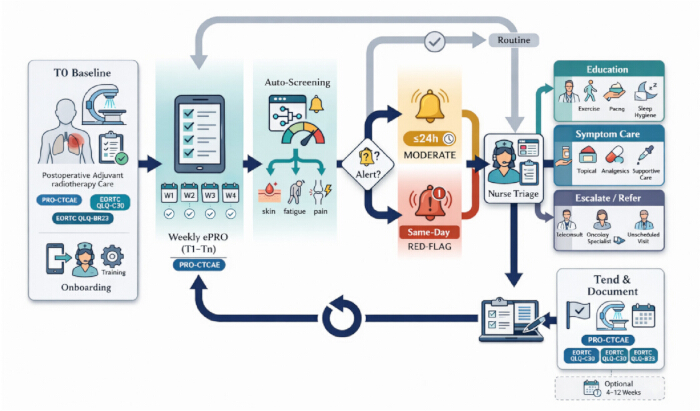
Figure 2: ePRO-guided symptom management workflow integrated into routine radiotherapy care. The workflow illustrates patient onboarding, weekly electronic patient-reported outcome (ePRO) assessments, automated symptom screening, nurse-led tiered triage algorithms, and protocolized closed-loop reassessment procedures. Please click here to view a larger version of this figure.
Before the initiation of radiotherapy, all baseline procedures were completed. All enrolled participants possessed smartphones with internet access. The research team provided standardized training on the ePRO platform, established individualized follow-up records, and supplied technical support contact information. Participants were informed that the platform was monitored by designated radiotherapy nurses during routine outpatient clinic hours (8:00 AM–5:00 PM on weekdays), and emergency instructions were provided for severe symptoms occurring outside monitoring hours. Baseline assessments established reference symptom and quality-of-life measures for subsequent longitudinal comparisons and individualized symptom tracking.
During radiotherapy, patients completed scheduled weekly electronic symptom assessments to generate continuous longitudinal symptom data. The system automatically screened questionnaire responses and identified clinically significant symptom domains associated with radiotherapy. Alert thresholds were predefined in accordance with institutional clinical consensus and standardized PRO-CTCAE grading recommendations. Alerts were triggered based on both absolute symptom severity and clinically meaningful worsening relative to baseline (eg, ≥2-point symptom increase).
Alerts were categorized into three levels. Routine alerts indicated mild or stable symptoms that did not require immediate intervention. Moderate alerts, such as moderate erythema or newly developed mild breast pain, prompted nurse-led telephone assessment and behavioral intervention within 24 h. Red-flag alerts, including moist desquamation or uncontrolled pain, required same-day nurse triage and mandatory escalation to a radiation oncologist. Multiple concurrent symptom alerts could activate multiple intervention pathways simultaneously. Closed-loop management was defined as completing the intervention and documenting reassessment within 48 h, confirming symptom stabilization or improvement.
Following alert activation, radiotherapy nursing staff conducted standardized symptom verification and triage assessment. Evaluations included symptom onset, progression rate, anatomical distribution, and prior self-management measures to guide protocolized intervention algorithms. Interventions were standardized according to symptom type and severity and prioritized education, self-management guidance, and symptom-directed supportive care recommendations, including topical management strategies for radiation dermatitis. Persistent symptom worsening, impaired treatment tolerance, or potential complications prompted escalation to radiation oncologists or referral to appropriate specialists, including dermatology, rehabilitation, or psychological support services. Intervention fidelity was prospectively monitored using predefined process metrics, including alert type, response timeliness, intervention content, and loop-closure status.
At completion of radiotherapy, endpoint assessments of symptoms and quality of life were performed to evaluate intergroup differences at the end of treatment. Longitudinal monitoring data were subsequently analyzed to characterize symptom trajectories and identify critical periods of symptom burden. Selected participants additionally underwent supplementary follow-up assessments to evaluate post-treatment recovery trends.
6. Statistical analysis
Sample size was determined a priori based on the primary endpoint of longitudinal acute symptom burden. Assuming a moderate effect size (Cohen’s d = 0.55) for reduction in peak symptom severity between groups, with α = 0.05 and 80% statistical power, a minimum of 43 patients per group was required. To account for an anticipated attrition rate of 15% commonly observed in longitudinal repeated-measures studies, the target enrollment was increased to approximately 102 patients. Ultimately, 105 patients completed follow-up and were included in the final analysis.
Statistical analyses were performed using R software (version 4. X.X; R Foundation for Statistical Computing) and SPSS Statistics (version 2X.0; IBM Corp.). All statistical tests were two-sided, with P < 0.05 considered statistically significant. Continuous variables were reported as mean ± standard deviation or median (interquartile range) depending on distribution characteristics, whereas categorical variables were summarized as frequencies and percentages.
Baseline comparisons between groups were performed using independent-samples t tests or Mann–Whitney U tests for continuous variables and χ2 tests or Fisher’s exact tests for categorical variables. The primary endpoint was the longitudinal trajectory of patient-reported acute symptom burden during radiotherapy, whereas the secondary endpoint was the change in quality of life at completion of radiotherapy.
Longitudinal ePRO outcomes were analyzed using linear mixed-effects models, with time, treatment group, and the time × group interaction as fixed effects, and subject-specific random intercepts. An unstructured covariance matrix was selected based on optimal model fit, as measured by the Akaike information criterion. To account for multiple longitudinal comparisons, the Benjamini–Hochberg false discovery rate adjustment was applied. Prespecified covariates included age, BMI, comorbidities, surgical approach, radiotherapy target volume, total radiation dose, radiotherapy duration, treatment-planning technique, and systemic therapy exposure.
Quality-of-life scores were analyzed according to standard EORTC scoring procedures and transformed to standardized scales to facilitate longitudinal comparison. Effect sizes and 95% confidence intervals were reported to enhance clinical interpretability. Additional trajectory analyses evaluated peak symptom severity, time to symptom peak, and cumulative symptom burden during treatment.
Missing-data mechanisms were evaluated before analysis. Linear mixed-effects models were estimated using restricted maximum likelihood under the missing-at-random assumption. Prespecified sensitivity analyses, including multiple imputation and pattern-mixture modeling, were conducted to assess robustness of the primary findings against nonignorable missingness.
Access restricted. Please log in or start a trial to view this content.
Results
Baseline characteristics
Table 1 summarizes the baseline demographic and clinical characteristics of the study population. Overall, the cohort consisted predominantly of middle-aged women, with closely matched age and body mass index (BMI) distributions between groups, indicating balanced baseline demographics. No significant intergroup differences were observed in menopausal status, educational level, marital status, employment status, or urban versus
Access restricted. Please log in or start a trial to view this content.
Discussion
This study focused on the critical treatment window of postoperative adjuvant radiotherapy, a period characterized by high curative potential but substantial acute symptom burden. The findings suggest that the incorporation of a patient-reported outcome (PRO)-guided symptom management pathway into routine radiotherapy care enabled earlier and more consistent capture of patient-reported experiences throughout treatment. This approach facilitated more timely stratified responses to high-frequency symptoms, including skin-r...
Access restricted. Please log in or start a trial to view this content.
Disclosures
The authors have nothing to disclose.
Acknowledgements
The authors gratefully acknowledge the patients and their families for participation in this study, as well as the medical and nursing staff of the Department of Radiotherapy for assistance with clinical coordination and data collection.
This work was supported by the Shandong Second Medical University Scientific Research Innovation Program (Grant No. 2024BKQ048) and the 2024 Shandong Provincial Graduate Education Teaching Reform Research Project (Grant No. SDYJSJGC2024052).
Access restricted. Please log in or start a trial to view this content.
Materials
| Name | Company | Catalog Number | Comments |
|---|---|---|---|
| Clinical Toxicity Grading | National Cancer Institute (NCI) | CTCAE v5.0 | Used by clinicians to assess adverse events (e.g., dermatitis, pain) |
| CTCAE Grading System | National Cancer Institute (NCI) | Version 5.0 | Clinician-rated toxicity grading |
| Electronic Patient-Reported Outcome (ePRO) System | Custom-developed / Shandong Second Medical University | N/A | Web-based or mobile platform for weekly symptom self-assessment; integrated with alert system |
| EORTC QLQ-BR23 | European Organisation for Research and Treatment of Cancer (EORTC) | N/A | Breast cancer-specific module used alongside QLQ-C30 |
| EORTC QLQ-C30 | European Organisation for Research and Treatment of Cancer (EORTC) | Version 3.0 | Standardized cancer-specific quality of life questionnaire |
| EORTC Scoring Manual | European Organisation for Research and Treatment of Cancer | Current edition | Standardized QoL score transformation |
| Image-Guided Radiotherapy (IGRT) Devices | Varian Medical Systems | On-Board Imager (OBI) and Cone Beam CT | Daily imaging for patient positioning verification |
| Patient-Reported Adverse Event (PRAE) Scale | Adapted from validated PRO instruments | N/A | Used to assess symptom frequency, severity, and impact; includes domains: skin, pain, fatigue, sleep, emotional distress |
| PRO-CTCAE Item Library | National Cancer Institute (NCI) | Current release | Symptom item framework for patient-reported toxicity assessment |
| R Statistical Software | R Foundation for Statistical Computing | Version 4.X.X | Linear mixed-effects modeling and longitudinal analysis |
| Radiotherapy Planning Systems | Varian Medical Systems | Eclipse Treatment Planning System | IMRT/VMAT planning tools (inferred from technique description) |
| SPSS Statistics | IBM Corp. | Version 2X.0 | Statistical analysis software |