This study presents a gelatin-based feeding method that enables precise, non-invasive, body mass–based oral drug delivery in adult zebrafish. The protocol demonstrates reliable feed acceptance and, as a proof-of-principle, successful delivery of MK-801, which resulted in the expected behavioral effects.
Method Article
A Simple and Precise Feed-Based Approach to Oral Drug Delivery in Fish
In This Article
Summary
Abstract
Typical methods for drug delivery in fish (e.g., beaker dosing, intraperitoneal injections, or oral gavage) are time-consuming, imprecise, and/or wasteful. Because these methods are also stressful for the animals, they are poorly suited for repeated or long-term drug administration and behavioral experiments that are sensitive to handling-related confounds, thereby limiting the utility of fish models in biomedical research. To overcome these obstacles, a gelatin-based feeding method was developed to enable rapid, precise drug dosing in fish with minimal disturbance. The method involves preparing individually tailored morsels of feed composed of gelatin, brine shrimp extract, spirulina, and the drug of choice. The heat malleable properties of gelatin allow a single homogeneous preparation to be liquefied, accurately portioned according to individual body mass, and re-solidified into customized morsels. As proof of principle, the NMDA receptor antagonist MK-801 (4 mg kg⁻1) was administered to adult zebrafish prior to the novel tank test, resulting in behavioral effects consistent with reduced anxiety-like behavior. This approach is well suited for behavioral pharmacology and is readily adaptable to other aquatic model organisms.
Introduction
Zebrafish (Danio rerio) are widely used in biomedical research to study development, physiology, behavior, and pharmacology1,2,3. However, the utility of zebrafish for pharmacological studies, particularly in adult animals, is limited by the availability of drug delivery methods that are both precise and minimally disruptive4.
Commonly used drug administration techniques in zebrafish, such as beaker dosing, intraperitoneal injection, and oral gavage, each present significant drawbacks. Exposure by whole body immersion via beaker dosing provides limited control over drug uptake, results in substantial compound waste, and introduces variability due to differences in absorption rate and compound stability5,6,7. Injection-based approaches and oral gavage allow more precise dosing but require anesthesia, restraint, and repeated handling, all of which can induce stress responses while increasing the risk of injury or hypoxia, potentially confounding behavioral and physiological measurements8,9,10. These limitations are particularly problematic for experiments involving repeated or long-term drug administration.
To address these challenges, a gelatin-based feeding method was developed that enables rapid, precise, and non-invasive drug delivery to zebrafish11. This approach allows pharmacological compounds to be incorporated into small, individually tailored feed morsels composed of gelatin, brine shrimp extract, and spirulina. Feed-based drug delivery is a non-invasive alternative that aligns with the principles of 3Rs (replacement, reduction, and refinement) in ethical animal research. Although previous studies have demonstrated the feasibility of feed-based drug delivery in adult zebrafish12,13,14, existing approaches rely on heterogeneous food matrices or fixed feed volumes that do not account for individual variation in body mass. The method described here addresses these limitations by enabling weight-based dose calibration.
This protocol provides a detailed, step-by-step description of a gelatin-based feed preparation and administration in adult zebrafish. Although the method is demonstrated using a behavioral assay, the novel tank test, it is broadly applicable to other areas of zebrafish biology and is expected to be adaptable for use in other aquatic model organisms. This protocol offers a practical solution for researchers seeking efficient, reproducible, and low-stress drug delivery in zebrafish, particularly for studies requiring precise, repeated, and/or long-term pharmacological manipulation.
Protocol
Adult male and female AB and TL zebrafish (4–12 months old) were used in this study. All animals were bred and housed at Wayne State University. All procedures were approved by the Institutional Animal Care and Use Committee in accordance with Wayne State University guidelines. Fish were kept under standard conditions on high-density racks (temperature 27.5 ± 0.5 °C, water conductivity 500 µS ± 10 µS, and pH 7.5 ± 0.2) with a 14 h:10 h light:dark cycle (lights on at 08:00 h). Fish were fed twice a day with a dry feed in the morning and freshly hatched brine shrimp in the afternoon. The reagents and the equipment used are listed in the Table of Materials.
1. Fish weighing and calculation of feed volume
- Fill a 100 mL glass beaker with approximately 50 mL of system water and place it on a digital scale. Tare the scale.
- Gently net a single fish from their home tank using a fine-mesh net. Briefly touch the net to a dry paper towel to remove excess water.
- Carefully transfer the fish into the beaker, ensuring that no water spills onto the scale.
- Record the weight and use this measured weight to calculate the required feed volume based on 1% volume per body weight (V/BW) for each individual fish.
2. Preparation of brine shrimp extract
- Suspend brine shrimp powder in distilled water to a final concentration of 250 mg/mL. Stir for 1 h at room temperature. Centrifuge the suspension at 12,500 × g for 10 min at room temperature and retain the supernatant.
- Repeat the centrifugation once more and again collect the supernatant.
- Store the brine shrimp extract at −20 °C up to 6 months.
3. Preparation of gelatin-based feed
- Thaw the brine shrimp extract prior to preparation and calculate the target masses of gelatin (12% w/v), spirulina (4% w/v), and, if applicable, pharmacological compounds required for the desired volume of gelatin feed.
- Weigh spirulina and gelatin powder (porcine-derived; Bloom ≈ 300 g) into separate 1.5 mL microcentrifuge tubes and record the actual mass in each tube. Ensure that the measured mass is at or above the target mass for the intended final volume.
- Add the appropriate volumes of brine shrimp extract, drug compound, and water to the spirulina-containing tube to achieve final concentrations of 4% w/v spirulina and 80 mg/mL brine shrimp extract.
- Vortex thoroughly to homogenize. Transfer the required volume of the mixture from the previous step to the gelatin-containing tube to obtain a final gelatin concentration of 12% w/v.
- Place the tube on a pre-warmed 45 °C heating block for 5 min, vortexing intermittently until the gelatin is completely dissolved. If dissolution is incomplete, gently stir using a sterile wooden or metal stir stick to aid homogenization.
- Aliquot the fully homogenized mixture (up to 100 µL per tube) into labeled 1.5 mL microcentrifuge tubes.
- Store aliquots at −20 °C overnight to allow complete solidification and to facilitate handling during feeding.
4. Formation of individual feed morsels
- Reheat the aliquoted gelatin mixture to 45 °C until fully liquefied prior to feeding.
- Vortex the liquefied gelatin mixture thoroughly.
- Pipette the volume corresponding to 1% of the fish’s body mass onto a sheet of paraffin film to form individual morsels (Figure 1).
NOTE: To facilitate handling and storage, place a sheet of paraffin film inside a Petri dish before dispensing the volume. This allows the paraffin to remain flat and makes it easier to transfer the prepared morsels to −20 °C for storage. - Place morsels at −20 °C for at least 20 min to allow re-solidification.
- Keep morsels on ice until feeding.
5. Gelatin feed administration
- Transfer fish from the housing rack to the behavior room and allow them to habituate for 1 h.
- Temporarily isolate each fish in the tank using transparent barriers for 2–5 min prior to feeding.
- Using forceps, place the individualized gelatin feed morsel corresponding to 1% of the fish’s body weight onto the water surface in front of each isolated fish.
- Observe each fish to confirm consumption of the entire feed morsel within 5 min.
- After the fish have consumed the feed, remove the barriers and either return the fish to their home tanks or proceed with experimental procedures.
NOTE: A worked example outlining feed preparation and calculation of target and actual dosing amounts is provided in the Supplementary File 1, with example values also presented in Table 1.
Results
Gelatin feed palatability
To assess the palatability of the feed, adult AB and TL zebrafish were given a gelatin-based feed for five consecutive days in place of their morning feed (Figure 2). All TL fish consumed the feed within 5 min on the first exposure, whereas AB fish required repeated exposure, with 15 of 16 individuals consistently consuming the feed after four consecutive days of acclimation (Figure 2A). Analysis of time to consume the feed using a three-way ANOVA (strain × sex × day) revealed significant main effects of strain (F₁,₁₂₅ = 19.4, P < 0.0001) and day (F₄,₁₂₅ = 5.80, P < 0.001), but no main effect of sex (F₁,₁₂₅ = 0.24, P = 0.63). Significant interactions were observed between strain and day (F₄,₁₂₅ = 3.35, P = 0.012) and between strain, day, and sex (F₄,₁₂₅ = 2.55, P = 0.04). TL fish of both sexes consumed the feed rapidly from the first exposure (4–20 s), whereas AB fish showed longer initial consumption times (7–144 s) that decreased over days (Figure 2B). By days four and five, all fish except one AB male consumed the feed within 10 s. Approximately 95% of fish consume the gelatin feed within 30 s of presentation after 2–3 days of acclimation, as reported previously15,16.
Behavioral effect of MK-801 administered using gelatin feed
To demonstrate the effectiveness of gelatin-based drug delivery, MK-801, a N-methyl-D-aspartate receptor (NMDAR) antagonist, was administered using gelatin feed. Bottom distance during exploration of a novel tank was measured as a behavioral readout. MK-801 is known to alter locomotion and anxiety-like or predator-avoidance behaviors in adult zebrafish17. Adult AB zebrafish were acclimatized to the feeding procedure by receiving gelatin morsels without the drug for two consecutive days to ensure familiarity and reliable consumption. On the third day, fish assigned to the treatment group received a single dose of MK-801 (4 mg kg⁻1) incorporated into the gelatin feed. Control fish received an identical gelatin morsel containing vehicle (water) only. Feed was administered 30 min prior to behavioral assessment in the novel tank test.
Anxiety-like or predator-avoidance behavior, measured as distance from the bottom, was analyzed using a 2 × 2 ANOVA (sex × drug), which revealed a significant main effect of MK-801 (Figure 3) (F₁,₆₉ = 24.5, P < 0.001). Drug-treated fish spent more time near the top of the tank, a pattern commonly interpreted as reduced anxiety-like or predator-avoidance behavior. There was no main effect of sex (F1,69=2.52, P=0.12) or drug by sex interaction (F1,69=1.0, P=0.32). FDR-corrected pairwise t-tests confirmed that MK-801 increased bottom distance in both females (P = 0.0076) and males (P = 0.023).
Taken together, these findings demonstrate that gelatin-based feed enables effective oral delivery of pharmacological compounds, producing expected drug-induced changes in bottom-dwelling behavior in the novel tank test.
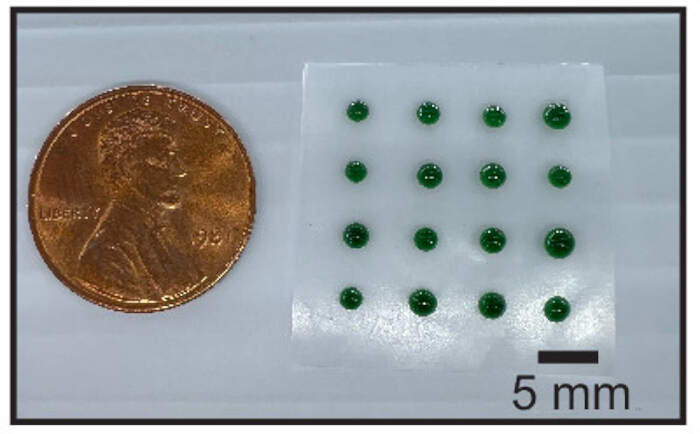
Figure 1: Preparation of gelatin feed. Gelatin feed was pipetted onto paraffin film in individually tailored morsels corresponding to 1% of body mass and allowed to set at −20 °C. This figure has been modified from Ochocki et al.11. Please click here to view a larger version of this figure.
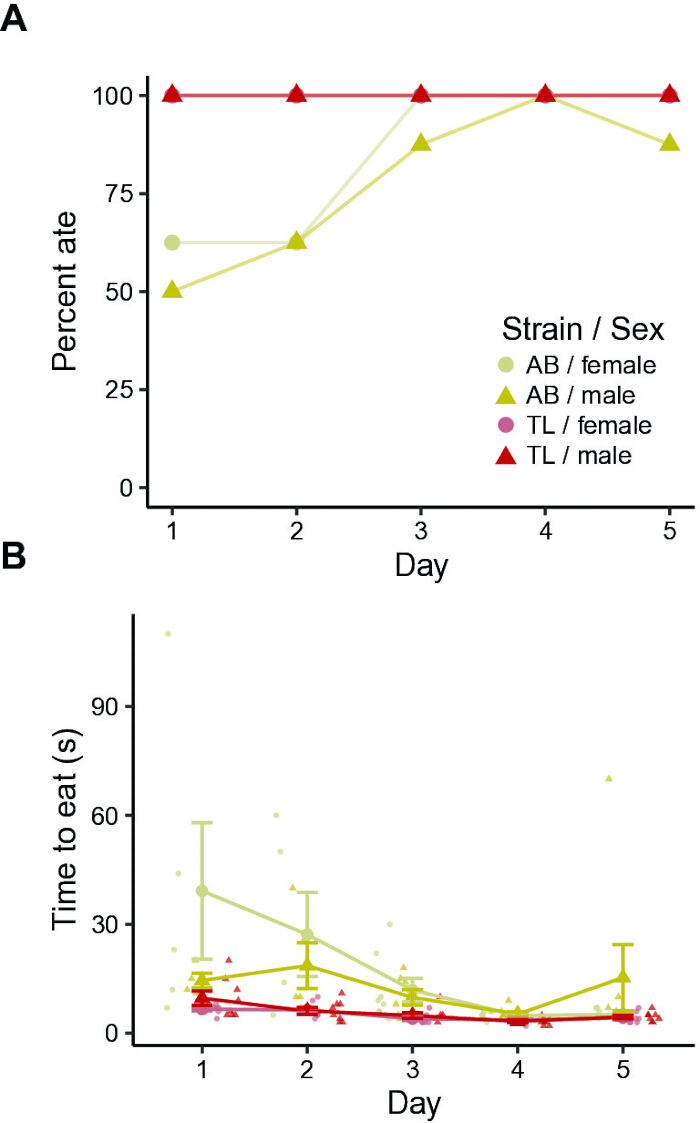
Figure 2: Consumption of gelatin-based feed by adult zebrafish. (A) Percentage of AB and TL fish of both sexes that consumed the feed within 5 min of administration. (B) Time to feed consumption for AB and TL fish by sex. Fish that did not consume the feed were excluded from the time-to-eat analysis. Data are shown as mean ± s.e.m.; n = 8 fish per strain and sex. This figure has been modified from Ochocki et al.11. Please click here to view a larger version of this figure.
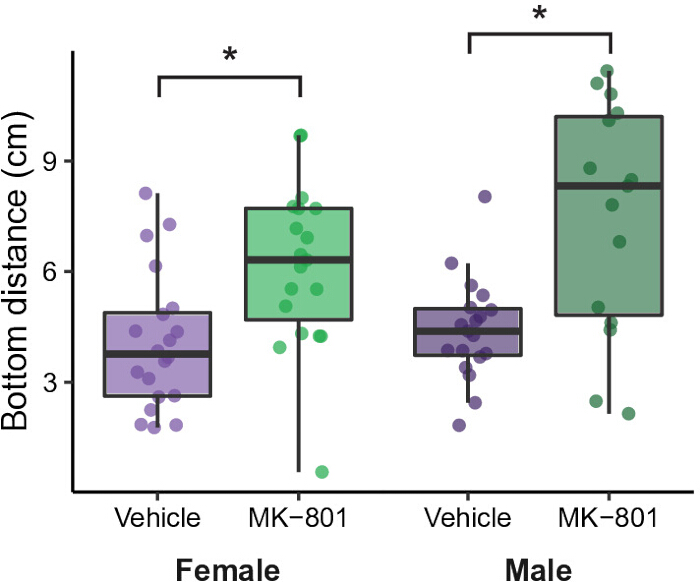
Figure 3: Behavioral effects of NMDA receptor antagonist administration. MK-801 (4 mg/kg) was administered 30 min prior to the novel tank test in adult AB zebrafish of both sexes. Distance from the bottom of the tank was used as a measure of anxiety-like/predator-avoidance behavior. Data are presented as box-and-whisker plots showing the median (center line), interquartile range (box), and ±1.5× the interquartile range (whiskers). *P < 0.05 based on false discovery rate–corrected pairwise t-tests. Sample sizes: female vehicle, n = 20; female MK-801, n = 19; male vehicle, n = 19; male MK-801, n = 15. Five animals were excluded from the analysis because they did not consume the gelatin feed. This figure has been modified from Ochocki et al.11. Please click here to view a larger version of this figure.
| Component | Stock Concentration | Target Concentration | Target Mass/Volume | Actual Mass/Volume |
| Gelatin | - | 12% (w/v) | 60 mg | 62 mg |
| Spirulina | - | 4% (w/v) | 20 mg | 25 mg |
| Brine shrimp extract | 250 mg/mL | 80 mg/mL | 160 µL | 200 µL |
| Drug | 10 mg/mL | 0.4 mg/µL (4 mg/kg at 1% BW) | 20 µL | 25 µL |
| Water | - | - | 320 µL | 400 µL |
| Total Volume of Liquid Feed | - | - | 500 µL | 625 µL |
| Total Volume of Finished Feed | - | - | 500 µL | 516.7 µL |
Table 1: Example gelatin feed preparation. Stock concentrations, target, and hypothetical actual masses or volumes used to prepare a gelatin-based feed for 4 mg/kg drug delivery administered at 1% body weight.
Supplementary File 1: Example preparation of gelatin-based feed for multiple fish. Worked example demonstrating the formulation of the drug-containing feed and the calculation of individualized dosing volumes based on individual body weight.Please click here to download this file.
Discussion
The gelatin-based feeding method presented here overcomes key limitations of commonly used drug-delivery approaches in zebrafish by enabling individualized, body mass–based dosing with minimal handling. This improves experimental precision and reproducibility. The heat malleable nature of gelatin allows a single homogeneous preparation to be liquefied, portioned accurately, and re-solidified into individualized morsels, ensuring uniform drug distribution while accommodating inter-individual size variability. In addition, oral delivery via gelatin feed avoids the stress and potential injury associated with injection-based methods, representing an important refinement under the 3Rs framework4.
The advantages of this approach depend on accurate execution. Several procedural factors are critical for successful implementation. Precise measurement of individual body mass is essential, as adult zebrafish can exhibit substantial size heterogeneity even within age-, sex-, and strain-matched groups, with body mass varying nearly threefold among individuals11,18,19. Thorough homogenization of the compound within the gelatin matrix is equally important to ensure consistent dosing across feed portions. Finally, acclimating fish to gelatin feed prior to drug administration reduces feed refusal; visual confirmation of feed ingestion is recommended to ensure accurate dose delivery.
Even with proper execution, however, there are some practical challenges to feed-based drug delivery. One potential issue is the improper setting of feed morsels that can result in rapid disintegration of the feed following placement in water. This typically results from inadequate temperature control and/or mixing during preparation, prolonged heating, or repeated freeze–thaw cycles of feed stocks. To prevent this, complete gelatin dissolution should be ensured through proper heating/mixing, and prepared stocks should be aliquoted into single-use portions that are thawed only once and used promptly. For sensitive preparations, it is recommended to prepare an additional feed morsel, which can be added to a beaker of water, confirming proper setting prior to experimentation. For compounds that reduce feed palatability, acceptance can be improved by incorporating attractants such as clam juice12˒13 or commercial fish attractants20. In the present study, brine shrimp extract was used to enhance palatability and proved effective. Alternatively, administering multiple smaller doses may improve consumption while achieving the desired cumulative exposure. Beyond these practical considerations, feed-based delivery also has inherent pharmacokinetic limitations. As with all oral delivery methods, gastrointestinal absorption may delay or reduce bioavailability relative to injection-based approaches, and compound stability within the feed matrix may vary.
Despite acclimation, a small proportion of animals may not consume the gelatin feed and should be excluded from analysis, as they may not receive the expected drug dose. Refusal rates typically range from 2.4%–6.4%15,16, and thus do not represent a major methodological hurdle. Feed intake may also vary across strains. This strain effect is consistent with prior reports indicating that genetic background can influence latency to approach food20. These factors should be considered when designing experiments. Reporting feeding compliance alongside strain identity is recommended to improve transparency and reproducibility.
Another important limitation of the present study is that the protocol was developed and validated exclusively in adult zebrafish and is therefore not directly transferable to the larval stage. This method relies on individualized body mass–based dosing and ingestion of discrete gelatin morsels. This is feasible in adults but impractical in larvae due to their small gape size, suspension-based feeding behavior, and the difficulty of obtaining reliable individual body-mass measurements. Consequently, adaptation for larval applications would require substantial modification. These modifications might include the development of micro-scale particles and alternative delivery strategies.
Compared with previously described feed-based methods, this approach offers superior dosing accuracy and ease of use. Commercial gelatin feeds require portioning of heterogeneous material, limiting dose precision12, while other methods administer uniform quantities to all animals and assume identical body mass14,21. By enabling individualized dosing, the gelatin-based feeding method described here avoids under- or overdosing and improves experimental control; this also brings drug dosing in adult zebrafish in line with best practices in rodents that typically dose based on weight. This method is also well-suited for studies requiring precise, repeated pharmacological manipulation, as it results in minimal stress. This includes applications in behavioral neuroscience, neuropharmacology, and aging research. It is also advantageous for compounds that interact with anesthetics or exhibit poor stability in aqueous environments. Although demonstrated here in adult zebrafish, the approach is readily adaptable to other aquatic model organisms. Overall, this technique enhances dosing precision, animal welfare, and methodological flexibility, expanding the utility of fish models in biomedical research.
Disclosures
This protocol is based on work previously published in the Journal of Experimental Biology, Ochocki AJ, Kenney JW, 202311. The present article provides a detailed and expanded methodological guidance for reproducibility.
Acknowledgements
This work was supported by the National Institutes of Health (R35GM142566) to J.W.K.
Materials
| Name | Company | Catalog Number | Comments |
|---|---|---|---|
| (+) MK-801 hydrogen maleate powder | SIGMA-ALDRICH | M107-5MG | |
| Gelatin From porcine skin powder | SIGMA-ALDRICH | G1890-100G | Gel strength ~300 g Bloom, Type A, Bioreagent |
| Mikro Fine Dried Brine shrimp | Brine Shrimp Direct | https://www.brineshrimpdirect.com/mikro-fine-dried-brine-shrimp-16-ounce | Fine < 400 micron |
| Spirulina powder | Brine Shrimp Direct | https://www.brineshrimpdirect.com/spirulina-powder-spirulina-powder-2-oz | 99% Pure blue green algae |
References
- Grunwald, D. J., Eisen, J. S. Headwaters of the zebrafish emergence of a new model vertebrate. Nat Rev Genet. 3 (9), 717-724 (2002).
- Norton, W., Bally-Cuif, L. Adult zebrafish as a model organism for behavioural genetics. BMC Neurosci. 11 (1), 90 (2010).
- Gerlai, R. Evolutionary conservation translational relevance and cognitive function the future of zebrafish in behavioral neuroscience. Neurosci Biobehav Rev. 116, 426-435 (2020).
- Sneddon, L. U., Halsey, L. G., Bury, N. R. Considering aspects of the 3Rs principles within experimental animal biology. J Exp Biol. 220 (17), 3007-3016 (2017).
- Levin, E. D., Limpuangthip, J., Rachakonda, T., Peterson, M. Timing of nicotine effects on learning in zebrafish. Psychopharmacology (Berl). 184 (3-4), 547-552 (2006).
- Montgomery, J. E., Parsons, M. J., Hyde, D. R. A novel model of retinal ablation demonstrates that the extent of rod cell death regulates the origin of the regenerated zebrafish rod photoreceptors. J Comp Neurol. 518 (6), 800-814 (2010).
- Sison, M., Gerlai, R. Behavioral performance altering effects of MK-801 in zebrafish (Danio rerio). Behav Brain Res. 220 (2), 331-337 (2011).
- Neely, M. N., Pfeifer, J. D., Caparon, M. Streptococcus zebrafish model of bacterial pathogenesis. Infect Immun. 70 (7), 3904-3914 (2002).
- Kinkel, M. D., Eames, S. C., Philipson, L. H., Prince, V. E. Intraperitoneal injection into adult zebrafish. J Vis Exp. (42), e2126 (2010).
- Collymore, C., Rasmussen, S., Tolwani, R. J. Gavaging adult zebrafish. J Vis Exp. (78), e50691 (2013).
- Ochocki, A. J., Kenney, J. W. A gelatin-based feed for precise and non-invasive drug delivery to adult zebrafish. J Exp Biol. 226 (2), jeb245186 (2023).
- Sciarra, J. B., Tyler, A., Kolb, A. A gelatin-based diet for oral dosing juvenile to adult zebrafish. Lab Anim Sci Prof. 32, 35 (2014).
- Chang, C. T., Doerr, K. M., Whipps, C. M. Antibiotic treatment of zebrafish mycobacteriosis tolerance and efficacy of treatments with tigecycline and clarithromycin. J Fish Dis. 40 (10), 1473-1485 (2017).
- Zang, L., Morikane, D., Shimada, Y., Tanaka, T., Nishimura, N. A novel protocol for the oral administration of test chemicals to adult zebrafish. Zebrafish. 8 (4), 203-210 (2011).
- Atiratana, T., Goldson, A. R., Samosorn, S., Rajput, N., Praphairaksit, N., et al. The effects of Arabian jasmine on zebrafish behavior depends on strain sex and personality. PLoS One. 20 (9), e0332642 (2025).
- Beigloo, F., Davidson, C. J., Gjonaj, J., Perrine, S. A., Kenney, J. W. Individual differences in the boldness of female zebrafish are associated with alterations in serotonin function. bioRxiv. , (2024).
- Benvenutti, R., Gallas-Lopes, M., Marcon, M., Reschke, C. R., Herrmann, A. P., et al. Glutamate NMDA receptor antagonists with relevance to schizophrenia a review of zebrafish behavioral studies. Curr Neuropharmacol. 20 (3), 494-509 (2022).
- Fowler, L. A., Williams, M. B., Dennis-Cornelius, L. N., Farmer, S., Barry, R. J., et al. Influence of commercial and laboratory diets on growth body composition and reproduction in the zebrafish Danio rerio. Zebrafish. 16 (6), 508-521 (2019).
- Siccardi, A. J., Garris, H. W., Jones, W. T., Moseley, D. B., D’Abramo, L. R., et al. Growth and survival of zebrafish Danio rerio fed different commercial and laboratory diets. Zebrafish. 6 (3), 275-280 (2009).
- Oswald, M., Robison, B. D. Strain-specific alteration of zebrafish feeding behavior in response to aversive stimuli. Can J Zool. 86 (10), 1085-1094 (2008).
- Lu, Y., Patton, E. E. Long-term non-invasive drug treatments in adult zebrafish that lead to melanoma drug resistance. Dis Model Mech. 15 (5), dmm049401 (2022).
Reprints and Permissions
