This study compares the safety profiles of vaginally administered misoprostol and dinoprostone using FAERS data from 2004 to 2023.
A subscription to JoVE is required to view this content. Sign in or start your free trial.
Research Article
Comparing the Safety Profiles of Vaginally Administered Misoprostol and Dinoprostone: A Retrospective Pharmacovigilance Study
* These authors contributed equally
In This Article
Summary
Abstract
Misoprostol and dinoprostone are the most commonly used agents for cervical ripening during labour induction. However, comparative safety data remain limited, particularly regarding rare adverse events and off-label use. Data were obtained from the FDA Adverse Event Reporting System (FAERS) database for the period from the first quarter of 2004 to the fourth quarter of 2023. Adverse event (AE) reports involving vaginal administration of misoprostol and dinoprostone were extracted, followed by deduplication and exclusion of cases without a specified route of administration. A total of 3,925 misoprostol-related and 1,191 dinoprostone-related AEs were included for analysis. Clinical characteristics were then compared between the two groups. Pharmacovigilance signal detection was performed at both the system organ class (SOC) and preferred term (PT) levels using disproportionality and Bayesian approaches, including reporting odds ratios (RORs), proportional reporting ratios (PRRs), information components (ICs), and empirical Bayesian geometric means (EBGMs). Distinct safety profiles were observed between the two agents. Dinoprostone was primarily associated with pregnancy-related complications, including stronger signals for uterine rupture and postpartum haemorrhage. In contrast, misoprostol was more frequently associated with pregnancy termination-related events, including incomplete abortion, as well as gastrointestinal adverse effects such as abdominal pain. Misoprostol also demonstrated a stronger signal for off-label use. These findings suggest that vaginally administered misoprostol and dinoprostone exhibit different safety profiles, which may inform clinical decision-making during labour induction by highlighting potential risks associated with each agent. However, because FAERS is a spontaneous reporting system subject to underreporting, reporting bias, and the inability to establish causality, the results should be interpreted with caution. Further prospective studies are warranted to validate these safety observations.
Introduction
Labour induction plays a crucial role in childbirth management, particularly in cases where labour needs to be initiated. The promotion of cervical ripening is essential to ensuring a smooth delivery process1. Insufficient cervical ripening can lead to prolonged labour, increasing the risk of maternal and neonatal complications. Therefore, the use of appropriate pharmacological agents to facilitate cervical ripening enhances both the safety and efficiency of labour induction2. However, existing induction methods and pharmacological agents exhibit significant variations in efficacy and safety3, necessitating further research to optimise and standardise their clinical application.
Prostaglandins are widely used for labour induction, with misoprostol and dinoprostone being the most commonly employed agents for cervical ripening, particularly via vaginal administration4,5. However, these drugs differ significantly in their mechanisms of action, pharmacokinetic properties, and safety profiles6,7. Misoprostol, a prostaglandin E1 (PGE1) analogue, acts on prostaglandin receptors in the cervix and uterine smooth muscle when administered vaginally, promoting cervical softening and dilation while simultaneously inducing uterine contractions8. Its rapid onset of action and flexible administration routes may support its use in selected labour induction settings9. In contrast, dinoprostone, a prostaglandin E2 (PGE2) analogue, is primarily administered as a sustained-release vaginal formulation, facilitating collagen degradation in the cervical stroma, thereby increasing cervical softness and dilation, while also stimulating uterine contractions10,11. Due to its prolonged pharmacological effect, dinoprostone may be useful in clinical settings where sustained cervical ripening and controlled administration are preferred.
In clinical practice, drug safety and tolerability are critical factors in decision-making, particularly in obstetric medicine, where maternal and neonatal health is directly influenced by pharmacological interventions. Although previous studies have reported common adverse events (AEs) and potential risks associated with misoprostol and dinoprostone, further analysis and comparison of their safety profiles are warranted12. Existing studies indicate that the most common adverse reactions associated with misoprostol are gastrointestinal in nature, including nausea, vomiting, diarrhoea, and fever13,14. Additionally, misoprostol may cause excessive uterine contractions, increasing the risk of uterine rupture, particularly in women with a history of caesarean section1. On the other hand, reported AEs of dinoprostone include headache, abdominal pain, nausea, and vaginal bleeding15. Furthermore, studies have suggested that dinoprostone may induce excessive uterine contractions and fetal heart rate abnormalities16. Compared with dinoprostone, oral misoprostol has been associated with lower rates of caesarean section, uterine hyperstimulation, and foetal heart rate changes, though fewer vaginal deliveries occur within 24 h17. However, most evidence is derived from clinical trials or single-center studies with limited sample sizes and insufficient ability to detect rare events, which may not fully reflect real-world safety. In addition, direct comparative data on vaginal use remain limited. Further studies are therefore needed to better characterize AE profiles and associated risks. This is particularly relevant for rare but serious obstetric AEs, which are difficult to detect adequately in trials or single-center studies because of limited sample size and restricted follow-up.
The FDA Adverse Event Reporting System (FAERS) is a large spontaneous reporting database widely used for post-marketing pharmacovigilance18. Despite inherent limitations such as underreporting, reporting bias, and lack of causal inference, it remains a key tool for signal detection and complements clinical evidence by providing real-world safety data. Unlike traditional clinical trials, FAERS may help identify rare, unexpected, or underrecognized AE patterns after drug use in broader clinical settings, although the detected signals should be interpreted as reporting associations rather than causal evidence. Comparative evidence on the safety of vaginal misoprostol and dinoprostone in FAERS remains limited. Therefore, differences may exist between the two agents in their AE profiles, as well as in the distribution and strength of safety signals across system organ classes and event types. Using FAERS data from 2004 to 2023, this study systematically compared AEs associated with vaginal misoprostol and dinoprostone to address gaps in existing evidence and provide a more comprehensive assessment of their safety. The findings may help clinicians recognize potential safety signals during labour induction, guide closer monitoring of serious maternal and fetal AEs, and support further validation in prospective studies and other real-world data sources.
Access restricted. Please log in or start a trial to view this content.
Protocol
This research used publicly available data and did not involve animal or human subjects. Therefore, ethical approval was not required.
Data source
This retrospective chart review study utilised publicly available AE reports from the FAERS database to perform a comparative analysis of AEs associated with the vaginal administration of misoprostol and dinoprostone. As a global reporting system for drug-related AEs, the FAERS database serves as a crucial resource for regulatory agencies and researchers in monitoring and evaluating drug safety in real-world settings. For this analysis, comprehensive data on vaginally administered misoprostol and dinoprostone were extracted from FAERS, covering the period from the first quarter of 2004 to the fourth quarter of 2023. This dataset included key information such as demographic details, drug-specific data, AE reports, patient outcomes, and sources of reports. These extensive data facilitated a thorough investigation of AEs related to the vaginal administration of misoprostol and dinoprostone, contributing to a detailed safety assessment of these drugs. All AEs were coded according to the Medical Dictionary for Regulatory Activities (MedDRA, version 26.1). Data extraction, cleaning, and signal detection analyses were performed using R software (version 4.5.1).
AE reports and drug identification
As FAERS does not standardise drug names, both brand and generic names were used to identify records associated with the target drugs. During the data mining process, text string searches were conducted in the FDA public database using both brand and generic names to identify reports related to the two drugs. AE reports explicitly marked as “misoprostol,” “dinoprostone,” or their respective brand names were extracted as the primary suspected cases (see Supplementary Table 1 and Supplementary Table 2 for the specific drug names used in screening). To identify vaginal administration records, reports were screened using route-of-administration information available in FAERS. Only reports indicating vaginal administration of misoprostol or dinoprostone were included in the final analysis. Reports with missing, unknown, or non-vaginal routes of administration were excluded.
Supplementary Table 1: Generic and brand names used to identify misoprostol-related reports in the FAERS database. Please click here to download this file.
Supplementary Table 2: Generic and brand names used to identify dinoprostone-related reports in the FAERS database. Please click here to download this file.
Data extraction
For data analysis from the FAERS database, data processing was performed according to the FDA-recommended deduplication procedure. Initially, 19,842,493 demographic records (DEMO) were extracted. After removal of 3,174,322 duplicate records, 16,668,171 unique records were retained. Additionally, 80,716,249 drug-related records and 48,387,071 reaction records were retrieved. Among these, AE reports explicitly identifying dinoprostone as the primary suspect drug (PS) totalled 1,316, corresponding to 4,068 preferred term (PT)-level AE records associated with dinoprostone-induced AEs. Similarly, AE reports explicitly identifying misoprostol as the PS totalled 9,884, corresponding to 37,297 PT-level AE records linked to misoprostol-induced AEs. These numbers represent the initial drug-specific identification before further restriction by administration route. Reports with missing case identifiers, duplicate records, or incomplete drug information were excluded during data cleaning. When multiple versions of the same case were identified, only the most recent case version was retained according to FDA recommendations. After further excluding cases without specified vaginal administration, a total of 3,925 AEs related to vaginally administered misoprostol and 1,191 AEs related to vaginally administered dinoprostone were included in the final statistical analysis. The detailed case identification, deduplication, inclusion, and exclusion procedures are illustrated in the workflow diagrams (Figure 1 and Figure 2).
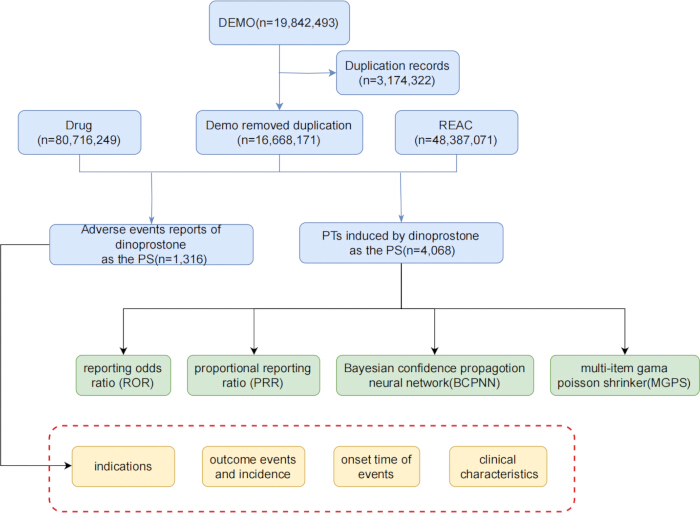
Figure 1: The flow diagram of selecting dinoprostone-related AE reports from the FAERS database. Flow diagram showing the identification, deduplication, and signal-detection process for dinoprostone-related AE reports from FAERS. Please click here to view a larger version of this figure.
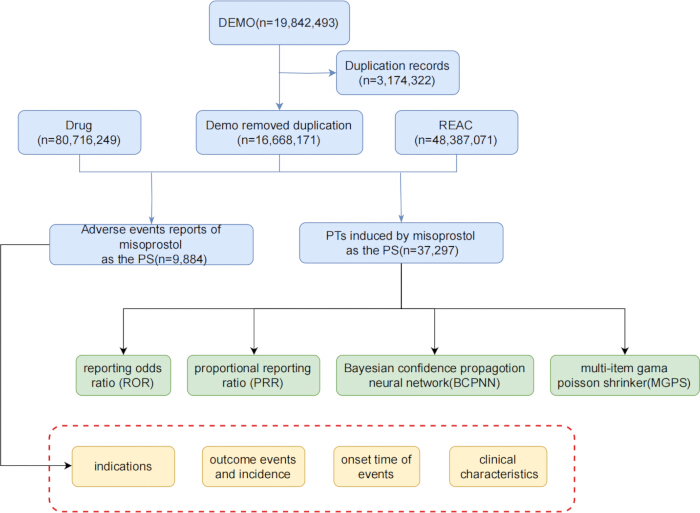
Figure 2: The flow diagram of selecting misoprostol-related AE reports from the FAERS database. Flow diagram showing the identification, deduplication, and signal-detection process for misoprostol-related AE reports from FAERS. Please click here to view a larger version of this figure.
To facilitate reproducibility and allow readers to verify the intermediate outputs of each step, key checkpoints were also provided in Supplementary Table 3. These included the numbers of initially extracted records, records retained after deduplication, primary suspect drug reports, PT-level AE records, and final vaginal administration reports included in the analysis (Supplementary Table 3).
Supplementary Table 3: Computational workflow and intermediate verification checkpoints for FAERS data processing and signal detection. Please click here to download this file.
Statistical analysis
This study employed multiple signal detection methods based on the FAERS database, including the reporting odds ratio (ROR) and proportional reporting ratio (PRR), to assess the strength of association between AEs in the exposed and non-exposed populations. ROR and PRR were selected because they are among the most widely used disproportionality analysis methods in pharmacovigilance and have demonstrated good performance for signal detection in spontaneous reporting databases. Higher ROR and PRR values indicate stronger disproportionality signals and a higher reporting frequency of a specific AE for the target drug. A positive signal was defined as: (1) ROR lower 95% confidence interval (ROR025) > 1 with at least three reports; (2) PRR ≥ 2, χ2 ≥ 4, and number of reports ≥ 3; (3) IC025 > 0; and (4) EBGM05 > 2. The formulas for calculating ROR, PRR, and EBGM are as follows:

‘a’ represents the number of reports for the target drug and target AE.
‘b’ represents the number of reports for the target drug and non-target AEs.
‘c’ represents the number of reports for non-target drugs and the target AE.
‘d’ represents the number of reports for non-target drugs and non-target AEs.

‘O’ represents observed frequency of AE reports for a given drug.
‘E’ expected frequency based on background data.
Access restricted. Please log in or start a trial to view this content.
Results
Descriptive analysis
Based on FAERS data from the first quarter of 2004 to the fourth quarter of 2023, a total of 1,567 AE reports related to misoprostol and 388 AE reports related to dinoprostone were included after deduplication and exclusion of cases without specified vaginal administration.
The temporal trend illustrated in Figure 3 shows a significant phase-specific fluctuation in AE reports for misoprostol. Between 2004 and 2007, the num...
Access restricted. Please log in or start a trial to view this content.
Discussion
This study, based on data analysis from the FAERS database, compared the AE profiles of misoprostol and dinoprostone when administered via the vaginal route. The results revealed significant differences in the association of AEs between the two drugs. These findings support the hypothesis that misoprostol and dinoprostone exhibit distinct AE profiles and help address the limited availability of large-scale real-world comparative safety data for these commonly used cervical ripening agents. However, the observed ...
Access restricted. Please log in or start a trial to view this content.
Disclosures
The authors declare no competing interests.
Acknowledgements
This study was supported by the National Natural Science Foundation of China (82471659), the Guangdong Provincial Administration of Traditional Chinese Medicine (20261391), Foshan City Self-raised Funding Type of Science and Technology Plan Projects (2320001011121), and the Southern Medical University Scientific Research Start-up Fund (18). The authors sincerely thank the FDA for providing access to the FAERS database, which made this study possible. The contributions of the research team to data processing, statistical analysis, and manuscript preparation are also gratefully acknowledged. Appreciation is further extended to healthcare professionals and reporters whose AE submissions to FAERS support continuous pharmacovigilance monitoring and drug safety evaluation.
Access restricted. Please log in or start a trial to view this content.
Materials
| Name | Company | Catalog Number | Comments |
|---|---|---|---|
| FAERS dataset (2004-2023) | U.S. FDA | www.fda.gov/drugs/drug-approvals-and-databases/fda-adverse-event-reporting-system-faers-database | Public database used to extract AE reports for misoprostol and dinoprostone. |
| faersR package | N/A | www.bioconductor.org/packages/faers | faersR package used for FAERS-based disproportionality and Bayesian signal detection analyses, including ROR, PRR, IC, and EBGM metrics |
| R software (version 4.5.1) | R Foundation for Statistical Computing | RRID:SCR_001905 | Statistical computing environment used for all analyses. |
References
- Socha MW, Flis W, Pietrus M, Wartęga M. Risk of cesarean delivery after vaginal inserts with prostaglandin analogs and single-balloon catheter used for cervical ripening and induction of labor. Biomedicines. 2023;11(8):2125.
- Namutosi E, et al. Induction of labor: a narrative review for clinical use. Cureus. 2025;17(10):e94205.
- Tsakiridis I, Mamopoulos A, Athanasiadis A, Dagklis T. Induction of labor: an overview of guidelines. Obstet Gynecol Surv. 2020;75(1):61-72.
- Patabendige M, et al. Vaginal misoprostol versus vaginal dinoprostone for cervical ripening and induction of labour: an individual participant data meta-analysis of randomised controlled trials. BJOG. 2024;131(9):1167-1180.
- Unni V, Mudanur SR, Yaliwal RG, Kori S. Comparative study of vaginal misoprostol tablet versus dinoprostone insert in induction of labor: a prospective interventional analysis. Cureus. 2025;17(3):e80026.
- Canan S, Kalkan SC, Özden S, Uslu Yuvaci H, Bostanci MS. Which causes less pain? A comparison of misoprostol and dinoprostone in labor induction. Ceska Gynekol. 2025;90(6):442-446.
- Tan SY, et al. Oral misoprostol (PGE1) vs vaginal dinoprostone (PGE2) for labor induction: individual participant data meta-analysis of randomized controlled trials. Ultrasound Obstet Gynecol. 2026;67(5):579-589.
- Coordinator, et al. Misoprostol use in obstetrics. Rev Bras Ginecol Obstet. 2023;45(6):356-368.
- Kumar N, Haas DM, Weeks AD. Misoprostol for labour induction. Best Pract Res Clin Obstet Gynaecol. 2021;77:53-63.
- Shirley M. Dinoprostone vaginal insert: a review in cervical ripening. Drugs. 2018;78(15):1615-1624.
- Gaudineau A, et al. Induction of labor at term with vaginal misoprostol or a prostaglandin E2 pessary: a noninferiority randomized controlled trial. Am J Obstet Gynecol. 2021;225(5):542.e1-542.e8.
- Sanchez-Ramos L, et al. Methods for the induction of labor: efficacy and safety. Am J Obstet Gynecol. 2024;230(3 Suppl):S669-S695.
- Wang S, et al. Pharmacokinetics and bioequivalence of misoprostol tablets: an open-label, randomized, single-dose, crossover study with healthy Chinese volunteers. Clin Pharmacol Drug Dev. 2022;11(8):949-956.
- Yang L, Xu W. A disproportionality analysis of FDA adverse event reporting system events for misoprostol. Sci Rep. 2025;15(1):2452.
- Rund NMA, et al. Determining the optimal time interval between vaginal dinoprostone administration and diagnostic office hysteroscopy in nulliparous women: a randomized, double-blind trial. J Minim Invasive Gynecol. 2022;29(1):85-93.
- Takakura S, Tanaka H, Enomoto N, Maki S, Ikeda T. The successful use of nitroglycerin for uterine hyperstimulation with fetal heart rate abnormality caused by a controlled-release dinoprostone vaginal delivery system (PROPESS): a case report. Medicina (Kaunas). 2021;57(5):478.
- Kerr RS, et al. Low-dose oral misoprostol for induction of labour. Cochrane Database Syst Rev. 2021;6(6):CD014484.
- Sakaeda T, Tamon A, Kadoyama K, Okuno Y. Data mining of the public version of the FDA Adverse Event Reporting System. Int J Med Sci. 2013;10(7):796-803.
- Lakho N, et al. Efficacy and safety of misoprostol compared with dinoprostone for labor induction at term: an updated systematic review and meta-analysis of randomized controlled trials. Front Med (Lausanne). 2024;11:1459793.
- Young DC, Delaney T, Armson BA, Fanning C. Oral misoprostol, low-dose vaginal misoprostol, and vaginal dinoprostone for labor induction: randomized controlled trial. PLoS One. 2020;15(1):e0227245.
- Gornisiewicz T, Huras H, Kusmierska-Urban K, Galas A. Pregnancy-related comorbidities and labor induction: the effectiveness and safety of dinoprostone compared to misoprostol. Ginekol Pol. 2021;92(9):647-658.
- Yan J, Yin B, Lv H. Comparing the effectiveness and safety of dinoprostone vaginal insert and double-balloon catheter as cervical ripening treatments in Chinese patients. Front Med (Lausanne). 2022;9:976983.
- Socha MW, Flis W, Pietrus M, Wartęga M. Results of induction of labor with prostaglandins E1 and E2 (the RIPE study): a real-world data analysis of obstetrical effectiveness and clinical outcomes of pharmacological induction of labor with vaginal inserts. Pharmaceuticals (Basel). 2023;16(7):982.
- Sire F, Ponthier L, Eyraud JL, Catalan C, Aubard Y, Coste Mazeau P. Comparative study of dinoprostone and misoprostol for induction of labor in patients with premature rupture of membranes after 35 weeks. Sci Rep. 2022;12(1):14996.
- Coleman RA, et al. The affinity, intrinsic activity and selectivity of a structurally novel EP2 receptor agonist at human prostanoid receptors. Br J Pharmacol. 2019;176(5):687-698.
- Chang TA, Li YR, Ding DC. Oxytocin and vaginal dinoprostone in labor induction: a systematic review and meta-analysis. Int J Gynaecol Obstet. 2024;166(2):626-638.
- Taliento C, et al. Safety of misoprostol vs dinoprostone for induction of labor: a systematic review and meta-analysis. Eur J Obstet Gynecol Reprod Biol. 2023;289:108-128.
- Arens AM, Olinde A, Knowles T, Lee SC. Clinical outcomes of single-agent mifepristone exposures reported to U.S. Poison Centers: a ten-year review of the National Poison Data System (2015-2024). Clin Toxicol (Phila). 2026;1-7: doi: 10.1080/15563650.2026.2642217.
- Abu Esba LC, Al Mardawi G, Al Mardawi E, Almadhi FM, Ardah HI. Misoprostol-induced fever and unnecessary antibiotic prescribing: a retrospective study. Infect Dis Ther. 2023;12(9):2259-2268.
- Chu JJ, et al. Mifepristone and misoprostol versus misoprostol alone for the management of missed miscarriage (MifeMiso): a randomized, double-blind, placebo-controlled trial. Lancet. 2020;396(10253):770-778.
Access restricted. Please log in or start a trial to view this content.