This single-center randomized trial evaluated an olfactory intervention using an essential oil and herbal sachet in maintenance hemodialysis patients. The intervention was associated with improved self-reported sleep quality and anxiety, although larger controlled studies are needed.
Research Article
Essential Oil-herbal Sachet Intervention for Sleep Quality and Anxiety in Maintenance Hemodialysis: A Single-center Randomized Trial
In This Article
Summary
Abstract
Sleep disturbance and anxiety are common in maintenance hemodialysis patients, yet sustained non-pharmacological management remains difficult in routine dialysis care. This single-center, open-label, parallel-group randomized trial evaluated whether a combined olfactory intervention using an essential-oil preparation and a traditional Chinese herbal sachet was associated with improved self-reported sleep quality and anxiety. Eighty-eight eligible patients with a baseline Pittsburgh Sleep Quality Index (PSQI) score >7 were recruited from Yongkang Hospital of Traditional Chinese Medicine between January 2022 and December 2023 and randomized 1:1 by random-number table to usual care or usual care plus the combined intervention. The trial was not prospectively registered, and participant and intervention-provider blinding was not feasible because of the odor-based intervention. The essential-oil preparation contained lavender essential oil, bergamot essential oil, and coconut oil in a 5:3:10 ratio and was used during dialysis and before sleep; the herbal sachet was placed near the pillow and replaced monthly. Outcomes were assessed using the PSQI and Hospital Anxiety and Depression Scale-Anxiety subscale (HADS-A) at baseline, day 7, day 15, month 1, and month 3. The primary endpoint was the between-group difference in PSQI global score at month 3. At month 3, the intervention group had lower PSQI scores than the control group (7.8 ± 2.6 vs. 13.8 ± 2.5; adjusted β, -5.37; 95% CI, -6.29 to -4.45; p < 0.001) and lower HADS-A scores (9.2 ± 2.1 vs. 11.8 ± 2.4; adjusted β, -2.61; 95% CI, -3.26 to -1.96; p. < 0.001). Sleep response occurred in 77.3% versus 31.8%, and anxiety response occurred in 68.2% versus 29.5%. Mean adherence was 86.7% for bedtime application and 83.4% for dialysis-session inhalation. Any adverse event was reported in 15.9% versus 6.8%, with no serious intervention-related adverse events. These preliminary findings require confirmation in larger controlled multicenter trials.
Introduction
Sleep disturbance and anxiety are highly prevalent among patients undergoing maintenance hemodialysis and are among the most burdensome non-survival outcomes in long-term renal replacement therapy1. In this population, poor sleep rarely appears as an isolated complaint. It often develops within a broader symptom burden shaped by uremia-related discomfort, repeated dialysis scheduling, restricted daily activities, chronic disease uncertainty, and persistent emotional stress. Reduced sleep quality can impair daytime functioning, intensify fatigue, weaken coping ability, and compromise overall quality of life2. Anxiety further amplifies this burden by increasing autonomic arousal and cognitive hypervigilance, which may worsen difficulty falling asleep and maintaining sleep and contribute to a clinically relevant sleep-anxiety cycle3.
In routine care, symptom management commonly relies on sleep hygiene advice, sedative or anxiolytic medication, and general psychological support. Although these approaches may provide partial relief, their use in dialysis populations can be constrained by residual daytime sedation, adverse effects, drug-interaction concerns, variable tolerance, and limited sustainability over prolonged treatment periods4. Implementation feasibility is also important. Maintenance hemodialysis is delivered within tightly scheduled clinical workflows, and many behavioral or psychological interventions require specialized personnel, repeated supervision, and long-term follow-up, making them difficult to standardize and sustain in everyday dialysis care5. These limitations underscore the need for adjunctive non-pharmacological strategies that are low-burden, acceptable to patients, and feasible across both dialysis-center routines and home-based self-management.
Aromatherapy has attracted attention as a complementary approach because it is noninvasive, simple to administer, and suitable for repeated use in clinical and home settings. Published studies suggest that inhaled volatile compounds from essential oils may be associated with relaxation, reduced emotional tension, and improved subjective sleep outcomes in some patient populations, including limited studies in dialysis populations6. Lavender and bergamot were selected in the present protocol because these oils are commonly used in olfactory interventions targeting relaxation, anxiety, and sleep-related symptoms, while coconut oil was used as a carrier to dilute the preparation and support safe external application. The essential oil preparation was therefore intended to provide short-period olfactory stimulation during dialysis and bedtime routines rather than a pharmacological treatment.
Traditional Chinese herbal sachets represent another external intervention form characterized by portability, low operating burden, and prolonged exposure to volatile botanical components. In the present study, the sachet formula included Albizia julibrissin, rose, Artemisia argyi, mint, Agastache rugosa, Acorus tatarinowii, clove, and Angelica dahurica. These components were selected to provide a stable aromatic background based on traditional external-use practice and their recognizable volatile sensory properties7. Unlike a brief inhalation, the sachet was designed to remain near the pillow during sleep and to maintain continuous odor exposure between dialysis sessions. This sustained exposure was not intended to replace standard sleep or psychological care, but to provide a structured sensory routine that could be repeated with minimal staff burden.
Although essential oil inhalation and herbal sachet exposure have each been used in complementary care, the evidence base remains fragmented. Existing studies differ substantially in intervention composition, delivery schedule, exposure duration, adherence management, and outcome measurement, which limits comparison across studies and weakens translation into reproducible clinical protocols8. Most previous work has focused on a single oil, a single delivery mode, or a single setting. This is a limitation for maintenance hemodialysis patients, whose symptoms often extend across both the dialysis unit and the home environment9. Direct evidence for a combined essential-oil and herbal-sachet protocol in maintenance hemodialysis remains limited, and the independent contribution of each component cannot be assumed from existing studies.
The novelty of the present trial lies in the development of a dual-setting olfactory protocol that combines short-period essential-oil exposure during dialysis and bedtime application with sustained overnight herbal-sachet exposure. The protocol was designed to be reproducible in terms of component selection, preparation, delivery schedule, adherence recording, and safety monitoring. This study evaluated whether the combined intervention was associated with greater improvement in self-reported sleep quality and anxiety than usual care alone in maintenance hemodialysis patients. Given the single-center, open-label design and absence of a placebo scent or attention-control condition, the trial was intended to provide preliminary randomized evidence rather than definitive proof of clinical effectiveness or mechanism.
Protocol
This study was conducted in accordance with the Declaration of Helsinki and the institutional requirements of Yongkang Hospital of Traditional Chinese Medicine10. The study was approved by the Ethics Committee of Yongkang Hospital of Traditional Chinese Medicine in 2021. The approval document did not assign a separate approval number. Written informed consent was obtained from all participants before screening and enrollment. Participants were informed that participation was voluntary, refusal would not affect routine dialysis care, and withdrawal was permitted at any time. The reagents, chemicals, and tools used in the protocol are listed in the Table of Materials.
1. Study design and overall workflow
This prospective, single-center, open-label, parallel-group randomized controlled study evaluated whether a combined olfactory intervention using an essential-oil preparation and a traditional Chinese herbal sachet was associated with improved self-reported sleep quality and anxiety in patients receiving maintenance hemodialysis. Participants were recruited from the Blood Purification Center of Yongkang Hospital of Traditional Chinese Medicine between January 2022 and December 2023. This trial was not prospectively registered in a public clinical trial registry. The reporting of the randomized trial followed CONSORT principles where applicable11.
Potentially eligible patients were screened during routine dialysis visits. After written informed consent was obtained, baseline demographic data, dialysis-related information, medication history, Pittsburgh Sleep Quality Index (PSQI) scores, and Hospital Anxiety and Depression Scale-Anxiety subscale (HADS-A) scores were collected before group allocation. Eligible participants were randomized in a 1:1 ratio to the control group or intervention group. A total of 88 participants were randomized, with 44 assigned to each group. The participant flow is shown in Figure 1.
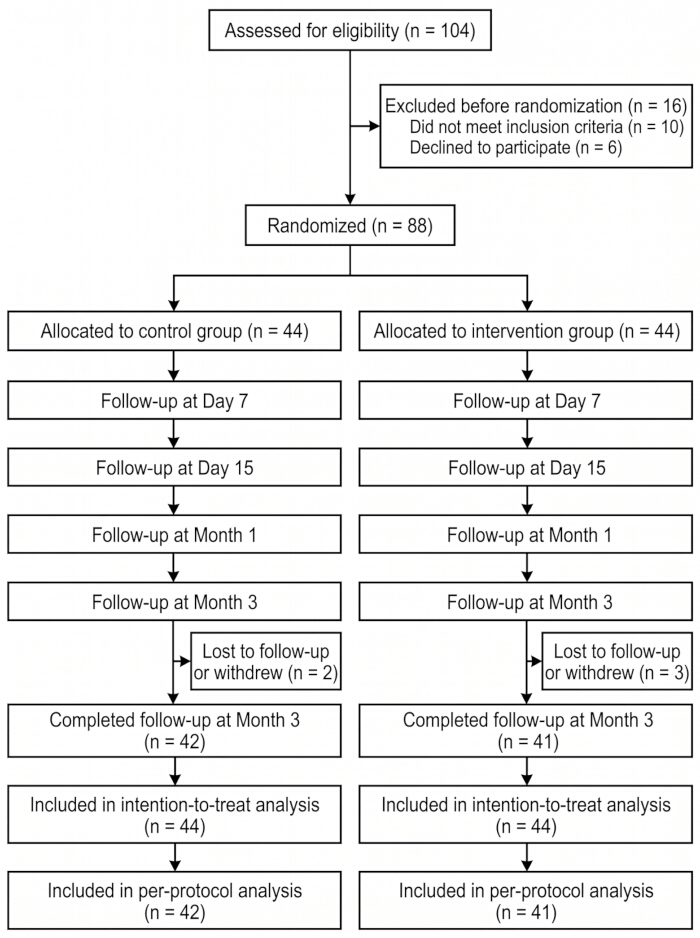
Figure 1: Study flow diagram. Flow of participant screening, exclusion, randomization, allocation, follow-up, and analysis. A total of 104 patients were assessed, 16 were excluded, and 88 were randomized 1:1 to the control or intervention group. Please click here to view a larger version of this figure.
The sample size was calculated using the PSQI global score at month 3 as the primary endpoint. A between-group difference of 2.5 points was considered clinically meaningful. Assuming a common standard deviation of 3.5 points, a two-sided α level of 0.05, 80% power, and an anticipated dropout rate of 10%, at least 40 participants were required per group. The final target sample size was set at 44 participants per group.
2. Participant recruitment and eligibility
Participants were recruited through continuous screening during routine dialysis attendance. Study staff explained the study purpose, intervention procedures, follow-up schedule, potential discomforts, confidentiality protections, and withdrawal rights before obtaining consent.
Participants were eligible if they had received maintenance hemodialysis for at least 12 months, maintained a stable dialysis schedule of 2–4 sessions per week with approximately 4 h per session, were 30–65 years of age, were able to cooperate with study procedures, could complete questionnaires independently or with standardized assistance, had a baseline PSQI global score > 7, and had not used medication specifically intended to improve or alter sleep within the previous 2 weeks.
Exclusion criteria included asthma, active rhinitis, olfactory dysfunction, known hypersensitivity to aromatic preparations or herbal sachets, major hematologic disease, severe unstable organic disease, recent surgery or trauma, severe infection, acute psychiatric instability requiring specialist management, major mobility limitation, major hearing or visual impairment, severe cognitive impairment, or incomplete core clinical data.
Participants were withdrawn if they discontinued maintenance hemodialysis, died during follow-up, withdrew consent, were lost to follow-up, or experienced a severe dialysis-related medical event that prevented continued participation. The date and reason for withdrawal were recorded. Completed data before discontinuation were retained in the study database.
3. Randomization, allocation concealment, and masking
After baseline assessment, participants were randomly assigned in a 1:1 ratio using a random-number table prepared before recruitment. Randomization used fixed blocks of four, with no stratification. The allocation sequence was prepared by a staff member who was not involved in screening, intervention delivery, outcome assessment, data entry, or statistical analysis.
Group assignments were placed in sequentially numbered, opaque, sealed envelopes. After eligibility confirmation and baseline assessment, the next envelope was opened in numerical order. Baseline outcome forms were completed before allocation disclosure.
Participant and intervention-provider blinding was not feasible because the intervention involved odor exposure and external aromatic application. To reduce expectation and reporting bias, both groups received standardized explanations, and questionnaires were administered using the same wording, item order, and response guidance at each time point. Outcome forms were checked by staff not responsible for intervention instruction when staffing allowed. Data were entered using participant codes. Before analysis, group labels were recoded as Group A and Group B, and the statistician analyzed the masked dataset before group identity was restored.
4. Control condition and co-intervention management
The control group received routine maintenance hemodialysis care and standard health education. Routine care included dialysis according to the existing schedule, nursing observation, vascular-access care, dietary and fluid-intake guidance, medication reminders, and sleep hygiene education. Sleep hygiene education covered regular sleep timing, reduced stimulating activities before bedtime, avoidance of excessive daytime napping, reduced evening caffeine or strong tea intake, and maintenance of a quiet sleeping environment.
Participants in both groups were asked not to start new aromatherapy, herbal sachet use, structured massage, foot reflexology, acupuncture, moxibustion, meditation programs, or other complementary sleep interventions during follow-up. Sedative, hypnotic, anxiolytic, antidepressant, and analgesic medications were not initiated for study purposes. Clinically required medication or dialysis-prescription changes were permitted and recorded.
5. Preparation of the combined olfactory intervention
The intervention consisted of an essential oil preparation for inhalation during dialysis sessions and a bedtime external application, plus a traditional Chinese herbal sachet for overnight olfactory exposure.
The essential oil preparation contained lavender, bergamot, and coconut oils in a 5:3:10 volume ratio. For each batch, 5 mL lavender essential oil, 3 mL bergamot essential oil, and 10 mL coconut oil were mixed in a sealed light-protective container by gentle inversion for 2 min. The mixture was stored at room temperature, away from light, heat, and moisture, and dispensed into identical amber bottles. Each bottle was labeled with the batch number, preparation date, component ratio, participant study number, and recommended use period. Dispensing records linked each participant to a specific batch.
The herbal sachet contained 6 g each of Albizia julibrissin, rose, mint, Agastache rugosa, Acorus tatarinowii, clove, Angelica dahurica, and 30 g of Artemisia argyi. The dried materials were processed into coarse powder, mixed, and packed into breathable cotton sachets measuring 8 cm × 10 cm. Sachets were labeled with the preparation and replacement dates and replaced every 30 days.
Before intervention initiation, participants received face-to-face instruction on oil use, sachet placement, daily recording, and discomfort reporting. The first use was supervised in the dialysis unit.
6. Delivery of the intervention during dialysis and before sleep
On dialysis days, participants in the intervention group used the essential-oil preparation once during the dialysis session. Study staff placed two drops of the preparation on a sterile cotton pad and positioned it approximately 5–8 cm from the nostrils without touching the nose, skin, vascular access site, dialysis tubing, or mucosa. Each exposure lasted 45 min. If the odor became clearly imperceptible before 45 min, the cotton pad could be replaced once; no more than one replacement was allowed per dialysis session. Staff recorded completion, start, and end times, replacement, session completion, and discomfort.
Before bedtime, participants applied 4 drops in total: 1 drop behind each ear and 1 drop on the Yongquan point of each foot. A gentle circular massage was performed for 15 min. Participants were instructed not to apply the oil to damaged skin, inflamed areas, mucosal surfaces, or areas causing discomfort. If irritation, burning, breathing discomfort, dizziness, or other marked discomfort occurred, use was stopped and reported.
At bedtime, the herbal sachet was placed beside the pillow, approximately 20–30 cm from the head. Participants were instructed not to cover the nose or mouth with the sachet. Sachets were replaced every 30 days. The intervention pathway is shown in Figure 2A-C.
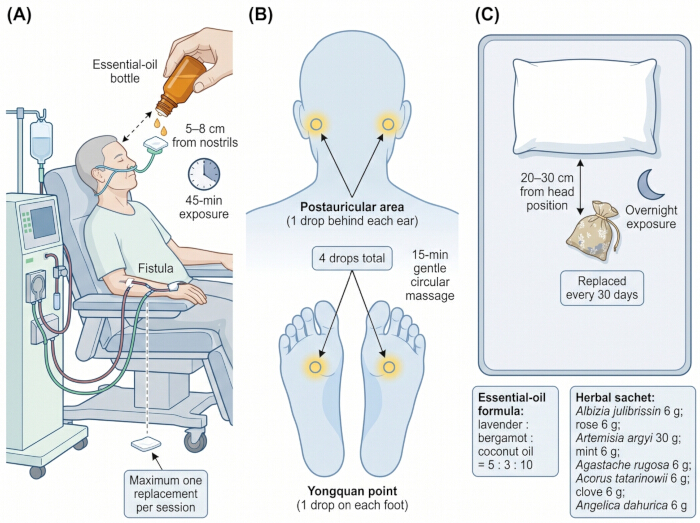
Figure 2: Intervention pathway and schedule. Dual-setting olfactory intervention delivered during dialysis and before sleep at home. (A) Dialysis session essential oil inhalation using two drops on a sterile cotton pad positioned 5–8 cm from the nostrils for 45 min. (B) Bedtime external application using four drops in total, followed by 15 min gentle massage. (C) Overnight herbal sachet placement near the pillow, with monthly replacement. Please click here to view a larger version of this figure.
Participants kept a daily intervention record documenting dialysis-session inhalation, bedtime oil application and massage, sachet use, sachet replacement, and adverse symptoms. Logs were checked during follow-up visits or telephone follow-up. Declining adherence triggered standardized re-instruction.
7. Outcome assessment
The primary outcome was sleep quality, assessed using the Pittsburgh Sleep Quality Index12. The PSQI contains 18 self-reported items grouped into seven component scores, and the global score ranges from 0 – 21, with higher scores indicating poorer sleep quality. The PSQI global score at month 3 was the primary endpoint. Component scores were retained as descriptive secondary sleep-domain outcomes. A baseline PSQI global score > 7 was used to define clinically relevant sleep disturbance for eligibility.
The secondary outcome was anxiety, assessed using the Hospital Anxiety and Depression Scale-Anxiety subscale13. HADS-A contains seven items, and the subscale score ranges from 0 –21, with higher scores indicating greater anxiety symptoms.
PSQI and HADS-A were administered at baseline, day 7, day 15, month 1, and month 3 by trained staff using a standardized script. Because PSQI reflects sleep status over the preceding month, day-7 and day-15 PSQI values were treated as early symptom-monitoring assessments, whereas month 3 was used for the primary PSQI comparison.
If a questionnaire item was missing, staff clarified the response with the participant on the same day whenever possible. If the total score could not be calculated reliably because of excessive missing items, that time-point score was treated as missing and recorded in the missing-data log.
Sleep response was defined as a reduction of at least 3 points in PSQI global score from baseline. Anxiety response was defined as a reduction of at least 2 points in HADS-A score from baseline. These responder outcomes were analyzed as secondary clinical-response outcomes.
8. Adherence and safety monitoring
Adherence was calculated as the number of completed planned intervention procedures divided by the number of expected procedures during the observation period, multiplied by 100. Adequate adherence was defined as completion of at least 80% of planned procedures. Daily records were checked against dispensing records, sachet replacement records, and follow-up contact forms.
Safety monitoring covered dizziness, headache, nausea, skin irritation, subjective respiratory discomfort, and other symptoms occurring during or after inhalation, external application, or sachet exposure. Each event was recorded by onset time, duration, severity, relationship to the intervention, management, and outcome. Severity was graded as mild, moderate, or severe. Relationship was classified as unrelated, possibly related, probably related, or definitely related by two study clinicians. Serious adverse events were defined as events resulting in hospitalization, life-threatening deterioration, permanent discontinuation of the intervention, or other major medical consequences.
9. Follow-up procedures and data quality control
Follow-up evaluations were performed at day 7, day 15, month 1, and month 3 after intervention initiation. The allowed windows were 7 ± 2 days, 15 ± 3 days, 30 ± 5 days, and 90 ± 10 days, respectively. The actual assessment date was recorded.
Questionnaires were administered on-site during dialysis whenever possible. If on-site follow-up could not be completed, telephone follow-up used the same wording and response structure. Responses were entered by trained staff and checked on the same day.
All study personnel received unified training before recruitment. Completed questionnaires were checked immediately after completion. Study data were double-entered by two trained staff members, and discrepancies were reconciled against source forms. Missing assessments, intervention logs, dispensing records, adherence records, safety logs, and outcome forms were cross-checked regularly. Data collected before withdrawal or loss to follow-up were retained in the analysis dataset.
10. Statistical analysis
Statistical analysis was performed using statistical software. All randomized participants were included in the intention-to-treat analysis whenever outcome data were available. A per-protocol analysis was also performed for participants who completed at least 80% of planned intervention procedures.
Continuous variables were summarized as mean ± standard deviation when approximately normally distributed and as median with interquartile range when distributional assumptions were not met. Categorical variables were summarized as numbers and percentages. Baseline between-group comparisons used the independent-samples t-test or Mann-Whitney U test for continuous variables and the chi-square test or Fisher’s exact test for categorical variables, as appropriate.
The primary endpoint was the between-group difference in PSQI global score at month 3. Longitudinal PSQI and HADS-A outcomes were analyzed using linear mixed-effects models. Fixed effects included group, time, and the group-by-time interaction. Participant was included as a random intercept to account for within-participant correlation across repeated measurements. Time was treated as a categorical repeated factor. An unstructured covariance matrix was used for the repeated measures when model convergence was achieved; if convergence failed, a first-order autoregressive covariance structure was used as a sensitivity specification. Models were estimated using restricted maximum likelihood. Adjusted models included age, sex, dialysis vintage, and primary renal disease as covariates. Model assumptions were assessed by inspecting residual distributions, fitted-versus-residual plots, and influential observations.
Responder analyses were conducted at each follow-up point. Sleep response was defined as a reduction of at least 3 points in PSQI global score from baseline, and anxiety response was defined as a reduction of at least 2 points in HADS-A score from baseline. Response rates were reported as percentages. Absolute risk differences and 95% confidence intervals were calculated for between-group response differences. Number needed to treat was calculated as the reciprocal of the absolute risk difference when the intervention group showed a higher response rate than the control group; values were interpreted descriptively because responder analyses were secondary.
Missing outcome data were assumed to be missing at random after accounting for observed baseline and follow-up information. For the primary analysis, linear mixed-effects models used all available repeated-measure data without excluding participants with incomplete follow-up. A sensitivity intention-to-treat analysis was performed using multiple imputation by fully conditional specification. Twenty imputed datasets were generated using group, age, sex, dialysis vintage, primary renal disease, baseline PSQI, baseline HADS-A, and available follow-up PSQI and HADS-A scores as predictors. Estimates from imputed datasets were pooled according to standard multiple-imputation procedures.
Subgroup analyses were performed according to age, sex, dialysis vintage, primary renal disease, baseline PSQI severity, and baseline HADS-A severity. Baseline PSQI severity was grouped as 8–14 and ≥ 15, and baseline HADS-A severity was grouped as < 11 and ≥ 11. Subgroup analyses were treated as exploratory. When subgroup effects were described, group-by-time-by-subgroup interaction terms were examined rather than relying only on within-subgroup P values.
Sensitivity analyses included the per-protocol analysis, the multiple-imputation intention-to-treat analysis, an additionally adjusted model including baseline fatigue-related measures when available, and an analysis excluding participants whose baseline PSQI values fell within the highest 5% of the sample distribution. Trajectory and network analyses were conducted as exploratory analyses and were not used to define the primary treatment effect.
All statistical tests were two-sided. A p-value < 0.05 was considered statistically significant for the primary endpoint. Secondary and exploratory analyses were not adjusted for multiplicity and were interpreted cautiously.
Results
Participant flow and baseline characteristics
A total of 104 patients undergoing maintenance hemodialysis were assessed for eligibility between January 2022 and December 2023. Sixteen patients were excluded before randomization because they did not meet the eligibility criteria or declined participation. The remaining 88 patients were randomized in a 1:1 ratio, with 44 assigned to the control group and 44 assigned to the intervention group. The participant flow is shown in Figure 1.
Baseline demographic and dialysis-related characteristics were similar between groups. Age was comparable in the control and intervention groups (48.5 ± 5.2 vs. 48.5 ± 5.4 years, P = 0.968), as was dialysis vintage (22 [18–29] vs. 22 [18–27] months, P = 0.548). Sex distribution was balanced between groups (male: 56.8% vs. 59.1%, P = 1.000), and the distribution of primary renal disease did not differ significantly (P = 0.999). Baseline PSQI global score was also similar between the control and intervention groups (17.1 ± 2.0 vs. 17.1 ± 2.4, P = 0.885), as was baseline HADS-A score (12.6 ± 2.7 vs. 12.7 ± 2.6, P = 0.846). Detailed baseline characteristics are shown in Table 1.
| Characteristic | Control group | Intervention group | P value |
| (n = 44) | (n = 44) | ||
| Age, years | 48.5 ± 5.2 | 48.5 ± 5.4 | 0.968 |
| Male sex, n (%) | 25 (56.8) | 26 (59.1) | 1 |
| Dialysis vintage, months | 22 (18–29) | 22 (18–27) | 0.548 |
| Dialysis frequency, sessions/week | 3.0 ± 0.5 | 3.0 ± 0.5 | 0.914 |
| Dialysis duration, h/session | 4.0 ± 0.0 | 4.0 ± 0.0 | 1 |
| Body mass index, kg/m² | 22.8 ± 2.6 | 22.6 ± 2.7 | 0.724 |
| Primary renal disease, n (%) | 0.999 | ||
| Chronic glomerulonephritis | 20 (45.5) | 20 (45.5) | |
| Diabetic nephropathy | 12 (27.3) | 12 (27.3) | |
| Hypertensive nephropathy | 7 (15.9) | 7 (15.9) | |
| Other primary renal disease | 5 (11.4) | 5 (11.4) | |
| Baseline PSQI global score | 17.1 ± 2.0 | 17.1 ± 2.4 | 0.885 |
| Baseline HADS-A score | 12.6 ± 2.7 | 12.7 ± 2.6 | 0.846 |
Table 1: Baseline characteristics of the study population. Demographic, dialysis-related, primary renal disease, baseline PSQI, and baseline HADS-A characteristics by study group. Values are presented as mean ± standard deviation, median (interquartile range), or n (%), as appropriate.
Primary outcome: PSQI global score
Sleep quality was assessed using the PSQI global score. The between-group difference in PSQI global score at month 3 was the primary endpoint. At baseline, PSQI global scores were comparable between groups. After intervention initiation, the intervention group showed lower PSQI scores than the control group at day 7 (12.9 ± 2.6 vs.16.3 ± 2.2, P < 0.001), day 15 (10.2 ± 2.7 vs.15.6 ± 2.3, P < 0.001), month 1 (7.7 ± 2.5 vs.14.7 ± 2.4, P < 0.001), and month 3 (7.8 ± 2.6 vs.13.8 ± 2.5, P < 0.001). Detailed PSQI outcomes are summarized in Table 2.
| Time point | Control group | Intervention group | Mean difference, intervention − control | P value |
| (n = 44) | (n = 44) | |||
| Baseline | 17.1 ± 2.0 | 17.1 ± 2.4 | 0 | 0.885 |
| Day 7 | 16.3 ± 2.2 | 12.9 ± 2.6 | -3.4 | <0.001 |
| Day 15 | 15.6 ± 2.3 | 10.2 ± 2.7 | -5.4 | <0.001 |
| Month 1 | 14.7 ± 2.4 | 7.7 ± 2.5 | -7 | <0.001 |
| Month 3 | 13.8 ± 2.5 | 7.8 ± 2.6 | -6 | <0.001 |
| Baseline-to-month-3 change | -3.3 ± 2.1 | -9.3 ± 2.4 | -6.0 | <0.001 |
Table 2: PSQI global score outcomes during follow-up. PSQI global scores at baseline, day 7, day 15, month 1, and month 3. Higher scores indicate poorer sleep quality. Values are presented as mean ± standard deviation. The primary endpoint was the month-3 PSQI global score.
The longitudinal trend in PSQI global score is shown in Figure 3. The distribution of PSQI improvement from baseline is shown at day 7, day 15, month 1, and month 3 in Figure 4A–D, respectively. Change was defined as baseline PSQI minus follow-up PSQI, so positive values indicate greater improvement. Across follow-up, the intervention group showed a larger median improvement than the control group.
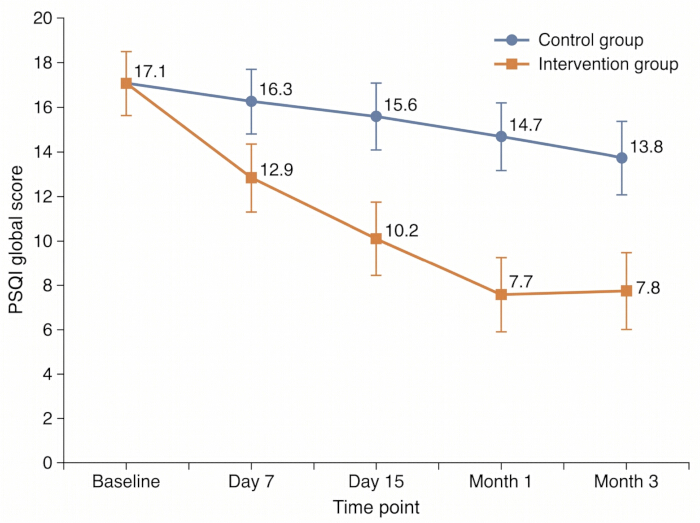
Figure 3: Longitudinal PSQI global scores by study group. Mean PSQI global scores at baseline, day 7, day 15, month 1, and month 3. Lower scores indicate better sleep quality. Error bars represent standard deviation. Please click here to view a larger version of this figure.
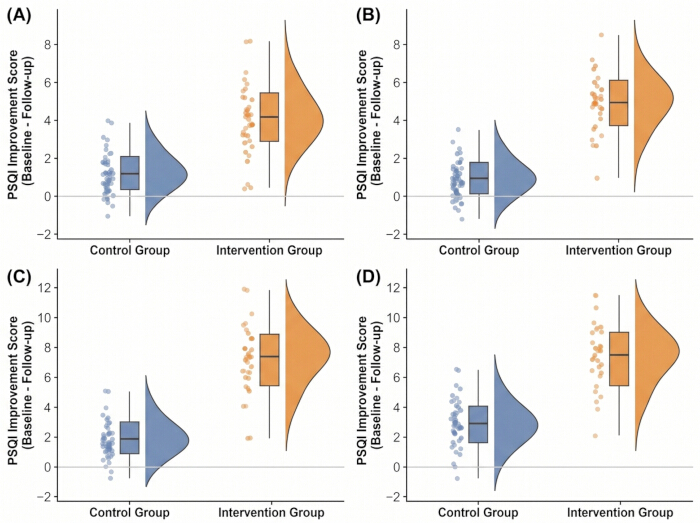
Figure 4: Distribution of PSQI improvement from baseline. Raincloud plots of PSQI improvement at (A) day 7, (B) day 15, (C) month 1, and (D) month 3. Improvement was calculated as baseline PSQI minus follow-up PSQI; positive values indicate greater improvement. Please click here to view a larger version of this figure.
Sleep-status transition was assessed using the threshold of PSQI < 7 versus PSQI ≥ 7. Because all participants entered the study with PSQI scores above the eligibility threshold, both groups began follow-up in the sleep-disturbance range. By month 3, a larger proportion of participants in the intervention group crossed below the PSQI <7 threshold than in the control group. The transition patterns for the control and intervention groups are shown in Figure 5A and Figure 5B, respectively.
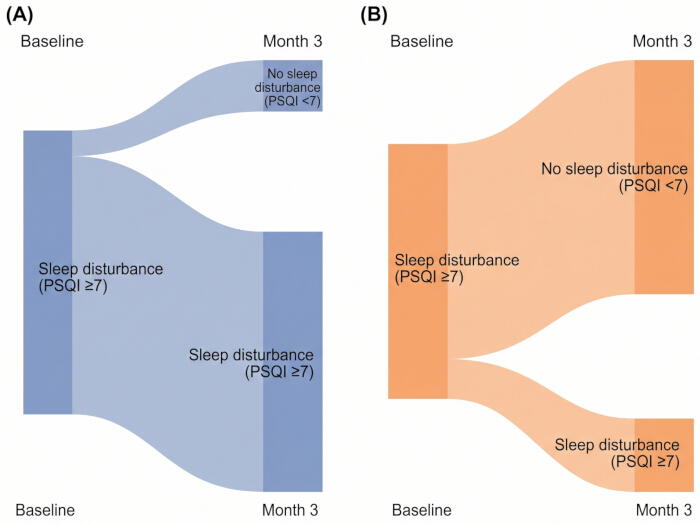
Figure 5: Sleep-disturbance status transitions. Sankey diagrams showing transitions from PSQI-defined sleep disturbance at baseline to sleep-disturbance or non-disturbance status at month 3 in (A) the control group and (B) the intervention group. Sleep disturbance was defined as PSQI ≥ 7, and non-disturbance as PSQI < 7. Please click here to view a larger version of this figure.
Secondary outcome: HADS-A score
Anxiety was assessed using HADS-A. Baseline HADS-A scores were similar in the control and intervention groups (12.6 ± 2.7 vs.12.7 ± 2.6, P = 0.846). In unadjusted between-group comparisons, the day-7 difference was not statistically significant (11.4 ± 2.4 vs.12.2 ± 2.6, P = 0.128). Differences favoring the intervention group were observed at day 15 (10.6 ± 2.3 vs. 12.1 ± 2.5, P = 0.006), month 1 (9.9 ± 2.2 vs. 12.0 ± 2.5, P < 0.001), and month 3 (9.2 ± 2.1 vs. 11.8 ± 2.4, P < 0.001). The baseline-to-month-3 change was -3.5 ± 2.0 in the intervention group and -0.8 ± 1.9 in the control group (P < 0.001). Detailed HADS-A outcomes are summarized in Table 3.
The longitudinal trend in HADS-A score is shown in Figure 6.
| Time point | Control group (n=44) | Intervention group (n=44) | Mean difference (intervention − control) | P value |
| Baseline | 12.6 ± 2.7 | 12.7 ± 2.6 | 0.1 | 0.846 |
| Day 7 | 12.2 ± 2.6 | 11.4 ± 2.4 | -0.8 | 0.128 |
| Day 15 | 12.1 ± 2.5 | 10.6 ± 2.3 | -1.5 | 0.006 |
| Month 1 | 12.0 ± 2.5 | 9.9 ± 2.2 | -2.1 | <0.001 |
| Month 3 | 11.8 ± 2.4 | 9.2 ± 2.1 | -2.6 | <0.001 |
| Baseline-to-month-3 change | -0.8 ± 1.9 | -3.5 ± 2.0 | -2.7 | <0.001 |
Table 3: HADS-A outcomes during follow-up. HADS-A scores at baseline, day 7, day 15, month 1, and month 3. Higher scores indicate greater anxiety symptoms. Values are presented as mean ± standard deviation.
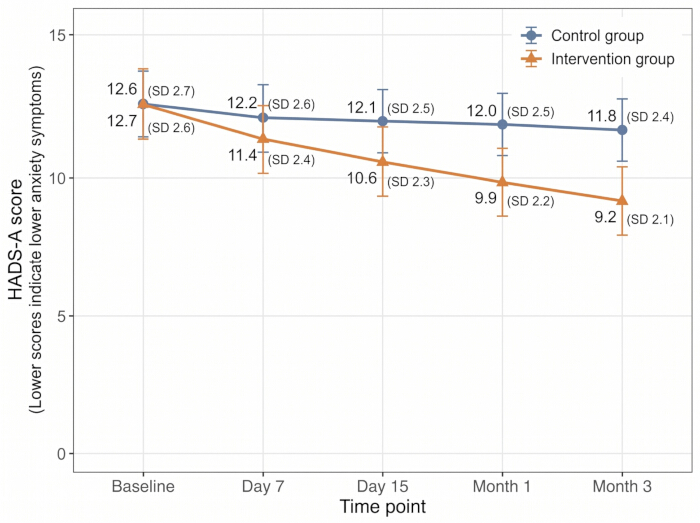
Figure 6: Longitudinal HADS-A scores by study group. Mean HADS-A scores at baseline, day 7, day 15, month 1, and month 3. Lower scores indicate lower anxiety symptoms. Error bars represent standard deviation. Please click here to view a larger version of this figure.
Model-based longitudinal effects
Longitudinal PSQI and HADS-A outcomes were analyzed using adjusted linear mixed-effects models. Models included group, time, and group-by-time interaction terms and were adjusted for age, sex, dialysis vintage, and primary renal disease.
For PSQI, the group-by-time interaction favored the intervention group at day 7 (β = -2.41, 95% CI -3.21 to -1.61, p < 0.001), day 15 (β = -3.18, 95% CI -4.00 to -2.36, p < 0.001), month 1 (β = -4.26, 95% CI -5.12 to -3.40, p < 0.001), and month 3 (β = -5.37, 95% CI -6.29 to -4.45, p < 0.001). The month-3 adjusted estimate represented the primary model-based comparison.
For HADS-A, the group-by-time interaction also favored the intervention group at day 7 (β = -0.98, 95% CI -1.49 to -0.47, p < 0.001), day 15 (β = -1.46, 95% CI -2.01 to -0.91, p < 0.001), month 1 (β = -2.05, 95% CI -2.64 to -1.46, p < 0.001), and month 3 (β = -2.61, 95% CI -3.26 to -1.96, P < 0.001). Full mixed-effects model estimates are shown in Table 4.
| Outcome | Time point | Adjusted β for group-by-time interaction | 95% CI | P value |
| PSQI global score | Day 7 | -2.41 | -3.21 to -1.61 | <0.001 |
| Day 15 | -3.18 | -4.00 to -2.36 | <0.001 | |
| Month 1 | -4.26 | -5.12 to -3.40 | <0.001 | |
| Month 3 | -5.37 | -6.29 to -4.45 | <0.001 | |
| HADS-A score | Day 7 | -0.98 | -1.49 to -0.47 | <0.001 |
| Day 15 | -1.46 | -2.01 to -0.91 | <0.001 | |
| Month 1 | -2.05 | -2.64 to -1.46 | <0.001 | |
| Month 3 | -2.61 | -3.26 to -1.96 | <0.001 |
Table 4: Adjusted mixed-effects model estimates. Adjusted group-by-time interaction estimates for PSQI and HADS-A outcomes. Models included group, time, group-by-time interaction, and covariates for age, sex, dialysis vintage, and primary renal disease.
Clinical response
Clinical response was evaluated using prespecified responder definitions. Sleep response was defined as a reduction of at least 3 points in PSQI global score from baseline. Anxiety response was defined as a reduction of at least 2 points in HADS-A score from baseline.
Sleep response rates were higher in the intervention group than in the control group at day 7 (40.9% vs. 15.9%), day 15 (59.1% vs. 22.7%), month 1 (70.5% vs. 27.3%), and month 3 (77.3% vs. 31.8%). At month 3, the absolute risk difference was 45.5% (95% CI, 27.0% to 64.0%), corresponding to an estimated number needed to treat of 2.2.
Anxiety response rates also favored the intervention group at day 7 (31.8% vs. 18.2%), day 15 (50.0% vs. 22.7%), month 1 (61.4% vs. 27.3%), and month 3 (68.2% vs. 29.5%). At month 3, the absolute risk difference was 38.7% (95% CI, 19.4% to 58.0%), corresponding to an estimated number needed to treat of 2.6. Detailed response rates, absolute risk differences, and number-needed-to-treat estimates are shown in Table 5.
| Outcome | Time point | Control group, n (%) | Intervention group, n (%) | Absolute risk difference, % (95% CI) | Estimated NNT |
| Sleep response | Day 7 | 7 (15.9) | 18 (40.9) | 25.0 (6.9 to 43.1) | 4 |
| Day 15 | 10 (22.7) | 26 (59.1) | 36.4 (17.3 to 55.5) | 2.8 | |
| Month 1 | 12 (27.3) | 31 (70.5) | 43.2 (24.3 to 62.0) | 2.3 | |
| Month 3 | 14 (31.8) | 34 (77.3) | 45.5 (26.9 to 64.0) | 2.2 | |
| Anxiety response | Day 7 | 8 (18.2) | 14 (31.8) | 13.6 (-4.2 to 31.5) | 7.3 |
| Day 15 | 10 (22.7) | 22 (50.0) | 27.3 (8.0 to 46.5) | 3.7 | |
| Month 1 | 12 (27.3) | 27 (61.4) | 34.1 (14.6 to 53.6) | 2.9 | |
| Month 3 | 13 (29.5) | 30 (68.2) | 38.6 (19.4 to 57.9) | 2.6 |
Table 5: Clinical response rates and number-needed-to-treat estimates. Sleep response was defined as a ≥ 3-point reduction in PSQI global score, and anxiety response as a ≥ 2-point reduction in HADS-A score. Absolute risk differences and number-needed-to-treat estimates were calculated from between-group response-rate differences.
Exploratory association and trajectory analyses
Exploratory association analysis examined the relationship between changes in PSQI components and changes in HADS-A. The chord diagram in Figure 7A was based on baseline-to-month-3 change scores, and the corresponding component-level correlation summary is shown in Figure 7B. Larger sleep-domain improvement tended to coincide with greater reduction in HADS-A, particularly for subjective sleep quality, sleep latency, sleep disturbance, and daytime dysfunction. Because this analysis was exploratory and correlation-based, it was not interpreted as evidence of a causal relationship.
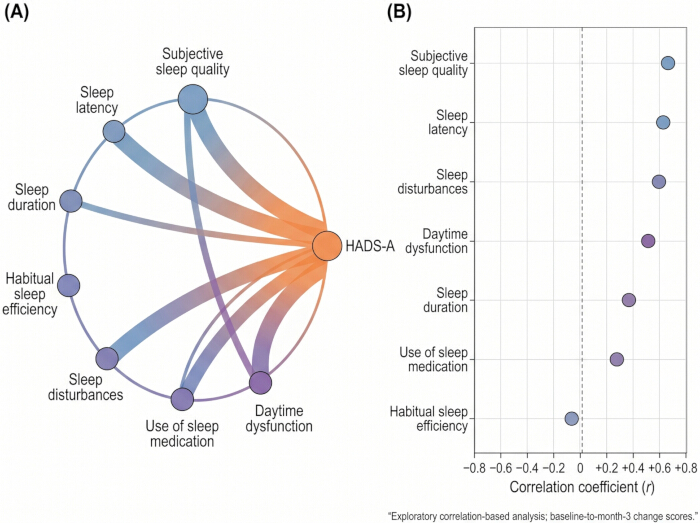
Figure 7: Exploratory association between sleep and anxiety changes. (A) Chord diagram showing correlations between baseline-to-month-3 changes in PSQI components and HADS-A scores. Links indicate correlations meeting the display threshold of |r| ≥ 0.30. (B) Correlation summary for PSQI component changes and HADS-A change. This analysis was exploratory and not adjusted for multiplicity. Please click here to view a larger version of this figure.
Exploratory trajectory analysis of repeated PSQI measurements identified different patterns of sleep-score change over time. Control-group trajectory patterns are shown in Figure 8A, and intervention-group trajectory patterns are shown in Figure 8B. In the intervention group, the more common pattern was early decline followed by maintenance, whereas the control group more often showed mild improvement or persistent sleep disturbance. These trajectory patterns were interpreted descriptively.
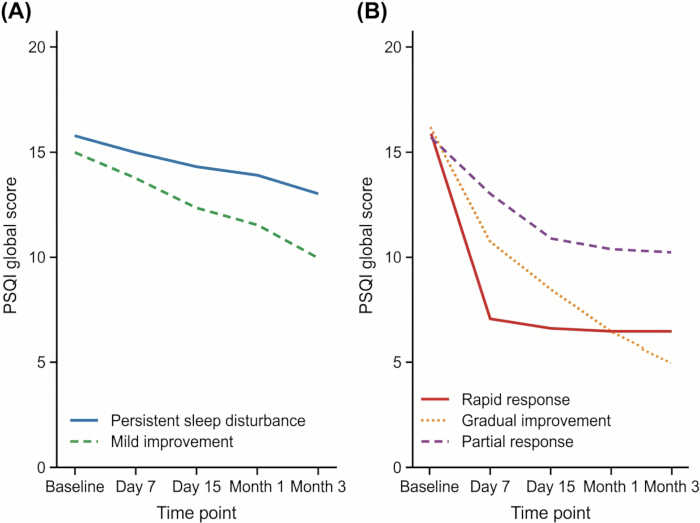
Figure 8: Exploratory PSQI trajectory patterns. Trajectory displays of PSQI global scores across baseline, day 7, day 15, month 1, and month 3 in (A) the control group and (B) the intervention group. Patterns were interpreted descriptively. Please click here to view a larger version of this figure.
Subgroup and sensitivity analyses
Subgroup analyses were conducted according to age, sex, dialysis vintage, primary renal disease, baseline PSQI severity, and baseline HADS-A severity. The direction of the PSQI treatment estimate was generally similar across subgroups, including sex-defined strata. Formal interaction testing did not provide sufficient evidence to conclude that intervention response differed by sex. Because subgroup analyses involved small strata and multiple comparisons, they were treated as exploratory.
Sensitivity analyses included the primary adjusted model, the per-protocol analysis restricted to participants with adherence ≥ 80%, the intention-to-treat analysis with multiple imputation for missing values, the additionally adjusted model, and the analysis excluding participants whose baseline PSQI values fell within the highest 5% of the sample distribution. These analyses yielded estimates in the same direction as the primary model. Subgroup and sensitivity analyses are summarized in Table 6.
| Analysis | Subgroup or Analysis Set | n | Adjusted β | 95% CI | Interaction or Comparison P Value |
| Age subgroup | <50 years | 47 | -5.45 | -6.62 to -4.28 | 0.812 |
| ≥50 years | 41 | -5.28 | -6.54 to -4.02 | ||
| Sex subgroup | Male | 51 | -5.3 | -6.47 to -4.13 | 0.744 |
| Female | 37 | -5.49 | -6.82 to -4.16 | ||
| Dialysis vintage subgroup | <24 months | 48 | -5.42 | -6.61 to -4.23 | 0.865 |
| ≥24 months | 40 | -5.31 | -6.58 to -4.04 | ||
| Primary renal disease subgroup | Chronic glomerulonephritis | 40 | -5.25 | -6.55 to -3.95 | 0.692 |
| Other renal disease | 48 | -5.46 | -6.65 to -4.27 | ||
| Baseline PSQI severity subgroup | 8–14 | 18 | -4.82 | -6.52 to -3.12 | 0.418 |
| ≥15 | 70 | -5.51 | -6.50 to -4.52 | ||
| Baseline HADS-A severity subgroup | <11 | 23 | -5.12 | -6.70 to -3.54 | 0.637 |
| ≥11 | 65 | -5.45 | -6.47 to -4.43 | ||
| Sensitivity analysis | Primary adjusted model | 88 | -5.37 | -6.29 to -4.45 | Reference |
| Per-protocol set, adherence ≥80% | 82 | -5.24 | -6.20 to -4.28 | 0.781 | |
| Multiple-imputation ITT analysis | 88 | -5.31 | -6.25 to -4.37 | 0.836 | |
| Additional adjustment model | 88 | -5.18 | -6.17 to -4.19 | 0.702 | |
| Excluding highest 5% baseline PSQI values | 84 | -5.09 | -6.04 to -4.14 | 0.644 |
Table 6: Subgroup and sensitivity analyses. Exploratory subgroup and sensitivity analyses for the month-3 PSQI treatment estimate. Negative β values favor the intervention group. Findings were interpreted cautiously because of the small strata and multiple comparisons.
Adherence and safety
Follow-up completion rates were 95.5% in the control group and 93.2% in the intervention group. In the intervention group, mean adherence was 86.7% for bedtime application and 83.4% for dialysis-session inhalation.
Adverse events were infrequent and predominantly mild. Any monitored adverse symptom was reported in 15.9% of the intervention group and 6.8% of the control group (p = 0.186). Reported events included mild dizziness, headache, nausea, and local skin irritation. No allergic reaction requiring discontinuation and no serious intervention-related adverse event was observed. Adherence and safety outcomes are summarized in Table 7.
| Outcome | Control group (n=44) | Intervention group (n=44) | P value |
| Completed scheduled follow-up, n (%) | 42 (95.5) | 41 (93.2) | 1 |
| Bedtime application adherence, % | Not applicable | 86.7 ± 8.4 | Not applicable |
| Dialysis-session inhalation adherence, % | Not applicable | 83.4 ± 9.1 | Not applicable |
| Adequate adherence ≥80%, n (%) | Not applicable | 38 (86.4) | Not applicable |
| Any monitored adverse symptom, n (%) | 3 (6.8) | 7 (15.9) | 0.186 |
| Dizziness, n (%) | 0 (0.0) | 2 (4.5) | 0.494 |
| Headache, n (%) | 1 (2.3) | 2 (4.5) | 1 |
| Nausea, n (%) | 1 (2.3) | 1 (2.3) | 1 |
| Local skin irritation, n (%) | 0 (0.0) | 2 (4.5) | 0.494 |
| Subjective respiratory discomfort, n (%) | 1 (2.3) | 0 (0.0) | 1 |
| Allergic reaction requiring discontinuation, n (%) | 0 (0.0) | 0 (0.0) | Not applicable |
| Serious intervention-related adverse event, n (%) | 0 (0.0) | 0 (0.0) | Not applicable |
Table 7: Follow-up completion, adherence, and safety outcomes. Follow-up completion, intervention adherence, and monitoring of adverse symptoms by the study group. Adequate adherence was defined as completion of at least 80% of planned procedures. Values are presented as mean ± standard deviation or n (%).
DATA AVAILABILITY:
The de-identified participant-level dataset and supporting study materials generated during this study are publicly available in the Figshare repository: https://doi.org/10.6084/m9.figshare.32578083.v1
Discussion
This single-center randomized controlled study evaluated a combined olfactory intervention consisting of dialysis-session essential-oil inhalation, bedtime external application with massage, and overnight exposure to a traditional Chinese herbal sachet in patients undergoing maintenance hemodialysis. Compared with routine care alone, the intervention group showed lower self-reported PSQI global scores at follow-up, with the primary month-3 comparison favoring the intervention group. HADS-A scores also decreased more in the intervention group over the same observation period. These findings should be interpreted as preliminary trial evidence of improved self-reported sleep quality and anxiety symptoms rather than definitive proof of clinical effectiveness. This cautious interpretation is important because sleep disturbance and emotional symptoms in hemodialysis patients are multifactorial and are often shaped by treatment burden, physical discomfort, uncertainty, fatigue, and repeated disruption of daily routines14.
The observed direction of change is broadly consistent with previous reports suggesting that aromatherapy or sensory relaxation approaches may reduce subjective sleep complaints or emotional distress in chronic illness and dialysis-related care settings15. The present protocol differs from many single-mode interventions by linking three components across two care contexts: inhalation during dialysis, external application with massage before sleep, and sustained sachet exposure near the pillow overnight. This design may have supported repeated use by embedding the intervention into existing dialysis and bedtime routines. However, the trial was not designed to isolate the independent effects of inhalation, massage, or exposure to herbal sachets. The observed between-group differences therefore reflect the combined protocol as a whole, not the efficacy of any single component.
Several plausible explanations may account for the observed changes, but none were directly tested. Olfactory stimulation may influence arousal, affective processing, and relaxation-related responses through neural pathways connected with emotion and autonomic regulation16. The bedtime application and gentle massage may have added a tactile and behavioral relaxation cue, while the sachet may have provided a repeated environmental signal associated with sleep preparation. These interpretations remain hypothesis-generating because the study did not include physiological endpoints such as actigraphy, polysomnography, autonomic measures, inflammatory markers, or neurobehavioral assessments. The exploratory association between PSQI component changes and HADS-A changes should also be read as correlation-based evidence only, not as confirmation that improvement in one symptom domain caused improvement in the other.
The response-rate findings provide a patient-level description of improvement beyond mean score differences. A larger proportion of participants in the intervention group met the prespecified sleep and anxiety response definitions by month 3, and the responder pattern was generally consistent with the mixed-effects estimates. Still, these response analyses were secondary and were not adjusted for multiplicity. Similarly, the subgroup, network, and trajectory analyses were exploratory, involved small strata or descriptive modeling, and should not be used to claim differential effects across patient subgroups. The absence of a sex-specific interaction signal in the subgroup analysis suggests that the trial did not provide sufficient evidence of sex-related differences in response, although the sample size was not adequate for a definitive sex-stratified conclusion17.
The main limitations are related to trial design, outcome measurement, and intervention attribution. The study was conducted at a single center with a modest sample size, which may limit generalizability to other dialysis units, patient populations, and care systems. Participant blinding and intervention-provider blinding were not feasible because of the odor-based, externally applied nature of the protocol, and the absence of a placebo scent or an attention-control condition means that expectation effects, performance bias, and reporting bias cannot be excluded. The trial was not prospectively registered in a public registry, which limits external transparency of prespecified outcomes and analyses. Outcomes were based on validated self-report instruments rather than objective sleep measures, so the results primarily reflect perceived sleep quality and anxiety burden. Although the protocol standardized component ratios, timing, placement, adherence logs, and safety monitoring, future studies should further quantify odor intensity, exposure fidelity, batch consistency, and the relative contribution of each intervention component18.
Taken together, this study suggests that a structured essential-oil and herbal-sachet olfactory protocol may be associated with improved self-reported sleep and anxiety outcomes in maintenance hemodialysis patients, with acceptable adherence and predominantly mild monitored adverse symptoms under the screening and monitoring procedures used in this trial. The findings support further evaluation of this low-burden adjunctive approach but do not establish it as a practice-ready intervention. Future multicenter randomized trials should include placebo-comparable or attention-control conditions, blinded outcome handling, objective sleep measures, longer follow-up, prespecified multiplicity control, and multi-arm designs that can separate the effects of inhalation, massage, sachet exposure, and their combination19.
Disclosures
The authors declare that they have no competing interests and no relevant financial relationships or personal conflicts to disclose.
Acknowledgements
The authors sincerely thank the patients and nursing staff of the hemodialysis center for their participation and support in this study. This work was supported by the Jinhua Traditional Chinese Medicine Science and Technology Project of Zhejiang Province (2022KY56).
Materials
| Name | Company | Catalog Number | Comments |
|---|---|---|---|
| Acorus tatarinowii rhizome | Hospital pharmacy, Yongkang Hospital of Traditional Chinese Medicine | Not commercially applicable | Herbal sachet component; 6 g per sachet. Supplied as dried medicinal material through the hospital pharmacy. |
| Adjustable mechanical pipette, 0.5–5 mL | Eppendorf | 3123000071 | Used to measure lavender essential oil, bergamot essential oil, and coconut oil during batch preparation. |
| Adverse-event monitoring form | Study-generated document | Not commercially applicable | Used to record onset time, duration, severity, suspected relationship to intervention, management, and outcome of monitored symptoms. |
| Agastache rugosa herb | Hospital pharmacy, Yongkang Hospital of Traditional Chinese Medicine | Not commercially applicable | Herbal sachet component; 6 g per sachet. Supplied as dried medicinal material through the hospital pharmacy. |
| Albizia julibrissin flower | Hospital pharmacy, Yongkang Hospital of Traditional Chinese Medicine | Not commercially applicable | Herbal sachet component; 6 g per sachet. Supplied as dried medicinal material through the hospital pharmacy. |
| Amber glass dropper bottle, 10 mL | Fisher Scientific or equivalent laboratory supplier | 03-339-23D or equivalent | Used to dispense the essential-oil preparation to participants. Amber glass was used to reduce light exposure. |
| Analytical balance, 220 g capacity, 0.001 g readability | OHAUS | PX223/E | Used to weigh dried herbal materials during sachet preparation. |
| Angelica dahurica root | Hospital pharmacy, Yongkang Hospital of Traditional Chinese Medicine | Not commercially applicable | Herbal sachet component; 6 g per sachet. Supplied as dried medicinal material through the hospital pharmacy. |
| Artemisia argyi leaf | Hospital pharmacy, Yongkang Hospital of Traditional Chinese Medicine | Not commercially applicable | Herbal sachet component; 30 g per sachet. Supplied as dried medicinal material through the hospital pharmacy. |
| Bergamot essential oil | Sigma-Aldrich / MilliporeSigma | W215309 | Used as the bergamot component of the essential-oil preparation. Stored away from light and heat before use. |
| Breathable cotton sachet bag, approximately 8 cm × 10 cm | Hospital-prepared study material | Not commercially applicable | Used to package the dried herbal mixture. Each sachet was labeled with preparation and replacement dates and replaced every 30 days. |
| Case report form | Study-generated document | Not commercially applicable | Used to record eligibility, demographic data, dialysis information, concomitant medications, follow-up status, and withdrawal information. |
| Clove | Hospital pharmacy, Yongkang Hospital of Traditional Chinese Medicine | Not commercially applicable | Herbal sachet component; 6 g per sachet. Supplied as dried medicinal material through the hospital pharmacy. |
| Coconut oil | Sigma-Aldrich / MilliporeSigma | C1758 | Used as the carrier oil in the essential-oil preparation. |
| Daily intervention adherence log | Study-generated document | Not commercially applicable | Used to record dialysis-session inhalation, bedtime application and massage, sachet use, sachet replacement, and discomfort. |
| Hospital Anxiety and Depression Scale-Anxiety subscale | GL Assessment | Licensed HADS record form/manual | Used to assess self-reported anxiety symptoms at baseline and follow-up. |
| IBM SPSS Statistics | IBM | Version 23.0 | Used for descriptive statistics, baseline comparisons, mixed-effects models, responder analyses, sensitivity analyses, and multiple imputation. |
| Intervention dispensing log | Study-generated document | Not commercially applicable | Used to record essential-oil preparation date, participant study number, dispensing date, and sachet replacement date. |
| Lavender essential oil | Sigma-Aldrich / MilliporeSigma | W262218 | Used as the lavender component of the essential-oil preparation. Mixed with bergamot essential oil and coconut oil at a 5:3:10 volume ratio. |
| Low-form glass beaker, 50 mL | VWR / Avantor | 10754-946 | Used for small-batch mixing of the essential-oil preparation. |
| Mint herb | Hospital pharmacy, Yongkang Hospital of Traditional Chinese Medicine | Not commercially applicable | Herbal sachet component; 6 g per sachet. Supplied as dried medicinal material through the hospital pharmacy. |
| Pittsburgh Sleep Quality Index | Original instrument source: Buysse et al. | Not commercially applicable | Used to assess self-reported sleep quality at baseline, day 7, day 15, month 1, and month 3. The validated Chinese version was used in questionnaire administration. |
| Random-number table | Study-generated document | Not commercially applicable | Used to generate the 1:1 allocation sequence before recruitment. |
| Rose flower | Hospital pharmacy, Yongkang Hospital of Traditional Chinese Medicine | Not commercially applicable | Herbal sachet component; 6 g per sachet. Supplied as dried medicinal material through the hospital pharmacy. |
| Sequentially numbered opaque sealed envelopes | Study-generated material | Not commercially applicable | Used for allocation concealment. Envelopes were opened only after eligibility confirmation and baseline assessment. |
| Sterile nonwoven gauze sponge, 2 × 2 in | Fisherbrand / Fisher Scientific | 22-028-559 | Used as the carrier pad for dialysis-session essential-oil inhalation. Two drops of essential-oil preparation were applied to the pad. |
| Tube Mill control batch mill | IKA | 4180001 | Used to process dried herbal materials into coarse powder before sachet packing. |
References
- Kose S, Mohamed NA. The interplay of anxiety, depression, sleep quality, and socioeconomic factors in Somali hemodialysis patients. Brain Sci. 2024;14(2):144.
- Wang G, Yi X, Fan H, Cheng H. Anxiety and sleep quality in patients receiving maintenance hemodialysis: multiple mediating roles of hope and family function. Sci Rep. 2024;14:15073.
- Chu G, Matricciani L, Russo S, Viecelli AK, Jesudason S, Bennett P, et al. Sleep disturbances in adults with chronic kidney disease: an umbrella review. J Nephrol. 2025;38(2):353-69.
- Lyons OD. Sleep disorders in chronic kidney disease. Nat Rev Nephrol. 2024;20(10):690-700.
- Pasyar N, Aghababaei M, Rambod M, Zarshenas MM. The effectiveness of Melissa officinalis L. essential oil inhalation on anxiety and symptom burden of hemodialysis patients: a randomized trial study. BMC Complement Med Ther. 2025;25(1):103.
- Beerappa H, Gt K, Chandrababu R. The effects of inhalational lavender essential oil aromatherapy on sleep quality in hemodialysis patients: a before-and-after-intervention trial. Holist Nurs Pract. 2023;37(6):356-62.
- Vafaee S, Shorofi SA, Kamali M, Asgarirad H, Mousavinasab SN, et al. The effect of topical application of lavender lipogel on sleep quality and well-being in patients undergoing maintenance hemodialysis: a randomized clinical trial. Jundishapur J Chronic Dis Care. 2023;12(4):e138628.
- Liu Y, Dong Y, Wang X, Huang Y, Wu F, Xia F, et al. Effects of lavender essential oil inhalation aromatherapy on postoperative sleep quality in patients with intracranial tumors: a randomized controlled trial. Front Pharmacol. 2025;16:1584998.
- Akkaya A, Koçaslı SK, Akın MA. The effects of inhalation aromatherapy on pain, anxiety, and sleep quality in burn patients: a randomized controlled study. Burns. 2024;50(9):107271.
- World Medical Association. World Medical Association Declaration of Helsinki: ethical principles for medical research involving human subjects. JAMA. 2013;310(20):2191-4.
- Schulz KF, Altman DG, Moher D, et al. CONSORT 2010 statement: updated guidelines for reporting parallel group randomised trials. BMJ. 2010;340:c332.
- Buysse DJ, Reynolds CF, Monk TH, et al. The Pittsburgh Sleep Quality Index: a new instrument for psychiatric practice and research. Psychiatry Res. 1989;28(2):193-213.
- Zigmond AS, Snaith RP. The Hospital Anxiety and Depression Scale. Acta Psychiatr Scand. 1983;67(6):361-70.
- Al Naamani Z, Gormley K, Noble H, Santin O, Al Maqbali M. Fatigue, anxiety, depression and sleep quality in patients undergoing haemodialysis. BMC Nephrol. 2021;22(1):157.
- Firooz M, Mahmoodi Shan GR, Jouybari L, Yazdi K, Osuji J. Effect of lavender aromatherapy on anxiety and fatigue in hemodialysis patients: a systematic review and meta-analysis. Iran J Public Health. 2024;53(3):539-52.
- Muz G, Taşcı S. Effect of aromatherapy via inhalation on the sleep quality and fatigue level in people undergoing hemodialysis. Appl Nurs Res. 2017;37:28-35.
- Du Z, Chu T, Dai F, Mao H, Zhao J. Correlation analysis of anxiety, depression, and sleep quality in end-stage renal disease patients undergoing maintenance hemodialysis. Medicine (Baltimore). 2025;104(42):e44433.
- Ali B, Al-Wabel NA, Shams S, Ahamad A, Khan SA, Anwar F. Essential oils used in aromatherapy: a systemic review. Asian Pac J Trop Biomed. 2015;5(8):601-11.
- Rajabi R, Akhlaghi F, Asadi N, Zamani Babgohari F, Arabpoor F. The effect of foot reflexology massage on fatigue and sleep quality in hemodialysis patients. SAGE Open Nurs. 2025;11:23779608251364099.