This protocol describes a three-level fall risk assessment pathway for hospitalized older adults that integrates fall-severity screening, the Morse Fall Scale, FRAIL frailty screening, and multifactorial assessment to support standardized risk classification and guide risk-factor-directed interventions.
A subscription to JoVE is required to view this content. Sign in or start your free trial.
Method Article
Three-Level Fall Risk Assessment Method for Hospitalized Older Adults: A Practical Protocol Based on Comprehensive Geriatric Assessment
In This Article
Summary
Abstract
Falls in older adults result from multiple interacting factors, making it difficult for a single assessment tool to comprehensively identify fall risk. This study describes a three-level fall risk assessment protocol based on comprehensive geriatric assessment to support progressive fall risk identification and standardized risk classification in hospitalized older adults. A single-center retrospective descriptive analysis of prospectively collected clinical data was conducted in 151 hospitalized older adults. The First Level combined the Morse Fall Scale (MFS) with fall-severity screening. The Second Level used the FRAIL Scale to conduct supplementary frailty screening for participants classified as low risk at the First Level. The Third Level applied a multifactorial fall risk assessment to participants classified as moderate or high risk at the First Level and those identified with pre-frailty or frailty at the Second Level, followed by final risk classification. At the First Level, 94 participants (62.2%) were classified as low risk, 57 (37.7%) as moderate or high risk, and 17 (11.3%) had a positive fall-severity screen. Among the 94 participants entering the Second Level, 23 (15.2%) had abnormal FRAIL Scale results. Eighty participants proceeded to the Third Level. Final risk classification identified 80 participants (53.0%) as low risk, 22 (14.6%) as moderate risk, and 49 (32.5%) as high risk. Among the 23 participants with abnormal FRAIL Scale results, 15 were classified as moderate or high risk after the Third Level assessment. These findings suggest that the protocol may improve the identification of hospitalized older adults at moderate to high risk of falls while reducing under-identification; however, its performance requires further validation.
Introduction
Falls are among the most common safety incidents affecting older adults and are associated with injury, disability, mortality, and increased use of healthcare resources1,2. Fall risk assessment is therefore a key component of fall prevention1. Although multiple international guidelines recommend multifactorial assessment and individualized intervention, falls remain a major safety concern among older adults2,3,4,5. Falls result from interacting physiological, clinical, medication-related, functional, behavioral, and environmental factors. A single risk assessment tool can rapidly identify some individuals at increased risk of falls; however, it is difficult for a single tool to comprehensively assess the multiple risk factors associated with falls6,7,8. Therefore, establishing a systematic, multi-level fall risk assessment approach remains an important challenge in fall prevention and management for older adults.
Applying a comprehensive assessment to every hospitalized older adult may be resource intensive, whereas relying on a single screening score may leave relevant risk factors insufficiently assessed. Unlike an approach based on a single assessment tool, the proposed three-level method combines rapid initial screening with supplementary frailty screening and targeted multifactorial assessment for individuals requiring further evaluation. This stepwise approach is intended to retain the efficiency of initial screening while enabling a more comprehensive assessment when indicated. By integrating progressive screening with targeted assessment, the protocol provides a standardized workflow that supports systematic risk identification and final risk classification while directing risk-factor-based interventions.
Based on the World Guidelines for Falls Prevention and Management for Older Adults3, comprehensive geriatric assessment, and clinical practice, this study developed a three-level fall risk assessment method and operational protocol for hospitalized older adults. The overall goal of this protocol is to provide a standardized and reproducible workflow for progressive fall risk identification, final risk classification, and risk-factor-directed stratified intervention. Compared with applying a comprehensive assessment to all hospitalized older adults or relying solely on a single screening tool, the stepwise protocol is intended to balance assessment efficiency with targeted comprehensive evaluation when additional assessment is indicated. The protocol is intended for inpatient geriatric care and other hospital settings with trained assessors and the required assessment tools.
Access restricted. Please log in or start a trial to view this content.
Protocol
The protocol and analysis were approved by the Medical Ethics Committee of Wuyunshan Hospital, Hangzhou (Hangzhou Health Promotion Research Institute) (Ethics Approval No. 2023 Medical Research Review No. 007). Written informed consent was obtained from all participants or their legal representatives before enrollment. Participant identity information was stored separately from the research dataset to maintain confidentiality. All methods were performed in accordance with the relevant guidelines and ethical standards, including the 1964 Declaration of Helsinki and its later amendments. The study was registered with the National Medical Research Registry (MR-33-23-035548).
1. Participant Preparation
- Inclusion Criteria
- Include a participant only if all of the following criteria are met: (1) age ≥65 years; (2) clear consciousness and ability to complete the assessments independently or with the assistance of a caregiver; and (3) agreement to undergo fall-risk assessment and related intervention management.
- Exclusion Criteria
- Exclude a participant if any of the following conditions is present: (1) a severe acute illness or critical condition that prevents completion of the assessment; (2) severe cognitive impairment or abnormal mental behavior that prevents cooperation with the assessment; or (3) incomplete required data.
2. First-Level: Initial Risk Screening
- Use the Morse Fall Scale (MFS) as the universal first-level screening tool for every eligible participant. If a fall history is identified, conduct the fall-severity screening.
Morse Fall Scale (MFS)- Administer the MFS to every eligible participant. Assess and record all six MFS items before calculating the total score and applying the routing rules9.
- Assess Indicator One: Fall History. Ask whether the participant has fallen during the previous 3 months. Assign 25 points if yes and 0 points if no. Record any falls that occurred during the previous year for the fall-severity screening described in Step 2.2.
- Assess Indicator Two: Secondary Medical Diagnosis. Determine whether more than one medical diagnosis is documented. Assign 15 points if yes; otherwise, assign 0 points.
- Assess Indicator Three: Use of Walking Aids. Ask and observe whether the participant uses crutches, a cane, or a walker. Assign 15 points if any of these devices are used. Assign 30 points if the participant walks while holding onto furniture.
- Assess Indicator Four: Intravenous Therapy. Determine whether the participant has an intravenous line or is receiving an intravenous infusion. Assign 20 points if yes; otherwise, assign 0 points.
- Assess Indicator Five: Gait and Mobility. Observe the participant’s gait during safe mobilization. Assign 10 points for a weak gait and 20 points for an impaired gait according to the MFS definitions.
- Assess Indicator Six: Awareness of Limitations. Determine whether the participant recognizes personal mobility limitations and the need for assistance. Assign 15 points if the participant overestimates or forgets personal limitations; otherwise, assign 0 points.
- Fall-Severity Screening
- Perform the fall-severity screening for participants who report one or more falls during the previous year10.
- Determine whether the participant experienced two or more falls during the previous year.
- Determine whether any fall caused an injury requiring medical attention.
- Determine whether the participant was unable to rise independently after a fall and required assistance from another person.
- Determine whether loss of consciousness or suspected syncope occurred during a fall.
- Record the fall-severity screen as positive if any criterion in Steps 2.2.2–2.2.5 is met. Otherwise, record the result as negative.
- Calculate the MFS Score and Apply the Routing Rules
- Calculate the total MFS score after completing all six MFS items.
- Classify the participant as low risk if the MFS score is 0–24, moderate risk if the score is 25–44, or high risk if the score is ≥459.
- Apply the predefined three-level routing rule after recording the standard MFS risk category.
- Route the participant to the Third Level if the total MFS score is ≥25 or the fall-severity screen is positive.
- Route the participant to the Second Level if the total MFS score is <25 and the fall-severity screen is negative.
3. Second Level: Frailty Supplementary Screening
- Apply the Second Level to participants with an MFS total score of <25 and a negative fall-severity screen.
- FRAIL Frailty Scale
- Administer the Chinese-language version of the FRAIL Scale translated and validated by Wei et al.11 Assess and record all five items before calculating the total score. Score each item as 0 or 1. Base the assessment on participant self-report without using measurement equipment.
- Assess Indicator One: Fatigue. Ask whether the participant felt tired most or all of the time during the previous week. Assign 1 point if yes.
- Assess Indicator Two: Resistance (Stair Climbing). Ask whether the participant has difficulty climbing one flight of stairs without using an assistive device, assistance from another person, or resting midway. Assign 1 point if yes.
- Assess Indicator Three: Ambulation. Ask whether the participant has difficulty walking one block (100 m) without using an assistive device or assistance from another person. Assign 1 point if yes.
- Assess Indicator Four: Disease Status. Use the verified diagnosis list recorded in Step 2.1.3 and ask only about physician-diagnosed conditions that are not already documented. Determine whether the participant has more than five of the following conditions: hypertension, diabetes, myocardial infarction, stroke, cancer other than minor skin cancer, congestive heart failure, asthma, arthritis, chronic lung disease, kidney disease, or angina. Assign 1 point if the participant has more than five conditions.
- Assess Indicator Five: Weight Loss. Ask whether the participant experienced a ≥5% decrease in body weight during the previous year or a shorter period. Assign 1 point if yes.
- Calculate the FRAIL Score and Determine Routing
- Calculate the total FRAIL score after completing all five assessment items.
- Classify the participant as not frail if the FRAIL score is 0, prefrail if the score is 1–2, or frail if the score is 3–511.
- Retain participants with a FRAIL score of 0 in the direct low-risk pathway.
- Route participants with a FRAIL score of 1–5, indicating prefrailty or frailty, to the Third-Level multifactorial fall-risk assessment.
4. Third Level: Multifactorial Risk Assessment
- Enter the participant into the Third Level if the fall-severity screen is positive.
- Enter the participant into the Third Level if the fall-severity screen is negative and the total MFS score is ≥25.
- Enter the participant into the Third Level if the fall-severity screen is negative, the total MFS score is <25, and the FRAIL score is 1–5.
- Multifactorial Fall Risk Assessment for Older Adults
- Administer the published Chinese-language Fall Risk Assessment Scale for Older Adults developed by Chen et al.12.
- Assess all 10 primary indicators and 36 secondary indicators before calculating the total score.
NOTE: The instrument was evaluated in 200 hospitalized older adults. The original study reported Cronbach’s α values of 0.714–0.789, S-CVI/Ave values of 0.962–1.000, KMO values of 0.698–0.791, and significant Bartlett’s tests (P < 0.001)12.
- Assessment Precautions
- Verify Assessor Qualifications
- Use four registered nurses holding the professional title of nurse-in-charge or higher with at least 10 years of clinical experience.
- Provide a 3-day training program led by the head nurse of the rehabilitation department before beginning the assessments.
- Include training on the MFS, FRAIL Scale, Fall Risk Assessment Scale for Older Adults, body mass index (BMI), handgrip strength, calf circumference, the five-times sit-to-stand test, the 3-m Timed Up and Go test, and the standing balance test.
- Use standardized operating procedures and demonstration videos throughout the training.
- Require each assessor to pass a practical examination and demonstrate agreement with the training leader on assessment procedures and scoring.
- Use Paired Assessment and Standardized Instructions
- Assign two nurses to assess each participant.
- Assign one nurse to complete the interview- and record-based assessments.
- Assign the second nurse to complete the instrument-based assessments.
- Review the combined assessment results before assigning the final risk level.
- Use the same standardized instructions and operating procedures for every participant.
- Maintain Safety and Participant Tolerance
- Complete all interview and observational assessments before performing the instrument-based assessments.
- Allow a caregiver to remain nearby for safety but do not allow the caregiver to assist with test completion.
- Maintain fall-prevention precautions throughout the assessment.
- Complete the assessment within 30 min.
- Document the reason if the participant cannot complete an instrument-based assessment because of a physical limitation, and assign the prespecified score rather than recording the result as missing data.
- Verify Assessor Qualifications
- Assessment Materials
- Use a height and weight scale, handgrip dynamometer, tape measure, one standardized chair with armrests, one standardized chair without armrests (seat height: 46 cm; armrest height: 21 cm), a 3-m walkway marker, a timer, assessment forms, paper, and a pen.
- Use the manufacturers, models, specifications, and access information listed in the Table of Materials.
- Conduct the Multifactorial Assessment
- For diagnosis-based items, use diagnoses made by the attending physician based on specialist documentation and reverify them during the current admission.
- Use the verified medical record as the scoring source if the participant’s report differs from the medical record.
- Indicator One: Age (Maximum 6 Points)
- Verify the participant’s age from the clinical record.
- Assign 2 points for participants aged 65–74 years.
- Assign 4 points for participants aged 75–84 years.
- Assign 6 points for participants aged ≥85 years.
- Indicator Two: Fall History (Maximum 10 Points)
- Use the verified fall history recorded in Step 2.1.2.
- Assign 5 points if the participant experienced one fall.
- Assign 10 points if the participant experienced two or more falls.
- Indicator One: Age (Maximum 6 Points)
- Indicator Three: Cognitive Function (Maximum 8 Points)
- Use the assessment result recorded in Step 2.1.7 to determine whether the participant overestimates personal ability or forgets personal limitations.
- Assign 4 points if either condition is present.
- Administer the locally adapted Chinese Mini-Cog procedure described in Table 113.
- Assign 6 points if the Mini-Cog score is ≤3.
- Assign 8 points instead if dementia has been diagnosed by the attending physician based on specialist documentation and reverified during the current admission.
- 4 Indicator Four: Mental/Psychological Status (Maximum 6 Points)
- Ask, “Are you afraid of falling?”
- Assign 2 points if the participant answers “Yes.”
- Ask, “Do you feel easily emotionally agitated?”
- Assign 2 points if the participant answers “Yes.”
- Ask, “In the past month, have you often felt down, depressed, or hopeless?”
- Ask, “In the past month, have you often felt little interest or pleasure in doing things?”
- Assign 2 points if the participant answers “Yes” to both questions.
- Assign diagnosis-based points only if depression has been diagnosed by the attending physician based on specialist documentation and reverified during the current admission.
- Indicator Five: Disease-Related Symptoms (Maximum 20 Points)
- Ask, “Do you experience dizziness or vertigo?”
- Ask, “Do you experience dizziness, vertigo, or darkening of vision when changing positions (e.g., standing after squatting)?”
- Assign 5 points if the participant answers “Yes” to either question.
- Ask, “During the past week, have you felt tired most or all of the time?”
- Ask, “Do you need to stay in bed or sit in a chair for more than half of the daytime?”
- Assign 5 points if either condition is present.
- Alternatively, administer the 10-item, 100-point Chinese Barthel Index12,14 as described in Table 2.
- Assign 5 points if the Barthel Index score is ≤70.
- Ask, “Do you have numbness, tremors, or stiffness in your lower limbs?” or observe whether either lower limb shows deformity, hemiplegia, disability, or an unsteady gait.
- Assign 4 points if any finding is present.
- Ask, “Do you have diarrhea, frequent urination (daytime >6 times), urgency, or increased nocturia (≥2 times)?”
- Assign 2 points if any condition is present.
- Ask, “Do you have difficulty falling asleep, early awakening, repeated awakening, excessive daytime sleepiness, or insufficient sleep?”
- Assign 2 points if any condition is present.
- Assign diagnosis-based points only if a sleep disorder has been diagnosed by the attending physician based on specialist documentation and reverified during the current admission.
- Assess Pain
- Ask, “Are you experiencing pain?”
- Administer the 0–10 Numeric Rating Scale (NRS-11) if the participant reports pain15. Refer to Table 3 for the NRS-11.
- Ask, “If 0 represents no pain and 10 represents the most severe pain imaginable, what number best describes your pain?”
- Assign 2 points if the NRS-11 score is ≥3.
- 6 Indicator Six: Auditory and Visual Function (Maximum 6 Points)
- Assess Vision
- Ask, “Can you see the small print in a newspaper clearly?”
- Ask, “Do you wear glasses?”
- If the participant wears glasses, ask, “Can you see clearly while wearing your glasses?”
- Apply the World Health Organization (WHO) classification of vision impairment as described in Table 416.
- Assign 2 points for unilateral visual impairment.
- Assign 4 points for bilateral visual impairment.
- Do not assign an additional unilateral score if the participant meets the criteria for bilateral visual impairment.
- 2 Assess Hearing
- Ask, “Can you hear me clearly?”
- Ask, “Do you wear a hearing aid?”
- Assess hearing during routine communication by using whispered speech, with reference to the study-specific communication assessment described in Table 517. Consider difficulty hearing whispered speech as evidence of hearing impairment.
- Assign 1 point for unilateral hearing loss.
- Assign 2 points for bilateral hearing loss.
- Do not assign an additional unilateral score if the participant meets the criteria for bilateral hearing loss.
- 7 Indicator Seven: Medication Factors (Maximum 6 Points)
- Review the participant’s medication record for sedative-hypnotics, antiepileptic drugs, antipsychotic agents, narcotic analgesics, diuretics, antihypertensive drugs, antiarrhythmic agents, antidiabetic drugs, laxatives, or mydriatics.
- Assign 2 points if one medication class is identified.
- Assign 6 points if two or more medication classes are identified.
- 8 Indicator Eight: Personal and Environmental Factors (Maximum 12 Points)
- 1 Assess Footwear and Clothing
- Observe whether the participant’s footwear and clothing meet fall-prevention requirements.
- Assign 3 points if the requirements are not met.
- 2 Assess Catheters, Drainage Tubes, and Intravenous Lines
- Determine whether the participant has an indwelling catheter, drainage tube, central venous catheter, or is receiving intravenous infusion therapy.
- Assign 3 points if any of these are present.
- 3 Assess the Use of Mobility Devices
- Determine whether the participant uses a cane, walker, or wheelchair.
- Assign 3 points if any mobility device is used.
- 4 Assess Living Situation and Caregiver Support
- Determine whether the participant lives alone.
- Determine whether the participant has no caregiver.
- Determine whether the participant’s caregiver is unable to provide adequate daily care or safety support because of insufficient knowledge, skills, physical capacity, or psychological capacity.
- Assign 3 points if any condition in Steps 4.7.8.4.1–4.7.8.4.3 is present.
- 9 Indicator Nine: Nutrition and Physical Function (Maximum 20 Points)
- 1 Assess BMI
- Measure the participant’s height and weight.
- Calculate the BMI as weight (kg)/height (m)2.
- Assign 2 points if the BMI is >25 kg/m2 or the body weight is <44 kg12.
- 2 Assess Handgrip Strength
- Measure handgrip strength using a handgrip dynamometer.
- Position the participant upright with the arms extended and without flexing the wrist or elbow.
- Instruct the participant to exert maximum grip strength.
- Measure each hand once and record the higher value.
- Discontinue the measurement if the participant is unable to cooperate.
- Assign 2 points if handgrip strength is <28 kg for males or <18 kg for females12,18.
- 3 Assess Calf Circumference
- Seat the participant on a standardized chair with a seat height of 46 cm.
- Position the hip and knee joints at 90°.
- Measure the maximum circumference of each calf using a measuring tape.
- Record the larger measurement.
- Assign 2 points if calf circumference is <34 cm for males or <33 cm for females12,18.
- 4 Assess Lower Limb Muscle Strength
- Measure the time required to complete the five-times sit-to-stand test.
- Allow safety guarding but do not allow another person to assist with the movement.
- Assign 4 points if the completion time is ≥11 s or the participant is unable to complete the test because of a physical limitation12.
- Refer to Table 6 for the detailed testing procedure.
- 5 Assess Mobility
- Measure the time required to complete the 3-m Timed Up and Go (TUG) test.
- Assign 5 points if the completion time is ≥12 s, the participant demonstrates an unsteady gait, or the participant is unable to complete the test because of a physical limitation12.
- Refer to Table 7 for the detailed testing procedure.
- 6 Assess Balance Ability
- Measure the length of time that the participant can stand with both feet together.
- Assign 5 points if the standing time is <10 s or the participant is unable to complete the test because of a physical limitation12.
- Refer to Table 8 for the detailed testing procedure.
- 10 Fall-Related Health Competence (Maximum 6 Points)
- 1 Assess Understanding of Fall Risk Factors
- Ask, “Do you know what risk factors could lead to a fall?”
- Calculate the proportion of personal risk factors correctly identified by the participant.
- Assign 2 points if the participant answers “I don’t know” or identifies <60% of the risk factors identified during the assessment.
- Calculate the proportion of correctly identified risk factors as (number of correctly identified personal risk factors ÷ total assessed personal risk factors) × 100%.
- Classify the participant as having insufficient understanding if the calculated proportion is <60%.
- 2 Assess Understanding of Fall Prevention Measures
- Ask, “Do you know how to prevent falls?”
- Calculate the proportion of applicable fall-prevention measures identified by the participant.
- Assign 2 points if the participant answers “I don’t know” or identifies <60% of the prevention measures applicable to the participant’s identified risk factors.
- 3 Assess Knowledge of Emergency Response After a Fall
- Ask, “If you fall, do you know what to do?”
- Compare the participant’s oral response with the five predefined knowledge points listed in Table 9. Do not require a physical demonstration.
- Assign 2 points if the participant answers, “I don't know,” or identifies fewer than 3 of the 5 knowledge points (<60%).
| Test Item | Administration | Scoring |
| Memory | Select three unrelated words (e.g., red, flag, tree). Read the words aloud and instruct the participant to repeat them immediately and remember them for later recall. | Immediate word registration is not scored. |
| Clock Drawing | Ask the participant to draw a clock showing a specified time (e.g., 11:10) on a blank sheet of paper. | Award 1 point for a complete clock face, 1 point for the correct placement of all numbers, and 1 point for the correct placement of the hour and minute hands. |
| Delayed Recall | After completion of the clock-drawing task, ask the participant to recall the three previously presented words. | Award 0 points if no words are recalled, 1 point if 1–2 words are recalled, and 2 points if all 3 words are recalled. Add the delayed-recall and clock-drawing scores to obtain a total score of 0–5 points. |
Table 1: Standardized Mini-Cog Administration and Scoring. Administration procedure and scoring criteria for the locally adapted Chinese Mini-Cog procedure used in this protocol. The scoring method reflected the version implemented by the study hospital and differed from the standardized Mini-Cog algorithm. The total score was used during the multifactorial assessment.
| No. | Activity | Completely Independent | Requires Some Assistance | Requires Substantial Assistance | Completely Dependent |
| 1 | Eating | 10 | 5 | 0 | — |
| 2 | Bathing | 5 | 0 | — | — |
| 3 | Grooming | 5 | 0 | — | — |
| 4 | Dressing and Undressing | 10 | 5 | 0 | — |
| 5 | Bowel Control | 10 | 5 | 0 | — |
| 6 | Bladder Control | 10 | 5 | 0 | — |
| 7 | Toileting | 10 | 5 | 0 | — |
| 8 | Bed-to-Chair Transfer | 15 | 10 | 5 | 0 |
| 9 | Walking on Level Surface | 15 | 10 | 5 | 0 |
| 10 | Climbing and Descending Stairs | 10 | 5 | 0 | 0 |
Table 2: Chinese Barthel Index (10-Item, 100-Point Version). The Chinese 10-item, 100-point Barthel Index used to assess functional dependence. Total scores range from 0 to 100, with higher scores indicating greater independence. In this protocol, participants with a Barthel Index score ≤70 were assigned 5 fall-risk points during the multifactorial assessment. This prespecified, study-specific cutoff was used as an objective alternative to the subjective questions concerning persistent tiredness and prolonged bed or chair rest because clinical observation indicated that some participants understated the severity of their weakness, fatigue, or functional limitations during self-report. It should not be interpreted as a standard Barthel dependency-category cutoff. The Chinese version used was the validated 10-item, 100-point Barthel Index reported by Hou et al.14.
| Score | Pain Severity |
| 0 | No pain |
| 1–3 | Mild pain |
| 4–6 | Moderate pain |
| 7–10 | Severe pain |
Table 3: Chinese Numeric Rating Scale (NRS-11). The Chinese-language 11-point Numeric Rating Scale (NRS-11) used to assess current pain intensity. Participants rate their current pain from 0 (no pain) to 10 (the most severe pain imaginable). In this protocol, participants with an NRS-11 score ≥3 were assigned 2 fall-risk points during the multifactorial assessment. The assessment was based on the standardized NRS-11 described by Hjermstad et al.15.
| Visual Acuity Grade | Best-Corrected Visual Acuity in the Better-Seeing Eye | Visual Field (Better-Seeing Eye) | Functional Impact |
| Mild visual impairment | <6/12 (0.5) but ≥6/18 (0.3) | No restriction | Slight impairment of fine activities (e.g., reading small print) |
| Moderate visual impairment | <6/18 (0.3) but ≥6/60 (0.1) | No restriction | Impairment of daily activities (e.g., cooking and traveling) |
| Severe visual impairment | <6/60 (0.1) but ≥3/60 (0.05) | ≤20° | Severe limitation of self-care ability |
| Blindness | <3/60 (0.05) | ≤10° | Unable to live independently without assistance or assistive devices |
Table 4: World Health Organization Classification of Vision Impairment. Classification criteria for visual impairment based on the World Health Organization (WHO) classification using best-corrected visual acuity in the better-seeing eye and, where applicable, visual field criteria. In this protocol, the WHO classification was used to identify unilateral or bilateral visual impairment. Participants with unilateral visual impairment were assigned 2 fall-risk points, whereas those with bilateral visual impairment were assigned 4 fall-risk points. These fall-risk scores are study-specific operational criteria and are not part of the WHO classification.
| Hearing Grade | Average Hearing Threshold in the Better-Hearing Ear (dB HL) | Study-Specific Impact on Daily Communication |
| Normal hearing | <20 | No or very limited listening difficulty. |
| Mild hearing loss | 20 to <35 | May have difficulty hearing soft speech or speech in noisy environments. |
| Moderate hearing loss | 35 to <50 | Difficulty hearing normal conversational speech. |
| Moderately severe hearing loss | 50 to <65 | Difficulty participating in conversations without amplification. |
| Severe hearing loss | 65 to <80 | Usually hears only loud speech in the better-hearing ear. |
| Profound hearing loss | 80 to <95 | Very limited perception of speech sounds. |
| Complete (total) deafness | ≥95 | No perception of speech sounds. |
Table 5: World Health Organization Hearing-Loss Categories and Study-Specific Communication Descriptions. The hearing-loss categories and threshold ranges are based on the World Health Organization classification.17 The communication descriptions were adapted by the study team and are not WHO definitions; pure-tone audiometry was not performed. In this protocol, unilateral hearing impairment was assigned 1 fall-risk point and bilateral hearing impairment 2 fall-risk points. These fall-risk scores are study-specific operational criteria and are not part of the WHO classification.
| Testing Requirements | Precautions |
| 1. Seat the participant on a chair without armrests, with the trunk as upright as possible and the hips and knees flexed to approximately 90°. Cross the arms over the chest, with each hand resting on the opposite shoulder. 2. Instruct the participant to stand up completely and sit down again as quickly as possible for five consecutive repetitions. 3. Start timing when the participant's buttocks leave the seat after the start command. 4. Stop timing when the participant reaches a full standing position at the completion of the fifth repetition. | 1. Use a chair without armrests with a seat height of 46 cm. 2. Discontinue the test if the participant requires physical assistance to stand or is unable to complete the procedure safely. 3. If the recorded time is 10–11 s, repeat the test once after a 1-min rest and record the better result. |
Table 6: Five-Times Sit-to-Stand Test Procedure. Standardized procedure for performing the Five-Times Sit-to-Stand Test (FTSST) to assess lower-extremity functional strength. Timing begins when the participant's buttocks leave the seat following the start command and ends when the participant completes the fifth standing movement. In this protocol, a completion time of ≥11 s indicates reduced lower-extremity strength and an increased risk of falling. The testing procedure, including the 10–11 s repeat-test criterion, follows the method reported by Chen et al.12.
| Testing Requirements | Precautions |
| 1. Instruct the participant to wear regular footwear. Assistive devices may be used if normally required for ambulation. 2. Seat the participant in a standard chair with armrests, with the back resting against the backrest. 3. Start timing when the participant's buttocks leave the seat following the start command. 4. Instruct the participant to walk as quickly and safely as possible to the 3-m mark, turn after both feet have crossed the line, return to the chair, and sit down. 5. Stop timing when the participant returns to the seated position. | 1. Use a chair with armrests, a seat height of 46 cm, and an armrest height of 21 cm. 2. Discontinue the test if the participant is unable to cooperate or complete the procedure safely. 3. If the recorded time is 11–12 s, repeat the test once after a 1-min rest and record the better result. |
Table 7: Three-Meter Timed Up and Go Test Procedure. Standardized procedure for performing the Three-Meter Timed Up and Go (TUG) Test to assess functional mobility and fall risk. Timing begins when the participant's buttocks leave the seat following the start command and ends when the participant returns to the seated position. In this protocol, a completion time of ≥12 s indicates an increased risk of falling. The testing procedure, including the 11–12 s repeat-test criterion, followed the method reported by Chen et al.12.
| Testing Requirements | Precautions |
| 1. Feet Together Test: Instruct the participant to stand with both feet together and side by side, and maintain the position for up to 10 s. 2. Semi-Tandem Stand: Instruct the participant to stand with the instep of one foot touching the big toe of the opposite foot, and maintain the position for up to 10 s. 3. Tandem Stand: Instruct the participant to place one foot directly in front of the other so that the heel of the front foot touches the toes of the back foot, and maintain the position for up to 10 s. | 1. Remain beside the participant throughout the assessment to guard against falls. 2. Remove walking aids only when it is safe to do so. 3. Do not provide physical assistance while timing the test. 4. Discontinue the assessment if the participant is unable to cooperate or cannot safely stand without a walking aid. |
Table 8: Progressive Standing Balance Test Procedure. Standardized procedure for assessing static standing balance using progressively more challenging standing positions. The assessment consists of the Feet Together, Semi-Tandem, and Tandem standing positions. In this protocol, inability to maintain any test position for 10 s indicates impaired balance and an increased risk of falling. Throughout the assessment, the examiner remains beside the participant to guard against falls. Walking aids may be removed only when safe to do so, and no physical assistance should be provided while timing the test. The procedure and interpretation were adapted from Chen et al.12.
| Fall Self-Rescue Knowledge Points | Seeking-Assistance Knowledge Points |
| 1. Recognize when the participant may attempt to get up: If there is no difficulty moving and no pain, the participant may perform self-rescue or stand up with assistance. 2. Recognize when the participant should not attempt to get up: If movement is difficult or painful, the participant should remain in the original position, avoid unnecessary movement, and call for help while awaiting assistance. 3. Describe how to get up safely: The six-step self-rescue procedure consists of: (1) remaining in a flexed position after the fall; (2) gradually rolling into a prone position; (3) locating a stable chair or handrail; (4) using the support to stand up slowly; (5) sitting in the chair; and (6) seeking assistance. | 4. Recognize the need to seek assistance: The participant should seek assistance when unable to get up safely or when movement is difficult or painful. 5. Describe how to seek assistance in the relevant setting:(1) Home: Seek assistance from family members, neighbors, or community workers. (2) Community or public setting: Seek assistance from family members, nearby individuals, police, or emergency medical services. (3) Hospital: Seek assistance from healthcare professionals, caregivers, or nearby patients. |
Table 9: Knowledge Assessment of Emergency Response After a Fall. Study-specific emergency-response knowledge points used to assess participants' understanding of fall self-rescue and assistance-seeking during the multifactorial assessment. The table summarizes recommended self-rescue actions following a fall and appropriate methods for seeking assistance in home, community, and hospital settings. Participants responded orally, and no physical demonstration was required. The table was not used as an educational tool during the assessment. These procedures were developed from the study protocol and hospital emergency response procedures and are not part of a standardized or independently validated assessment scale.
5. Assign the Final Risk Level and Configure Interventions
- Assign the Final Risk Level
- Classify the participant as low risk if the fall-severity screen is negative, the total MFS score is <25, and the FRAIL score is 0.
- Classify the participant as low risk if the fall-severity screen is negative and the Third-Level multifactorial assessment score is 0–20.
- Classify the participant as moderate risk if the fall-severity screen is negative and the Third-Level multifactorial assessment score is 21–40.
- Classify the participant as high risk if the fall-severity screen is positive.
- Classify the participant as high risk if the Third-Level multifactorial assessment score is ≥41.
- Assign the participant to the higher risk level if different assessment criteria indicate different risk levels3,10,12.
- Configure Interventions
- Determine the intervention intensity according to the participant’s final risk level.
- Select intervention components according to the specific risk factors identified during the Third-Level multifactorial assessment.
- Provide baseline fall-prevention education to every participant.
- Provide exercise guidance to every participant.
- Provide environmental safety guidance to every participant.
- Provide targeted interventions for participants classified as moderate risk.
- Provide multidisciplinary management for participants classified as high risk.
- Refer to Figure 1 for the complete final risk-classification algorithm.
- Refer to Table 10 for the intervention strategy corresponding to each final risk level
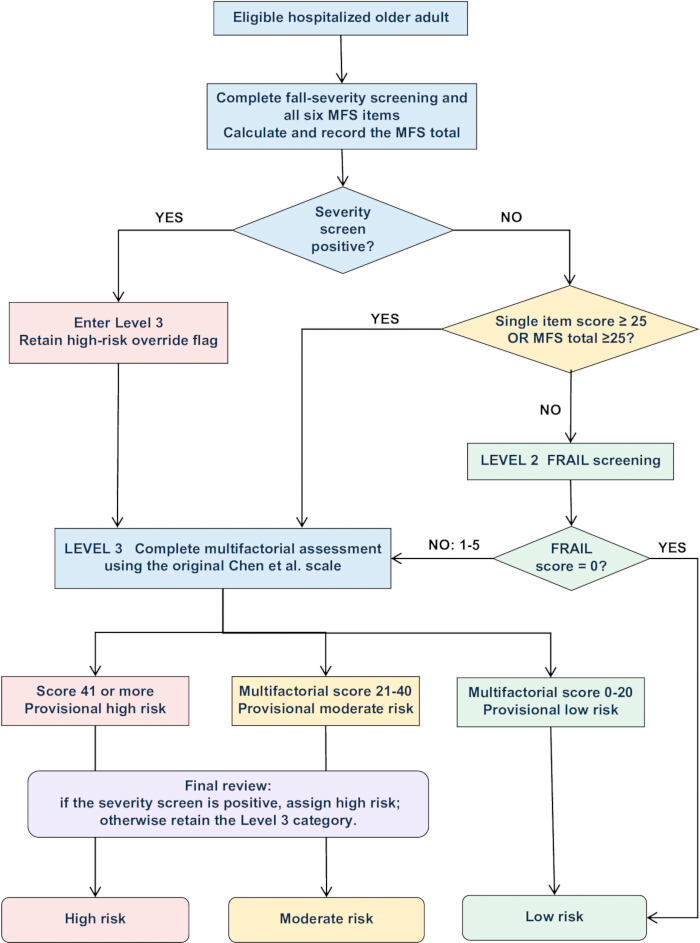
Figure 1. Three-Level Fall Risk Assessment and Classification Algorithm. Please click here to view a larger version of this figure.
Flowchart illustrating the three-level fall risk assessment pathway for hospitalized older adults. Eligible participants first undergo fall-severity screening and assessment using the Morse Fall Scale (MFS). Participants with a positive fall-severity screen or an MFS total score ≥25 proceed directly to the Third-Level multifactorial assessment. Participants with a negative fall-severity screen and an MFS total score <25 undergo FRAIL (Fatigue, Resistance, Ambulation, Illnesses, and Loss of Weight) screening. Participants with a FRAIL score of 0 are classified as low risk, whereas those with a FRAIL score of 1–5 proceed to the Third-Level multifactorial assessment. Final risk classification is based on the multifactorial assessment score, with a positive fall-severity screen overriding other classifications and assigning the participant to the high-risk category. Abbreviations: FRAIL, Fatigue, Resistance, Ambulation, Illnesses, and Loss of Weight; MFS, Morse Fall Scale.
| Stage | Condition | Action | Final Risk Implication |
| Level 1 | Fall-severity screen positive | Enter Level 3 | High-risk override applies. |
| Fall-severity screen negative and any single MFS item score ≥25 or cumulative MFS score ≥25 | Enter Level 3 | Final risk category determined after Level 3 assessment unless a higher-priority rule applies. | |
| Fall-severity screen negative, no single MFS item score ≥25, and cumulative MFS score <25 | Proceed to Level 2 (FRAIL screening) | Risk category not yet determined. | |
| Level 2 | FRAIL score = 0 | Exit pathway | Assign low risk. |
| FRAIL score = 1–5 | Enter Level 3 | FRAIL determines eligibility for further assessment but does not determine the final risk category. | |
| Level 3 | Multifactorial assessment score 0–20 | Assign low risk | Final classification unless superseded by the high-risk override. |
| Multifactorial assessment score 21–40 | Assign moderate risk | Final classification unless superseded by the high-risk override. | |
| Multifactorial assessment score ≥41 | Assign high risk | Final classification. | |
| Final Review | More than one risk criterion is met | Apply the higher risk category | Follow the higher-risk principle. |
Table 10: Three-Level Routing and Final Risk-Stratification Algorithm. Decision algorithm summarizing the three-level fall-risk assessment pathway used in this protocol. Participants first undergo the fall-severity screen (Level 1). Those with a positive fall-severity screen proceed directly to the multifactorial assessment (Level 3), and the high-risk override is applied. Participants with a negative fall-severity screen are routed according to the Morse Fall Scale (MFS) and FRAIL assessment. Completion of all six MFS items is required. A single MFS item scored 25 or 30 points satisfies the ≥25-point routing threshold because the cumulative MFS score has already reached that threshold; otherwise, the cumulative MFS score is used. This routing threshold is a study-specific operational decision rule within standard MFS scoring and does not represent a separate MFS risk-category cutoff. Standard MFS categories are 0–24 (low risk), 25–44 (moderate risk), and ≥45 (high risk). A positive fall-severity screen is defined as two or more falls during the previous year, a fall-related injury requiring medical attention, inability to rise without assistance after a fall, or loss of consciousness or suspected syncope. The algorithm was developed from the study protocol and adapted from Chen et al.12.
6. Reassess Fall Risk Dynamically
- Perform fall-risk screening and assessment at least once annually for all older adults.
- Reassess community-dwelling older adults classified as high risk at least once every 6 months.
- Perform fall-risk screening and assessment at the participant’s first hospital admission or first institutional admission.
- Monitor participants classified as high risk daily.
- Reassess participants classified as high risk within 1 month.
- Reassess the participant within 24 h after a fall.
- Reassess the participant within 24 h after a significant change in disease status.
- Reassess the participant within 24 h after a relevant medication adjustment.
- Revise the intervention program according to the reassessment results.
- Follow the reassessment process provided in Figure 1.
Access restricted. Please log in or start a trial to view this content.
Results
Study Design and Participant Characteristics
This study was a single-center retrospective descriptive analysis of prospectively collected clinical data from pathway implementation between June 1, 2023, and December 31, 2024. The source population comprised 350 hospitalized patients. A convenience sample of 152 records was selected for analysis. One record was excluded because personal and baseline information were incomplete, leaving 151 complete records for analysis. The part...
Access restricted. Please log in or start a trial to view this content.
Discussion
The three-level fall-risk assessment method described in this study has several operational features and practical advantages. First, it systematically combines the MFS, FRAIL Scale, and CGA-based multifactorial Fall Risk Assessment Scale with fall-severity screening derived from the 2022 World Guidelines for Falls Prevention and Management for Older Adults, thereby establishing a progressive assessment pathway. Second, unlike approaches based on a single fall-risk screening tool, it provides a clearly defined w...
Access restricted. Please log in or start a trial to view this content.
Disclosures
The authors declare that they have no competing interests.
Acknowledgements
This work was supported by the Hangzhou Health Science and Technology Plan (Grant No. ZD20230125).
Access restricted. Please log in or start a trial to view this content.
Materials
| Name | Company | Catalog Number | Comments |
|---|---|---|---|
| Armchair with armrests | Locally supplied hospital furniture | Not applicable | Seat height 46 cm; armrest height 21 cm. Used for the 3-m Timed Up and Go test. |
| Barthel Index, Chinese version | Not applicable | Chinese 10-item, 100-point version (Hou et al., 2012) | Used to assess functional dependence. |
| Chair without armrests | Locally supplied hospital furniture | Not applicable | Seat height 46 cm. Used for the Five-Times Sit-to-Stand Test. |
| Fall Risk Assessment Scale for Older Adults, Chinese version | Not applicable | Chen et al. (2024) | Published assessment instrument used for the Third-Level assessment. |
| FRAIL Scale, Chinese version | Not applicable | Wei et al. (2018), Chinese version | Used for Second-Level frailty screening. |
| Handgrip dynamometer | Yiwu Huaju | HJ-101 | Used to measure handgrip strength. Record the higher value from the two hands. |
| Height and weight scale | Zhejiang Qida | QD-602 | Used to measure height and weight for BMI calculation. |
| Measurement forms (assessment record forms) | Study hospital (locally supplied) | Paper assessment record forms; one form per participant; no version number or revision date available | Required for recording assessment results throughout the protocol. |
| Mini-Cog, Chinese version | Study hospital | Chinese-language local version used in the hospital's comprehensive geriatric assessment; no separate version number documented | Immediate word registration was not scored. Delayed recall was scored from 0 to 2 points, and clock drawing was scored from 0 to 3 points, yielding a total score of 0–5 points. |
| Morse Fall Scale (MFS), Chinese version | Not applicable | Chinese version translated by Zhou Jungui (2010) and subsequently validated in 2012 | Six-item fall-risk screening instrument used without local modification. |
| Numeric Rating Scale (NRS-11), Chinese version | Not applicable | 0–10 Numeric Rating Scale | Used to assess current pain intensity. |
| Paper | Study hospital (locally supplied) | Not applicable | Used for recording assessment results. |
| Pen | Study hospital (locally supplied) | Not applicable | Used for recording assessment results. |
| Tape measure | Deli Group | JDDLXC1412 | Non-elastic tape used to measure calf circumference. |
| Timer (digital stopwatch) | Shenzhen Yisheng | YS-802 | Used for the Five-Times Sit-to-Stand Test, Timed Up and Go Test, and standing balance tests. |
| Walkway marker (3 m) | Locally supplied | Not applicable | Used to mark the 3-m Timed Up and Go test distance. |
| WHO Classification of Hearing Impairment | World Health Organization | World Report on Hearing (2021) | Used for hearing classification during the assessment. |
| WHO Classification of Vision Impairment | World Health Organization | ICD-11 / WHO (2023) | Used for vision classification during the assessment. |
References
- World Health Organization. World report on ageing and health. World Health Organization; Geneva; 2015. Available from: https://www.who.int/publications/i/item/9789241565042.
- World Health Organization. WHO global report on falls prevention in older age. World Health Organization; Geneva; 2008. Available from: https://www.who.int/publications-detail-redirect/9789241563536.
- Montero-Odasso M, et al. World guidelines for falls prevention and management for older adults: a global initiative. Age Ageing. 2022;51(9):afac205. doi:10.1093/ageing/afac205.
- Kim KI, et al. Evidence-based guidelines for fall prevention in Korea. Korean J Intern Med. 2017;32(1):199-210. doi:10.3904/kjim.2016.218.
- Panel on Prevention of Falls in Older Persons, American Geriatrics Society and British Geriatrics Society. Summary of the updated American Geriatrics Society/British Geriatrics Society clinical practice guideline for prevention of falls in older persons. J Am Geriatr Soc. 2011;59(1):148-57. doi:10.1111/j.1532-5415.2010.03234.x.
- Strini V, Schiavolin R, Prendin A. Fall risk assessment scales: a systematic literature review. Nurs Rep. 2021;11(2):430-43. doi:10.3390/nursrep11020041.
- Glass A, Mendelson G, Ben Natan M. Comparison of two fall-risk assessment tools used in a long-term care facility. Int J Health Care Qual Assur. 2020;33(3):237-46. doi:10.1108/IJHCQA-03-2019-0065.
- Morris ME, et al. Divesting from a scored hospital fall risk assessment tool (FRAT): a cluster randomized non-inferiority trial. J Am Geriatr Soc. 2021;69(9):2598-604. doi:10.1111/jgs.17125.
- Morse JM, Black C, Oberle K, Donahue P. A prospective study to identify the fall-prone patient. Soc Sci Med. 1989;28(1):81-6. doi:10.1016/0277-9536(89)90309-2.
- Wu Y, et al. Interpretation of the 2022 edition of the "World Guidelines: Prevention and Management of Falls in Older Adults." Chinese General Practice. 2023;26(10):1159-63, 1171. doi:10.12114/j.issn.1007-9572.2022.0842.
- Wei Y, et al. Reliability and validity of the Chinese version of the FRAIL Scale for older inpatients. Chin J Pract Nurs. 2018;34(20):1526-30. doi:10.3760/cma.j.issn.1672-7088.2018.20.002.
- Chen X, et al. Construction and validation of a fall risk assessment scale for older adults based on comprehensive geriatric assessment. J Nurs Rehabil. 2024;23(8):26-30.
- Borson S, et al. The Mini-Cog: a cognitive "vital signs" measure for dementia screening in multi-lingual elderly. Int J Geriatr Psychiatry. 2000;15(11):1021-7. doi:10.1002/1099-1166(200011)15:11<1021::AID-GPS234>3.0.CO;2-6.
- Hou D, et al. Reliability and validity of the Chinese version of the Barthel Index. Clin Focus. 2012;27(3):219-21.
- Hjermstad MJ, et al. Studies comparing numerical rating scales, verbal rating scales, and visual analogue scales for assessment of pain intensity in adults: a systematic literature review. J Pain Symptom Manage. 2011;41(6):1073-93. doi:10.1016/j.jpainsymman.2010.08.016.
- Fang IM, Fang YJ, Hu HY, Weng SH. Association of visual impairment with cognitive decline among older adults in Taiwan. Sci Rep. 2021;11(1):17593. doi:10.1038/s41598-021-97095-9.
- World Health Organization. World report on hearing. World Health Organization; Geneva; 2021. Available from: https://www.who.int/publications/i/item/9789240020481.
- Chen LK, et al. Asian Working Group for Sarcopenia: 2019 consensus update on sarcopenia diagnosis and treatment. J Am Med Dir Assoc. 2020;21(3):300-307.e2. doi:10.1016/j.jamda.2019.12.012.
- Haines TP, Hill K, Walsh W, Osborne R. Design-related bias in hospital fall risk screening tool predictive accuracy evaluations: systematic review and meta-analysis. J Gerontol A Biol Sci Med Sci. 2007;62(6):664-72. doi:10.1093/gerona/62.6.664.
- Kim J, Lee W, Lee SH. A systematic review of the guidelines and Delphi study for the multifactorial fall risk assessment of community-dwelling elderly. Int J Environ Res Public Health. 2020;17(17):6097. doi:10.3390/ijerph17176097.
- Aranda-Gallardo M, et al. Instruments for assessing the risk of falls in acute hospitalized patients: a systematic review and meta-analysis. BMC Health Serv Res. 2013;13:122. doi:10.1186/1472-6963-13-122.
- Chen M, et al. A systematic review of wearable sensor-based technologies for fall risk assessment in older adults. Sensors (Basel). 2022;22(18):6752. doi:10.3390/s22186752.
Access restricted. Please log in or start a trial to view this content.
Reprints and Permissions
This article has been published
Video Coming Soon