This bibliometric analysis delineates the landscape of mitochondrial research in diabetic nephropathy (DN) and summarizes major thematic changes and emerging topics.
Research Article
A Bibliometric and Visualized Analysis of Mitochondrial Research in Diabetic Nephropathy
* These authors contributed equally
In This Article
Summary
Abstract
This bibliometric study systematically maps the global landscape of mitochondrial research in DN from 2016 to 2025. To maintain consistency with the study title and search focus, DN is used as the primary term, whereas diabetic kidney disease (DKD) is retained only when describing search terms, screening criteria, or original author keywords. A total of 1,342 publications were retrieved from the Science Citation Index Expanded (SCI-EXPANDED) and Social Sciences Citation Index (SSCI) within the Web of Science Core Collection (WoSCC) and analyzed using CiteSpace, VOSviewer, and Scimago Graphica. Annual publication output increased nearly fourfold from 63 in 2016 to 239 in 2025, and dataset-level citation visibility also increased. China led in publication volume, whereas Australia and the United States showed higher average citations per paper, indicating a divergence between output and citation-based visibility. Central South University ranked first in institutional output and total citations among the institutions shown, but its collaboration connectivity was lower than that of Shanghai Jiao Tong University and Zhejiang University. Keyword and reference analyses showed a temporal expansion from high-glucose-induced oxidative stress and apoptosis to mitophagy, ferroptosis, mitochondrial dynamics, mitochondria-associated endoplasmic reticulum membranes (MAMs), and the NLRP3 inflammasome. Intervention-related and methodology-related topics, including SGLT2 inhibitors, MitoQ, caloric restriction, Mendelian randomization, and metabolomics, were also identified. Overall, mitochondrial research in DN has broadened toward mitochondrial quality control, regulated cell death, multi-omics approaches, and intervention-related topics. These bibliometric patterns indicate topic prominence and citation visibility rather than direct mechanistic or clinical evidence and may help identify directions requiring further validation.
Introduction
DN is one of the most severe microvascular complications of diabetes mellitus and a leading cause of end-stage renal disease worldwide1,2. Despite substantial progress in glucose control, blood pressure management, and renin-angiotensin system blockade, the incidence of DN continues to rise, and a considerable proportion of patients still progress to irreversible renal failure3. This unmet clinical need has driven an intense search for novel pathophysiological mechanisms and therapeutic targets. Mitochondria serve as central hubs of cellular energy metabolism, redox homeostasis, and apoptosis, and have emerged as critical nodes in the pathogenesis of DN4,5. Studies over the past two decades have established that hyperglycemia-induced mitochondrial dysfunction directly contributes to podocyte injury, tubular epithelial cell damage, mesangial expansion, and interstitial fibrosis6,7. This dysfunction is characterized by excessive reactive oxygen species production, impaired oxidative phosphorylation, mitochondrial fragmentation, defective mitophagy, and dysregulated mitochondrial biogenesis8,9. Consequently, mitochondria-related signaling pathways involving SIRT3, PGC1α, Drp1, PINK1, Parkin, and the NLRP3 inflammasome have become key research foci10,11. Recently, emerging concepts such as ferroptosis, MAMs, and mitochondrial metabolic reprogramming have further expanded the mechanistic landscape of DN12,13,14. The volume of publications on mitochondrial research in DN has increased substantially, generating a rich but increasingly complex and fragmented body of knowledge.
Given the rapid proliferation of literature, traditional narrative reviews are insufficient to systematically capture the evolving intellectual landscape, collaborative networks, and emerging frontiers of this field15. Bibliometric analysis, a quantitative and visualization-based approach, offers an objective means to map scientific outputs, identify influential papers, authors, institutions, and countries, and detect the dynamics of research topics over time16,17,18,19,20. Several bibliometric studies have examined diabetic nephropathy, DKD, mitochondria-related kidney research, or oxidative stress-related topics21,22,23,24. Nevertheless, an updated, topic-focused bibliometric synthesis of mitochondrial research in DN may still help clarify recent research activity, collaboration patterns, thematic evolution, and emerging topics in this specific field. In this study, all relevant publications were retrieved from the SCI-EXPANDED and SSCI within the WoSCC, covering the period from 2016 to 2025. CiteSpace, VOSviewer, and Scimago Graphica were employed to conduct a systematic bibliometric and visualization analysis. This study delineates the current research landscape and summarizes the evolution of major topics, including mitophagy, ferroptosis, mitochondrial dynamics, and intervention-related research, thereby providing a bibliometric basis for identifying directions that warrant further experimental and clinical validation.
Protocol
Data acquisition and search strategy
All bibliometric records were retrieved from the SCI-EXPANDED and SSCI within the WoSCC on April 30, 2026. SCI-EXPANDED was used to capture biomedical and life-science literature, while SSCI was retained to include potentially relevant interdisciplinary records. The search strategy was constructed with reference to the Medical Subject Headings (MeSH) database. “Diabetic Nephropathies” and “Mitochondria” were searched separately in MeSH, and the corresponding MeSH terms, entry terms, and related subheadings were reviewed to guide keyword selection and synonym expansion. Because Web of Science does not directly use MeSH indexing, the MeSH-derived terms were translated into topic-field search terms. The final search was performed using the following Boolean expression: TS=((“diabetic nephropathy” OR “diabetic nephropathies” OR “diabetic kidney disease” OR “diabetic kidney diseases” OR “diabetic kidney” OR “diabetic renal”) AND (mitochondria* OR mitochondrial* OR mitophagy OR “mitochondrial dysfunction” OR “mitochondrial dynamics” OR “mitochondrial fission” OR “mitochondrial fusion” OR “mitochondrial biogenesis” OR “mitochondrial quality control”)). Document types were restricted to articles and review articles, and the publication period was set from January 1, 2016, to December 31, 2025. This period was selected because it represented the most recent complete 10-year interval available at the time of retrieval, allowing the analysis to focus on contemporary developments in mitochondrial research in DN while avoiding potential bias from an incomplete 2026 publication year.
All records were exported in plain-text format with the “Full Record and Cited References” option selected. To reduce the inclusion of irrelevant records potentially retrieved through Keywords Plus, the titles, abstracts, and author keywords of all retrieved records were manually screened. Only records substantively related to mitochondrial research in DN or DKD were retained. Publications were excluded if DN or DKD was mentioned only as one of several diabetic complications or as background information, without kidney-related outcomes, renal cell models, renal tissue evidence, nephropathy-specific mechanisms, or a primary focus on DKD. After duplicate removal and manual screening according to the predefined inclusion and exclusion criteria, 1,342 eligible publications were included in the final analysis.
Analytical tools and mapping workflow
Basic statistical analyses and conventional charts, including bar charts, line charts, pie charts, and bubble plots, were generated using WPS Excel 2023 and GraphPad Prism 10.1. Annual publication output was summarized by publication year. Dataset-level annual Times Cited counts were obtained from the WoSCC citation report and defined as citations received in each calendar year by all 1,342 included records, rather than same-year citations to annual publication cohorts or field-wide annual citation totals. For country/region-level analyses, average citations per paper were calculated by dividing total citations by the number of publications for each country/region. This metric was interpreted as an unadjusted descriptive indicator of citation visibility within the retrieved dataset. It was not considered a direct measure of national research quality or academic influence, because citation counts may be influenced by publication year, citation window, journal platform, article type, study design, and field-specific citation practices.
Knowledge mapping was performed using VOSviewer 1.6.19, CiteSpace 6.4.R1, and Scimago Graphica 1.0.25. The databases, software, and online resources used for literature retrieval, bibliometric analysis, visualization, and journal metric retrieval are listed in the Table of Materials. Network analyses were conducted using the full counting method. The WoSCC plain text files were imported into VOSviewer to construct co-authorship networks at the country/region, institution, and author levels, as well as keyword co-occurrence and journal co-citation networks. For geographic visualization, the country/region co-authorship network generated in VOSviewer was exported as a Graph Modeling Language (GML) file and imported into Scimago Graphica, where a geographic layout was applied with a world map as the background. In this map, node size represented publication volume, and link thickness indicated collaboration intensity. The same WoSCC dataset was imported into CiteSpace for keyword-timeline clustering, reference co-citation clustering, and citation-burst detection to characterize the temporal evolution and intellectual structure of the field.
Parameter configuration in CiteSpace and VOSviewer
In CiteSpace, the time span was set from 2016 to 2025, with each time slice set to 1 year, yielding 10 slices in total. Node types were selected according to the analytical purpose, with Keyword used for keyword timeline and burst analyses, and Reference used for reference co-citation and burst analyses. The node selection criterion was set to the g-index with a scaling factor of k = 10, rather than a fixed Top N or Top N% threshold, to allow node selection to adapt to yearly citation or occurrence distributions while maintaining an interpretable network size25,26. Pathfinder pruning was applied to the time-sliced networks and the merged network, whereas the Minimum Spanning Tree algorithm was not used. For burst detection, the decay factor γ was set to 0.5. In the reference co-citation clustering analysis, modularity Q and weighted mean silhouette values were calculated to describe the overall structure and cluster consistency of the pruned network.
In VOSviewer 1.6.19, all WoSCC plain text files were imported by selecting “Create a map based on bibliographic data” and “Read data from bibliographic database files,” with the file type specified as Web of Science. The full counting method was used. For co-authorship networks, the minimum publication threshold was set to 5 for countries/regions and institutions and to 3 for authors.
For institution-level analyses, institutional names were manually checked and harmonized according to the WoSCC affiliation records before network construction. The citation count for each institution was defined as the total WoSCC Times Cited count of publications attributed to that institution within the retrieved dataset. Abbreviated node labels generated in VOSviewer were further checked against the corresponding full institutional names to avoid ambiguity. For country/region analysis, the WoSCC country/region address field was used. Country/region names were manually harmonized for spelling variants and abbreviations. England, Scotland, Wales, and Northern Ireland were consolidated into the United Kingdom, and People’s Republic of China was shortened to China. Mainland China was reported as China, whereas Hong Kong Special Administrative Region (Hong Kong SAR), Macao SAR, and Taiwan were retained as separate regions if indexed separately by WoSCC; no post hoc merging was performed for country/region-level network analysis. For keyword co-occurrence analysis, the analysis unit was set to author keywords extracted from the WoSCC records, and the minimum occurrence threshold was set to 5; at this threshold, 89 keywords met the criteria. Before network generation, synonymous terms and abbreviations identified in the author-keyword list were manually standardized; for example, abbreviations for DN and reactive oxygen species were converted into their full terms. For journal co-citation analysis, cited sources were used as the unit of analysis, and a citation threshold was applied to retain an interpretable network of 53 journals. The layout was set to LinLog/modularity, with Attraction set to 2 and Repulsion set to -1. Node size was weighted by publication count, citation frequency, keyword occurrence, or co-citation strength according to the specific analysis. All network generation procedures were independently performed twice by the first and second authors using the same dataset and parameter settings to verify the stability of the results. In cases of notable discrepancies, the raw data and parameter settings were rechecked before reanalysis.
Results
Annual publication trends and dataset-level citation visibility
From 2016 to 2025, the annual number of publications on mitochondrial research in DN increased from 63 to 239. Dataset-level annual Times Cited counts for the fixed dataset increased from 49 in 2016 to 12,516 in 2025. This metric represents citations received in each calendar year by all included records, rather than same-year citations to annual publication cohorts or field-wide citation totals. Because this citation metric was calculated for the fixed dataset as a whole, annual citation counts are affected by publication age, accumulated exposure time, and unequal citation windows among the included records. Therefore, the upward citation curve in Figure 1 should be interpreted as dataset-level citation visibility rather than direct evidence of increasing research impact over time. From 2022 to 2025, 754 publications were recorded, accounting for 56.2% of the total number of publications shown in Figure 1.
Regional patterns of country/region collaboration networks and citation visibility
The country/region analysis summarized publication output, citation-based indicators, and collaboration patterns in mitochondrial research in diabetic nephropathy. China ranked first with 775 publications, followed by the United States with 235 publications; together, these two countries contributed more than 70% of the total literature output in this field (Table 1). In terms of average citations per paper, Australia ranked first with 98 citations per paper, followed by the United States with 69 and China with 30. These values were interpreted as descriptive citation visibility indicators rather than direct measures of research quality. Australia ranked eighth in total publication count but showed relatively high unadjusted citation visibility and multiple collaboration links with teams in Europe and the United States. Its collaboration network showed links with the United Kingdom, Germany, and the United States (Figure 2A). Regarding collaboration intensity, the United States had the highest total link strength at 140, followed by China with 82. Figure 2B presents a bubble plot integrating publication volume, citation counts, and total link strength across three dimensions. In this plot, China showed the highest publication volume and high total citation counts, whereas the United States showed high citation counts and the highest collaboration intensity. When average citations per paper were considered, Australia and Italy ranked highly in this dataset.
Further examination of the country/region collaboration network revealed five main collaboration clusters (Figure 2A). The chord diagram further illustrated collaboration links among countries/regions (Figure 2C). The largest cluster included China, the United States, Japan, and South Korea, with multiple collaboration links among these countries. Within Europe, a subnetwork centered on Italy, Spain, the Netherlands, and Denmark emerged, alongside another collaboration axis connecting Germany, France, and Sweden. Middle Eastern and South Asian countries, such as Egypt, India, Israel, and Saudi Arabia, formed a relatively independent cluster with weaker links to Europe and America. Trans-regional connections among Australia, the United Kingdom, and Germany were also observed.
Institutional research output and collaboration network characteristics
The institutional co-authorship network constructed by VOSviewer included 51 institutions forming nine clusters (Figure 3A). The abbreviated node label “China Med Univ” in Figure 3A refers to China Medical University. Central South University showed the highest publication output and the highest total citation count among the institutions shown, but its collaboration connectivity was not the strongest. Overall, most institutions mainly collaborated with domestic or East Asian partners, while limited cross-regional links with institutions in the United States and Australia were also observed. In terms of publication volume, all top 10 institutions were from China (Figure 3B). Central South University ranked first with 56 publications, followed by Wuhan University with 35, and Zhengzhou University and Shanghai Jiao Tong University with 30 publications each (Table 2). However, the total link strength of Central South University was 20, lower than that of Shanghai Jiao Tong University and Zhejiang University, indicating that high publication output did not necessarily correspond to the strongest institutional collaboration connectivity. In terms of total citations, Central South University ranked first with 2,999 total citations, followed by Monash University with 1,713. Other institutions from China, the United States, and Australia also ranked among the top 10 by total citation count (Figure 3C).
Journal co-citation network and publication characteristics
The journal co-citation network included 53 selected journals forming five clusters (Figure 4A). Cluster 1 contained 14 journals, represented by Redox Biology, Cell Death & Disease, and Metabolism-Clinical and Experimental, and included journals related to oxidative stress, mitophagy, and metabolic reprogramming. Cluster 2 included nephrology and multidisciplinary journals, such as Kidney International, JCI Insight, Nature Reviews Nephrology, Diabetes, and Nature Communications. Clusters 3 and 4 covered journals such as Antioxidants, Frontiers in Pharmacology, Biomedicine & Pharmacotherapy, Scientific Reports, and PLOS ONE. Cluster 5 included journals such as Free Radical Biology and Medicine, Renal Failure, and Phytomedicine. In terms of publication volume, Frontiers in Pharmacology ranked first with 54 articles, followed by International Journal of Molecular Sciences (45 articles) and Scientific Reports (29 articles) (Figure 4B, Table 3). Frontiers in Pharmacology had an impact factor of 4.8 and 1,379 citations, whereas International Journal of Molecular Sciences had an impact factor of 4.9 and 1,885 citations, and Free Radical Biology and Medicine had an impact factor of 8.2 and 1,362 citations. Regarding citation volume, Nature Reviews Nephrology ranked first with 2,455 total citations, followed by International Journal of Molecular Sciences with 1,885 citations, Redox Biology with 1,452 citations, Frontiers in Pharmacology with 1,379 citations, Free Radical Biology and Medicine with 1,362 citations, Kidney International with 1,338 citations, and Cell Death & Disease with 1,268 citations (Figure 4C).
Author co-authorship network and publication/citation indicators
In the author co-authorship network, 24 prolific authors were grouped into five clusters (Figure 5A). The network showed several relatively distinct author teams, with Sun Lin, Yang Ming, Xiao Li, Han Yachun, Liu Fuyou, Chen Wei, Gao Peng, Danesh Farhad R., Galvan Daniel L., and Li Li appearing as major nodes across these collaboration groups. Danesh Farhad R. and Galvan Daniel L. also appeared among the top 10 authors by total citation count. Regarding publication volume, Sun Lin ranked first with 24 papers, followed by Yang Ming with 20 papers and Li Ping with 17 papers. Among the top 10 most productive authors, eight were from China and two were from the United States (Figure 5B).
In terms of total citations, Sun Lin ranked first with 1,775 citations, followed by Xiao Li with 1,341 citations, Yang Ming with 1,288 citations, and Liu Fuyou with 1,236 citations (Figure 5C). Authors from the United States, including Danesh Farhad R. with 1,097 citations, Galvan Daniel L. with 1,081 citations, and Sharma Kumar with 852 citations, as well as Cooper Mark E. from Australia with 1,091 citations, also ranked among the top 10 by total citation count. Li Ping ranked third by publication volume but did not appear among the top 10 authors by total citation count. In the retrieved dataset, Sun Lin ranked first in both publication volume and total citation count.
Keyword co-occurrence and evolution of research hotspots
Author-keyword co-occurrence analysis summarized the frequency and betweenness centrality of keywords in mitochondrial research on diabetic nephropathy. Among high-frequency keywords, “diabetic nephropathy” had the highest frequency with 573 occurrences, followed by “oxidative stress” with 449 occurrences, “diabetic kidney disease” with 292 occurrences, and “mitochondrial dysfunction” with 235 occurrences (Table 4). Because “diabetic nephropathy” and mitochondria-related terms were central components of the search strategy and study scope, their high frequency was expected and was interpreted mainly as evidence of topic consistency rather than as an independent emerging hotspot. Other frequently occurring keywords included “activation” (197), “injury” (194), and “apoptosis” (140). In the keyword co-occurrence network, high glucose, reactive oxygen species, glucose, diabetic nephropathy, mitochondrial dysfunction, and mitochondrial homeostasis appeared as prominent interconnected nodes, indicating that oxidative stress, metabolic disturbance, and mitochondrial impairment formed the core co-occurrence structure of this field (Figure 6A). Although “mitophagy” did not enter the top 10 keywords by frequency in Table 4, it appeared as a visible topic in the keyword co-occurrence and timeline visualizations, suggesting its relevance to the thematic evolution of mitochondrial research in DN. In terms of betweenness centrality, “kidney” (0.35) and “mesangial cells” (0.33) had the highest centrality values, followed by “pathway” (0.30), “reactive oxygen species” (0.27), “NF-κB” (0.25), “endoplasmic reticulum stress” (0.22), “acute kidney injury” (0.22), “glucose” (0.21), “mitochondria” (0.19), and “cardiovascular disease” (0.19) (Table 4). It should be noted that Table 4 summarizes ranked keywords by frequency and betweenness centrality, whereas Figure 6B and Figure 6C present algorithmically generated clusters and their temporal activity; therefore, the cluster labels in Figure 6 are not expected to exactly reproduce the ranked keyword list in Table 4.
Keyword timeline mapping visualized the temporal activity of keyword clusters from 2016 to 2025 (Figure 6C). Early active topics were mainly related to high glucose, reactive oxygen species, chronic kidney disease, acute kidney injury, insulin resistance, glucose, and mitochondrial function. In later years, fission, mitophagy, mitochondrial homeostasis, fatty acid oxidation, and type 2 diabetes appeared as sustained or emerging timeline topics. Keyword clustering generated 13 thematic clusters (Figure 6B), including chronic kidney disease, protects, skeletal muscle, cardiovascular disease, diabetic nephropathy, lipid peroxidation, diabetes mellitus, DKD, fission, traditional Chinese medicine, endoplasmic reticulum stress, mice, and fatty acid oxidation. These cluster labels were algorithmically generated and should be interpreted as descriptive labels of keyword co-occurrence patterns rather than as a ranked list of high-frequency keywords. The kidney-related clusters mainly included diabetic nephropathy, DKD, chronic kidney disease, lipid peroxidation, fission, endoplasmic reticulum stress, traditional Chinese medicine, mice, and fatty acid oxidation. Notably, some algorithmically generated labels, such as skeletal muscle and cardiovascular disease, appeared to reflect peripheral or systemic diabetes-related terms rather than core DN-specific mitochondrial mechanisms. Therefore, these peripheral clusters were not interpreted as major research hotspots in the present study. Timeline visualization showed that fission-, mitophagy-, and fatty acid oxidation-related topics remained active after 2019 (Figure 6C).
Reference co-citation clusters and citation burst analysis
Reference co-citation analysis generated 18 clusters in the Pathfinder-pruned network, with modularity Q = 0.867 and weighted mean silhouette value = 0.9587 (Figure 7A,B). However, because Pathfinder pruning may reduce weak cross-cluster links, these clusters were interpreted as thematic concentrations in the retrieved literature rather than as evidence that the themes were completely independent of one another. Major reference clusters included ferroptosis, NLRP3 inflammasome, PINK1, MAMs, SGLT2 inhibitors, MitoQ, caloric restriction, Mendelian randomization, and metabolomics. The strongest early citation bursts were Dugan et al. (strength 24.52, from 2016 to 2018), Sharma et al. (strength 20.58, from 2016 to 2018), Kang et al. (strength 18.91, from 2016 to 2020), and Zhan et al. (strength 16.91, from 2016 to 2020).
Representative later burst references included Coughlan et al. (strength 12.02, from 2017 to 2021), Ayanga et al. (strength 10.71, from 2017 to 2021), Qi et al. (strength 14.31, from 2018 to 2022), Xiao et al. (strength 12.43, from 2018 to 2022), Bhargava et al. (strength 20.52, from 2019 to 2022), Galvan et al. (strength 13.07, from 2019 to 2022), Forbes et al. (strength 20.53, from 2020 to 2023), and Wei et al. (strength 10.75, from 2021 to 2023) (Figure 7C). Together, these burst references and co-citation clusters characterized the temporal distribution and thematic composition of the cited literature in the retrieved dataset.
DATA AVAILABILITY:
The raw data supporting the findings of this study have been deposited in the public repository Science Data Bank (ScienceDB), under the dataset titled “A Bibliometric and Visualized Analysis of Mitochondrial Research in Diabetic Nephropathy.” The dataset is accessible via the following link: https://www.scidb.cn/s/2aiiYj. The deposited data include the complete set of bibliographic records retrieved from the WoSCC on April 30, 2026, using the search strategy described in the Protocol section, as well as the intermediate data files used for the bibliometric and visualization analyses. The dataset is made available under the CC BY‑NC 4.0 license to further support the reproducibility of this study.
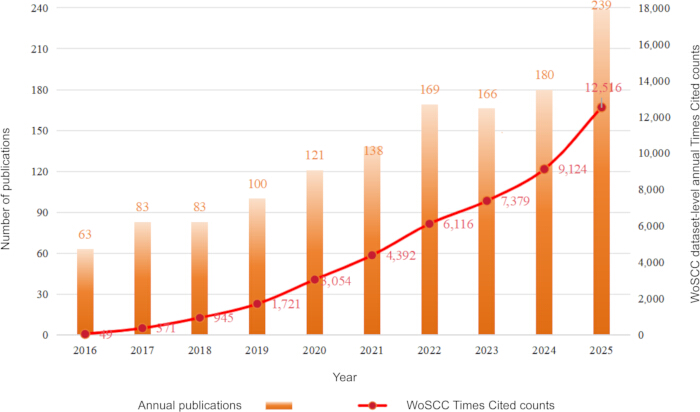
Figure 1: Annual publication output and WoSCC dataset-level citation visibility of mitochondrial research in DN from 2016 to 2025. Orange bars represent the number of publications per year, corresponding to the left y-axis. The red line represents WoSCC dataset-level annual Times Cited counts, corresponding to the right y-axis. These counts indicate citations received in each calendar year by all 1,342 included records and should be interpreted as dataset-level citation visibility rather than direct evidence of increasing research impact over time. Abbreviations: WoSCC = Web of Science Core Collection. Please click here to view a larger version of this figure.
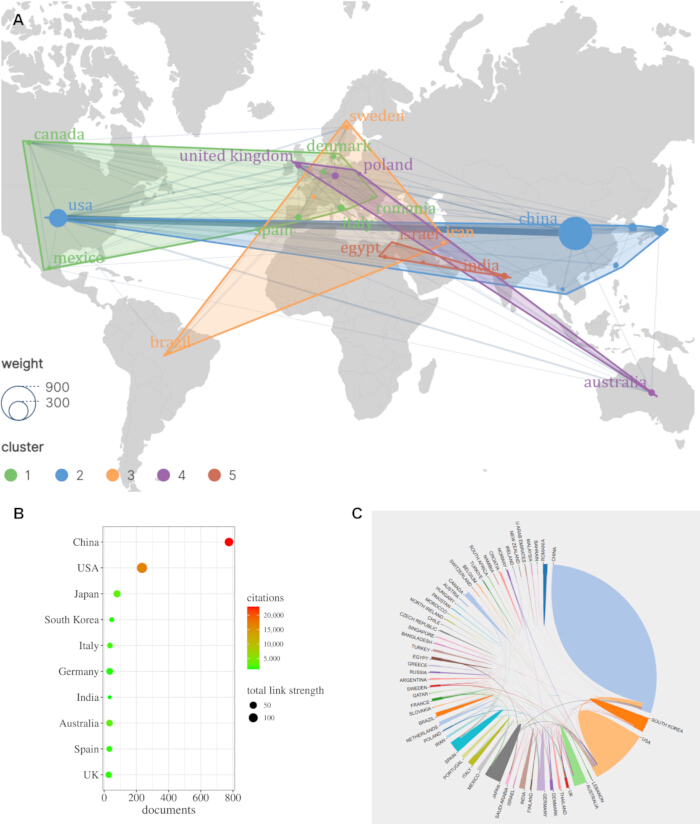
Figure 2: Country/region collaboration networks and bibliometric indicators. (A) Global collaboration network overlaid on a world map, where node size represents publication volume and link thickness denotes collaboration intensity. (B) Bubble plot showing publication volume, citation count, and total link strength for the top 10 countries/regions. (C) Chord diagram illustrating collaboration links among countries/regions. Abbreviations: USA = United States of America; UK = United Kingdom, with England, Scotland, Wales, and Northern Ireland consolidated. Please click here to view a larger version of this figure.
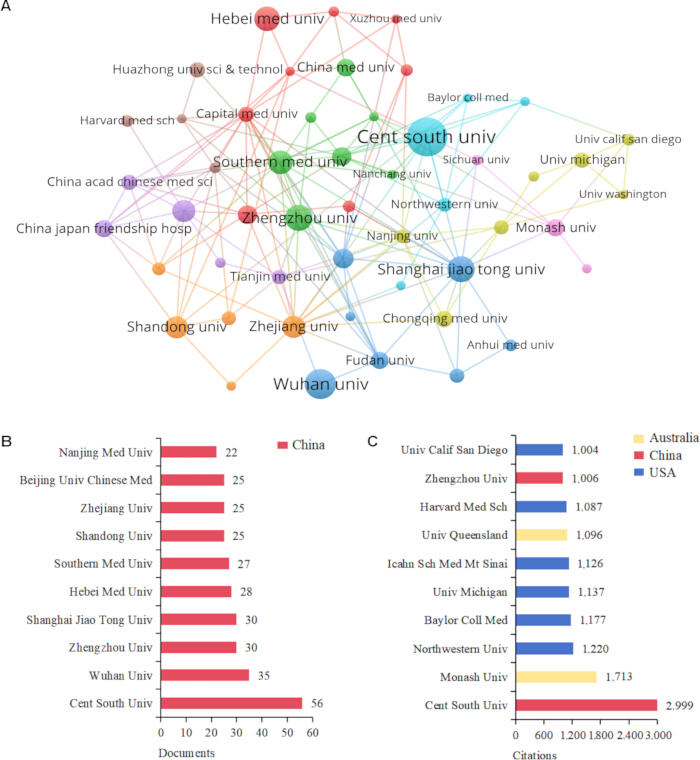
Figure 3: Institutional collaboration networks and research output. (A) Co-authorship network of 51 institutions organized into nine clusters. (B) Bar chart of the top 10 institutions by publication volume. (C) Bar chart of the top 10 institutions by total citation count. The abbreviated node label “China Med Univ” in panel A refers to China Medical University. Abbreviations: Univ = University; Med = Medical; Coll = College; Sch = School; Mt = Mount; USA = United States of America. Please click here to view a larger version of this figure.
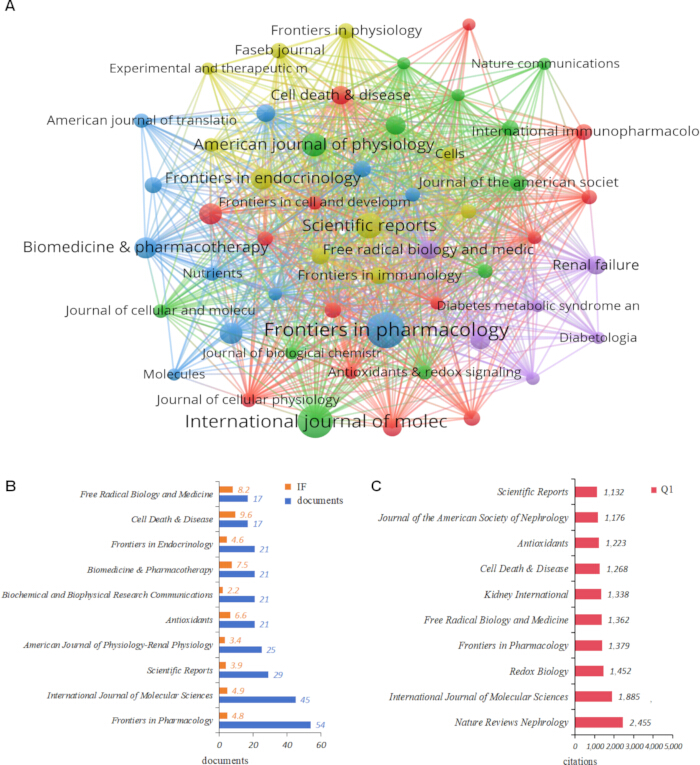
Figure 4: Journal co-citation network and publication characteristics. (A) Co-citation network of 53 selected journals forming five clusters. (B) Publication volume and impact factor of the top 10 journals by publication volume. (C) Citation count and Journal Citation Reports (JCR) quartile of the top 10 journals by total citation count. Abbreviations: IF = Impact factor; JCR = Journal Citation Reports; Q1 = Quartile 1. Please click here to view a larger version of this figure.
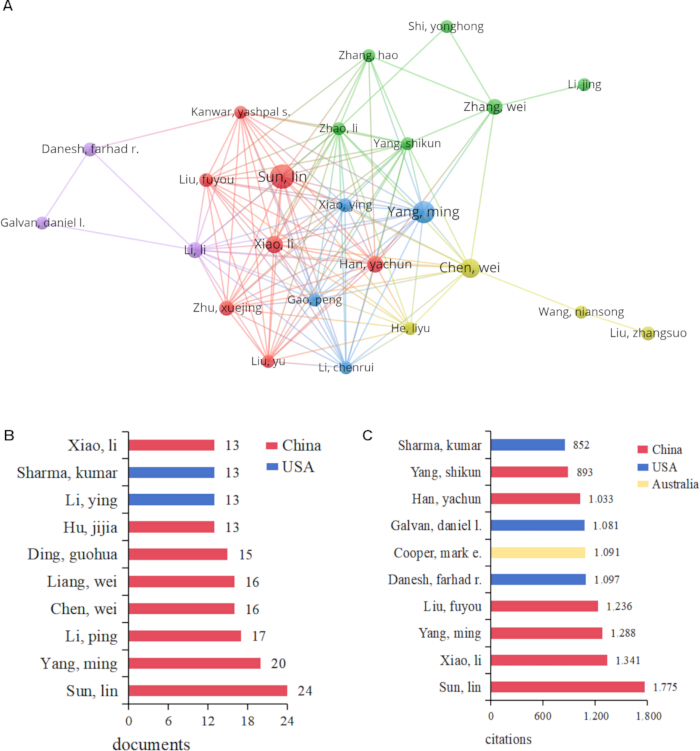
Figure 5: Author co-authorship network and publication/citation indicators. (A) Co-authorship network of 24 high-output authors forming five clusters. (B) Top 10 authors by publication volume. (C) Top 10 authors by total citation count. Abbreviations: USA = United States of America. Please click here to view a larger version of this figure.
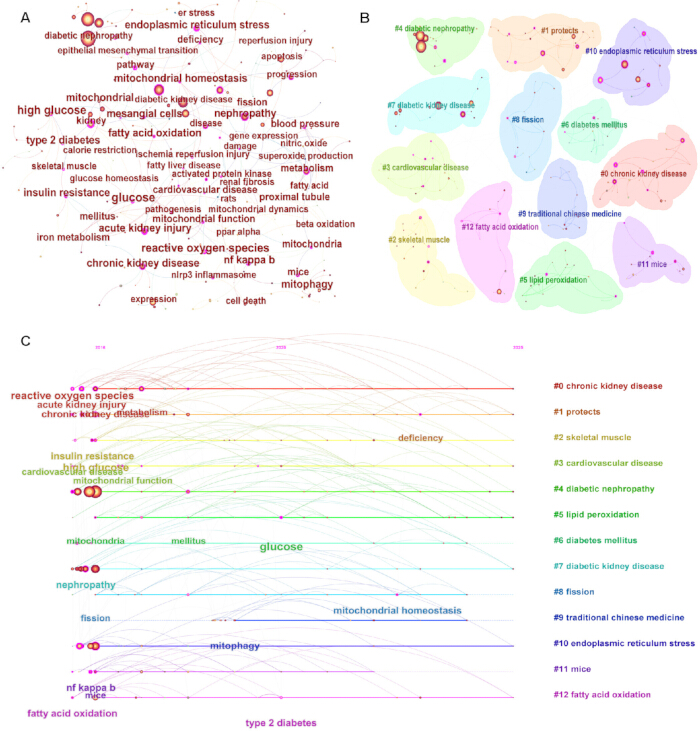
Figure 6: Author-keyword co-occurrence and evolution of research hotspots. (A) Keyword co-occurrence network. (B) Keyword clustering map showing 13 thematic clusters. (C) Keyword timeline visualization showing temporal cluster activity from 2016 to 2025. Cluster labels were algorithmically generated and should be interpreted as descriptive labels of keyword co-occurrence patterns rather than direct evidence that all clusters represent core diabetic nephropathy-specific research themes. The ranked keyword frequency and betweenness centrality results are summarized separately in Table 4, whereas Figure 6 emphasizes keyword co-occurrence structure, thematic clustering, and temporal activity. Abbreviations: ER = endoplasmic reticulum; NLRP3 = NOD-like receptor family pyrin domain-containing 3; NF-κB = nuclear factor kappa B; PPAR α = peroxisome proliferator-activated receptor alpha. Please click here to view a larger version of this figure.
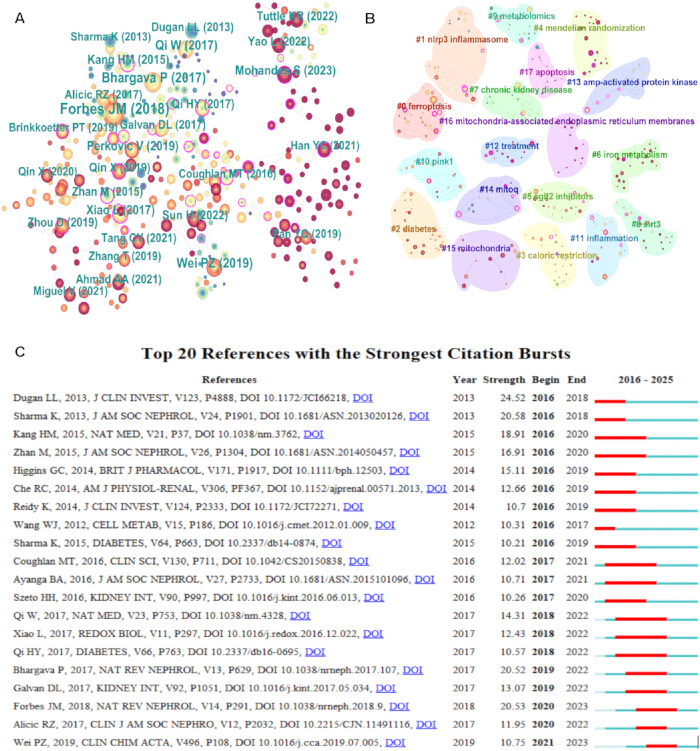
Figure 7: Reference co-citation and knowledge evolution. (A) Reference co-citation network. (B) Reference clustering map showing 18 knowledge clusters. (C) Top 20 references with the strongest citation bursts, including burst strength and burst duration. Abbreviations: NLRP3 = NOD-like receptor family pyrin domain-containing 3; PINK1 = PTEN-induced kinase 1; SGLT2 = sodium-glucose cotransporter 2; MitoQ = mitochondria-targeted ubiquinone; SIRT3 = sirtuin 3; AMPK = AMP-activated protein kinase; DOI = digital object identifier. Please click here to view a larger version of this figure.
| Rank | Country | Documents | Citations | Average citation per paper | Total link strength |
| 1 | China | 775 | 23034 | 30 | 82 |
| 2 | USA | 235 | 16320 | 69 | 140 |
| 3 | Japan | 80 | 3129 | 39 | 43 |
| 4 | South Korea | 47 | 1606 | 34 | 15 |
| 5 | Italy | 36 | 2185 | 61 | 21 |
| 6 | Germany | 34 | 1512 | 44 | 39 |
| 7 | India | 34 | 1279 | 38 | 11 |
| 8 | Australia | 33 | 3246 | 98 | 35 |
| 9 | Spain | 32 | 1768 | 55 | 24 |
| 10 | UK | 28 | 1667 | 60 | 32 |
Table 1: Top 10 countries/regions ranked by publication output, with citation count, average citations per paper, and total link strength. It summarizes the publication output, citation-based indicators, and collaboration strength of the ten most productive countries/regions in mitochondrial research on diabetic nephropathy. Abbreviations: UK = United Kingdom; USA = United States of America.
| Rank | Organization | Documents | Citations | Total link strength | Country |
| 1 | Cent South Univ | 56 | 2999 | 20 | China |
| 2 | Wuhan Univ | 35 | 934 | 3 | China |
| 3 | Zhengzhou Univ | 30 | 1006 | 11 | China |
| 4 | Shanghai Jiao Tong Univ | 30 | 963 | 26 | China |
| 5 | Hebei Med Univ | 28 | 893 | 6 | China |
| 6 | Southern Med Univ | 27 | 732 | 19 | China |
| 7 | Shandong Univ | 25 | 792 | 16 | China |
| 8 | Zhejiang Univ | 25 | 728 | 23 | China |
| 9 | Beijing Univ Chinese Med | 25 | 385 | 19 | China |
| 10 | Nanjing Med Univ | 22 | 638 | 17 | China |
Table 2: Top 10 institutions ranked by publication output, with WoSCC total Times Cited count, total link strength, and country. It presents the leading institutions by publication output, together with their citation performance, collaboration strength, and country of affiliation. Institutional names are presented as standardized abbreviated labels for concise table presentation and were checked against the corresponding full institutional names in WoSCC affiliation records. Abbreviations: WoSCC = Web of Science Core Collection; Univ = University; Med = Medical.
| Rank | Source | Documents | Citations | Total link strength | IF | JCR |
| 1 | Frontiers in Pharmacology | 54 | 1379 | 338 | 4.8 | Q1 |
| 2 | International Journal of Molecular Sciences | 45 | 1885 | 253 | 4.9 | Q1 |
| 3 | Scientific Reports | 29 | 1132 | 129 | 3.9 | Q1 |
| 4 | American Journal of Physiology-Renal Physiology | 25 | 1078 | 196 | 3.4 | Q1 |
| 5 | Antioxidants | 21 | 1223 | 141 | 6.6 | Q1 |
| 6 | Biochemical and Biophysical Research Communications | 21 | 766 | 155 | 2.2 | Q1 |
| 7 | Biomedicine & Pharmacotherapy | 21 | 581 | 96 | 7.5 | Q3 |
| 8 | Frontiers in Endocrinology | 21 | 379 | 161 | 4.6 | Q1 |
| 9 | Cell Death & Disease | 17 | 1268 | 104 | 9.6 | Q1 |
| 10 | Free Radical Biology and Medicine | 17 | 1362 | 197 | 8.2 | Q1 |
Table 3: Top 10 journals ranked by publication volume, with citation count, total link strength, impact factor, and Journal Citation Reports quartile. It summarizes the publication characteristics, citation performance, and journal impact metrics of the ten most productive journals in the retrieved dataset. Citation count refers to the total WoSCC Times Cited count of included records published in each journal. IF and JCR quartiles were obtained from Journal Citation Reports. Abbreviations: IF = Impact factor; JCR = Journal Citation Reports; Q1 = Quartile 1; Q3 = Quartile 3; WoSCC = Web of Science Core Collection.
| Rank | Keywords | Count | Keywords | Centrality |
| 1 | diabetic nephropathy | 573 | kidney | 0.35 |
| 2 | oxidative stress | 449 | mesangial cells | 0.33 |
| 3 | diabetic kidney disease | 292 | pathway | 0.30 |
| 4 | mitochondrial dysfunction | 235 | reactive oxygen species | 0.27 |
| 5 | activation | 197 | NF-κB | 0.25 |
| 6 | injury | 194 | endoplasmic reticulum stress | 0.22 |
| 7 | nephropathy | 189 | acute kidney injury | 0.22 |
| 8 | dysfunction | 187 | glucose | 0.21 |
| 9 | expression | 152 | mitochondria | 0.19 |
| 10 | apoptosis | 140 | cardiovascular disease | 0.19 |
Table 4: Top 10 keywords by frequency and betweenness centrality. It lists the most frequently occurring keywords and the keywords with the highest betweenness centrality, highlighting the principal research themes and influential topics in mitochondrial research on diabetic nephropathy. Abbreviations: NF-κB = nuclear factor kappa B.
Discussion
This bibliometric study provides a systematic overview of the global research landscape and thematic evolution of mitochondrial research in DN from 2016 to 2025. The results show that research activity in this field increased over the past decade, particularly after 2021. During this period, the research focus gradually expanded from oxidative stress and mitochondrial dysfunction to mitochondrial quality control, metabolic adaptation, regulated cell death, organelle interactions, and translationally oriented therapeutic exploration. These trends suggest that mitochondrial research in DN has moved from descriptive characterization of mitochondrial injury toward more mechanism-oriented and integrative investigation.
A noticeable divergence between publication output and citation-based visibility was observed across countries/regions and institutions, but this pattern should not be interpreted simply as a contrast between research quantity and research quality. The rapid increase in publications from China may be related to several contextual factors, including the growing national burden of diabetes and chronic kidney disease, sustained investment in biomedical research, expansion of graduate training and university-based research platforms, and increasing use of public transcriptomic and experimental datasets in nephrology research. These factors may have promoted a broad and rapidly expanding research base. However, many Chinese publications in this field were relatively recent, resulting in shorter citation windows and potentially lower average citations per paper. In contrast, countries such as the United States, Australia, Italy, and the United Kingdom showed higher citation-based visibility despite lower publication counts, which may partly reflect longer-established academic lineages in DKD, mitochondrial biology, redox biology, and translational nephrology. Highly cited studies from these countries were frequently associated with conceptual or methodologically influential topics, including mitophagy, mitochondrial dynamics, and mitochondria-targeted interventions. Therefore, the observed geographic pattern is better understood as a difference in research maturity, topic positioning, publication timing, collaboration structure, and knowledge diffusion rather than direct evidence of national research superiority. At the institutional level, Central South University was the most productive and most cited institution among the institutions shown in the retrieved dataset, but its collaboration profile suggests a more nationally concentrated network rather than a major international collaboration hub. In comparison, institutions such as Monash University, Harvard Medical School, and the University of Michigan showed citation visibility in topics related to mitochondrial quality control, SIRT3-mediated antioxidant protection, mitochondria-targeted delivery, and mitochondrial dynamics imaging. These findings indicate that institutional citation visibility and network roles in this field depend not only on publication volume, but also on whether institutions participate in internationally connected, conceptually influential, or translationally oriented research lines. Thus, the country and institutional analyses should be interpreted as mapping the distribution and diffusion of knowledge rather than ranking scientific quality.
Journal and author analyses further indicate how this research field is organized across publication platforms and contributor networks. The journal distribution suggests that mitochondrial research in DN is inherently interdisciplinary, involving nephrology, redox biology, metabolism, pharmacology, cell death, and nanomedicine. The high citation count of review-oriented or high-impact journals may reflect their role in integrating concepts and shaping research agendas, whereas journals with high publication volume may function more as platforms for accumulating experimental and pharmacological evidence. Therefore, differences between publication volume and citation count at the journal level should be interpreted in relation to journal scope, article type, readership, and the maturity of the topics published. Journals such as Kidney International, Redox Biology, Cell Death & Disease, and Free Radical Biology and Medicine appear to connect mechanistic studies of oxidative stress, mitochondrial dysfunction, mitophagy, and renal injury with emerging translational questions. Meanwhile, Frontiers in Pharmacology and Antioxidants reflect the increasing intersection between mitochondrial biology, redox regulation, and pharmacological intervention. At the author level, productivity and citation visibility were also not completely overlapping. Authors with high publication counts may represent active contributors to the expanding research base, whereas authors with fewer but highly cited publications may have contributed to influential conceptual frameworks, disease models, or intervention-related studies. For example, Sun Lin showed both high productivity and citation visibility, while Danesh Farhad R., Galvan Daniel L., Sharma Kumar, and Cooper Mark E. appeared among highly cited authors despite lower publication numbers. This pattern suggests that author-level bibliometric indicators are shaped by collaboration networks, publication timing, article type, and topic centrality. Accordingly, these indicators should be interpreted as measures of visibility and intellectual linkage within the retrieved dataset, rather than as direct measures of individual scientific quality or clinical importance.
Keyword and reference analyses provide insights into the temporal evolution of the intellectual structure of this field. Early burst references were mainly associated with oxidative stress, mitochondrial reactive oxygen species, mitochondrial dysfunction, and metabolic stress, indicating that early bibliometric visibility was largely centered on oxidative and metabolic injury in diabetic kidneys8,27. Subsequent references and keyword clusters gradually shifted toward mitochondrial quality control, including autophagy, mitophagy, mitochondrial biogenesis, and regulatory pathways involved in maintaining mitochondrial homeostasis9,28,29. In the recent period, burst references and co-citation clusters increasingly involved regulated cell death, organelle interactions, intervention-related topics, and causal-inference or omics-oriented approaches, with representative topics including ferroptosis, the NLRP3 inflammasome, MAMs, SGLT2 inhibitors, MitoQ, and Mendelian randomization-related approaches30,31,32,33,34,35,36,37. Recent mechanistic and intervention-related studies also provide examples corresponding to these active themes, including metformin-mediated regulation of mitophagy and ferroptosis through the HIF-1α/MIOX axis, P110-mediated inhibition of Drp1-dependent mitochondrial fission, and PINK1/Parkin-related mitophagy regulation by Baoshentongluo formula or dapagliflozin38,39,40,41. This shift suggests that the field has moved from describing mitochondrial injury toward investigating mitochondrial quality-control networks, regulated cell-death pathways, organelle interactions, intervention-related topics, and causal or omics-oriented approaches. These patterns indicate that ferroptosis, the NLRP3 inflammasome, MAMs, SGLT2 inhibitors, MitoQ, and Mendelian randomization-related approaches have become increasingly visible topics in the retrieved literature.
However, the interpretation of algorithmically generated keyword cluster labels requires caution. Labels such as skeletal muscle and cardiovascular disease appeared to reflect peripheral or systemic diabetes-related terms, or broader comorbidity-related contexts, rather than core diabetic nephropathy-specific mitochondrial mechanisms. Therefore, these peripheral labels were not treated as primary emerging hotspots in this study. Instead, hotspot interpretation was based mainly on concordant evidence from keyword frequency, burst terms, timeline activity, and reference co-citation patterns. Accordingly, mechanistic terms such as ferroptosis, NLRP3 inflammasome activation, and MAMs are discussed as emerging research fronts identified by keyword and co-citation patterns, rather than being elaborated as a separate mini-review. Future studies should determine whether these topics with high bibliometric visibility correspond to reproducible biological mechanisms in human DKD through experimental validation in clinical samples, single-cell analysis, spatial transcriptomics, and prospective translational studies. Computationally identified targets, such as HDAC9-related mitochondrial dysfunction and senescence-associated inflammation, also require functional validation before being interpreted as therapeutic targets42. Given that the present study uses an established bibliometric framework, its contribution should be understood primarily as an updated, topic-focused synthesis of mitochondrial research in DN rather than as a methodological innovation.
These findings also point to several priorities for future research. First, although mitophagy, mitochondrial dynamics, ferroptosis, MAMs, and inflammasome activation have become increasingly visible in the literature, evidence from human diabetic kidney tissues remains limited. Many recent mechanistic or computational examples are still mainly based on experimental models or bioinformatics analyses, including studies related to mitophagy and ferroptosis, Drp1-dependent mitochondrial fission, PINK1/Parkin-mediated mitophagy, and HDAC9-related mitochondrial dysfunction38,39,40,41,42. Therefore, these findings require further validation in human samples and renal cell-type-specific contexts. Second, mitochondria-targeted interventions and metabolism-related approaches, including MitoQ, SGLT2 inhibitors, antioxidants, and organelle-targeted or pathway-directed strategies, require more rigorous translational evaluation, particularly regarding bioavailability, renal targeting efficiency, long-term safety, and clinical efficacy30,31,32,33,34,35,36,37. Future studies integrating human diabetic kidney tissues, single-cell or spatial technologies, multi-omics analyses, and prospective translational designs may help determine which mitochondria-related pathways are reproducible and clinically relevant in diabetic nephropathy.
Several limitations should be acknowledged. First, all records were retrieved from the WoSCC. Although this database provides standardized citation metadata and is widely used in bibliometric studies, its selective coverage may have excluded publications indexed only in other databases, regional journals, non-English sources, or recently updated records. Although MeSH-derived terms and manual screening were used to improve the search strategy, incomplete retrieval of relevant studies cannot be fully avoided. Second, citation-based indicators in this study were unadjusted descriptive measures. Citation counts may be influenced by publication age, citation window, journal visibility, article type, database coverage, self-citation, and field-specific citation practices. Therefore, highly cited publications should be interpreted as having greater citation visibility or wider knowledge diffusion within the retrieved dataset, rather than as direct evidence of superior research quality, originality, methodological rigor, or clinical relevance. In addition, the WoSCC dataset-level Times Cited counts presented in Figure 1 represent a static snapshot at the time of data retrieval, April 30, 2026; these citation counts are dynamic and may differ if the same analysis is performed at a later date. More importantly, the upward citation curve in Figure 1 is influenced by publication age, accumulated exposure time, and unequal citation windows among the included records. Therefore, this trend should not be interpreted as a direct year-by-year increase in research impact, scientific quality, methodological rigor, or clinical relevance. Accordingly, the citation-related results should be interpreted as a retrospective snapshot rather than as fixed absolute values. Third, keyword and network analyses are sensitive to data processing and parameter settings. Although synonymous terms and abbreviations were manually harmonized, non-standardized author keywords and algorithmically generated cluster labels may still introduce ambiguity. In addition, threshold selection and pruning algorithms, including the g-index criterion, Pathfinder pruning, and VOSviewer thresholds, may reduce weak or peripheral links and influence the apparent clustering structure, node connectivity, and collaboration patterns. Specifically, the relatively high modularity Q value, 0.867, and weighted mean silhouette value, 0.9587, of the reference co-citation network may partly reflect the influence of Pathfinder pruning; therefore, the corresponding clusters were mainly used to identify thematic concentrations and should not be interpreted as evidence that the research themes were completely independent from one another. Thus, the generated networks should be regarded as analytical simplifications of the retrieved dataset rather than complete representations of all relationships in the field. Finally, the time window from 2016 to 2025 highlights recent developments but may underrepresent earlier foundational studies and may not fully capture emerging publications indexed after the retrieval date. Future bibliometric studies incorporating multiple databases, broader language coverage and document types, updated retrieval dates, and sensitivity analyses of network parameters may provide a more comprehensive view of this field.
Over the past decade, mitochondrial research in DN has evolved from a descriptive exploration of oxidative stress into a complex multidimensional field encompassing quality control mechanisms, metabolic adaptation, and causal-inference methodologies. Although China led in total publication volume, citation visibility varied across countries, institutions, and research themes. The emergence of ferroptosis, MAMs, Mendelian randomization, and multi-omics approaches indicates active research directions in the retrieved dataset. These bibliometric patterns suggest that future experimental and clinical studies may further clarify which mitochondria-related pathways are reproducible in specific renal cell types, disease stages, and therapeutic contexts.
Disclosures
The authors declare no conflicts of interest.
Materials
| Name | Company | Catalog Number | Comments |
|---|---|---|---|
| Web of Science Core Collection | Clarivate | https://www.webofscience.com/ | Not applicable |
| VOSviewer | Leiden University | https://www.vosviewer.com/ | 1.6.19 |
| CiteSpace | Drexel University | https://citespace.podia.com/ | 6.4.R1 |
| Scimago Graphica | Scimago Laboratory | https://www.scimagographica.org/ | 1.0.25 |
| WPS Excel | Kingsoft Corporation | https://www.wps.com/ | 2023 |
| GraphPad Prism | GraphPad Software | https://www.graphpad.com/ | 10.1 |
| Journal Citation Reports | Clarivate | https://jcr.clarivate.com/ | Not applicable |
| Medical Subject Headings database | National Library of Medicine | https://www.ncbi.nlm.nih.gov/mesh/ | Not applicable |
References
- Samsu N. Diabetic nephropathy: Challenges in pathogenesis, diagnosis, and treatment. Biomed Res Int. 2021;2021:1497449.
- GBD 2019 Diabetes in the Americas Collaborators. Burden of diabetes and hyperglycaemia in adults in the Americas, 1990-2019: A systematic analysis for the Global Burden of Disease Study 2019. Lancet Diabetes Endocrinol. 2022;10:655-67.
- Alicic RZ, Rooney MT, Tuttle KR. Diabetic kidney disease: Challenges, progress, and possibilities. Clin J Am Soc Nephrol. 2017;12:2032-45.
- Forbes JM, Thorburn DR. Mitochondrial dysfunction in diabetic kidney disease. Nat Rev Nephrol. 2018;14:291-312.
- Galvan DL, Green NH, Danesh FR. The hallmarks of mitochondrial dysfunction in chronic kidney disease. Kidney Int. 2017;92:1051-7.
- Mise K, Galvan DL, Danesh FR. Shaping up mitochondria in diabetic nephropathy. Kidney360. 2020;1:982-92.
- Fan X, et al. Mitochondrial metabolic reprogramming in diabetic kidney disease. Cell Death Dis. 2024;15:442.
- Sharma K, et al. Metabolomics reveals signature of mitochondrial dysfunction in diabetic kidney disease. J Am Soc Nephrol. 2013;24:1901-12.
- Xiao L, et al. The mitochondria-targeted antioxidant MitoQ ameliorated tubular injury mediated by mitophagy in diabetic kidney disease via Nrf2/PINK1. Redox Biol. 2017;11:297-311.
- Bhargava P, Schnellmann RG. Mitochondrial energetics in the kidney. Nat Rev Nephrol. 2017;13:629-46.
- Qi W, et al. Pyruvate kinase M2 activation may protect against the progression of diabetic glomerular pathology and mitochondrial dysfunction. Nat Med. 2017;23:753-62.
- Qin X, et al. Berberine protects glomerular podocytes via inhibiting Drp1-mediated mitochondrial fission and dysfunction. Theranostics. 2019;9:1698-713.
- Du L, et al. Sirt6 overexpression relieves ferroptosis and delays the progression of diabetic nephropathy via Nrf2/GPX4 pathway. Ren Fail. 2024;46:2377785.
- Wu X, Yang J, He J. Research progress of mitochondrial dynamics and autophagy in diabetic complications: New treatment strategies. Diabetes Metab Syndr Obes. 2025;18:3167-80.
- Synnestvedt MB, Chen C, Holmes JH. CiteSpace II: Visualization and knowledge discovery in bibliographic databases. AMIA Annu Symp Proc. 2005;2005:724-8. Available from: https://pmc.ncbi.nlm.nih.gov/articles/PMC1560567/
- Wang Y, et al. Research trends and hotspots in JAK inhibitors for ulcerative colitis: A bibliometric analysis from 2015 to 2024. J Multidiscip Healthc. 2025;18:6755-71.
- Chen G, Yan Z, Wang Y, Tao Q. Rheumatoid arthritis and fibromyalgia syndrome: A bibliometric and bioinformatics perspective on comorbidity research. J Multidiscip Healthc. 2025;18:6811-27.
- Van Eck NJ, Waltman L. Software survey: VOSviewer, a computer program for bibliometric mapping. Scientometrics. 2010;84:523-38.
- Ma L, Yao T, Jin D, Yan Z. Mapping the knowledge landscape of muscle disorders in rheumatoid arthritis: A bibliometric and bioinformatics study. J Vis Exp. 2026;(230):e70373.
- Zhang Y, et al. Bibliometric and visual analysis of the immune system in osteomyelitis (1990-2024). J Vis Exp. 2026;(229):e70317.
- Wang XR, et al. Global research hotspots and trends in oxidative stress-related diabetic nephropathy: A bibliometric study. Front Endocrinol (Lausanne). 2025;15:1451954.
- Mao J, et al. The relationship between kidney disease and mitochondria: A bibliometric study. Ren Fail. 2024;46:2302963.
- Huang Z, et al. The 100 top-cited articles in diabetic kidney disease: A bibliometric analysis. Ren Fail. 2021;43:781-95.
- Wei Y, Jiang Z. The evolution and future of diabetic kidney disease research: A bibliometric analysis. BMC Nephrol. 2021;22:158.
- Egghe L. Theory and practise of the g-index. Scientometrics. 2006;69:131-52.
- Chen C. CiteSpace: A Practical Guide for Mapping Scientific Literature. Nova Science Publishers; Hauppauge, NY; 2016.
- Dugan LL, et al. AMPK dysregulation promotes diabetes-related reduction of superoxide and mitochondrial function. J Clin Invest. 2013;123:4888-99.
- Kang HM, et al. Defective fatty acid oxidation in renal tubular epithelial cells has a key role in kidney fibrosis development. Nat Med.. 2015;21:37-46.
- Zhan M, Usman IM, Sun L, Kanwar YS. Disruption of renal tubular mitochondrial quality control by myo-inositol oxygenase in diabetic kidney disease. J Am Soc Nephrol.. 2015;26:1304-21.
- Elwakiel A, Mathew A, Isermann B. The role of endoplasmic reticulum-mitochondria-associated membranes in diabetic kidney disease. Cardiovasc Res. 2024;119:2875-83.
- Chen J, et al. CNPY2 aggravates renal tubular cell ferroptosis in diabetic nephropathy by regulating PERK/ATF4/CHAC1 pathway and MAM integrity. Adv Sci (Weinh). 2025;12:e2416441.
- Yu K, et al. Honokiol attenuates diabetic nephropathy by targeting SIRT3 to suppress mitochondrial ROS-induced pyroptosis. Diabetol Metab Syndr. 2025;18:7.
- Ward MS, et al. Targeted mitochondrial therapy using MitoQ shows equivalent renoprotection to angiotensin converting enzyme inhibition but no combined synergy in diabetes. Sci Rep. 2017;7:15190.
- Liu Y, et al. Combining mitochondrial proteomes and Mendelian randomization to identify novel therapeutic targets for diabetic nephropathy. Ren Fail. 2025;47:2473669.
- Zheng T, et al. Canagliflozin ameliorates diabetic podocyte damage via enriching mitochondria-associated endoplasmic reticulum membranes. Cell Signal. 2025;135:112038.
- Li H, et al. Dapagliflozin attenuates AKI to CKD transition in diabetes by activating SIRT3/PGC1-α signaling and alleviating aberrant metabolic reprogramming. Biochim Biophys Acta Mol Basis Dis. 2024;1870:167433.
- Liu B, et al. Association between GATM gene polymorphism and progression of chronic kidney disease: A mitochondrial related genome-wide Mendelian randomization study. Sci Rep. 2024;14:20346.
- Wu Q, Zhao Y, Huang F. Metformin alleviates renal tubular injury in diabetic kidney disease by activating mitophagy and inhibiting ferroptosis via HIF-1α/MIOX axis. J Pharm Anal. 2025;15:101284.
- Yue R, et al. Inhibition of Drp1-mediated mitochondrial fission by P110 ameliorates renal injury in diabetic nephropathy. Int Immunopharmacol. 2025;152:114342.
- Pang Y, et al. Baoshentongluo formula relieves podocyte injury in diabetic kidney disease through regulating mitophagy via PINK1/parkin signaling pathway. Front Endocrinol (Lausanne). 2025;16:1606326.
- Ma Y, et al. SIRT1-PINK1-parkin axis orchestrated mitophagy and renal repair by dapagliflozin in diabetic nephropathy. Biochim Biophys Acta Mol Basis Dis. 2026;1872:168074.
- Huang J, et al. Integrative transcriptomic and machine learning analyses identify HDAC9 as a key regulator of mitochondrial dysfunction and senescence-associated inflammation in diabetic nephropathy. Front Immunol. 2025;16:1627173.