This retrospective study identifies risk factors for early postoperative ileus after laparoscopic radical cystectomy. Using a standardized outcome definition, multivariable logistic regression, bootstrap internal validation, and exploratory analysis of inflammatory markers, it offers a reproducible framework for risk-factor assessment while avoiding unsupported etiological subtype claims and overinterpretation in this setting.
Research Article
Risk Factors for Early Postoperative Ileus Following Laparoscopic Radical Cystectomy
In This Article
Summary
Abstract
Early postoperative ileus (EPOI) delays recovery after radical cystectomy, but reported definitions and associated factors vary. This retrospective study evaluated 549 adults with bladder cancer who underwent curative-intent laparoscopic radical cystectomy and urinary diversion between January 2014 and December 2022. EPOI was defined by the presence of at least two prespecified clinical or radiological criteria between postoperative days 3 and 30. Candidate factors were evaluated using univariate analyses and multivariable logistic regression. Model discrimination and calibration were assessed, and 1,000-resample bootstrap internal validation was performed. An exploratory subgroup analysis assessed inflammatory markers measured within 24 h after surgery. EPOI occurred in 76 patients (13.84%). After multivariable adjustment, female sex was associated with lower odds of EPOI, whereas smoking history, diabetes mellitus, previous abdominal surgery, greater intraoperative blood loss, and higher lymph node yield were associated with higher odds. The apparent area under the receiver operating characteristic curve (AUC) of the primary model was 0.881, and the optimism-corrected AUC was 0.869. In the 138-patient inflammatory-marker subgroup, postoperative white blood cell count and C-reactive protein were higher in patients who subsequently met the prespecified EPOI criteria; white blood cell count showed exploratory discrimination with an AUC of 0.727. These findings identify patient- and surgery-related factors associated with EPOI, but the model, data-derived thresholds, and biomarker findings require prospective multicenter external validation before clinical use.
Introduction
Bladder cancer is among the most common malignancies worldwide and occurs substantially more frequently in men than in women1,2. Approximately three-quarters of newly diagnosed cases are non-muscle-invasive, whereas the remainder present with muscle-invasive disease3. Radical cystectomy with pelvic lymph-node dissection remains a recommended treatment for muscle-invasive and selected very-high-risk non-muscle-invasive bladder cancer3,4.
Despite advances in minimally invasive surgery and perioperative care, postoperative ileus remains a clinically relevant complication after radical cystectomy. A cystectomy-specific systematic review reported substantial variation in the incidence of postoperative ileus because diagnostic definitions, surgical approaches, and perioperative pathways differed across studies5. Early postoperative ileus (EPOI) is characterized by delayed recovery of gastrointestinal motility and may present with nausea, vomiting, abdominal distension, intolerance to oral intake, and delayed passage of flatus or stool6. EPOI can prolong hospitalization, increase readmission, and delay postoperative recovery. In a cohort undergoing radical cystectomy with an enhanced recovery protocol, Bazargani et al. reported postoperative ileus in 11.6% of patients7.
Evidence regarding factors associated with EPOI after laparoscopic radical cystectomy remains heterogeneous, partly because previous studies have used different outcome definitions and have focused on different clinical and perioperative variables. In addition, the discriminatory value of routinely measured early postoperative inflammatory markers in this specific surgical setting remains insufficiently characterized. The novelty of the present study lies in combining a standardized, prespecified EPOI definition with a relatively large laparoscopic radical cystectomy cohort, multivariable assessment of patient- and surgery-related factors, formal evaluation of model discrimination and calibration with bootstrap internal validation, and a clearly separated exploratory analysis of postoperative inflammatory markers. We hypothesized that EPOI would be associated with a combination of patient- and surgery-related factors and that selected inflammatory markers measured within 24 h after surgery might provide additional discriminatory information. Therefore, this retrospective study aimed to identify patient- and surgery-related factors associated with EPOI following laparoscopic radical cystectomy, to internally assess the resulting multivariable model, and to explore the discriminatory value of selected postoperative inflammatory markers.
Protocol
This retrospective study was approved by the Ethics Committee of Nanjing Drum Tower Hospital (No. 2021-085-01). The requirement for written informed consent for participation was waived by the Ethics Committee because the study involved a retrospective review of existing medical records. Patient data were deidentified before analysis. All methods were performed in accordance with the Declaration of Helsinki and relevant institutional guidelines.
Study design and source cohort
Patients with bladder cancer who underwent laparoscopic radical cystectomy combined with urinary diversion at Nanjing Drum Tower Hospital between January 2014 and December 2022 were identified. Adults aged 18 years or older with histopathologically confirmed bladder cancer who underwent curative-intent laparoscopic radical cystectomy and had complete preoperative, intraoperative, and postoperative data sufficient to assess EPOI through postoperative day 30 were included in the study.
Patients were excluded if they had pre-existing intestinal obstruction, inflammatory bowel disease, or another gastrointestinal disorder that substantially affected intestinal motility, previous pelvic radiotherapy, conversion from laparoscopic to open surgery, incomplete medical records, insufficient postoperative information for assessment of EPOI, or death before EPOI status could be adequately assessed during the 30-day postoperative period. Patients who received neoadjuvant chemotherapy alone were not excluded, provided that they subsequently underwent curative-intent surgery and met all other eligibility criteria. Patients with distant metastatic disease who underwent palliative rather than curative surgery were also excluded. The numbers of patients initially screened, excluded according to each eligibility criterion, and included in the final analytical cohort are summarized in Supplementary Figure 1.
Demographic, clinical, and operative variables
The following variables were recorded: sex, age, smoking history, height, weight, body mass index (BMI), hypertension, diabetes mellitus, previous abdominal surgery, preoperative hemoglobin, albumin, creatinine, operative time, intraoperative blood loss, intraoperative transfusion volume, lymph node yield, and urinary diversion type.
Postoperative length of stay and 30-day unplanned readmission were recorded as descriptive postoperative outcomes rather than candidate predictors. Postoperative length of stay was defined as the number of calendar days from surgery to discharge from the index hospitalization. A 30-day unplanned readmission was defined as any unplanned inpatient readmission occurring within 30 days after discharge.
EPOI study definition
The composite definition proposed by Vather et al6. was used to define EPOI. EPOI was diagnosed when at least two of the following criteria were present between postoperative days 3 and 30: nausea and vomiting within the previous 12 h; cessation of flatus and defecation within the previous 24 h; persistent abdominal distension; intolerance to solid or semisolid food in the previous two meals; or gastric dilatation, intestinal-loop dilatation, and intestinal air-fluid levels detected by upright abdominal radiography or computed tomography. Patients were classified as having EPOI or not having EPOI. The term mechanical intestinal obstruction was reserved for cases with a clearly documented mechanical cause, such as intestinal volvulus or internal herniation. Clearly documented causes were described narratively. Formal etiological subtype classification was not performed because standardized imaging review, operative confirmation, and prespecified expert adjudication were unavailable.
Electronic medical records were initially reviewed by one investigator using a standardized data-extraction form. Cases in which the EPOI criteria were met or the relevant documentation was uncertain were independently reassessed by a second investigator. Disagreements were resolved through discussion, and unresolved cases were adjudicated by a senior urologist. The reviewers were not formally blinded to candidate predictors because these variables were contained in the same source records; nevertheless, EPOI status was assigned solely according to the prespecified clinical and radiological criteria before predictor modeling was performed. A symptom or radiological finding was counted as present only when it was explicitly documented. Ambiguous or undocumented findings were not counted as positive criteria, and patients whose available records were insufficient to determine EPOI status were excluded.
Perioperative management
The institutional perioperative pathway in effect at the time of surgery was summarized. In the present cohort, preoperative management generally included anesthetic assessment, optimization of comorbidities, correction of fluid and electrolyte abnormalities, and antibiotic and venous thromboembolism prophylaxis when clinically indicated. Postoperative management generally included multimodal analgesia, fluid and electrolyte management, early mobilization, and stepwise resumption of oral intake as gastrointestinal recovery allowed. Because a prospectively standardized enhanced recovery after surgery (ERAS) checklist was not used throughout the study period, a patient-level ERAS score could not be derived from the retrospective records. Component-level adherence and cumulative perioperative opioid exposure could not be uniformly reconstructed.
Exploratory inflammatory-marker subgroup
Patients with complete postoperative white blood cell count (WBC), C-reactive protein (CRP), interleukin-6 (IL-6), and procalcitonin measurements obtained within 24 h after surgery were identified. All biomarker measurements were obtained before the earliest qualifying EPOI assessment, which began on postoperative day 3. Because this was a retrospective study and gastrointestinal symptoms were not assessed using a standardized protocol at the exact time of blood sampling, the absence of subtle or evolving bowel dysfunction at biomarker measurement could not be confirmed in every patient. In the present cohort, 138 patients met this criterion: 20 developed EPOI and 118 did not. Subgroup membership was defined solely by the availability of all four biomarker measurements and not by EPOI status. The inflammatory-marker subgroup was compared with the remaining cohort to assess potential selection bias. The biomarker analyses were treated as exploratory. These biomarkers were not used to assign an etiological subtype. Because only 20 EPOI events occurred in the subgroup, a conventional four-marker multivariable model was not retained.
Statistical analysis
Statistical analyses were performed using IBM SPSS Statistics. The normality of continuous variables was assessed using the Shapiro–Wilk test. Normally distributed continuous variables were presented as the mean ± standard deviation and were compared using the independent-samples t-test. Non-normally distributed continuous variables were presented as the median and interquartile range [M (Q1, Q3)] and were compared using the Mann–Whitney U test. Categorical variables were compared using the chi-square test or Fisher's exact test, as appropriate.
For the primary multivariable logistic regression analysis, sex and smoking history were prespecified as forced-entry covariates, independent of their univariate p values, because they had been evaluated as potentially relevant baseline factors in previous cystectomy-specific studies of postoperative ileus and could plausibly act as confounders8,9. These two variables were entered in the first block using the Enter method and were retained throughout model development. The remaining variables with p < 0.10 in the univariate analyses—height, BMI, diabetes mellitus, previous abdominal surgery, preoperative albumin, intraoperative blood loss, and lymph node yield—were treated as data-driven candidate predictors. They were entered in the second block and evaluated using backward likelihood-ratio selection. Sex, smoking history, diabetes mellitus, previous abdominal surgery, intraoperative blood loss, and lymph node yield were included in the final model.
Continuous predictors were retained as continuous variables. Intraoperative blood loss was entered per 100 mL increase to improve interpretability, and lymph node yield was entered per additional dissected lymph node. Exploratory cut-off values were derived from receiver operating characteristic (ROC) analysis and the Youden index, but were not used to dichotomize variables in the primary model.
Female sex was coded as 1 and male sex as 0. Smoking history, diabetes mellitus, and previous abdominal surgery were coded as 1 for presence and 0 for absence. Multicollinearity was evaluated using tolerance and variance inflation factor (VIF) values. Linearity in the logit for continuous predictors was assessed using the Box–Tidwell approach. Standardized residuals and Cook's distance were examined to identify potentially influential observations.
Model calibration was evaluated using the Hosmer–Lemeshow goodness-of-fit test, calibration intercept, calibration slope, and Brier score. Model discrimination was evaluated using the area under the ROC curve. At an exploratory probability threshold selected using the Youden index, sensitivity, specificity, positive predictive value (PPV), and negative predictive value (NPV) were calculated. Internal validation was performed using 1,000 bootstrap resamples to estimate optimism-corrected discrimination and calibration.
Because complete core clinical and perioperative information was required for study inclusion, data imputation was not performed for the primary model. Baseline and perioperative characteristics, as well as the incidence of EPOI, were compared between the 138 patients with complete inflammatory-marker data and the remaining 411 patients. The biomarker comparisons were considered exploratory. The ROC analysis of postoperative WBC count was not prespecified; WBC was selected post hoc as a single representative routinely available marker to limit multiple exploratory ROC analyses in the small subgroup with only 20 EPOI events. The selection was not based on the primary multivariable model because postoperative biomarkers were not included in that model. A separate ROC analysis of CRP was not performed. Postoperative length of stay and 30-day unplanned readmission were presented descriptively and were not included in predictor selection or multivariable model construction.
Results
Cohort characteristics and incidence of EPOI
A total of 612 patients who underwent laparoscopic radical cystectomy with urinary diversion during the study period were screened for eligibility. Of these, 63 were excluded: 10 had a pre-existing gastrointestinal disorder affecting intestinal motility, 5 underwent conversion to open surgery, 21 had incomplete medical records, and 27 had insufficient postoperative information for EPOI assessment. The final analytical cohort therefore comprised 549 patients. The patient- selection process is shown in Supplementary Figure 1. The final cohort included 465 men and 84 women. EPOI occurred in 76 patients, corresponding to an incidence of 13.84%.
Univariate analysis
In the univariate analysis, the EPOI group had a shorter median height, higher median BMI, higher proportions of patients with diabetes mellitus and a history of previous abdominal surgery, lower preoperative serum albumin concentrations, greater intraoperative blood loss, and a higher lymph node yield than the non-EPOI group (all p < 0.05). No significant intergroup differences were observed for sex, age, smoking history, body weight, hypertension, preoperative hemoglobin, preoperative creatinine, operative time, intraoperative transfusion volume, or urinary diversion type (all p > 0.05), as shown in Table 1.
Multivariable logistic regression analysis
Sex and smoking history were included as prespecified forced-entry covariates. Height, BMI, diabetes mellitus, previous abdominal surgery, preoperative albumin, intraoperative blood loss, and lymph node yield met the univariate screening criterion of P < 0.10 and were evaluated as data-driven candidate predictors. Following backward likelihood-ratio selection of these candidate predictors, the final model included the two forced-entry covariates together with diabetes mellitus, previous abdominal surgery, intraoperative blood loss, and lymph node yield (Table 2). A history of previous abdominal surgery was associated with higher odds of EPOI than no such history (OR = 6.024, 95% CI: 1.242–29.412; p = 0.026). Each 100 mL increase in intraoperative blood loss was associated with a 10.5% increase in the odds of EPOI (OR = 1.105, 95% CI: 1.007–1.213; p = 0.036). Each additional dissected lymph node was associated with a 4.6% increase in the odds of EPOI (OR = 1.046, 95% CI: 1.002–1.091; p = 0.039).
The primary model was statistically significant (Omnibus test: χ2 = 60.201, p < 0.001). The Hosmer–Lemeshow test indicated acceptable calibration (p = 0.469). The apparent AUC was 0.881 (95% CI: 0.834–0.928), and the optimism-corrected AUC after 1,000 bootstrap resamples was 0.869. The bootstrap-corrected calibration slope was 0.93, the calibration intercept was 0.01, and the Brier score was 0.083. At an exploratory predicted-probability threshold of 0.15, sensitivity was 78.9%, specificity was 82.5%, PPV was 42.0%, and NPV was 96.1%. The apparent ROC curve of the primary model is shown in Figure 1, whereas the optimism-corrected AUC is reported numerically only; the calibration plot is shown in Supplementary Figure 2. Tolerance values ranged from 0.63 to 0.91, VIF values ranged from 1.10–1.59, the Box–Tidwell tests for intraoperative blood loss and lymph node yield were nonsignificant (p = 0.286 and p = 0.418, respectively), and the maximum Cook’s distance was 0.087.
In exploratory ROC analyses conducted in the present cohort, the Youden-index-derived cut-off values were 475 mL for intraoperative blood loss and 14.5 dissected lymph nodes. Because lymph node yield is an integer count, the statistical cut-off of 14.5 nodes corresponds clinically to a threshold of ≥15 dissected lymph nodes. These data-derived cut-off values were not used to dichotomize variables in the primary multivariable logistic regression model and should not be interpreted as validated clinical decision thresholds.
Documented causes among patients with EPOI
Among the 76 patients with EPOI, a specific cause was documented in six cases: three cases of intestinal volvulus, one case of internal herniation through a mesenteric defect, and two cases of hypokalemia-associated intestinal dysmotility. The remaining cases were not assigned to an etiological subtype because the retrospective records lacked prespecified and reproducible criteria for mechanism classification.
Exploratory inflammatory-marker analysis
The 138 patients with complete inflammatory-marker data were compared with the remaining 411 patients to assess potential selection bias. No statistically significant differences were observed in age, sex distribution, smoking history, BMI, diabetes mellitus, previous abdominal surgery, preoperative albumin, operative time, intraoperative blood loss, lymph node yield, urinary diversion type, or EPOI incidence between the two groups (all p > 0.05; Supplementary Table 1). EPOI occurred in 20 of 138 patients (14.49%) in the inflammatory-marker subgroup and in 56 of 411 patients (13.63%) among the remaining patients (p = 0.798).
In the exploratory subgroup, postoperative WBC and CRP concentrations measured within 24 h after surgery were significantly higher in patients who subsequently met the prespecified EPOI criteria than in those who did not, whereas IL-6 and procalcitonin did not differ significantly (Table 3). Because of the limited number of EPOI events, WBC was selected post hoc as a single representative marker for exploratory ROC analysis; this selection was not intended to indicate superiority over CRP. Exploratory ROC analysis of postoperative WBC count yielded an AUC of 0.727 (95% CI: 0.604–0.850). At the Youden-index-derived cut-off value of 12.35 x 10⁹/L, sensitivity was 75.0%, specificity was 72.0%, PPV was 31.3%, and NPV was 94.4%. The ROC curve is shown in Figure 2. Because the cut-off and performance estimates were derived and evaluated in the same limited subgroup, they should be regarded as hypothesis-generating and require independent validation before clinical use.
DATA AVAILABILITY:
The appropriately deidentified individual-level data used to generate the results of this study are provided as Supplementary File 1. The dataset includes the clinical, perioperative, outcome, and inflammatory-marker variables used in the reported analyses.
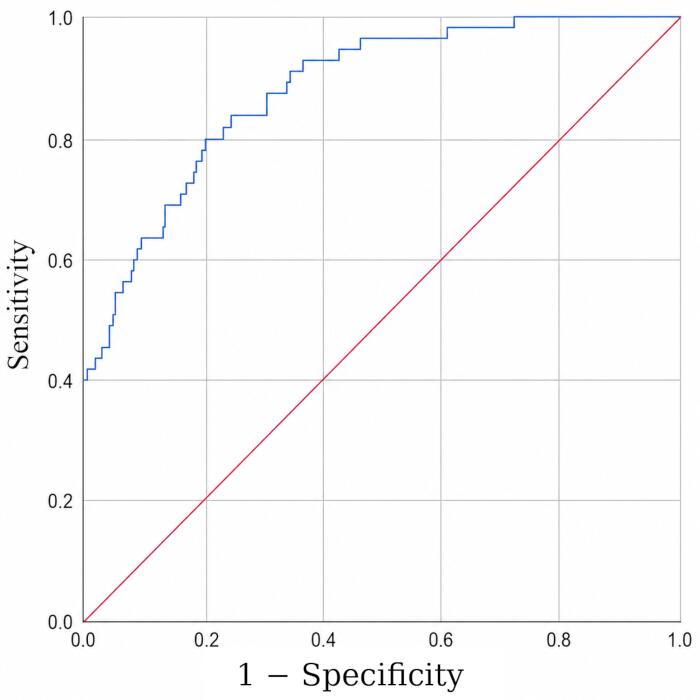
Figure 1: Apparent ROC curve for the primary multivariable logistic regression model. The displayed curve represents the apparent ROC curve, with an AUC of 0.881 (95% CI: 0.834–0.928). The optimism-corrected AUC after 1,000 bootstrap resamples was 0.869 and is reported numerically only; an optimism-corrected ROC curve is not displayed. At an exploratory predicted-probability threshold of 0.15, sensitivity was 78.9%, specificity was 82.5%, PPV was 42.0%, and NPV was 96.1%. Please click here to view a larger version of this figure.
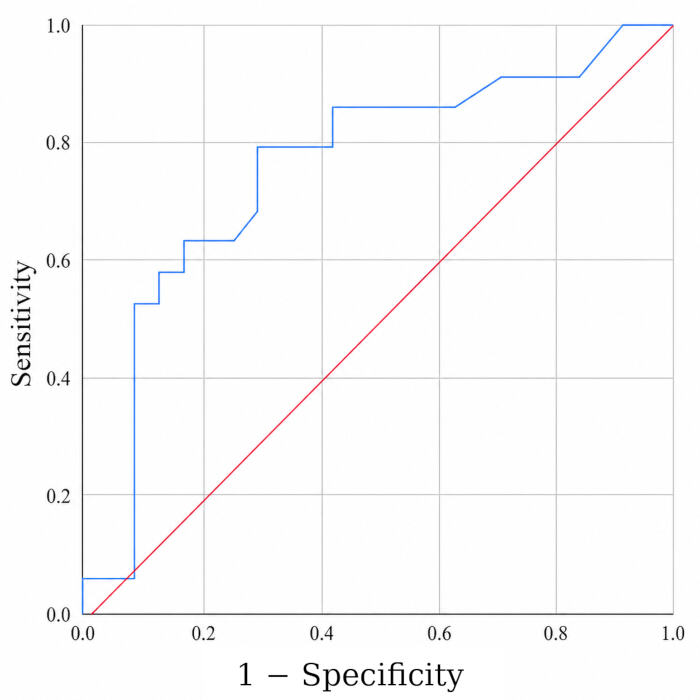
Figure 2: Exploratory ROC curve for postoperative WBC count in the inflammatory-marker subgroup. The AUC was 0.727 (95% CI: 0.604–0.850). At the Youden-index-derived cut-off value of 12.35 x 10⁹/L, sensitivity was 75.0%, specificity was 72.0%, PPV was 31.3%, and NPV was 94.4%. These performance estimates were derived and evaluated in the same limited subgroup and were not independently validated. Please click here to view a larger version of this figure.
| Variable | Total cohort (n = 549) | Non-EPOI group (n = 473) | EPOI group (n = 76) | p value |
| Sex, male/female | 465/84 | 401/72 | 64/12 | 0.898 |
| Age, years, M (Q1, Q3) | 68.00 (61.00, 75.00) | 68.00 (61.00, 75.00) | 68.00 (63.00, 74.50) | 0.817 |
| Smoking history, n (%) | 146 (26.59) | 123 (26.00) | 23 (30.26) | 0.435 |
| Height, cm, M (Q1, Q3) | 169.00 (163.00, 172.00) | 170.00 (165.00, 173.00) | 165.50 (160.00, 170.00) | 0.001 |
| Weight, kg, M (Q1, Q3) | 67.00 (60.00, 74.00) | 67.00 (60.00, 74.00) | 67.25 (60.00, 74.75) | 0.714 |
| BMI, kg/m², M (Q1, Q3) | 23.83 (21.93, 25.83) | 23.72 (21.72, 25.62) | 24.54 (23.07, 26.12) | 0.016 |
| Hypertension, n (%) | 250 (45.54) | 210 (44.40) | 40 (52.63) | 0.181 |
| Diabetes mellitus, n (%) | 91 (16.58) | 71 (15.01) | 20 (26.32) | 0.014 |
| Previous abdominal surgery, n (%) | 14 (2.55) | 8 (1.69) | 6 (7.89) | 0.001 |
| Preoperative hemoglobin, g/L, M (Q1, Q3) | 127.00 (112.00, 140.00) | 127.00 (112.00, 140.00) | 127.00 (110.00, 140.75) | 0.937 |
| Preoperative albumin, g/L, M (Q1, Q3) | 39.10 (37.10, 41.40) | 39.20 (37.10, 41.50) | 37.90 (36.33, 40.88) | 0.047 |
| Preoperative creatinine, μmol/L, M (Q1, Q3) | 73.00 (63.00, 88.00) | 73.00 (62.90, 88.00) | 74.00 (63.25, 83.00) | 0.774 |
| Operative time, min, M (Q1, Q3) | 375.00 (325.00, 450.00) | 375.00 (325.00, 445.00) | 387.50 (327.50, 463.75) | 0.478 |
| Intraoperative blood loss, mL, M (Q1, Q3) | 300.00 (200.00, 500.00) | 300.00 (200.00, 500.00) | 400.00 (262.50, 600.00) | 0.005 |
| Intraoperative transfusion volume, mL, M (Q1, Q3) | 0.00 (0.00, 300.00) | 0.00 (0.00, 300.00) | 0.00 (0.00, 175.00) | 0.312 |
| Lymph node yield, M (Q1, Q3) | 16.00 (11.00, 21.00) | 15.00 (10.00, 21.00) | 17.50 (13.00, 22.00) | 0.047 |
| Urinary diversion type | 0.273 | |||
| Ureterocutaneostomy, n (%) | 182 (33.15) | 162 (34.25) | 20 (26.32) | |
| Bricker ileal conduit, n (%) | 286 (52.09) | 240 (50.74) | 46 (60.53) | |
| Orthotopic neobladder, n (%) | 81 (14.75) | 71 (15.01) | 10 (13.16) |
Table 1: Baseline and perioperative characteristics of patients with and without EPOI following laparoscopic radical cystectomy. Values are presented as median (Q1, Q3) or n (%). The p value for urinary diversion type represents the overall comparison across the three diversion categories. Abbreviations: EPOI = early postoperative ileus; BMI = body mass index.
| Variable | β | SE | OR | 95% CI | p value |
| Female sex | -1.930 | 0.717 | 0.145 | 0.036–0.592 | 0.007 |
| Smoking history | 1.257 | 0.513 | 3.514 | 1.285–9.606 | 0.014 |
| Diabetes mellitus | 1.872 | 0.755 | 6.503 | 1.480–28.578 | 0.013 |
| Previous abdominal surgery | 1.794 | 0.805 | 6.024 | 1.242–29.412 | 0.026 |
| Intraoperative blood loss, per 100 mL | 0.100 | 0.048 | 1.105 | 1.007–1.213 | 0.036 |
| Lymph node yield, per additional node | 0.045 | 0.022 | 1.046 | 1.002–1.091 | 0.039 |
Table 2: Multivariable logistic regression analysis of factors associated with EPOI following laparoscopic radical cystectomy. Female sex was coded as 1 and male sex as 0. Smoking history, diabetes mellitus, and previous abdominal surgery were coded as 1 for presence and 0 for absence. Intraoperative blood loss was entered per 100 mL increase, and lymph node yield was entered per additional dissected lymph node. Abbreviations: β = regression coefficient; SE = standard error; OR = odds ratio; CI = confidence interval.
| Marker | Non-EPOI group (n = 118), M (Q1, Q3) | EPOI group (n = 20), M (Q1, Q3) | p value |
| WBC, ×10⁹/L | 9.90 (8.10, 12.90) | 13.70 (11.13, 15.68) | 0.001 |
| CRP, mg/L | 24.25 (17.00, 56.25) | 54.40 (40.93, 78.03) | <0.001 |
| IL-6, pg/mL | 97.34 (46.06, 160.14) | 99.57 (51.58, 213.93) | 0.685 |
| Procalcitonin, ng/mL | 0.057 (0.025, 0.078) | 0.042 (0.031, 0.052) | 0.553 |
Table 3: Exploratory comparison of inflammatory markers measured within 24 h after laparoscopic radical cystectomy. Values are presented as median (Q1, Q3) and were compared using the Mann–Whitney U test. Abbreviations: WBC = white blood cell count; CRP = C-reactive protein; IL-6 = interleukin-6; EPOI = early postoperative ileus.
Supplementary Figure 1: Patient selection and analytical cohorts. A total of 612 patients who underwent laparoscopic radical cystectomy with urinary diversion were screened. Sixty-three patients were excluded according to the prespecified eligibility criteria, leaving 549 patients in the primary analytical cohort. Of these, 76 met the prespecified EPOI criteria and 473 did not. Complete postoperative WBC, CRP, IL-6, and procalcitonin data were available for 138 patients, including 20 with EPOI and 118 without EPOI. Abbreviations: EPOI = early postoperative ileus; WBC = white blood cell count; CRP = C-reactive protein; IL-6 = interleukin-6.Please click here to download this file.
Supplementary Figure 2: Bootstrap-corrected calibration plot for the primary multivariable logistic regression model. The diagonal line represents perfect agreement between predicted and observed EPOI probabilities. The bootstrap-corrected calibration slope was 0.93, the calibration intercept was 0.01, and the Brier score was 0.083.Please click here to download this file.
Supplementary Table 1: Comparison of patients with complete inflammatory-marker data and the remaining cohort. Values are presented as median (Q1, Q3) or n (%). The inflammatory-marker subgroup was defined by the availability of complete postoperative WBC, CRP, IL-6, and procalcitonin measurements obtained within 24 h after surgery.Please click here to download this file.
Supplementary File 1: Deidentified individual-level data used to generate the results of this study. The Excel workbook contains separate worksheets for the EPOI and non-EPOI groups and includes the demographic, clinical, perioperative, postoperative outcome, and inflammatory-marker variables analyzed in the study. Direct patient identifiers are not included.Please click here to download this file.
Discussion
The incidence of EPOI following laparoscopic radical cystectomy in the present study was 13.84%, similar to the 11.6% reported by Bazargani et al7. Patients with EPOI also had longer postoperative hospital stays and a higher 30-day unplanned readmission rate, indicating a greater short-term healthcare burden associated with this complication. Previous cystectomy-specific studies have shown that the reported incidence and associated factors vary according to the EPOI definition, surgical approach, urinary diversion, perioperative pathway, opioid exposure, and intraoperative fluid management8,9,10,11,12. Against this heterogeneous background, the principal contribution of the present study is not the proposal of a definitive clinical prediction tool, but the integration of a standardized EPOI definition, a 549-patient laparoscopic radical cystectomy cohort, an internally validated multivariable model, and an explicitly exploratory assessment of early postoperative inflammatory markers within a single analytical framework.
After multivariable adjustment, female sex was associated with lower odds of EPOI, whereas smoking history, diabetes mellitus, previous abdominal surgery, greater intraoperative blood loss, and higher lymph node yield were associated with higher odds of EPOI. Smoking may be associated with inflammatory responses and impaired intestinal microcirculation. Diabetes mellitus may contribute through autonomic neuropathy, intestinal dysmotility, and microvascular injury. Previous abdominal surgery may increase intra-abdominal adhesions and complicate subsequent pelvic surgery. However, this association was based on only 14 patients with a history of previous abdominal surgery and was accompanied by a wide confidence interval; therefore, the effect estimate should be interpreted cautiously and requires confirmation in larger cohorts. The associations of intraoperative blood loss and lymph node yield with EPOI may reflect the effects of greater surgical trauma and operative extent, although the observational design does not establish causality. The ROC-derived values of 475 mL for intraoperative blood loss and ≥15 dissected lymph nodes should therefore be interpreted only as exploratory, data-dependent thresholds rather than as established clinical intervention points.
The primary model showed good apparent discrimination, but the PPV was modest at the exploratory operating threshold, partly reflecting the relatively low incidence of EPOI. Although the NPV was high, the model was developed and evaluated in the same single-center cohort. Therefore, its performance should not be interpreted as establishing immediate clinical utility, and external validation is required. Urinary diversion type was not significantly associated with EPOI in the univariate analysis and was not retained in the final model, although this finding should not be interpreted as proof that diversion type has no effect on postoperative bowel recovery.
The present findings are partly consistent with, but not identical to, previous cystectomy-specific studies. Xue et al. identified chronic constipation, increased laxative use, elevated preoperative creatinine, delayed postoperative ambulation, and intestine-related urinary diversion as factors associated with postoperative ileus following laparoscopic radical cystectomy9. Zennami et al. reported a different predictor profile among patients undergoing robot-assisted radical cystectomy10. Koo et al. found that greater perioperative opioid exposure was associated with delayed bowel recovery following radical cystectomy with ileal conduit diversion11, whereas Shim et al. reported that higher intraoperative fluid administration was associated with prolonged postoperative ileus after robot-assisted radical cystectomy12. The variation across studies supports cautious comparison of individual effect estimates and further indicates that EPOI is a multifactorial postoperative condition.
Inflammatory mechanisms have long been proposed to contribute to postoperative ileus through intestinal wall edema, inflammatory exudation, impaired intestinal motility, and interactions with adhesive or mechanical factors. Surgical trauma and tissue manipulation may activate neural and inflammatory pathways, leading to leukocyte recruitment, intestinal wall edema, impaired smooth muscle contractility, and delayed recovery of bowel function13,14,15. These inflammatory changes may coexist with postoperative neural inhibition, metabolic disturbances, intestinal dysmotility, adhesions, or other mechanical factors. Accordingly, inflammation should be interpreted as one component of the multifactorial pathophysiology of postoperative ileus rather than as a separate diagnostic entity. In the present study, EPOI was identified according to prespecified clinical and radiological criteria rather than on the basis of a presumed inflammatory mechanism6.
Systematic reviews and large colorectal cohorts have demonstrated substantial heterogeneity in the reported incidence and predictors of postoperative ileus, partly because of differences in diagnostic definitions, operative procedures, patient populations, and perioperative pathways16,17,18,19. Minimally invasive surgery combined with multimodal enhanced-recovery care has been associated with faster gastrointestinal recovery than conventional perioperative management20. In patients undergoing radical cystectomy, ERAS recommendations and subsequent clinical studies have described multimodal perioperative pathways that include appropriate fluid management, opioid-sparing analgesia, early mobilization, and early oral intake21,22,23. However, these studies do not establish the effectiveness of any single intervention for preventing EPOI, and their findings should be interpreted as background evidence rather than direct support for a specific preventive strategy in the present cohort.
In the present cohort, a clearly documented mechanical cause was identified in four patients, including three cases of intestinal volvulus and one case of internal herniation through a mesenteric defect, while hypokalemia-associated intestinal dysmotility was documented in two patients. Clinical and radiological findings were considered supportive of the diagnosis of EPOI but were not independently used to assign patients to a specific etiological subtype. Because standardized imaging review, operative confirmation, and prespecified expert adjudication were unavailable for all cases, the remaining 70 patients could not be reproducibly classified as having dynamic, inflammatory, or mixed obstruction. The present study, therefore, does not support classifying the remaining cases as a distinct inflammatory etiological subtype.
Initial management is generally based on repeated clinical assessment and exclusion of a correctable mechanical cause. Supportive measures may include temporary restriction of oral intake, gastrointestinal decompression when indicated, correction of fluid and electrolyte disturbances, appropriate nutritional support, and minimization of medications that may further impair intestinal motility. Urgent surgical evaluation is warranted when a mechanical cause or a complication such as bowel ischemia, strangulation, or perforation is suspected, or when peritoneal signs are present24.
All inflammatory-marker measurements were obtained within 24 h after surgery and therefore preceded the earliest qualifying EPOI assessment on postoperative day 3. This temporal sequence supported their exploratory evaluation as early discriminatory markers. However, because gastrointestinal symptoms were not assessed using a standardized protocol at the exact time of blood sampling, subtle or evolving bowel dysfunction could not be excluded. Therefore, elevated WBC and CRP concentrations may have reflected nonspecific early postoperative inflammation or an evolving complication rather than a true predictive signal for subsequent EPOI. In the subgroup with available inflammatory-marker data, postoperative WBC count and CRP concentration were higher in patients who subsequently met the prespecified EPOI criteria, whereas IL-6 and procalcitonin did not differ significantly. Postoperative WBC count was selected post hoc for a single exploratory ROC analysis because of the limited number of EPOI events and the intention to avoid multiple exploratory ROC analyses. This selection was not based on the primary multivariable model, and a separate CRP ROC analysis was not performed; therefore, the present study does not establish that WBC has superior discriminatory performance to CRP. Exploratory ROC analysis of postoperative WBC count yielded an AUC of 0.727. However, the biomarkers were not used to define an inflammatory etiological subtype, and the observed differences do not establish inflammation as the predominant cause of EPOI. Given the limited subgroup size, the predominance of complete biomarker measurements in the later study period, and the inclusion of only 20 EPOI events, postoperative WBC count should be regarded as an exploratory discriminatory marker rather than an independently validated early-warning marker. Validation in a larger prospective cohort is required.
Several features strengthen the present study, including the relatively large cohort of patients undergoing laparoscopic radical cystectomy, the use of consistent clinical and radiological criteria for EPOI, the detailed assessment of patient- and surgery-related variables, and bootstrap internal validation of the primary multivariable model. Nevertheless, several limitations should be acknowledged.
First, the retrospective, single-center design may have introduced selection and information bias and may limit the generalizability of the findings. Although bootstrap internal validation was performed for the primary model, no independent external cohort was available; therefore, the model performance estimates and data-derived cut-off values may have been optimistically biased.
Second, the study period extended from 2014–2022, during which surgical techniques, analgesic practices, and perioperative-care pathways may have evolved. A prospectively standardized ERAS checklist was not available throughout the entire study period, and patient-level adherence to individual ERAS components, bowel-preparation protocols, and cumulative perioperative opioid exposure could not be uniformly reconstructed from the retrospective records.
Third, although preoperative serum albumin was analyzed, comprehensive nutritional assessments were unavailable. Tumor stage, neoadjuvant therapy, and postoperative complications were not consistently incorporated into the primary model, and residual confounding from these factors cannot be excluded. Fourth, complete inflammatory-marker data were available for only 138 patients and were concentrated in the later study period; moreover, this subgroup included only 20 EPOI events. Finally, the available records did not permit standardized etiological classification of all EPOI cases, and the study was not designed to evaluate specific preventive or therapeutic interventions.
Conclusion
Among 549 patients who underwent laparoscopic radical cystectomy, 76 developed EPOI, corresponding to an incidence of 13.84%. After multivariable adjustment, female sex was associated with lower odds of EPOI (OR = 0.145, 95% CI: 0.036–0.592), whereas smoking history (OR = 3.514, 95% CI: 1.285–9.606), diabetes mellitus (OR = 6.503, 95% CI: 1.480–28.578), previous abdominal surgery (OR = 6.024, 95% CI: 1.242–29.412), greater intraoperative blood loss (OR = 1.105 per 100 mL, 95% CI: 1.007–1.213), and higher lymph node yield (OR = 1.046 per node, 95% CI: 1.002–1.091) were associated with higher odds of EPOI. In the 138-patient inflammatory-marker subgroup, postoperative WBC count showed exploratory discriminatory performance for EPOI (AUC = 0.727, 95% CI: 0.604–0.850) but was not included in the primary multivariable model. These associations and exploratory biomarker findings require prospective multicenter external validation before they can be used for clinical risk assessment.
Disclosures
The authors have no conflicts of interest to declare.
Acknowledgements
Not applicable.
Materials
| Name | Company | Catalog Number | Comments |
|---|---|---|---|
| AU5400 Automated Chemistry Analyzer | Beckman Coulter, Inc., Brea, CA, USA | AU5400 | Automated clinical chemistry platform used for postoperative C-reactive protein measurement. |
| cobas e 411 Analyzer (rack system) | Roche Diagnostics GmbH, Mannheim, Germany | 04775201001 | Automated electrochemiluminescence immunoassay analyzer used for postoperative interleukin-6 and procalcitonin measurements. |
| CRP Latex Reagent | Beckman Coulter, Inc., Brea, CA, USA | OSR6199 | Immunoturbidimetric reagent for quantitative C-reactive protein measurement on AU-series chemistry analyzers. |
| Elecsys BRAHMS PCT | Roche Diagnostics GmbH, Mannheim, Germany | 08828644190 | Electrochemiluminescence immunoassay reagent kit for quantitative determination of procalcitonin in human serum or plasma; 100 tests; compatible with the cobas e 411 analyzer. |
| Elecsys IL-6 | Roche Diagnostics GmbH, Mannheim, Germany | 05109442190 | Electrochemiluminescence immunoassay reagent kit for quantitative determination of interleukin-6 in human serum or plasma; 100 tests; compatible with the cobas e 411 analyzer. |
| Electronic medical record system | Nanjing Drum Tower Hospital, Nanjing, China | Institutional system | Used to identify eligible patients and extract demographic, clinical, operative, postoperative, and follow-up information. |
| IBM SPSS Statistics | IBM Corp., Armonk, NY, USA | Version 26.0 | Used for descriptive statistics, group comparisons, multivariable logistic regression, receiver operating characteristic analysis, and bootstrap internal validation. |
| Picture archiving and communication system (PACS) | Nanjing Drum Tower Hospital, Nanjing, China | Institutional system | Used to retrieve and review upright abdominal radiography and computed tomography examinations supporting the diagnosis of early postoperative ileus. |
| XE-5000 Automated Hematology System | Sysmex Corporation, Kobe, Japan | XE-5000 | Automated hematology analyzer used for postoperative white blood cell count measurement. |
| Note: Upright abdominal radiography and computed tomography were performed as part of routine clinical care and retrospectively reviewed. Because this study covered 2014–2022 and did not impose a study-specific imaging acquisition protocol, a single radiography or CT scanner model was not assigned in the materials table. |
References
- Bray F, Laversanne M, Sung H, et al. Global cancer statistics 2022: GLOBOCAN estimates of incidence and mortality worldwide for 36 cancers in 185 countries. CA Cancer J Clin. 2024;74(3):229-263.
- Richters A, Aben KKH, Kiemeney LALM. The global burden of urinary bladder cancer: an update. World J Urol. 2020;38(8):1895-1904.
- Lenis AT, Lec PM, Chamie K. Bladder cancer: a review. JAMA. 2020;324(19):1980-1991.
- Witjes JA, Bruins HM, Cathomas R, et al. European Association of Urology guidelines on muscle-invasive and metastatic bladder cancer: summary of the 2020 guidelines. Eur Urol. 2021;79(1):82-104.
- Ramirez JA, McIntosh AG, Strehlow R, et al. Definition, incidence, risk factors, and prevention of paralytic ileus following radical cystectomy: a systematic review. Eur Urol. 2013;64(4):588-597.
- Vather R, Trivedi S, Bissett I. Defining postoperative ileus: results of a systematic review and global survey. J Gastrointest Surg. 2013;17(5):962-972.
- Bazargani ST, Djaladat H, Ahmadi H, et al. Gastrointestinal complications following radical cystectomy using enhanced recovery protocol. Eur Urol Focus. 2018;4(6):889-894.
- Forbes CM, Chehroudi AC, Mannas M, et al. Defining postoperative ileus and associated risk factors in patients undergoing radical cystectomy with an Enhanced Recovery After Surgery program. Can Urol Assoc J. 2021;15(2):33-39.
- Xue X, Wang D, Ji Z, et al. Risk factors of postoperative ileus following laparoscopic radical cystectomy and developing a points-based risk assessment scale. Transl Androl Urol. 2021;10(6):2397-2409.
- Zennami K, Sumitomo M, Hasegawa K, et al. Risk factors for postoperative ileus after robot-assisted radical cystectomy with intracorporeal urinary diversion. Int J Urol. 2022;29(6):553-558.
- Koo KC, Yoon YE, Chung BH, et al. Analgesic opioid dose is an important indicator of postoperative ileus following radical cystectomy with ileal conduit: experience in the robotic surgery era. Yonsei Med J. 2014;55(5):1359-1365.
- Shim JS, Noh TI, Ku JH, et al. Effect of intraoperative fluid volume on postoperative ileus after robot-assisted radical cystectomy. Sci Rep. 2021;11(1):10522.
- Venara A, Neunlist M, Slim K, et al. Postoperative ileus: pathophysiology, incidence, and prevention. J Visc Surg. 2016;153(6):439-446.
- Vather R, O’Grady G, Bissett IP, et al. Postoperative ileus: mechanisms and future directions for research. Clin Exp Pharmacol Physiol. 2014;41(5):358-370.
- Livingston EH, Passaro EP Jr. Postoperative ileus. Dig Dis Sci. 1990;35(1):121-132.
- Wolthuis AM, Bislenghi G, Fieuws S, et al. Incidence of prolonged postoperative ileus after colorectal surgery: a systematic review and meta-analysis. Colorectal Dis. 2016;18(1):O1-O9.
- Moghadamyeghaneh Z, Hwang GS, Hanna MH, et al. Risk factors for prolonged ileus following colon surgery. Surg Endosc. 2016;30(2):603-609.
- Vather R, Josephson R, Jaung R, et al. Development of a risk stratification system for the occurrence of prolonged postoperative ileus after colorectal surgery: a prospective risk factor analysis. Surgery. 2015;157(4):764-773.
- Chapuis PH, Bokey L, Keshava A, et al. Risk factors for prolonged ileus after resection of colorectal cancer: an observational study of 2400 consecutive patients. Ann Surg. 2013;257(5):909-915.
- Vlug MS, Wind J, Hollmann MW, et al. Laparoscopy in combination with fast track multimodal management is the best perioperative strategy in patients undergoing colonic surgery: a randomized clinical trial (LAFA study). Ann Surg. 2011;254(6):868-875.
- Cerantola Y, Valerio M, Persson B, et al. Guidelines for perioperative care after radical cystectomy for bladder cancer: Enhanced Recovery After Surgery Society recommendations. Clin Nutr. 2013;32(6):879-887.
- Palumbo V, Giannarini G, Crestani A, et al. Enhanced Recovery After Surgery pathway in patients undergoing open radical cystectomy is safe and accelerates bowel function recovery. Urology. 2018;115:125-132.
- Wessels F, Lenhart M, Kowalewski KF, et al. Early recovery after surgery for radical cystectomy: comprehensive assessment and meta-analysis of existing protocols. World J Urol. 2020;38(12):3139-3153.
- Vilz TO, Stoffels B, Strassburg C, et al. Ileus in adults: pathogenesis, investigation and treatment. Dtsch Arztebl Int. 2017;114(29-30):508-518.