
Guest Editors
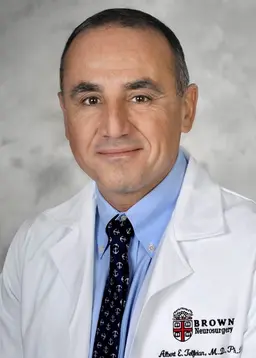
Albert Telfeian
Brown University, Warren Alpert School of Medicine
Albert Telfeian, MD, PhD is a Professor of Neurosurgery at the Warren Alpert School of Medicine at Brown University, director of minimally invasive endoscopic spine surgery at Rhode Island Hospital, and Vice Chairman of Quality Assurance for the Department of Neurosurgery at Brown. Dr. Telfeian is a graduate of the MD/PhD program at Brown University. He completed a postdoctoral fellowship at Yale University and his neurosurgical residency at the Hospital of the University of Pennsylvania. He also completed fellowship training in spine and functional epilepsy surgery at Switzerland’s Centre Hospitalier Universitaire Vaudois and a pediatric neurosurgery fellowship at the Children’s Hospital of Philadelphia. Telfeian has published extensively in the areas of epilepsy, functional and spine surgery and is currently involved in the research and development of minimally invasive endoscopic surgical techniques.

Christoph Hofstetter
UW Medicine
Christoph Hofstetter, MD, PhD, is a neurosurgeon at UW Medicine and a UW associate professor of Neurological Surgery. Dr. Hofstetter specializes in complex spine surgery with an emphasis on minimally invasive techniques and a focus on degenerative spinal disorders and spinal oncology. He believes in creating active partnerships with his patients to achieve the best possible outcomes. Dr. Hofstetter earned his MD from the University of Vienna, and PhD at Karolinska Institute in Stockholm. Dr. Hofstetter’s research interests include minimally invasive motion-preserving spinal procedures, endoscopic techniques to treat disc herniations, and treatment strategies to enhance nerve fiber plasticity and regeneration following spinal cord injury.
Collection Overview
Full endoscopic spine surgery (FES) is a rapidly advancing field. Technological advancements in endoscopic equipment and intraoperative visibility continue to evolve, allowing spine surgeons to adopt the technique easier with the tools they are familiar with in conventional spine surgery. With reports of less blood loss, shorter hospital stays, shorter surgical times, and significantly less collateral tissue damage, FES is an attractive option for several spine pathologies. Leveraging the benefit of ambulatory spine surgery with little to no need for postoperative narcotic medications, FES aligns with several national and international healthcare initiatives. FES can be used to treat several spine pathologies including, degenerative disc disease, disc herniations, nerve compression, central canal stenosis, and lumbar spondylolisthesis, and indications are expanding to include thoracic disc herniations, cervical disease, spinal oncology, spontaneous CSF leaks, and many more.
This collection showcases common applications of the endoscope to treat various spine pathologies and highlights key procedures that demonstrate novel uses of the endoscope in the spine. This collection aims to expose the current advantages of FES, help resident surgeons learn more about the procedures, inform future adopters of the techniques and advancements, and help patients understand the procedures and help them better prepare for these surgeries.
Articles


Transforaminal Full-Endoscopic Lumbar Foraminotomy Under Local Anesthesia for L5/S1 Adjacent Segment Foraminal Stenosis
0 Views
•
Cited by 1
•
2025
•
Abstracts
Percutaneous Posterior Endoscopic Cervical Decompression (P-PECD) for cervical spondylotic radiculopathy
chen li1,
Ye Jiang2,
cong luo2,
lutao yuan2,
Yong Yu*1
1Department of Neurosurgery, Zhongshan Hospital, Fudan University,
2Department of Neurosurgery, Minhang Hospital, Fudan University