Guest Editors

Anjali Lathwal
Indraprastha Institute of Information Technology Delhi, IIIT-Delhi
Dr. Anjali Lathwal completed her B.Tech and M.Tech in Computer Science and Engineering from Maharshi Dayanand University, Rohtak, Haryana, India. Exposure to biological science during her Master’s thesis project motivated her to pursue research in the field of biological sciences. She then did her Doctorate in Computational Biology at the Indraprastha Institute of Information Technology Delhi, IIIT-Delhi, fully funded by the University Grants Commission, Government of India. During her Ph.D., she extensively worked towards advancing biomarker discovery and immunotherapeutics in cancer and other infectious diseases. Her areas of expertise include Applied Machine Learning; Monte-Carlo Simulations; Mathematical Modeling; Computer-aided Vaccine Design; Peptide-based Therapeutics; Cancer Immunotherapy; Biomarkers Discovery; Genomic Annotation & Instability; Survival Modeling; Drug Repurposing; Network Modeling; Database Design, Management, and Integration. Later, she joined NIH-National Institute on Aging, Baltimore, Maryland, USA, for her postdoctoral training and worked on the project of drug repurposing for effective treatment and management of Alzheimer’s and other age-related neurological disorders. She employed mechanism-based systems biology and network science principles using large-scale multi-omics and clinical data. She also gained experience in developing deep learning and network-based modes to identify disease-specific progression markers using longitudinal clinical data. She has published more than ten peer-reviewed publications in renowned international journals and book chapters as a co-author, and has done several independent consultancy projects. She is also a member of the Asia-Pacific Bioinformatics Network society and the recipient of the Research Excellence Award from the Institute of Scholars (InSc). Her research experience shows her substantial contribution to viral therapeutics, biomarker discovery, and computational biology.
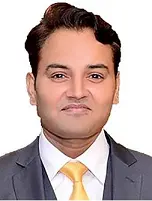
Pawan Kumar Raghav
University of California San Francisco (UCSF), Department of Surgery
Dr. Pawan Kumar Raghav completed his MSc in Bioinformatics from Punjabi University Patiala; PG Diploma in Chemo-Informatics from Jamia Hamdard; MPhil in Bioinformatics from The Global Open University, Nagaland. He worked at the Institute of Nuclear Medicine and Allied Sciences, Defense Research Development Organization (DRDO), Delhi, India for Ph.D., and got degree in Life Sciences from Bharathiar University, Coimbatore. During his Ph.D he designed molecules and evaluated their experimental applications through response modification that regulates stem cells proliferation, differentiation, and apoptosis. He also worked as Research Associate in INMAS, DRDO where he has worked for stem cell-based patents. Dr. Pawan Kumar Raghav is a recipient of Postdoctoral fellowship awarded by Department of Science and Technology, SERB, India. He has completed the Department of Science and Technology, Government of India’s project as leading Principal Investigator in Department of Computational Biology, IIIT Delhi. His research work included development of tools and databases using machine learning algorithms, and new scoring function parameterizations for use in docking, simulations, and complex network analysis. Later, he has joined as a Scientist ‘D’ in Stem Cell Facility, AIIMS, Delhi. As a scientist, he carried out stem cell informatics, current Good Manufacturing Practices, and tissue engineering experimental studies. Currently, he is working as a Research Employee in the School of Medicine, Department of Surgery, University of California San Francisco, San Francisco, California. He is developing novel approaches for investigating immune/inflammatory mechanisms of allograft injury and discovering new biomarkers and therapeutics in solid organ and bone marrow transplantation. He is the recipient of several awards and honors, including the ICMR Travel Award to deliver an oral talk in 11th world congress & expo on cell & stem cell research ORLANDO, the USA, Research Excellence Award from Institute of Scholars, best Research Award from Science Father, and invited to present the research proposal at BioMed X GmbH, Germany. He has published more than 40 publications, including international research articles, book chapters, books, and Indian intellectual property rights for patents. He also reviewed and guest edited special collections for several international journals and books.

Rajesh Kumar
National Institutes of Health, National Cancer Institute, Developmental Therapeutics Branch, MD, USA
Dr. Rajesh Kumar completed his M.Sc. in Biotechnology from Kurukshetra University in Kurukshetra, Haryana, India. Exposure to genomic science motivated him to explore the human genome via emerging computational techniques. Thus he enrolled himself in the Ph.D. program at the CSIR-Institute of Microbial Technology, Chandigarh, India, in 2015. During his initial Ph.D. tenure, he designed and validated cell-penetrating peptides for effective tumor therapy. His research interests include immunotherapeutics for cancer and other infectious diseases; analysis of multi-omics data for biomarker identification; understanding genomic structural alterations in cancers; peptide-based therapeutics; designing epitope-based vaccines; and developing algorithms for clinical data analysis and interpretation using machine learning for precision medicine. He has published more than 25 peer-reviewed publications in international journals and contributed as an author to published books. He is also a member of the Asia-Pacific Bioinformatics Network society. He is the recipient of the CSIR-travel award for delivering the presentation at the Gordon Research Conference on Genomic Instability and Cancer in Ventura, California, USA, in 2020. He is a recipient of the Carl Storm International Fellowship award in 2020. Currently, he is a postdoctoral fellow at the Developmental Therapeutics Branch of the National Cancer Institute, NIH, USA. His research activities and broad experience show his significant contribution to computational biology.
Collection Overview
Vaccination is historically one of the most significant medical interventions to reduce fatality and morbidity by controlling and preventing diseases. Earlier conventional vaccines such as live-attenuated or inactivated whole-pathogen have had a therapeutic response but pose a risk of reversal to a highly pathogenic form and may not be sufficiently immunogenic. According to the literature, efficient recombinant protein and synthetic peptide manufacturing technologies were developed to help with vaccine research and production. Despite this, an insufficient understanding of the immune mechanisms and inadequate solutions for overcoming antigenic variability have drastically affected the design of effective vaccines against highly infectious and deadly diseases. Another vital challenge is handling genetic diversity, which demands a wide range of immune responses and the need to respond to emerging outbreaks and pathogens rapidly. New analytical and technological methods may aid in deciphering the complexity of immune mechanisms that will be critical to designing highly effective future vaccines. In addition, recent advances in the fields of systems and structural biology, immunology (e.g., recombinant protein vaccines, DNA and RNA vaccines, live recombinant viral and bacterial vectors), reverse vaccinology, reverse genetics, and computational biology have opened up new avenues for improving our understanding of immune mechanisms and responses, allowing us to improve vaccine design and development.
This Methods Collection will focus on the methods of current and emerging approaches in vaccine design and delivery, including nano vaccines, epitopes, adjuvants, and new vaccine development tools and platforms.
Articles

Micro-Colony Forming Unit Assay for Efficacy Evaluation of Vaccines Against Tuberculosis
0 Views
•
Cited by 1
•
2023
•
Abstracts
Multi-Phase Training in Virus-Like Particle Vaccine Development to Foster Science Self-Efficacy in Students with Minimal Laboratory Experience
Naomi Lee*1,
Bryce Chackerian2,
Julianne Peabody2,
Macie Proctor-Roser3
1Department of Chemistry, Northern Arizona University, Flagstaff, AZ 86011,
2Department of Molecular Genetics & Microbiology, University of New Mexico, Albuquerque, NM, 87131,
3Department of Biology, Northern Arizona University, Flagstaff, AZ 86011
A simple approach for visualizing bladder wall and distal ureters using indocyanine green during robotic resection of bladder endometriosis
Yasnaia Bruneel1,
Christophe Ghysel2,
Caroline Van Holsbeke 3
1Department of Gynaecology. AZ Sint-Jan Hospitals Bruges, Belgium,
2Department of Urology. AZ Sint-Jan Hospitals, Bruges, Belgium,
3Department of Gynaecology. AZ Sint-Lucas Hospital, Bruges, Belgium
Optimization of nisin concentration in inducing SARS-CoV2 spike protein expression in recombinant L.lactis
Valentina Yurina*1,
Oktavia Rahayu Adianingsih1
1Universitas Brawijaya
Molecular dynamics driven pipeline for HIV1 vaccine design
Rory Henderson*1
1Duke University