Guest Editor

Collection Overview
Heterocyclic compounds are organic compounds with a ring structure that contains at least one C-atom and one heteroatom, such as N, O, or S, representing a privileged class of compounds of both natural origin and pharmaceutical importance. Among different kinds of heterocycles, nitrogen-based heterocyclic compounds are more abundant in nature and a unique class among the applied branches of chemical science, with a significant amount of research dedicated; they form part of structural units of important bioactive compounds, such as vitamins, hormones, agrochemicals, antibiotics, etc. They especially form an integral part of the base pairs of DNA and RNA, namely purines, pyrimidines, etc.
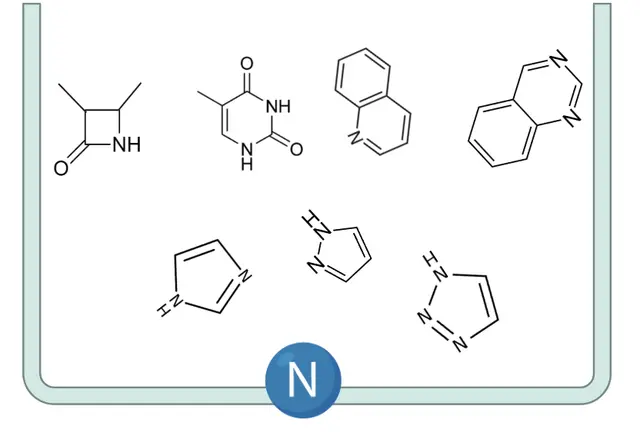
Over the last two centuries, methods/approaches in the isolation, characterization, and synthesis of these compounds have been evolving constantly from classical procedures. However, a lack of reproducible strategies, as well as fatal side-effects and the development of multidrug resistance, has limited this field of research significantly. Therefore, the primary objective of this collection is to provide an insight into the current methods involving N-containing heterocyclic structures (four to seven-membered rings) introducing lactams, pyrazoles, imidazoles, triazoles, pyrimidines, quinolines, quinazolines, etc. The focal point of this methods collection includes but is not limited to:
- Isolation and structural elucidation
- Development of novel synthetic methodologies including click reactions, multicomponent domino reactions, etc.
- More sustainable protocols for green and easy preparations
- Structural modification, screening, physiological, and pharmacological properties
- Promising applications in the development of novel molecules and composites