
Guest Editors

Yongkui Tang
University of California at Santa Barbara, Department of Mechanical Engineering
Dr. Yongkui Tang received a B.S. degree in electrical engineering from Peking University, Beijing, China, in 2014, followed by the M.S. and PhD degrees in electrical engineering from the University of Southern California, Los Angeles, CA, USA, in 2016 and 2021, respectively. His graduate research has been focused on microelectromechanical systems (MEMS), microfabrication, and piezoelectric acoustic transducers, including self-focusing acoustic transducers (SFATs), acoustic “tweezers,” and acoustic propellers. In Oct. 2021, he joined the Department of Mechanical Engineering, the University of California at Santa Barbara, CA, the USA as a postdoctoral scholar developing biocompatible hydrogel microstructures for biomedical applications.

Hong Ding
University of Texas at Austin, Department of Biomedical Engineering
Dr. Hong Ding received the B.Eng. and PhD degrees from the School of Mechanical Engineering, Zhejiang University, Hangzhou, China, in 2013 and 2019, respectively. In 2016, he joined the Department of Mechanical Engineering, University of California at Berkeley (UC Berkeley), Berkeley, CA, USA, as a visiting student. In 2019, He joined the Department of NanoEngineering, University of California at San Diego (UC San Diego), San Diego, CA, USA, as a Postdoctoral Researcher. He is currently a Postdoctoral Researcher with the Department of Biomedical Engineering, the University of Texas at Austin (UT Austin), Austin, TX, USA. His research interests include MEMS resonators, resonant sensors, micromachined ultrasonic transducers, soft actuators, and flexible electronics.
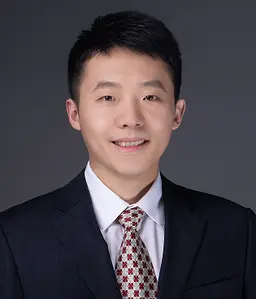
Yifei Mao
Shanghai Jiao Tong University, School of Electronic Information and Electrical Engineering
Dr. Yifei Mao is an Assistant Professor in the School of Electronic Information and Electrical Engineering, Shanghai Jiao Tong University, Shanghai, China. He received his B.S. degree from Xidian University, Xi’an, China, in 2012 and his PhD from Peking University, Beijing, China, in 2017. He worked as a postdoctoral fellow at the School of Physics, Peking University, from 2017 to 2021 before joining Shanghai Jiao Tong University as a faculty. His research interests include nanophotonics, micro-nano fabrication, nano-lasers, metamaterials, etc. He published more than 15 peer-reviewed papers in journals such as Nature, Advanced Materials, Nano Letters, etc. His works have been selected as China’s Top 10 Optical Breakthroughs of 2020 and China’s Top 10 Semiconductor Research Breakthroughs of 2020.
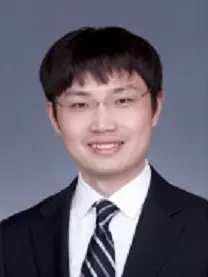
Yunqi Cao
Zhejiang University, College of Control Science and Engineering, State Key Laboratory of Industrial Control Technology
Dr. Yunqi Cao received the B.S. degree in physics from Wuhan University, Wuhan, Hubei, China, in 2012, and an M.S. degree in materials science and engineering from the University of Florida, Gainesville, FL, USA, in 2014, followed by the PhD degree in electrical engineering from Michigan State University, East Lansing, MI, USA, in 2019. He worked as an R&D engineer at Semiconductor Manufacturing International Corporation, Shanghai, China, in 2015 and served as a postdoctoral scholar at the University of Southern California, Los Angeles, CA, the USA, from 2019 to 2020. He is currently a tenure-track faculty with the College of Control Science and Engineering at Zhejiang University with a courtesy appointment in the Chu Kochen Honors College. His research interests include microelectromechanical systems (MEMS), microfabrication, microfluidics, energy harvesting, flexible electronics, and soft tactile sensors.
Collection Overview
Many soft or flexible materials exhibit attractive properties, including light weight, flexibility, portability, stretchability, biocompatibility, etc. Leveraging these features, these materials have been used in a variety of devices, such as flexible electronics, wearable sensors, soft robots and actuators, energy harvesters, drug delivery agents, tissue-engineering scaffolds, and microfluidic devices. For these devices to replace their hard, rigid counterparts and be widely used in consumer applications, there is still room for improvement towards integrating many components, smaller footprints, and lower manufacturing costs, to which micro/nanofabrication technologies provide an excellent solution. Although these technologies are traditionally implemented for manufacturing rigid semiconductor devices, in recent years, extensive progress has been made in developing micro/nanofabrication methods involving soft or flexible materials. This collection aims to highlight emerging or advanced microfabrication and nanofabrication techniques that open up new avenues for next-generation devices based on functional soft or flexible materials. The methods of interest include but are not limited to:
1. Creating structures or devices made of soft or flexible materials at the microscale or the nanoscale.
2. Adapting traditional or inventing new micro/nanofabrication techniques for fabrication on soft or flexible substrates.
3. Micro/nanofabrication of structures or devices that are not necessarily made of soft or flexible materials or on soft or flexible substrates but can be integrated into or combined with soft or flexible materials for creating new or improved functionalities.
Articles


