
Guest Editors
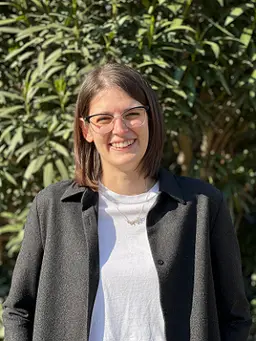
Laura Veschetti
University of Verona, Strada le Grazie 8, 37134 Verona, Italy, School of Medicine, Department of Neurosciences, Biomedicine and Movement Sciences, Laboratory of Computational Genomics
Dr. Laura Veschetti received her MSc in Molecular and Medical Biotechnology from the University of Verona in 2018. She earned her PhD in Applied Life and Health Sciences at the University of Verona in 2022. During her PhD, she worked in the laboratory of Prof. Giovanni Malerba (https://www.sites.google.com/view/gmlab) and was a visiting PhD student at The Novo Nordisk Foundation Center for Biosustainability (Denmark). She focused her research on microbial genomics by tackling questions regarding microbe-host adaptation, environmental reservoirs of antimicrobial resistance, and the interaction of transcriptome and mirnome in nematodes. She is also collaborating on projects involving cutting-edge technologies such as shotgun metagenomics and long-read sequencing.
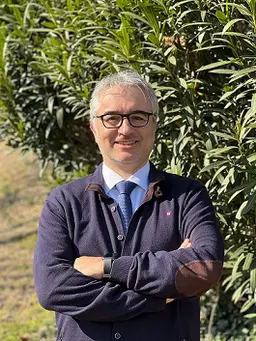
Giovanni Malerba
University of Verona, Strada le Grazie 8, 37134 Verona, Italy, School of Medicine, Department of Neurosciences, Biomedicine and Movement Sciences, Laboratory of Computational Genomics
Prof. Giovanni Malerba received a degree in Biological Sciences (University of Padua), a PhD in Biotechnology Applied to Biomedical Sciences (University of Verona), and a Specialization in Medical Genetics (technical address, University of Verona). He has carried out research activities at the laboratories of the University of Verona, the Fox Chase Cancer Center (Philadelphia, USA), INSERM U794, CEPH Institute (Paris, France), and the Sanger Center (Hinxton, UK). Since 2003, he has been affiliated with the University of Verona. His research focuses on big-data analysis in humans and microbes genomics, epigenomics, and transcriptomics. Currently, he is leading projects which employ innovative technologies such as single-cell, shotgun metagenomics, and long-read sequencing.
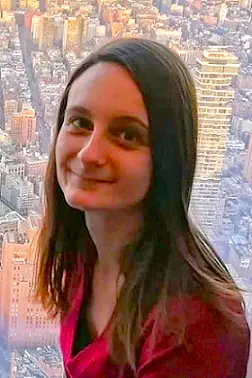
Angela Sandri
University of Verona, Strada Le Grazie 8, 37134 Verona, Italy, Section of Microbiology, Department of Diagnostics and Public Health
Dr. Angela Sandri obtained an MSc in Medical and Pharmaceutical Biotechnology in 2013 at the University of Florence and a PhD in Applied Life and Health Sciences in 2017 at the University of Verona. During her PhD, she did part of her research activity at the Technical University of Denmark. Currently, she is a post-doctoral researcher at the University of Verona. Since her bachelor’s and master’s thesis, the main subject of her research has been bacterial pathogens in cystic fibrosis airway infections. Currently, she is leading a research study to identify potential genetic and phenotypic markers of bacterial persistence, virulence, and antibiotic resistance through a combination of genomic, molecular, and phenotypic - in vitro and in vivo approaches.
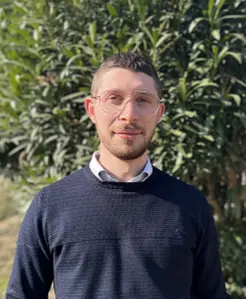
Mirko Treccani
University of Verona, Strada le Grazie 8, 37134 Verona, Italy, School of Medicine, Department of Neurosciences, Biomedicine and Movement Sciences, Laboratory of Computational Genomics
Mirko Treccani received his BSc degree in Bioinformatics in 2018 and his MSc degree in Molecular and Medical Biotechnology in 2020 at the University of Verona. He is now earning his PhD in Applied Life and Health Sciences at the University of Verona under the supervision of Prof. Giovanni Malerba. He started working in protein docking and modeling during his BSc, and he moved to genomics of complex diseases in his MSc. Currently, he develops and applies new strategies for complex traits and disease analysis, cooperating with national and international consortia. Moreover, he supports bioinformatics outside everyday research, being president of the ISCB RSG Italy and cooperating with worldwide RSGs, focusing on education, training, and divulgation of bioinformatics.
Collection Overview
Microorganisms play an essential role in many aspects of life, beginning with their ecological functions as decomposing organisms, progressing to industrial applications for food and bioactive molecule production, as well as water treatment, and finally, to their impact on human health and disease. It is clear, then, how important it is to detect, characterize, and understand microbes at the molecular level to decipher the mechanisms underlying their genomic plasticity and richness and define their role in complex communities. Despite the importance of these tasks, there are still limited guidelines on why and how to approach microbial genomics analyses, mainly due to the fast-paced development of sequencing technologies and the ever-growing expertise required to carry out such demanding analyses. This Methods Collection aims to provide an overview of the essential toolkit to study microbes in various in silico, in vitro, and in vivo systems.
Articles

Pseudotyped Viruses As a Molecular Tool to Monitor Humoral Immune Responses Against SARS-CoV-2 Via Neutralization Assay
0 Views
•
2023
•
Abstracts
Pseudotyped viral particles: a molecular biology tool to study host-virus interactions
Alessandra Ruggiero*1,
Tobia Fantoni1,
Michele Bissoli1,
Mauro Voi1,
Alexandrina Dabija1,
Rebecca Casula1,
DOMENICO LUCA MINAFRA1,
Chiara Stefani1,
Donato Zipeto1
1University of Verona