
Guest Editors
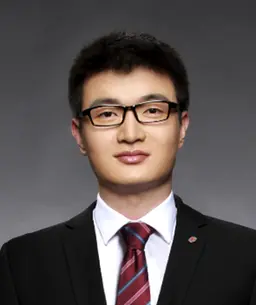
Jinglong Tang
Department of Occupational and Environmental Health, School of Public Health, Qingdao University
Dr. Jinglong Tang received his bachelor's degree in biotechnology from Jilin University in 2012. He obtained his PhD in Physical Chemistry from the Peking University in 2017, where he began his research on nanotoxicology and nanomedicine as a joint PhD student with National Center for Nanoscience and Technology, China, in the Chinese Academy of Sciences Key Laboratory for Biomedical Effects of Nanomaterials and Nanosafety. He then joined Qingdao University and occupied environmental toxicology research. Dr. Tang specialized in nanotoxicology, environmental risk assessment and occupational health. He is a leading academic researcher with a broad vision and innovative ideas in understanding the connection between pollutants exposure and adverse health effect, especially in respiratory system and cardio- cerebral-vascular system injury. He has been the principal investigator and co-investigator of several national grants and is taking on roles as guest editor or editorial board member of highly impacted journals. He has over 60 peer-reviewed papers in high impact journals including Nat Commun, Adv Mater, ACS Nano, Environ Int, Part Fibre Toxicol, etc. Dr. Tang is actively involved in the toxicology research and medicine landscape at the Qingdao University, working across disciplines and being an advocate for bench-to-bedside discovery.

Daochuan Li
Department of Toxicology, School of Public Health, Sun Yat-sen University, Guangzhou, China
Dr. Li Daochuan obtained his PhD in Toxicology from the School of Public Health at Sun Yat-sen University in 2011. He conducted postdoctoral research at the University of Maryland, Baltimore in the United States. In 2019, he joined Sun Yat-sen University as an associate professor, and deputy director of the Department of Toxicology at School of Public Health. Dr. Li specialized in Molecular toxicology and focused on the epigenetic regulatory mechanisms of chemical carcinogenesis and the evaluation of chemical toxicity based on toxicity pathways. He has made significant achievements in rapid screening of environmental carcinogens using in vitro cell models, elucidation of epigenetic mechanisms of chemical carcinogenesis and carcinogenic risk assessment. Dr. Li has hosted several national grants and served as a reviewer for multiple highly impacted journals. He has obtained multiple national invention patent authorizations and published over 80 peer-reviewed papers, including academic journals such as Environ Health Persp, J Hazard Mater, Part Fibre Toxicol, Arch Toxicol, and Toxicol Sci, etc.
Collection Overview
Environmental pollution remains one of the most significant factors responsible for the global burden of diseases. While laboratory techniques in environmental health research have made significant progress over the past two decades, assessing the adverse health effects caused by pollutants is still not straightforward due to the multidisciplinary nature of environmental health studies. Therefore, the opportunity to develop an interdisciplinary approach is crucial for basic research in environmental science, toxicology, and public health. This Methods Collection highlights techniques currently employed in environmental health research. The scope includes:
- Approaches for the identification of environmental pollutants in biological samples.
- Testing methods for assessing the potential toxicity of chemicals.
- Application of toxicity pathway analysis to identify potential toxins.
- Novel toxicological models for evaluating environmental pollutants.
The experimental and analytical methods presented in this collection will enable the advancement of environmental health and accelerate the management of potential environmental pollutants.
Articles

Measuring Carbon Content in Airway Macrophages Exposed to Carbon-Containing Particulate Matters
0 Views
•
Cited by 1
•
2024
•


Abstracts
Generation of Complex Emissions with a Surrogate Combustion Generator
Timothy Nurkiewicz*1
1West Virginia University
A Method to assess the effects of endogenous and exogenous toxins on macrophage efferocytosis
Huihui Wang*1
1China Medical University