
Guest Editors
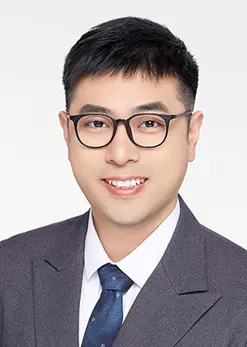
Yawei Du
Ruijin Hospital, Shanghai Jiao Tong University, School of Medicine
Dr. Yawei Du is an assistant professor at Ruijin Hospital, Shanghai Jiao Tong University, School of Medicine. He earned his PhD from Southeast University, China (Joint PhD at the University of Melbourne). He completed postdoctoral training at Shanghai Jiao Tong University School of Medicine before joining Ruijin Hospital. His research focuses on translational regenerative medicine, integrating multidisciplinary approaches including chemistry, biomaterials, molecular biology, and medicine to modulate cell microenvironments for tissue regeneration. Dr. Du has authored over 50 SCI papers in prestigious journals such as Advanced Materials, Advanced Science, Advanced Functional Materials, and Bioactive Materials, with an H-index of 20 and over 1000 citations. He has secured grants as principal investigator from institutions, including the National Natural Science Foundation of China (NSFC), the Shanghai Committee of Science and Technology, and the Shanghai Municipal Health Commission. Dr. Du also serves as a youth editorial board member for journals like Exploration and Advanced Biotechnology.
Hengyi Lu
Shanghai Advanced Research Institute (SARI), Chinese Academy of Sciences (CAS)
Dr. Hengyi Lu is a professor at the Shanghai Advanced Research Institute, Chinese Academy of Sciences. He earned his PhD from Fudan University and conducted postdoctoral research at the University of Texas at Austin, USA. His research focuses on developing polymer-based gel materials for biomedical applications such as bio-lubrication, drug delivery, and tissue regeneration, as well as functional applications, including mechanical lubrication, solar-water purification, and atmospheric water harvesting. Dr. Lu has published over 44 SCI papers in journals like Advanced Materials, Advanced Functional Materials, and ACS Materials Letters, with an H-index of 29 and more than 3500 citations.

Juan Wang
Ruijin Hospital, Shanghai Jiao Tong University, School of Medicine
Dr. Juan Wang received her Ph.D degree from Donghua University. She is an associate professor at Ruijin Hospital, Shanghai Jiao Tong University, School of Medicine. Her research focuses on biomimetic material design, cell-material interfacial signal transduction, and tissue regeneration. She has published over 50 SCI papers in renowned journals such as Science Bulletin, Advanced Materials, Advanced Science, and Advanced Functional Materials, with an H-index of 23 and over 1645 citations. Dr. Wang has secured grants as the principal investigator from the National Natural Science Foundation of China (NSFC), the Shanghai Committee of Science and Technology, and the Shanghai Municipal Health Commission. She is an academic editor for Exploration and a guest editor for several other journals.
Liang Chen
Wenzhou Institute, University of Chinese Academy of Sciences (UCAS)
Dr. Liang Chen holds dual doctoral degrees in biomaterials science from Donghua University and Chimie Macromoléculaire et Supramoléculaire from Université Toulouse III – Paul Sabatier. He is an associate professor at Wenzhou Institute, University of Chinese Academy of Sciences. His research interests are biomaterial design and tissue repair. Dr. Chen has published over 30 SCI papers in leading journals such as Science Bulletin, Advanced Materials, Advanced Science, and Advanced Functional Materials, with an H-index of 16. has successfully secured grants as the principal investigator from the National Natural Science Foundation of China (NSFC) and the Shanghai Municipal Health Commission. He is a young editor for Exploration and a guest editor for several other journals.
Collection Overview
Injectable nano/micromaterials (e.g., lipid nanoparticles, microspheres) represent a burgeoning area of research and development spanning medicine, biotechnology, and materials science. These materials hold promise for various applications, including drug delivery, tissue engineering, diagnostics, imaging, and immunotherapy. Accurate fabrication methods using physical or chemical preparation techniques are essential to meet specific structural and performance requirements. The goal of this Methods Collection is to provide reproducible methodologies for the study of injectable nano/micromaterials preparation and related biomedical applications. Innovative protocols for preparing injectable nano/micro-materials, such as microfluidics, self-assembly, chemical synthesis, and shear-extrusion techniques, are welcomed for submission to this collection.
