Collection-image

TOPICAL COLLECTIONS

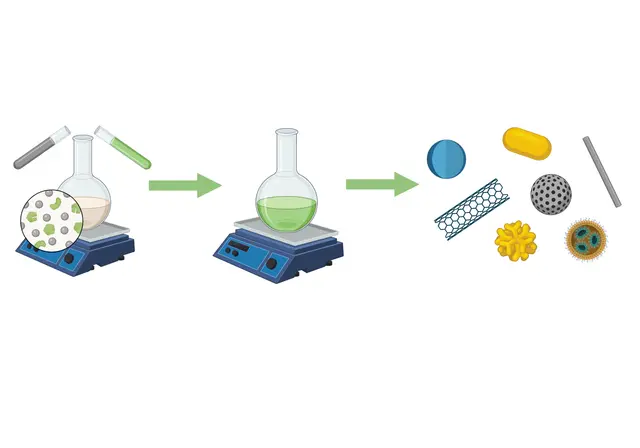
Green Synthesis of Functional Nanomaterials: Sustainable Methodologies, Mechanisms, and Applications
Submit Abstract

Guest Editor

Álvaro de Jesús Ruiz-Baltazar

Álvaro de Jesús Ruiz-Baltazar

National Autonomous University of Mexico (UNAM), Center for Applied Physics and Advanced Technology

Dr. Álvaro de Jesús Ruiz-Baltazar is a Researcher for Mexico (Investigador por México) at the Secretariat of Science, Humanities, Technology and Innovation (SECIHTI), currently affiliated with the Center for Applied Physics and Advanced Technology (CFATA) of the National Autonomous University of Mexico (UNAM), Juriquilla Campus. He holds a PhD in metallurgy and materials science from Universidad Michoacana de San Nicolás de Hidalgo, an MSc in materials science from the Instituto Tecnológico de Morelia, and a BSc in Mechanical Engineering. His research focuses on the green synthesis, advanced characterization, and application of functional nanomaterials, including metallic, metal-oxide, magnetic, plasmonic, and hybrid nanostructures. His work particularly addresses sustainable synthesis using plant extracts, deep eutectic solvents, and ultrasound-assisted methodologies, with applications in environmental remediation, water treatment, catalysis, and biomedicine. He is a member of the Mexican National System of Researchers (SNII), Level II.

Collection Overview

The development of sustainable methodologies for the synthesis of functional nanomaterials has emerged as an important research direction toward reducing the environmental impact associated with conventional chemical and physical synthesis routes. This collection will focus on recent advances in green and sustainable approaches for the preparation of metallic, metal-oxide, magnetic, plasmonic, and hybrid nanomaterials, with particular emphasis on the use of biological resources, plant extracts, deep eutectic solvents, water-based systems, ultrasound-assisted processes, and other environmentally responsible methodologies. Contributions addressing synthesis mechanisms, reaction optimization, physicochemical characterization, reproducibility and structure–property relationships are particularly encouraged. The collection will also highlight emerging applications of sustainably synthesized nanomaterials in environmental remediation, water treatment, catalysis, sensing, energy, and biomedical technologies. By bringing together methodological advances and application-oriented research, this collection aims to provide a comprehensive perspective on how green synthesis can contribute to the development of next-generation functional nanomaterials