Guest Editors

Liya Xu
University of Southern California, Children’s Hospital Los Angeles
Dr. Liya Xu received her undergraduate degree from the University of Science and Technology of China. She completed her PhD of Neuroscience at University of Southern California followed by postdoctoral trainings in Peking University and University of Southern California. She is a Sr. Research Associate of Children’s Hospital Los Angeles. Her scientific experience has been concentrated in the areas of genetics and molecular biology with an emphasis in developing technology to solve genetically defined questions.

Jesse L. Berry
University of Southern California, Children’s Hospital Los Angeles
Dr. Jesse Berry received her undergraduate and medical degree from Harvard University. She completed her surgical training at LAC+USC followed by a fellowship in ocular oncology at Children’s Hospital Los Angeles. She is an Associate Professor in Ophthalmology at the USC Roski Eye Institute and Children’s Hospital Los Angeles. Her clinical expertise includes retinoblastoma, uveal melanoma, and ocular surface squamous neoplasia among others. Her research endeavors are supported by the National Cancer Institute and focus on development of the aqueous humor as a liquid biopsy for retinoblastoma.
Collection Overview
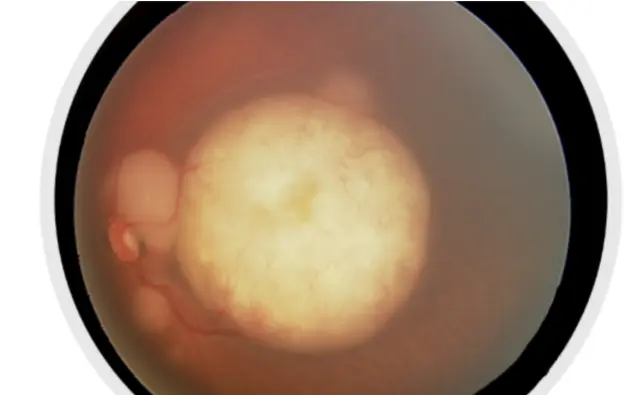
Retinoblastoma is a primary intraocular cancer of the developing retina. It accounts for 3% of childhood cancers, with an incidence of 1/18,000 live births. The vast majority of cases are initiated by biallelic inactivation of the RB1 tumor suppressor gene; the initial mutation may arise in the developing retina (causing a single tumor in one eye) or as a germline mutation, predisposing the child to multiple retinoblastoma tumors in both eyes along with non-ocular malignancies later in life. While 10% of patients have a family history, most cases arise from new sporadic mutations. The diagnosis of retinoblastoma is made clinically, as direct tumor biopsy is contraindicated due to the risk of extraocular tumor seeding. Given this limitation, there are no molecular biomarkers in current clinical practice that inform prognosis for ocular salvage. If the cancer is confined to the intraocular space at diagnosis, mortality from retinoblastoma is low – morbidity, however, is not. Enucleation (surgical removal of the eye to prevent spread of disease) and vision loss are common, particularly in advanced cases. Attempts at ocular salvage require multimodal therapy, including systemic intravenous, intra-arterial, and/or intravitreal chemotherapy, combined with laser and cryotherapy for focal consolidation. This methods collection describes innovative approaches for the diagnosis, prognosis, and management of retinoblastoma, with a particular focus on novel techniques that address limitations in the field. This collection will further include therapeutic advances, research protocols, and the development of in vitro and in vivo assays to study tumorigenesis and therapeutic interventions for this childhood eye cancer.
Articles


Aqueous Humor as a Liquid Biopsy for Retinoblastoma: Clear Corneal Paracentesis and Genomic Analysis
0 Views
•
Cited by 36
•
2021
•
Mary E. Kim1,2, Liya Xu1,2,3,11, Rishvanth K. Prabakar4, Lishuang Shen5, Chen-Ching Peng1,3, Peter Kuhn3,6,7,8, Xiaowu Gai5,9, James Hicks3,6,10, Jesse L. Berry1,2,6,11
1The Vision Center, Children’s Hospital Los Angeles, 2USC Roski Eye Institute, Keck School of Medicine of the University of Southern California, 3Department of Biological Sciences, Dornsife College of Letters, Arts, and Sciences, University of Southern California, 4Department of Molecular and Computational Biology, University of Southern California, 5Center for Personalized Medicine, Department of Pathology and Laboratory Medicine, Children’s Hospital Los Angeles, 6Norris Comprehensive Cancer Center, Keck School of Medicine, University of Southern California, 7Department of Aerospace and Mechanical Engineering, Viterbi School of Engineering, University of Southern California, 8Department of Biomedical Engineering, Viterbi School of Engineering, University of Southern California, 9Department of Pathology and Laboratory Medicine, Keck School of Medicine of USC, 10Department of Biochemistry and Molecular Medicine, Keck School of Medicine, University of Southern California, 11The Saban Research Institute, Children’s Hospital Los Angeles
