Guest Editor

Collection Overview
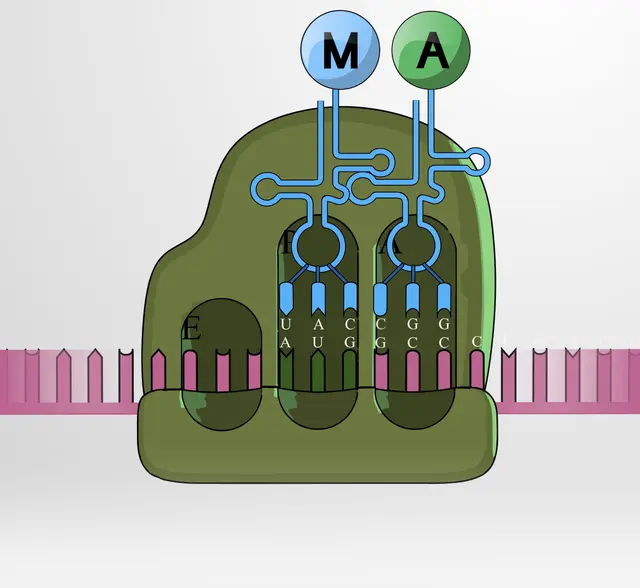
Protein synthesis (translation) is a fundamental cellular process governed by multifaceted machinery. During translation the information encoded in the messenger RNA is transformed into polypeptide chains. The process of translation is extensively studied and proceeds through three main phases: initiation, elongation and termination. Because the synthesis of proteins is vital for all cellular functions the process is very well controlled and can be adjusted to the needs of the cell.
Besides protein folding and degradation, the production of proteins is an essential process that protein homeostasis relies on. Many exogenous and endogenous stresses can influence the process of translation and consequently, the translational output. Nowadays, research challenges in protein translation involve the identification of the molecular mechanisms that facilitate the adaptation of protein synthesis. In this context, the ribosome itself became a major interest in the field. The ribosome was thought of to be a macromolecular complex consisting of proteins and RNA with little regulatory capacity. Over the past few years the concept of ‘specialized ribosomes’ developed. Such specialization occurs through heterogeneity in ribosomal protein composition and post-translational modifications, ribosomal RNA diversity, and differential binding of ribosome associated proteins. Thus, ribosome specialization may have an important influence on the production of functional proteins from the genomic template.
This Methods Collection will gather approaches on assessing the process of protein synthesis, the rate of translation, the analysis of ribosomes including their purification and composition, and the identification of translational output.
Articles


Abstracts
RIBO-seq in bacteria: quick and easy sample collection and library preparation protocol for NGS sequencing
Olga Chrobak1,
Natalia Kopik1,
Agata Starosta*1,
Mariia Kovalenko1,
Przemysław Latoch2
1Laboratory of Gene Expression, ECOTECH-Complex, Maria Curie-Sklodowska University, ul. Gleboka 39, 20-612 Lublin, Poland; Department of Molecular Biology, Institute of Biological Sciences, Maria Curie-Sklodowska University, ul. Akademicka 19, 20-400 Lublin, Poland,
2Laboratory of Gene Expression, ECOTECH-Complex, Maria Curie-Sklodowska University, ul. Gleboka 39, 20-612 Lublin, Poland; Faculty of Information Technology, Polish-Japanese Academy of Information Technology, ul. Koszykowa 86, 02-008 Warsaw, Poland
FRET Assay for Characterizing Dynamic Protein Exchange Between Protein Assemblies
Reid Gordon*1
1University of California, Santa Barbara