
Guest Editors
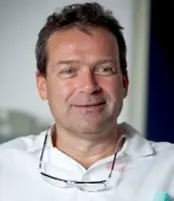
Peter Windisch
Semmelweis University, Department of Periodontology
Dr. Peter Windisch is a professor and has been chair of the Department of Periodontology, Faculty of Dentistry, Semmelweis University, Budapest, Hungary since 2014. He received his DMD degree in 1987 (summa cum laude), defending his PhD thesis "Complex analysis of periodontal regenerative procedures”. He holds seminars, lectures, and hands-on courses in periodontology and implant dentistry for graduate- and postgraduate students, as well as dentists. He received his Dr. Habil. degree in 2011. He is the president of the Hungarian Society of Periodontology, and a member of the European Federation of Periodontology, as well as the Hungarian Society of Implantology. He is a fellow of the International Team for Implantology. He is a qualified specialist for regenerative periodontal regenerative surgery, root coverage procedures with autogenous and xenogeneic materials, and hard- and soft tissue regeneration around dental implants. He has authored numerous international peer-reviewed articles in the field of regenerative periodontal therapy and implant-supported comprehensive rehabilitation of periodontal patients.
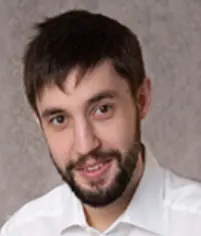
Daniel Palkovics
Semmelweis University, Department of Periodontology
Dr. Daniel Palkovics is a PhD student and has been an Assistant Lecturer at the Department of Periodontology, Faculty of Dentistry, Semmelweis University, Budapest, Hungary since 2019. He received his DMD degree in 2016 (cum laude) and he became a periodontal specialist in 2019. In the same year, he started PhD work under Prof. Windisch. His PhD topic is “Application of Digital Three-Dimensional technologies in regenerative-reconstructive periodontal and implant surgery”. He holds seminars, lectures in periodontology, and teaches digital dentistry for graduate students. He is an active member of the Digital Dentistry Society and a member of the Hungarian Society of Periodontology. He has been actively researching the application of digital technologies in dentistry for the past 4 years, focusing mainly on periodontal regenerative surgery, reconstructive dentoalveolar surgery, and implant surgery.
Collection Overview
Rapid technological advances in dentistry enable the computer-aided planning and execution of different treatment modalities in dentistry and oral surgery. Digital technologies are nowadays applied in all fields of dental care.
Three-dimensional data can be obtained utilizing cone-beam computed tomography (CBCT) and intraoral optical scanning (IOS). They can be used to determine the morphology of various defects and their relation to surrounding tissues. In periodontology, implant dentistry, endodontic surgery and maxillo-facial surgery, through the use of CBCT and IOS data, surgical interventions can be planned virtually and patient-specific static or dynamic guide systems can be used during surgery. This way, certain steps (if not all) of surgical interventions are guided based on preoperative plans. During prosthetic rehabilitation, digital methods are used to design and manufacture conventional or implant-retained prostheses. Using chair-side systems, restorations can be done directly. Orthodontists can use backward planning in accordance with the final occlusion to digitally plan each phase of treatment. Integration of additive manufacturing (3D printing) facilitates the point-of-care production of anatomical models, surgical guides, temporary prostheses, and orthodontic splints.
This collection aims to present novel and innovative designs, procedures, and methods in digital dentistry and to discuss the results and their advantages and disadvantages over conventional methods.
Articles


Guided Endodontics: Three-Dimensional Planning and Template-Aided Preparation of Endodontic Access Cavities
0 Views
•
Cited by 4
•
2022
•
Wadim Leontiev1, Thomas Connert1, Roland Weiger1, Dorothea Dagassan-Berndt2, Gabriel Krastl3, Eva Magni1
1Department of Periodontology, Endodontology and Cariology, University Center for Dental Medicine Basel UZB, University of Basel, 2Center for Dental Imaging, University Center for Dental Medicine, University of Basel, 3Department of Conservative Dentistry and Periodontology, University Hospital of Würzburg
Abstracts
Effectiveness of technology-enhanced teaching methods of undergraduate dental skills for local anesthesia administration. Students’ perception
Rasa Mladenovic*1
1Department of Dentistry, Faculty of Medical Sciences, University of Kragujevac, Serbia
Protocol for Virtual Surgical Planning for Orthognathic Surgery in combination with Surgery First Approach.
Flavio Uribe1,
Meenakshi Vishwanath*2,
Nandakumar Janakiraman3
1UConn Health - School of Dental Medicine,
2University of Nebraska Medical Center - College of Dentistry,
3University of Louisville - School of Dentistry