
Guest Editors

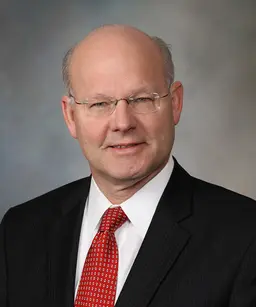
Kendall Lee
Mayo Clinic, Department of Neurologic Surgery
Dr. Lee is a consultant in the Department of Neurologic Surgery with joint appointments in the Department of Physiology and Biomedical Engineering and the Department of Physical Medicine and Rehabilitation at Mayo Clinic in Rochester, Minnesota. He joined the staff of Mayo Clinic in 2006 and holds the academic rank of professor of neurosurgery and Biomedical Engineering. He also founded Neural Engineering Laboratories and is currently a Director at Mayo Clinic. Dr. Lee earned his BA in biology with a minor in philosophy (Summa Cum Laude) from the University of Colorado at Denver. He attended Yale University Graduate School, where he received his Master of Philosophy, MD (Cum Laude), and PhD in neurobiology. He completed an internship in internal medicine at the Hospital of St. Raphael, Yale University School of Medicine and a residency in neurology at Harvard Medical School. He further trained at Dartmouth Hitchcock Medical Center, completing an internship in general surgery and a residency and chief residency in neurosurgery. In his clinical practice, Dr. Lee is an expert on neurological disorders, seeing patients with Parkinson’s disease, Tourette’s syndrome, dystonia, and other neurodegenerative diseases. His research focuses on developing deep brain stimulation for the treatment of Parkinson's disease, tremor, depression, obsessive-compulsive disorder, and epilepsy. Dr. Lee is fascinated with the possibility of combining sophisticated electrophysiological and electrochemical recordings with miniaturized analytical elements (microprocessors) to augment or repair disrupted function in the brain. His team was awarded the Mayo Clinic Distinguished Team Science award in 2015. He was a Commander in the US Navy Reserve and in 2013 served a 6- month deployment in Germany, using his neurosurgery skills to treat soldiers wounded in the conflict in the Middle East. Lastly, Dr. Lee serves as Chairman of the Board, Chief Medical Officer, and President of NaviNetics, Inc., a medical device company.
Kevin E. Bennet
Mayo Clinic, Division of Engineering
Dr. Kevin E. Bennet is an Administrator of the Division of Engineering of the Mayo Clinic of Rochester, Minnesota, CEO of NaviNetics, Inc, Assistant Professor of Neurosurgery, and co-Director of the Neural Engineering Laboratory of Neurologic Surgery. His division, comprised of 67 technical staff, collaboratively develops and applies new technology for clinical practice and research. Major development efforts include deep brain stimulation, wireless physiological monitoring, and minimally invasive surgery. He also founded Neural Engineering Laboratories and is currently a Director at Mayo Clinic. Dr. Bennet joined the Mayo Clinic in 1990 with current and past appointments as Chair of Strategic Alliances, Vice Chair of Information Technology Standards & Architecture Subcommittee, Clinical Practice Committee, Equipment Subcommittee, Information Technology Coordinating Executive Committee, Pharmacy and Therapeutics Committee, Medical/Industry Relations Committee, as well as chair and membership in various workgroups and taskforces. He has also served as a reviewer of Mayo Clinic Proceedings and the NIH Small Business Innovation Research program. He has over 30 years of experience in technology development with organizations including W.R. Grace & Co., Exxon International, and Amoco Chemicals. He has been a consultant to the National Institutes of Health and served on NIH site visit teams. He holds patents concerning semiconductor and optical technology and has founded several technology-based companies. Along with Dr. Kendall Lee and Dr. Yoonbae Oh, Dr. Bennet is a founding member of NaviNetics, Inc., a medical device company in Rochester where he serves as Chief Executive Officer and Chief Financial Officer. Dr. Bennet received a Bachelor of Science degree in Chemical Engineering from the Massachusetts Institute of Technology, a Master of Business Administration from Harvard and a PhD from Deakin University.
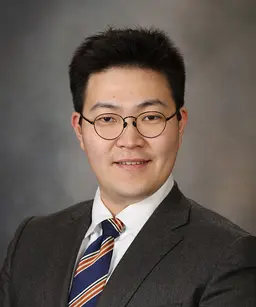
Yoonbae Oh
Mayo Clinic, Department of Neurosurgery
Dr. Yoonbae Oh is an Associate Director in Neural Engineering Laboratories and Assistant Professor in the Department of Neurosurgery and Biomedical Engineering at Mayo Clinic, Rochester Minnesota. He received his PhD in Neural Engineering from the Department of Biomedical Engineering, Hanyang University in South Korea. Dr. Oh joined the Mayo Clinic in 2016. Significantly, Dr. Oh has been instrumental in the development of multiple techniques for improving clinical practice and preclinical research. Major development efforts include neural engineering, specifically in electrophysiology, stereotactic and functional neurosurgery, and electrochemistry. For the past years, his research has focused on developing novel real-time neurochemical recording techniques to measure vital neurotransmitters in the brain (e.g., dopamine and serotonin) and elucidating the therapeutic mechanisms of electrical stimulation in restoring function in brain. His developments in the medical field resulted in multiple pending patents which are essential for next-generation clinical practice in neurology and neurosurgery. He is a founding member of NaviNetics, Inc., a stereotactic neurosurgical device company, and WINCS International, LLC., a smart deep brain stimulation company, in Rochester along with Dr. Kevin Bennet and Dr. Kendall Lee. Dr. Oh received a Bachelor of Science degree in Biomedical Engineering, a Master of Biomedical Engineering, and Doctor of Philosophy in Neural Engineering from the Hanyang University.
Collection Overview
The development of technologies for neuroscience is key to understanding the brain in both normal and disease states. Monitoring neuronal activities, including interactions underlying biological effects, disease models, pharmacological treatments and neuromodulation with cutting edge engineering is essential to understand our central nervous system and to provide knowledge and technology to advance patient care. This collection brings together the wide range of techniques that have been developed to explore and monitor different types of brain activities.
Examples of methods to be included in this collection are:
- Techniques for neurochemical monitoring and signal processing for interpretation
- Techniques for electrophysiological monitoring and signal processing for interpretation
- New sensors for monitoring brain activity
- Methods to understand the biological mechanisms of neuromodulation, such as deep brain stimulation (DBS) and spinal cord modulation
- Methods to efficiently translate biological recordings and observations into bioelectronic technologies for innovative, next-generation devices and procedures to treat a broad range of neurologic and psychiatric conditions
- Techniques to pioneer less invasive neurosurgical techniques
Articles


Abstracts
A method for self-initiated behavioral training and testing in enriched colony cages applied to self-paced skilled reaching after brain injury
April Becker*1,
Jared Armshaw1,
Grayson Butcher1
1University of North Texas
Video of transmission electron microscopy analysis in Drosophila larval neuromuscular junctions
Guangming Gan*1
1Southeast University
Novel D1 Stereotactic System usage in deep brain stimulation neurosurgery
Dan Tian1,
Lauren Rho2,
Seth Lewis1,
Yoonbae Oh*3,
Kendall Lee4,
Kevin Bennet5,
Patrick Gora1,
Aaron Rusheen6,
Stephan Goerss1,
Danielle Jondal1,
Benjamin Felmlee1,
Jeffrey Kingsbury7,
Stephen Sinicrope8,
Juan Rojas Cabrera1
1NaviNetics, Inc.,
2Barrett, the Honors College at Arizona State University, Downtown Phoenix Campus; Mayo Clinic Graduate School of Biomedical Sciences; Mayo Clinic Department of Physiology and Biomedical Engineering,
3Mayo Clinic Department of Physiology and Biomedical Engineering; NaviNetics, Inc.,
4Mayo Clinic Department of Physiology and Biomedical Engineering; NaviNetics, Inc.; Mayo Clinic Department of Neurologic Surgery,
5NaviNetics, Inc.; Mayo Clinic Department of Neurologic Surgery; Mayo Clinic Division of Engineering,
6Mayo Clinic Department of Neurologic Surgery; Mayo Clinic Alix School of Medicine; Mayo Clinic Medical Scientist Training Program,
7Barrett, the Honors College at Arizona State University, Downtown Phoenix Campus,
8Mayo Clinic Graduate School of Biomedical Sciences, University of Chicago, Mayo Clinic Department of Neuroscience