Development of Heterogeneous Enantioselective Catalysts using Chiral Metal-Organic Frameworks (MOFs)

January 17th, 2020
Here, we present a protocol for active site validation of metal-organic framework catalysts by comparing stoichiometric and catalytic carbonyl-ene reactions to find out whether a reaction takes place on the inner or outer surface of metal-organic frameworks.
Related Concept Videos
01:22
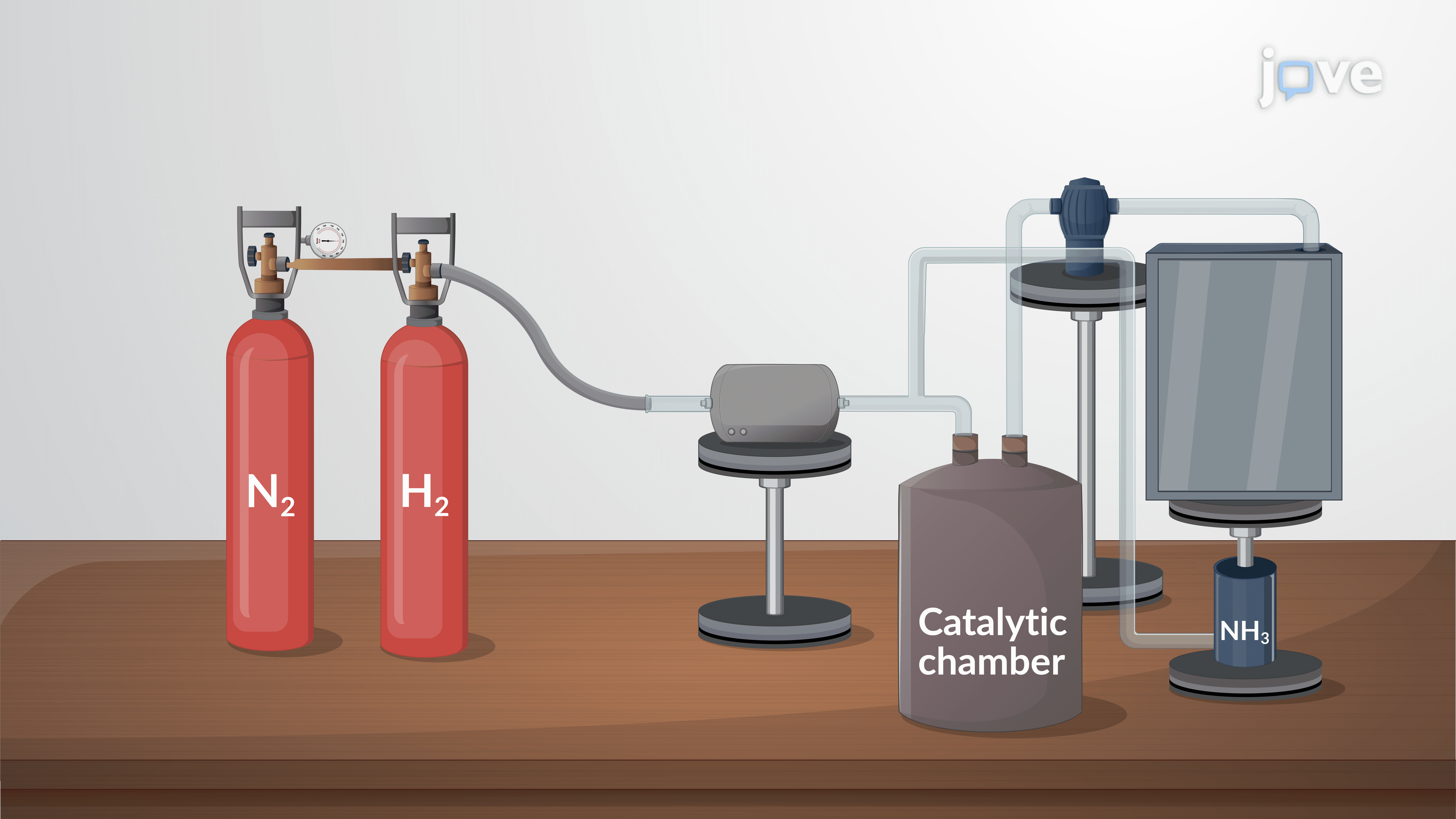
Heterogeneous Catalysis
Heterogeneous catalysis involves a catalyst in a different phase from the reactants. It is a process where the catalyst and the reactants are in distinct phases, typically solid and gas or liquid.Most heterogeneous catalysts are metals, metal oxides, or acids. The list includes transition metals like iron (Fe), cobalt (Co), nickel (Ni), palladium (Pd), platinum (Pt), chromium (Cr), manganese (Mn), tungsten (W), silver (Ag), and copper (Cu). These metals possess partially vacant d orbitals that...

02:17
Reduction of Alkenes: Asymmetric Catalytic Hydrogenation
Catalytic hydrogenation of alkenes is a transition-metal catalyzed reduction of the double bond using molecular hydrogen to give alkanes. The mode of hydrogen addition follows syn stereochemistry.The metal catalyst used can be either heterogeneous or homogeneous. When hydrogenation of an alkene generates a chiral center, a pair of enantiomeric products is expected to form. However, an enantiomeric excess of one of the products can be facilitated using an enantioselective reaction or an...