In this study, we introduce a protocol for decompression 3 years after posterior lumbar interbody fusion (PLIF) using a unilateral biportal endoscopic (UBE) technique without removing the implant. This protocol highlights how the UBE technique can enhance intraoperative visualization, improve efficiency, reduce operating time, and achieve adequate nerve root decompression.
Method Article
Decompression After Posterior Lumbar Interbody Fusion without Moving Implant via Unilateral Biportal Endoscopic Technique
In This Article
Summary
Abstract
The complexity and diversity of reasons for revising posterior lumbar interbody fusion (PLIF) are well-documented. Common triggers include weak initial surgical indications, delayed intervention, diagnostic oversights or misjudgments, insufficient decompression, internal fixation complications, postoperative disease progression or recurrence, and adjacent segment degeneration. Pathological drivers such as intervertebral disc degeneration, facet joint degeneration, spinal instability, and spondylolisthesis in operated segments frequently cause nerve compression, spinal cord injury, or vertebral fractures. These conditions manifest as low back pain, radiating nerve pain, and intermittent claudication.
Critical determinants for revision include patient age, surgical technique, number of operated PPPP segments, age at initial surgery, and prior laminectomy status. Traditional revision involves open surgery to remove fixation rods, followed by decompression and re-instrumentation. However, surgical site adhesions increase procedural complexity, risking dural tears and nerve root injuries during direct visualization. Minimally invasive unilateral biportal endoscopic (UBE) decompression has emerged to address unilateral nerve root canal stenosis post fusion without hardware removal. While UBE has demonstrated safety and efficacy, its adoption remains limited by high technical demands, restricting patient access.
This paper explores the role of UBE in revision surgery, emphasizing its ability to achieve neural decompression while preserving instrumentation. The technique's steep learning curve necessitates specialized training, contributing to geographic disparities in availability. To broaden access, the authors advocate clarifying rationale and defining dissemination strategies of UBE, including standardized training, explicit surgical indications, and outcome assessment frameworks. Addressing these challenges could improve patient outcomes and advance minimally invasive spinal care, particularly in revision contexts where traditional approaches pose higher morbidity risks. Democratizing the benefits of UBE requires structured efforts to mitigate technical barriers and foster interdisciplinary collaboration, ensuring equitable integration of this innovation.
Introduction
As the application of internal fixation technology expands, there has been a consistent annual increase in the volume and quality of posterior lumbar interbody fusion (PLIF) and fusion surgeries1. Despite these advancements, the necessity for revision surgeries arises in some cases due to the recurrence of symptoms post operation, driven by factors such as the inappropriate selection of surgical strategies, intraoperative errors, and complications inherent to internal fixation procedures2.The primary objective of revision surgeries for PLIF is to alleviate nerve compression and restore the stability of the lumbar spine3. Traditionally, these revision surgeries involve the removal of existing internal fixation devices, followed by a re-decompression of the nerve roots. However, this approach can lead to extensive tissue dissection, notable muscle trauma, substantial blood loss, and an elevated risk of infection. The procedure, conducted under direct vision, poses a risk of damaging the dura mater and nerve roots, which can consequently result in a prolonged and complex postoperative recovery process4,5.
Performing decompression surgery for unilateral nerve root canal stenosis following lumbar fusion presents significant challenges6.Inadequate outcomes may ensue, which not only exhaust valuable healthcare resources but also considerably undermine the quality of life for patients7.Fortunately, with ongoing advancements in minimally invasive surgical techniques, our hospital has refined a specialized approach. We adopted UBE decompression to address unilateral nerve root canal stenosis after lumbar fusion surgery, avoiding the need for removal of internal fixation. This minimally invasive technology has reached a state of maturity within our institution, offering an effective alternative for these complex cases.
The UBE lumbar decompression surgery is conducted with a methodical approach, detailed as follows :Patient positioning: Prone position. Segment localization and marking: We use the iron grid locator posted on the patient's skin with the help of a C-arm X-ray. Portal creation: Establish visualization and working channel. Nerve root decompression; intraoperative monitoring; postoperative closure. This refined description of the UBE lumbar decompression procedure highlights the surgical precision and minimally invasive nature of the technique, emphasizing its potential to enhance patient outcomes.
Originally, UBE technology was employed in the realm of joint surgeries. As technological advancements progressed, UBE was introduced to the field of lumbar surgeries, albeit initially with a lower level of technical refinement. Over time, however, the application and effectiveness of UBE in lumbar procedures have significantly improved, culminating in a state of maturity8,9.The uniqueness of UBE technology lies in its difference from transforaminal endoscopic technology. It achieves operation by adopting a dual-channel approach on one side of the patient's body. Among them, the observation channel is equipped with a high-magnification endoscope, which can provide a clear and broad field of vision. The operation channel can accommodate traditional surgical instruments, enabling precise operation during the surgical process. This innovative technology has successfully integrated the advantages of open surgery and traditional minimally invasive surgery. It helps perform surgical operations flexibly within a high-definition field of vision. In addition, the benefits of the UBE technology are multifaceted, including reducing postoperative pain and speeding up the recovery time, making it a favorable choice for patients undergoing lumbar surgery.
While UBE technology is gaining popularity and is actively promoted both nationally and internationally, its availability remains largely concentrated in major medical centers within central cities. This article meticulously outlines the critical technical aspects of UBE, serving as a valuable reference to guide future clinical utilization in a broader range of healthcare settings.By elucidating the key components of UBE technology, this article aims to extend its reach and application, thereby enhancing surgical capabilities and patient outcomes across various medical institutions. The detailed exposition of the technique's essentials is intended to empower a new generation of surgeons and to facilitate the integration of UBE into diverse clinical practices.
The patient, a 63-year-old female, presented with a chief complaint of "recurrent lumbosacral pain for 9 years, with recent exacerbation of numbness and pain in the left lower limb over the past 2 months." Three years prior, she underwent a PLIF surgery at the Affiliated Hospital of Chengdu University of Traditional Chinese Medicine for a level L4/5 disc issue. Postoperatively, she experienced a significant improvement in her lumbosacral pain. However, she continued to have intermittent numbness and pain in her left lower limb, which worsened 2 months ago. Further imaging studies indicated narrowing of the left nerve root canal at L4 and L5 due to hyperplastic tissues, suggesting a potential cause for her symptoms. The patient's Visual Analog Scale (VAS) score was recorded at 6, indicating moderate pain levels10. During this period, the patient's symptoms did not improve after 3 months of conservative treatment; hence, the final decision was made to undergo surgical treatment.
Access restricted. Please log in or start a trial to view this content.
Protocol
The surgical protocol was meticulously reviewed and granted approval by the Ethics Review Committee of the Affiliated Hospital of Chengdu University of Traditional Chinese Medicine. Prior to the surgery, the patient, along with her immediate family, provided signed, informed consent, demonstrating their understanding and agreement to the proposed surgical intervention, ensuring that the medical plan is in strict adherence to the Core System of Medical Quality and Safety. A detailed list of the surgical instruments and equipment utilized for this procedure is outlined in the Table of Materials.
1. Preoperative preparation
- Have the nurse draw blood samples and send them to the laboratory to carry out preoperative blood tests, including the examinations of routine blood, the liver and kidney functions, coagulation, routine urine and feces, Hepatitis B, AIDS, as well as Serological tests of Syphilis to exclude surgical contraindications.
- Perform preoperative imaging examinations, including the electrocardiogram, chest CT, Iumbar spine imaging (Figure 1 and Figure 2), lumbar vertebra CT (Figure 3), lumbar MRI (Figure 4), as well as other related examinations.
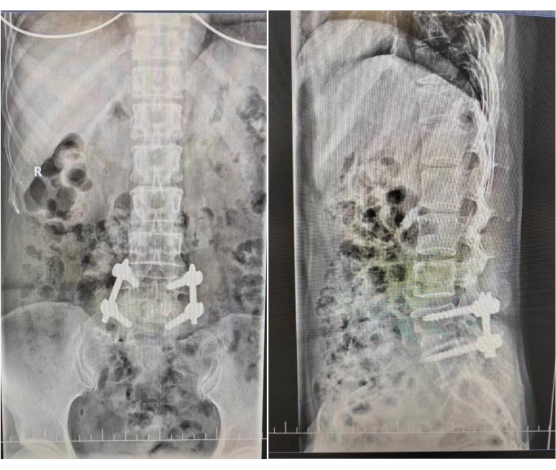
Figure 1: Lumbar anterior-lateral position DR. Abbreviation: DR = Digital Radiography. Please click here to view a larger version of this figure.
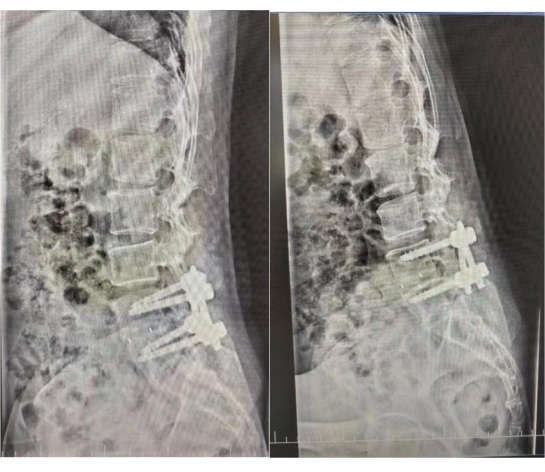
Figure 2: Lumbar hyperextension and flexion position DR. Abbreviation: DR = Digital Radiography. Please click here to view a larger version of this figure.
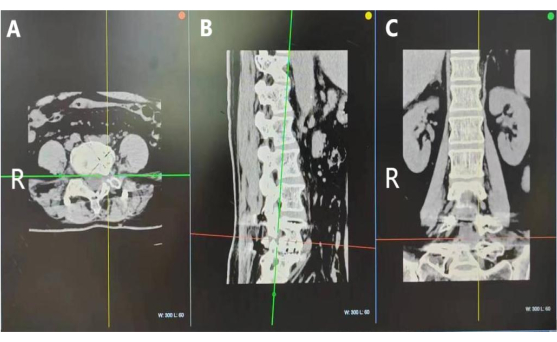
Figure 3: L4/5 vertebra CT. Three different colors (green, red, yellow) are positioning markers in CT 3D imaging. (A) Axial view. (B) Sagittal view. (C) Coronal view. Abbreviation: CT = Computed Tomography. Please click here to view a larger version of this figure.
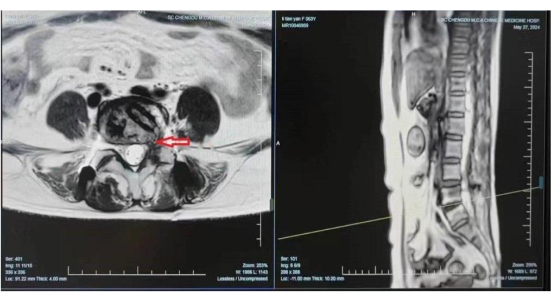
Figure 4: L4/5 vertebra MRI. The arrow points to the area of nerve root canal stenosis. Abbreviation: MRI = Magnetic Resonance Imaging. Please click here to view a larger version of this figure.
NOTE: In this study, the imageological examination of this patient showed that her left nerve root canal of L4 and L5 was narrow due to hyperplastic tissues (Figure 4).
2. Surgical techniques
- Anesthetize via endotracheal intubation (following the consent for anesthesia approved by the institution) or intravenous injection: Midazolam, 0.2 mg/kg, Intravenous injection, Propofol, 6 mg∙kg-1∙h-1, Sodium Atracurium Besylate, 0.15 mg/kg, Sufentanil, 1 µg/kg.
- Keep the patient in the prone position, with cushions under the face, chest, bilateral knees, and both sides of the iliac crest to ensure a straight and level back.
- Locate the segment by C-arm fluoroscopy and mark the intervertebral plate space of L4/5 as well as the projected positions on patient's body of the junctional zone between the upper and lower articular processes by using a marker pen.
- Perform routine disinfection with povidone iodine solution, lay three layers of surgical sheet in order, paste the membrane, connect the unilateral biportal endoscopic surgical system, LED luminescence, endoscopic video system, radio frequency plasma surgical system (60 W), surgical dynamic system (8,000 RPM), and the other surgical instruments (Figure 5).
- Have the surgeon and the assistant stand on the side of the patient on which the symptoms are experienced and the display stand on the opposite side, directly facing the surgeon.
NOTE: Because the patient's symptoms are on the left side, the surgeon and the assistant were located on the left side of the patient, while the display stand was on the right side of the patient, directly facing the surgeon. - Insert the positioner 1 cm to the left side of the median line of the L5 vertebral body to reach the L4/5 interlaminar space and perform the C-arm fluoroscopy once again to locate the operating position.
- Confirm the accurate position, make an 8 mm incision with the positioner as the midpoint (Figure 6, point A) and another 8 mm incision at a lower point (Figure 6, point B); the distance between the two incisions is 15 mm.
- Remove the positioner. Place the endoscopic surgical system in the incision where the positioner used to be. Use the lower incision to pass a surgical tool such as forceps or positioner.
- Clean up the soft tissues with the bipolar electrode system and biopsy forceps in the endoscopic view. Find the channel formed by removing part of the articular process and laminae during the last surgery (Figure 7A).
- Use the abrasive drilling and lamina rongeur to remove part of the articular process and lamina to reveal the spinal canal (Figure 7B,C).
NOTE: At this stage, finding the operating area of the last surgery and the internal fixation device installed can help pinpoint the correct location in the accreted scar area into the spinal canal. - Continue to clean up the soft tissues in the spinal canal; use the electrodes system to stop the hemorrhage.
NOTE: The nerve root was fastened by hypertrophic scar tissue, which caused poor mobility due to the first operation (Figure 7D). - Use the neural probe to discreetly probe the nerve root location. Find the origin of the nerve root and use the neural probe to resect the compressed hypertrophic tissue downward along the nerve root (Figure 7E).
- Use the neuro stripper to gently pluck the nerve root and check its ventral side for any residual depressor (Figure 7F). Move the endoscope to adjust the field of view, check the relaxation of nerve root, and confirm that the nerve root decompression is complete and successful (Figure 7G).
- Check the number of the surgical instruments and gauze; then, pull out the endoscopic surgical system under direct vision.
- Place the drainage, suture the incisions of the surgical segment subcutaneously and intradermally with absorbable lines, disinfect, and wrap them with aseptic dressing. The operation is completed.
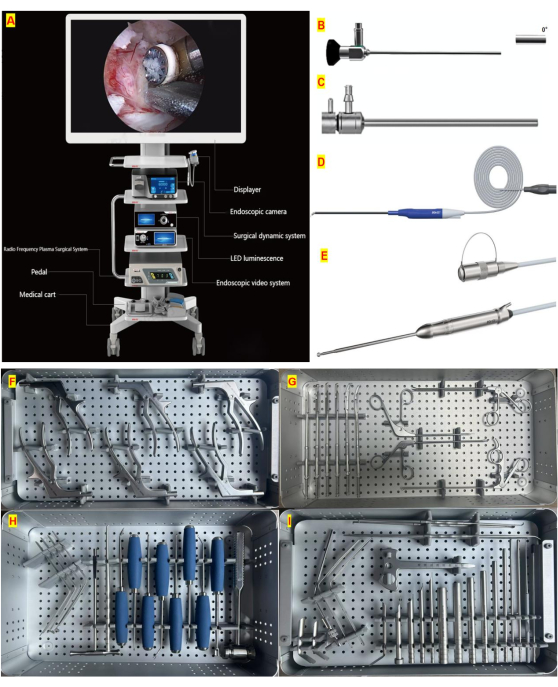
Figure 5: Surgical instruments and systems used in the protocol. (A) Medical cart which contains Displayer, Endoscopic camera, Surgical dynamic system, LED luminescence, Endoscopic video system, Radio frequency plasma surgical system, Pedal. (B) 0° endoscopic, (C) endoscopic lens sheath, (D) plasma, (E) Grinding bit and handle, (F) handle of the bone rongeurs, (G) Nucleus pulposus forceps and head of bone rongeurs, (H) Neural hook and Bone-cutting tools, (I) Devices used for establishment of approach and neuroprotection. Please click here to view a larger version of this figure.
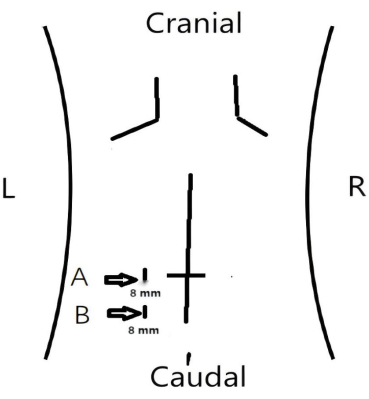
Figure 6: Location of the incisions. Place the endoscopic surgical system in incision A. Use incision B to pass through a surgical tool such as forceps or bipolar electrodes. Please click here to view a larger version of this figure.
3. Postoperative procedures
- Return the patient safely to the ward after resuscitation.
- After the operation, give the patient intravenous drip of ibuprofen to relieve inflammation and pain, famotidine to inhibit acid and protect the stomach, dexamethasone for anti-inflammation, and mannitol to reduce nerve swelling.
- Give the patient a digestible diet 4 h after the surgery and ask them to try to rest in bed on the same day.
- Have a doctor change the dressing, observe the wound, remove the drainage tube, and ask the patient to wear a waist girdle to move around on the ground on the first day after the operation.
Access restricted. Please log in or start a trial to view this content.
Results
The surgery was performed on June 3, 2024, and lasted for 1.5 h. The patient returned to the ward safely with stable vital signs and a visual analog scale (VAS) score of 3. On postoperative day 1, the pain and numbness in the left lower limb had significantly improved and the VAS score was reduced to 2. We recommended that the patient rest in bed more and perform ankle pump exercises to prevent thrombosis. On postoperative day 2, the patient walked 200 m with a brace and a stable gait; there was a slight pain in the surg...
Access restricted. Please log in or start a trial to view this content.
Discussion
Lumbar interbody fusion (LIF) is a widely performed orthopedic procedure, demonstrating efficacy in addressing lumbar degenerative diseases, scoliosis, spinal deformities, and traumas11. However, degenerative discs, small spinal joints, and insufficient initial decompression could lead to reoperation in some patients12. Open surgery could damage soft tissue and bone because the implants should be removed using a large approach.Although traditional revision surgery offers su...
Access restricted. Please log in or start a trial to view this content.
Disclosures
The authors have no conflicts of interest to disclose.
Acknowledgements
We thank the anesthesiologists and inpatient department nurses who assisted with the operation.
Access restricted. Please log in or start a trial to view this content.
Materials
| Name | Company | Catalog Number | Comments |
|---|---|---|---|
| 0°endoscopic | bonss | High-definition, wide-angle | |
| Displayer | bonss | Anti-glare screen, show realistic images | |
| Endoscopic camera | bonss | IP8X waterproof rating, facilitating sterilization | |
| Endoscopic lens sheath | bonss | Single-valve design, the inlet valve can rotate 360° | |
| Endoscopic video system | bonss | 4K ultra-clear imaging | |
| Estabishment of approach and neuroprotective devices | bonss | Highly targeted and easy to operate | |
| Grinding bit and handle | bonss | Efficient, running smoothly, with high strength. | |
| handle of the bone rongeurs | bonss | Good grip, easy to replace | |
| LED luminescence | bonss | Ultra-high brightness, with 20 levels of brightness adjustment available | |
| Neural hook and Bone-cutting tools | bonss | A wide variety of models, easy to operate | |
| Nucleus pulposus forceps and head of bone rongeur | bonss | The models are diverse and can be adapted for operation in multiple parts | |
| Pedal | bonss | Waterproof, pressure-resistant and convenient | |
| Plasma | bonss | Integrated design, powerful in performance, high surgical efficiency | |
| Radio frequency plasma surgical system | bonss | Endoscopic cutting ablation function | |
| Surgical dynamic system | bonss | Large-sized touch screen, rich display and convenient operation. |
References
- Verma, K., Boniello, A., Rihn, J. Emerging techniques for posterior fixation of the lumbar spine. J Am Acad Orthop Surg. 24 (6), 357-364 (2016).
- Le Huec, J. C., et al. Revision after spinal stenosis surgery. Eur Spine J. 29 (Suppl 1), 22-38 (2020).
- Montenegro, T. S., et al. Clinical outcomes in revision lumbar spine fusions: an observational cohort study. J Neurosurg Spine. 35 (4), 437-445 (2021).
- De Antoni, D. J., Claro, M. L., Poehling, G. G., Hughes, S. S. Translaminar lumbar epidural endoscopy: anatomy, technique, and indications. Arthroscopy. 12 (3), 330-334 (1996).
- Vaccaro, A. R., Garfin, S. R. Internal fixation (pedicle screw fixation) for fusions of the lumbar spine. Spine (Phila Pa 1976). 20 (24 Suppl), 157s-165s (1995).
- Chou, P. H., et al. Is removal of the implants needed after fixation of burst fractures of the thoracolumbar and lumbar spine without fusion? a retrospective evaluation of radiological and functional outcomes. Bone Joint J. 98B (1), 109-116 (2016).
- Früh, A., et al. Decompression with or without fusion in degenerative adjacent segment stenosis after lumbar fusions. Neurosurg Rev. 45 (6), 3739-3748 (2022).
- Wu, J. J., Chen, H. Z., Zheng, C. Transforaminal percutaneous endoscopic discectomy and foraminoplasty after lumbar spinal fusion surgery. Pain Physician. 20 (5), E647-E651 (2017).
- Sakhrekar, R., et al. The past, present, and future of unilateral biportal endoscopy with a technical note on novel endoscopic visualization pedicle screw insertion technique and UBE-transforaminal lumbar interbody fusion technique with literature review. J Orthop Case Rep. 13 (12), 165-171 (2023).
- Qu, M., et al. Utilizing the visual analogue scale (VAS) to monitor and manage pain in post-operative skin wounds after thoracic surgery. Int Wound J. 21 (3), e14503(2024).
- Yu, Y., Robinson, D. L., Ackland, D. C., Yang, Y., Lee, P. V. S. Influence of the geometric and material properties of lumbar endplate on lumbar interbody fusion failure: a systematic review. J Orthop Surg Res. 17 (1), 224(2022).
- Ramanathan, S., Rapp, A., Perez-Cruet, M., Fahim, D. K. Long-term reoperation rates after open versus minimally invasive spine surgery for degenerative lumbar disease: Five year follow-up of 2130 patients. World Neurosurg. 171, e126-e136 (2023).
- Mehren, C., Wanke-Jellinek, L., Korge, A. Revision after failed discectomy. Eur Spine J. 29 (Suppl 1), 14-21 (2020).
- Bains, R. R., et al. Are there differences in the reoperation rates for operative adjacent-segment disease between ALIF+PS, PLIF+PS, TLIF+PS, and LLIF+PS? An analysis of a cohort of 5291 patients. J Neurosurg Spine. 40 (6), 733-740 (2024).
- Han, H., et al. Short-term clinical efficacy and safety of unilateral biportal endoscopic transforaminal lumbar interbody fusion versus minimally invasive transforaminal lumbar interbody fusion in the treatment of lumbar degenerative diseases: a systematic review and met. J OrthopSurg Res. 18 (1), 656(2023).
- Pan, M., et al. Percutaneous endoscopic lumbar discectomy: Indications and complications. Pain Physician. 23 (1), 49-56 (2020).
- Ruetten, S., Komp, M., Godolias, G. A New full-endoscopic technique for the interlaminar operation of lumbar disc herniations using 6-mm endoscopes: prospective 2-year results of 331 patients. Minim Invasive Neurosurg. 49 (2), 80-87 (2006).
- Ju, C. I., Lee, S. M. Complications and management of endoscopic spinal surgery. Neurospine. 20 (1), 56-77 (2023).
- Kang, M. S., et al. Clinical outcome of biportal endoscopic revisional lumbar discectomy for recurrent lumbar disc herniation. J Orthop Surg Res. 15 (1), 557(2020).
- Zhu, H., Yang, Q., Xiang, Z., Shang, H. The unilateral biportal endoscopic technique for lumbar disc herniation. Asian J Surg. 46 (9), 4087(2023).
- Kang, M. -S., et al. Clinical outcome of biportal endoscopic revisional lumbar discectomy for recurrent lumbar disc herniation. J Orthop Surg Res. 15 (1), 557(2020).
- Özer, M., Demirtaş, O. K. Comparison of lumbar microdiscectomy and unilateral biportal endoscopic discectomy outcomes: a single-center experience. J Neurosurg Spine. 40 (3), 351-358 (2024).
- Ahn, Y. Current techniques of endoscopic decompression in spine surgery. Ann Transl Med. 7 (Suppl 5), S169(2019).
- Yang, S. C., et al. Percutaneous endoscopic debridement and drainage for the treatment of instrumented lumbar spine infection. J Orthop Surg (Hong Kong). 27 (3), 2309499019863356(2019).
Access restricted. Please log in or start a trial to view this content.
Reprints and Permissions
Request permission to reuse the text or figures of this JoVE article
Request Permission