Using network pharmacology and experimental validation, this protocol reveals the mechanism of action of Yinhuo Tang (YHT) in the treatment of diabetic kidney disease (DKD) and how YHT reduces podocyte damage in DKD mice through the inhibition of the PI3K/AKT/NF-κB signaling pathway.
Method Article
Predicting and Validating the Regulation of Podocyte Injury and Treatment of Diabetic Kidney Disease by Yinhuo Tang
In This Article
Summary
Abstract
Diabetic kidney disease (DKD) is a chronic kidney disease characterized by massive proteinuria and decreased glomerular filtration rate. The main pathological feature of DKD is renal microangiopathy, and ~40% of diabetic patients will develop DKD. The podocyte-associated proteins CD2AP and WT-1 play a crucial role in maintaining the normal function of podocytes and the integrity of the glomerular filtration barrier. When podocyte structure or function is disrupted-due to inflammation, oxidative stress, or other pathological insults-the slit diaphragm and actin cytoskeleton are damaged, leading to increased permeability of the glomerular filtration barrier and resulting in proteinuria. Yinhuo Tang (YHT) is a traditional Chinese medicine prescription that has the function of reducing proteinuria and delaying the deterioration of renal function; however, the mechanism of YHT in treating DKD is not clear. In this paper, based on network pharmacology and animal experiments, we examined the blood glucose, liver function, renal function, blood lipids, renal pathology, expression levels of podocyte marker proteins CD2AP and WT-1, as well as the PI3K/AKT/NF-κB signaling pathway in db/db mice after the administration of YHT for 8 weeks. Our results show that YHT reduces the expression levels of inflammatory factors by inhibiting the PI3K/AKT/NF-κB signaling pathway, thus reducing podocyte damage to play a role in delaying the progression of DKD.
Introduction
Diabetic kidney disease (DKD) is a prevalent and serious complication of diabetes, and it remains the leading cause of end-stage renal failure globally1. The disease progresses through a series of complex pathological processes, such as glomerular enlargement, mesangial expansion, tubulointerstitial fibrosis, and excessive accumulation of extracellular matrix components2,3. Despite improvements in diabetes management, current therapies mainly aim to control blood glucose levels and blood pressure, which only slow the progression of DKD rather than reversing its underlying pathological changes. This underscores the pressing need for more comprehensive and effective treatment options4,5.
Traditional Chinese medicine (TCM) has emerged as a promising alternative therapy in the treatment of chronic diseases such as DKD6,7,8. TCM emphasizes a holistic treatment approach, which can address the complex, multi-target nature of DKD. Among various TCM formulations, Yinhuo Tang (YHT) has been shown to possess multiple physiological functions, such as nourishing yin (to supplement blood volume), tonifying the kidney (to enhance kidney function), clearing heat (to suppress inflammation), and subduing yang (to lower blood pressure)9,10,11. However, a comprehensive understanding of the mechanisms by which YHT alleviates DKD is still lacking.
The podocyte-related protein CD2AP is a key protein in the podocyte, crucial for maintaining the integrity of the filtration barrier, while WT-1 plays a critical role in kidney development and fibrosis12,13,14,15,16. Therefore, the normal function of these two proteins is vital for normal glomerular filtration function. Existing literature suggests that these targets are involved in the progression of DKD, and we hypothesize that the active components of YHT may interact with these targets to exert therapeutic effects. This study aims to confirm these interactions and provide deeper insights into how YHT modulates the disease pathways of DKD.
In this study, we employ a combination of network pharmacology and animal experiments to explore the therapeutic mechanisms of YHT in DKD. Network pharmacology, which integrates bioinformatics tools to analyze the complex interactions between active compounds and biological targets, allows us to explore the multi-target, multi-pathway nature of YHT's action17,18,19. Traditional drug discovery methods often emphasize single-target interventions. In contrast, network pharmacology serves as a predictive tool that helps identify potential pathways and molecular targets, offering preliminary insights into the possible mechanisms of action of complex therapies. While it does not replace the rigorous experimental and regulatory steps required for drug development, network pharmacology can guide hypothesis generation and streamline early-stage research20.
Ultimately, this study aims to bridge the gap between traditional and modern medicine, providing scientific evidence for the integration of TCM into the treatment of DKD. The results of this research may help develop more effective and safer treatment strategies for DKD, offering an alternative to standard care that are often limited by side effects. By elucidating the molecular mechanisms of YHT and validating its therapeutic potential, we hope to demonstrate the broad applicability of TCM in the treatment of DKD.
Protocol
A total of thirty male 6-week-old spontaneous type II diabetic (C57BL/Ksj db/db) mice and six male non-diabetic control mice (db/m) with the same genetic background were selected for this study. The mice were housed for 2 weeks in a sterile SPF-grade environment at the Animal Experiment Center of Changchun University of Traditional Chinese Medicine (license number: SYXK (JI) 2023-0014). During this period, they were provided with regular maintenance diet and sterile water. Fasting blood glucose was measured in the db/db mice at the start and end of the 2-week period, and only those with results exceeding 11.1 mmol/L in both tests were included in the experiment. The study was approved by the Ethics Committee of Changchun University of Traditional Chinese Medicine (ID number: 2024147).
1. Drug preparation
- Preparation of YHT (Table 1)
- Select Rehmannia glutinosa (30 g), Ophiopogon japonicus (10 g), Morindae Officinalis Radix (10 g), Poria cocos (15 g), and Schisandra chinensis (6 g), and rinse the herbs with water to remove impurities and dust from the surface. Then, mix 71 g of the raw herbs with 710 mL of distilled water and soak in ceramic pots for 60 min
- After boiling at 100 °C, lower the temperature of the decoction to 80 °C for 60 min and then filter off the dregs through two layers of medical gauze. Store the liquid in a refrigerator at 4 °C.
- Add 710 mL of distilled water to the above dregs, and repeat the soaking from step 1.1.1 and step 1.1.2 once; store the liquid in a refrigerator at 4 °C.
- Mix the above two medicinal liquids from steps 1.1.2 and 1.1.3 and place them in the material tray of the vacuum lyophilizer. Start the vacuum pump to remove the air from the freeze-drying chamber, set the temperature to -40 °C, and maintain it for 6 h to freeze the water in the drug solution into a solid state. Then, adjust the temperature to -20 °C for 36 h to sublimate the water as ice crystals into gas. Finally, set the temperature to 40 °C, maintain it for 24 h to remove the remaining moisture from the drug solution, turn off the heating and vacuum pump, and remove the freeze-dried powder (YHT powder).
- Weigh 0.4615 g, 0.923 g, and 1.846 g of lyophilized YHT powder, suspend in 1 mL of saline, and make the suspension of YHT with the concentrations of 0.4615 g/mL, 0.923 g/mL and 1.846 g/mL, respectively.
- Preparation of Valsartan
- Add valsartan (10.29 mg) into 50 mL of PEG300 and shake well to completely dissolve.
- Add 50 mL of saline to the solution from step 1.2.1 and shake well to homogenize and obtain a valsartan solution with a concentration of 10.29 mg/mL.
2. Drug treatments
NOTE: The experiment was divided into six groups: the normal control group (CON), the model group (MOD), the valsartan Positive control group (POS), the low-dose group of the YHT (YH-L), the middle-dose group of the YHT (YH-M), and the high-dose group of the YHT (YH-H). Adult humans need 71 g YHT per day. According to the conversion formula of experimental mouse and human drug dose, the daily dose for mouse was ~9.23 g/kg:
Equivalent experimental dose for mouse (g/kg) = human dose (g)/body weight (70 kg) × 9.1
- Grasp the back of the mice firmly with the non-dominant hand so that their heads, necks, and bodies are in a straight line (to avoid struggling) and position the 1 mL gavage needle appropriately at an angle similar to the physiological curvature of the esophagus of the mice. Push the gavage needle through the corner of the mouth of the mice, press it down on the tongue, press it against the palate, and push it gently inward into the stomach.
- Slowly push the drug in using the index finger of the dominant hand, and withdraw the needle vertically to complete the gavage operation.
NOTE: The dose of the drug was 10 mL/kg for a total of 4 weeks.- Administer 10 ml∙kg-1∙day-1 saline by gavage to CON and MOD mice.
- Administer 10.29 mg∙kg-1∙day-1 valsartan suspension by gavage to the POS group mice.
- Administer the following doses of the YHT by gavage to these groups: 4.615 g∙kg-1∙day-1 to the YH-L group; 9.23 g∙kg-1∙day-1 to the YH-M group; 18.46 g∙kg-1∙day-1 to the YH-H group.
3. Evaluation of YHT efficacy
- Detection of blood and urine biochemical indexes
- After 8 weeks of continuous drug administration, collect 24 h urine from mice using a metabolic cage, centrifuge the collected urine at 7,992 × g for 10min, remove the supernatant, and measure the urine protein level using the urinary protein test kit.
- Grip the back of the mouse with the non-dominant hand to fix the mouse and use the little finger and ring finger of the same non-dominant hand to fix the tail of the mouse. Sterilize the tip of the tail of the mouse with iodine vapor cotton balls. With the dominant hand, hold a blood collection needle to quickly puncture the tip of the tail of the mouse, squeeze from the root of the tail of the mouse to the tip of the tail, and drop the blood onto the blood glucose test paper.
- Using the non-dominant hand, grasp the mouse's tail, while securing the scapular area with the thumb and forefinger, ensuring the mouse's abdomen faces upward. With the dominant hand, hold a 1 mL syringe filled with phenobarbital sodium. Insert the needle (3-5 mm deep) into the abdominal cavity at a 30-45° angle, targeting the region between the navel and the hindlimbs, with the needle directed toward the head. Slowly withdraw the syringe plunger to check for blood; if blood is aspirated, reposition the needle accordingly..
- Slowly inject the pentobarbital sodium solution to ensure even administration, and withdraw the syringe after the injection is complete. Wait for 10 min, then with forceps in the dominant hand, gently pinch the mouse's hind limb toes to check for a response. If a response is still observed, administer a small additional dose (10 mg/kg) as needed.
NOTE: Assuming a mouse weighs 60 g and the phenobarbital solution is 1% w/v, 0.06 mL is the additional dose to be administered in case of any response. - Use scissors to trimthe whiskers and hair around the eyes of the mice, using the non-dominant hand to press the skin around the eyes from which eyeballs are to be removed so that the eyeballs protrude. Sterilize the skin around the eyeballs with ethanol, use tweezers to quickly take out the eyeballs so that the blood drips into the microcentrifuge tubes (1.5-2 mL), incubate the tubes at room temperature for 10 min, centrifuge the tubes for 10 min at 7,992 × g, and extract the supernatant solution.
- Measure the expression levels of Serum Creatinine (Scr), Blood Urea Nitrogen (BUN), Albumin (ALB), Alanine Aminotransferase (ALT), Aspartate Aminotransferase (AST), Triglycerides (TG), and Total Cholesterol (TC) in serum according to the instructions of the kit.
- Separation of renal tissues
- After blood sampling, fix the mice on the surgical plate in a supine position, clip the hair of the anterior thoracic region of the mice, sterilize the anterior thoracic region using ethanol, cut the abdominal skin with scissors, and push aside the small and large intestines to expose the kidneys.
- Remove the mouse kidney tissue, use hemostatic forceps to bluntly separate the periosteum, and place the left kidney in a -80 °C freezer for storage and the right kidney in a 20 mL tube containing 4% paraformaldehyde solution to fix the kidney.
- Remove the right kidneys from the formaldehyde after 24 h, rinse briefly with distilled water for 5min, dehydrate using a gradient of anhydrous ethanol (100% → 95% → 85% → 75%, 5 min each), transparentize using gradient xylene(2 x 10 min), embed in paraffin wax, and allow the wax blocks to solidify at room temperature21. Then, put it in the -20 °C freezer overnight.
- Remove the wax block, slice it at a thickness of 3 µm, place it in water to unfold, then fish it out with a slide, and place it in a constant temperature oven at 40 °C to bake for 30 min and then store it for subsequent analysis
- Renal histopathological analysis
- Remove the right kidney, perform gradient xylene dewaxing and anhydrous ethanol dehydration as above (step 3.2.3), and wash with distilled water.
- Perform staining according to the instructions of Hematoxylin and Eosin stain (H&E), Periodic Acid-Schiff stain (PAS), and Masson staining kits.
- Perform gradient anhydrous ethanol dehydration and xylene transparency again as in step 3.2.3.
- After drying at room temperature, mount the the tissue sections on the slides with a coverslip using neutral gum as the mounting medium. Observe the slides and image them under a light microscope at 400x magnification.
- Immunohistochemical analysis of renal tissue
- Remove the right kidney, dewax and dehydrate the sections as described in step 3.2.3, place them in 10 mM sodium citrate buffer solution (pH 6.0), and heat (125 °C, 103 kPa) for 5 min for antigen repair. After 10 min, remove the sections, cool to room temperature, and wash them 3 x 5 min in 1x PBS.
- Place the sections in 3% hydrogen peroxide solution for 10 min to block endogenous peroxidase and wash 3 x 5 min in PBS.
- Add 10% goat serum dropwise to the sections, making sure that the goat serum evenly covers the whole section. Place the sections in a wet box, incubate at 37 °C for 30 min, and wash 3 x 5 min with PBS.
- Add primary antibodies COI-I (1:200), α-SMA (1:200), WT-1 (1:200), CD2AP (1:200) dropwise (see Table of Materials), and incubate in a wet box at 4 °C in the refrigerator overnight.
- Remove the section, wash with PBS 3 x 5 min, add secondary antibody (1:3,000) dropwise, incubate at 37 °C for 60 min, and wash with PBS for 3 x 5 min.
- Add 3,3'-diaminobenzidine (DAB) color development solution for 10 min, wash off the color development solution with distilled water, incubate with 100 µL of hematoxylin for 5 min at room temperature, and rinse with distilled water for 5 min.
- Dehydrate, transparentize, and seal as described in step 3.2.3, and collect the images using an optical microscope.
- Quantitative real-time polymerase chain reaction (qRT-PCR) assay analysis
- Take ~100 mg of frozen kidney tissue in a 10 mL homogenizer tube, grind it with a pestle thoroughly until there is no obvious tissue mass, and then, add 1 mL of RNA extraction reagent for homogenization.
- Add 250 µL of chloroform, shake in a vortex mixer for 10 s, incubate it on ice for 5 min, centrifuge it at 15,984 × g for 10 min at 4 °C, and pipette out the upper aqueous phase to a new tube.
- Add 500 µL of isopropanol to the aqueous phase, mix thoroughly using a vortex mixer for 10 s, and incubate the mixture on ice for 5 min. Following this, centrifuge at 15,984 × g for 10 min. Carefully remove the supernatant, and wash the RNA pellet with 1 mL of 75% ethanol. After brief vortexing, centrifuge again at 15,984 × g for 10 min. Discard the ethanol and allow the RNA pellet to air-dry at room temperature.
- Add 30 µL of diethyl pyrocarbonate water to dissolve the RNA, and measure the absorbance of the RNA solution at 260 nm and 280 nm using a spectrophotometer to calculate the RNA concentration.
NOTE: The RNA purity is assessed by the A260/A280 ratio. An ideal A260/A280 ratio should be between 1.8 and 2.0, indicating good RNA purity. If the ratio is below 1.8, it may suggest the presence of protein or phenol contamination, and further purification is required, such as performing an additional phenol-chloroform extraction or ethanol precipitation to remove contaminants. - Mix 3 µg of total RNA, 4 µL of 4 gDNA Wiper Mix, and RNase-free ddH2O to a final volume of 16 µL, centrifuge at 1,250 × g for 10 s, and incubate at 42 °C for 2 min. Add 4 µL of 5x reverse transcriptase to 16 µL of the above solution, centrifuge at 1,250 × g for 10 s. Perform the reverse transcription program at 50 °C (15 min) → 85 °C (5 s) → 4 °C (10 min). Store the synthesized cDNA at -20 °C.
- Remove the cDNA solution from the freezer and perform pre-denaturation at 90 °C (10 min), followed by 40 cycles of 94 °C (30 s) → 60 °C (30 s) → 72 °C (24 s), and finally lyse in the order of 95 °C (15 s) → 60 °C (60 s) → 95 °C (350 s, 60°C gradually increase to 95 °C at a rate of 0.1 °C/s).
- Calculate the relative expression of WT-1, CD2AP, PI3K, AKT, NF-κB, and IL-1β using the 2-ΔΔCt method based on the Ct value of each sample with Gapdh as the internal reference (ΔΔCt = Ct value of the target gene - Ct value of the internal reference gene) (see Table 2).
- Western blot (WB) assay analysis
- Take ~100 mg of frozen kidney tissue in a 10 mL homogenizer tube, followed by 500 µL of lysis solution (protease inhibitor:phosphatase inhibitor:RIPA= 1:1:100), and grind it with a pestle sufficiently until there is no obvious tissue mass.
- Incubate the tube on ice for 30 min, centrifuge at 15,984 × g for 10 min, and aspirate the supernatant.
- Determine the protein concentration of each sample using the BCA assay. Based on the measured concentrations, pipette equal amounts of total protein (e.g., 30 µg) from each group into new tubes and adjust the final volume using PBS to ensure consistency. Next, add 5x protein loading buffer, boil at 100 °C for 10 min, and then remove and cool to room temperature.
- Use 12.5% SDS-PAGE gel electrophoresis to separate the proteins. First, use 80 V to make the sample pass through the concentration gel slowly, then adjust the voltage to 120 V until the sample runs to the bottom of the separation gel, and turn off the unit.
- Soak filter paper in membrane transfer buffer, use tweezers to hold a corner of the PVDF membrane and immerse it in methanol to activate it. Remove the gel, use a plastic plate to cut off the concentrated gel and the bottom of the separation gel, and then, according to the sandwich structure of the filter paper/gel/PVDF membrane/filter paper to set up the membrane transfer device (gel as the negative pole, the PVDF membrane as the positive pole), place the setup in a membrane transfer tank filled with precooled transfer buffer, surround it with ice cubes to maintain a low temperature, and perform the transfer at a constant current of 200 mA.
NOTE: Decide the transfer time according to the molecular weight of the protein (the larger the molecular weight, the longer the transfer time). - Place the PVDF membrane in the blocking buffer, shake the blocking buffer for 90 min at room temperature, and wash with TBST (50 mL of 20x TBS and 0.5 mL of Tween-20 per L of TBST) for 3 x 5 min.
- Using primary antibody diluent dilute primary antibody: WT-1 (1:1,000), CD2AP (1:1,000), P-PI3K (1:1,000), P-AKT (1:1,000), P-NF-κB (1:1,000), and IL-1β (1:1,000), add primary antibody on the PVDF membrane and incubate in a wet box in a 4 °C refrigerator overnight(see Table of Materials).
- Remove the PVDF membrane from the 4 °C refrigerator, wash with TBST for 3 x 5 min, Using secondary antibody diluent dilute secondary antibody (1:10000), add secondary antibody incubate at room temperature for 60 min, wash with TBST for 3 x 5 min, place the PVDF membrane in the chemiluminescence imager, and uniformly add ECL luminescent liquid dropwise (A:B = 1:1).
4. Network pharmacology analysis of YHT for DKD treatment
- Screening of active ingredients and targets of YHT
- Determine the active ingredients of Radix Rehmanniae Praeparata, Morindae Officinalis Radix, Poria, and Schisandra Chinensis using the TCMSP database (https://old.tcmsp-e.com/tcmsp.php) and of Maitake from the BATMAN-TCM database (http://bionet.ncpsb.org/batmantcm). Set oral bioavailability (OB) ≥ 30% and drug-likeness (DL) ≥ 0.18 as the screening criteria to identify the active ingredients.
- Search the TCMSP database (https://old.tcmsp-e.com/tcmsp.php) for the targets of action of the active ingredients from the above TCMs.
- De-emphasize the targets of the above active ingredients and integrate them into a list for further analysis. Standardize the names of the targets using the Uniprot protein database (https://www.uniprot.org).
- Construction of the target network of the active ingredients of YHT
- Import the active ingredients and their corresponding targets into theoftware: Construct the "active ingredient-target" network by selecting File | Import | Network and loading the relevant data.
- Perform network topology analysis by navigating to Tools | Network Analysis | Analyze Network to visualize the relationships among drugs, active ingredients, targets, and diseases. In the network visualization, the nodes represent the active ingredients, and the edges represent the interactions between active ingredients and targets.
- Screening of DKD-related targets
- Using Diabetic Kidney Disease as the search term and setting the species as Human, screen DKD-related targets from the following databases: GeneCards database (https://www.genecards.org); OMIM database (http://www.omim.org); TTD database (https://www.ttd.cn); DrugBank database (http://www.drugbank.ca); DisGeNET database (http://www.disgenet.org).
- After obtaining the results from the five databases, merge them into a spreadsheet and remove duplicates by using the Remove Duplicates function under the Data menu, ensuring that only the unique names of DKD-related targets are retained.
- Construction of PPI (protein-protein interaction) and screening of core targets
- Use spreadsheet software to identify the intersection targets of YHT and DKD by entering the list of YHT targets in one column and the list of DKD targets in another. Apply conditional formatting to highlight common entries in both columns, thereby identifying the intersection targets.
- Open the String database website (https://cn.string-db.org/), select Input | Paste/Upload to batch import the data, and set the threshold Degree ≥ 1 to filter out free targets (targets without interactions) in the network.
- Select File | Import | Network, and import the filtered intersection targets into the software to create the final visualization.
- Navigate to Network Analysis | Analyze Network, and filter out the core targets of YHT-DKD based on the Degree value.
- Gene ontology (GO) functional analysis and Kyoto encyclopedia of genes and genomes (KEGG) pathway enrichment analysis
- Open the Metascape platform by visiting http://metascape.org/gp/index.html, select Start Analysis to begin, paste the list of targets for YHT and DKD into the input box in the Custom Analysis section, set the species to Homo sapiens from the dropdown menu, choose Custom Analysis, and set the P-value threshold to <0.01, and click Submit to run the analysis.
- After the results are returned from Metascape, go to http://www.bioinformatics.com.cn/, select Tools | enrichment GO term, paste the GO terms from the results, and click Submit to generate bubble charts. Visualize the top 10 GO terms by sorting them based on P-value.
- Sort the KEGG pathways based on the P-value from the Metascape analysis results. Go to the same Microbiology website (http://www.bioinformatics.com.cn/), select go kegg pathway enrichment, paste the selected top 10 KEGG pathways, and click Submit to visualize the KEGG bubble diagrams.
5. Statistical analysis
- If the data follow a normal distribution and the variances are homogeneous, use one-way ANOVA. If the variances are not homogeneous, use Dunnett's T3 test or an independent sample t-test.
- For data that do not follow a normal distribution, use the rank-sum test from non-parametric methods.
- Consider P < 0.05 statistically significant.
Results
Improvement in blood glucose, liver and kidney function, and lipid metabolism disorders in DKD mice
After 8 weeks of administration, different doses of YHT significantly reduced the levels of random blood glucose, 24 h UTP, Scr, and BUN, improved renal function (Figure 1A-D); increased the level of ALB; reduced the levels of ALT and AST; enhanced liver function (Figure 1E-G); reduced the levels of TC and TG; and improved the regulation of lipid metabolism (Figure 1H,I). The above results indicated that YHT had protective effects on blood glucose, liver and kidney function, and lipid regulation.
Amelioration of renal histopathologic injury in DKD mice
To test whether YHT could ameliorate renal injury in DKD mice, the extent of pathological injury in renal tissues was examined using H&E, PAS, and Masson staining, as well as IHC. H&E and PAS staining revealed glomerular atrophy, widening of the tunica albuginea region, swelling and detachment of tubular epithelial cells, interstitial inflammatory cell infiltration, and obvious glomerular glycogen deposition in the MOD group (Figure 2A,B). Masson staining showed a significant increase in blue collagen fibers in the kidneys of the MOD group compared with the CON group (Figure 2C,D). IHC showed that the percentages of areas positive for COI-I and α-SMA were significantly higher in the MOD group than in the CON group (Figure 2E-G). In contrast, after the use of YHT and POS, glomerular atrophy, widening of the tethered zone, swelling and shedding of tubular epithelial cells, the degree of interstitial inflammatory cell infiltration, and glomerular glycogen deposition were significantly alleviated; the area of blue collagen fibers was significantly reduced; and the percentages of areas positive for COI-I and α-SMA were significantly decreased. The above results indicated that YHT could attenuate renal pathological injury and renal fibrosis in DKD mice.
Attenuation of podocyte injury in DKD mice
The foot cell damage in DKD mice was observed by IHC, PCR, and WB. The IHC results showed that the expression levels of foot cell functional marker proteins, CD2AP and WT-1, were significantly decreased in the MOD group compared with the CON group, indicating that the renal foot cells were damaged. YHT treatment increased the expression levels of CD2AP and WT-1 and reduced the damage to the foot cells (Figure 3A-C). PCR and WB results showed that the relative mRNA and protein expression levels of foot cell functional marker proteins, CD2AP and WT-1, were significantly decreased in the MOD group compared with the CON group, and the relative mRNA and protein expression levels of CD2AP and WT-1 were significantly increased after YHT treatment (Figure 3D-H). The above results indicated that YHT could attenuate podocyte injury in DKD mice.
Elucidation of the potential targets and signaling pathways linked to effects of YHT on DKD via network pharmacology
The active ingredients of YHT (291) were screened through TCMSP and BATMAN-TCM databases, of which 39 active ingredients met the criteria of OB ≥ 30% and DL ≥ 0.18. The active ingredients were searched in the database to identify their targets, and after merging and deleting duplicate values, a total of 303 targets were obtained (Figure 4A). After merging the results of five databases, including GeneCards, OMIM, TTD, Drugbank, and DisGeNET, and removing duplicate values, 1,867 DKD-related targets were finally obtained. Next, http://www.bioinformatics.com.cn/ was used to intersect the screened YHT active ingredients with DKD targets, resulting in 84 intersecting targets (Figure 4B). These 84 targets were imported into Cytoscape software to draw a PPI network diagram, and potential key targets for YHT treatment of DKD were identified, including AKT, IL-1 β, CASP3, APOE, and JUN (Figure 4C). GO functional enrichment analysis yielded a total of 1,246 items, indicating that YHT may exert therapeutic effects on DKD by regulating biological processes such as response to hormone, and molecular functions including protein homodimerization activity and oxidoreductase activity, as well as cellular components such as membrane rafts and membrane microdomains (Figure 4D). A total of 263 KEGG enrichment results were obtained, mainly involving the AGE-RAGE signaling pathway in diabetic complexes, alcoholic liver disease, lipid and atherosclerosis pathway. Based on the P-value, the top 10 results were selected to draw a KEGG visualization bubble chart (Figure 4E). The AGE-RAGE signaling pathway is highly enriched in diabetic complexes, and multiple core targets in the PPI, such as PI3K, AKT, and IL-1β, are enriched in this pathway. Therefore, this signaling pathway was selected for subsequent validation.
Attenuation of podocyte injury by inhibiting the PI3K/AKT/NF-κB signaling pathway
The expression levels of genes and proteins related to the PI3K/AKT/NF-κB signaling pathway were further examined by PCR and WB. The PCR results showed that the relative mRNA expression levels of Pi3k, Akt, Nf-κb, and Il-1β in the MOD group were significantly elevated compared to the CON group and were significantly decreased after the administration of YHT (Figure 5A-D). WB results showed that the relative protein levels of P-PI3K, P-AKT, P-NF-κB, and IL-1β were also significantly elevated in the MOD group compared with the CON group, whereas they were significantly decreased after the administration of YHT (Figure 5E-I). These results further suggested that YHT could inhibit the PI3K/AKT/NF-κB signaling pathway by attenuating podocyte injury in DKD mice.
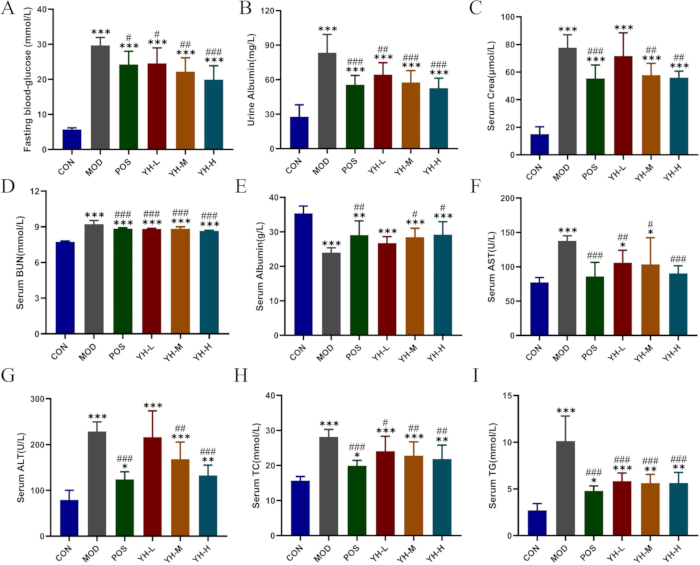
Figure 1: Improvement in blood glucose, hepatic and renal functions, and lipid metabolism disorders in DKD mice. Effects of YHT on (A) random blood glucose; (B-D) renal function, including 24 h urinary protein, blood creatinine, and urea nitrogen; (E-G) hepatic function, including serum albumin, alanine aminotransferase, and aspartate aminotransferase; and (H,I) lipid metabolism regulation, including total cholesterol and triglycerides. Data are expressed as means ± standard deviations of six independent samples, compared with the blank group, *p < 0.05, **p < 0.01, ***p < 0.001, and compared with the model group, #p < 0.05, ##p < 0.01, ###p < 0.001, these statistical notations are used consistently in all figures. Abbreviations: YHT = yinhuo Tang; DKD = diabetic kidney disease; ALB = albumin; ALT = alanine aminotransferase; AST = aspartate aminotransferase; TC = total cholesterol; TG = triglycerides; CON = control group; MOD = model group; POS = valsartan Positive control group; YH-L = low-dose group of the YHT; YH-M = middle-dose group of the YHT; YH-H = high-dose group of the YHT. Please click here to view a larger version of this figure.
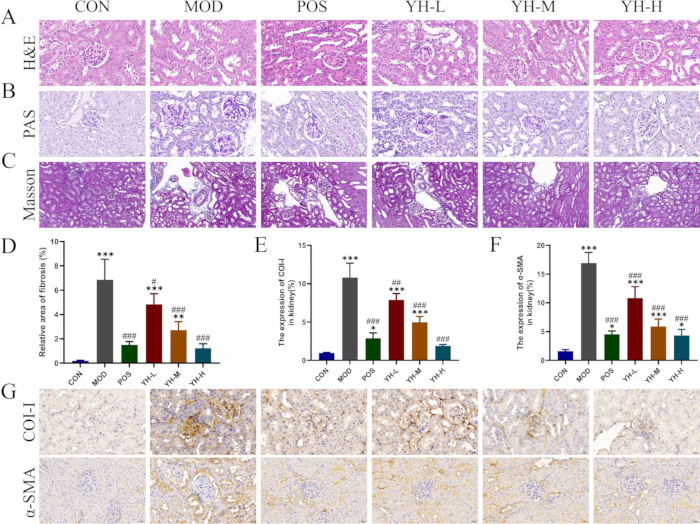
Figure 2: Amelioration of the histopathological damage of kidneys in DKD mice. (A,B) Renal histology by H&E and PAS staining (scale bar = 20 µm); (C) Masson staining to observe the degree of renal fibrosis and (D) semi-quantitative analysis using ImageJ software; (E-G) Semiquantitative analysis of the relative expression levels of COI-I and α-SMA in renal tissues using IHC and ImageJ software (scale bar = 20 µm). Abbreviations: YHT = yinhuo Tang; DKD = diabetic kidney disease; H&E = Hematoxylin and Eosin stain; PAS = Periodic Acid-Schiff stain; COI-I = Collagen type I; α-SMA = α-smooth muscle actin; CON = control group; MOD = model group; POS = valsartan Positive control group; YH-L = low-dose group of the YHT; YH-M = middle-dose group of the YHT; YH-H = high-dose group of the YHT. Please click here to view a larger version of this figure.
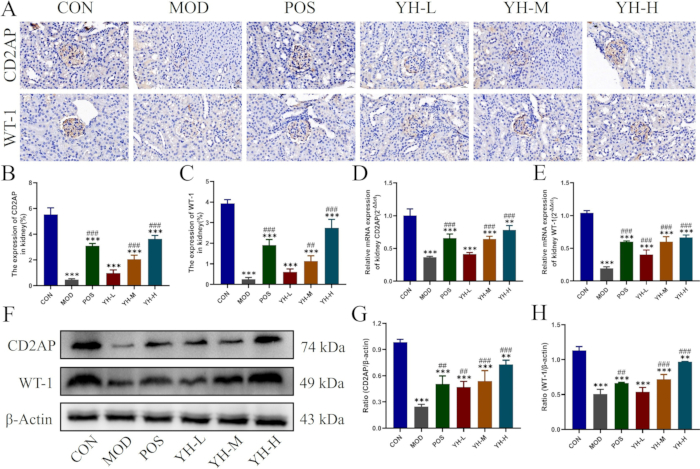
Figure 3: Attenuation of podocyte injury in DKD mice. (A-C) IHC detected the relative expression levels of CD2AP and WT-1 in renal tissues (scale bar = 20 µm); (D,E) PCR detected the relative mRNA expression of CD2AP and WT-1 in renal tissues, and semi-quantitative analysis was performed using Image J software; (F-H) WB detected the relative protein expression levels of CD2AP and WT-1 in renal tissues, and semiquantitative analysis was performed using ImageJ software. quantitative analysis using Image J software. Abbreviations: YHT = yinhuo Tang; DKD = diabetic kidney disease; IHC = immunohistochemistry; WB = Western blotting; CD2AP = CD2-associated protein; WT-1 = Wilms tumor 1; CON = control group; MOD = model group; POS = valsartan Positive control group; YH-L = low-dose group of the YHT; YH-M = middle-dose group of the YHT; YH-H = high-dose group of the YHT. Please click here to view a larger version of this figure.
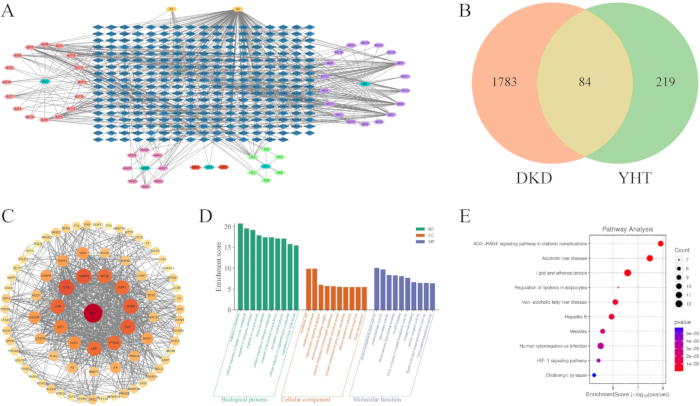
Figure 4: Network pharmacologic analysis of YHT for the treatment of DKD. (A) Active ingredient-disease target plot of YHT for the treatment of DKD. (B) Venn diagram of intersecting targets of YHT and DKD. Orange color represents the number of relevant targets for DKD; green color represents the number of therapeutic targets of YHT active ingredients; and the intersecting part represents the number of intersecting targets (the number of targets of YHT for DKD). (C) PPI network diagram of the intersecting targets of YHT and DKD. (D) GO enrichment analysis of the 10 most important targets of YHT for the treatment of DKD. (E) KEGG enrichment analysis of the 10 most important targets for YHT treatment of DKD. Abbreviations: YHT = yinhuo Tang; DKD = diabetic kidney disease; PPI = Protein-Protein Interaction; GO = Gene Ontology; KEGG = Kyoto Encyclopedia of Genes and Genomes; CON = control group; MOD = model group; POS = valsartan Positive control group; YH-L = low-dose group of the YHT; YH-M = middle-dose group of the YHT; YH-H = high-dose group of the YHT. Please click here to view a larger version of this figure.
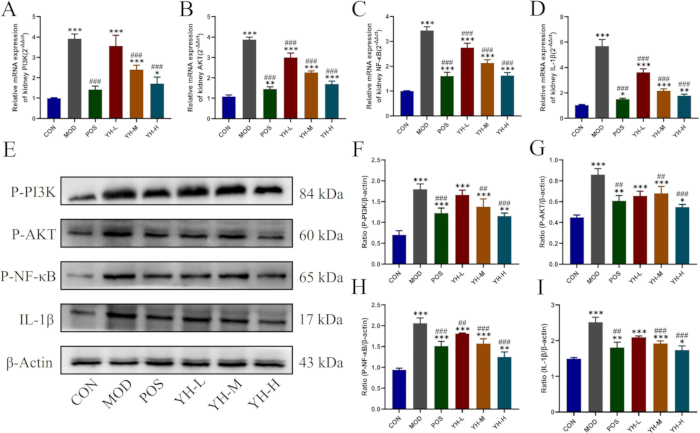
Figure 5: Attenuation of podocyte injury by inhibiting the PI3K/AKT/NF-κB signaling pathway. (A-D) PCR to detect the relative mRNA expression of Pi3k, Akt, Nf-κb, and Il-1β in renal tissues. (E-I) WB to detect the relative protein expression levels of P-PI3K, P-AKT, P-NF-κB, and IL-1β in renal tissues, and semi-quantitative analysis was performed using ImageJ software. Please click here to view a larger version of this figure.
Table 1: Composition of Yinhuo Tang. Please click here to download this Table.
Table 2: Details of qRT-PCR primers. Please click here to download this Table.
Discussion
One of the critical steps in this protocol is the use of network pharmacology to identify the active components of YHT and predict their interactions with DKD-related targets. This step involves analyzing large-scale biological data using bioinformatics tools such as databases (e.g., TCMSP, DrugBank, and GeneCards) to map out the molecular pathways and potential biological networks affected by YHT. This prediction was followed by experimental validation through animal models of DKD, where the hypothesized effects of YHT on these pathways were tested. The integration of computational predictions with data is a crucial aspect of our approach, as it enhances the reliability of our findings and bridges the gap between theoretical predictions and practical outcomes. Additionally, the use of animal models is another critical step in validating the therapeutic effects of YHT. DKD in animals closely mimics the progression of human disease, allowing for an effective evaluation of YHT's impact on both glomerular damage and renal fibrosis. The meticulous monitoring of renal function markers such as Scr, BUN, and proteinuria, alongside histopathological assessments, is essential to assess the therapeutic efficacy of YHT.
While our protocol combines powerful computational and experimental methods, there are several limitations. First, the network pharmacology approach relies heavily on available data in public databases, and there may be biases or missing information regarding certain components of YHT or DKD-related pathways. Although we cross-referenced multiple databases to mitigate this issue, some relevant interactions may still be overlooked. Second, this study only explored the mechanism of YHT in reducing podocyte injury at the experimental animal level, and cellular experiments and clinical large-sample studies are needed to validate the experimental results. Lastly, network pharmacology showed that the treatment of DKD with YHT was also associated with alcoholic liver disease, lipid metabolism and atherosclerosis, and regulation of lipolysis in adipocytes. This study only verified whether modulation of the PI3K/AKT/NF-κB signaling pathway by YHT could delay the progression of DKD; the results need further exploration.
The PI3K/AKT/NF-κB signaling pathway is an important intracellular signaling pathway involved in the regulation of a variety of biological processes such as cell growth, proliferation, survival, and inflammatory responses22. Studies have shown that it plays an important role in the progression of pediculocyte injury23,24. NF-κB is an important downstream component of the PI3K/Akt pathway and participates in the transmission of a variety of intracellular signals and the expression of multiple genes. Inhibition of the PI3K/AKT signaling pathway leads to the degradation of the NF-κB inhibitory protein IκB, which in turn leads to the phosphorylation of NF-κB and its entry into the nucleus, and to the production of a variety of chemokines and inflammatory factors, leading to podocyte injury and renal interstitial fibrosis25. Some studies have shown that inhibition of the activation of PI3K/AKT/NF-κB signaling pathway can effectively suppress inflammatory responses and renal fibrosis, thus delaying the progression of DKD26.
Studies have shown that lipid metabolism disorders play a significant role in the onset and progression of DKD27,28. DKD patients often show abnormal lipid metabolism, including elevated levels of LDL, TG, and fatty acid accumulation. These abnormalities are closely related to pathological changes such as glomerulosclerosis and tubulointerstitial fibrosis29,30. Research indicates that lipid metabolism disorders can promote DKD progression through multiple signaling pathways31,32. First, the mTOR signaling pathway is a key pathway in the regulation of lipid metabolism; its overactivation leads to podocyte injury and proteinuria33,34. A high-fat environment can promote lipid accumulation through the PI3K/AKT/mTOR axis, inducing podocyte apoptosis and ultimately exacerbating renal function deterioration35,36,37. Second, AMP-activated protein kinase (AMPK), a critical regulator of cellular energy metabolism, protects the kidney from metabolic disturbances by promoting fatty acid oxidation, inhibiting lipid synthesis, and reducing lipotoxicity38,39,40. AMPK inactivation is considered an important mechanism in DKD progression. AMPK activators, such as metformin, have shown significant renoprotective effects and represent a promising therapeutic target for DKD41.
Finally, studies have demonstrated that peroxisome proliferator-activated receptors α/γ (PPARα/γ) play an essential role in regulating lipid metabolism and DKD42,43. PPARα activation promotes fatty acid oxidation and reduces lipid accumulation in the kidney, while PPARγ improves insulin sensitivity and exerts anti-inflammatory effects44,45. PPAR agonists, such as fibrates, have shown potential clinical benefits in reducing proteinuria in DKD patients46. In conclusion, lipid metabolism disorders influence the pathological progression of DKD through multiple signaling pathways. The interactions between these pathways form a complex pathological network. Targeting lipid metabolism could provide novel therapeutic strategies for DKD.
The caspase (CASP) family, a family of cysteine-specific proteases, is a group of proteases that are widely found in cells and are mainly involved in the regulation of apoptosis and inflammatory responses47,48. Members of the CASP family share structural similarities and usually exist as zymogens, which are activated through a cascade of reactions, thus triggering apoptosis, pyroptosis, and other programmed cell death processes49. Among them, CASP3, a member of the caspase (CASP) family with a conserved structure typically present as a zymogen, is a key protease in the execution phase of apoptosis that catalyzes the cleavage of specific cellular proteins, thereby playing a critical role in regulating normal cell growth and maintaining internal homeostasis50,51. Caspase-8 acts as an initiator of apoptotic cascades and participates in the modulation of inflammatory responses through the activation of NPK, which is a key factor in the regulation of cellular growth. Caspase-8 acts as an initiator of the apoptotic cascade and also participates in the regulation of the inflammatory response by activating inflammatory vesicles such as NLRP1 and NLRP3, thereby triggering cellular pyroptosis52. Based on the important role of the CASP signaling pathway in mediating apoptosis and pyroptosis in pedunculated cells, further in-depth explorations into the relationship between YHT, CASP3/8, pedunculated cells, and DKD are warranted in the future.
Compared to conventional drug discovery approaches that typically emphasize well-defined single-target mechanisms for regulatory clarity and predictability, our network pharmacology-based strategy allows for a systematic exploration of the multi-target interactions inherent in TCM formulations like YHT. While this complexity reflects the holistic nature of TCM and its potential therapeutic breadth, it also underscores the challenge of unintended off-target effects, which require careful validation and interpretation. By considering the multi-target and multi-pathway nature of YHT's action, we provide a more holistic understanding of its therapeutic effects in treating DKD. Furthermore, network pharmacology allows for the prediction of potential drug interactions and side effects, which is crucial for ensuring the safety and efficacy of multi-component therapies. Current DKD treatments largely focus on managing symptoms or slowing progression rather than addressing the underlying disease mechanisms. By integrating modern bioinformatics tools with experimental validation, this study underscores the importance of systems biology in improving the efficacy of TCM, particularly in chronic diseases like DKD.
Looking forward, this technique holds significant promise for expanding the scope of network pharmacology in TCM research, particularly in the treatment of complex diseases like DKD. Our approach could be applied to explore other TCM formulas or individual herbs for their therapeutic potential in treating kidney diseases, cardiovascular diseases, and metabolic disorders. Furthermore, this methodology could be extended to investigate drug repurposing by identifying novel uses for existing medications in DKD treatment.Another potential application of our approach lies in personalized medicine. By incorporating patient-specific data, network pharmacology could be used to tailor TCM treatment strategies based on individual molecular profiles, enhancing treatment efficacy and minimizing adverse effects.
Disclosures
The authors have no conflicts of interest to declare.
Acknowledgements
This work was supported by the Jilin Provincial Natural Science Foundation (No.20210101201JC).
Materials
| Name | Company | Catalog Number | Comments |
|---|---|---|---|
| Anhydrous ethanol | China National Pharmaceutical Group Chemical Reagent Co., Ltd | 10009218 | |
| Animal Experiment Center | Changchun University of Traditional Chinese Medicine | SYXK (JI) 2023-0014 | |
| BATMAN-TCM database | http://bionet.ncpsb.org/batmantcm | -- | |
| BCA Protein Assay Kit | Solarbio | PC0020 | |
| Blocking Buffer | Beyotime | P0023B | |
| Ceramic pots | Midea | MD-DG30E103 | |
| Chemiluminescence imaging system | Hangzhou Shenhua Technology Co., Ltd | SH-523 | |
| Chloroform | China National Pharmaceutical Group Chemical Reagent Co., Ltd | 10006818 | |
| Cytoscape 3.8.0 software | -- | -- | |
| DAB reagent kit | Servicebio | G1212-200T | |
| db/db mice | Nanjing Junke Biological limited company | SCXK (Su) 2020-009 | |
| ECL substrate solution | affinity | KF8003 | |
| Electric constant temperature water bath pot | Fisaff Instrument (Hebei) Co., Ltd | DK-20000-IIIL | |
| Electrophoresis instrument power supply | Beijing Longfang Technology Co., Ltd | LF-600S | |
| Glass Homogenizer | Solarbio | YA0852 | |
| Glass slide | Nantong Meiweide Life Science Co., Ltd | PC2-301 | |
| Goat Anti-Rabbit IgG HRP(secondary antibody) | Affinity | S0001 | 1:3000 for IHC, 1:10000 for WB |
| Hematoxylin | Wuhan Lingsi Biotechnology Co., Ltd | G1140 | |
| High speed refrigerated centrifuge | Hunan Kecheng Instrument Equipment Co., Ltd | H1-16KR | |
| HiScript II Q RT SuperMix for qPCR (+gDNA wiper) | VAZYME | R223-01 | |
| Horizontal shaker | Jiangsu Haimen Qilin Bell Instrument Manufacturing Co., Ltd | TS-1 | |
| Imaging system | Nikon | Nikon DS-U3 | |
| Intelligent digital magnetic heating stirrer | Hangzhou Miou Instrument Co., Ltd | TP-350E+ | |
| Isopropanol | China National Pharmaceutical Group Chemical Reagent Co., Ltd | 80109218 | |
| marker(20-120KD) | GenScript | M00521 | |
| Masson staining kit | BASO | BA4079B | |
| Medical gauze | Jianerkang Medical | -- | |
| Metascape platform | http://metascape.org/gp/index.html | -- | |
| Methanol | Thermo | 67-56-1 | |
| Microbiology website | http://www.bioinformatics.com.cn/ | -- | |
| microscope | Nikon | ECLIPSE Ci | |
| microwave oven | Galanz Microwave Oven Electrical Appliance Co., Ltd | P70D20TL-P4 | |
| Multi sample tissue grinder | Shanghai Jingxin Industrial Development Co., Ltd | Tissuelyser-24L | |
| Multifunctional analytical electronic balance | Changzhou Lucky Electronic Equipment Game Company | FA1204 | |
| Neutral resin | Wuhan Lingsi Biotechnology Co., Ltd | G8590 | |
| Normal Goat Serum | Solarbio | SL038 | |
| oven | Shanghai Huitai Instrument Manufacturing Co., Ltd | DHG-9140A | |
| Palm centrifuge | Wuhan Lingsi Biotechnology Co., Ltd | D1008E | |
| PAS staining kit | BASO | BA4114B | |
| Pathological slicer | Shanghai Leica Instrument Co., Ltd | RM2016 | |
| PBS | Solarbio | P1020 | |
| PCR instrument | Hangzhou Miou Instrument Co., Ltd | PR-96 | |
| Pipette gun | Dragon | KE0003087/KA0056573 | |
| Primary Antibody Dilution Buffer | Beyotime | P0023A | |
| Protein phosphatase inhibitor complex | Meilunbio | MB12707-1 | |
| PVDF membrane (0.22 μm) | Solarbio | ISEQ00010 | |
| Quick primary/secondary antibody diluent | Solarbio | A1811 | |
| Rabbit anti-CD2AP | Affinity | DF2298 | 1:200 for IHC, 1:1000 for WB |
| Rabbit anti-COI-I | Affinity | DF12149 | 1:200 for IHC, 1:1000 for WB |
| Rabbit anti-IL-1β | Affinity | AF5103 | 1:1000 for WB |
| Rabbit anti-P-AKT | Affinity | AF0016 | 1:1000 for WB |
| Rabbit anti-P-NF-Κb | Affinity | AF3219 | 1:1000 for WB |
| Rabbit anti-P-PI3K | Affinity | AF3242 | 1:1000 for WB |
| Rabbit anti-WT-1 | Affinity | DF6331 | 1:200 for IHC, 1:1000 for WB |
| Rabbit anti-α-SMA | Affinity | AF1032 | 1:200 for IHC, 1:1000 for WB |
| Rabbit anti-β-Actin | Affinity | AF7018 | 1:1000 for WB |
| Real-Time PCR System | ABI | QuantStudio 6 | |
| RIPA Lysis Buffer | Meilunbio | MA0151 | |
| RNase-free ddH2O | Solarbio | R1600 | |
| Secondary Antibody Dilution Buffer | Beyotime | P0023D | |
| Slide and cover glass | Jiangsu Shitai Experimental Equipment Co., Ltd | 10212432C | |
| SPSS 26.0 software | -- | -- | |
| String database website | https://cn.string-db.org/ | -- | |
| Super pure water instrument | Zhiang Instrument (Shanghai) Co., Ltd | Clever-S15 | |
| Taq Plus DNA Polymerase | TIANGEN | ET105-02 | |
| TCMSP database | https://old.tcmsp-e.com/tcmsp.php | -- | |
| Tissue grinder | Beautiful Wall | MB-96 | |
| Trizol | Ambion | 15596-026 | |
| Tween 20 | China National Pharmaceutical Group Chemical Reagent Co., Ltd | 30189328 | |
| Ultra micro UV visible spectrophotometer | Hangzhou Miou Instrument Co., Ltd | ND-100 | |
| Uniprot protein database | https://www.uniprot.org | -- | |
| Upright optical microscope | Nikon | Nikon Eclipse CI | |
| Urinary Protein Test Kit | Nanjing Jiancheng Bioengineering Research Institute | C035-2 | |
| vacuum lyophilizer | Ningbo Xinzhi Biotechnology Co. | A01-1-NA0959 | |
| Vertical electrophoresis tank | Beijing 61 Instrument Factory | DYCZ-24DN | |
| Vortex mixer | Wuhan Lingsi Biotechnology Co., Ltd | MX-F | |
| Western Blocking Buffer | Solarbio | SW3010 | |
| xylene | China National Pharmaceutical Group Chemical Reagent Co., Ltd | 10023418 | |
| Yihong | Wuhan Lingsi Biotechnology Co., Ltd | E8090 |
References
- Naaman, S. C., Bakris, G. L. Diabetic nephropathy: Update on pillars of therapy slowing progression. Diabetes Care. 46 (9), 1574-1586 (2023).
- Glastras, S. J., Pollock, C. A. Targeted identification of risk and treatment of diabetic kidney disease. Nat Rev Nephrol. 20 (2), 75-76 (2024).
- Gregory, G. A., et al. Global incidence, prevalence, and mortality of type 1 diabetes in 2021 with projection to 2040: a modelling study. Lancet Diabetes Endocrinol. 10 (10), 741-760 (2022).
- Rao, B. V., Tan, S. H., Candasamy, M., Bhattamisra, S. K. Diabetic nephropathy: An update on pathogenesis and drug development. Diabetes Metab Syndr. 13 (1), 754-762 (2019).
- Guo, M., He, F., Zhang, C. Molecular therapeutics for diabetic kidney disease: An update. Int J Mol Sci. 25 (18), 10051(2024).
- Shen, S., et al. Advances in traditional Chinese medicine research in diabetic kidney disease treatment. Pharm Biol. 62 (1), 222-232 (2024).
- Han, C., et al. Yi-Shen-Hua-Shi granule ameliorates diabetic kidney disease by the "gut-kidney axis". J Ethnopharmacol. 10 (307), 116257(2023).
- Ma, X., et al. Advances in oxidative stress in pathogenesis of diabetic kidney disease and efficacy of TCM intervention. Ren Fail. 45 (1), 2146512(2023).
- Liu, M., et al. A systematic review on polysaccharides from Morinda officinalis How: Advances in the preparation, structural characterization and pharmacological activities. J Ethnopharmacol. 28 (328), 118090(2024).
- Zhang, X., et al. Network pharmacology-based identification of key pPharmacological mechanism of Shen-qi-di-huang decoction acting on uremia. Altern Ther Health Med. 30 (1), 44-50 (2024).
- Linlin, Z., et al. A multi-target and multi-channel mechanism of action for Jiawei Yinhuo Tang in the treatment of social communication disorders in autism: Network pharmacology and molecular docking studies. Evid Based Complement Alternat Med. 8 (2022), 4093138(2022).
- Husain, S. Role of podocyte in kidney disease. Front Biosci (Landmark Ed). 29 (7), 250(2024).
- Pavenstädt, H., Kriz, W., Kretzler, M. Cell biology of the glomerular podocyte. Physiol Rev. 83 (1), 253-307 (2003).
- Torban, E., et al. From podocyte biology to novel cures for glomerular disease. Kidney Int. 96 (4), 850-861 (2019).
- Yue, J. I., et al. Acupuncture improve proteinuria in diabetic kidney disease rats by inhibiting ferroptosis and epithelial-mesenchymal transition. Heliyon. 10 (13), e33675(2024).
- Liu, X. Q., et al. Wogonin protects glomerular podocytes by targeting Bcl-2-mediated autophagy and apoptosis in diabetic kidney disease. Acta Pharmacol Sin. 43 (1), 96-110 (2022).
- Nogales, C., et al. Network pharmacology: curing causal mechanisms instead of treating symptoms. Trends Pharmacol Sci. 43 (2), 136-150 (2022).
- Zhang, P., et al. Network pharmacology: towards the artificial intelligence-based precision traditional Chinese medicine. Brief Bioinform. 25 (1), bbad518(2023).
- Zhao, L., et al. Network pharmacology, a promising approach to reveal the pharmacology mechanism of Chinese medicine formula. J Ethnopharmacol. 12 (309), 116306(2023).
- Meek, R. L., et al. Glomerular cell death and inflammation with high-protein diet and diabetes. Nephrol Dial Transplant. 28 (7), 1711-1720 (2013).
- Fischer, A. H., Jacobson, K. A., Rose, J., Zeller, R. Paraffin embedding tissue samples for sectioning. CSH Protoc. 2008, (2008).
- Yusuf, J. A., et al. Molecular mechanism underlying stress response and adaptation. Prog Brain Res. 291, 81-108 (2025).
- Yu, M., et al. Baicalein increases cisplatin sensitivity of A549 lung adenocarcinoma cells via PI3K/Akt/NF-κB pathway. Biomed Pharmacother. 12 (90), 677-685 (2017).
- Chen, H., et al. The PI3K/AKT pathway in the pathogenesis of prostate cancer. Front Biosci (Landmark Ed). 21 (5), 1084-1091 (2016).
- Wang, J., et al. Critical roles of PI3K/Akt/NF-κB survival axis in angiotensin II-induced podocyte injury. Mol Med Rep. 20 (6), 5134-5144 (2019).
- Zhang, S. J., et al. Integrated network pharmacology analysis and experimental validation to elucidate the mechanism of acteoside in treating diabetic kidney disease. Drug Des Devel Ther. 12 (18), 1439-1457 (2024).
- Rong, J., et al. Mechanisms of hepatic and renal injury in lipid metabolism disorders in metabolic syndrome. Int J Biol Sci. 20 (12), 4783-4798 (2024).
- Bi, Z., et al. Development of a clinical prediction model for diabetic kidney disease with glucose and lipid metabolism disorders based on machine learning and bioinformatics technology. Eur Rev Med Pharmacol Sci. 28 (3), 863-878 (2024).
- Wei, L., Gao, J., Wang, L., Tao, Q., Tu, C. Multi-omics analysis reveals the potential pathogenesis and therapeutic targets of diabetic kidney disease. Hum Mol Genet. 33 (2), 122-137 (2024).
- Vartak, T., Godson, C., Brennan, E. Therapeutic potential of pro-resolving mediators in diabetic kidney disease. Adv Drug Deliv Rev. 178 (4), 113965(2021).
- Liu, S., et al. Renal tubule ectopic lipid deposition in diabetic kidney disease rat model and in vitro mechanism of leptin intervention. J Physiol Biochem. 78 (2), 389-399 (2022).
- Tang, C., et al. Fenofibrate attenuates renal tubular cell apoptosis by up-regulating MCAD in diabetic kidney disease. Drug Des Devel Ther. 17 (2), 1503-1514 (2023).
- Lu, H. T., et al. Unraveling DDIT4 in the VDR-mTOR pathway: a novel target for drug discovery in diabetic kidney disease. Front Pharmacol. 15 (10), 1344113(2024).
- Tang, G., et al. Clinical efficacies, underlying mechanisms and molecular targets of Chinese medicines for diabetic nephropathy treatment and management. Acta Pharm Sin B. 11 (9), 2749-2767 (2021).
- Zhang, P., et al. Huaiqihuang (HQH) protects podocytes from high glucose-induced apoptosis and inflammation response by regulating PI3K/AKT/mTOR pathway. Arch Physiol Biochem. 11 (27), 1-8 (2024).
- Zhaoan, G., et al. Qizhi Jiangtang capsule activates podocyte autophagy in diabetic kidney disease by inhibiting phosphatidylinositol 3-kinase/protein kinase B/mammalian target of rapamycin pathways. J Tradit Chin Med. 43 (4), 667-675 (2023).
- Jin, D., et al. Jiedu Tongluo Baoshen formula enhances podocyte autophagy and reduces proteinuria in diabetic kidney disease by inhibiting PI3K/Akt/mTOR signaling pathway. J Ethnopharmacol. 293 (3), 115246(2022).
- Zhou, Y., et al. Metrnl alleviates lipid accumulation by modulating mitochondrial homeostasis in diabetic nephropathy. Diabetes. 72 (5), 611-626 (2023).
- Shao, M., et al. Canagliflozin regulates metabolic reprogramming in diabetic kidney disease by inducing fasting-like and aestivation-like metabolic patterns. Diabetologia. 67 (4), 738-754 (2024).
- Tian, S., et al. GLP-1 receptor agonists alleviate diabetic kidney injury via β-klotho-mediated ferroptosis inhibition. Adv Sci (Weinh). 12 (4), e2409781(2024).
- Song, Y., et al. Identification of circular RNAs and functional competing endogenous RNA networks in human proximal tubular epithelial cells treated with sodium-glucose cotransporter 2 inhibitor dapagliflozin in diabetic kidney disease. Bioengineered. 13 (2), 3911-3929 (2022).
- Fan, Y., et al. Identification of potential key lipid metabolism-related genes involved in tubular injury in diabetic kidney disease by bioinformatics analysis. Acta Diabetol. 61 (8), 1053-1068 (2024).
- Pan, S., et al. A comprehensive weighted gene co-expression network analysis uncovers potential targets in diabetic kidney disease. J Transl Int Med. 10 (4), 359-368 (2023).
- Chen, Y., et al. Curcumin targets CXCL16-mediated podocyte injury and lipid accumulation in diabetic kidney disease treatment. Arch Pharm Res. 47 (12), 924-939 (2024).
- Liu, K., et al. Design, synthesis, and biological evaluation of a novel dual peroxisome proliferator-activated receptor alpha/delta agonist for the treatment of diabetic kidney disease through anti-inflammatory mechanisms. Eur J Med Chem. 218 (5), 113388(2021).
- Kitada, M., Kanasaki, K., Koya, D. Clinical therapeutic strategies for early stage of diabetic kidney disease. World J Diabetes. 5 (3), 342-356 (2014).
- Galluzzi, L., Kepp, O., Kroemer, G. Caspase-3 and prostaglandins signal for tumor regrowth in cancer therapy. Oncogene. 31 (23), 2805-2808 (2012).
- Li, L., Wang, S., Zhou, W. Balance cell spoptosis and pyroptosis of caspase-3-activating chemotherapy for better antitumor therapy. Cancers (Basel). 15 (1), 26(2022).
- Fan, T. J., et al. Caspase family proteases and apoptosis. Acta Biochim Biophys Sin (Shanghai). 37 (11), 719-727 (2005).
- Asadi, M., et al. Caspase-3: Structure, function, and biotechnological aspects. Biotechnol Appl Biochem. 69 (4), 1633-1645 (2022).
- Eskandari, E., Eaves, C. J. Paradoxical roles of caspase-3 in regulating cell survival, proliferation, and tumorigenesis. J Cell Biol. 221 (6), e202201159(2022).
- Pang, J., Vince, J. E. The role of caspase-8 in inflammatory signalling and pyroptotic cell death. Semin Immunol. 42 (70), 101832(2023).
Reprints and Permissions
Request permission to reuse the text or figures of this JoVE article
Request Permission