Co-administration of CBD with paclitaxel prevents the development of chemotherapy-induced peripheral neuropathy in rats. This protocol describes cannabinoid handling, inducing an allodynic phenotype in rats via chemotherapeutic administration, assessing mechanical and thermal allodynia, and using high-speed videography to distinguish allodynia and hyperalgesia.
Method Article
Prevention of Allodynia and Hyperalgesia by Cannabidiol in a Rat Model of Chemotherapy-Induced Peripheral Neuropathy
Opens in a new tab
In This Article
Summary
Loading...
$$\rightleftharpoonup{xx}$$
$$\longleftharp{xx}$$,
$$\longrightharp{xx}$$,
Abstract
Loading...
$$\rightleftharpoonup{xx}$$
$$\longleftharp{xx}$$,
$$\longrightharp{xx}$$,
This study demonstrates the utility of a rat model of chemotherapy-induced peripheral neuropathy (CIPN) to assess the ability of the non-psychoactive cannabinoid cannabidiol (CBD) to modulate the development of this syndrome in vivo. The method utilizes the chemotherapeutic agent paclitaxel to generate an allodynic phenotype in the animals. This study describes how to handle and solubilize CBD, administer the chemotherapeutic agent, assess mechanical and cold sensitivity, and apply high-speed videography to measure nocifensive behavior in animals. Using the procedures outlined, the data support that CBD prevents the allodynic phenotype from developing in the treated animals. No difference was observed in the CBD-treated animals from day 0 (pre-paclitaxel baseline) to day 7 (post-sensitization) in mechanical or thermal sensitivity, while the vehicle-treated animals became significantly more sensitive. This response to treatment is durable up to the latest time point where data were collected (7 weeks). The addition of high-speed videography allows for a more granular and unbiased assessment of this behavioral phenotype (e.g., classification of analgesia and anti-allodynia). This demonstrates both the utility of this model for cannabinoid drug characterization and the potential role of CBD in mitigating neuropathic pain.
Introduction
Loading...
$$\rightleftharpoonup{xx}$$
$$\longleftharp{xx}$$,
$$\longrightharp{xx}$$,
Chemotherapy-induced peripheral neuropathy (CIPN) is a type of sensory neuropathy. It is a common side effect of chemotherapy treatment and is especially prevalent with taxane and platinum-based drugs1,2. Some symptoms of CIPN include chronic pain, numbness, tingling, and extreme sensitivity to touch and temperature1,2. These painful symptoms not only interfere with a patient's day-to-day life but also their cancer treatment. Some cancer patients seek a reduction in dosage or a complete termination of chemotherapy to be able to manage the decrease in quality of life associated with this syndrome3. Currently, the common clinically used treatments for CIPN are incompletely effective at symptomatic relief and include opioids, which pose significant abuse potential4. There is no cure for CIPN to date, therefore, finding a safe and effective alternative is essential5,6.
Cannabidiol (CBD) has previously been shown to have efficacy at preventing the development of CIPN as modeled in mice7,8. This demonstrates a promising pathway for avoiding the potentially long-term allodynic symptoms of CIPN for patients without the need for relief via equivocally effective drugs or potentially harmful opioids. The majority of people using CBD, especially for therapeutic purposes like managing seizures, experience mild side effects, and the drug is generally well-tolerated9. Most adverse effects are dose-dependent and often improve as the body adjusts.
In this widely used model of CIPN10, rats are administered paclitaxel to induce neuropathy, which recapitulates the allodynic phenotype observed in some patients after chemotherapeutic intervention, as reported previously11. The goal of this induction is to have a translationally relevant platform for evaluating this type of sensory neuropathy in vivo, which is suitable for researchers investigating mechanisms or interventions for this syndrome. Mechanical sensitivity is measured using the von Frey test, and cold temperature challenges are used to measure thermal sensitivity10,11. This allows for the quantitation of the prophylactic potential of CBD in mitigating CIPN at the two most clinically important quality-of-life endpoints for patients. Further evaluation included high-speed videography-assisted analysis of nocifensive behaviors12,13. This expanded analysis of behavioral responses to innocuous and noxious stimuli allows for the differentiation between allodynic and hyperalgesic effects of chemotherapy administration, as well as the ability of CBD to modulate these effects.
This protocol describes how to induce the CIPN phenotype, assess and quantify mechanical and thermal hypersensitivity in rats, and apply videography for an unbiased and more granular evaluation of allodynia and hyperalgesia.
Protocol
Loading...
$$\rightleftharpoonup{xx}$$
$$\longleftharp{xx}$$,
$$\longrightharp{xx}$$,
This protocol was approved and follows the guidelines of Temple University's Animal Care and Use Committee under approved protocols for animal research. Adult male Sprague-Dawley rats (250-300 g) were used in this study. Details regarding the reagents and equipment used are listed in the Table of Materials.
1. Preparing cannabinoids and chemotherapeutic agents for the induction of CIPN
NOTE: Figure 1 shows the process of solubilization of cannabidiol.
- Assemble the following materials for solubilization of CBD and dilution of paclitaxel.
- 100% ethanol (EtOH), Chremophor (Ethoxylated castor oil), normal saline, amber glass vials (x2), 50 ml conical tube (x2), CBD powder stock, paclitaxel clinical stock (6 mg/mL).
- Add an appropriate volume of EtOH to each 50 mL conical tube for a final solvent preparation of 1:1:18 EtOH: ethoxylated castor oil: normal saline.
- Mass out the appropriate amount of CBD to create a 5 mg/kg concentration for the number of animals to be tested.
- Dissolve CBD in EtOH in one of the two prepared 50 mL conical tubes.
- Vortex CBD-EtOH mixture at high speed until CBD is completely dissolved.
- Add an equivalent volume of ethoxylated castor oil to each 50 mL conical tube.
- Vortex each tube at high speed until the ethoxylated castor oil is in solution with EtOH.
- Add an appropriate volume of normal saline to each 50 mL conical tube for a final ratio of 1:1:18.
- Vortex until saline is in solution.
- Transfer the vehicle control solution and CBD solution into amber glass vials.
- Dilute stock paclitaxel solution 1:6 in normal saline to bring the final concentration to 1 mg/mL in amber vials at the appropriate volume for the number of animals to be tested.
- Seal the amber vials with aluminum-collared rubber vial caps.
NOTE: If prepared before initiation of the experiment, vials of vehicle, vehicle + CBD, and paclitaxel can be stored at 4-8 °C for up to 7 days. Allow refrigerated vials to equilibrate to room temperature before injection. Also, note that it is critically important to store prepared cannabinoid reagents in glass, if not for immediate use, to prevent adhesion to the vessel or precipitating out of solution.
2. Inducing allodynic phenotype in rats
- Assemble the necessary materials for paclitaxel injection as mentioned below:
- Prepared 1 mg/mL paclitaxel stock solution, 1 mL disposable syringes (x n rats), 25 G syringe needles (x n rats), chemotherapeutic waste sharps container, and scale to collect animal weights.
- Number or tag the rats with unique identifiers.
NOTE: The animals should have acclimated to their housing for at least 1 week prior to the start of the experiment. - Collect the weights of each animal.
- Prepare syringes with the appropriate volume of paclitaxel (all animals) and vehicle or CBD (by treatment group). In this case, the injection volume corresponds to 1 µL/g weight of the animals.
- Inject paclitaxel and vehicle or paclitaxel and CBD interperitoneally.
- To restrain the rat for injection, grasp the rat with non-dominant from the back, with the index finger meeting the thumb around the neck and the middle finger meeting the thumb under the shoulder, using ring and pinky fingers to grip the body.
- Stabilize the rat's hindlegs against the body.
- Use caution not to apply an uncomfortable level of pressure on the animal to avoid injury.
NOTE: There is always a risk of bite or scratch when handling rats. To mitigate this risk, the experimenter may wear additional PPE in the form of bite-resistant gloves. - While manually restrained and stabilized, tilt the animal such that its abdomen is readily accessible to the syringe.
- Inject 1 mg/mL paclitaxel into the lower right quadrant of the animal and dispose of the syringe in the chemotherapy waste sharps container.
- Inject the vehicle or CBD at 1 µL/g weight into the lower left quadrant of the animal and dispose of the syringe in the regular sharps container.'
NOTE: Alternating the sites of injection mitigates animal distress and potential irritation of the injection site. - This marks experimental day 1. Repeat this process on days 2-4 to induce the allodynic phenotype. Follow institutional handling protocols for chemotherapeutic contaminated cages during this time.
- Take baseline mechanical and thermal allodynia measurements on day 0, as described in step 3. Include additional stimuli in baseline generation as described in step 4. Analysis of day 0 values for these stimuli will be necessary to generate pain scores.
- Repeat step 2.5.8 until animals demonstrate a stable, repeatable baseline to avoid heterogeneity in response caused by insufficient handling.
NOTE: Do not interrupt the process of inducing the allodynic phenotype. If the experimenter is unable to conduct injections in 4 consecutive days, alternate dosing schedules can achieve a similar induction of the phenotype. It is also possible and perhaps recommended to combine the injection of paclitaxel and vehicle or CBD in one injection rather than 2 by adjusting the volume of the initial vehicle or CBD solution appropriately to accommodate dilution of paclitaxel in these mixtures while maintaining a 5 mg/mL final concentration of CBD and 1 mg/mL concentration of paclitaxel. Take appropriate caution while handling chemotherapy sharps to avoid accidental exposure to the experimenter.
3. Assessing mechanical and thermal sensitivity post-sensitization
NOTE: Figure 2 shows the schematic apparatus used for this study.
- Assemble the following materials for mechanical and cold sensitivity assays:
- Von Frey filaments (4-100 g), dry ice, 15 mL conical tube, isolation chambers, wire floor grid, ¼ inch glass panel, and stopwatch.
- Begin assessment on experimental day 7 (e.g., 3 days post final chemotherapeutic/treatment condition injection).
- Assemble von Frey and thermal isolation chambers.
- Place the isolation chambers for mechanical sensitivity (6 chambers separated by plastic partitions) on a wire floor grid 20 cm above the benchtop.
- Place the isolation chambers for thermal sensitivity testing (single chamber) on a 1/4-inch glass surface 20 cm above the benchtop.
- Place the animals individually in isolation chambers for mechanical allodynia.
- Allow acclimation to the isolation chambers for 15 min prior to the start of testing.
- Conduct manual von Frey testing for mechanical sensitivity. This method describes manual von Frey testing, but electronic von Frey testing may be substituted for manual testing14.
- Start with the filament corresponding to the lowest gram of force (e.g., 4 g) and apply pressure on the mid-plantar surface of the right hind paw such that the filament is held in a c-shape for 6 s.
NOTE: Researchers report little difference between right and left hind paws, but experimenters should be consistent between animals). Repeat 5 trials per stimulus. - Repeat for each animal to be tested.
- Move up the filament size sequentially and repeat steps 3.5.1-3.5.2 until a pain response is observed (e.g., paw withdrawal) in at least 2 of the 5 trials.
- Record filament gram of force that evoked the observed paw response.
- Re-test the next lower filament to see if paw withdrawal is observed. If no response is observed, the recorded gram of force is final.
- If the animal responds at this step, record a new filament gram of force and re-test the next lower filament. Repeat until lower filaments no longer elicit a response. Representative data are shown in Figure 3A,C.
- Start with the filament corresponding to the lowest gram of force (e.g., 4 g) and apply pressure on the mid-plantar surface of the right hind paw such that the filament is held in a c-shape for 6 s.
- Conduct cold sensitivity testing.
- Remove the animal from the mechanical sensitivity isolation chamber and place it in a thermal sensitivity isolation chamber.
- Pack 15 mL conical tube with dry ice such that the final pellet extends from the top of the tube.
- Place the dry ice on the glass proximal to animal's right hind paw.
- With a stopwatch, record the time until the animal demonstrates paw withdrawal in response to temperature. Representative data are shown in Figure 3B.
- Re-house the rat in its home cage.
- Repeat all steps of 3.7 until all animals have been tested and are back in their home cage.
NOTE: It is also important to note that animals' behavior and weights should be monitored for any signs of distress at this stage. If the animals develop baseline pain behavior or are losing bodyweight during prolonged time courses, the study should be terminated, and animals should be euthanized according to proper animal handling technique. If the animals do not display distress over the course of the experiment, the animals should be euthanized after the final testing day.
4. Mechanical sensitivity assessment via high-speed videography
- Assemble the following materials as mentioned below for mechanical sensitivity assay and videography:
- Isolation chambers, Wire floor grid, Cotton swab, Makeup brush, Pins, high-speed camera, infrared lights, laptop with compatible analysis software.
- Assess in conjunction with previously described mechanical sensitivity testing11or as a standalone assay as described below.
- Assemble the isolation chambers for mechanical sensitivity (single chamber) by placing them on a wire floor grid 20 cm above the benchtop.
- Place the camera on a tripod at roughly a 45-degree angle between 1 and 2 feet away from the isolation chamber.
- Position the infrared lights on tripods to illuminate the chamber for experimentation and subsequent scoring.
- Place the animals individually in the isolation chamber for mechanical stimulus assessment.
- Allow acclimation to isolation chambers for 15 m prior to the start of testing.
- Conduct somatosensory testing for mechanical sensitivity with different stimuli (Figure 4).
- Use a laptop with Photron FastCAM Analysis software to record the isolation chamber at 2000 frames/s for each stimulus (press the corresponding button to start recording).
- Use the cotton swab to make gentle contact between the cotton tip and the hind paw of the rat while recording, and stop after completing the recording.
- Use the makeup brush to wipe across the hind paw from back to front and stop after completing.
- Use the pin to conduct low- and high-pressure pin pricks on the hind paw of the rat. For low-pressure pricks, gently touch the pin to the hind paw, withdraw after contact while recording, and stop after completion.
- For high-pressure pin pricks, sharply press the pin into the hind paw and, withdraw after contact while recording and stop after completion.
- Return the animal to the home cage.
- Repeat for each animal to be tested.
- Manually assess nocifensive behavior recorded via high-speed videography using videos processed with FastCAM software15, as demonstrated in Figure 5A,B.
- Measure the paw height (in cm) from the mesh floor to its highest point after paw stimulation. To do this in the software, navigate to Dimensions > Measurements and select Two points.
- Play the video through the entire paw movement to determine the moment when the paw reaches its peak during the initial upward motion. Select a clearly identifiable region of the paw (e.g., the center of the plantar surface, the intersection of a digit with the paw, heel, etc.) and set it as the initial point.
- Rewind the video to locate the position of that region before stimulation and mark the second point at that location along the y-axis. Ensure that the measurement line remains parallel to the y-axis and not angled. The height will be displayed in the top left corner of the screen15.
- Determine the paw speed by calculating the distance (in cm) from the initial lift to the highest point, divided by the time (in seconds) between these two points. This measurement can be performed in the software by selecting Dimensions > Measurements and choosing Two points.
- Play the video through the entire paw movement to identify the frames where the paw initiates its first upward motion. Measure paw velocity by selecting two points at different frames within this movement and calculating the distance divided by the number of frames or the time elapsed between the start and end frames15.
- Evaluate the videos for orbital tightening, paw shake, paw guard, and jumping behaviors. For instance, if an animal were to display one of these behaviors during stimulus application, their nocifensive behavior score would be 1.
NOTE: Orbital tightening was scored when eyes went from fully open to partially or fully closed during stimulus application. Paw shaking was scored when high-frequency paw flinching was observed during stimulus application. Jumping was scored when three or more paws were off the wire grid floor during stimulus application. - Use baseline data from the stimuli to generate distribution and error estimates for this cohort of animals as previously described15. Briefly, record videos of each animal being used in the studies in response to static touch, dynamic touch, light pinprick, and heavy pinprick at pre-treatment baseline to capture the full range of possible behavioral features.
- Calculate the average and standard deviation of each behavioral feature (velocity, height, pain score) for the group across all stimuli (static touch, cotton swab, light pinprick, heavy pinprick).
- Generate z-scores from raw data observed in each video using variables generated in step 4.9.4 and the procedures previously described16.
- Combine all z-scores into a one-dimensional eigenvalue using principal component analysis using statistical analysis software17. This allows for the combination of transformed z-scores from the three-dimensional dataset to be computed as a single weighted total value16.
- Plot PCA-generated pain scores encompassing these multiple behavioral dimensions to separate behaviors associated with noxious and innocuous stimuli (Figure 5C) using statistical analysis software.
NOTE: Videography-assisted mechanical testing iterates on von Frey testing by incorporating increased dimensionality. In the context of CIPN, it allows for the description of and distinction between antiallodynia and analgesia. Video scoring can also be conducted by parties independent of the experimenter who conducted the sensory testing. This is a powerful tool that can both reduce experimenter bias and increase the depth of information gathered. It is important to note that this method is reliant on specialized hardware, software, and statistical techniques. It serves as a supplement to the more accessible method described in previous sections. Furthermore, it should be noted that data collection is time-consuming due to the size of the files generated by the camera and that file storage space can be a limiting factor. These factors should be considered at the outset of the experiment.
- Measure the paw height (in cm) from the mesh floor to its highest point after paw stimulation. To do this in the software, navigate to Dimensions > Measurements and select Two points.
Results
Loading...
$$\rightleftharpoonup{xx}$$
$$\longleftharp{xx}$$,
$$\longrightharp{xx}$$,
The behavioral results elicited by this CIPN model in rats are highly reproducible and consistent. Figure 3A shows baseline and post-paclitaxel sensitization mechanical sensitivity results in control and CBD-treated animals. At baseline, Sprague-Dawley rats generally start to exhibit paw withdrawal at 26-60 g of force as applied by von Frey filaments. This is observable in both treatment groups on day zero. After paclitaxel is administered, vehicle-treated animals become sensitive to the lowest gram of force filaments applied (e.g., 4-6 g). This is observed in this study as well as published previously11. This study demonstrates that CBD is highly effective at mitigating this sensitization if co-administered with paclitaxel. The CBD-treated animals remain at baseline, showing no statistically significant difference between day 7 and day 0. Additionally, this effect is durable. Figure 3C shows that with no additional intervention, this effect is still present up to experimental day 49. The phenotype induced by chemotherapeutic treatment is stable and consistent for many weeks, as demonstrated here and previously related cannabinoid compound testing11. A paclitaxel + vehicle control group must be maintained during this time to ensure that any modulation of allodynia is due to the treatment group and that there is no loss of phenotype in the control animals.
This effect is also observed when thermal hypersensitivity is assessed. Paclitaxel-sensitized animals become very sensitive to cold stimuli and start paw withdrawal shortly after exposure, as demonstrated here and published previously11. Figure 3B shows that CBD treatment is protective for this effect. Generally, vehicle-treated animals will withdraw within roughly 10 s, while CBD-treated animals behave very similarly to their pre-sensitization baseline.
Assessing mechanical and thermal sensitivity can show experimenter bias. It is helpful to have more than one technician present to conduct these studies. In the case of mechanical allodynia, it can be helpful to have more than one person perform the test in full and evaluate agreement between the independent evaluators' observations. It is noted in the literature that animals respond differently to different experimenters depending on the characteristics of that person, so multiple hands and consistent handling protocols can help reduce the impact of these biases18,19. In the case of thermal sensitivity testing, it can be helpful to have multiple sets of hands for these same reasons, but also to simplify applying the cold stimulus and recording the time to respond simultaneously. This is not to say that these experiments cannot be conducted accurately by a single person, however, these factors should be considered.
High-speed videography enhanced this assessment of mechanical sensitivity. This allows for the incorporation of multiple stimuli in the sensory testing to describe a wider array of behaviors. Figure 5 shows representative results for this type of videography-assisted pain scoring in this model of CIPN. In this study, in addition to the von Frey and thermal assessment previously described, animals were exposed to a series of additional innocuous and noxious stimuli: cotton swabs, dynamic brushing, low-pressure pin prick, and high-pressure pin prick. Using these stimuli, different parameters were measured from the captured high-speed videos. These parameters included paw height, paw distance, and nocifensive behaviors consisting of orbital tightening, paw shake, paw guard, and jumping. These behavioral responses can be quantitated and combined into a composite score where positive values correspond to more pain-like responses and negative values correspond to less pain-like responses. Figure 5 demonstrates that the innocuous stimuli of the cotton swab and dynamic brushing promote more pain-like behavior in paclitaxel-sensitized animals that received the vehicle, indicating the allodynic phenotype shown in this model. The CBD-treated animals do not exhibit the same allodynic response to innocuous stimuli, indicating an antiallodynic effect of CBD treatment. Furthermore, these animals display a reduced response to the noxious stimulus of a low-pressure pin prick relative to their vehicle-treated counterparts, which indicates the anti-hyperalgesic effects of CBD treatment.
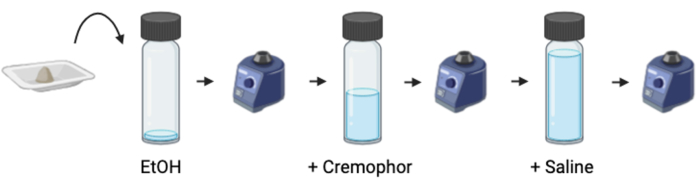
Figure 1: Solubilization of cannabidiol. The process for getting cannabidiol into the solution is stepwise as follows: (1) Preparing an appropriate mass of powder stock and adding it directly to ethanol. (2) Vortexing ethanol/CBD until the powder is fully in solution. (3) Adding ethoxylated castor oil to ethanol/CBD solution. (4) Vortexing until the ethoxylated castor oil is fully in solution. Adding saline to ethanol/CBD/castor oil solution. (5) Vortexing until all components are fully in solution. If this process is not conducted in glass vials, the solution should be transferred to glass vials immediately after the solution is complete. The ratio of ethanol to the ethoxylated castor oil to saline is 1:1:18. Please click here to view a larger version of this figure.
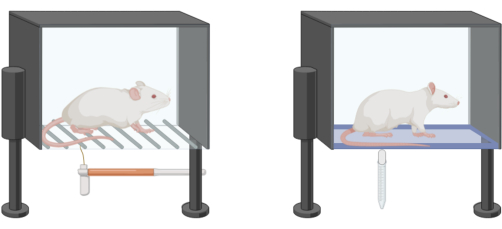
Figure 2: Schematic of the apparatus. A mechanical sensitivity assessment is conducted using isolation chambers with a wire grid floor elevated 20 cm above the benchtop so that von Frey filaments can pass through to contact the rat's hind paw (left side). Thermal sensitivity is conducted with isolation chambers on top of a ¼ glass panel where dry ice can be placed under the rat's hindpaw (right panel). Videography experiments use the same setup as mechanical sensitivity. Please click here to view a larger version of this figure.

Figure 3: CBD prevents paclitaxel-induced CIPN. (A) Mechanical sensitivity induced by paclitaxel was prevented by co-administration of 5 mg/kg CBD in male rats. Animals received four doses of 1 mg/kg paclitaxel along with either vehicle or 5 mg/kg CBD on experimental days 1-4. Mechanical allodynia was assessed using von Frey monofilaments and the up-down/ascending stimulus method weekly from assessment day 0 to day 7. Filament force (g) at paw withdrawal was recorded, and statistical significance between treatment groups was determined using a mixed-effects ANOVA. Data are presented as mean ± SD (n = 8). *p < 0.05. The dashed line represents the pre-chemotherapy baseline average force at paw withdrawal (log g). (B) Thermal sensitivity induced by paclitaxel was prevented by co-administration of 5 mg/kg CBD in the same male rats described in (A). Thermal sensitivity was assessed on experimental day 7 using dry ice exposure, and paw withdrawal latency (s) was recorded. An unpaired t-test was used to compare CBD and vehicle treatments. Data are presented as mean ± SD (n = 8). ****p < 0.0001. The dashed line represents the baseline withdrawal time. (C) The time course of mechanical sensitivity was assessed weekly from assessment day 0 to day 49 using von Frey monofilaments and the up-down/ascending stimulus method. Filament force (g) at paw withdrawal was measured, and statistical significance between treatment groups was determined using a mixed-effects ANOVA. Data are presented as mean ± SD (n = 8). *p < 0.05. The dashed line represents the pre-chemotherapy baseline average force at paw withdrawal (log g). Please click here to view a larger version of this figure.
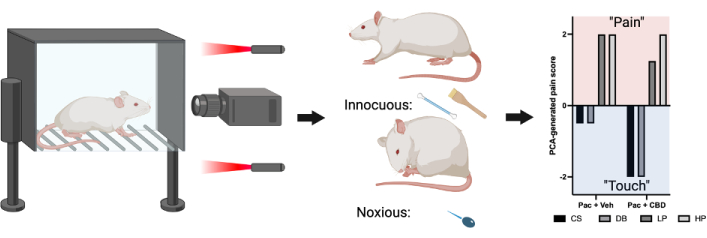
Figure 4: High-speed videography assisted analysis of nocifensive behaviors. Schematic representation of behaviors recorded and converted into a principal component assisted (PCA) pain score (left panel). Schematic representation of kinematic parameters of behaviors evoked by noxious and innocuous stimuli (right panel). Please click here to view a larger version of this figure.
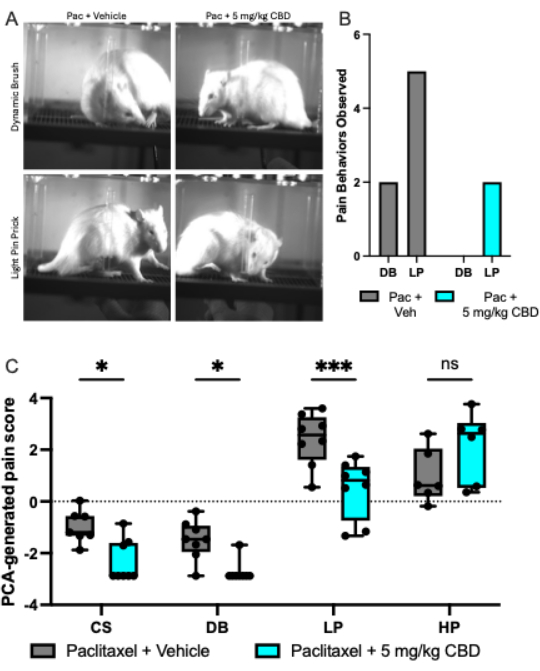
Figure 5: PCA-generated pain score analysis of response to innocuous and noxious stimuli. (A) Representative stills from videos depicting the various scored behaviors. Behavior scoring is quantitated in (B). (C) Paclitaxel-sensitized animals treated with vehicle or 5 mg/kg CBD were exposed to a series of noxious and innocuous stimuli (CS = cotton swab, DB = dynamic brushing, LP = low-pressure pin prick, HP = high-pressure pin prick). PCA scores were assigned based on behaviors recorded via high-speed videography and converted to z scores for PCA. Positive values indicate pain-like responses, and negative values indicate non-pain-like responses. Vehicle-treated animals responded with more sensitivity to innocuous stimuli CS and DB relative to the CBD-treated animals. Additionally, response to noxious stimulus LP was abated in CBD-treated animals. A Two-way ANOVA was performed to determine statistically significant differences between treatment conditions for all stimuli. n = 6-8, * indicates p< 0.05. Please click here to view a larger version of this figure.
Discussion
Loading...
$$\rightleftharpoonup{xx}$$
$$\longleftharp{xx}$$,
$$\longrightharp{xx}$$,
The rat model of chemotherapy-induced peripheral neuropathy recapitulates two of the most reported quality-of-life issues for patients receiving certain types of chemotherapy in mechanical and thermal sensitivity. With this model, relatively inexpensive and efficient methods can quantify these sensitivities via von Frey filament testing and thermal sensitivity through dry ice exposure. This method also provides an additional method for more specialized testing via high-speed videography, which can be used for more detailed and unbiased analysis than the more readily adaptable methods described above. This model is an important tool for the investigation of experimental therapeutics for CIPN, a syndrome for which new treatment options are urgently needed.
The work presented here focuses on the non-psychoactive cannabinoid CBD. This method describes the way to effectively handle and store CBD - the cannabinoids are highly nonpolar molecules and require some special considerations when preparing for experimentation. To get CBD (and other cannabinoids) in solution without precipitating, it is important to follow the protocol described here in a stepwise manner. Powder stock should be dissolved directly in ethanol, diluted with castor oil, and finally brought to volume with saline with vigorous vortexing in between each step. Trying to dissolve the powder stock in the completed vehicle will result in CBD percipitating out of the solution. Additionally, the use of glass vials for storage rather than plastic tubes is important to avoid any adhesion or loss of functionality of the solution being tested. CBD is also photolabile, so amber vials are recommended. The solution can be affected by oxidation and temperature, so these factors should be considered if longer-term storage is needed. It is preferable to make fresh stock frequently rather than once at the outset of the experiment. Proper preparation and handling of the cannabinoids to be tested is critical for these types of experiments.
This method is robust and highly reproducible at inducing paclitaxel-mediated mechanical and thermal allodynia. Paclitaxel treatment in rats causes a significant and durable sensitivity to mechanical and thermal stimuli that manifests in the paws, similar to the "stocking and glove" pattern that manifests in human patients. It is difficult to directly compare the translational potential of different CIPN models because, to date, no drugs developed specifically for CIPN have been approved for use in patients. Mice are commonly used as an alternative model for this syndrome, however, rat behavior better mimics human behavior than mice20. Previous analyses of CIPN studies conducted in Sprague-Dawley rats showed behavioral, histological, and electrophysiological changes that are in line with the human presentation of this syndrome21.
The main limitation of the techniques described here is the potential for experimental bias. This protocol offers solutions to mitigate this by having multiple experimenters perform the von Frey filament testing and thermal allodynia assessment. Videography as an extension of these studies can help reduce potential bias - videos can be scored by independent parties and can be blinded to the treatment conditions. These methods can help reduce subjective interpretations of a single experimenter's observations of animal behavior in these assays. Additional challenges include subjective differences in some rats' responses to chemotherapy. This dosing paradigm works consistently in both male and female Sprague-Dawley rats11. If inconsistencies are present in trying to reproduce this method, dosing regimens can be adjusted. Experiments should not proceed until baseline (pre-treatment) responses are relatively consistent across animals. This is especially important for establishing this as a new assay in a lab, as consistent application of the stimuli is a skill that improves with repeated efforts.
Disclosures
Loading...
$$\rightleftharpoonup{xx}$$
$$\longleftharp{xx}$$,
$$\longrightharp{xx}$$,
The authors have nothing to disclose.
Acknowledgements
Loading...
$$\rightleftharpoonup{xx}$$
$$\longleftharp{xx}$$,
$$\longrightharp{xx}$$,
The authors would like to acknowledge the Ward and Wimmer labs for their support in this project. This work was supported by the National Institutes of Health National Institute of Neurological Disorders and Stroke [Grant R42 NS120548-02].
Materials
| Name | Company | Catalog Number | Comments |
|---|---|---|---|
| Cannabidiol | Caymen Chemical | 90080 | Ann Arbor, MI |
| Chremophor | Millipore-Sigma | 238470 | St. Lous, MO |
| Ethanol | Millipore-Sigma | E7023 | St. Lous, MO |
| FastCAM Analysis software | Photon | https://photron.com, open-sourced | |
| High-speed camera | Photron | AX 50 | |
| Infrared lights | CMVision | IP65 | |
| Normal Saline | Millipore-Sigma | S0817 | St. Lous, MO |
| Paclitaxel | Temple University Hospital Pharmacy | N/A | Philadelphia, PA |
| Sprague-Dawley rats (250–300 g) | Taconic Laboratories, Cranbury, NJ |
References
Loading...
$$\rightleftharpoonup{xx}$$
$$\longleftharp{xx}$$,
$$\longrightharp{xx}$$,
- Chemotherapy-induced peripheral neuropathy. Biomed Rep. 6 (3), 267-271 (2017).">Zhang, X., Chen, W. W., Huang, W. J. Chemotherapy-induced peripheral neuropathy. Biomed Rep. 6 (3), 267-271 (2017).
- Chemotherapy-induced peripheral neuropathy: part 1-current state of knowledge and perspectives for pharmacotherapy. Pharmacol Rep. 72 (3), 486-507 (2020).">Sałat, K. Chemotherapy-induced peripheral neuropathy: part 1-current state of knowledge and perspectives for pharmacotherapy. Pharmacol Rep. 72 (3), 486-507 (2020).
- Chemotherapy-induced peripheral neuropathy: An unresolved issue. Neurología (English Edition). 25 (2), 116-131 (2010).">Velasco, R., Bruna, J. Chemotherapy-induced peripheral neuropathy: An unresolved issue. Neurología (English Edition). 25 (2), 116-131 (2010).
- Mechanisms of chemotherapy-induced peripheral neuropathy. Int J Mol Sci. 20 (6), 1451(2019).">Zajaczkowską, R., et al. Mechanisms of chemotherapy-induced peripheral neuropathy. Int J Mol Sci. 20 (6), 1451(2019).
- Cannabinoids: An effective treatment for chemotherapy-induced peripheral neurotoxicity. Neurother. 18 (4), 2324(2021).">Cavaletti, G., et al. Cannabinoids: An effective treatment for chemotherapy-induced peripheral neurotoxicity. Neurother. 18 (4), 2324(2021).
- The endocannabinoid system: A potential target for the treatment of various diseases. Int J Mol Sci. 22 (17), 9472(2021).">Lowe, H., Toyang, N., Steele, B., Bryant, J., Ngwa, W. The endocannabinoid system: A potential target for the treatment of various diseases. Int J Mol Sci. 22 (17), 9472(2021).
- Cannabidiol prevents the development of cold and mechanical allodynia in paclitaxel-treated female C57Bl6 mice. Anesth Analg. 113 (4), 947-950 (2011).">Ward, S. J., Ramirez, M. D., Neelakantan, H., Walker, E. A. Cannabidiol prevents the development of cold and mechanical allodynia in paclitaxel-treated female C57Bl6 mice. Anesth Analg. 113 (4), 947-950 (2011).
- Cannabidiol inhibits paclitaxel-induced neuropathic pain through 5-HT(1A) receptors without diminishing nervous system function or chemotherapy efficacy. Br J Pharmacol. 171 (3), 636-645 (2014).">Ward, S. J., et al. Cannabidiol inhibits paclitaxel-induced neuropathic pain through 5-HT(1A) receptors without diminishing nervous system function or chemotherapy efficacy. Br J Pharmacol. 171 (3), 636-645 (2014).
- An update on safety and side effects of cannabidiol: A review of clinical data and relevant animal studies. Cannabis Cannabinoid Res. 2 (1), 139(2017).">Iffland, K., Grotenhermen, F. An update on safety and side effects of cannabidiol: A review of clinical data and relevant animal studies. Cannabis Cannabinoid Res. 2 (1), 139(2017).
- Preclinical research in paclitaxel-induced neuropathic pain: A systematic review. Front Vet Sci. 10, 1-17 (2023).">Bacalhau, C., Costa-Pereira, J. T., Tavares, I. Preclinical research in paclitaxel-induced neuropathic pain: A systematic review. Front Vet Sci. 10, 1-17 (2023).
- KLS-13019, a novel structural analogue of cannabidiol (CBD) and GPR55 receptor antagonist, prevents and reverses chemotherapy-induced peripheral neuropathy (CIPN) in rats. J Pharmacol Exp Ther. 391 (2), 231-240 (2024).">Ippolito, M. J., Hayduk, S. A., Kinney, W., Brenneman, D. E., Ward, S. J. KLS-13019, a novel structural analogue of cannabidiol (CBD) and GPR55 receptor antagonist, prevents and reverses chemotherapy-induced peripheral neuropathy (CIPN) in rats. J Pharmacol Exp Ther. 391 (2), 231-240 (2024).
- A novel behavioral assay for measuring cold sensation in mice. PLoS ONE. 7 (6), 1-08 (2012).">Brenner, D. S., Golden, J. P., Gereau, R. W. IV A novel behavioral assay for measuring cold sensation in mice. PLoS ONE. 7 (6), 1-08 (2012).
- Paternal morphine exposure in rats reduces social play in adolescent male progeny without affecting drug-taking behavior in juvenile males or female offspring. Mol Cell Neurosci. 126, 103877(2023).">Zeid, D., et al. Paternal morphine exposure in rats reduces social play in adolescent male progeny without affecting drug-taking behavior in juvenile males or female offspring. Mol Cell Neurosci. 126, 103877(2023).
- Methods used to evaluate pain behaviors in rodents. Front Mol Neurosci. 10 (284), 1-17 (2017).">Deuis, J. R., Dvorakova, L. S., Vetter, I. Methods used to evaluate pain behaviors in rodents. Front Mol Neurosci. 10 (284), 1-17 (2017).
- Using high-speed videography for objective and reproducible pain measurement on a mouse pain scale. STAR Protoc. 2 (1), 1-16 (2021).">Burdge, J., Fried, N. T., Abdus-Saboor, I. Using high-speed videography for objective and reproducible pain measurement on a mouse pain scale. STAR Protoc. 2 (1), 1-16 (2021).
- Chronic paternal morphine exposure increases sensitivity to morphine-derived pain relief in male progeny. Sci Adv. 8 (7), 1-17 (2022).">Toussaint, A. B., et al. Chronic paternal morphine exposure increases sensitivity to morphine-derived pain relief in male progeny. Sci Adv. 8 (7), 1-17 (2022).
- Development of a mouse pain scale using sub-second behavioral mapping and statistical modeling. Cell Rep. 28 (6), 1-33 (2019).">Abdus-Saboor, I., et al. Development of a mouse pain scale using sub-second behavioral mapping and statistical modeling. Cell Rep. 28 (6), 1-33 (2019).
- Sex-specific stress and biobehavioral responses to human experimenters in rats. Front Neurosci. 16, 1-14 (2022).">Faraji, J., et al. Sex-specific stress and biobehavioral responses to human experimenters in rats. Front Neurosci. 16, 1-14 (2022).
- Getting a handle on rat familiarization: The impact of handling protocols on classic tests of stress in Rattus norvegicus. Lab Anim. 57 (3), 259-269 (2023).">Bigelow, L. J., Pope, E. K., MacDonald, D. S., Rock, J. E., Bernard, P. B. Getting a handle on rat familiarization: The impact of handling protocols on classic tests of stress in Rattus norvegicus. Lab Anim. 57 (3), 259-269 (2023).
- The mighty mouse: The impact of rodents on advances in biomedical research. Missouri Med. 110 (3), 207-211 (2013).">Bryda, E. C. The mighty mouse: The impact of rodents on advances in biomedical research. Missouri Med. 110 (3), 207-211 (2013).
- A systematic summary and comparison of animal models for chemotherapy induced (peripheral) neuropathy (CIPN). PLoS One. 14 (8), 1-17 (2019).">Gadgil, S., et al. A systematic summary and comparison of animal models for chemotherapy induced (peripheral) neuropathy (CIPN). PLoS One. 14 (8), 1-17 (2019).
Reprints and Permissions
Request permission to reuse the text or figures of this JoVE article
Request Permission