This protocol presents a fluorescence-guided laparoscopic approach for duodenum-preserving pancreatic head resection using preoperative indocyanine green to clearly visualize biliary anatomy, aiming to reduce common bile duct injury and enhance the safety and reproducibility of the procedure.
Method Article
Application of Indocyanine Green Fluorescence Imaging Technology in Laparoscopic Duodenum-Preserving Pancreatic Head Resection
In This Article
Summary
Abstract
This protocol aims to demonstrate the integration of indocyanine green (ICG) fluorescence imaging into laparoscopic duodenum-preserving pancreatic head resection (LDPPHR) to enable real-time visualization of the biliary tree and minimize the risk of common bile duct (CBD) injury. Adult patients with benign or low-grade malignant tumors of the pancreatic head are selected. Preoperatively, 5 mg of ICG is administered intravenously to achieve optimal hepatic uptake and biliary excretion. During LDPPHR, a near-infrared camera system is employed to detect fluorescence and delineate the CBD and its anatomical relationships. Trocars are placed to optimize instrument access, and stepwise dissection exposes the pancreas and biliary tract. Fluorescence imaging guides precise skeletonization and protection of the CBD during pancreatic head separation. The pancreatic neck is divided using ultrasonic energy; reconstruction is performed via duct-to-mucosa pancreaticojejunostomy. Intraoperative ultrasound is utilized as an adjunct to confirm anatomical margins and vascular proximity. Postoperative management includes drain placement and monitoring guided by amylase measurements. In a series of six patients, this protocol enabled accurate biliary identification, prevented bile duct injury, and was associated with favorable outcomes. This fluorescence-guided technique enhances surgical safety and may facilitate the adoption of organ-preserving strategies in selected pancreatic head lesions.
Introduction
Benign and low-grade malignant tumors of the pancreas generally have a favorable prognosis and primarily include serous cystic neoplasms (SCN), mucinous cystic neoplasms (MCN), neuroendocrine tumors, solid pseudopapillary neoplasms (SPN), and intraductal papillary mucinous neoplasms (IPMN). Clinically, SCN often lacks specific symptoms and is usually discovered incidentally during routine imaging examinations1,2. Some patients may experience abdominal discomfort, bloating, or jaundice. Epidemiological data indicate that SCN accounts for approximately 25% of pancreatic cystic tumors and predominantly occurs in middle-aged and elderly women. In recent years, its incidence has shown an upward trend, possibly related to advancements in imaging technologies and increased public health awareness. Although SCN has low malignant potential, its growth can compress surrounding tissues and organs, leading to a series of clinical symptoms and increasing the disease burden on patients. Current treatment strategies mainly include close monitoring and surgical resection. For asymptomatic SCN patients with small tumor diameters and no risk of malignancy, regular follow-up observations can be chosen. However, for cases with significant symptoms, tumor enlargement, or suspected malignancy, surgical resection is the preferred treatment method.
Laparoscopic duodenum-preserving pancreatic head resection3,4,5 (LDPPHR), as an advanced minimally invasive surgical technique, has gained widespread attention in recent years for treating benign and low-grade malignant diseases of the pancreatic head. The core concept of LDPPHR is to excise the lesion in the pancreatic head through minimally invasive surgery while preserving the duodenum and common bile duct, thus maximizing the preservation of the pancreas' endocrine and exocrine functions. Compared to the classical pancreaticoduodenectomy (PD), LDPPHR avoids excessive removal of pancreatic tissue and surrounding organs, reduces interference with the anatomical structure of the digestive tract, lowers the incidence of postoperative complications, and improves patients' postoperative quality of life6. However, due to the complex anatomical structure of the pancreas and the close proximity of the pancreatic head to vital blood vessels and the biliary system, LDPPHR faces certain challenges in its application, especially regarding the exposure and protection of the intrapancreatic segment of the common bile duct. Dissecting the intrapancreatic common bile duct is prone to bile duct injuries, with a higher incidence of postoperative bile leakage and biliary stricture, which restricts the further promotion of LDPPHR.
Indocyanine green7,8 (ICG) is a safe, non-toxic near-infrared fluorescent dye with excellent tissue penetration and fluorescence properties. ICG is an amphiphilic iodide dye with a rapid hepatic clearance rate of 18%-24% per minute9. After intravenous injection, ICG can enter the extrahepatic bile ducts within two minutes, achieving visualization of the biliary system, and can be injected multiple times during surgery. Indocyanine green (ICG) fluorescence imaging has emerged as a promising intraoperative tool in hepatopancreatobiliary surgery, offering real-time delineation of biliary and vascular anatomy10,11. Compared to conventional approaches relying solely on visual anatomical landmarks or intraoperative ultrasound, ICG fluorescence provides enhanced visualization and precision, with recent studies demonstrating a marked reduction in bile duct injury rates. In addition, fluorescence imaging requires no intraoperative radiation, is easily repeatable, and can be integrated into standard high-definition laparoscopic platforms.
The primary objective of this protocol is to facilitate oncologically safe yet organ-preserving resection of appropriate pancreatic head lesions using laparoscopic duodenum-preserving pancreatic head resection (LDPPHR) integrated with indocyanine green (ICG) near-infrared fluorescence imaging (Figure 1). By preserving both the duodenum and the native biliary anatomy, LDPPHR aims to maintain gastrointestinal continuity, safeguard endocrine and exocrine pancreatic function, and significantly reduce postoperative morbidity when compared to the conventional pancreaticoduodenectomy. This protocol is most appropriate for adults presenting with benign or low-grade malignant tumors (such as branch-duct intraductal papillary mucinous neoplasms or neuroendocrine tumors less than 3 cm) confined to the pancreatic head, with no vascular or duodenal invasion on preoperative imaging. The described technique is best adopted in high-volume centers with advanced laparoscopic experience and access to fluorescence imaging systems.
Protocol
The surgery was approved by the First Affiliated Hospital of Kunming Medical University, and informed consent was obtained from all patients for both participation and publication.
1. Patient selection
- Include patients diagnosed with benign or low-grade malignant tumors, with a particular focus on identifying serous cystic neoplasms (SCNs).
- Review all preoperative imaging studies (Figure 2A-I), such as contrast-enhanced CT or MRI, and confirm that the tumor is localized in the pancreatic head and meets all criteria for surgical resection, including size, border, and anatomical relations.
- Examine imaging and intraoperative findings to exclude patients with major vascular invasion, such as involvement of the portal vein or superior mesenteric vein, or invasion of surrounding organs. Select patients who are thus suitable for laparoscopic duodenum-preserving pancreatic head resection (LDPPHR).
- Conduct a thorough preoperative evaluation, including physical examination, laboratory tests, and cardiopulmonary assessment, to confirm that the patient's overall health status is satisfactory and that the patient can tolerate general anesthesia and laparoscopic surgery.
- Obtain and document written informed consent, ensuring patients understand the surgical procedure, risks, possible complications, and agree to surgery and the use of surgical images/videos for research.
2. Preoperative preparation
- Prepare indocyanine green (ICG) solution according to the manufacturer's recommendations. Calculate the exact dose based on patient weight (0.5 mg/kg).
- Inject ICG intravenously via a peripheral vein exactly 24 h before surgery to ensure optimal uptake for intraoperative fluorescence navigation.
- Monitor the patient for any adverse reactions after ICG injection, and record the injection time and dose in the patient's medical record.
- Ensure that all necessary equipment, including the fluorescence laparoscopic system used, with excitation wavelength at 780-790 nm, collection wavelength at 800-900 nm, and camera distance of 3-150 mm), is functional and available before commencing surgery.
3. Positioning of the patient and distribution of trocar
- Place the patient in the supine position with both legs apart. Initiate analgesia with a slow intravenous bolus of remifentanil (0.5-1.0 µg/kg), followed by induction of hypnosis with intravenous propofol (1.5-2.0 mg/kg). Confirm successful mask ventilation, then achieve neuromuscular blockade with intravenous rocuronium (0.6-0.9 mg/kg). Following tracheal intubation, maintain anesthesia with continuous infusions of propofol (75-150 µg/kg/min) and remifentanil (0.05-0.2 µg/kg/min); apply appropriate patient monitors and warming blankets.
- Disinfect the abdominal skin using povidone-iodine solution, beginning at the umbilicus and spiraling outward. Drape the patient in a sterile manner.
- Make a 1.5 cm transverse skin incision at the lower edge of the umbilicus. Insert a Veress needle to create a CO2 pneumoperitoneum, and set intra-abdominal pressure at 14 mmHg. Replace the needle with a 12 mm trocar for the observation port and insert a laparoscope to visualize the abdominal cavity.
- Identify the intersection of the left and right midclavicular lines with a horizontal plane 2 cm above the umbilicus. Make two small incisions at these points. Insert a 12 mm trocar on the right and a 5 mm trocar on the left under direct vision.
- Locate the left and right anterior axillary lines, and mark points two fingerbreadths below the costal margin. Make incisions and place a 5 mm trocar at each site.
- Position the surgeon to the right side of the patient, the first assistant on the left side, and the camera assistant between the patient's legs for optimal access and visualization.
4. Pancreatic head dissociation
- Exposure of the pancreatic head
- Open the hepato-gastric ligament using a laparoscopic ultrasonic scalpel. Suspend the left lateral lobe of the liver using a purse-string suture.
- Incise the gastrocolic ligament near the colonic side using an energy device. Wrap a small piece of sterile gauze around the stomach to create a sling, then elevate the stomach and secure the sling to the upper abdominal wall with a 2-0 suture to fully expose the pancreas.
- Clear the tissue between the right end of the transverse colon and the duodenum to expose the descending and horizontal portions of the duodenum and the anterior surface of the pancreas.
- Dissection of the gastroduodenal artery (GDA)
- Identify the superior border of the pylorus. Dissect carefully to expose the common hepatic artery, proper hepatic artery, and gastroduodenal artery (GDA). Use rubber tubing to suspend these vessels for better visualization.
- Trace the GDA distally, and dissect to reveal both anterior and posterior branches supplying the pancreatic head and duodenum. Transect branches of the anterior superior pancreaticoduodenal artery (ASPDA) to the pancreas, using an ultrasonic scalpel for hemostasis, while preserving the posterior superior pancreaticoduodenal artery (PSPDA).
- Elevate the transverse colon and dissect the anterior layer of the transverse mesocolon. Ligate and divide the gastrocolic trunk (Henle's trunk) and its tributaries with hemoclips. Retract tissue inferiorly and expose the main trunk of the superior mesenteric vein (SMV) at the lower border of the pancreatic neck.
5. Pancreatic head resection
- Transection of the pancreatic neck
- Dissect the loose connective tissue enveloping the SMV. Individually identify and divide the small pancreatic branches draining into the SMV using appropriate energy devices or clips.
- Create a posterior tunnel through the pancreatic neck, anterior to the SMV, using blunt dissection and right-angle forceps. Pass a silk suture through the tunnel and use it to lift and stabilize the distal pancreas.
- Apply intraoperative ultrasound to the pancreatic neck. Verify that surgical margins are negative before proceeding. Clamp the neck with atraumatic forceps and transect the pancreatic neck with an ultrasonic scalpel under direct vision.
- Transect the main pancreatic duct sharply using laparoscopic scissors. Confirm the presence of clear pancreatic fluid emerging from the duct.
- Handling of the portal vein (PV)
- Gently lift the pancreatic head and uncinate process from left to right. Divide all small branches of the portal vein supplying the pancreas, using ligatures or clips, while preserving the main trunk of the inferior pancreaticoduodenal vessels.
- Exposure of the common bile duct (CBD)
- Flip the uncinate process and pancreatic head to the right and dissect the retro-pancreatic fascial plane with an ultrasonic scalpel set to low or medium power. Stay close to the pancreatic parenchyma to avoid injury to the superior mesenteric vein and common bile duct. Identify and preserve small vascular branches and expose the common bile duct near the papilla.
- Activate the fluorescence laparoscopic system to clearly visualize and identify the CBD. Carefully dissect and protect the bile duct throughout the procedure.
- Closure of the main pancreatic duct
- Separate the pancreatic head from the duodenal loop. Transect the main pancreatic duct at the pancreatobiliary junction and close it with interrupted slow-absorbing sutures to prevent pancreatic leakage.
- Place the resected pancreatic head specimen into a sterile retrieval bag and extract it through an extended incision at the port site as needed.
- Surgical field examination
- Irrigate the surgical field with warm sterile saline. Use suction to aspirate fluid and ensure a clean operative field.
- Submit frozen-section samples as needed to confirm negative surgical margins.
- Examine the blood supply to the bile duct and duodenal wall, as well as intestinal peristalsis. Test intestinal peristalsis by gently probing with laparoscopic forceps. Use fluorescence laparoscopy to check for bile leakage.
6. Alimentary tract reconstruction
- Identify the jejunum and measure 20 cm distal to the ligament of Treitz. Transect the jejunum at this location using a laparoscopic linear stapler.
- Elevate the distal limb of the jejunum through a window in the transverse mesocolon, bringing it up to the pancreatic stump for subsequent pancreaticojejunostomy.
- Insert a silicone stent into the cut end of the main pancreatic duct to guide drainage and support the anastomosis.
- Continuously suture the posterior aspect of the pancreas and the seromuscular layer of the small bowel using a slow-absorbing suture. Under direct visualization, perform interrupted suturing of the posterior mucosal layer of the pancreaticojejunostomy with slow-absorbing sutures. Repeat this technique for the anterior mucosal layer.
- Continuously suture the anterior aspect of the pancreas and the seromuscular layer of the small bowel with a slow-absorbing suture. Finally, flush the anastomosis and carefully check for airtightness and absence of leakage.
- Create a side-to-side jejunojejunostomy ~35 cm from the pancreaticojejunostomy site by aligning the bowel and using a laparoscopic linear stapler. Inspect the staple line and reinforce it with additional sutures if necessary.
7. Drain placement
- Irrigate the entire abdominal cavity thoroughly with warm saline, and aspirate residual fluid using suction.
- Insert two silicone abdominal drains; position one anterior and one posterior to the pancreaticojejunostomy site. Take them out through separate stab incisions, and suture the skin around the tubes to secure them.
- Remove all trocars under direct visualization. Close fascial defects ≥ 10 mm with absorbable sutures. Close all skin incisions with non-absorbable sutures or skin staples, and apply sterile dressings.
8. Postoperative treatment
- Administer intravenous broad-spectrum antibiotics prophylactically to prevent infection according to institutional protocol.
- Administer medications such as somatostatin analogs intravenously or subcutaneously to suppress pancreatic enzyme secretion and promote hemostasis as indicated (e.g., somatostatin, continuous intravenous infusion at 0.25 mg/h via a syringe pump).
- Begin enteral feeding after recovery of intestinal function (gastrointestinal motility), usually within 72 h. If enteral feeding is not possible, initiate total parenteral nutrition to maintain caloric and electrolyte requirements.
- Postoperative drain management: Monitor daily drain amylase levels and output volume. Remove the drain if the drain amylase level on postoperative day 3 is less than 3x the upper normal serum amylase and the output volume is less than 50 mL/day, with no signs of infection. If biochemical leakage occurs, continue conservative management and delay drain removal until the leakage resolves. Closely observe for signs of infection or bleeding, and intervene promptly if necessary.
- Perform daily laboratory evaluation, including white blood cell count, liver and renal function, serum amylase and lipase, and inflammatory markers. Adjust medication and nutritional support as needed based on patient progress.
Results
From January 2022 to January 2024, a total of six patients were included in the study, with a follow-up period of 6 months.
Intraoperative conditions
The surgery was successfully completed in all patients, with an operative time of 370-560 min and an intraoperative blood loss of 150-350 mL (Table 1). During pancreatic head resection, ICG fluorescence imaging can clearly help visualize the common bile duct (Figure 3A, B). After resection, ICG fluorescence imaging can be used to detect bile leakage (Figure 3C-F).
Postoperative status
All patients recovered well and were able to ambulate on postoperative days 1-3. The nasogastric tube was removed on postoperative days 3-7. Postoperative blood glucose levels remained within 10 mmol/L in all patients (Table 1).
No patients experienced bile leakage, abdominal infection, anastomotic bleeding or stricture, or duodenal perforation. Five patients developed biochemical leakage postoperatively. The drainage tubes were removed on postoperative days 5-7, and the patients were discharged on postoperative days 5-8 (Table 1).
Histopathological results
The postoperative pathological examination revealed that five patients were diagnosed with serous cystic neoplasm (SCN) (Figure 4A), and one patient was diagnosed with intraductal papillary mucinous neoplasm (IPMN) (Figure 4B).
Follow-up status
All patients were followed up for 6 months postoperatively (Figure 2J-L). The general condition was good, with no tumor recurrence, chronic diarrhea, diabetes, dyspepsia, gastrointestinal leakage, or bile duct stricture. The patient maintained a good quality of life.
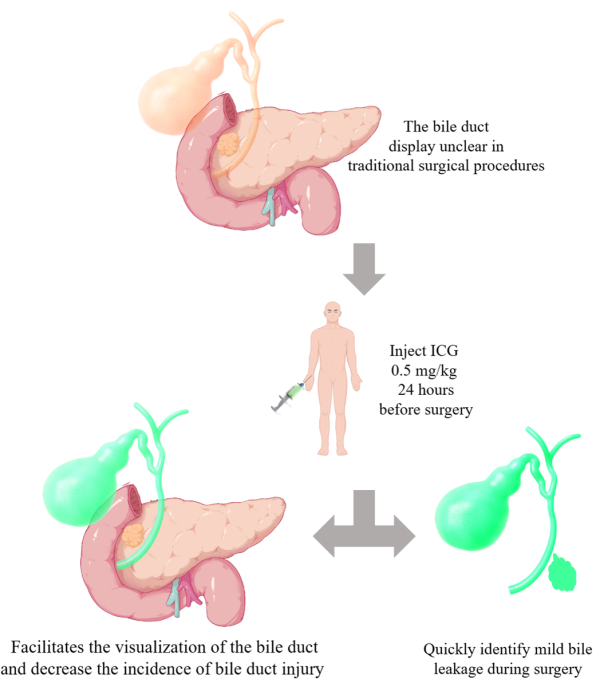
Figure 1: Schematic diagram of ICG fluorescence imaging technology in laparoscopic duodenum-preserving pancreatic head resection. Abbreviations: ICG = indocyanine green. Please click here to view a larger version of this figure.
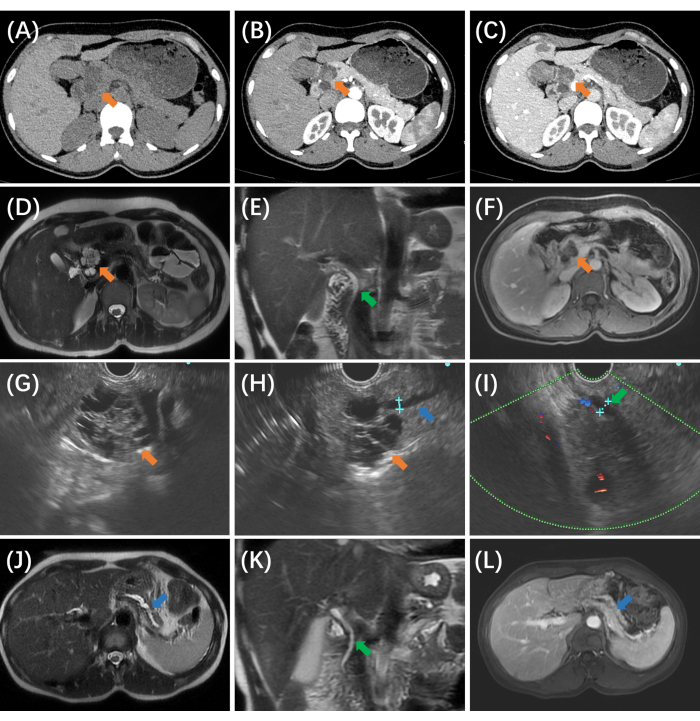
Figure 2: Pre and postoperative images. (A-C) Preoperative CT images, (A) plain scan, (B) arterial phase, (C) venous phase; (D-F) Preoperative MRI images, (D) T2, (E) MRCP, (F) T1 enhancement; (G-I) Preoperative EUS images, (G) tumor, (H) relationship of pancreatic duct and tumor, (I) bile duct; (J-L) Postoperative MRI images, (J) T2, (K) MRCP, (L) T1 enhancement. Note: yellow arrow: tumor; green arrow: bile duct; blue arrow: pancreatic duct. Abbreviations: CT = computed tomography; MRI = magnetic resonance imaging; MRCP = magnetic resonance cholangiopancreatography; EUS = endoscopic ultrasound. Please click here to view a larger version of this figure.
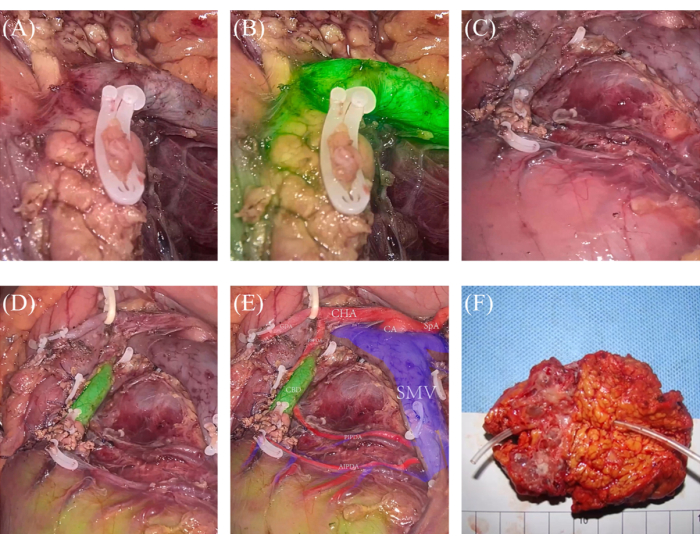
Figure 3: Intraoperative conditions. (A) CBD during pancreatic head resection; (B) CBD with ICG fluorescence imaging during pancreatic head resection; (C) CBD after pancreatic head resection; (D) CBD with ICG fluorescence imaging after pancreatic head resection; (E) The vascular course in the surgical field; (F) Resected tumor tissue. Abbreviations: CBD = common bile duct; ICG = indocyanine green. Please click here to view a larger version of this figure.
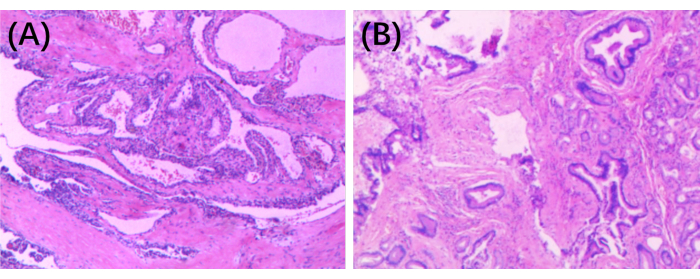
Figure 4: Histopathological results. (A) SCN; (B) IPMN. Abbreviations: SCN = serous cystic neoplasm; IPMN = intraductal papillary mucinous neoplasm. Please click here to view a larger version of this figure.
| Case | Operative time (min) | Intraoperative blood loss (mL) | Ambulate (day) | Nasogastric tube removed (day) | Drainage tube removed (day) | Postoperative hospital stay (day) | Pathological results |
| 1 | 420 | 200 | 2 | 3 | 5 | 6 | SCN |
| 2 | 480 | 300 | 1 | 5 | 5 | 6 | SCN |
| 3 | 560 | 350 | 3 | 7 | 7 | 8 | SCN |
| 4 | 370 | 150 | 3 | 5 | 5 | 5 | SCN |
| 5 | 390 | 200 | 1 | 5 | 5 | 5 | IPMN |
| 6 | 550 | 300 | 3 | 5 | 6 | 7 | SCN |
Table 1: Intraoperative and postoperative conditions of patients who underwent LDPPHR with ICG.
Discussion
In this study, we outlined the steps involved in applying Indocyanine Green (ICG) fluorescence imaging technology to laparoscopic duodenum-preserving pancreatic head resection (LDPPHR), with a focus on its role in intraoperative anatomical identification and the prevention of postoperative complications. Through the preoperative intravenous injection of an appropriate dose of ICG, the biliary system became clearly visible under near-infrared fluorescence imaging during the procedure. This technique effectively enabled us to accurately locate and protect the pancreatic segment of the common bile duct, reducing the risk of bile duct injury caused by the complexity of the anatomical structures, and enhancing the precision and safety of the surgery.
Benign or low-grade malignant tumors of the pancreatic head12,13 are the primary surgical indications for laparoscopic duodenum-preserving pancreatic head resection (LDPPHR), including serous cystic tumors, mucinous cystadenomas, intraductal papillary mucinous neoplasms, solid pseudopapillary tumors, and neuroendocrine tumors. Both LDPPHR and laparoscopic pancreaticoduodenectomy (LPD) can achieve therapeutic goals for these conditions. However, LDPPHR preserves the continuity of the digestive tract while resecting the pathological tissue, resulting in significantly less surgical trauma compared to LPD, fewer complications, and improved patient quality of life. Preoperative qualitative diagnosis of the lesion is a prerequisite for performing this surgery. Although various diagnostic modalities are currently available for the localization and characterization of pancreatic head lesions, achieving an accurate qualitative diagnosis remains challenging. Therefore, intraoperative rapid frozen-section pathological examination becomes particularly important. In this study, surgical indications were met for the patient. Preoperative assessment of the lesion type and nature was conducted by integrating the patient's medical history, physical examination, laboratory tests, and imaging findings, with an initial consideration of a benign lesion. After specimen resection, intraoperative rapid frozen-section pathological examination suggested a high likelihood of a benign pancreatic head lesion, meeting the requirements for LDPPHR.
The success of LDPPHR lies in preserving the blood supply to the duodenum and the common bile duct (CBD)14. The duodenum and pancreatic head share a common blood supply and venous return, primarily through the anterior and posterior pancreaticoduodenal arterial/vein arcades, which include the posterior superior pancreaticoduodenal artery/vein (PSPDA/V), anterior superior pancreaticoduodenal artery/vein (ASPDA/V), anterior inferior pancreaticoduodenal artery/vein (AIPDA/V), and posterior inferior pancreaticoduodenal artery/vein (PIPDA/V). The classic Beger procedure15 preserves some pancreatic tissue along the duodenal margin to maintain the integrity of the anterior and posterior pancreaticoduodenal arterial arcades, ensuring adequate blood supply to the duodenum and distal CBD.
In fact, the posterior pancreaticoduodenal arterial arcade and its branches primarily supply the distal CBD and the ampulla of Vater. Preservation of this arcade is crucial for preventing postoperative ischemia-related complications such as duodenal necrosis and CBD stricture. Since these arteries primarily originate from the dorsal side of the pancreas and course posterior to the CBD, they are relatively easier to preserve. On the other hand, dividing the ASPDA facilitates the mobilization and resection of pancreatic tissue in the head region. Therefore, Takada et al.16 proposed that the anterior pancreaticoduodenal arterial arcade can be completely or partially resected as long as the posterior pancreaticoduodenal arterial arcade is preserved to ensure sufficient blood supply to the duodenum and the pancreatic segment of the bile duct. In this study, we transected the ASPDA while preserving the PSPDA, AIPDA, and PIPDA. Additionally, during the dissection of the pancreatic segment of the CBD, we minimized the use of the ultrasonic scalpel to avoid damaging the blood supply around the bile duct.
Another critical aspect of LDPPHR is the anatomical exposure of the pancreatic segment of the common bile duct (CBD)17. This segment of the bile duct is surrounded by pancreatic tissue, making it challenging to locate and expose during laparoscopic surgery due to the lack of tactile feedback for identifying the bile duct. This difficulty often leads to intraoperative conversions and a higher incidence of postoperative biliary complications. Intraoperative cholangiography18 via the cystic duct has been attempted to address this issue, but the procedure is complex, involves significant radiation exposure, and is time-consuming. To better expose and protect the CBD, Ishizawa19,20 introduced indocyanine green (ICG) fluorescence imaging for intraoperative bile duct visualization. This technique enables real-time identification of biliary anatomy, reducing the risk of bile duct injury. ICG imaging technology allows for real-time intraoperative tracking and visualization of the CBD, helping to prevent bile duct injury and reducing the incidence of postoperative bile leakage and bile duct stricture. Additionally, ICG fluorescence imaging can detect occult bile leaks that are not visible to the naked eye during surgery, allowing the surgeon to repair them promptly. Factors that influence the quality of ICG fluorescence imaging include the dose and timing of ICG injection. In our study, patients undergoing LDPPHR with ICG fluorescence imaging received a preoperative peripheral intravenous injection of 0.5 mg/kg ICG 24 h prior to surgery. The quality of intraoperative fluorescence imaging was generally sufficient to meet surgical requirements.
In this study,the precise application of ICG fluorescence imaging in LDPPHR is pivotal to optimizing intraoperative anatomical identification and safety. Key steps include preoperative intravenous administration of ICG at a dose of 0.5 mg/kg 24 h before surgery, which ensures clear fluorescence contrast in the biliary tract10,17,21. During resection of the pancreatic head, near-infrared (NIR) fluorescence imaging reliably delineates the common bile duct (CBD), facilitating its exposure and protection, particularly for the intrapancreatic segment. Another essential step is meticulous vascular preservation: namely, preserving the posterior superior pancreaticoduodenal artery (PSPDA), anterior inferior pancreaticoduodenal artery (AIPDA), and posterior inferior pancreaticoduodenal artery (PIPDA), while dividing the anterior superior pancreaticoduodenal artery (ASPDA) to facilitate mobilization. These measures collectively minimize intraoperative bile duct injury, ischemia, and anatomical disturbance.
Inadequate biliary visualization may result from suboptimal ICG use or imaging parameters; remedies include ICG re-injection, camera adjustment, or gentle dissection. Suspected duodenal ischemia requires assessment of the pancreaticoduodenal arcades; if compromised, limit resection or switch to another procedure to prevent ischemic complications. Minimize energy device use near the CBD. If injury occurs, repair immediately or insert a T-tube or consider alternative surgical approaches if unresolve22,23.
Integration of ICG fluorescence imaging in LDPPHR confers significant advantages over conventional techniques, including reduced surgical trauma, preservation of gastrointestinal continuity, and superior postoperative recovery compared to LPD or traditional pancreaticoduodenectomy. Real-time biliary mapping with ICG surpasses intraoperative cholangiography by offering immediate, radiation-free visualization, and facilitates the detection and repair of occult bile leaks, potentially reducing postoperative biliary complications and strictures24,25. Looking ahead, combining ICG fluorescence with advanced imaging modalities -- such as 3D navigation or intraoperative ultrasound -- could overcome current penetration limitations and expand its use to more complex cases, anatomical variations, and select malignancies. Furthermore, real-time assessment of tissue perfusion may help prevent ischemic complications, underscoring the promising future directions of this technique.
Despite improving CBD identification, ICG fluorescence imaging has inherent constraints. Its limited tissue penetration (typically a few millimeters) impedes visualization in obese patients or those with significant inflammation26. Hepatic background fluorescence may obscure anatomical details, especially in complex cases. Our study is limited to benign and low-grade malignant pancreatic tumors; its efficacy has not been confirmed in cases of advanced tumors or anatomical alterations.
In conclusion, LDPPHR preserves the integrity and continuity of the digestive tract, maintains the normal physiological function of organs, and improves the long-term quality of life for patients with benign or low-grade malignant tumors of the pancreatic head. The application of ICG fluorescence imaging facilitates the visualization of the pancreatic segment of the common bile duct, reduces the complexity of the surgical procedure, and holds the potential to decrease the incidence of postoperative complications such as bile duct stricture and bile leakage. This technique demonstrates significant clinical value.
Disclosures
The authors have no conflicts of interest to declare.
Acknowledgements
The authors acknowledge the entire surgical and nursing team of the Department of Hepatobiliary Surgery at the First Affiliated Hospital of Kunming Medical University for their support and assistance. The authors also extend their gratitude to the anesthesiology team of the First Affiliated Hospital of Kunming Medical University for their support and assistance, as well as to the operating room staff for providing photographic support.
Materials
| Name | Company | Catalog Number | Comments |
|---|---|---|---|
| 4K fluorescence laparoscopic camera system | Healnoc, Zhejiang, China | ECS-F400 | Near-infrared fluorescence imaging (used with ICG) |
| Absorb suture (4-0 PDS PLUS Pudis) | Johnson & Johnson, New Jersey, USA | PDP771D | Pancreaticojejunostomy |
| Clip applier | Kang Ji, Zhejiang, China | 101.113B | Application of polymer clips for tissue/vascular ligation |
| CO2 Insufflator | Karl Storz, Thuringia, Germany | UI400 | CO2 insufflation to establish pneumoperitoneum |
| Indocyanine green (ICG) | Dandong Yichuang, Liaoning, China | Approval No. (China): H20055881 | Fluorescence dye to visualize biliary anatomy |
| Intraoperative ultrasound system | BK medical, Copenhagen, Denmark | BK5000 | Intraoperative delineation of tumor margins |
| Laparoscopic linear stapler | Medtronic, Dublin, Ireland | Endo GIA 45 | Used for jejunojejunostomy |
| Laparoscopic needle holder | Karl Storz, Thuringia, Germany | 26173KL | For intraoperative suturing |
| Laparoscopic ultrasonic scalpel | Ethicon, Ohio, USA | HARH36 | Ultrasonic energy device for dissection and hemostasis |
| Polymer ligating clips | Kang Ji, Zhejiang, China | 103Y.301 | For use with clip applier |
| Silicone abdominal drains | Diall, Zhengzhou, China | 52-3522 | Abdominal drainage |
| Silicone stent | Nantong Sanli, Jiangsu, China | FQ-type | Pancreatic duct stent/splint for pancreatoenteric anastomosis |
| Trocar, 12 mm | Kang Ji, Zhejiang, China | 101Y.307 | Laparoscopic instrument ports (12 mm) |
| Troca, 5 mm | Kang Ji, Zhejiang, China | 101Y.302 | Laparoscopic instrument ports (5 mm) |
| Ultrasound transducer (curvilinear) | BK medical, Copenhagen, Denmark | I12C4f (9066) 4 | Used with BK5000; laparoscopic/curvilinear probe |
References
- Dietrich, C. F., et al. Serous pancreatic neoplasia, data and review. World J Gastroenterol. 23 (30), 5567-5578 (2017).
- Kim, H. S., Jang, J. Y. Management algorithms for pancreatic cystic neoplasms. Arch Pathol Lab Med. 146 (3), 322-329 (2022).
- Boggi, U. Laparoscopic duodenum-preserving total pancreatic head resection for pancreatic tumors: the difficult balance among overtreatment, ideal treatment, and undertreatment. Langenbecks Arch Surg. 407 (8), 3859-3861 (2022).
- Cao, J., et al. Laparoscopic duodenum-preserving total pancreatic head resection: a novel surgical approach for benign or low-grade malignant tumors. Surg Endosc. 33 (2), 633-638 (2019).
- Xia, Z., et al. Short-term clinical outcomes of laparoscopic duodenum-preserving pancreatic head resection for the management of pancreatic-head cystic neoplasms. BMC Surg. 23 (1), 104(2023).
- Chen, X., Chen, W., Zhang, Y., An, Y., Zhang, X. Short-term outcomes of laparoscopic duodenum-preserving total pancreatic head resection compared with laparoscopic pancreaticoduodenectomy for the management of pancreatic-head benign or low-grade malignant lesions. Med Sci Monit. 26, e927248(2020).
- Reinhart, M. B., Huntington, C. R., Blair, L. J., Heniford, B. T., Augenstein, V. A. Indocyanine green: historical context, current applications, and future considerations. Surg Innov. 23 (2), 166-175 (2016).
- Cassese, G., Troisi, R. I. Indocyanine green applications in hepato-biliary surgery. Minerva Surg. 76 (3), 199-201 (2021).
- Salehi, O., Kazakova, V., Vega, E. A., Conrad, C. Indocyanine green staining for intraoperative perfusion assessment. Minerva Surg. 76 (3), 220-228 (2021).
- Lu, C., et al. Laparoscopic duodenum-preserving pancreatic head resection with real-time indocyanine green guidance of different dosage and timing: enhanced safety with visualized biliary duct and its long-term metabolic morbidity. Langenbecks Arch Surg. 407 (7), 2823-2832 (2022).
- Zhang, Y., Zhang, J., Jiang, K., Wu, W. Indocyanine green real-time-guided laparoscopic duodenum-preserving pancreatic head resection. J Minim Access Surg. 18 (4), 632-634 (2022).
- Asano, Y., et al. Clinical outcomes of organ-preserving pancreatectomy for benign or low-grade malignant pancreatic tumors: a multicenter nationwide survey in Japan. J Hepatobiliary Pancreat Sci. 29 (8), 898-910 (2022).
- Qin, H., et al. Duodenum-preserving pancreas head resection in the treatment of pediatric benign and low-grade malignant pancreatic tumors. HPB (Oxford). 22 (2), 306-311 (2020).
- Liu, X., et al. How to implement minimally invasive duodenum-preserving total pancreatic head resection for patients with pancreatic head lesions: a retrospective study. Medicine (Baltimore). 102 (31), e34608(2023).
- Beger, H. G., Poch, B. High incidence of redo surgery after Frey procedure for chronic pancreatitis in the long-term follow-up. J Gastrointest Surg. 20 (5), 1076-1077 (2016).
- Takada, T., Yasuda, H., Amano, H., Yoshida, M. A duodenum-preserving and bile duct-preserving total pancreatic head resection with associated pancreatic duct-to-duct anastomosis. J Gastrointest Surg. 8 (2), 220-224 (2004).
- Huang, J., et al. Real-time fluorescence imaging with indocyanine green during laparoscopic duodenum-preserving pancreatic head resection. Pancreatology. 24 (1), 130-136 (2024).
- Polat, F. R., Abci, I., Coskun, I., Uranues, S. The importance of intraoperative cholangiography during laparoscopic cholecystectomy. JSLS. 4 (2), 103-107 (2000).
- Ishizawa, T., et al. Intraoperative fluorescent cholangiography using indocyanine green: a biliary road map for safe surgery. J Am Coll Surg. 208 (1), e1-e4 (2009).
- Ishizawa, T., Bandai, Y., Kokudo, N. Fluorescent cholangiography using indocyanine green for laparoscopic cholecystectomy: an initial experience. Arch Surg. 144 (4), 381-382 (2009).
- Zhou, J., Tan, Z., Sun, B., Leng, Y., Liu, S. Application of indocyanine green fluorescence imaging in hepatobiliary surgery. Int J Surg. 110 (12), 7948-7961 (2024).
- Dickens, E. O. Common bile duct injury in cholecystectomy. JAMA Surg. 159 (5), 591-592 (2024).
- Cubisino, A., Dreifuss, N. H., Cassese, G., Bianco, F. M., Panaro, F. Minimally invasive biliary anastomosis after iatrogenic bile duct injury: a systematic review. Updates Surg. 75 (1), 31-39 (2023).
- Wang, X., et al. Consensus guidelines for the use of fluorescence imaging in hepatobiliary surgery. Ann Surg. 274 (1), 97-106 (2021).
- Schols, R. M., et al. Combined vascular and biliary fluorescence imaging in laparoscopic cholecystectomy. Surg Endosc. 27 (12), 4511-4517 (2013).
- Hardy, N. P., et al. Real-time administration of indocyanine green in combination with computer vision and artificial intelligence for the identification and delineation of colorectal liver metastases. Surg Open Sci. 12, 48-54 (2023).