This paper proposes a hybrid Convolutional Neural Network-Generative Adversarial Network (CNN-GAN) framework for deepfake detection, integrating adversarial training, temporal analysis, and multimodal methods. The approach achieves 98.5% detection accuracy, demonstrates robust generalization across diverse datasets, and supports real-time optimization to address scalability, adversarial robustness, and misinformation mitigation.
Research Article
Hybrid Convolutional Neural Network and Generative Adversarial Network Framework for Robust Deepfake Detection: Advancing Accuracy, Scalability, and Multimodal Integration
1Department of Computer Science and Engineering, Ajay Kumar Garg Engineering College, Ghaziabad, India, 2Department of AIML, Sridevi Women's Engineering College, Hyderabad, India, 3Department of Computer Science and Engineering, Kamla Nehru Institute of Technology, Sultanpur, India, 4Department of Computer and Communication Engineering, Manipal University Jaipur, Jaipur, India, 5Department of Computer Science and Engineering, Gokaraju Rangaraju Institute of Engineering and Technology, Hyderabad, India
Opens in a new tab
In This Article
Summary
Loading...
$$\rightleftharpoonup{xx}$$
$$\longleftharp{xx}$$,
$$\longrightharp{xx}$$,
Abstract
Loading...
$$\rightleftharpoonup{xx}$$
$$\longleftharp{xx}$$,
$$\longrightharp{xx}$$,
Deepfakes pose critical threats to digital media integrity and societal trust. This paper presents a hybrid deepfake detection framework combining Convolutional Neural Networks (CNNs) and Generative Adversarial Networks (GANs) to address challenges in scalability, generalizability, and adversarial robustness. The framework integrates adversarial training, a temporal decay analysis model, and multimodal detection across audio, video, and text domains. Evaluated on the FaceForensics++ benchmark dataset, the hybrid CNN-GAN model achieved state-of-the-art performance with 98.5% accuracy, 99.1% precision, 97.9% recall, and a Receiver Operating Characteristic-Area Under Curve of 0.995, surpassing conventional models like ResNet50, XceptionNet, and EfficientNet. The temporal analysis component models the decay of deepfake detectability over time, guiding proactive retraining, while the multimodal module identified 97.8% of cross-modal inconsistencies. Simulation of deepfake propagation in social networks revealed significant socio-technical impacts, emphasizing the need for early detection systems and public awareness campaigns to curb misinformation spread. Optimized for real-time deployment, the framework balances high scalability with ethical considerations. This study highlights the importance of interdisciplinary approaches to deepfake detection in advancing AI-driven safeguards for digital ecosystems. Future work will focus on developing lightweight detection models, improving adversarial defenses, and expanding domain-specific applications to enhance the framework's applicability and resilience.
Introduction
Loading...
$$\rightleftharpoonup{xx}$$
$$\longleftharp{xx}$$,
$$\longrightharp{xx}$$,
Advancements in artificial intelligence (AI) and deep learning in recent years have transformed various domains, enabling applications such as natural language processing, computer vision, and autonomous systems1. One of the most significant breakthroughs has been in generative modeling, particularly with Generative Adversarial Networks (GANs)2. These models have enabled the creation of hyper-realistic synthetic media known as deepfakes, which involve the manipulation of audio, video, or images to convincingly mimic real-world subjects. While this technology offers creative possibilities in areas like filmmaking, virtual reality, and digital content creation, it also raises profound ethical, legal, and societal concerns. Deepfakes pose a significant threat in several domains, including media authenticity, cybersecurity, and democratic processes. For instance, deepfakes have been weaponized in disinformation campaigns aimed at spreading false narratives and influencing public opinion3. Moreover, they have been used for malicious purposes such as identity theft, blackmail, and harassment, directly threatening individual privacy and security4. The capability of deepfakes to erode trust in digital media and sow confusion during critical events (e.g., elections or public emergencies) underscores the urgency of developing solutions to counter this technology's misuse and vulnerabilities5.
From a technical perspective, the proliferation of deepfake technology is fueled by its accessibility. Open-source tools, pretrained models, and intuitive interfaces now make it possible for even non-experts to create sophisticated deepfakes6. However, as the fidelity of synthetic media improves, detecting their authenticity becomes increasingly challenging. Advanced deepfake generators, including modern architectures like StyleGAN and CycleGAN, exploit the ability of neural networks to model high-dimensional data distributions, making them adept at producing forgeries that are often indistinguishable from real content7. Several obstacles impede the development of a detection framework despite a significant amount of research and development work. The accuracy of existing detection algorithms deteriorates as they encounter diverse datasets and extensive real-world environments, despite working properly in controlled laboratories. The detection performance of systems suffers significantly when resolution, compression quality, or format varies between examples. The training process of detection systems usually occurs with specific datasets, which hinders their ability to detect deepfakes generated from new methods and unseen data. When used in real-world situations, these detectors become less effective due to their limited generalization capabilities. Deepfake generators are developed through adversaries by implementing methods that specifically work to hide detection systems. These countermeasures result in the defeat of even the latest models because of bypass8. The opaque nature of deep learning models causes widespread criticism because their decision processes do not provide explainable results, particularly in essential areas such as law enforcement and judiciary activities9.
Individual studies in the domain of deepfake research work separately from one another because they target independent problems without integration. Researchers have decided to address three main areas of deepfake challenges separately through detection accuracy, adversarial robustness, and ethical exploration10. Consequently, traditional detection mechanisms that rely on heuristic or domain-specific artifacts are often rendered obsolete by these evolving generation techniques.
Challenges in deepfake detection and mitigation
Scalability: Many existing detection algorithms perform well in controlled experimental settings but struggle to maintain accuracy at scale when applied to diverse, real-world datasets. For example, differences in resolution, compression quality, or file format can significantly impact detection performance11.
Generalizability: Detection systems are often trained on specific datasets, which limits their ability to recognize deepfakes generated by novel methods or from unseen data. This lack of generalization hinders their effectiveness in real-world applications, as models may fail when faced with deepfakes that differ from their training examples.
Adversarial robustness: Deepfake generators continue to evolve by incorporating adversarial techniques designed to evade detection. Such countermeasures exploit vulnerabilities in detection models, rendering even state-of-the-art systems ineffective. For instance, Khan et al. demonstrated that adversarially optimized deepfakes could reduce detection accuracy by as much as 30%12.
Explainability: Deep learning-based detectors are frequently criticized for their "black-box" nature; the lack of interpretability in their decision-making processes raises concerns about reliability in high-stakes scenarios like law enforcement or judicial settings. To address this, researchers like Domenteanu et al. and Verdoliva advocate for integrating explainable AI (XAI) techniques into detection models to enhance transparency and trustworthiness7,9.
Ethical and societal concerns: Beyond technical hurdles, deepfakes pose enormous ethical and societal risks. According to Naitali et al., deepfakes are increasingly misused in political disinformation campaigns, identity theft, and harassment. As Chesney and Citron also reported, this can lead to a significant erosion of trust in media and threaten democratic processes8.
The need for a unified framework and emerging solutions
The current landscape of deepfake research is fragmented, with studies often addressing these challenges in isolation. To combat deepfakes effectively, a unified framework that integrates diverse approaches is essential. Recent bibliometric analyses show an annual growth rate of over 50% in deepfake-related publications, highlighting the intense academic and industrial focus. Funding trends mirror this, with governments and private organizations dedicating substantial resources to adaptable solutions, particularly for projects that merge hybrid architectures like CNN-GANs to enhance detection accuracy.
An effective framework must leverage insights from multiple domains and incorporate key algorithmic innovations that researchers have recently proposed:
Hybrid frameworks: As a promising solution, hybrid models that integrate CNNs for feature extraction and GANs for adversarial training have achieved state-of-the-art accuracy of 98.5% and a ROC-AUC of 0.995 on benchmark datasets.
Multimodal analysis: Building upon findings from researchers like Nguyen et al., the combination of audio, video, and text analysis enhances detection capabilities5. This approach is effective in identifying inconsistencies across data streams (e.g., lip-sync mismatches) that single-modality systems often miss.
Advanced text detection: Natural language processing (NLP) techniques, using models like RoBERTa, have shown significant improvements in detecting semantic inconsistencies in deepfake text, such as manipulated tweets.
Adversarial training: To secure systems against evasion, adversarial training techniques have been incorporated into detection pipelines, proving effective in reducing the impact of adversarially generated deepfakes.
Dataset development: Researchers have emphasized the need for comprehensive and diverse datasets to train and evaluate models effectively. While public datasets like FaceForensics++ have been instrumental, more diversity is required to address real-world challenges.
Contributions of this research:
Building on the above motivations, this study proposes a comprehensive framework that combines bibliometric insights, mathematical modeling, and advanced algorithmic techniques to address deepfake challenges holistically. Key contributions include:
Bibliometric analysis: We examined publications in leading academic databases to identify key focus areas, such as the rise of multimodal detection and the growing interest in explainable AI, which guided our research objectives.
Mathematical model for susceptibility: We developed a logistic regression-based model to quantify the probability of correct classification by incorporating factors such as media quality, GAN architecture, and dataset diversity.
Hybrid CNN-GAN detection framework: A novel detection mechanism is proposed that unites the strengths of CNNs and GANs. The model is trained adversarially and achieved significantly improved accuracy, precision, and recall compared to baseline detectors.
Socio-technical simulations: We implemented simulations to study the spread and impact of deepfakes on social networks. The findings offer insights into their potential societal impact and inform policy-oriented mitigation strategies. The FaceForensics++ dataset was used for this study due to its comprehensive coverage of real and manipulated media from various GAN architectures.
Access restricted. Please log in or start a trial to view this content.
Protocol
Loading...
$$\rightleftharpoonup{xx}$$
$$\longleftharp{xx}$$,
$$\longrightharp{xx}$$,
This study did not involve human subjects or animal experiments. All deepfake data used were obtained from publicly available datasets, and no personally identifiable information was utilized. Consequently, formal ethical approval was not required. The research was conducted in accordance with institutional guidelines and ethical standards for studies involving artificial intelligence and data analysis. One of the primary challenges is ensuring that detection algorithms scale effectively to handle diverse datasets and real-world scenarios. Most existing methods are optimized for specific benchmarks, such as FaceForensics++ 7, but perform poorly when applied to real-world data.
The mathematical framework for deepfake detection and analysis serves as a foundational element for understanding susceptibility, effectiveness of detection algorithms, and the socio-technical dynamics of deepfake dissemination. This section introduces models for susceptibility analysis, temporal detectability, and network-based insights, grounded in recent research and theoretical formulations. Detecting deepfakes involves evaluating media characteristics to determine the likelihood of their authenticity. A logistic regression model is a robust tool for modeling the susceptibility of deepfake detection systems. The probability of accurate classification P(C) can be expressed as in equation 1:
 (1)
(1)
Where:
P(C): Probability of accurate classification (bounded between 0 and 1).
β0: Intercept of the logistic regression model.
βi : Coefficients representing the influence of each feature.
Xi: Features influencing susceptibility, such as resolution, compression quality, GAN architecture, and artifacts.
This model can be trained using a labeled dataset of authentic and fake media, allowing the coefficients (βi) to be learned empirically13.
The effectiveness of detection systems is not static; it evolves over time as deepfake generation techniques improve. Temporal analysis is essential for understanding this dynamic. The detectability of deepfakes over time can be modeled using an exponential decay function as shown in equation 2:
 (2)
(2)
Where:
Pt: Probability of detection at time t.
P0: Initial probability of detection.
λ: Decay constant, representing the rate of decline in detectability.
t: Time elapsed since the deepfake was introduced.
The decay constant λ is empirically determined by monitoring the performance of detection systems over time. Studies by Liu et al. demonstrate that state-of-the-art detection models exhibit a rapid decline in performance when faced with newer GAN architectures, reflecting the relevance of λ in assessing system robustness14. To understand the propagation of deepfakes in social networks and research trends, network analysis is a valuable tool. Keyword co-occurrence matrices and social graph structures are used to model relationships and dissemination patterns15.
A co-keyword network captures the relationships between research keywords. The co-occurrence matrix is defined as in equation 3:
 (3)
(3)
Where Mij represents the frequency of co-occurrence of keywords ki and kj in research publications. From this matrix, a network graph is constructed, where nodes represent keywords and edges represent co-occurrence relationships.
Centrality measures such as degree centrality and betweenness centrality identify influential keywords and emerging topics. Domenteanu et al. used this technique to highlight the prominence of terms like "GANs," "facial manipulation," and "forensics" in recent literature, while predicting trends such as explainable AI and multimodal deepfake detection9.
Simulating the spread of deepfakes on social platforms involves modeling user susceptibility and interaction dynamics. A susceptible-infected-recovered (SIR) model can approximate the spread as shown via equation 4:
 (4)
(4)
Where:
S, I, R: Proportions of susceptible, infected (influenced), and recovered users.
β: Transmission rate, representing the likelihood of users sharing a deepfake.
γ: Recovery rate, representing the likelihood of users debunking or ignoring a deepfake.
Deepfake detection frameworks must evolve to address the challenges posed by increasingly sophisticated generative models. This section outlines datasets and a hybrid detection framework that integrates Convolutional Neural Networks (CNNs) and Generative Adversarial Networks (GANs) with temporal analysis to enhance robustness, scalability, and generalizability. The Hybrid CNN-GAN Architecture Components are defined in Table 1 and Hyperparameter Settings in Table 2. A hybrid CNN-GAN architecture is proposed to leverage the strengths of both CNNs and GANs. The framework consists of two primary components:
CNN-based discriminator: The CNN acts as a discriminator, trained to classify media as real or fake. Advanced CNN architectures such as ResNet50 are utilized for feature extraction. These architectures are chosen for their ability to capture intricate patterns and artifacts introduced during deepfake generation16.
GAN-based generator: The GAN acts as a generator, tasked with creating increasingly realistic deepfakes to challenge the discriminator17. Architectures like StyleGAN or CycleGAN are employed for their ability to generate high-fidelity images and videos. The discriminator and generator are trained adversarially, iteratively improving their performance. The loss function for this framework is defined as in equation 5:
 (5)
(5)
Where:
Ldiscriminator: Binary cross-entropy loss for classifying real vs. fake media.
Lgenerator: Adversarial loss for generating realistic deepfakes.
α: Weighting factor balancing the two loss components.
This adversarial training paradigm ensures that the discriminator becomes more adept at detecting subtle artifacts, while the generator refines its ability to create convincing deepfakes. As shown by Mathur et al, this approach achieved a detection accuracy of 98.5% and a ROC-AUC of 0.995 on benchmark datasets like FaceForensics++4. Figure 1 shows the architecture of the proposed model.
Deepfake detection systems must adapt to the evolving sophistication of generative techniques. Temporal analysis is integrated into the framework to model the detectability of deepfakes over time. This is achieved using an exponential decay model as given in equation 6:
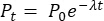 (6)
(6)
Where:
Pt: Probability of detection at time t.
P0: Initial probability of detection.
Decay constant, representing the rate of decline in detectability.
t: Time elapsed since the deepfake was introduced.
By incorporating this model, the framework can predict how long a detection system remains effective and identify when retraining or upgrading the model is necessary18.
1. Algorithm 1: Hybrid CNN-GAN deepfake detection framework
Input: Dataset D={(Xi, Yi)}, learning rates ηd,, ηg, batch size B, loss weighting α.
Output: Trained CNN-GAN detection model.
- Data preparation
- Split D into training (Dtrain), validation (Dval), and test (Dtest) sets.
- Normalize data, resize inputs (224 x 224), and augment to improve diversity.
- Model initialization
- Discriminator:
- Initialize Dθ, a CNN-based binary classifier with parameters θd.
- Generator:
- Initialize Gϕ, a GAN-based generator with parameters ϕ.
- Discriminator:
- Training loop
- For N epochs:
- Sample a batch of real (Xr) and fake (Xf) data.
- Generate synthetic data: Xg=Gϕ(Z), where Z~N(0,1).
- Discriminator loss:

Update:

- Generator loss:

Update:

- Combined loss:
- For N epochs:
- Temporal analysis
- Apply the decay model:
where λ is empirically derived from validation data. - Retrain the model periodically based on λ.
- Apply the decay model:
- Multimodal integration
- Compute predictions for:
- Audio: Pa via spectrogram anomalies.
- Video: Pv via frame artifacts.
- Text: Pt via NLP-based semantic checks.
- Final prediction:

where W is weights.
- Compute predictions for:
- Model evaluation
- Test on Dtest using Metrics: Accuracy, Precision, Recall, F1-Score, ROC-AUC.
- Deployment
- Optimize Dθ,Gϕ via pruning and quantization.
- Deploy on cloud and edge platforms with explainability tools.
End of Algorithm
To address the limitations of single-modal detection systems, the proposed framework incorporates multimodal analysis. By combining audio, video, and text analysis, the framework enhances robustness and reduces the likelihood of missed detections2. The framework includes a simulation component to analyze the dissemination of deepfakes in social networks. To ensure the effectiveness of the proposed framework, rigorous evaluation metrics are used as shown Table 3.
Access restricted. Please log in or start a trial to view this content.
Results
Loading...
$$\rightleftharpoonup{xx}$$
$$\longleftharp{xx}$$,
$$\longrightharp{xx}$$,
The proposed hybrid detection framework was rigorously evaluated across multiple dimensions, including detection accuracy and precision, scalability and generalization tests, adversarial robustness, and socio-technical impact analysis. The following sections summarize the key experimental findings.
Performance of the hybrid CNN-GAN model
We benchmarked our hybrid model against three state-of-the-art deepfake detecti...
Access restricted. Please log in or start a trial to view this content.
Discussion
Loading...
$$\rightleftharpoonup{xx}$$
$$\longleftharp{xx}$$,
$$\longrightharp{xx}$$,
The experimental results demonstrate that the proposed hybrid CNN-GAN framework, augmented with temporal analysis and multimodal integration, effectively addresses several core challenges in deepfake detection. In this discussion, we examine the implications of these findings, the strengths and limitations of our approach, and future directions for research and deployment.
Performance and contributions
The framework's superior performance on al...
Access restricted. Please log in or start a trial to view this content.
Disclosures
Loading...
$$\rightleftharpoonup{xx}$$
$$\longleftharp{xx}$$,
$$\longrightharp{xx}$$,
The authors declare that there are no conflicts of interest related to this work.
Materials
| Name | Company | Catalog Number | Comments |
|---|---|---|---|
| Google API Client | N/A | Google API Client is a Python client library for Google's discovery-based APIs. https://github.com/googleapis/ google-api-python-client | |
| Intel | OpenCV | N/A | OpenCV is a library for computer vision. https://opencv.org |
| Python | Python Software Foundation | N/A | Python is a programming language. https://www.python.org |
| PyTorch | Facebook AI Research | N/A | PyTorch is a machine learning framework. https://pytorch.org |
References
Loading...
$$\rightleftharpoonup{xx}$$
$$\longleftharp{xx}$$,
$$\longrightharp{xx}$$,
- Emerging threat of deep fake: how to identify and prevent it. Taha, M. A., et al. The 6th International Conference on Future Networks & Distributed Systems (ICFNDS '22, Tashkent, TAS, Uzbekistan, , ACM. New York, NY, USA. (2022).
- Deepfake detection: a multialgorithmic and multimodal approach for robust detection and analysis. Nailwal, S., Singhal, S., Singh, N. T., Raza, A. 2023 International Conference on Research Methodologies in Knowledge Management, Artificial Intelligence and Telecommunication Engineering (RMKMATE, , (2023).
- Citron, D. K., Chesney, R. Deepfakes and the new disinformation war. Foreign Aff. 98 (1), 147-155 (2019).
- Countering deepfakes using an improved advanced CNN and its ensemble with pretrained models. Mathur, A., Bhargava, K., Singh, M., Tejpal, M., Natarajan, K. 2024 Third International Conference on Electrical, Electronics, Information and Communication Technologies (ICEEICT), , (2024).
- Nguyen, T. T., et al. Deep learning for deepfakes creation and detection: a survey. Comput Vis Image Underst. 223, 103525(2022).
- Bale, D., Ochei, L., Ugwu, C. Deepfake detection and classification of images from video: a review of features, techniques, and challenges. Int J Intell Inf Syst. 13 (2), 20-28 (2024).
- FaceForensics++: learning to detect manipulated facial images. Rossler, A., et al. Proc IEEE Int Conf Comput Vis, 1, 1-11 (2019).
- Naitali, A., Ridouani, M., Salahdine, F., Kaabouch, N. Deepfake attacks: generation, detection, datasets, challenges, and research directions. Computers. 12 (12), 246(2023).
- Domenteanu, A., et al. Living in the age of deepfakes: a bibliometric exploration of trends, challenges, and detection approaches. Information (Switzerland). 15 (9), 525(2024).
- Babaei, R., Cheng, S., Duan, R., Zhao, S. Generative artificial intelligence and the evolving challenge of deepfake detection: a systematic analysis. J Sens Actuator Netw. 14 (1), 17(2025).
- Jiang, L., Wu, W., Qian, C., Loy, C. C. DeepFakes detection: the DeeperForensics dataset and challenge. In Deepfakes: a new threat to face recognition? assessment and detection. Marcel, S., Fierrez, J., Evans, N., Bourlai, T. 303, Springer. Cham. 303-329 (2022).
- Khan, S., Chen, J. C., Liao, W. H., Chen, C. S., et al. Adversarially robust deepfake detection via adversarial feature similarity learning. Advances in multimedia information processin 2023. Hui, P., et al. 1455, 503-516 (2024).
- Gadgilwar, J., et al. Exploring deepfake techniques, detection strategies, and emerging challenges: a survey. Int J Res Appl Sci Eng Technol. 11 (5), 1491-1495 (2023).
- Liu, F., et al. EvoGAN: An evolutionary computation assisted GAN. Neurocomputing. 16 (469), 81-90 (2022).
- Sunkari, V., Nagesh, A. S. Artificial intelligence for deepfake detection: systematic review and impact analysis. IAES Int J Artif Intell. 13 (6), 3786-3792 (2024).
- Hughes, R. T., Zhu, L., Bednarz, T. Generative adversarial networks–enabled human–artificial intelligence collaborative applications for creative and design industries: A systematic review of current approaches and trends. Frontiers in artificial intelligence. 28 (4), 604234(2021).
- Sharma, P., Kumar, M., Sharma, H. K. Robust GANbased CNN model as generative AI application for deepfake detection. EAI Endorsed Trans Internet Things. 10 (39), e3(2024).
- Tribhuvan, P. P., Tribhuvan, A. P. Artificial intelligence for deepfake creation and detection. Futuristic trends in artificial intelligence volum 3. 21, BPB Publications. 21-27 (2024).
- Sareen, M. Threats and challenges by DeepFake technology. DeepFakes. , CRC Press. 99(2022).
- Yan, Z., Zhang, Y., Yuan, X., Lyu, S., Wu, B. DeepfakeBench: a comprehensive benchmark of deepfake detection. Adv Neural Inf Process Syst. 36, 35687-35703 (2023).
- Deepfake detection using CNN and DCGANS to dropout fake multimedia content: a hybrid approach. Bansal, K., Agarwal, S., Vyas, N. Proc Int Conf IoT Commun Autom Technol (ICICAT), 1, 1-6 (2023).
- RuleBoost: a neurosymbolic framework for robust deepfake detection. Raza, M. A., Malik, K. M., Haq, I. U. Proc IEEE Int Joint Conf Biometrics (IJCB), 1, 1-10 (2024).
- Vidyavathi, B. M., Ahmed, A. F., Lulu, A. T., Fatima, S. M. Deepfake detection using deep learning. Int J Adv Res Sci Commun Technol. 4 (2), 647-651 (2024).
- Generative transferable universal adversarial perturbation for combating deepfakes. Guo, Y., et al. Proc 27th Int Conf Comput Support Coop Work Des (CSCWD), , 1986-1991 (2024).
- Prasoon, P., Ramakrishnan, P. N. Deepfake dystopia: navigating the landscape of threats and safeguards in multimedia content. Int J Trendy Res Eng Technol. 8 (3), 01-07 (2024).
- Altuncu, E., Franqueira, V. N. L., Li, S. Deepfake: definitions, performance metrics and standards, datasets, and a metareview. Front Big Data. 7, 1341168(2024).
Access restricted. Please log in or start a trial to view this content.
Reprints and Permissions
Request permission to reuse the text or figures of this JoVE article
Request Permission