This study combines the rule-based strategy with machine learning and expert assistance to annotate the Hinglish and English text. The data is tested on 19,000 tweets with 81% accuracy, and it is much cheaper than doing it manually. It could be useful for tracking emotions during a crisis.
Research Article
Machine Learning and Lexical Rule-Based Cost-Efficient Emotion Annotation of Hinglish Utterances
In This Article
Summary
Loading...
Abstract
Loading...
 into
into 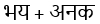 ), and active learning to prioritize ambiguous samples. Evaluated on a 19,000 war and conflict-related Hinglish tweets dataset, the framework achieved 81% accuracy (F-score: 0.76) while reducing operational costs by 40% compared to manual annotation. Lexical rules resolved 89% of code-switching ambiguities, and iterative refinements enabled incremental accuracy gains from 72% to 81%. The system's efficiency stems from limiting human effort to 73% of the dataset, with automated preprocessing of emojis, hashtags, and slang. This study is based on the hypothesis that integrating lexical rule-based methods with active learning and machine learning can enhance the accuracy of emotion annotation in Hinglish text, while simultaneously reducing the manual labeling and overall annotation effort.
Introduction
Loading...
Access restricted. Please log in or start a trial to view this content.
Protocol
Loading...

Access restricted. Please log in or start a trial to view this content.
Results
Loading...
Access restricted. Please log in or start a trial to view this content.
Discussion
Loading...
Access restricted. Please log in or start a trial to view this content.
Disclosures
Loading...
Acknowledgements
Loading...
Access restricted. Please log in or start a trial to view this content.
Materials
| Name | Company | Catalog Number | Comments |
|---|---|---|---|
| fastText | Facebook AI | N/A | Word representation and classification |
| Google Colab | N/A | Cloud-based Jupyter Notebook environment | |
| Google Colab GPU/TPU | N/A | Cloud-based hardware acceleration | |
| Intel Core i5/i7 or AMD Ryzen 5/7 | Intel / AMD | N/A | Processor for local execution (if required) |
| Matplotlib | Open-source | N/A | Data visualization library |
| NLTK | Open-source | N/A | Natural Language Toolkit for text processing |
| NumPy | Open-source | N/A | Numerical computing library |
| NVIDIA GTX 1650 or Higher (Optional) | NVIDIA | N/A | GPU for deep learning tasks |
| Pandas | Open-source | N/A | Data manipulation library |
| Python | Python Software Foundation | N/A | Programming language for ML and NLP |
| PyTorch | Meta AI | N/A | Deep Learning framework |
| RAM (8GB Minimum, 16GB Recommended) | Various | N/A | Memory requirement for ML tasks |
| Scikit-learn | Open-source | N/A | Machine Learning library |
| Seaborn | Open-source | N/A | Statistical data visualization |
| SpaCy | Explosion AI | N/A | Industrial-strength NLP library |
| SSD Storage (256GB Minimum, 512GB Recommended) | Various | N/A | Storage for dataset processing |
| TensorFlow | N/A | Deep Learning framework |
References
Loading...
Access restricted. Please log in or start a trial to view this content.
Reprints and Permissions
Request permission to reuse the text or figures of this JoVE article
Request Permission