Method Article

Ultrasonic Osteotome in Posterior Endoscopic Cervical Discectomy for Cervical Radiculopathy

DOI:

10.3791/68461

October 14th, 2025

 ,  ,  , 

Corresponding Authors: Guoxin Fan <fan06309@163.com>, Xiang Liao <digitalxiang@163.com>

* These authors contributed equally

In This Article

Erratum Notice

Important: There has been an erratum issued for this article. Read More ...

Erratum

Loading...
$$\rightleftharpoonup{xx}$$ $$\longleftharp{xx}$$, $$\longrightharp{xx}$$,

Formal Correction: Erratum: Ultrasonic Osteotome in Posterior Endoscopic Cervical Discectomy for Cervical Radiculopathy
Posted by JoVE Editors on 12/08/2025. Citeable Link.

This corrects the article 10.3791/68461

Summary

Loading...
$$\rightleftharpoonup{xx}$$ $$\longleftharp{xx}$$, $$\longrightharp{xx}$$,

Here, we present a protocol to describe the technical key points of applying the ultrasonic osteotome in posterior endoscopic cervical discectomy.

Abstract

Loading...
$$\rightleftharpoonup{xx}$$ $$\longleftharp{xx}$$, $$\longrightharp{xx}$$,

The ultrasonic osteotome, as a novel osteotomy system, demonstrates unique advantages in posterior endoscopic cervical discectomy (PECD), though its technical implementation remains challenging. Accumulated evidence has validated the safety profile of this device in spinal surgery. Meta-analysis has revealed its superior efficacy in enhancing decompression efficiency, reducing intraoperative blood loss, and shortening operative duration compared to conventional high-speed burrs. Notably, no significant differences were observed in symptom improvement rates, hospital stay duration, or postoperative complication incidence between the two techniques. This study provides a video-documented technical protocol for ultrasonic osteotome utilization in PECD, demonstrating successful clinical implementation in a patient with cervical radiculopathy. We enrolled a 62-year-old female patient who presented with a 10-year history of left-sided cervical and upper back pain. She was admitted for surgery following a recent exacerbation that was accompanied by numbness and pain in her left upper limb. The duration of the surgical procedure was 109 minutes. The patient was mobilized with the help of a standard cervical brace on postoperative day 1. The patient demonstrated significant resolution of left-sided neck pain (preoperative visual analog scale [VAS] score 6, decreasing to 1) and left upper limb radiculopathy. Postoperative magnetic resonance imaging (MRI) confirmed adequate nerve root decompression, with significant symptom resolution and absence of device-related complications such as dural tears or neurological deficits. These findings substantiate the technical feasibility and procedural reliability of the ultrasonic osteotome in endoscopic cervical spine surgery.

Introduction

Loading...
$$\rightleftharpoonup{xx}$$ $$\longleftharp{xx}$$, $$\longrightharp{xx}$$,

Cervical radiculopathy, a prevalent spinal disorder, affects approximately 3.3 cases per 1,000 individuals in the general population1. Anterior cervical discectomy and fusion (ACDF) has long been recognized as one of the standard surgical treatments for cervical radiculopathy2. However, hardware-related complications following ACDF, including hardware failure, pseudarthrosis, adjacent segment degeneration, and graft subsidence, present significant management challenges3,4,5,6,7,8. In recent years, percutaneous endoscopic spine surgery has rapidly advanced due to its minimally invasive nature, rapid recovery, and favorable outcomes9,10,11,12. Percutaneous posterior endoscopic technique may serve as a potential alternative to ACDF in the management of cervical radiculopathy, with recent studies showing comparable therapeutic outcomes that warrant further clinical investigation9,13,14,15,16.

The anatomical location of cervical disc herniation is closely associated with surgical difficulty17,18. Based on the anatomical position of the herniated material, it can be classified into three subtypes (Figure 1): Type A, Type B, and Type C. Among these, Type C (where the herniation is completely located within the intervertebral foramen) presents greater challenges for surgical decompression, with higher risks of nerve root injury and vertebral artery laceration. Compared to ACDF, posterior endoscopic cervical discectomy (PECD) offers superior decompression of the stenotic nerve root canal17,19,20. This is particularly evident in cases where foraminal stenosis is caused by osseous compression, such as hypertrophy of the Luschka joint, osteophyte formation, or calcified intervertebral discs21.

The key to the PECD technique lies in achieving adequate decompression of the compressed structures while avoiding injury to critical anatomical elements such as nerve roots and vertebral arteries during the decompression process. However, when using standard surgical instruments (high-speed burr) for bone removal, capillary bleeding often obscures the endoscopic visual field in the irrigation fluid22,23. This phenomenon not only increases surgical risks but also prolongs operative time due to the necessity of additional hemostatic procedures24,25. The ultrasonic osteotome, as an alternative osteotomy instrument, has been recognized as an efficient and safe option and is being increasingly adopted in various spinal surgical procedures24,25,26.

The ultrasonic osteotome generates high-frequency ultrasonic vibrations to cut bone tissue through micro-oscillations27,28. Consequently, compared to the layer-by-layer grinding of high-speed burs, the osteotomy mode of the ultrasonic osteotome demonstrates higher efficiency when cutting large bone segments25. Due to the distinct physical properties (e.g., elasticity, hardness) of soft and bone tissues, the ultrasonic osteotome exerts a relatively weaker effect on soft tissues24,25. Thus, for specific procedural steps, the ultrasonic osteotome offers superior safety over high-speed burs. Furthermore, the ultrasonic bone scalpel offers an added advantage over the high-speed burr. During the bone removal process, the cavitation effect induced by the ultrasonic vibrations promotes the coagulation and denaturation of hemoglobin within the cutting area, thereby achieving hemostasis23,28,29,30. Currently, research on the application of the ultrasonic bone scalpel in PECD is extremely limited. Therefore, this study aims to establish a systematic operational scheme for this technique.

Protocol

Loading...
$$\rightleftharpoonup{xx}$$ $$\longleftharp{xx}$$, $$\longrightharp{xx}$$,

The protocol follows the guidelines of the ethics committee of the local hospital. The ethics committee approved the protocol. The patient provided written informed consent.

NOTE: A 62-year-old female patient was included in the study, admitted for treatment due to a 10-year history of left-sided cervical and back pain, which had worsened over the past 10 days and was accompanied by numbness and pain in the left upper limb. Physical examination findings were as follows: (1) restricted left lateral flexion and extension of the cervical spine; (2) positive left brachial plexus stretch test and Spurling's test; (3) muscle strength of the left triceps graded as 4/5; (4) numbness and pain in the left upper limb, primarily radiating to the middle finger of the left hand; and (5) a visual analog scale (VAS) score of 6. The MRI imaging indicates compression of the left C7 nerve root (Figure 2A) and stenosis of the left C7 intervertebral foramen (Figure 2B). The patient had previously undergone conservative outpatient treatment for 3 months with recurrent symptoms and opted for surgical intervention. The surgical instruments and equipment used in the study are listed in the materials table.

1. Pre-endoscopic decompression procedures

  1. Body position
    1. Position the patient prone on the operating table with both upper limbs extended forward. This positioning ensures that the cervical nerve roots remain in a relaxed state31.
  2. Puncture localization and anesthesia
    1. Project the percutaneous puncture point onto the outer lower edge of the left side of cervical 7, targeting the lateral edge of the cervical 6/7 interlaminar window, which is known as the V point, formed by the inferior edge of the C6 lamina, the superior edge of the C7 lamina, and the adjacent facet joint, as visualized under the X-ray image.
    2. Routinely disinfect the surgical area, drape sterile towels, and inject 10 mL of 0.5% lidocaine into the puncture site.
  3. Puncture and cannulation
    1. Under real-time X-ray imaging, insert an 18 G percutaneous puncture needle along the planned trajectory, advancing from the skin entry point to the target V point (Figure 3A).
    2. Confirm the position of the puncture needle under X-ray fluoroscopy and make a 1.2 cm incision through the skin and deep fascia at the percutaneous puncture site using a surgical scalpel.
    3. Gradually insert different sizes of dilators along the puncture needle until the working cannula (outer diameter 1.2 cm, inner diameter 1 cm) smoothly enters (Figure 3B). Ensure that the bevel tip of the working cannula contacts the cervical lamina bone surface before commencing the operation under the endoscope.

2. Ultrasonic osteotome osteotomy

  1. Resection of the Lamina and Facet Joint near the V-point (V-point plasty)
    1. Use tissue forceps to strip residual soft tissue from the bone surface to identify the lamina and lateral mass. Expose the V-point (Figure 4A).
    2. Set the ultrasonic osteotome to 40 kHz and 150 W.
    3. Centered on the V-point, use the ultrasonic osteotome to progressively resect a portion of the superior lamina, inferior lamina, and part of the facet joint (Figure 4B).
      NOTE: Compared to using a high-speed burr for layer-by-layer bone removal, the ultrasonic osteotome is more efficient and safer for resecting bone around the nerve root.
    4. Continue resecting the lamina and facet joint to enlarge the interlaminar window. During this procedure, the spinal canal will be opened.
  2. Exposure of the axillary region of the nerve root
    1. Gently clean the ligament and epidural tissue within the field using tissue forceps (Figure 4C). Then, assess the anatomical structures within the spinal canal beneath the interlaminar window.
    2. Adjust the bone resection direction to expose the axillary region of the nerve root (Figure 4D).
  3. Expansion of the nerve root canal
    1. Use the ultrasonic osteotome to resect a small portion of the medial pedicle inferior to the C7 nerve root to expand the surgical working space in the axillary region (Figure 4E).
      NOTE: Resect only a small portion of the medial pedicle to avoid damaging the vertebral artery located laterally.
    2. Remove the ventral calcified protrusion of the nerve root to achieve ventral decompression of the nerve root (Figure 4F).
    3. Resect the dorsal spur of the nerve root to achieve dorsal decompression (Figure 4G).
      NOTE: Since the vibration direction of the ultrasonic osteotome is aligned with its long axis during operation, prolonged direct contact between the side of the osteotome and the nerve root must be avoided during bone resection, as this may result in thermal injury to the nerve.
    4. Confirm successful decompression of the compressed nerve root, ensuring adequate mobility of the C7 nerve root (Figure 4H).

3. Postoperative management

  1. Instruct the patient to wear a neck brace when ambulating, starting 2-3 h postoperatively, unless special circumstances indicate otherwise.
  2. Administer Flurbiprofen Axetil 50 mg intravenously once daily for postoperative analgesia, continuing for 2 days.
  3. Restrict neck activity postoperatively, with the patient wearing the neck brace for 1 week.

Results

Loading...
$$\rightleftharpoonup{xx}$$ $$\longleftharp{xx}$$, $$\longrightharp{xx}$$,

The left C7 nerve root of the patient was successfully and adequately decompressed. Under endoscopic visualization, the ventral herniation compressing the nerve root was effectively removed, and partial laminectomy, facetectomy, and spur removal were achieved on the dorsal aspect of the nerve root. Ultimately, it was confirmed that the compressed nerve root had achieved sufficient space for movement. Postoperative MRI imaging demonstrated sufficient foraminal decompression at the left C7 level, in contrast to the preoperative findings (Figure 5A,B). Postoperative CT imaging demonstrated the enlarged left C7 intervertebral foramen (Figure 6A,A*) and the decompressed left C7 nerve root canal (Figure 6B,B*). Three-dimensional CT reconstruction revealed that less than 1/2 of the facet joint had been removed (Figure 6C,D). No surgical complications, such as nerve root injury or dural tear, were observed.

The demographic information of the patient and the surgical-related data are presented in Table 1. The duration of the surgical procedure was 109 min. Postoperative mobilization was achieved with the help of a standard cervical brace on postoperative day 1. The patient demonstrated significant resolution of left-sided neck pain (preoperative VAS score 6, decreasing to 1) and left upper limb radiculopathy. Neurological assessment revealed intact sensorimotor function in bilateral upper extremities, with no evidence of myelopathic signs or nerve root injury.
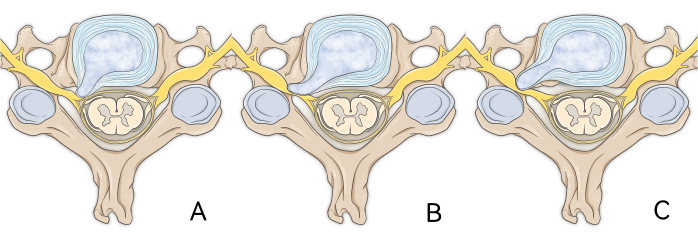
figure-results-1
Figure 1: Three classifications of cervical radiculopathy. (A) The protrusion was entirely within the spinal canal. (B) The protrusion was partially located in the spinal canal and partially in the intervertebral foramen. (C) The protrusion was located entirely within the intervertebral foramen. Please click here to view a larger version of this figure.
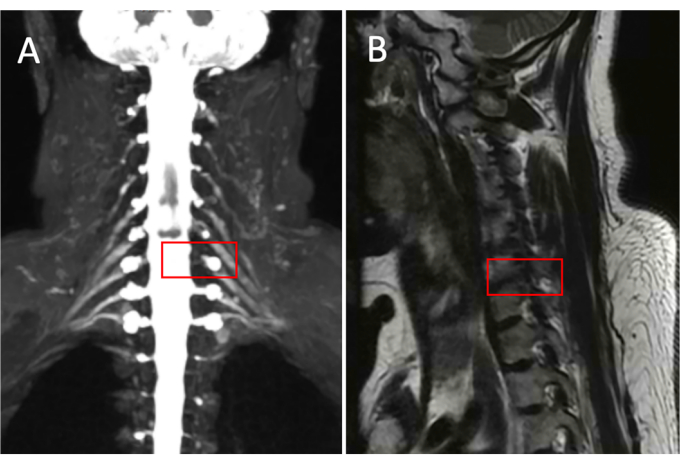
figure-results-2
Figure 2: Preoperative magnetic resonance imaging (MRI). (A) Absence of visualization at the root of the left C7 nerve root, suggestive of nerve compression. (B) Presence of left C7 intervertebral foramen stenosis. Please click here to view a larger version of this figure.
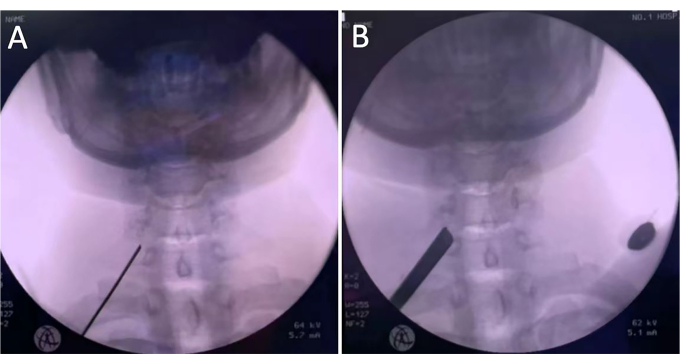
figure-results-3
Figure 3: X-ray fluoroscopic imaging. (A) Diagram of puncture needle position under X-ray fluoroscopy. (B) Diagram of working channel position under X-ray fluoroscopy. Please click here to view a larger version of this figure.
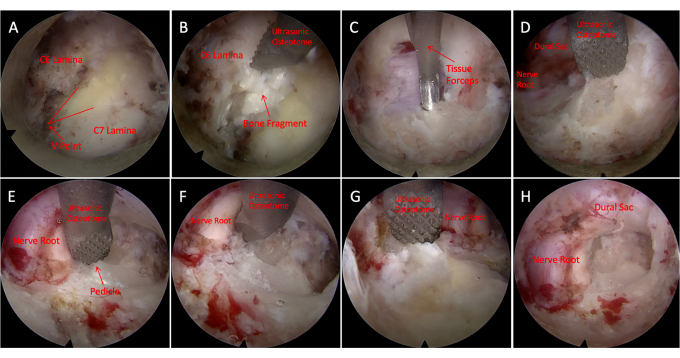
figure-results-4
Figure 4: Visualization of key steps during posterior endoscopic cervical discectomy (PECD). (A) The V-point, formed by the inferior edge of the C6 lamina, the superior edge of the C7 lamina, and the adjacent facet joint. (B) Partial laminectomy performed using the ultrasonic osteotome. (C) Ligament and epidural tissue within the interlaminar window removed using tissue forceps. (D) Partial laminectomy and facet joint resection performed using the ultrasonic osteotome to expose the axillary region of the nerve root. (E) Partial pedicle resection performed using the ultrasonic osteotome. (F) Exploration and decompression of the ventral region of the nerve root using the ultrasonic osteotome. (G) Removal of osteophytes dorsal to the nerve root using the ultrasonic osteotome. (H) Complete decompression of the left C7 nerve root achieved. Please click here to view a larger version of this figure.
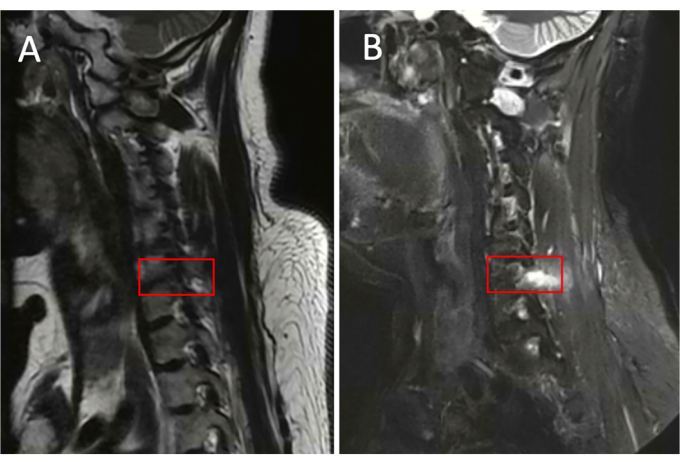
figure-results-5
Figure 5: Preoperative and postoperative magnetic resonance imaging (MRI). (A) Preoperative MRI demonstrating stenosis (red box) of the left C7 intervertebral foramen. (B) Postoperative MRI revealing enlargement of the left C7 intervertebral foramen and clear visualization of the C7 nerve root (red box). Please click here to view a larger version of this figure.
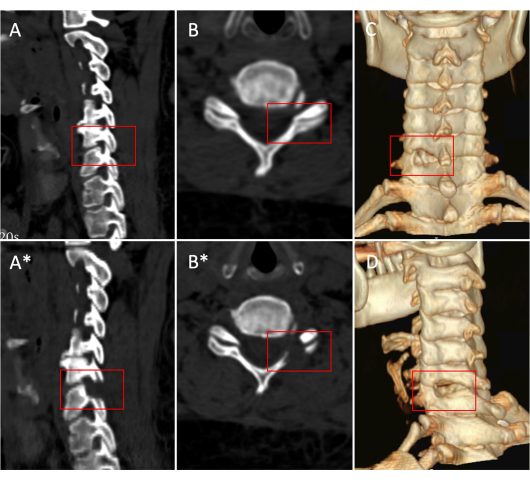
figure-results-6
Figure 6: Preoperative and postoperative CT imaging. (A,A*) Sagittal CT images demonstrating preoperative and postoperative views, indicating enlargement of the left C7 intervertebral foramen. (B,B*) Axial CT images showing preoperative and postoperative views, revealing decompression of the stenotic segment in the left C7 nerve root canal. (C,D) Postoperative three-dimensional CT reconstruction images in anteroposterior and lateral views. Please click here to view a larger version of this figure.

ParametersValues
GenderFemale
Age (years)62
DiagnosisCervical Radiculopathy
Surgical segmentLeft C6/7
Operation time (min)109
Preoperative VAS score6
Postoperative VAS score1

Table 1: Demographic information and surgical-related data of the patient.

Supplementary Figure 1: Ultrasonic osteotomes and irrigation sleeves schematic diagram. (A,A*) Schematic diagram of an ultrasonic osteotome (Model: OT1SPT19) and its magnified tip view. Specifications: horseshoe-shaped width 2.4 mm, length 250.6 mm; Material: TC4 titanium alloy. (B,B*) Schematic diagram of an irrigation sleeve (Model: OS1SPT19) and its magnified tip view. Specifications: inner diameter (ID) 4.6 mm, outer diameter (OD) 5.8 mm; length 230 mm; Material: Polytetrafluoroethylene (PTFE). Please click here to download this File.

Discussion

Loading...
$$\rightleftharpoonup{xx}$$ $$\longleftharp{xx}$$, $$\longrightharp{xx}$$,

Compared with ACDF, PECD achieves more effective decompression in stenotic nerve root canals, making it a viable minimally invasive alternative17,20,32,33. The ultrasonic osteotome, as a novel osteotomy power system, serves as a reliable tool for bone removal during PECD17,23,24. Numerous studies have confirmed the safety of the ultrasonic osteotome in spinal surgeries17,23,24.

In this study, the ultrasonic osteotomy-generated vibration operated at a frequency of 40,000 cycles per second (40 kHz), with the maximal amplitude of the employed ultrasonic osteotome being less than 250 µm34. The vibrational mode was predominantly longitudinal in direction, while the transverse amplitude was markedly attenuated compared to the longitudinal component. Consequently, in V-point osteoplasty, ultrasonic osteotomy demonstrated enhanced safety profiles and superior resection efficiency relative to high-speed burring25. Although continuous saline irrigation provides cooling, prolonged lateral contact between the activated ultrasonic osteotome and neural structures (nerve roots and dural sac) should be avoided to prevent thermal injury35,36.

The study utilized a working cannula with an internal diameter of 1 cm, while the ultrasonic osteotome tip measured 2.4 mm in width. To prevent damage to the rigid working cannula by the ultrasonic osteotome, we employed customized irrigation sleeves (internal diameter: 4.6 mm; external diameter: 5.8 mm), with detailed specifications provided in the Supplementary Figure 1. Furthermore, at specific anatomical sites, the ultrasonic osteotome may create irregular osteotomy margins, a limitation that can be compensated for by subsequent high-speed burr refinement.

Since its first successful application in cervical laminoplasty by Hidaka in 1998, the ultrasonic osteotome has been increasingly utilized in spinal surgeries23,24. The literature reports on the application of ultrasonic osteotomes in thoracic ossification of ligamentum flavum, lumbar spinal stenosis, spinal trauma, spinal tumors, and spinal deformities have been continuously increasing37,38,39. Meta-analysis results indicate that, compared to standard surgical instruments, the use of the ultrasonic osteotome in spinal procedures shows no significant differences in symptom improvement rates, postoperative complications, or hospital stay duration24. However, the ultrasonic osteotome can significantly enhance the safety of the decompression procedure, reduce intraoperative bleeding, and save surgical time23,29,30,40.

However, this technique has certain limitations. First, the use of the ultrasonic osteotome under endoscopy requires surgeons to possess extensive experience in endoscopic procedures. Second, as this is a technical report, large-scale controlled studies will be needed in the future to verify the clinical advantages of this method. Third, the bone edges resected by the ultrasonic osteotome may not be as smooth as those achieved with a high-speed burr, making the combination of the ultrasonic osteotome and high-speed burr more advantageous for bone removal. Finally, the relatively high cost of the ultrasonic osteotome may limit the widespread adoption of this technology.

Disclosures

Loading...
$$\rightleftharpoonup{xx}$$ $$\longleftharp{xx}$$, $$\longrightharp{xx}$$,

The authors in this study declare that no conflict of interest exists.

Acknowledgements

Loading...
$$\rightleftharpoonup{xx}$$ $$\longleftharp{xx}$$, $$\longrightharp{xx}$$,

This work is funded by the Science, Technology, and Innovation Commission of Shenzhen Municipality (Grant No. JCYJ20230807115918039) from Zhouyang Hu; the Nanshan District Health Science and Technology Major Project (Grant No. NSZD2023026; NSZD2023023) from Zhouyang Hu and Guoxin Fan; Nanshan District Health Science and Technology Project (Grant No. NS2023002; NS2023044) from Xiang Liao and Guoxin Fan; the Medical Scientific Research Foundation of Guangdong Province of China (Grant No. A2023195) from Guoxin Fan.

Materials

List of materials used in this article
NameCompanyCatalog NumberComments
0.5% lidocaine Beijing Tide Pharmaceutical Co., LtdH37022768Local Anesthesia
Dilatation cannulaBeijing Tianqi Medical technology Co., Ltd., BeijingZJ289019Cannulation
Flurbiprofen axetil Shandong Hualu Pharmaceutical Co., Ltd.H20041508For postoperative pain
Irrigation sleevesBeijing Sumai Medical Technology Co., LtdOS1SPT19Restricted operating range of the ultrasonic osteotome
Joimax Endoscopy SystemJoimaxFS7347171OTESSYS
Puncture needleBeijing Tianqi Medical technology Co., Ltd., BeijingZJ289033Puncture
Ultrasonic osteotomeBeijing Sumai Medical Technology Co., LtdOT1SPT19Bone Cutting

References

Loading...
$$\rightleftharpoonup{xx}$$ $$\longleftharp{xx}$$, $$\longrightharp{xx}$$,
  1. Diagnosis and nonoperative management of cervical radiculopathy. J Orthop Sports Phys Ther. 30 (12), 728-744 (2000).">Wainner, R. S., Gill, H. Diagnosis and nonoperative management of cervical radiculopathy. J Orthop Sports Phys Ther. 30 (12), 728-744 (2000).
  2. Evaluation of current trends in treatment of single-level cervical radiculopathy. Clin Spine Surg. 32 (5), e241-e245 (2019).">Mok, J. K., et al. Evaluation of current trends in treatment of single-level cervical radiculopathy. Clin Spine Surg. 32 (5), e241-e245 (2019).
  3. Anterior cervical discectomy and fusion associated complications. Spine (Phila, Pa 1976). 32 (21), 2310-2317 (2007).">Fountas, K. N., et al. Anterior cervical discectomy and fusion associated complications. Spine (Phila, Pa 1976). 32 (21), 2310-2317 (2007).
  4. Biomechanical comparison of percutaneous posterior endoscopic cervical discectomy and anterior cervical decompression and fusion on the treatment of cervical spondylotic radiculopathy. J Orthop Surg Res. 14 (1), 71(2019).">Ren, J., et al. Biomechanical comparison of percutaneous posterior endoscopic cervical discectomy and anterior cervical decompression and fusion on the treatment of cervical spondylotic radiculopathy. J Orthop Surg Res. 14 (1), 71(2019).
  5. A review of complication rates for anterior cervical diskectomy and fusion (ACDF). Surg Neurol Int. 10, 100(2019).">Epstein, N. E. A review of complication rates for anterior cervical diskectomy and fusion (ACDF). Surg Neurol Int. 10, 100(2019).
  6. Esophageal perforation after anterior cervical spine surgery: A systematic review of the literature. J Neurosurg Spine. 25 (3), 285-291 (2016).">Halani, S. H., et al. Esophageal perforation after anterior cervical spine surgery: A systematic review of the literature. J Neurosurg Spine. 25 (3), 285-291 (2016).
  7. Dysphagia rates after anterior cervical diskectomy and fusion: A systematic review and meta-analysis. Global Spine J. 7 (1), 95-103 (2017).">Shriver, M. F., et al. Dysphagia rates after anterior cervical diskectomy and fusion: A systematic review and meta-analysis. Global Spine J. 7 (1), 95-103 (2017).
  8. Recurrent laryngeal nerve injury during anterior cervical discectomy and fusion (ACDF): A case presentation and review of the literature. Cureus. 16 (7), e64603(2024).">Echevarria, A. C., Hershfeld, B., Verma, R., Bruni, M. Recurrent laryngeal nerve injury during anterior cervical discectomy and fusion (ACDF): A case presentation and review of the literature. Cureus. 16 (7), e64603(2024).
  9. Introduction: Endoscopic spine surgery. Neurosurg Focus. 40 (2), E1(2016).">Gokaslan, Z. L., Telfeian, A. E., Wang, M. Y. Introduction: Endoscopic spine surgery. Neurosurg Focus. 40 (2), E1(2016).
  10. Clinical observation of posterior percutaneous full-endoscopic cervical foraminotomy as a treatment for osseous foraminal stenosis. World Neurosurg. 106, 945-952 (2017).">Ye, Z. Y., et al. Clinical observation of posterior percutaneous full-endoscopic cervical foraminotomy as a treatment for osseous foraminal stenosis. World Neurosurg. 106, 945-952 (2017).
  11. Drilling speed and bone temperature of a robot-assisted ultrasonic osteotome applied to vertebral cancellous bone. Spine (Phila, Pa 1976). 46 (14), e760-e768 (2021).">Lang, Z., et al. Drilling speed and bone temperature of a robot-assisted ultrasonic osteotome applied to vertebral cancellous bone. Spine (Phila, Pa 1976). 46 (14), e760-e768 (2021).
  12. Posterior cervical full-endoscopic technique for the treatment of cervical spondylotic radiculopathy with foraminal bony stenosis: A retrospective study. Front Surg. 9, 1035758(2022).">Shi, M., et al. Posterior cervical full-endoscopic technique for the treatment of cervical spondylotic radiculopathy with foraminal bony stenosis: A retrospective study. Front Surg. 9, 1035758(2022).
  13. Safe route for cervical approach: Partial pediculotomy, partial vertebrotomy approach for posterior endoscopic cervical foraminotomy and discectomy. World Neurosurg. 140, e273-e282 (2020).">Kim, H. S., et al. Safe route for cervical approach: Partial pediculotomy, partial vertebrotomy approach for posterior endoscopic cervical foraminotomy and discectomy. World Neurosurg. 140, e273-e282 (2020).
  14. Full-endoscopic cervical posterior foraminotomy for the operation of lateral disc herniations using 5.9-mm endoscopes: A prospective, randomized, controlled study. Spine (Phila, Pa 1976). 33 (9), 940-948 (2008).">Ruetten, S., Komp, M., Merk, H., Godolias, G. Full-endoscopic cervical posterior foraminotomy for the operation of lateral disc herniations using 5.9-mm endoscopes: A prospective, randomized, controlled study. Spine (Phila, Pa 1976). 33 (9), 940-948 (2008).
  15. Modified k-hole percutaneous endoscopic surgery for cervical foraminal stenosis: Partial pediculectomy approach. Pain Physician. 22 (5), e407-e416 (2019).">Xiao, C. M., et al. Modified k-hole percutaneous endoscopic surgery for cervical foraminal stenosis: Partial pediculectomy approach. Pain Physician. 22 (5), e407-e416 (2019).
  16. Clinical and radiological outcomes of a comparative study of anterior cervical decompression and fusion with partial pediculotomy, partial vertebrotomy (PPPV) posterior endoscopic cervical decompression (PECD) for cervical foraminal pathology. Medicina (Kaunas). 59 (7), 1222(2023).">Kim, H. S., Wu, P. H., Chin, B. Z. J., Jang, I. T. Clinical and radiological outcomes of a comparative study of anterior cervical decompression and fusion with partial pediculotomy, partial vertebrotomy (PPPV) posterior endoscopic cervical decompression (PECD) for cervical foraminal pathology. Medicina (Kaunas). 59 (7), 1222(2023).
  17. Ultrasonic osteotome assisted posterior endoscopic cervical foraminotomy in the treatment of cervical spondylotic radiculopathy due to osseous foraminal stenosis. J Korean Neurosurg Soc. 66 (4), 426-437 (2023).">Jiang, Y., et al. Ultrasonic osteotome assisted posterior endoscopic cervical foraminotomy in the treatment of cervical spondylotic radiculopathy due to osseous foraminal stenosis. J Korean Neurosurg Soc. 66 (4), 426-437 (2023).
  18. Classification of cervical disc herniation myelopathy or radiculopathy: A magnetic resonance imaging-based analysis. Quant Imaging Med Surg. 13 (8), 4984-4994 (2023).">Wang, S., et al. Classification of cervical disc herniation myelopathy or radiculopathy: A magnetic resonance imaging-based analysis. Quant Imaging Med Surg. 13 (8), 4984-4994 (2023).
  19. Efficacy and safety of percutaneous endoscopic cervical discectomy for cervical disc herniation: A systematic review and meta-analysis. J Orthop Surg Res. 17 (1), 519(2022).">Zhang, J., et al. Efficacy and safety of percutaneous endoscopic cervical discectomy for cervical disc herniation: A systematic review and meta-analysis. J Orthop Surg Res. 17 (1), 519(2022).
  20. Posterior full-endoscopic cervical discectomy in cervical radiculopathy: A prospective cohort study. Clin Neurol Neurosurg. 195, 105948(2020).">Ji-Jun, H., et al. Posterior full-endoscopic cervical discectomy in cervical radiculopathy: A prospective cohort study. Clin Neurol Neurosurg. 195, 105948(2020).
  21. Comparison of single-level cervical radiculopathy outcomes between posterior endoscopic cervical decompression and anterior cervical discectomy and fusion: Mid-term results. Clin Spine Surg. 36 (6), e252-e257 (2023).">Chen, Y., Zhang, T., Cai, B., Xu, J., Lian, X. Comparison of single-level cervical radiculopathy outcomes between posterior endoscopic cervical decompression and anterior cervical discectomy and fusion: Mid-term results. Clin Spine Surg. 36 (6), e252-e257 (2023).
  22. Seizures after percutaneous endoscopic lumbar discectomy: A case report. Medicine (Baltimore). 99 (47), e22470(2020).">Wu, J., Fang, Y., Jin, W. Seizures after percutaneous endoscopic lumbar discectomy: A case report. Medicine (Baltimore). 99 (47), e22470(2020).
  23. Blood loss reduction during surgical correction of adolescent idiopathic scoliosis utilizing an ultrasonic bone scalpel. Spine Deform. 2 (4), 285-290 (2014).">Bartley, C. E., Bastrom, T. P., Newton, P. O. Blood loss reduction during surgical correction of adolescent idiopathic scoliosis utilizing an ultrasonic bone scalpel. Spine Deform. 2 (4), 285-290 (2014).
  24. Effect of ultrasonic osteotome on therapeutic efficacy and safety of spinal surgery: A system review and meta-analysis. Comput Math Methods Med. 2022, 9548142(2022).">Wu, L., Wang, S. Effect of ultrasonic osteotome on therapeutic efficacy and safety of spinal surgery: A system review and meta-analysis. Comput Math Methods Med. 2022, 9548142(2022).
  25. Clinical effect of channel assisted cervical key hole technology combined with ultrasonic bone osteotome in the treatment of single segment cervical spondylotic radiculopathy. Front Surg. 9, 1029028(2022).">Liu, J., et al. Clinical effect of channel assisted cervical key hole technology combined with ultrasonic bone osteotome in the treatment of single segment cervical spondylotic radiculopathy. Front Surg. 9, 1029028(2022).
  26. Use of an ultrasonic osteotome device in spine surgery: Experience from the first 128 patients. Eur Spine J. 22 (12), 2845-2849 (2013).">Hu, X., Ohnmeiss, D. D., Lieberman, I. H. Use of an ultrasonic osteotome device in spine surgery: Experience from the first 128 patients. Eur Spine J. 22 (12), 2845-2849 (2013).
  27. Ultrasonic bone scalpel for thoracic spinal decompression: Case series and technical note. J Orthop Surg Res. 15 (1), 309(2020).">Sun, C., et al. Ultrasonic bone scalpel for thoracic spinal decompression: Case series and technical note. J Orthop Surg Res. 15 (1), 309(2020).
  28. Resection of spinal meningioma using ultrasonic bonescalpel microshaver: Cases, technique, and review of the literature. Oper Neurosurg (Hagerstown). 19 (6), 715-720 (2020).">Sadrameli, S. S., Chan, T. M., Lee, J. J., Desai, V. R., Holman, P. J. Resection of spinal meningioma using ultrasonic bonescalpel microshaver: Cases, technique, and review of the literature. Oper Neurosurg (Hagerstown). 19 (6), 715-720 (2020).
  29. Technical aspects on the use of ultrasonic bone shaver in spine surgery: Experience in 307 patients. Biomed Res Int. 2016, 8428530(2016).">Hazer, D. B., Yaşar, B., Rosberg, H. E., Akbaş, A. Technical aspects on the use of ultrasonic bone shaver in spine surgery: Experience in 307 patients. Biomed Res Int. 2016, 8428530(2016).
  30. Safety and efficacy of a novel ultrasonic osteotome device in an ovine model. J Clin Neurosci. 18 (11), 1528-1533 (2011).">Sanborn, M. R., et al. Safety and efficacy of a novel ultrasonic osteotome device in an ovine model. J Clin Neurosci. 18 (11), 1528-1533 (2011).
  31. Guideline implementation: Positioning the patient. AORN J. 106 (3), 227-237 (2017).">Burlingame, B. L. Guideline implementation: Positioning the patient. AORN J. 106 (3), 227-237 (2017).
  32. Percutaneous endoscopic cervical discectomy versus anterior cervical discectomy and fusion: A comparative cohort study with a five-year follow-up. J Clin Med. 9 (2), 371(2020).">Ahn, Y., Keum, H. J., Shin, S. H. Percutaneous endoscopic cervical discectomy versus anterior cervical discectomy and fusion: A comparative cohort study with a five-year follow-up. J Clin Med. 9 (2), 371(2020).
  33. Clinical efficacy and learning curve of percutaneous endoscopic cervical discectomy for symptomatic cervical spondylotic radiculopathy. J Orthop Surg Res. 20 (1), 138(2025).">Sun, X., et al. Clinical efficacy and learning curve of percutaneous endoscopic cervical discectomy for symptomatic cervical spondylotic radiculopathy. J Orthop Surg Res. 20 (1), 138(2025).
  34. Full-endoscopic decompression with the application of an endoscopic-matched ultrasonic osteotome for removal of ossification of the thoracic ligamentum flavum. Pain Physician. 24 (3), 275-281 (2021).">Yang, J. S., et al. Full-endoscopic decompression with the application of an endoscopic-matched ultrasonic osteotome for removal of ossification of the thoracic ligamentum flavum. Pain Physician. 24 (3), 275-281 (2021).
  35. Recapping hemilaminoplasty for spinal surgical disorders using ultrasonic bone curette. Surg Neurol Int. 3, 70(2012).">Matsuoka, H., et al. Recapping hemilaminoplasty for spinal surgical disorders using ultrasonic bone curette. Surg Neurol Int. 3, 70(2012).
  36. Potential risk of thermal damage to cervical nerve roots by a high-speed drill. J Bone Joint Surg Br. 91 (11), 1541-1544 (2009).">Hosono, N., et al. Potential risk of thermal damage to cervical nerve roots by a high-speed drill. J Bone Joint Surg Br. 91 (11), 1541-1544 (2009).
  37. Applying ultrasonic osteotome to treat thoracic ossification of ligamentum flavum combined with thoracic disc herniation: A case report. Asian J Surg. 47 (4), 1855-1856 (2024).">Kang, Y., Yang, Y., Zhang, H., Li, X. Applying ultrasonic osteotome to treat thoracic ossification of ligamentum flavum combined with thoracic disc herniation: A case report. Asian J Surg. 47 (4), 1855-1856 (2024).
  38. Channel-assisted cervical key hole technology combined with ultrasonic bone osteotome versus posterior percutaneous endoscopic cervical foraminotomy: A clinical retrospective study. Int Orthop. 48 (2), 547-553 (2024).">Sun, X., et al. Channel-assisted cervical key hole technology combined with ultrasonic bone osteotome versus posterior percutaneous endoscopic cervical foraminotomy: A clinical retrospective study. Int Orthop. 48 (2), 547-553 (2024).
  39. Bone-to-bone ligament preserving laminoplasty with ultrasonic osteotome assistance for intraspinal tumors: A technical note and clinical follow-up. Orthop Surg. 15 (6), 1549-1555 (2023).">Rong, H., et al. Bone-to-bone ligament preserving laminoplasty with ultrasonic osteotome assistance for intraspinal tumors: A technical note and clinical follow-up. Orthop Surg. 15 (6), 1549-1555 (2023).
  40. Thoracic spine stenosis: Does ultrasonic osteotome improve outcome in comparison to conventional technique. Malays Orthop J. 15 (2), 62-69 (2021).">Krishnan, A., et al. Thoracic spine stenosis: Does ultrasonic osteotome improve outcome in comparison to conventional technique. Malays Orthop J. 15 (2), 62-69 (2021).

Reprints and Permissions

Request permission to reuse the text or figures of this JoVE article

Request Permission

Tags

Ultrasonic OsteotomePosterior Endoscopic DiscectomyCervical RadiculopathyCervical Spine SurgeryNerve Root DecompressionSpinal SurgeryDecompression EfficiencyIntraoperative Blood LossHigh Speed BurrsMagnetic Resonance Imaging

Related Articles