This protocol describes a method using esophageal squamous cell carcinoma cell lines as an example to analyze protein lactylation. The process involves analyzing protein lactylation from cell culture to confirmation of candidates, including lactylation-based mass spectrometry analysis and confirmation by immunoprecipitation.
Method Article
Mass Spectrometry-based Lactylome and Confirmation of Lactylated Proteins
Opens in a new tab
In This Article
Summary
Loading...
$$\rightleftharpoonup{xx}$$
$$\longleftharp{xx}$$,
$$\longrightharp{xx}$$,
Abstract
Loading...
$$\rightleftharpoonup{xx}$$
$$\longleftharp{xx}$$,
$$\longrightharp{xx}$$,
First identified in 2019, lactylation, a new post-translational modification (PTM) on lysine residues, has since been shown to be of interest in multiple pathologies and physiological contexts. It possesses two isomers (L- and D-lactylation) and is known to alter complex formation, cellular localization, or stability of target proteins. This protocol describes a method for analyzing lactylation from cell culture to confirmation of potential lactylated targets, using the TE11 esophageal squamous cell carcinoma cell line as an example. The following protocol will provide details on the identification of lactylated proteins through L-lactyllysine (KL-LA)-specific immunoprecipitation (IP) of peptides for mass spectrometry (MS) analysis: (1) protein extraction, (2) protein reduction, alkylation and digestion, (3) protein purification and peptides concentration, (4) IP using KL-LA beads and (5) concentration of KL-LA peptides. Following these steps, analyses of the MS raw data will be performed to identify lactylated sites, and confirmation of these putative lactylated proteins by IP will be described. Using this method, a range of 100 to 500 peptides can be identified, and lactylated proteins of interest can be confirmed. To conclude, studying lactylated proteins has the potential to enhance our understanding of PTM-driven cell signaling in both normal and disease conditions.
Introduction
Loading...
$$\rightleftharpoonup{xx}$$
$$\longleftharp{xx}$$,
$$\longrightharp{xx}$$,
Lactylation is a post-translational modification (PTM) on lysine residues using metabolites derived from glycolysis. L-lactyl-CoA and lactoylglutathione are substrates of L-lactylation (KL-LA) and D-lactylation (KD-LA), respectively1,2. L-lactylation is an enzymatic process involving enzymes such as acetyltransferase3,4. On the contrary, D-lactylation is a non-enzymatic process by nucleophilic substitution between lactoylglutathione and a lysine residue5. As a dynamic process, deacetylases such as HDAC1-3 have been implicated as erasers of lactylation6. Since its discovery in 20193, it has been shown to be of interest in multiple pathologies and physiological contexts2. This PTM was first identified on histones by the observation of a mass shift of 72.021 Da using high-performance liquid chromatography (HPLC)-tandem mass spectrometry (MS/MS) analysis3. Since then, lactylation has been detected on other proteins than histones and has been shown to affect the functional diversity, localization, or stability of the modified proteins depending on the context7,8,9,10.
Considering that PTMs are frequently in low abundance11 and are part of a dynamic and transient process12, enrichment of the investigated PTM by immunoprecipitation (IP) is required. Following that, MS is frequently used to describe the PTM-linked proteome on digested peptides, such as phosphoproteome or ubiquitination profiling11. As is the case for those other PTMs, lactylome or enriched-lactylated peptides, MS-based proteomics is the gold standard method to identify new lactylation sites.
This protocol describes the identification of KL-LA-enriched peptides through MS-based proteomics, followed by the confirmation of lactylated proteins by immunoprecipitation. Using esophageal squamous cell carcinoma (ESCC) cell lines as an example, we describe a protocol to pull down lactylated proteins for MS-based identification of lactylated targets and their subsequent confirmation by IP.
Protocol
Loading...
$$\rightleftharpoonup{xx}$$
$$\longleftharp{xx}$$,
$$\longrightharp{xx}$$,
As PTMs are a dynamic and transient process, it is important to pre-establish the confluency at which the total lactylation level is optimal using flow cytometry or Western blotting with an anti-KL-LA antibody. For example, a confluency of 70%-80% is preferable in ESCC cell lines for lactylome and IP experiments, as the total level of lactylation is at its highest. The reagents and the equipment used are listed in the Table of Materials.
1. Cell culture
- Grow cells in 100 mm Petri dishes until the required confluency is reached, as previously stated.
NOTE: Grow enough cells to obtain between 0.5-1 mg of proteins for lactylomes or more than 2 mg for IP. - Rinse cells with 5 mL of pre-chilled 1x phosphate-buffered saline (PBS).
- Add 500 μL of pre-chilled PBS and harvest cells using a cell scraper. Transfer to a 1 mL low-binding microtube.
- Centrifuge cells at 2,000 x g for 5 min at room temperature (RT) and discard the clear supernatant. Cell pellets can be stored at -80 °C.
2. Lactylome
NOTE: Always work with gloves to prevent sample contamination. Always use filtered tips, low-binding microtubes, and MS-grade water.
NOTE: Biological replicates (3-5 in our experience) should always be performed to ensure the identified modifications are reproducible.
- Protein extraction
NOTE: Work on ice.- Prepare the lactylome lysis buffer (Table 1) and store at 4 °C before use. Add protease inhibitors right before use.
- Extract the proteins using the appropriate volume of lysis buffer.
- Sonicate on ice 12 cycles of 5 s pulse + 5 s off at an intensity of 20%-25%.
- Centrifuge at 16,000 x g for 10 min at 4 °C. Transfer the clear supernatant containing the proteins to a new low-binding microtube.
- Quantify proteins using a Bicinchoninic acid (BCA) kit according to the manufacturer's recommendation.
NOTE: The BCA kit is compatible with a maximum of 3 M urea. Thus, samples need to be diluted accordingly. - Transfer 500 μg to 1 mg of proteins to new low-binding microtubes. Use the same amount of protein for each sample. Complete the volume of all samples with the lactylome lysis buffer to the same final volume.
- Reduction, alkylation, and enzymatic digestion
- Add dithiothreitol to a final concentration of 5 mM. Incubate at 95 °C for 2 min.
- Incubate for 30 min at RT.
- Add chloroacetamide to a final concentration of 7.5 mM. Incubate at RT for 20 min in the dark.
- Add 3 times the sample volume (from step 2.1.6) of 1 M (NH4)2CO3 to reduce urea from 8 M to 2 M.
NOTE: If the total volume exceeds the capacity of the microtubes, split it into two microtubes. - Add 1 μg of MS-grade trypsin per 100 µg of proteins. Incubate overnight at 30 °C. Proceed with the sample purification.
- Purification and peptide concentration
NOTE: Work at RT.- Acidify the sample by adding trifluoroacetic acid (TFA) to a final concentration of 0.2%.
- Prepare the following solutions in MS-grade water freshly: 0.1% TFA, 1% formic acid (FA), and 1% FA/50% acetonitrile.
- Use C18 100 mg columns to proceed with purification.
NOTE: To use this column, use two pipette tips: load the column with one and cut the tip of the other one to eject the liquid from the column. Ensure the column remains consistently wet. Use one column per sample. - Charge the column with 1 mL of 100% acetonitrile, the wetting solution, and eject. Repeat twice.
- Equilibrate the column by charging 1 mL of 0.1% TFA and eject. Repeat twice.
- Charge the column with 1 mL of the acidified sample. Proceed with 10 cycles of charge/eject of the sample. Repeat if some sample remains.
- Wash the column by charging 1 mL of 0.1% TFA and eject. Repeat twice.
- For elution, proceed with 10 charge/eject cycles using 750 μL of 1% FA/50% acetonitrile. Collect in a new low-binding microtube. Repeat with an additional 750 μL of 1%/50% acetonitrile for a total of 1.5 mL of purified peptides.
NOTE: Identify the microtube on the side rather than on the cap to avoid contaminating samples while puncturing holes in the cap. - Puncture 1 to 3 holes in the cap of the microtubes with a needle for evaporation.
- Using a vacuum concentrator, concentrate the samples at 60 °C for as long as needed (for samples in a final volume of 1.5 mL, this can take at least 4 h). Then, proceed with the immunoprecipitation of the peptides.
- Immunoprecipitation using KL-LA beads
- Prepare the wash buffer and lactylome IP buffer (Table 2).
- On ice, add 200 μL of IP buffer to the concentrated peptides, mixing thoroughly up and down until dissolved. Some precipitates can still be visible.
- Centrifuge at 12,000 x g for 10 min at 4 °C to remove any precipitates.
NOTE: After centrifugation, the sample can be dosed as a control step using, for example, a spectrophotometer to quantify the peptide concentration at 205 nm. - Wash KL-LA agarose-conjugated beads 3 times with 200 μL of ice-cold 1x PBS by centrifuging at 2,000 x g for 1 min at 4 °C and removing the clear supernatant after each wash.
NOTE: For 1 mg of protein at the beginning of this protocol, use 20 μL of KL-LA agarose-conjugated beads, previously aliquoted in 0.5 mL low-binding tubes for easy use. - Transfer the clear supernatant containing the resuspended peptides into the 0.5 mL microtube containing the pre-washed beads. Seal the tubes with paraffin film to avoid leakage.
- Incubate overnight with gentle end-to-end rotation at 4 °C.
NOTE: Steps 2.4.7-2.4.12 are all performed at 4 °C. - Pellet the beads by centrifugation at 2,000 x g for 1 min. Discard the clear supernatant.
- Add 200 μL of lactylome IP buffer and wash for 15 s by inverting the tube. Centrifuge at 2,000 x g for 30 s and discard the clear supernatant.
- Repeat step 2.4.8 once.
- Add 200 μL of wash buffer and wash for 15 s by inverting the tube. Centrifuge at 2,000 x g for 30 s and discard the clear supernatant.
- Repeat step 2.4.10 twice.
- Add 200 μL of MS-grade water and wash for 30 s by inverting the tube. Centrifuge at 2,000 x g for 1 min and discard the clear supernatant.
NOTE: The remaining steps of the lactylome protocol are performed at RT. - Elute the bound peptides with 100 µL of elution buffer (0.1% TFA freshly prepared) for 1 min with gentle end-to-end rotation at RT. Centrifuge at 2,000 x g for 2 min.
- Repeat step 2.4.13 two additional times and combine the elutes. Proceed with the purification of samples.
- Concentration and purification of KL-LA peptides
- Prepare the following solutions in MS-grade water fresh: 0.1% TFA, 1% FA, and 1% FA/50% acetonitrile.
NOTE: Right before starting the purification, prepare the right amount of solution in 1.5 mL microtubes (step 2.5.3: 300 μL of 100% acetonitrile, step 2.5.4: 300 μL of 0.1% TFA, step 2.5.6: 300 μL of 0.1% TFA and step 2.5.7: 300 μL of 1% FA/50 %). - Use 100 μL C18 tips to proceed with the purification.
NOTE: The 100 μL C18 tips are used in the same manner as traditional pipette tips. Keep the thumb engaged and never release the plunger between steps to keep the column wet and prevent air from being introduced. - Aspirate 100 μL of 100% acetonitrile, the wetting solution, and dispense carefully without ejecting all the liquid. Repeat twice.
- Equilibrate the column by aspirating 100 μL of 0.1% TFA and dispense carefully. Repeat twice.
- Charge the column with 100 μL of the sample of KL-LA peptides. Proceed with 10 charge/eject cycles in a new low-binding microtube. Repeat if some sample remains.
- Wash the column by aspirating 100 μL of 0.1% TFA and dispense it. Repeat twice.
- Proceed with 10 charge/eject cycles for elution using 100 μL of 1% FA/50% acetonitrile in a new low-binding microtube. Repeat twice and combine the eluates.
NOTE: The peptides binding to the C18 tip might prevent the tip from aspirating 100 μL at a time. Repeat this step until there is no more liquid in the microtube (300 μL) at step 2.5.7. - Puncture 1 to 3 holes in the cap of the microtubes with a needle for evaporation.
NOTE: Identify the microtubes on the side of the tube rather than on the cap to avoid contaminating samples while puncturing the holes. - Using a vacuum concentrator, concentrate the samples at 60 °C for as long as needed for the liquid to evaporate (for a total volume of 300 μL, it can take at least 2 h).
- Resuspend the concentrated peptides in 30 μL of 1% FA.
- Following the guidelines of your mass spectrometry platform, quantify peptides with a spectrophotometer at 205 nm to determine their concentration.
- Transfer into a glass vial and keep at 4 °C until the MS analysis.
- Prepare the following solutions in MS-grade water fresh: 0.1% TFA, 1% FA, and 1% FA/50% acetonitrile.
3. MS analysis and bioinformatics
NOTE: Samples were analyzed at the University of Sherbrooke Proteomics Core Facility using a mass spectrometer (MS) (operated in Data-Dependent Acquisition with Parallel Accumulation-Serial Fragmentation (DDA-PASEF) mode.
- Mass spectrometry
- For each sample, inject 375 ng of peptides into a high-performance liquid chromatography (HPLC) system.
- Load peptides onto a trap column at a constant flow rate of 4 µL/min.
- Separate the peptides on an analytical C18 column using a 2-h gradient of 5%-37% acetonitrile in 0.1% FA at a flow rate of 400 nL/min.
- Perform electrospray ionization with the following settings: Capillary voltage: 1500 V, Dry gas: 3.0 L/min, Dry temperature: 180 °C, TIMS-in pressure: 2.6 mBar.
- Acquire the mass spectra in a 100-1700 m/z range using DDA auto-MS/MS mode.
NOTE: The instrument is set to detect charge states from 0 to 5+. A dual Trapped Ion Mobility Spectrometry (TIMS) configuration is used with a ramp time of 100 ms and 10 Parallel Accumulation-Serial Fragmentation (PASEF) scans per acquisition cycle, resulting in a 1.17 s duty cycle. Dynamic exclusion is set to 0.4 min. - Perform fragmentation using a collision-induced dissociation (CID) energy linearly ramped from 20-59 eV across an ion mobility range of 0.6-1.6 Vs/cm².
NOTE: The target intensity is set at 20,000, with an intensity threshold of 2,500. A standard filter polygon is applied to prioritize precursors along the diagonal scan line for +2, +3, and +4 charged peptides in the m/z-ion mobility plane.
- Data preprocessing: MaxQuant analysis
NOTE: The next steps are performed using MaxQuant v.2.6.713 software to identify the lactylated peptides.- In the top-right section, click on the Configuration tab and verify that lactylation has been added as a modification.
- If not, use the Unimod.org database14. Log in as a guest and search for lactylation (accession #2114).
- Click on the Add button. In Name, write Lactylation (K), enter the composition as written in Unimod by clicking on the Change button.
- Verify the monoisotopic mass obtained. Click on OK.
- In the top left of the screen, in blue, click on the Save changes button.
- In the top-left section, click on Raw data. Load raw data files and name them automatically using the No fractions button.
- Set the number of threads at the bottom left based on the number of cores accessible on the computer.
- In the Group specific tab, click on Modifications in blue.
- Add Lactylation to Variable modifications by clicking on the arrow button to add to the square to the right.
- Click on Label-free quantification. Enter LFQ and change the normalization type to none.
- Click on Digestion. Ensure that Trypsin/P is added to the square to the right.
- Increase the Max. missed cleavages to 4 as lactylation could affect trypsin digestion.
- Click on Instrument. Change Main search peptide tolerance to 20, considering lactylation is not a common PTM.
- In the top-left section, click on Global parameters. Add a Fasta file, previously downloaded from Uniprot or Ensembl, for the corresponding species.
- Click on Identifier rule and Test to make sure the Fasta file can be read correctly.
- Click on Protein quantification in blue. Add Lactylation to the square to the right.
- Click on Identification in blue. Change FDR to 0.05. Make sure Second peptides and Match between runs are checked.
- Click on Label-free quantification in blue. Check the iBAQ and Top3 boxes.
- In the top-right section, click on Performance.
- In the bottom section, click on Start in blue.
- Identification of lactylated proteins
NOTE: At the end of the MaxQuant run, there will be multiple output files obtained, such as:
• Lactylation (K)Sites: primary file of interest - contains site-specific information on lactylated lysine residues in a precise peptide sequence (protein identified, localization of lactylation in sequence, intensities, confidence level).
• Lactylation parameters: contains all information on settings and thresholds used during MaxQuant analysis.
• Lactylation peptides: identified peptides modified and unmodified.
• Lactylation protein groups: identified protein groups and their link to detected lactylation.
The use of those files will depend on the research question. The next step describes how to identify a lactylated site.- Open the Lactylation (K)Sites file in Excel.
- Duplicate the tab at the bottom Lactylation (K)Sites to keep the original data.
- Sort from A to Z the Reverse and Potential contaminant columns. If there is value in some rows, delete those rows.
- In this new tab, only keep the necessary columns, such as: (1) Protein: UniProt14 Primary accession number, (2) Positions within proteins: Predicted position of lactylation, important to confirm as described later, (3) Protein names, (4) Gene names, (5) Number of Lactylation (K detected on the corresponding peptide), (6) Lactylation (K) Probabilities (Probability of 1 on the position of lactylation), (7) Intensity (Sum of all individual intensities belonging to the corresponding peptide).
- Complete any missing values such as Protein names or Gene names.
- Only keep the first accession number in the ''Proteins'' column. The table obtained represents all lactylated peptides detected along with the most likely protein in which this peptide can be found.
NOTE: As lactylation is not an abundant PTM, between 100 and 500 peptides are expected to be identified as being lactylated. As detected peptides differ from one replicate to another, it is possible to set a threshold of at least detected in 2 biological replicates. - To confirm the position of a modified residue, use an alignment web tool such as BLAST from NIH15 or Align from UniProt16 with the peptide sequence in the column ''Lactylation (K) Probabilities'' (erase any probability) and the protein sequence from UniProt database17.
NOTE: Since multiple lactylation sites can be identified in a single protein sequence, it is possible to align these sites simultaneously. This will also help identify duplicate sites that may be on different peptides but at the same location in the protein sequence. - The data analysis will depend on the research question, but it is necessary to consider steps of normalization, centering, scaling, and log transformation before doing any statistical data analysis18.
- To confirm the lactylated proteins identified by MS analysis, proceed with the immunoprecipitation protocol.
4. Immunoprecipitation (IP)
- Protein extraction
NOTE: Work on ice.- Prepare the IP lysis/wash buffer (Table 3) and store it at 4 °C before use. Add the protease inhibitors right before use.
NOTE: For the sample preparation, a cell pellet that has been conserved at -80 °C can be used. If working with fresh cells, follow the steps 4.1.2 and 4.1.3. Otherwise, resuspend the cell pellet in the same volume of IP lysis/wash buffer as stated in step 4.1.2 and continue with step 4.1.4. - Add 1 mL of IP lysis/wash buffer and incubate cells at 4 °C for 10 min.
- Harvest cells using a cell scraper and transfer the lysis to a 1.5 mL microtube.
- Incubate with gentle end-to-end rotation for 30 min at 4 °C.
- Centrifuge at 16,000 x g for 10 min at 4 °C.
- Transfer the clear supernatant to a new 1.5 mL microtube.
- Quantify protein with a BCA kit according to the manufacturer's protocol.
- Prepare the IP lysis/wash buffer (Table 3) and store it at 4 °C before use. Add the protease inhibitors right before use.
- Pre-clear of the beads and KL-LA antibody incubation
NOTE: Work on ice. For each experimental condition, prepare a control IP tube (IgG of the same species as the KL-LA antibody) and a tube for KL-LA IP.- Transfer 1 mg of proteins to a new 1.5 mL microtube. Complete all the samples to the same final volume using IP lysis/wash buffer.
NOTE: This protocol can be performed using magnetic beads or agarose beads. For the following steps, magnetic beads were used. - Transfer the required volume of beads to a new 1.5 mL microtube.
- To pre-wash the beads, magnetize the beads for 30 s or until the solution is clear. Discard the clear supernatant. Wash beads 3 times with 500 µL of IP lysis/wash buffer. Discard the clear supernatant after each wash. Add the same volume of IP buffer as the volume of beads initially taken.
- Incubate the protein samples with 10-15 µL of the pre-washedbeadswith gentle end-to-end rotation for 20 min at 4 °C.
NOTE: For 1 mg of protein, use 10-15 µL of magnetic beads. This step minimizes nonspecific protein binding to the beads during the immunoprecipitation protocol. - Magnetize the beads for 30 s or until the solution is clear. Transfer the clear supernatant to a new 1.5 mL microtube.
- Add 1.5 µL of anti-KL-LAantibody in one tube and the corresponding amount of IgG in another tube.
NOTE: For 1 mg of protein at the beginning of this protocol, use 1.5 µg of antibodies. - Incubate the samples with gentle end-to-end rotation overnight at 4 °C.
- Transfer 1 mg of proteins to a new 1.5 mL microtube. Complete all the samples to the same final volume using IP lysis/wash buffer.
- KL-LA immunoprecipitation
NOTE: Work on ice.- Prepare the IP lysis/wash buffer (Table 3) and store it at 4 °C before use. Add the protease inhibitors right before use.
- Pre-wash the beads as described in step 4.2.3.
NOTE: For 1 mg of protein at the beginning of this protocol, use 40 µL of magnetic beads. - Incubate the samples with 40 µL of pre-washed magnetic beadswith gentle end-to-end rotation for 4 hours at 4 °C.
- Magnetize the beads for 30 s or until the solution is clear. Collect the first clear supernatant. Wash beads 3 times with 500 µL of IP lysis/wash buffer. Remove the clear supernatant after each wash.
NOTE: The first supernatant can be quantified and used in western blotting (WB). It is useful to evaluate the efficacy of the immunoprecipitation. - Resuspend the beads with 20 µL of 2x Laemmli and 5% β-mercaptoethanol buffer.
- Incubate at 95 °C for 5 min before loading onto an SDS-PAGE gel. Alternatively, denatured samples can be stored at -20 °C for several weeks.
- WB detection
- Place the IP tubes on the magnetic stand for 30 s before collecting the sample and loading it onto an SDS-PAGE gel.
- Perform WB using an antibody against the protein of interest and/or the anti-KL-La antibody to confirm the pull-down of lactylated proteins in 5% Bovine Serum Albumin (BSA). Secondary antibodies were diluted at 1:5000 in 5% BSA.
- Detect the bands using HRP-based chemiluminescence detection.
Results
Loading...
$$\rightleftharpoonup{xx}$$
$$\longleftharp{xx}$$,
$$\longrightharp{xx}$$,
As an example, the esophageal squamous cell carcinoma TE11 cell line was cultured until reaching 80% confluency. Following the workflow illustrated in Figure 1 and MaxQuant analysis as described in this protocol, the lactylome was determined. In those cells, 137 peptides were identified as potentially lactylated, representing 82 unique proteins, as multiple sites were identified on the same protein (Figure 2A). Note that this does not account for unique peptides. A number between 100 and 500 identified peptides are expected in those experiments in esophageal squamous cell carcinoma cell lines.
Lactylated proteins that were identified are related to several biological processes, such as chromatin remodeling or chromatin assembly, which had already been described in the literature as enriched in lactylated proteins (Figure 2B). Some of the first identified lactylated proteins were histones, which can also be found in this data, such as Histone H1.2 (Table 4). Lactylation could be identified on several different lysine residues from the same protein. For example, two sites of lactylation were identified on Histone H1.2: lysines (K) 168 (probably) and 191. On the first peptide (Table 4, line 2), it was observed that the K168 residue has a higher probability to be the one lactylated with 0.733 on 1 while K169 has a probability of only 0.267. HNRNPA1 is a good example of a peptide that will require to be aligned to determine the right modified residue.
To validate the lactylation of HNRNPA1 based on the lactylome results (Table 4), an IP assay targeting this post-translational modification was performed. First, to determine which bead type displays optimal interaction with the anti-KL-LAantibody, G beads and A/G beads were compared. After performing IP with a KL-LA antibody and followed by a WB against KL-LA, a visible enrichment of KL-LA proteins was observed, compared to the input, as expected, with both bead types (Figure 3). These results demonstrate the efficiency and the robustness of the protocol in enriching lactylated proteins. No marked difference was observed between both bead types that were tested. In order to validate the targets that are identified by MS, specific IPs can then be confirmed. For example, the lactylation of HNRNPA1, which was identified by MS (Table 4), was calibrated. A specific band corresponding to HNRNPA1 was detected after KL-LA IP and HNRNPA1 WB, indicating that HNRNPA1 is modified by lactylation (Figure 4). While both G and A/G beads successfully immunoprecipitated the target protein, a more intense signal of HNRNPA1 is observed with A/G beads, suggesting enhanced affinity or recovery.
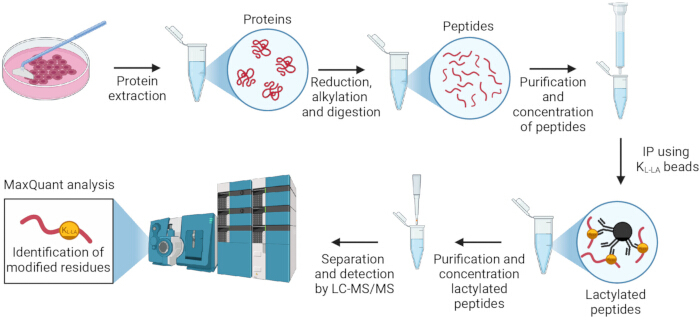
Figure 1: Overview of the workflow for the lactylome analysis. Abbreviations: IP = Immunoprecipitation; KL-LA = L-lactyllysine; LC-MS/MS = liquid chromatography-tandem mass spectrometry. Please click here to view a larger version of this figure.
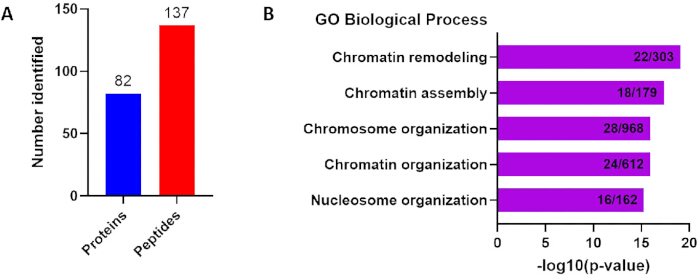
Figure 2: Representative results for some proteins obtained for the lactylome of TE11 cells. (A) Total number of proteins and peptides identified. Multiple lactylation sites can be identified on the same protein. (B) Top 5 biological processes enriched for lactylated proteins in TE11 cells obtained using the STRING database. P-value was corrected for multiple testing using Benjamini-Hochberg. The number in each bar represents the number of proteins in the network that were identified as lactylated out of the total number of proteins in this Gene Ontology (GO). Please click here to view a larger version of this figure.
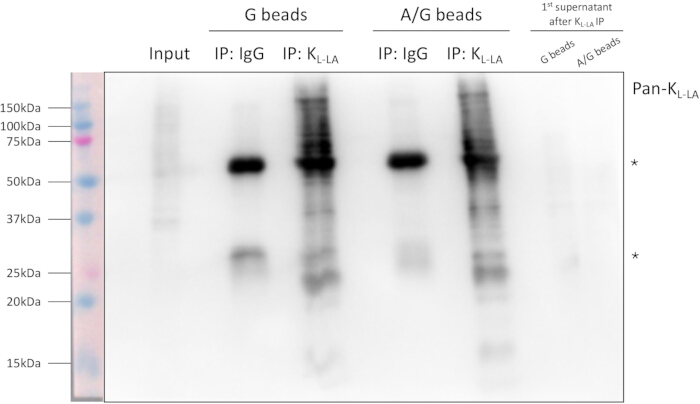
Figure 3: Immunoprecipitation of KL-LA using G or A/G beads and WB detection of Pan-KL-LA in TE11 cells. Detection of Pan-KL-LA serves as a crucial control to confirm the efficacy and specificity of the immunoprecipitation of this PTM. This experiment ensures that the IP successfully enriches proteins harboring the KL-LA modification. (*) indicates the heavy and light chains of the antibody, as clearly observed in IP: IgG lanes (control IP) (N = 3). Please click here to view a larger version of this figure.
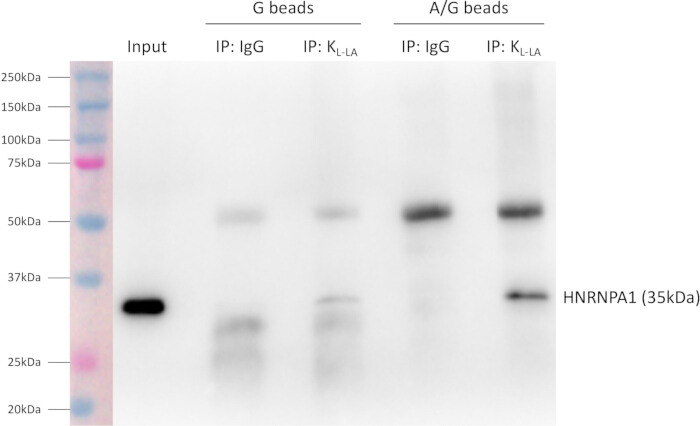
Figure 4: Immunoprecipitation of KL-LA using G or A/G beads and detection of HNRNPA1 by WB. Detection of HNRNPA1 by WB in KL-LA-specific immunoprecipitations using G or A/G beads confirms its lactylation in TE11 cells (N = 3). Please click here to view a larger version of this figure.
| Solution | Final concentration |
| Urea | 8 M |
| Ammonium bicarbonate | 1 M |
| HEPES | 20 mM |
Table 1: Lactylome lysis buffer. Preparing in MS-grade water and adjusting the pH to 8.
| Solution - Lactylome wash buffer | Final concentration |
| NaCl | 100 mM |
| EDTA | 1 mM |
| Tris-HCl | 20 mM |
| Add for Lactylome IP buffer | Final concentration |
| NP-40 | 0.5% |
Table 2: Lactylome wash buffer and IP buffer. Preparing in MS-grade water and adjusting the pH to 8 for both solutions.
| Solution | Final concentration |
| Sodium chloride | 100 mM |
| Sodium fluoride | 50 mM |
| Tris-HCl (pH 7.5) | 50 mM |
| β-glycerophosphate | 40 mM |
| EDTA (pH 8) | 5 mM |
| Glycerol | 5% |
| Triton X-100 | 1% |
| Add fresh: | |
| Protease Inhibitor Cocktail 100X | 1X |
| PMSF | 1 mM |
| Orthovanadate | 0.2 mM |
Table 3: IP lysis/wash buffer. It must be free of denaturants, as they can destabilize the presence of the PTMs on proteins.
| Positions within proteins | Protein | Protein names | Gene names | Number of Lactylation (K) | Lactylation (K) probabilities | Intensity | ||
| 168 | P16403 | Histone H1.2 | HIST1H1C | 1 | KPAAATVTK(0.733)K(0.267) | 1.98E+04 | ||
| 191 | P16403 | Histone H1.2 | HIST1H1C | 1 | SAAK(1)AVKPK | 6.91E+04 | ||
| 51 | A8K2U0 | Alpha-2-macroglobulin-like protein 1 | A2ML1 | 1 | VCLDLSPGYSDVK(1) | 3.18E+04 | ||
| 5;5;5 | C9JMM0 | Chromobox protein homolog 3 | CBX3 | 1 | ASNK(1)TTLQK | 1.21E+05 | ||
| 10;10;10 | C9JMM0 | Chromobox protein homolog 3 | CBX3 | 1 | TTLQK(0.828)MGK(0.172) | 2.49E+05 | ||
| 112;141 | O76095-2 | Protein JTB | JTB | 2 | K(0.858)ALEK(0.18)VRK(0.962) | 1.47E+04 | ||
| 350;298;298;297;285;245; 253;169;48;100;95;93;79; 23;93;92;79;28;74;50;73; 51;57;56;48;61;66;66;73 | P09651 | Heterogeneous nuclear ribonucleoprotein A1 | HNRNPA1 | 1 | SSGPYGGGGQYFAK(1)PR | 6.13E+04 | ||
Table 4: Representative results for lactylated peptides obtained for the TE11 esophageal squamous cell carcinoma cell line. This table is obtained following the MaxQuant analysis.
Discussion
Loading...
$$\rightleftharpoonup{xx}$$
$$\longleftharp{xx}$$,
$$\longrightharp{xx}$$,
This protocol describes how immunoprecipitation of KL-LA-modified proteins can be used in MS to discover new lactylated proteins and their sites of lactylation. This lactylome protocol is performed using conjugated beads, but could be achieved using KL-LA antibody or even KD-LA antibody according to the research question. If one uses an antibody instead of conjugated beads, choosing a polyclonal antibody facilitates the formation of tighter complexes since it can bind to multiple epitopes; however, this approach may introduce variability. One advantage of using conjugated beads is that they prevent the antibody from leaching - releasing from the solid support - which could contaminate the MS samples. It is also more time efficient than using an unconjugated antibody.
Moreover, it is important to note that the quantity of identified peptides in this type of analysis can be influenced by multiple factors1. First, antibody specificity plays a crucial role in ensuring that the correct protein is captured. Adding a step of pre-clearing with agarose beads could be a way to remove nonspecific interactions. On the other hand, it is unknown if lactylation can affect trypsin digestion, as it cleaves peptides on the c-terminal side of arginine residue, but most importantly, lysine residue. If this is the case, it could potentially lead to reduced peptide coverage. Hence, it is possible to consider other options for proteases. In this protocol, the parameter ''Max. missed cleavages'' is increased to take into account this limitation. Lastly, sample preparation and handling, such as the use of gloves to prevent contamination of samples with keratins from the skin, for example, or modification stability, as PTM turnover is a dynamic and sometimes fast process6, should also be considered.
Contrary to the broader MS approach that led to low detection of low-abundance PTM, such as lactylation, identification of enriched-KL-LA peptides through MS-based proteomics allows detailed PTM site analysis, such as the identification of newly characterized sites of lactylation and lactylated proteins19. Western blot can provide information on the general pattern of lactylation present in cells, but cannot inform on protein-specific lactylation. Thus, IP is the commonly used approach to confirm MS-detected PTM20. Proximity ligation assay (PLA) is another technique that can be used to confirm the lactylation of potential targets identified by proteomics21. This technique can also indicate the localization of the modified proteins, but has a lower specificity. Using a lactylation-specific IP approach is appropriate for a broad PTM screen, but it could be interesting to perform protein-specific IP depending on the research question at play.
When quantifying the proportion of a specific lactylated protein in a total protein extract, performing an IP alone is not sufficient. While IP using KL-LA beads allows for the capture of lactylated proteins, it does not accurately quantify the proportion of lactylation, as it is limited to enriching target proteins. Therefore, mass spectrometry is required, providing a more detailed analysis that allows for precise quantitative measurement of lactylation. Thus, performing IP of a potentially lactylated protein using an antibody against that protein, followed by mass spectrometry analysis, could determine the percentage of lactylated proteins in a total protein sample, while performing IP is an efficient approach to confirm the lactylation of the proteins identified as lactylated by MS.
In an IP using non-conjugated antibodies, optimizing the bead-to-antibody ratio is essential to ensure optimal capture of lactylated proteins. Indeed, the balance between these two components directly impacts the specificity and efficiency of the IP. An excess of antibodies can lead to nonspecific binding, which increases background noise and reduces the overall accuracy of detection. In contrast, the contrary can lead to an inefficient target protein enrichment, resulting in weaker signals and reduced sensitivity. These technical considerations are critical for obtaining reliable and precise results in the study of lactylated proteins.
To conclude, this protocol can be used to monitor changes in lactylation profiles following homeostasis deregulation, such as cancer8,10, that could impact drug-related response. Identification of biomarkers could even be achieved using this method. Applicable to multiple cell lines, tissue types, and even patient biopsies, this technique holds the potential to deepen the understanding of PTM-driven cell signaling in disease or normal conditions.
Disclosures
Loading...
$$\rightleftharpoonup{xx}$$
$$\longleftharp{xx}$$,
$$\longrightharp{xx}$$,
No conflict of interest to disclose.
Acknowledgements
Loading...
$$\rightleftharpoonup{xx}$$
$$\longleftharp{xx}$$,
$$\longrightharp{xx}$$,
We sincerely thank all members of the Giroux Lab for scientific discussions. We are thankful to the Proteomic and mass spectrometry platform from the Faculty of Medicine and Health Sciences - Université de Sherbrooke for providing services and guidance. VG is supported by the Natural Sciences and Engineering Research Council of Canada (RJPIN-2019-06185) and the Canadian Institutes of Health Research (178171). VG holds the Canada Research Chair Tier 2 in Gastrointestinal Stem Cell Biology. MH is a recipient of scholarships from Centre de Recherche en Inflammation et Oncologie Digestive de l'Université de Sherbrooke, Université de Sherbrooke-Fondation De Sève, CRCHUS, the TRaIning A New generation of researchers in Gastroenterology and LivEr (TRIANGLE) program, and FRQ. FMB is a FRQS Merit Research Scholar (366044). VG and FMB are members of the FRQS-funded "Centre de Recherche du CHUS".
Materials
| Name | Company | Catalog Number | Comments |
|---|---|---|---|
| 100 uL Zip Tip C18 | Pierce | 87784 | |
| Acclaim PepMap100 C18 | Dionex Corporation | 164946 | 0,3mm i.d. x 5mm |
| Acetonitrile (MS grade) | Fisher | A955-4 | |
| Ammonium bicarbonate | Sigma-Aldrich | A6141-500 | |
| Anti-HNRNPA1 monoclonal antibody | Novus Biologicals | NB100-672 | |
| Anti-L-Lactyllysine (KL-La) monoclonal antibody | PTM-Bio | PTM1401RM | |
| Anti-mouse IgG, HRP-linked antibody | CST | 7076S | |
| Anti-rabbit IgG, HRP-linked antibody | CST | 7074S | |
| Azure 280 | Biosystems | AZI280-01 | |
| BCA kit | Thermo Fisher Scientific | P123227 | |
| Bovin Serum Albumin (BSA) | Wisent | 800-095-EG | |
| Captive Spray nanoESI source | Bruker Daltonics | ||
| Chloroacetamide | Sigma-Aldrich | C0267 | |
| Clarity Max Western ECL Substrate | Bio-Rad | 1705062 | |
| Dithiothreitol (DTT) | Thermo Fisher Scientific | R0861 | |
| Dynabeads Protein G beads for Immunoprecipitation | Thermo Fisher Scientific | 10004D | |
| EDTA | Sigma-Aldrich | E9884 | |
| Formic acid (FA; MS grade) | Thermo Fisher Scientific | A117-50 | |
| Glycerol | Fisher Scientific | BP229-1 | |
| HEPES (1M) | Wisent | 330-050-EL | |
| Hypersep C18 100mg column | Fisher | 60108-302 | |
| KL-LA agarose conjugated beads | PTM-Bio | PTM-1404 | |
| Laemmli 2X (SDS, Bromophenol) | Wisent, J.T.Baker | 800-100-CG, D293-01 | |
| Low binding microtube 0.5 mL | Sarstedt | 72.704.600 | |
| Low binding microtube 1.5 mL | Thermo Fisher Scientific | P190410 | |
| Microtube 1.7 mL | Axygen | MCT-175-C | |
| NanoElute HPLC system | Bruker Daltonics | 1,9um particle size, 75um i.d. x 25cm | |
| Normal Rabbit IgG polyclonal antibody | Millipore Sigma | 12-370 | |
| PepSep | Bruker Daltonics | 1811112 | |
| Phosphate-buffered saline (PBS) | Wisent | 311-425-CL | |
| PMSF | Thermo Fisher Scientific | 36978 | |
| Protease inhibitor cocktail (PIC) | Sigma-Aldrich | P8340-5 | |
| Sera-Mag SpeedBeads Protein A/G Magnetic Particles | Thermo Fisher Scientific | 09-981-920 | |
| Sodium chloride | Sigma-Aldrich | S9888-500 | |
| Sodium fluoride | Sigma-Aldrich | S1504 | |
| Sodium orthovanadate | Sigma-Aldrich | S6508 | |
| TimsTOF pro mass spectrometer | Bruker Daltonics | ||
| Trifluoroacetic acid (TFA) | Thermo Fisher Scientific | A116-50 | |
| Tris-HCl | Wisent | 600-125-IK | |
| Triton X-100 | Sigma-Aldrich | X100 | |
| Trypsine (MS grade) | Pierce | 90058 | |
| Urea | Thermo Fisher Scientific | U15-500 | |
| Vaccufuge plus | Eppendorf | 22820168 | |
| Water (MS grade) | VWR | 10803-890A | |
| β-glycerophosphate | Sigma-Aldrich | G5422 | |
| β-mercaptoethanol | Sigma-Aldrich | M3148 |
References
Loading...
$$\rightleftharpoonup{xx}$$
$$\longleftharp{xx}$$,
$$\longrightharp{xx}$$,
- Lactylation in cancer: Current understanding and challenges. Cancer Cell. 42 (11), 1803-1807 (2024).">Li, H., Sun, L., Gao, P., Hu, H. Lactylation in cancer: Current understanding and challenges. Cancer Cell. 42 (11), 1803-1807 (2024).
- Lactylation: The emerging frontier in post-translational modification. Front Genet. 15, 1423213(2024).">Lu, Z., et al. Lactylation: The emerging frontier in post-translational modification. Front Genet. 15, 1423213(2024).
- Metabolic regulation of gene expression by histone lactylation. Nature. 574 (7779), 575-580 (2019).">Zhang, D., et al. Metabolic regulation of gene expression by histone lactylation. Nature. 574 (7779), 575-580 (2019).
- HBO1 catalyzes lysine lactylation and mediates histone H3K9la to regulate gene transcription. Nat. Commun. 15 (1), 3561(2024).">Niu, Z., et al. HBO1 catalyzes lysine lactylation and mediates histone H3K9la to regulate gene transcription. Nat. Commun. 15 (1), 3561(2024).
- Non-enzymatic lysine D-lactylation induced by glyoxalase II substrate SLG dampens inflammatory immune responses. Cell Res. 35 (2), 97-116 (2025).">Zhao, Q., et al. Non-enzymatic lysine D-lactylation induced by glyoxalase II substrate SLG dampens inflammatory immune responses. Cell Res. 35 (2), 97-116 (2025).
- Class I histone deacetylases (HDAC1-3) are histone lysine delactylases. Sci Adv. 8 (3), eabi6696(2022).">Moreno-Yruela, C., et al. Class I histone deacetylases (HDAC1-3) are histone lysine delactylases. Sci Adv. 8 (3), eabi6696(2022).
- Hypoxic in vitro culture reduces histone lactylation and impairs pre-implantation embryonic development in mice. Epigenetics Chromatin. 14 (1), 57(2021).">Yang, W., et al. Hypoxic in vitro culture reduces histone lactylation and impairs pre-implantation embryonic development in mice. Epigenetics Chromatin. 14 (1), 57(2021).
- Lactylome analysis suggests lactylation-dependent mechanisms of metabolic adaptation in hepatocellular carcinoma. Nat. Metab. 5 (1), 61-79 (2023).">Yang, Z., et al. Lactylome analysis suggests lactylation-dependent mechanisms of metabolic adaptation in hepatocellular carcinoma. Nat. Metab. 5 (1), 61-79 (2023).
- Protein lactylation critically regulates energy metabolism in the protozoan parasite Trypanosoma brucei. Front Cell Dev Biol. 9, 719720(2021).">Zhang, N., et al. Protein lactylation critically regulates energy metabolism in the protozoan parasite Trypanosoma brucei. Front Cell Dev Biol. 9, 719720(2021).
- Histone lactylation drives oncogenesis by facilitating m(6)A reader protein YTHDF2 expression in ocular melanoma. Genome Biol. 22 (1), 85(2021).">Yu, J., et al. Histone lactylation drives oncogenesis by facilitating m(6)A reader protein YTHDF2 expression in ocular melanoma. Genome Biol. 22 (1), 85(2021).
- Common errors in mass spectrometry-based analysis of post-translational modifications. Proteomics. 16 (5), 700-714 (2016).">Kim, M. -S., Zhong, J., Pandley, A. Common errors in mass spectrometry-based analysis of post-translational modifications. Proteomics. 16 (5), 700-714 (2016).
- Dynamics of post-translational modification systems: Recent progress and future directions. Biophys J. 114 (3), 507-515 (2018).">Conradi, C., Shiu, A. Dynamics of post-translational modification systems: Recent progress and future directions. Biophys J. 114 (3), 507-515 (2018).
- MaxQuant enables high peptide identification rates, individualized p.p.b.-range mass accuracies and proteome-wide protein quantification. Nat Biotechnol. 26 (12), 1367-1372 (2008).">Cox, J., Mann, M. MaxQuant enables high peptide identification rates, individualized p.p.b.-range mass accuracies and proteome-wide protein quantification. Nat Biotechnol. 26 (12), 1367-1372 (2008).
- Unimod: Protein modifications for mass spectrometry. Proteomics. 4 (6), 1534-1536 (2004).">Creasy, D. M., Cottrell, J. S. Unimod: Protein modifications for mass spectrometry. Proteomics. 4 (6), 1534-1536 (2004).
- Basic local alignment search tool. J Mol Biol. 215 (3), 403-410 (1990).">Altschul, S. F., Gish, W., Miller, W., Myers, E. W., Lipman, D. J. Basic local alignment search tool. J Mol Biol. 215 (3), 403-410 (1990).
- UniProt Tools: BLAST, Align, Peptide Search, and ID Mapping. Curr Protoc. 3 (3), e697(2023).">Zaru, R., Orchard, S. UniProt Consortium. UniProt Tools: BLAST, Align, Peptide Search, and ID Mapping. Curr Protoc. 3 (3), e697(2023).
- UniProt: The universal protein knowledgebase in 2025. Nucleic Acids Res. 53 (D1), D609-D617 (2025).">UniProt Consortium. UniProt: The universal protein knowledgebase in 2025. Nucleic Acids Res. 53 (D1), D609-D617 (2025).
- Pretreating and normalizing metabolomics data for statistical analysis. Genes Dis. 11 (3), 100979(2023).">Sun, J., Xia, Y. Pretreating and normalizing metabolomics data for statistical analysis. Genes Dis. 11 (3), 100979(2023).
- Data-independent acquisition proteomics methods for analyzing post-translational modifications. Proteomics. 23 (7-8), e2200046(2023).">Yang, Y., Qiao, L. Data-independent acquisition proteomics methods for analyzing post-translational modifications. Proteomics. 23 (7-8), e2200046(2023).
- Mass spectrometry-based detection and assignment of protein post-translational modifications. ACS Chem Biol. 10 (1), 63-71 (2015).">Doll, S., Burlingame, A. L. Mass spectrometry-based detection and assignment of protein post-translational modifications. ACS Chem Biol. 10 (1), 63-71 (2015).
- Proximity ligation assay allows the detection, localization, and quantification of protein arginine methylation in fixed tissue. J Vis Exp. (185), e64294(2022).">Poulard, C., Jacquemetton, J., Valantin, J., Treilleux, I., Le Romancer, M. Proximity ligation assay allows the detection, localization, and quantification of protein arginine methylation in fixed tissue. J Vis Exp. (185), e64294(2022).
Reprints and Permissions
Request permission to reuse the text or figures of this JoVE article
Request Permission