This protocol details the development process of acupuncture clinical guideline recommendations for nonspecific low back pain, including systematic evidence synthesis, quality appraisal, expert consensus procedures, and the formulation of treatment regimens.
Method Article
Developing Guideline Recommendations and Treatment Regimens for Acupuncture: An Example from the Clinical Practice Guideline
Hui-ze Lin1,2 , Shan-shan Li1 , Yu-tong Fei3 , Hong Zhao4 , Yao Lu1 , Xiao-xu Liu1 , Xiang Wang1 , Yi-xuan Feng5 , Sheng-nan Guo6 , Lan-ping Liu1 , Wen-xi Yan1 , Ke-xin Zhu1 , Ping-ping Zhang1 , Jiang-hong Shen1 , Jing-wen Fei1 , Jin-na Yu1 , Tao Yang1
1Department of Acupuncture-Moxibustion, Guang'anmen Hospital, China Academy of Chinese Medical Sciences, 2Monash Neuromodulation Research Unit, Department of Physiotherapy, School of Primary and Allied Health Care, Faculty of Medicine, Nursing and Health Science, Monash University, 3Centre for Evidence-based Chinese Medicine, Beijing University of Chinese Medicine, 4Luohu District Hospital of Traditional Chinese Medicine, 5Department of Acupuncture-Moxibustion, Institute of Acupuncture and Moxibustion, China Academy of Chinese Medical Sciences, 6Institute of Acupuncture and Moxibustion, China Academy of Chinese Medical Sciences
Opens in a new tab
In This Article
Summary
Loading...
$$\rightleftharpoonup{xx}$$
$$\longleftharp{xx}$$,
$$\longrightharp{xx}$$,
Abstract
Loading...
$$\rightleftharpoonup{xx}$$
$$\longleftharp{xx}$$,
$$\longrightharp{xx}$$,
Acupuncture is a widely practised modality in complementary and alternative medicine, with demonstrated efficacy in managing nonspecific low back pain. Despite its inclusion in international guidelines, formal protocols for developing acupuncture-specific clinical recommendations remain insufficient. The present study outlines the methodology employed to develop the clinical practice guideline for acupuncture-moxibustion in nonspecific low back pain, using a representative clinical question to illustrate each phase of development. The guideline development process involved a systematic compilation of clinical evidence and a critical examination of evidence quality and applicability within real-world clinical settings. The results present a structured, transparent process for achieving expert consensus and generating guideline recommendations and treatment protocols. The study provides a replicable framework for developing acupuncture clinical practice guidelines, thereby contributing to the broader standardization of acupuncture practice and its integration into evidence-informed healthcare.
Introduction
Loading...
$$\rightleftharpoonup{xx}$$
$$\longleftharp{xx}$$,
$$\longrightharp{xx}$$,
Acupuncture is widely recognised as one of the most extensively employed therapies in the complementary and alternative medicine world, with 45 countries recognising it legislatively and 39 countries recognising it as a valid therapy within their healthcare system1,2. Nonspecific low back pain (NSLBP) stands as the most common medical condition3,4. As shown, positive efficacy in clinical practice is supported by systematic reviews and international guidelines. While international guidelines on low back pain consistently mention acupuncture1,5,6, a noticeable gap exists in scientific evidence and the availability of standardized acupuncture clinical practice guidelines. Clinical guidelines play a critical role in promoting evidence-based practice7. Existing publications outline methodological frameworks for guideline development, including evidence retrieval and systematic appraisal procedures8,9,10. Nevertheless, systematic guidance remains limited regarding the collection, synthesis, and translation of evidence into actionable recommendations within acupuncture-specific clinical guidelines.
The "Clinical Practice Guidelines for Acupuncture in Nonspecific Low Back Pain" project was initiated on September 30, 2020, under the auspices of the World Federation of Acupuncture-Moxibustion Societies (WFAS), and ultimately addressed ten key clinical questions11,12. This study uses a representative clinical question to illustrate the step-by-step process of developing final recommendations, thereby providing methodological insights for the future standardization of acupuncture clinical practice guidelines.
In real-world applications, this protocol is most effective when used in multidisciplinary clinical settings that support structured decision-making processes and the integration of evidence. However, in regions with limited methodological resources or low digital infrastructure, adaptation may be required. For example, in the absence of electronic infrastructure, consensus-building may rely on manual survey instruments or simplified evaluation scales. Moreover, the success of the guideline development process is contingent upon timely expert coordination and access to trained personnel for evidence synthesis and documentation. These contextual factors should be considered by any group aiming to replicate or adapt this approach in different healthcare systems.
Protocol
Loading...
$$\rightleftharpoonup{xx}$$
$$\longleftharp{xx}$$,
$$\longrightharp{xx}$$,
This protocol follows the ethical guidelines of the World Federation of Acupuncture-Moxibustion Societies and does not involve direct patient experimentation.
1. Work overview
- Establish the project structure.
- Appoint a guideline leader (GL) to oversee funding acquisition, coordinate the project team, and manage the entire project timeline. Ensure that the GL facilitates expert discussions and supervises scientific quality control.
- Form a multidisciplinary guideline development group (GDG) following WFAS standards.
NOTE: Ensure representation from experts in acupuncture, orthopaedics, pain management, health economics, and patient advocacy, spanning at least six countries.
- Define subgroups and responsibilities.
- Designate a drafting team (DT) under the GL, comprising members of the systematic review group (SRG) responsible for literature screening and evidence analysis. Assign tasks by distributing standardized screening forms, training members on inclusion criteria, and ensuring independent dual review for each article.
- Assign administrative DT members to handle expert meeting logistics and record-keeping.
- Establish literature retrieval functions.
- Appoint the Literature Retrieval Institution (LRI), specifically the Institute of Information on Traditional Chinese Medicine, to perform all systematic literature searches.
- Instruct the LRI to access both Chinese and English language databases using standardized query protocols and consistent indexing logic.
- Organize communication and collaboration.
- Assign a secretary to manage internal communications, schedule meetings, and collect administrative records.
- Conduct weekly online meetings via video conferencing software. Send calendar invitations by email and prepare a shared agenda in advance using collaborative platforms. Assign a note-taker to document key discussions, decisions, and action items in real time. Present updates via screen sharing and record the session using built-in recording functions. Immediately upload meeting minutes to a shared drive and maintain them in a standardized format.
- Documentation and archiving
- Archive all meeting notes using standardized templates (Word and PDF). Record sessions via video conferencing tools and export recordings as MP4 files. Upload all materials to a password-protected shared drive accessible only to GDG members and project leaders.
- Archive records in a shared, access-controlled digital workspace to ensure traceability and transparency of the entire process.
2. Work process
NOTE: The guideline addresses ten clinical questions, covering key acupuncture treatment areas for nonspecific low back pain11,12. This study illustrates the specific guideline development process by focusing on a critical question: For patients with acute or subacute nonspecific low back pain, is filiform needle therapy more effective than oral Western medicine? (Figure 1, Flowchart of the recommendation process).
- Stage 1: Preparing the evidence bodies
- Define the clinical focus.
- Define the central clinical question using the Population, Intervention, Comparison, Outcome (PICO) framework: "For patients with acute or subacute NSLBP, is filiform needle therapy more effective than oral Western medicine?" Exclude interventions, comparators, or outcomes that do not meet PICO criteria based on preliminary assessment13,14,15,16,17,18.
- Use this PICO question to guide all evidence retrieval, screening, and grading decisions throughout the protocol.
- Conduct literature searches.
- Instruct the LRI to perform a comprehensive literature search across both Chinese and English databases up to March 2021.
- Include China National Knowledge Infrastructure (CNKI), Wan Fang database, VIP (China Academic Journals) database, Chinese Biomedical Literature Database (CBM), PubMed, Web of Science, Embase, Cochrane Library, Scopus, and Epistemonikos. Perform searches in each database using predefined combinations of terms related to the PICO questions. Export all retrieved citations into a reference manager and remove duplicates.
- Retrieve grey literature from ClinicalTrials.gov, European Union Clinical Trial Register (EUCTR), the World Health Organisation International Clinical Trials Registry Platform (WHO ICTRP), and the Chinese Clinical Trial Registry (ChiCTR).
- Ensure that search results are screened for alignment with the PICO question.
- Evaluate existing systematic reviews.
- Direct DT and GDG members to independently appraise all included systematic reviews and meta-analyses using the AMSTAR 2 checklist. Require reviewers to score all 16 domains, resolve discrepancies through consensus meetings, and record final quality ratings in a centralised database.
- Confirm that all included interventions, comparators, and outcomes conform to the PICO framework.
- Register a new systematic review (SR) and meta-analysis (MA) protocol on PROSPERO if existing evidence fails to meet the inclusion criteria.
NOTE: On September 13, 2021, the systematic review and meta-analysis for this clinical question were registered on an international protocol registry platform (http://www.crd.york.ac.uk/prospero) with the registration number CRD42021278346.
- Screen and select RCTs
- Follow the Preferred Reporting Items for Systematic Reviews and Meta-analysis Protocols (PRISMA) guidelines to screen and classify trials according to PICO19. Screen articles by importing all search results into a reference manager. Remove duplicates, apply inclusion/exclusion criteria using two independent reviewers, and document selection flow using a standard systematic review reporting framework checklist and flow diagram. Resolve discrepancies through discussion or, if unresolved, consultation with a third independent reviewer.
- From the initial screening, identify 19 potentially relevant RCTs and include 14 based on cross-review by the SRG and GDG. Perform manual reference checks and supplementary searches to ensure comprehensiveness.
- Extract and analyze data.
- Instruct two SRG members to extract key data independently, including characteristics of included studies20,21,22,23,24,25,26,27,28,29,30,31,32,33.
NOTE: Conduct Table 1, Characteristics of Included Studies, preparing meta-analysis. - Conduct a meta-analysis to synthesize evidence, supplemented by forest plots and subgroup analyses to address heterogeneity (Supplementary Figure 1, Supplementary Figure 2, Supplementary Figure 3, Supplementary Figure 4, and Supplementary Figure 5, Forest plots of main meta-analysis results). Use narrative synthesis to supplement statistical results when appropriate, particularly in cases of high heterogeneity where meta-analysis is unsuitable.
NOTE: Use narrative synthesis particularly in contexts where high heterogeneity limits quantitative aggregation. - Convert evidence to recommendations: Summarize the quantitative results in the Summary of Findings (Table 2, Summary of Findings) and provide them to panels to develop the evidence-to-decision (EtD) frameworks and final recommendations for the guideline.
NOTE: For the question "For patients with acute or subacute nonspecific low back pain, is filiform needle therapy more effective than oral Western medicine?", the 14 eligible randomized controlled trials (RCTs) included in the meta-analysis, the main results are as follows:
i) Pain (VAS or NRS): Based on 9 RCTs with 468 participants, filiform needle therapy showed a mean difference of -1.17 cm (95% CI: -1.61 to -0.72) compared to oral medication. This indicates a moderate effect size20,21,22,23,24,25,26,27,28.
ii) Response Rate: Across 14 RCTs with 16 comparisons involving 1,278 participants, the relative risk (RR) was 1.11 (95% CI: 1.05 to 1.18), favouring acupuncture over oral treatment, with an absolute improvement of 91 more responders per 1,00020,21,22,23,24,25,26,27,28,29,30,31,32,33.
iii) Functional Disability (ODI/RMDQ): From 4 RCTs with 6 comparisons (346 participants), the standardized mean difference (SMD) was -1.42 (95% CI: -2.22 to -0.62), indicating a large effect favouring acupuncture21,25,26,28.
iv) Lumbar Range of Motion: Across one RCT with 2 comparisons involving 95 participants reported a non-significant mean difference of +1.27 cm (95% CI: -0.77 to 3.31)26.
v) Lumbar Range of Motion (Schober Test): Two RCTs with 120 participants reported a non-significant mean difference of +1.27 cm (95% CI: -0.77 to 3.31)24,27.
v) Safety: Adverse events were reported in 4 out of 14 studies. Acupuncture-related events were minor and self-limiting (e.g., transient fainting, mild bleeding), while medication-related adverse reactions included gastrointestinal discomfort21,26,28,29.
Based on quantitative findings, the methodological protocol presented in this study led to the finalized recommendation: "The panel recommends prioritising filiform needle therapy."
- Instruct two SRG members to extract key data independently, including characteristics of included studies20,21,22,23,24,25,26,27,28,29,30,31,32,33.
- Supplement gaps with indirect evidence.
- Consult health economists to estimate costs and policy impacts when direct evidence is unavailable34.
- Incorporate market price data to contextualise economic factors when formal cost-effectiveness analyses are unavailable.
- Appraise evidence quality.
- Use the Grading of Recommendation Assessment, Development, and Evaluation (GRADE) method35 to assess the quality of evidence across dimensions. For each outcome, evaluate risk of bias, inconsistency (using I2 threshold of 50%), indirectness, imprecision, and publication bias36,37 (Table 3, Credibility Assessment).
- Use the Risk of Bias (RoB) assessment tools to evaluate methodological limitations in individual RCTs37,38,39.
- Evaluate I2 values to assess inconsistency; check CIs and sample size to determine imprecision36,40. Use statistical software for meta-analysis to compute I2 for heterogeneity (threshold: I2 > 50% considered substantial). Interpret 95% confidence intervals and consider imprecision significant if the total sample size < 400 or the CI crosses the null effect22,26.
- Conduct subgroup analyses separately from the overall dataset to reduce heterogeneity and enhance clinical relevance37.
- Assign final quality ratings as high, moderate, low, or very low based on the lowest-rated key outcome36,40. Document all judgments in an evidence-to-decision software tool following the GRADE methodology.
- Convert evidence to recommendations.
- Generate evidence-to-decision (EtD) frameworks using dedicated guideline development software. Integrate Summary of Findings (SoF) tables (Table 2, Summary of Findings) and populate criteria related to priority, benefits, harms, feasibility, acceptability, and resource use. Export completed frameworks in PDF format for expert panel review.
- Ensure each framework includes a concise summary of findings, an appraisal of benefits versus harms, and feasibility considerations.
- Present EtD criteria, including problem priority, benefits, harms, resource use, equity, acceptability, and feasibility for panel voting.
- Define the clinical focus.
- Stage 2: Determining recommendations by the guideline panel
- Design the consensus process.
- Implement a two-round modified Delphi process following steps 2.2.1.2-2.1.1.4.
- Distribute scoring forms to all panellists individually via email with instructions for completion within 5 days;
- After initial scoring, compile quantitative results and anonymised comments;
- Conduct a structured online meeting to discuss disagreements, followed by a second anonymous vote.
- Use the first round to collect individual EtD evaluations; use the second round to conduct group discussions and finalize recommendations.
- Prepare the voting platform and materials.
- Supply GDG members with digital EtD evaluation forms explicitly aligned with the PICO framework and GRADE assessment domains41.
- Distribute structured EtD evaluation forms through a secure online survey platform. Set single-choice voting options aligned with the GRADE domains. Enable anonymous submission, restrict voting to one per user, and record timestamped data for export and analysis.Export results as Excel files for consensus analysis.
- Guide experts in recommendation evaluation.
- Instruct panellists to assess key dimensions: benefit-risk balance, values, feasibility, resource use, and equity42.
- Present supporting evidence summaries during discussion and provide instructions for scoring recommendation strength and direction.
- Classify recommendation strength.
- Use the GRADE grid to categorise the recommendation into one of the following types36,40,43
Strong recommendation for intervention
Conditional recommendation for intervention
Weak recommendation for intervention
Strong recommendation for control
Conditional recommendation for control
Weak recommendation for control
No recommendation
Define a strong recommendation as ≥70% expert agreement. Define conditional/weak recommendation as ≥50% agreement and ≤20% support for control30.
- Use the GRADE grid to categorise the recommendation into one of the following types36,40,43
- Document consensus process.
- Require each expert to independently complete Round 1 scoring without influence from other panel members.
- Summarize results by the GL, including all submitted comments and numerical data. Present voting outcomes are visualised using response tables in Table 4, Evidence to Decision Framework, detailing agreement proportions across GRADE domains.
- Review the summary and hold structured discussions to reach convergence during Round 2.
- Finalize recommendations.
- Update the recommendation wording based on the Round 2 consensus and submit it to the DT for integration41.
- Draft final recommendation statements, incorporating EtD evidence, majority vote outcomes, and expert comments. If no consensus is reached after two rounds, the panel issues no recommendation for that clinical question42,44.
NOTE: For the recommendation on filiform needle therapy versus oral Western medicine, a total of 13 expert panellists participated in the final round of voting. Specifically, 10 out of 13 panellists (77%) voted in favour of recommending the intervention, meeting the predefined threshold for issuing a strong recommendation (≥70% agreement). Across the EtD domains, expert agreement was as follows: Problem priority: 13/13 (100%), Benefits & harms of the options: 12/13 (92%), Resource use:10/13 (77%), Equity: 10/13 (77%), Acceptability: 11/13 (85%), Feasibility: 11/13 (85%) and Certainty of evidence: Rated as very low (based on GRADE), acknowledged but offset by strong consensus. Although equity-related impacts received slightly lower agreement (77%), the overall support, including considerations of the low risk of harm, clinical feasibility, and patient preferences, met the predefined threshold for issuing a strong recommendation. These factors offset the limitations in evidence certainty. These quantitative results provide a transparent and reproducible basis for the panel's final consensus. (Table 2, Summary of Findings and Table 4, Evidence to Decision Framework). While the overall certainty of the evidence for this recommendation was rated as "very low" based on GRADE criteria, due to factors such as high heterogeneity, risk of bias, and limited sample sizes, the panel determined that a conditional recommendation was still warranted. Multiple non-evidence-based EtD criteria supported this decision:
i) Patient Values and Preferences: Expert consensus indicated strong patient preference for acupuncture over medication due to perceived safety, cultural familiarity, and non-pharmacological nature of the intervention.
ii) Acceptability and Feasibility: Acupuncture is widely practised and well-integrated in many clinical settings in Asia. The technique does not require complex equipment, and most procedures are already reimbursed in select regions.
iii) Resource Use and Cost: Although formal economic analyses were limited, existing studies from high-income countries suggest that acupuncture is either cost-effective or cost-neutral compared to standard care. The panel acknowledged this as indirect evidence supporting feasibility.
iv) Equity Considerations: Acupuncture can potentially reduce health disparities by offering low-cost alternatives to pharmacologic management, particularly where access to Western medicines is constrained.
v) Risk-Benefit Profile: Reported adverse events associated with filiform needle therapy were rare and self-limiting, whereas Western medications posed known risks such as gastrointestinal distress or dependency.
These qualitative factors were quantitatively supported through the EtD voting process: over 85% of the expert panel rated the intervention as "acceptable," "feasible," and of "high priority" (Table 4, Evidence to Decision Framework). While the evidence was weak, the convergence of stakeholder values, safety profile, and implementation feasibility justified a conditional recommendation under the GRADE framework.
- Design the consensus process.
- Stage 3: Sending the draft for review and publication
- Compile final documents
- Finalize the recommendation statements and treatment regimens based on expert consensus outcomes from Stage 2.
- Compile and archive all supporting documentation, including EtD frameworks, voting records, and systematic review/meta-analysis outputs.
- Submit for internal and external review
- Submit the draft guideline to five internal reviewers designated by the GDG.
NOTE: These included senior clinicians in acupuncture and orthopaedics, health economists, and methodologists trained in the GRADE approach. Each reviewer was provided with the full protocol, the Summary of Findings (Table 2, Summary of Findings), and the EtD framework (Table 4, Evidence to Decision Framework). Feedback was collected via structured comment forms that scored content clarity, methodological transparency, and consistency with GRADE.
Subsequently, the revised document was sent to eight external peer reviewers representing academic institutions and professional acupuncture associations from Europe, Asia, and North America. External reviewers offered structured commentary on the clinical relevance, generalisability, and practical feasibility of the proposed recommendations. Across both review rounds, a total of twelve substantive suggestions were received and categorised for response. Major revisions included:
i) Aligning PICO elements more precisely with selected outcomes;
ii) Expanding the Summary of Findings to incorporate subgroup analyses for various acupuncture modalities;
iii) Reporting expert consensus with quantitative metrics across all EtD domains;
iv) Justifying strong recommendations derived from low-certainty evidence by incorporating feasibility considerations and panel judgement.
All reviewer comments, revision logs, and point-by-point responses were archived in the project system. Quantitative results from the EtD voting (77% agreement on recommendation, 100% agreement on problem priority, >85% on feasibility and acceptability) were integrated into the final report (Table 4, Evidence to Decision Framework). This rigorous and transparent review process ensured that the final guideline was both evidence-based and clinically grounded, with clear documentation of revisions made in response to expert feedback.
- Submit the draft guideline to five internal reviewers designated by the GDG.
- Finalize the guideline for publication.
- Revise the draft based on reviewer input and submit to the DT for final formatting and style review45.
- Review and finalize the guideline to ensure it complies with WFAS and WHO procedural standards. Include complete protocol documentation in the final submission.
NOTE: Based on the above process, the final recommendation and treatment regimen are formed (Table 5, Final Recommendation and Treatment Regimen)
- Mark guideline completion.
- Confirm that all documents, including final recommendations, EtD frameworks, voting records, review feedback, and protocol details, have been compiled, reviewed, and archived. Notify all contributors of the project's completion and prepare the guidelines for submission to publication and dissemination platforms."
- Final Step: Archive and close.
- Archive all final documents, including final recommendations, evidence profiles, EtD tables, and review feedback on an institutional drive. Generate a final approval memo signed by the guideline leader and lead methodologist. Circulate the closure notice to all GDG members. Submit the guideline to a peer-reviewed journal for publication and notify WFAS of project completion.
- Compile final documents
Results
Loading...
$$\rightleftharpoonup{xx}$$
$$\longleftharp{xx}$$,
$$\longrightharp{xx}$$,
For a structured developing guideline recommendations and treatment regimens for the acupuncture process encompassing systematic evidence retrieval, eligibility screening, data extraction, quantitative synthesis, and multi-round expert panel assessment, we generated a series of summary tables that represent the core methodological and decision-making elements of the protocol. These five tables collectively trace the pathway from evidence appraisal to final recommendation, thereby providing a transparent framework for interpreting the findings and understanding their clinical implications.
Table 1 summarizes the characteristics of all included studies20,21,22,23,24,25,26,27,28,29,30,31,32,33, covering study design, participant numbers and demographics, intervention details, comparator types, primary outcomes, and follow-up periods. This table underpins the understanding of the evidence base used in the review and assists in evaluating external validity and comparability.
Table 2 summarizes the pooled effect by consolidating the statistically synthesized evidence into a comparable and interpretable format20,21,22,23,24,25,26,27,28,29,30,31,32,33.. The interpretation of treatment effects was further informed by the established minimal clinically important difference (MCID) threshold46,47. This table links evidence appraisal to decision-making. The SoF provided the factual basis for the subsequent EtD panel voting.
Table 3 ensures that recommendations were based on a transparent and reproducible appraisal of the evidence. Each critical outcome was assessed using the GRADE. This table corresponds to the initial stage in the pathway from systematic evidence retrieval to recommendation formulation. It enables readers to identify which outcomes predominantly determined the overall certainty, and to understand the rationale for downgrading, thereby framing the scope and constraints for subsequent SoF and EtD assessments.
Table 4 presents the panel's ratings and brief justifications across key EtD dimensions. This table clearly illustrates how non-evidence factors influenced the strength and direction of the recommendation when certainty was limited, serving as the core vehicle for the protocol's transparency and acceptability48,49,50,51,52,53. These findings help to explain the rationale and boundaries of the final recommendation.
Integrating the evidence profiles from Table 1, Table 2, Table, and Table 4, Table 5 specifies the final recommendation and the corresponding acupuncture regimens. This table represents the final stage in translating evidence into practice, providing a clinically applicable and reproducible protocol that can be adapted to various clinical settings. The treatment regimen presented in Table 5 was developed based on a systematic review and meta-analysis of previously published RCTs. It reflects the expert panel's consensus recommendation using the GRADE framework and EtD assessment. This regimen has not yet been prospectively implemented or validated in a clinical trial conducted by the authors. Rather, it is proposed as a standardized clinical protocol informed by existing evidence for future application and testing.
The entire development process successfully passed both internal and external reviews and is currently pending publication as part of an official clinical practice guideline (Table 5, Final Recommendation and Treatment Regimen). The results demonstrate that using a structured, multi-stage protocol, which incorporates evidence retrieval, GRADE assessment, and consensus through a modified Delphi process, can yield reproducible and transparent outcomes.
The high level of expert consensus reflects not only the robustness of the structured methodology but also the clarity of role assignment and procedural workflow. These findings reinforce the protocol's applicability in guiding decision-making within complex, multidisciplinary environments. In less optimal cases, divergent interpretations of indirect evidence, such as economic data or patient acceptability, led to conditional or weak recommendations. These instances highlight the sensitivity of recommendation strength to gaps in outcome data and stakeholder disagreement, underscoring the importance of comprehensive and balanced evidence synthesis.
Although the protocol demonstrated effectiveness in developing acupuncture-specific guidelines, its generalizability to other clinical conditions and healthcare systems will require contextual adaptation. Despite this limitation, the framework offers a replicable and methodologically sound model for future evidence-informed guideline development. To ensure broader applicability, further validation across diverse clinical topics and practice settings is necessary.
DATA AVAILABILITY:
This published article and its supplementary information files include all data generated or analyzed during this study.All data generated or analyzed in this study are included in the main article and its supplementary information files. No additional datasets were generated.
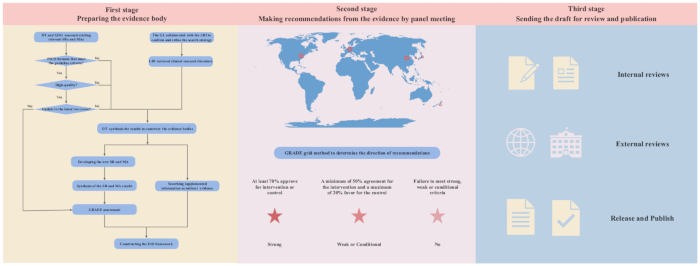
Figure 1: Flowchart of the recommendation process. The figure summarizes the three-stage process of guideline development, including evidence preparation, consensus formulation using the GRADE grid method, and the final steps for internal/external review and publication. Please click here to view a larger version of this figure.
Table 1: Characteristics of included studies. The study design, participant demographics, intervention types, comparators, outcome measures, and follow-up durations for all included randomized controlled trials. Please click here to download this table.
Table 2: Summary of findings. The pooled effect of the clinical question by consolidating the statistically synthesized evidence into a comparable and interpretable format. Please click here to download this table.
Table 3: Credibility assessment. The table provides domain-level assessments for each review, enabling a transparent appraisal of evidence reliability across key outcomes. Please click here to download this table.
Table 4: Evidence to decision framework. The table outlines expert evaluations across key EtD criteria such as priority, benefits, harms, acceptability, feasibility, resource use, and equity. The data reflect panel consensus levels that guided the strength and direction of the final recommendation. Please click here to download this table.
Table 5: Final recommendation and treatment regimen. The table reflects the expert panel's consensus recommendation using the GRADE framework and EtD assessment based on a systematic review and meta-analysis of previously published RCTs. It provides a detailed acupuncture treatment regimen, including acupoint selection, intervention method, session frequency, and treatment duration for nonspecific low back pain. Please click here to download this table.
Supplementary Figure 1: Forest plots for VAS. Please click here to download this figure.
Supplementary Figure 2: Forest plots for response. Please click here to download this figure.
Supplementary Figure 3: Forest plots for DOI. Please click here to download this figure.
Supplementary Figure 4: Forest plots for LROM. Please click here to download this figure.
Supplementary Figure 5: Forest plots for Schober test. Please click here to download this figure.
Discussion
Loading...
$$\rightleftharpoonup{xx}$$
$$\longleftharp{xx}$$,
$$\longrightharp{xx}$$,
Clinical practice guidelines are valuable resources that offer high-quality treatment options for clinicians and informed choices for patients54. Between 1991 and 2007, more than 1,300 clinical practice guidelines were published, which included 2,189 recommendations on acupuncture, reflecting the growing integration of acupuncture into mainstream healthcare systems55. However, China still lacks a dedicated guideline development organisation, resulting in incomplete frameworks and insufficient methodological detail11,56. Particularly notable is the need for more comprehensive technical information and descriptions of the practical process in developing the core recommendations and regimens of these guidelines56. This study addresses these gaps by presenting a structured protocol for acupuncture guideline development, which adheres to the WHO manual, integrates the GRADE methodology, and provides practical operational steps11,12. The approach aims to enhance scientific rigour, clinical applicability, and international reproducibility in the development of acupuncture guidelines.
The protocol introduces several features to enhance efficiency, transparency, and standardization throughout the guideline process. Structured steps were designed to enable consistent evidence synthesis, expert appraisal, and consensus formation across different working groups. The use of automated tools, such as structured survey platforms, online voting systems, and SoF templates, reduced administrative burden and facilitated remote collaboration.
Furthermore, acupuncture effectiveness is influenced by multiple intervention variables, including the number and location of acupoints, needling technique, electroacupuncture usage, and treatment frequency45,57,58. Unlike drug therapies, which can be stratified by dose alone, acupuncture requires multidimensional subgrouping1. To address this complexity, a dedicated classification approach was developed through consensus among experienced acupuncture clinicians and methodological experts. Future guidelines should define disease- and therapy-specific subgroup methods to reduce heterogeneity and support robust recommendations40.
The implementation of acupuncture guidelines is affected by both personal and external factors1,5. Personal factors include healthcare providers' knowledge, clinical attitudes, and familiarity with evidence-based tools1. External elements such as guideline coverage, reimbursement policy, clinician workload, and patient affordability also play critical roles5. In both China and the United States, fewer than 25% of clinicians adhere to evidence-based acupuncture guidelines for low back pain2,5. During the development of this guideline, several implementation challenges were encountered. Owing to the COVID-19 pandemic, a hybrid model of online and offline consensus meetings was adopted59. While online meetings improved accessibility and scheduling flexibility, some experts noted diminished interaction and reduced engagement51. To address this, pre-voting materials and briefing sessions were introduced to clarify consensus principles and streamline live discussions34. Flexible timeline management also proved essential in coordinating experts from multiple time zones.
Thirteen experts participated in the guideline development process, including representatives from six countries and regions across Asia, Europe, North America, and Oceania. The panel also included health economics experts and patient representatives. Through a structured development framework, including evidence synthesis, GRADE quality assessment, and multiple rounds of consensus voting, the group ensured that the recommendations were balanced and clinically relevant. Patient perspectives were particularly valuable in shaping recommendations that are both understandable and practical in real-world settings60.
Although acupuncture provides moderate to large effects according to current evidence, low or very low certainty remains in many domains, necessitating cautious interpretation50,61.In one key recommendation, the panel evaluated cost-effectiveness based on indirect evidence from high-income countries, such as Germany, the UK, and the US50,62,63. Although findings suggested favourable cost profiles50,62,63, several panellists expressed concerns about limited applicability in low- and middle-income settings, including China and Southeast Asia64. The intensity of acupuncture delivery, such as personnel training, session duration, and frequency, may reduce feasibility and economic value in such contexts, especially where reimbursement is lacking. Due to limitations in the external validity of economic evidence, particularly its transferability to low- and middle-income settings, panellists expressed reservations regarding feasibility and resource use. Nevertheless, consistent patient preference for acupuncture, minimal adverse effects, and clinical feasibility contributed to a conditional recommendation despite low-certainty evidence. This highlights how limitations in the external validity of economic evidence can moderate the strength of recommendations, even when clinical efficacy is well established.
Despite the known benefits of acupuncture for NSLBP, few national healthcare systems formally integrate it into clinical guidelines or health insurance schemes. In the early 2000s, Beijing's medical insurance covered acupuncture broadly, even in the absence of a formal economic evaluation1,64,65. In the past decade, however, China's medical insurance decision-making has become more evidence-driven. This shift underscores both a progressive stance and an urgent need for high-quality health economic studies to support sustainable acupuncture coverage 1,64,65.
Disclosures
Loading...
$$\rightleftharpoonup{xx}$$
$$\longleftharp{xx}$$,
$$\longrightharp{xx}$$,
The authors declare that they have no competing financial interests or other conflicts of interest related to the content of this work.
Acknowledgements
Loading...
$$\rightleftharpoonup{xx}$$
$$\longleftharp{xx}$$,
$$\longrightharp{xx}$$,
This work was supported by the National Key R&D Program of China: No. 2019YFC1712200 and the National Key R&D Program of China Sub-topic: No. 2019YFC1712203.
Materials
| Name | Company | Catalog Number | Comments |
|---|---|---|---|
| CBM (Chinese Biomedical Database) | SinoMed | N/A (http://www.sinomed.ac.cn/) | Used for biomedical literature retrieval |
| Chinese Clinical Trial Registry | ChiCTR | N/A (http://www.chictr.org.cn/) | Source of Chinese trial registration data |
| Citation management software | Clarivate Analytics | EndNote X9 (https://endnote.com/) | Used to organize references and remove duplicates |
| ClinicalTrials.gov | U.S. NIH | N/A (https://clinicaltrials.gov/) | Source of registered clinical trials |
| CNKI database | Tsinghua Tongfang | N/A (https://www.cnki.net/) | Used for retrieving Chinese clinical literature |
| Cochrane Library | Wiley | N/A (https://www.cochranelibrary.com/) | Used for sourcing systematic reviews |
| Cochrane Risk of Bias tool | Cochrane | N/A (https://www.riskofbias.info/welcome/rob-2-0-tool) | Used for assessing risk of bias in RCTs |
| Digital questionnaire platform | Questionnaire Star (WJX.cn) | N/A (https://www.wjx.cn/) | Used for collecting expert panel responses online |
| Embase | Elsevier | N/A (https://www.embase.com/) | Used for evidence synthesis |
| Epistemonikos | Fundación Epistemonikos | N/A (https://www.epistemonikos.org/) | Source of clinical research evidence |
| Evidence-to-decision software tool | Evidence Prime, Inc. | GRADEpro GDT (https://gradepro.org/) | Used to create EtD frameworks and Summary tables |
| GRADE EtD framework | GRADE Working Group | N/A (https://www.gradeworkinggroup.org/) | Used to convert evidence into clinical recommendations |
| PRISMA guidelines | N/A | N/A (http://www.prisma-statement.org/) | Used to guide systematic review and meta-analysis protocol |
| PROSPERO | University of York | CRD42021278346 (https://www.crd.york.ac.uk/prospero/) | Registry for the SR and MA conducted in the study |
| Protocol registry platform | University of York | PROSPERO (CRD42021278346) (https://www.crd.york.ac.uk/prospero/) | Used to register systematic review protocol |
| PubMed | NLM | N/A (https://pubmed.ncbi.nlm.nih.gov/) | Used for retrieving English medical literature |
| Scopus | Elsevier | N/A (https://www.scopus.com/) | Literature retrieval database |
| Statistical software for meta-analysis | Cochrane Collaboration | RevMan 5.4 (https://training.cochrane.org/online-learning/core-software/revman) | Used for performing meta-analysis and forest plots |
| Tencent Meeting | Tencent | N/A (https://meeting.tencent.com/) | Used for online weekly expert and coordination meetings |
| VIP (China Academic Journals) | Chongqing VIP | N/A (http://www.cqvip.com/) | Source for literature screening |
| Wan Fang database | Wanfang Data | N/A (https://www.wanfangdata.com.cn/) | Used for literature retrieval |
| Web of Science | Clarivate | N/A (https://www.webofscience.com/) | Used for English-language evidence search |
| Tencent | N/A (https://www.wechat.com/) | Used for team communication and coordination | |
| WHO ICTRP | WHO | N/A (https://trialsearch.who.int/) | Source of international clinical trials |
| WJX voting platform | WJX.cn | N/A (https://www.wjx.cn/) | Used for expert panel online voting |
References
Loading...
$$\rightleftharpoonup{xx}$$
$$\longleftharp{xx}$$,
$$\longrightharp{xx}$$,
- Zhang, Y. Q., et al. Increasing the usefulness of acupuncture guideline recommendations. BMJ. 376, e070533(2022).
- Lu, L., et al. Evidence mapping and overview of systematic reviews of the effects of acupuncture therapies. BMJ Open. 12 (6), e056803(2022).
- Knezevic, N. N., Candido, K. D., Vlaeyen, J. W. S., Van Zundert, J., Cohen, S. P. Low back pain. Lancet. 398 (10294), 78-92 (2021).
- Maher, C., Underwood, M., Buchbinder, R. Nonspecific low back pain. Lancet. 389 (10070), 736-747 (2017).
- Qaseem, A., et al. Nonpharmacologic and pharmacologic management of acute pain from non-low back, musculoskeletal injuries in adults: a clinical guideline from the American College of Physicians and American Academy of Family Physicians. Ann Intern Med. 173 (9), 739-748 (2020).
- Oliveira, C. B., et al. Clinical practice guidelines for the management of nonspecific low back pain in primary care: an updated overview. Eur Spine J. 27 (11), 2791-2803 (2018).
- Guyatt, G. H., et al. What is "quality of evidence" and why is it important to clinicians. BMJ. 336 (7651), 995-998 (2008).
- Chen, Y., et al. A reporting tool for practice guidelines in health care: the RIGHT statement. Ann Intern Med. 166 (2), 128-132 (2017).
- Qaseem, A., Snow, V., Owens, D. K., Shekelle, P. The development of clinical practice guidelines and guidance statements of the American College of Physicians: summary of methods. Ann Intern Med. 153 (3), 194-199 (2010).
- Brouwers, M. C., et al. Development and validation of a tool to assess the quality of clinical practice guideline recommendations. JAMA Netw Open. 3 (5), e205535(2020).
- Liu, L., et al. Identification of clinical questions for the development of clinical practice guideline on acupuncture and moxibustion for nonspecific low back pain using the modified Delphi method. Chin Gen Med. 26 (9), 1037-1043 (2023).
- Lin, H., et al. Questionnaire of clinical questions for clinical practice guideline of acupuncture-moxibustion: nonspecific low back pain. World J Acupunct Moxibustion. 32 (2), 109-114 (2022).
- Lee, J. H., et al. Acupuncture for acute low back pain: a systematic review. Clin J Pain. 29 (2), 172-185 (2013).
- Gianola, S., et al. Effectiveness of treatments for acute and subacute mechanical nonspecific low back pain: a systematic review with network meta-analysis. Br J Sports Med. 56 (1), 41-50 (2022).
- Wang, Y., Sun, Y., Wu, Y., Zhang, J., Zhang, Y. Meta-analysis of clinical randomized controlled trial of electro-acupuncture Houxi point in the treatment of acute lumbar sprain. J Acupunct Tuina Sci. 13 (5), 332-338 (2015).
- Valério, R. T. Systematic review and meta-analysis of acupuncture treatment of acute lumbar sprain in recent 10 years [Master's Thesis]. , Beijing University of Chinese Medicine. (2016).
- Hu, X. Systematic evaluation of "exercise acupuncture" treatment of acute lumbar sprain [Master's Thesis]. , Chengdu University of Traditional Chinese Medicine. (2015).
- Su, X., et al. Acupuncture for acute low back pain: a systematic review and meta-analysis. Ann Palliat Med. 10 (4), 3924-3936 (2021).
- Page, M. J., et al. The PRISMA 2020 statement: an updated guideline for reporting systematic reviews. J Clin Epidemiol. 134, 178-189 (2021).
- Du, L. Analgesia time-effects study of acupuncture at Yaoyong point combined with exercise therapy for acute lumbar sprain [Master's Thesis]. , Traditional Chinese Medicine University of Guangzhou. (2018).
- Fan, Y., Wu, Y. Effect of electroacupuncture on muscle state and infrared thermogram changes in patients with acute lumbar muscle sprain. J Tradit Chin Med. 35 (5), 499-506 (2015).
- Gao, H., Wei, C., He, T. Treatment of 36 cases of acute lumbar sprain by acupuncture at Jingweiqi point. J Gansu Coll Tradit Chin Med. (2), 49-50 (2006).
- Huang, J. Clinical study of acupuncture at lumbar pain point combined with lumbar activity in the treatment of acute lumbar sprain [Master's Thesis]. , Traditional Chinese Medicine University of Guangzhou. (2012).
- Jin, M., Chen, J. Acupuncture treatment of 40 cases of acute lumbar sprain. Jiangxi Univ Tradit Chin Med. 39 (6), 74(2008).
- Li, K., Liu, Y. Treatment of 66 cases of acute lumbar sprain with hand acupuncture exercise therapy. Chin Arch Tradit Chin Med. 4, 652-653 (2005).
- Liu, L., Lu, J., Ma, H. Clinical trials for treatment of acute lumbar sprain by acupuncture stimulation of "Yaotong" and local Ashi-points in combination with patient's lumbar movement. Acupunct Res. 42 (1), 72-75 (2017).
- Qu, F., et al. Clinical observation on treating acute lumbar muscle sprain by electropuncture. Clin Res Tradit Chin Med. 9 (16), 39-40 (2017).
- Shang, L., et al. Clinical study on distal-points acupuncture combined with exercise for acute lumbar sprain: Experiences from Professor Sun Yuanzheng. J Clin Acupunct Moxibustion. 33 (7), 38-40 (2017).
- Sun, Y., Shao, P., Zheng, X. Clinical observation of acute lumbar sprain treated by electroacupuncture at Chengshan (BL57). Liaoning J Tradit Chin Med. 47 (4), 176-182 (2020).
- Wang, L., Pan, L., Sun, Y., Chen, X., Sheng, L. Effect of electroacupuncture at A Shi point combined with para-acupuncture on pain and lumbar motion in patients with acute lumbar sprain. Hubei J Tradit Chin Med. 38 (4), 67-69 (2016).
- Wu, Y., et al. Observation on short-term and long-term therapeutic effects of electroacupuncture at Houxi (SI 3) on acute lumbar sprain. Chin Acupunct Moxibustion. 01 (1), 3-5 (2007).
- Xu, B. Observation of curative effect on acute lumbar sprain treated by strong stimulation of pension point. Fujian J Tradit Chin Med. 44 (3), 14-15 (2013).
- Zhao, Y., Li, L., Pan, J., Yu, Q. To explore the clinical observation of acupuncture combined with exercise therapy in the treatment of acute lumbar sprain. World Latest Med Inf Dig (Electr Ed). (18), 169-172 (2014).
- Hu, Z., et al. Chinese medicine rapid dynamic guidelines formulation methods (3): A rapid evidence collection and integration and recommendation opinions. J Tradit Chin Med. 1, 1-5 (2014).
- Brożek, J. L., et al. Grading quality of evidence and strength of recommendations in clinical practice guidelines part 3 of 3: The GRADE approach to developing recommendations. Allergy. 66 (5), 588-595 (2011).
- Atkins, D., et al. Grading quality of evidence and strength of recommendations. BMJ. 328 (7454), 1490(2004).
- Zhang, Y., et al. guidelines: 20. Assessing the certainty of evidence in the importance of outcomes or values and preferences-inconsistency, imprecision, and other domains. J Clin Epidemiol. 111, 83-93 (2019).
- Higgins, J. P., et al. The Cochrane Collaboration's tool for assessing risk of bias in randomised trials. BMJ. 343, d5928(2011).
- Morgan, R. L., et al. A risk of bias instrument for non-randomized studies of exposures: A users' guide to its application in the context of GRADE. Environ Int. 122, 168-184 (2019).
- Harbour, R., Miller, J. A new system for grading recommendations in evidence-based guidelines. BMJ. 323 (7308), 334-336 (2001).
- Alonso-Coello, P., et al. Evidence to Decision (EtD) frameworks: A systematic and transparent approach to making well-informed healthcare choices. 1: Introduction. BMJ. 353, i2016(2016).
- Wiercioch, W., et al. Methodology for the American Society of Hematology VTE guidelines: Current best practice, innovations, and experiences. Blood Adv. 4 (10), 2351-2365 (2020).
- Phillippo, D. M., et al. Threshold analysis as an alternative to GRADE for assessing confidence in guideline recommendations based on network meta-analyses. Ann Intern Med. 170 (8), 538-546 (2019).
- Guidance on prevention of venous thromboembolism. Lancet. 375 (9713), (2010).
- Li, H., et al. A framework on developing integrative medicine clinical practice guideline for stroke management and rehabilitation in Hong Kong. Phytomedicine. 106, 154442(2022).
- Chapman, J. R., et al. Evaluating common outcomes for measuring treatment success for chronic low back pain. Spine (Phila Pa 1976). 36 (21 Suppl), S54-S68 (2011).
- Smeets, R., Köke, A., Lin, C. W., Ferreira, M., Demoulin, C. Measures of function in low back pain/disorders: Low Back Pain Rating Scale LBPRS), Oswestry Disability Index (ODI), Progressive Isoinertial Lifting Evaluation (PILE), Quebec Back Pain Disability Scale (QBPDS), and Roland-Morris Disability Questionnaire (RDQ). Arthritis Care Res (Hoboken). 63 (Suppl 11), S158-S173 (2011).
- Skonnord, T., et al. Cost-effectiveness analysis of acupuncture compared with usual care for acute nonspecific low back pain: Secondary analysis of a randomised controlled trial. Acupunct Med. 40 (2), 123-132 (2022).
- Witt, C. M., et al. Pragmatic randomized trial evaluating the clinical and economic effectiveness of acupuncture for chronic low back pain. Am J Epidemiol. 164 (5), 487-496 (2006).
- Ratcliffe, J., Thomas, K. J., MacPherson, H., Brazier, J. A randomised controlled trial of acupuncture care for persistent low back pain: Cost effectiveness analysis. BMJ. 333 (7569), 626(2006).
- Kim, N., Yang, B., Lee, T., Kwon, S. An economic analysis of usual care and acupuncture collaborative treatment on chronic low back pain: A Markov model decision analysis. BMC Complement Altern Med. 10, 74(2010).
- Liu, B., Li, D. World Acupuncture-International Acupuncture Application Survey and Analysis. China Academic Journal. , (2014).
- Liu, B. White Paper on the Development of Chinese Traditional Medicine. , Information Office of the State Council. China. (2016).
- Brignardello-Petersen, R., Carrasco-Labra, A., Guyatt, G. H. How to interpret and use a clinical practice guideline or recommendation: Users' guides to the medical literature. JAMA. 326 (15), 1516-1523 (2021).
- Dobos, G. J., Kirschbaum, B., Choi, K. E. The Western model of integrative oncology: The contribution of Chinese medicine. Chin J Integr Med. 18 (9), 643-651 (2012).
- Liao, X., et al. How to draft editorial explanation for transparent and concise guideline on clinical practice-case analysis. Chin J Tradit Chin Med. 42 (23), 4520-4528 (2017).
- Moon, H. Y., et al. Safety of acupuncture during pregnancy: A retrospective cohort study in Korea. BJOG. 127 (1), 79-86 (2020).
- Liao, Y. Y., Seto, K., Saito, H., Fujita, M., Kawakami, M. Effect of acupuncture on adrenocortical hormone production: I. Variation in the ability for adrenocortical hormone production in relation to the duration of acupuncture stimulation. Am J Chin Med. 7 (4), 362-371 (1979).
- Shi, Y., Li, Y., Yuan, X. A study on the perceived measurement of knowledge exchange effect of academic conferences affected by the epidemic. Mod Inf. 42 (7), 57-67 (2022).
- Sonyi, M., Keller, J., Fox, M., Hammer, H. F. Development of a multinational clinical practice guideline: A practical structured procedure. Dig Dis. 39 (5), 477-487 (2021).
- Witt, C. M., et al. Acupuncture in patients with dysmenorrhea: A randomized study on clinical effectiveness and cost-effectiveness in usual care. Am J Obstet Gynecol. 198 (2), 166.e1-166.e8 (2008).
- Borah, B. J., Naessens, J. M., Glasgow, A. E., Bauer, B. A., Chon, T. Y. Cost-effectiveness of acupuncture in an employee population: A retrospective analysis. Complement Ther Med. 31, 14-19 (2017).
- Spackman, E., et al. Cost-effectiveness analysis of acupuncture, counselling and usual care in treating patients with depression: The results of the ACUDep trial. PLoS One. 9 (11), e113726(2014).
- Lu, L., et al. Evidence on acupuncture therapies is underused in clinical practice and health policy. BMJ. 376, e067475(2022).
- Li, H., et al. Using economic evaluations to support acupuncture reimbursement decisions: Current evidence and gaps. BMJ. 376, e067477(2022).
Reprints and Permissions
Request permission to reuse the text or figures of this JoVE article
Request Permission