Preclinical research involving prenatal cannabis exposure (PCE) utilizes diverse methodologies to investigate how cannabis, such as trans-delta-9-tetrahydrocannabinol (THC) and cannabidiol (CBD), impacts pregnant individuals and developing fetuses. In this review, we present the various in vitro and in vivo techniques, including their advantages and limitations.
Review Article
Diverse Methodologies Used for Preclinical Research into Prenatal Cannabis Exposure
Opens in a new tab
In This Article
Summary
Loading...
$$\rightleftharpoonup{xx}$$
$$\longleftharp{xx}$$,
$$\longrightharp{xx}$$,
Abstract
Loading...
$$\rightleftharpoonup{xx}$$
$$\longleftharp{xx}$$,
$$\longrightharp{xx}$$,
The legalization of cannabis across the United States has led to an increase in human use, especially amongst pregnant individuals, driving the need for vigorous scientific investigation on potential health effects to the individual and developing fetuses. Preclinical research, particularly including trans-delta-9-tetrahydrocannabinol (THC) and cannabidiol (CBD), offers exciting opportunities and significant challenges. However, the variability in cannabis formulations, routes of administration (i.e., orally, inhaled, topical application), and dosing presents challenges in evaluating efficacy and safety due to differences in the pharmacokinetics and bioavailability. Understanding both the potential benefits and risks of cannabis use, including short- and long-term effects on pregnant individuals and developing fetuses, is essential for understanding neurodevelopmental effects. In this review, in vitro and in vivo methods, including cell-based assays, organoid models, animal models, artificial intelligence (AI), and machine learning (ML), are utilized for preclinical research into prenatal cannabinoid exposure (PCE) to evaluate methodological limitations and the implications for developing evidence-based treatment.
Introduction
Loading...
$$\rightleftharpoonup{xx}$$
$$\longleftharp{xx}$$,
$$\longrightharp{xx}$$,
National professional bodies, including the American College of Obstetricians and Gynecologists (ACOG) and the American Academy of Pediatrics (AAP), recommend that cannabis use be discontinued or avoided in people who are pregnant or planning to become pregnant1. As of August 2025, 24 states and the District of Columbia have legalized cannabis for recreational use in adults2 (Figure 1). Cannabis is the most commonly used federally illegal drug in pregnant individuals3. Rates of prenatal cannabinoid exposure (PCE) are rising, having increased from 5.5% of pregnancies in 2012 to 9% of pregnancies in 2022. The US prevalence of cannabis use in pregnancy ranges from 3.9% to 16%3. The plant Cannabis sativa has more than 500 chemicals and 144 distinct cannabinoids responsible for its psychoactive and medicinal properties4 with the two most common being trans-delta-9-tetrahydrocannabinol (THC) and cannabidiol (CBD). THC is the main psychoactive cannabinoid responsible for the cannabis high and its addictive potential5. The amount of THC in cannabis flower has rapidly increased over the last two decades from 5% in the 1990s to over 40% in recent years5.
The use amongst the pregnant population is likely increasing in part due to the common perception that cannabis helps with anxiety, stress, sleep, and depression, while providing relief from pain and nausea. There is also a misconception that cannabis is a safer alternative to pharmaceuticals due to being perceived as natural6,7. However, use of cannabis during pregnancy results in exposure to the developing fetus, as THC can cross the placenta and bind to endocannabinoid receptors -cannabinoid receptors (CB) 1 and 2. These receptors are expressed in reproductive tissues and the placenta, and their presence is detectable in the fetal brain as early as the 14th week of gestation8,9. Following consumption by the pregnant individual, THC rapidly enters the bloodstream, with peak plasma levels achieved between 3-10 min typically following inhalation10 and 1-2 h following oral ingestion11. As chronic cannabis use results in accumulation and storage in adipose tissues, the presence of THC can persist into pregnancy even if active use ceases11. Following delivery, infants can be exposed through breast milk12. Studies have shown that THC can be detected in breast milk for up to 6 days after a single use13 and up to 6 weeks with chronic use due to its accumulation in fat stores11,14.
Risks for both the pregnant person and the developing fetus are known to be present in the setting of cannabis use. The pregnant individual who uses cannabis is at an increased risk for multiple complications, including gestational hypertension, preeclampsia, and placental abruption, even after adjusting for confounding factors. PCE has been shown to be independently associated with increased odds of preterm birth, being small-for-gestational-age, and low birth weight for the infant15,16. Abnormal development after PCE persists into adolescence and adulthood, with decreased memory performance, impulse control, problem-solving, and verbal development being altered17,18,19. No amount of cannabis has been proven safe to use during pregnancy or while breastfeeding1,3.
Cannabis can be processed into a variety of forms for consumption, including oral products (e.g., edibles, capsules/tablets, tinctures, lozenges/films, teas), inhaled products (e.g., smoked, vapes, concentrates, sprays), or applied to the skin (e.g., creams, lotions, balms, patches). Among these, smoking remains the dominant method of use, though recent trends show increasing consumption of edibles and vaping among adults20. Importantly, the route of exposure can impact onset and duration of action; when inhaled, THC is rapidly absorbed, leading to high plasma levels and quicker onset of effects. Taken orally, there is a delayed onset, but the duration of action is longer. The systemic absorption of topical and sublingual forms is variable21. Novel delivery methods are also being developed to improve their targeted delivery and bioavailability. With continued new models being developed, it is important to review the current state of the literature, with consideration for standardizing exposure paradigms whenever possible to improve the applicability of results.
Scope and Structure
This methods-focused review will summarize and compare preclinical models and exposure paradigms used to study cannabis/cannabinoids in PCE and discuss the implications for rigor and translation. A literature search was conducted in PubMed for articles published up to 2026. The key words included: prenatal cannabinoid/cannabis/marijuana exposure, preclinical models, cannabinoid impact on pregnancy, and offspring outcomes. Inclusion criteria were English language, preclinical studies focusing on PCE, and could include original research, reviews, or meta-analyses.
It is important to connect real-world heterogeneity with the many forms and variable potency available, and to consider why preclinical methodological choices (route, formulation, dose, timing) affect conclusions. Important considerations should be taken when designing models and when interpreting publications related to PCE, including the details of the exposure mode, dose, frequency, and duration of exposure.
Review and Perspective
Loading...
$$\rightleftharpoonup{xx}$$
$$\longleftharp{xx}$$,
$$\longrightharp{xx}$$,
Preclinical research into PCE plays a crucial role in understanding the complex effects of cannabinoids like THC and CBD prior to implementation of human trials, with the approaches used having multiple advantages, including control over experimental conditions, such as dose, route of administration, and environmental factors. Animal models and in vitro studies can help unravel the underlying biological and molecular mechanisms of action of cannabis due to the ability to control extraneous factors. Preclinical research into PCE is an essential complement to clinical cannabinoid research, where ethical concerns arise from cannabinoid administration, particularly in vulnerable populations. Additional studies are needed to further understand the neuroprotective potential and limit the risk of cannabis use.
In vitro models
In vitro models provide a way to study specific cellular responses in a more isolated and defined manner but have a major limitation due to the inability to replicate complex whole-body systems. In vitro models of cannabis use are employed to study the effects of cannabis and its components on cells and tissues outside of a living organism. These models are valuable for investigating the biological mechanisms of cannabis, assessing its potential therapeutic effects, and evaluating potential risks associated with use. Placental trophoblast cell lines have been used to study placental dysfunction and maternal-fetal transfer of cannabinoids. One study used a human extravillous trophoblast cell line (HTR8/SVneo) to analyze the effect of THC on cell proliferation (following exposure for 48 h), invasion, and mitochondrial function, and found that cell proliferation and invasion were significantly reduced and mitochondrial function was negatively impacted22. Another study used a human trophoblast cell line derived from choriocarcinoma (BeWo cells), which are frequently used to study placental nutrient exchange and metabolic stress induced by THC. It was found to cause a reduction in secretion of human chorionic gonadotropin (hCG) and the production of human placental lactogen and insulin growth factor 2, three hormones known to be important in facilitating fetal growth23 (Figure 2).
A physiologically based pharmacokinetic (PBPK) model is an in vitro model example in which mathematical modeling combines in vitro data with other information (e.g., human physiology) with the goal of predicting pharmacokinetic behavior. A PBPK model was developed for THC and 11-hydroxy-delta-9-tetrahydrocannabinol (11-OH-THC). 11-OH-THC is the primary active metabolite of THC24, which is highly potent and longer-lasting. THC was administered via inhalation and given intravenously to a healthy non-pregnant group to verify the model. The model was then used to extrapolate and predict THC exposure in pregnant individuals, due to the ethical concerns of administering THC to a pregnant population24,25.
These in vitro studies are important for specific investigations, but a major limitation is the inability to investigate more complex outcomes, such as generalized development or multi-system impacts. The models do not fully recapitulate the complexity and physiological relevance of in vivo systems due to a lack of complete interaction between different cell types and tissues.
Organoid models
The organoid model provides three-dimensional (3D) mini organs from stem cells, which mimic human tissue complexity and thus can address some of the limitations of in vitro models. However, organoid models often lack vital components like immune cells and blood vessels, which prevents them from being used to look at complex systemic interactions. Organoid models bridge the gap between traditional cell cultures and animal models by providing human-relevant, 3D systems that better predict real-world drug behavior (Figure 2). Organoids are proving to be valuable tools for investigating the effects of cannabis, especially on the developing brain. Patterned brain region-specific organoids have been generated for the hippocampus26 and cerebellum27 as well as other brain areas, to provide a way to model human brain development and disease. Research using brain organoids has revealed important insights into the impact of cannabis and its components on the brain, particularly THC and CBD28,29,30.
A study by Ao et al. modeled PCE using human embryonic stem cells (hESCs) to assemble and culture cerebral organoids28. Under on-chip exposure to THC, cerebral organoids exhibited reduced neuronal maturation, downregulation of CB1 receptors, impaired neurite outgrowth, and reduced spontaneous neuronal firing. This finding highlights the potential negative impact of THC on brain development, specifically on the maturation of cortical neurons. Miranda et al. used two human induced pluripotent stem cell lines (hiPSCs) to differentiate into neuronal cells and exposed the cells to THC and CBD from day 19 to day 30 of differentiation at 1-10 μM concentrations29. This led to the formation of functionally impaired neurons and highlights a potential explanation for the link between PCE and psychiatric disorders. THC-treated neurons also displayed synaptic and glutamate signaling alterations. Thus, organoid models have revealed a negative impact of THC on certain brain cell types.
Due to ethical concerns of administering cannabis to pregnant individuals, organoids can provide an invaluable approach for studying the effects of exposure during prenatal development, a period when the brain is particularly vulnerable. Traditional cell and animal models have limitations in fully representing the human nervous system, making organoids a more suitable system for investigating the impact of cannabis exposure on neuronal development31. While organoid research has made significant strides, challenges such as reproducibility and heterogeneity within organoid cultures remain to be addressed. The lack of vascularization in organoids is another limitation, although bioengineering approaches are being explored to overcome this issue. Future research using organoids will be crucial for comprehensively understanding the effects of cannabis on the developing nervous system and informing public policy and medical guidelines30.
In vivo models
This model type is more specific and reliable for observing biological effects and evaluating toxicity, metabolism, and overall efficacy. Caution must be used when interpreting results, as the findings do not directly translate to the human population. In vivo preclinical models of cannabis use can study the effects of cannabinoids like THC and CBD on behavior, brain function, and potential therapeutic effects. These models help researchers understand how cannabis affects the body and brain, and they are crucial for developing potential treatments for cannabis-related issues and other conditions. These models allow for exploration of how cannabis influences processes in a controlled environment and the effects on metabolic, cardiovascular, and neurodevelopmental outcomes11. A number of different species are used in these models, ranging from nematodes to non-human primates (Figure 3).
One species commonly used is Caenorhabditis elegans (C. elegans), due to the overlap of genes with humans (60%-80% estimated overlap) with a short lifespan of 2-3 weeks32. They are useful to study basic development at the cellular, molecular, and genetic levels. C. elegans possesses a functional ECS, consisting of endocannabinoid ligands, enzymes, and receptors, though they are more primitive than mammalian systems33. Models utilizing C. elegans are investigating the impact of prenatal cannabis exposure and cannabis toxicity
The fruit fly, Drosophila melanogaster, is another model used to look at the effect of cannabis on brain function and lifespan. It has a relatively short lifespan (50-90 days) and a genome similar to that of humans (70%). They have a well-mapped nervous system, which is useful for investigating brain function34. However, a drawback is its lack of complex brain structures, such as the hippocampus, and no ECS35.
The endocannabinoid system (ECS) is highly conserved across vertebrate species, particularly in rodents and non-human primates (NHP)35. With its high conservation, it allows for translational research where findings are largely applicable to human health and disease. Like C. elegans, Zebrafish (Danio rerio) are used to model preclinical cannabis exposure and have a lifespan of approximately 3 years and a genome similar to humans. Zebrafish have functional ECS/cannabinoid receptors, making them a common model organism for studying cannabinoid function and early development. Zebrafish are useful for developmental studies because of the rapid development of embryos and larvae, and their body transparency is notable during the early stages of development. Therefore, zebrafish have been used to investigate the effects of cannabis on embryogenesis, behavior, neuronal development, and neuroinflammation36.
Though less common, chick embryo models can be used to investigate the impact of cannabis exposure. This model has demonstrated embryotoxic effects and decreased embryonal viability following THC administration in early pregnancy37. While this model may have limited use, it has the potential to provide insight into specific questions that may be challenging to answer otherwise due to ethical constraints.
A widely used in vivo model is rodents (mice and rats of various strains), due to their genetic and physiological similarities to humans38,39. Mice, especially, can be genetically manipulated, which can be a huge advantage40. Rats are more complex behaviorally, so they are useful to study social interactions, learning and memory, fear and anxiety, with changes in these being seen after PCE in humans41,42. Rodents share a similar endocannabinoid system (ECS) with CB receptors, endogenous ligands, and enzymes responsible for the biosynthesis and degradation of endocannabinoids. Numerous models exist using rodents to investigate multiple aspects of cannabis exposure. One of the disadvantages of the rodent model is their gestational period is much shorter than that of humans, resulting in a significant portion of brain development occurring postnatally.
Finally, NHP models offer a higher degree of translational relevance to humans due to closer biological and behavioral similarities, especially in areas like reward, cognition, memory, motor coordination, and neurodevelopment43. The most popular NHP models are the rhesus macaques and squirrel monkeys. Squirrel monkeys can reliably self-administer THC44, which allows for studying the rewarding effects of cannabis and evaluating potential cannabis use disorder (CUD) treatments. Rhesus macaques can reliably eat THC cookies, and it was found to be deleterious to offspring lung development and function45. While the benefit of consistent ingestion allows for dose alteration, the expense and regulatory requirements often hinder many scientists from pursuing NHP models, despite their translational benefits.
All in vivo models have the complicating factor of how the cannabis is administered and the dose used. Cannabis can be consumed in a number of ways, and historically, injection of a component of cannabis via IP or subcutaneous (SC) was used. Injection can generate a greater role for first-pass metabolism and delay the onset of effects compared to other methods of administration. Gavage has also been frequently used when oral ingestion is desired and has the benefit of cannabis being exposed to the gastrointestinal system. While these approaches can be appropriate, the use of injections and gavage can cause significant stress to the animals (and physiological changes), with concerns for clinical translatability. Researchers continue to explore alternative routes of administration and to develop methods that better reflect human cannabis use patterns, such as vapor inhalation models and various oral products, with the goal of improving the translational value of the preclinical research. Additional studies have investigated how cannabis affects anxiety and depression-like behaviors as well as cognitive function (learning, memory, and attention). PCE studies to date consistently demonstrate long-lasting cognitive and affective behavioral impairments akin to reports in humans41,46
Models for studying voluntary consumption, particularly with THC edibles, are being used to better understand how cannabis affects individuals who choose to consume it orally. Illustrative examples of voluntary oral dosing paradigms include a model that uses chocolate gelatin (THC-E-gel) to encourage voluntary high-dose consumption in mice47 and another model of voluntary consumption via mini-chocolate cookies and peanut butter mixed with THC for moderate prenatal THC exposure in rats48. Voluntary consumption has the benefit of removing the stress of gavage administration, but the limitation is that the dose may vary based on actual consumption, and thus serum measurements may be needed to interpret the dose received.
Animal models are valuable for studying complex endpoints, including behavioral deficits and neuropathological changes, which cannot be assessed in vitro. Animal models can also evaluate treatments that might aid in reducing cannabis use and preventing relapse in addiction models. They provide a means to study aspects of cannabis use and abuse that would be difficult or impossible to investigate in humans due to ethical considerations.
The landscape of preclinical studies is changing, primarily driven by advances in technology. While traditional animal models remain relevant, there’s a growing adoption of innovative methodologies due to limitation of animal models. Specifically, differences in species, ethical considerations, and the fact that animal models may not accurately recapitulate human responses continue to push for new approaches to be developed. Computational modeling offers more human-relevant data for specific scientific questions and can reduce the need for animal testing.
Artificial intelligence (AI) and machine learning (ML)
AI and ML are transforming preclinical studies (Figure 2). ML is increasingly used in cannabis-related research to improve data analysis and modeling. A scoping review by Ng et al. highlighted that ML algorithms can be used for predicting risks of and factors contributing to cannabis use and for extracting information about cannabis49. A challenge associated with the algorithm was the introduction of biases into the results. AI and ML generate human-relevant data, but they are highly dependent on the quality and nature of the data they are trained on, so biases can be introduced into the results.
Preclinical research is essential for understanding the multifaceted effects of cannabis and cannabinoids. Table 1 compares the preclinical model classes discussed in this review with key advantages and limitations. By utilizing diverse animal models and continually refining methodologies, scientists are working towards providing the evidence needed to develop safe and effective cannabis-based medicines and inform public health decisions.
Conclusions
Loading...
$$\rightleftharpoonup{xx}$$
$$\longleftharp{xx}$$,
$$\longrightharp{xx}$$,
Quality research in the methodologies of cannabis exposure, including prenatal exposure models, is very important. Preclinical research approaches offer valuable tools for understanding the complex effects of cannabis, identifying potential therapeutic applications, and developing safe and effective treatments for cannabis-related conditions. With an increase in use among pregnant individuals, these preclinical findings are promising, but it's crucial to emphasize that these studies have key limitations (Table 1), including the inability of in vitro experiments to replicate whole body systems, organoid reproducibility/heterogeneity, and lack of vascularization, species differences in animal models, and AI/ML bias risk. Additionally, regulatory barriers in preclinical cannabis research can hinder access to research materials and create administrative challenges. Cannabis remains a Schedule I substance, falling under the highest level of regulatory oversight, indicating high potential for abuse and no accepted medical use at the federal level, although it has been recommended to move to a Schedule III substance for medical use50.
Future directions in preclinical research, especially centered on prenatal use, need to include standardizing exposure paradigms whenever possible to improve translational alignment across models. Variations in the potency of products used (cannabinoid content and purity, much higher THC concentrations) and formulation comparability remain major hurdles in the ability to compare studies at this time. Doses, route of administration, and gestational timing (trimester) of exposure should be noted to allow translation to clinical outcomes. Also, preclinical research to look at environmental factors such as housing, rearing, and stress should be conducted. Using preclinical models is especially important for pregnant individuals and developing fetuses, for whom clinical trials would not be ethical to conduct.
Clinical studies in humans are essential to further understand how these findings translate into real-world outcomes, given that benefits do appear to exist in specific indications. Cannabis can provide relief from chronic/neuropathic pain51,52, and nausea and vomiting53,54. Cannabis also has a number of detrimental effects, including increased maternal anemia during pregnancy, and neonatal problems such as reduced birth weight and the need for intensive care treatment55. Therefore, the current paucity in the literature demands a thoughtful combination of methodologically rigorous preclinical work and human studies to determine the safest and most effective indications for cannabis use.
In summary, preclinical studies play a crucial role in advancing our understanding of cannabis and its potential therapeutic applications. These studies provide valuable insights into the mechanisms of action, potential benefits, and possible risks of cannabis, paving the way for future clinical trials and the development of new cannabis-based therapies, and informing health decisions. There is strong evidence that cannabis use during pregnancy, constitutes a significant neurodevelopmental risk. Moving forward, translational research linking human and animal work is important to paint a picture of the damage caused by PCE and to eventually find a way to overcome/treat some of the devastating effects that occur.
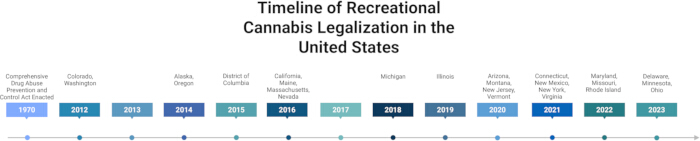
Figure 1: Timeline of recreational Cannabis legalization in the United States. Beginning in 1970, the Comprehensive Drug Abuse (CSA) and Control Act was enacted. This federal law established the regulation of the manufacture, distribution, and possession of controlled substances, including cannabis. The United States Congress cannot mandate states to mirror or follow federal laws, which results in states passing local legislation regulating the legality of substances such as cannabis. The first states to legalize the recreational use of cannabis included Washington and Colorado in 2012. Since then, 24 of the 50 states and the District of Columbia have legalized recreational use of cannabis. Please click here to view a larger version of this figure.
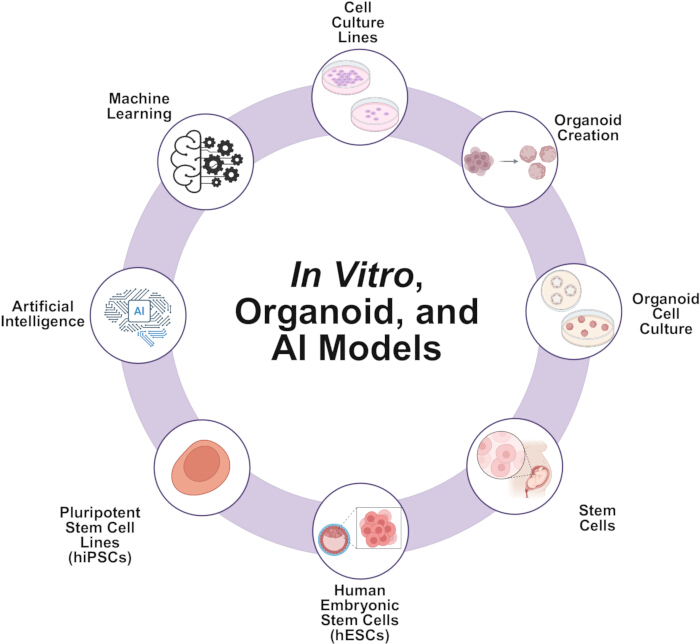
Figure 2: In vitro Organoid, and AI models. In vitro models, such as cell culture lines, assist in studying components of cells and tissues outside of a living organism. Organoids are three-dimensional tissue cultures that mimic the architecture and functionality of human organs. These models range from brain organoids to human cerebral organoids. Stem cell lines are also commonly used in cannabis studies. Artificial intelligence (AI) and machine learning (ML) have more recently been used to develop models impacting cannabis research. Please click here to view a larger version of this figure.
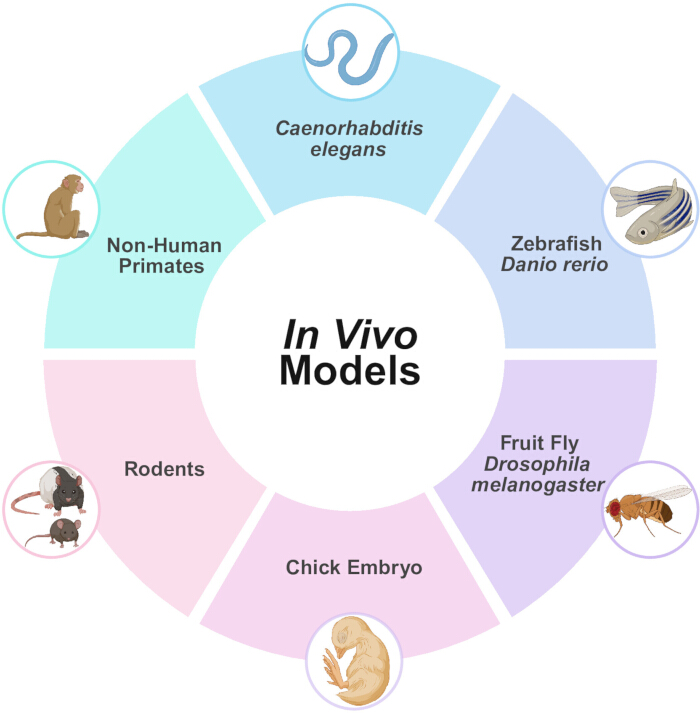
Figure 3: In vivo models. A depiction of in vivo models that are commonly used in preclinical cannabis studies, which include animals such as nematodes and non-human primates. These models can help to study behavior, brain function, and potential therapeutic effects among other areas of interest. Please click here to view a larger version of this figure.
| Method Used | Key Advantages | Limitations |
| In Vitro Experiments | High control over experimental parameters | Unable to replicate complex whole-body systems / biological processes |
| Ethical advantages over animal and human studies | Cannot capture the systemic effects of compounds on the entire body | |
| Isolate specific cellular responses and mechanisms | Findings not directly translatable to effects in vivo | |
| Amenable to high-throughput screening | ||
| Low cost and typically relatively fast | ||
| Organoid models | Provide human relevant 3D systems | Often with limited reproducibility |
| Can analyze real world drug behavior | Lack vital components like immune cells and blood vessels (vascularization) | |
| Compound effects on human organs | Limited oxygen / nutrient supply | |
| Compound effects on neuronal development | Heterogenity | |
| In Vivo experiments | Controlled environment (dosage and administration) | Species differences |
| Ethical advantages over human studies | Ethical disadvantage | |
| Self administration models | Findings typically cannot be directly translated to human responses | |
| Vapor inhalation models | Strict regulations and compliance standards | |
| Can study effects on behavior, brain function, and therapeutic effects | Expensive and time consuming | |
| Help inform public health decisions | ||
| AI/ML | Human relevant data | Potential for introduction of biases into results |
| Reduce the need for animal research | ||
| Prediction of risks and factors contributing to compound use |
Table 1: Key advantages and limitations of the various methods used in preclinical research into prenatal cannabis exposure.
Disclosures
Loading...
$$\rightleftharpoonup{xx}$$
$$\longleftharp{xx}$$,
$$\longrightharp{xx}$$,
The authors have no conflicts of interest to disclose.
Acknowledgements
Loading...
$$\rightleftharpoonup{xx}$$
$$\longleftharp{xx}$$,
$$\longrightharp{xx}$$,
Supported by the University of New Mexico Health Sciences Center Research Allocation Committee grant, the Department of Pediatrics at the University of New Mexico, and the Division of Neonatology at the University of New Mexico.
Reprints and Permissions
Request permission to reuse the text or figures of this JoVE article
Request Permission