This study examines whether relationship-marketing factors improve sports recommender systems for Chinese Super League fans. Incorporating satisfaction, trust, commitment, and reciprocity significantly enhances Top-N recommendation accuracy, especially under sparse and long-tail conditions. Results show that commitment and reciprocity drive repeated high-involvement behavior, while satisfaction and trust mainly support early engagement.
A subscription to JoVE is required to view this content. Sign in or start your free trial.
Research Article
Intelligent Recommender Systems for Chinese Super League Fan Consumption Behavior Prediction
In This Article
Summary
Abstract
Understanding and predicting fan consumption behavior is a central challenge in professional sports, yet most recommender systems rely primarily on historical interactions and pay limited attention to relationship-marketing factors that shape fan engagement. To address this gap, this study develops MLP-PA (Multi-Layer Perceptron with Pyramid Attention) and examines whether incorporating fans’ relational states—such as satisfaction, trust, commitment, and reciprocity—can improve recommendation effectiveness across multiple consumption scenarios among Chinese Super League (CSL) fans. Using a multi-scenario dataset covering ticketing, merchandise, membership, and digital content, empirical results show that recommendations generated by MLP-PA achieve significantly higher Top-N ranking accuracy than conventional collaborative filtering approaches, with particularly pronounced improvements in sparse and long-tail settings. The analysis further reveals that different relationship factors are associated with distinct consumption patterns: commitment and reciprocity are more strongly linked to repeated and high-involvement behaviors, whereas satisfaction and trust mainly influence initial and short-term responses. These findings demonstrate that relationship-marketing factors play a substantive and differentiated role in fan consumption behavior, offering actionable insights for personalized engagement strategies and digital operations in professional football.
Introduction
In recent years, recommender systems have become a central component of digital platforms, enabling the alignment of users, products, and consumption contexts through data-driven personalization. While recommender technologies are well established in domains such as e-commerce and online media, their application in professional sports remains comparatively underdeveloped1. In leagues such as the Chinese Super League (CSL), fan consumption behavior is highly context-sensitive and evolves across pre-match, match-day, and post-match phases, with purchasing decisions closely intertwined with offline attendance, emotional attachment, and social identity. However, most existing sports recommender studies primarily adapt collaborative filtering or content-based techniques from other domains and focus on short-term interaction signals, such as clicks or purchases. These approaches largely overlook the relational dynamics between fans and clubs—such as trust, commitment, or reciprocity—that are known in sports marketing research to shape long-term engagement and repeated consumption2. As a result, current models struggle to explain why similar behavioral histories may lead to divergent consumption outcomes under different relational states. This gap highlights the need for recommender frameworks that move beyond interaction frequency and explicitly account for relationship-driven mechanisms in fan decision making3.
From a relationship-marketing perspective, satisfaction, trust, commitment, and reciprocity jointly constitute relationship quality and are well established as drivers of key fan outcomes, including match attendance, merchandise purchases, membership renewal, and word-of-mouth advocacy4,5,6. In contrast, most existing sports recommender systems continue to model fan–item interactions as largely homogeneous behavioral signals, paying little attention to the relational context underlying those interactions. This simplification limits their ability to capture how different relationship factors exert distinct influences across consumption stages and engagement intensities and helps explain why models based solely on interaction histories often fail to differentiate short-term responses from sustained, high-involvement fan behavior.
From an engineering standpoint, sports recommender systems face additional challenges, including asymmetric implicit feedback, severe long-tail sparsity, and heterogeneous multi-touch interaction contexts7. Traditional collaborative filtering approaches and single-path deep models often show limited cross-context generalization in such settings and offer little interpretability for decision support in marketing operations.
Methodologically, prior recommender-system research has proposed a range of solutions to address sparsity, heterogeneity, and long-term optimization. Graph-based and attention-driven models have improved representation learning and ranking performance by reweighting the importance of neighbors and capturing higher-order interactions8,9. Hybrid architectures that combine collaborative signals with deep learning have demonstrated gains in large-scale recommendation tasks10. Reinforcement-learning-based approaches further extend optimization toward long-term objectives rather than myopic accuracy11. These advances provide valuable methodological foundations for modeling complex interactions under sparse feedback.
Nevertheless, most of these approaches remain agnostic to relationship-marketing constructs and do not explicitly incorporate variables such as satisfaction, trust, commitment, or reciprocity into the recommendation process. This limitation is particularly salient in professional football contexts, where fan–club relationships evolve and where different relational dimensions are known to dominate distinct behavioral outcomes (e.g., first-time purchase versus repeat attendance)12,13,14,15.
To address this gap, we propose MLP-PA (Multi-Layer Perceptron with Pyramid Attention), a relationship-aware recommender framework tailored to the Chinese Super League (CSL) scenario. Building on a Neural Collaborative Filtering (NCF) architecture with a Multi-Layer Perceptron (MLP) backbone, the proposed model treats satisfaction, trust, commitment, and reciprocity as first-class relational features and injects them into an attention-based prior channel. A pyramid feature attention module is then employed for late fusion to selectively amplify salient interaction patterns across multiple scales while integrating fan, item, and contextual representations. By explicitly modeling relationship variables alongside nonlinear interaction features, MLP-PA aims to improve both predictive accuracy and interpretability in sports recommendation.
An empirical evaluation on a self-built CSL dataset shows that the proposed approach consistently outperforms classical baselines, including UserCF, ItemCF, and MF-BPR, across Top-N ranking metrics. Further analysis of model variants indicates that incorporating relationship-aware attention helps alleviate long-tail sparsity and contextual heterogeneity. The results also reveal differentiated roles of relational factors. Commitment and reciprocity are more strongly associated with repeated and high-involvement behaviors, whereas satisfaction and trust primarily support first-time and short-term responses.
Access restricted. Please log in or start a trial to view this content.
Protocol
This study uses de-identified fan–item interaction logs and anonymized questionnaire data collected for research purposes only. No personally identifiable information was accessed, stored, or processed. According to institutional and national guidelines, this study did not require formal ethics committee approval or individual informed consent.
Dataset preparation and experimental procedure
Step 1. Data preparation and preprocessing
Dataset preparation and experimental procedures were designed to transform raw behavioral logs and survey responses into a unified, reproducible experimental dataset suitable for model training and evaluation. The process focuses on data cleaning, anonymization, feature construction, normalization, and alignment of interaction records with relationship-related variables. Raw interaction logs were first screened to remove incomplete entries and duplicated events to ensure data consistency. Fan identifiers and item identifiers were then anonymized through hashing to protect user privacy. Multiple forms of interaction, including browsing, clicking, purchasing, and attendance validation, were mapped to implicit feedback signals, with each observed interaction treated as a positive instance. Relationship-related variables—satisfaction, trust, commitment, and reciprocity—were collected from questionnaire responses and linked to the corresponding fan identifiers. Missing questionnaire values were addressed using mean imputation within the same membership tier to preserve group-level characteristics. Continuous features were normalized using min–max scaling to the range [0, 1] to ensure comparability across variables. Following preprocessing, the finalized dataset was stored in structured files comprising anonymized fan IDs, item IDs, timestamps, contextual tags, and normalized relationship variables, which were then used consistently across all experimental settings.
Expected output:
As a result of this process, the outputs include a cleaned interaction table, a normalized table of relationship variables aligned with fan identifiers, and a statistical summary detailing the numbers of fans, items, and interactions in the final dataset.
Step 2. Train/validation/test split and negative sampling
Data are split chronologically at the user level to avoid information leakage. For each fan, the most recent interaction is reserved for testing, the second most recent for validation, and the remaining interactions for training. Negative samples are generated by uniformly sampling non-interacted items from the item set. For each positive interaction, a fixed number of negative samples is drawn (negative sampling ratio = 1:5) during training. The same candidate set construction is applied consistently across all models.
Expected output:
As a result of this step, the outputs include chronologically split training, validation and test datasets, along with pre-generated negative sample lists constructed according to the specified sampling ratio.
Step 3. Software environment and implementation
All experiments are implemented in Python. Model training and evaluation are conducted using PyTorch (version ≥ 1.12). Bayesian hyperparameter optimization is performed using Optuna (version ≥ 3.0). Training scripts are executed on a workstation equipped with a single NVIDIA GPU (≥ 8 GB memory). Configuration files specify dataset paths, model parameters, and optimization settings to ensure reproducibility.
Step 4. Model construction and parameter specification
The MLP-PA model consists of an embedding layer, a multilayer perceptron backbone, a relationship-attention channel, and a pyramid attention fusion module. Key parameters are set as follows: embedding dimension = 32; MLP hidden layers = [64, 32]; activation function = ReLU; optimizer = Adam with learning rate 0.001 and weight decay 1e-5. The pyramid attention module uses three pooling scales with kernel sizes {1, 2, 4} and stride equal to kernel size. The attention reduction ratio is set to 4. Dropout with rate 0.3 is applied to prevent overfitting. Early stopping is triggered if validation NDCG@10 does not improve for 10 consecutive epochs.
Step 5. Training and hyperparameter optimization
The model is trained using a pairwise Bayesian Personalized Ranking (BPR) loss. During training, validation performance is monitored at the end of each epoch. Bayesian hyperparameter optimization searches over learning rate, embedding size, dropout rate, negative sampling ratio, and attention-related parameters. The optimization objective is validation NDCG@10. Each candidate configuration is trained with early stopping to reduce computational cost.
Expected output:
As a result of this process, the outputs include trained model checkpoints, validation performance logs, and the optimal hyperparameter configuration identified through Bayesian optimization.
Step 6. Evaluation and result generation
After training, the best-performing model (based on validation NDCG@10) is evaluated on the test set. Top-N recommendation lists are generated for each fan, and performance is measured using HR@K and NDCG@K. Additional analyses, including ablation studies and phase-conditioned attention profiling, are conducted using the same evaluation protocol to ensure comparability.
Completion criteria
The protocol is considered complete when the following outputs are obtained: 1) A fully trained MLP-PA model with optimized hyperparameters; 2) Test-set HR@K and NDCG@K results for all baseline and ablation models; 3) Saved model checkpoints, evaluation metrics, and reproducible configuration files. These outputs collectively enable independent replication of the proposed recommender system protocol.
Commitment–trust relationship marketing theory
Commitment–trust theory identifies commitment and trust as the core determinants of relationship quality. By reducing transactional uncertainty and fostering long-term orientation and cooperative intent, these factors promote relational continuity and value creation16. Trust reflects fans’ beliefs in a club’s competence, integrity, and benevolence, which lowers perceived risk and information asymmetry. As a result, higher trust facilitates low-friction engagement with personalized recommendations, data authorization, and payment processes, thereby supporting early-stage and low-commitment behaviors along the click-to-purchase funnel. Commitment, in contrast, captures fans’ willingness to invest time, financial resources, and emotional attachment to sustain the relationship despite competing alternatives or temporary dissatisfaction17. Because commitment is closely associated with identity alignment, sunk costs, and dedicated investments, it provides more stable explanatory power for high-cost and high-involvement behaviors, such as repeat purchases, membership renewal, in-stadium attendance, and word-of-mouth advocacy18.
Based on these distinctions, we derive the following hypotheses.
H1 (Trust → Supportive Behavior): Higher trust reduces decision friction and perceived risk, thereby increasing the likelihood of shallow behaviors such as clicks, add-to-cart actions, and first-time purchases.
H2 (Relative Advantage of Commitment): Among the four relationship dimensions, commitment exhibits the strongest marginal explanatory power for high-cost and long-term behaviors, including repeat purchases, renewals, and offline attendance, and its contribution to predictive performance exceeds that of satisfaction and trust.
Social exchange theory
Social exchange theory emphasizes that individuals follow norms of reciprocity and fairness in repeated interactions19. Perceived reciprocity means fans feel there is give-and-take from the club in value concessions, emotional responses, and resource allocation. When reciprocity is perceived as genuine and sustainable, fans are more likely to reciprocate through consumption and attendance, forming a positive feedback loop20. Satisfaction is a function of accumulated experiences relative to expectations. Through an expectation–confirmation mechanism, it promotes short-term compliance and positive word of mouth, and it provides fertile ground for the development of trust and commitment21.
Accordingly, we derive:
H3 (Satisfaction → Supportive Behavior): Higher satisfaction reduces regret and increases immediacy of response, boosting short-term purchasing and participation.
H4 (Reciprocity → Conversion and Repurchase): Within a repeated-game framework, reciprocity signals amplify the “I benefit → I give back” exchange intensity, significantly improving conversion and repurchase rates—especially in price-sensitive or scarcity contexts.
Synthesizing the two theories, the four dimensions exhibit clear contextual heterogeneity in their pathways of influence:
In contexts of uncertainty or high perceived risk—new products, dynamic pricing, high-stakes authorization/payment—trust exerts stronger marginal effects (supports H1).
In long-term/identity-sticky contexts—season passes, consecutive home games, membership renewal—commitment dominates (supports H2).
At major-match nodes or under incentives/scarcity—limited benefits, promotions—reciprocity more strongly lifts conversion and repurchase (supports H4).
Satisfaction serves as the “base soil,” positively driving short-term behaviors in nearly all contexts (supports H3) and indirectly consolidating trust and commitment by improving experience quality. Rather than testing these hypotheses via structural equation modeling, we inject the four dimensions into an attention layer, allowing the model to learn contextualized weights, and corroborate the mechanisms with ablation experiments.
MLP
The multilayer perceptron (MLP) serves as the backbone representation learner in our framework.
(1) Input-mapping layer.
The original feature vector is linearly expanded once by a weight matrix  and bias b(1), yielding
 (1)
(1)
(2) Deep nonlinearity layer.
We stack linear, activation, and normalization layers. The linear mapping uses a fully connected affine transform:
z = Wx + b, (2)
Where  is the weight matrix,
 is the bias vector, x is the previous layer’s output, and z is the linear output. To match ReLU’s activation characteristics and keep gradients stable during training, we adopt He initialization for W:
 (3)
(3)
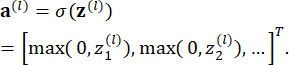
The activation function is ReLU, which is particularly suitable for deep architectures22. When x>0, the derivative of ReLU is a constant, effectively alleviating the vanishing-gradient problem associated with sigmoid activations and thus speeding up back-propagation and convergence23. ReLU is also computationally simple (no exponentials) and naturally sparse (outputs zero for x<0), which reduces redundant neuron responses and improves generalization. Its definition is24
σ(x) = max(0,x), (4)
Applied element-wise to the linear output, we obtain:
 (5)
(5)
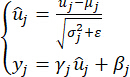
After each “linear → activation” operation, we introduce Batch Normalization (BN) to stabilize gradients and accelerate convergence. BN dynamically standardizes features within each mini-batch, mitigating internal covariate shift, improving training stability, and reducing sensitivity to the learning rate. BN also has a mild regularization effect akin to injecting noise, which helps prevent overfitting without hurting model capacity.
Let the current mini-batch output be  , The BN transform for the j-th feature is
 (6)
(6)
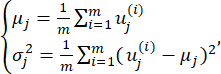
Where μj and σj2 are the batch mean and variance of the j-th feature, ε is a small constant for numerical stability, and γj, βj are learnable scale and shift parameters that restore the networks nonlinear expressiveness.
 (7)
(7)
Here m is the mini-batch size, ε is a small constant for numerical stability, and γj, βj are learnable scale/shift parameters used to recover the network’s nonlinear expressivity after normalization.
(3) Feature compression layer
After deep feature extraction, we append a feature compression layer at the end of the MLP block to retain salient information while suppressing redundancy, reduce the computational burden of subsequent modules, and provide mild regularization. Let the input vector be  . The compressed output is
  , with parameters
  ,
,  . The operation is:
 (8)
(8)
Pyramid attention (PA) mechanism
Let the last MLP layer output be  . To enable explicit selection over higher-order nonlinear interactions, we first rearrange
  by field/channel into a matrix25:

 (9)
(9)
Where C is the number of channels and L is the length per channel.
(1) Multi-scale feature construction.
Along the feature axis L, apply 1-D pooling with multiple scales to obtain26
 (10)
(10)
where ks and stride define the s-th scale.
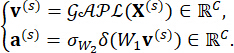
(2) Channel attention per scale.
For each scale, build a channel descriptor and attention weights27:
 (11)
(11)
Where δ(⋅) is ReLU, σ(⋅) is Sigmoid,
 , r is the reduction ratio.
Apply the weights channel-wise:
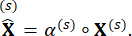 (12)
(12)
(3) Fusion and write-back.
Project each scale with GAPL to a unified 1-D space and fuse them:
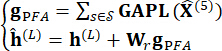 (13)
(13)
where Ps are fusion weights and Wr is a learnable projection used in the residual write-back.
Final scoring:
 (14)
(14)
Where ⊙ denotes the Hadamard (element-wise) product and  denotes vector concatenation.
Top-N task formalization and learning objective
(1) Problem setting.
Let the fan set be F and the item set I (tickets, merchandise, membership benefits, and content).Implicit feedback  indicates whether fan
  has interacted with item
  (click, purchase, attendance/validation, etc.). The positive samples in the training set are
 ,
,  .
.
We inject the four relationship-marketing variables—satisfaction, trust, commitment, reciprocity—as a vector:  into the attention layer to obtain a context-aware relationship representation
  , which is fused with fan/item embeddings
  to produce the score
  . For each positive pair
  , we draw several negatives at a fixed ratio from
  to form
  .
.
(2) Pairwise objective.
To directly optimize relative ranking, we use the BPR (Bayesian Personalized Ranking) loss28:
 (15)
(15)
Here  expresses the likelihood that “the positive score exceeds the negative score”;
  is an L2 regularizer to control overfitting;
  denotes all learnable parameters.
(3) Inference and ranking.
At test time, the candidate set is 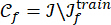 . We compute scores , and return the Top-N list29:
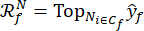 (16)
(16)
Recommendation algorithm design
This section describes the complete recommendation workflow used in this study, covering the end-to-end pipeline from data preprocessing to model training and online inference. The workflow explains how raw fan–item interaction data and relationship variables are transformed into personalized ranking scores through representation learning and attention-based modeling. The detailed procedure is outlined as follows.
Step 1: Data preparation and normalization.
CSL fan–item interaction logs are transformed into implicit feedback signals. Missing values are handled, and the four relationship variables—satisfaction, trust, commitment, and reciprocity—are normalized. The data are split chronologically into training, validation, and test sets, and multiple negative samples are generated for each positive interaction.
Step 2: Relationship-attention encoding.
The four relationship variables are fed into an attention module to learn context-aware importance weights, producing a compact fan relationship representation for downstream modeling.
Step 3: Interaction input construction.
Fan and item embeddings are learned and concatenated with the relationship representation to form the complete feature vector for each fan–item interaction.
Step 4: Representation learning.
The interaction features are passed through an MLP branch to capture high-order nonlinear patterns and generate a fused latent representation.
Step 5: Pyramid feature attention.
A multi-scale feature pyramid is constructed on top of the MLP output. Channel-wise attention and cross-scale fusion are applied, and enhanced features are integrated via residual connections to amplify salient channels while suppressing redundant ones.
Step 6: Scoring and output.
The linear branch is concatenated with the enhanced nonlinear representation and fed into the output layer to compute a preference score for each fan–item pair.
Step 7: Training and optimization.
The model is optimized using a pairwise ranking objective. An adaptive optimizer is employed together with weight decay, dropout, and early stopping to improve generalization and mitigate overfitting.
Step 8: Bayesian hyperparameter optimization.
Validation ranking metrics are used as the objective to automatically search key hyperparameters, including embedding dimensions, network depth and width, learning rate, negative sampling ratio, dropout rate, and pyramid- and attention-related parameters.
Step 9: Inference and ranking.
During online inference, preference scores are computed for each fan over the candidate item set to generate Top-N recommendations, with optional post-ranking strategies applied to account for freshness, diversity, and business constraints.
Experimental validation
Dataset and feature schema
We evaluate on a self-built dataset that joins (via hashed fan IDs) de-identified CSL club information-system logs of fan–item implicit interactions with a contemporaneous relationship survey. The data cover four business domains—tickets, merchandise, membership, and content—and include browse, click, add-to-cart/favorite, purchase/ticketing, and in-stadium validation events, with timestamps, touchpoint channel, context tags, and promotion flags. The span is ≥ one full season; scale is on the order of fans, items, and events sufficient for deep modeling.
Feature schema and encodings: Items-ItemID, ItemType, TeamTag, PriceBand (ID/category embeddings); Fans—FanID, Region, Membership Tier, Tenure (FanID learned as an embedding; other categorical/numerical fields standardized); RQ features—Satisfaction, Trust, Commitment, Reciprocity scaled to [0,1] and fed to the Attention channel, then fused with MLP representations via PA; Context—PhaseTag, Channel, PromoFlag, Hour, Weekday (categoricals as embeddings; time features with sinusoidal sin/cos encoding).
Hyperparameter optimization
Key hyperparameters of MLP-PA are tuned via Bayesian optimization within a preset search space, using NDCG@10 on the validation set as the primary target (with HR@10 as reference) and early stopping to mitigate overfitting. Each candidate configuration is run under multiple random seeds and averaged. The final deployed settings are reported in Table 1.
| Hyperparameter | Description | Search Range | Selected Value |
| Embedding dimension | Fan/item embedding size | {32, 64, 128} | 64 |
| MLP hidden layers | Number of MLP layers | {2, 3, 4} | 3 |
| MLP hidden units | Units per hidden layer | {64, 128, 256} | 128 |
| Dropout rate | Dropout probability | [0.1, 0.5] | 0.3 |
| Learning rate | Initial learning rate | [1e-4, 1e-2] | 1.00E-03 |
| Negative sampling ratio | Negatives per positive sample | {1, 3, 5, 10} | 5 |
Table 1: Final Hyperparameter Settings of the MLP-PA Model
Access restricted. Please log in or start a trial to view this content.
Results
Convergence and stability
To evaluate the convergence behavior and training stability of the proposed model, we compare its validation performance against a standard MLP-based recommender without pyramid feature attention or relationship-aware attention, which serves as the control model. All models are trained under identical data splits, optimization settings, and stopping criteria to ensure a fair comparison.
Access restricted. Please log in or start a trial to view this content.
Discussion
Conceptual and methodological contributions
This study contributes conceptually by reframing relationship dimensions—satisfaction, trust, commitment, and reciprocity—not as static auxiliary features, but as context-sensitive relational signals whose influence varies across engagement stages. The proposed framework operationalizes this idea through an attention-based mechanism that dynamically reweights relational cues in conjunction with behavioral representations....
Access restricted. Please log in or start a trial to view this content.
Disclosures
The author has no conflicts of interest to declare.
Acknowledgements
The author would like to thank the anonymous reviewers for their constructive comments and suggestions, which helped improve the clarity and quality of this manuscript. He also acknowledges the support of the collaborating organization for providing access to the data used in this study. Any opinions, findings, and conclusions expressed in this paper are those of the author and do not necessarily reflect the views of the affiliated institutions.
Access restricted. Please log in or start a trial to view this content.
Materials
| Name | Company | Catalog Number | Comments |
|---|---|---|---|
| Python | https://www.python.org | 3.9.10 | |
| Deep learning framework | PyTorch | https://pytorch.org | >= 1.12 |
| Hyperparameter optimization library | Optuna | https://optuna.org | >= 3.0 |
| Hardware | NVIDIA GPU | https://www.nvidia.com | Single GPU, >= 8 GB memory |
| Dataset | Self-built CSL fan dataset | N/A | One full season or longer; scale sufficient for deep modeling |
| Interaction data | Fan–item implicit interaction logs | N/A | Not separately versioned |
| Survey data | Relationship questionnaire data | N/A | Not separately versioned |
| Data preprocessing method | Hash-based anonymization | N/A | Applied to fan and item identifiers |
| Data preprocessing method | Mean imputation within membership tier | N/A | Applied to missing questionnaire responses |
| Data preprocessing method | Min–max normalization | N/A | Range [0, 1] |
| Data splitting strategy | Chronological user-level split | N/A | Most recent = test; second most recent = validation; remainder = training |
| Negative sampling | Uniform negative sampling | N/A | Positive:negative ratio = 1:5 |
| Model backbone | MLP (Multi-Layer Perceptron) | https://pytorch.org/docs/stable/nn.html | Hidden layers [128, 64, 32] (optimized) |
| Attention module | Relationship-attention channel | N/A | Custom module |
| Fusion module | Pyramid Attention (PA) | N/A | Pooling scales {1, 2, 4}, stride = kernel size, reduction ratio = 4 |
| Optimizer | Adam | https://pytorch.org/docs/stable/generated/torch.optim.Adam.html | Learning rate 0.001, weight decay 1e-5 |
| Regularization | Dropout | https://pytorch.org/docs/stable/generated/torch.nn.Dropout.html | Rate 0.3 |
References
- Wang, L., et al. Drug combination recommendation model for systemic lupus erythematosus and antiphospholipid syndrome. Pharmaceutics. 18 (8), 1224(2025).
- Hu, X., Yuan, Z., Ma, Z. A robot control knowledge recommendation model PKGAT based on multimodal knowledge graph. Int J Softw Eng Knowl Eng. 35 (8), (2025).
- Ji, S. An intelligent recommendation model for disclosure of electricity market entities based on association rule mining algorithm. Electr Eng. , In press (2025).
- Xie, F., et al. Differential weighting and flexible residual GCN-based contrastive learning for recommendation. Symmetry. 17 (8), 1320(2025).
- Duan, J., et al. A deep recommendation model based on semantic information and correlation between items. J Intell Inf Syst. , In press (2025).
- Malakhatka, E., et al. Optimal time recommendation model for home appliances: HSB Living Lab dishwasher study. Energy Effic. 18 (1), 3(2024).
- Yuan, Q., Cong, G., Ma, Z., Sun, A., Magnenat-Thalmann, N. Time-aware point-of-interest recommendation. Proc Int ACM SIGIR Conf Res Dev Inf Retr, 36, 363-372 (2013).
- Alaoui, E. D., et al. Comparative study of filtering methods for scientific research article recommendations. Big Data Cogn Comput. 8 (12), 190(2024).
- Li, X., Hu, G. Design and implementation of an electronic journal resource recommendation system integrating user profile and knowledge graph. Front Comput Intell Syst. 10 (2), 74-78 (2024).
- Sami, A., et al. A deep learning-based hybrid recommendation model for internet users. Sci Rep. 14 (1), 29390(2024).
- Zhonghua, W. Intelligent recommendation model of tourist places based on collaborative filtering and user preferences. Appl Artif Intell. 37 (1), (2023).
- Wang, Q., Esquivel, A. J. Personalized movie recommendation system based on DDPG: Application and analysis of reinforcement learning in user preferences. Front Soc Sci Technol. 5 (18), (2023).
- Miao, L., et al. Study on two-tier EV charging station recommendation strategy under multi-factor influence. J Artif Intell. 5, 181-193 (2023).
- Yunni, X., et al. A quasi-Newton matrix factorization-based model for recommendation. Int J Web Serv Res. 20 (1), 1-15 (2023).
- Mourad, J., et al. Personalized PV system recommendation for enhanced solar energy harvesting using deep learning and collaborative filtering. Sustain Energy Technol Assess. 60, 103456(2023).
- Pfajfar, G., et al. Value of corporate social responsibility for multiple stakeholders and social impact: A relationship marketing perspective. J Bus Res. 143, 46-61 (2022).
- Khan, R. U., et al. The impact of customer relationship management and company reputation on customer loyalty: The mediating role of customer satisfaction. J Relatsh Mark. 21 (1), 1-26 (2022).
- Sheth, J. New areas of research in marketing strategy, consumer behavior, and marketing analytics: The future is bright. J Mark Theory Pract. 29 (1), 3-12 (2021).
- Mishra, M., Mund, P. Fifty-two years of consumer research based on social exchange theory: A review and research agenda using topic modeling. Int J Consum Stud. 48 (4), e13074(2024).
- Cook, K. S., Hahn, M. Social exchange theory: Current status and future directions. Theor Sociol. 50, 179-205 (2021).
- Naseer, A., Jalal, A. Multimodal objects categorization by fusing GMM and multilayer perceptron. Proc 5th Int Conf Adv Comput Sci (ICACS), , 1-7 (2024).
- Hussain, K., et al. Analyzing LULC transformations using remote sensing data: Insights from a multilayer perceptron neural network approach. Ann GIS. 30, 1-28 (2024).
- Mfetoum, I. M., et al. A multilayer perceptron neural network approach for optimizing solar irradiance forecasting in Central Africa with meteorological insights. Sci Rep. 14 (1), 3572(2024).
- Yu, Y., et al. Multi-scale spatial pyramid attention mechanism for image recognition: An effective approach. Eng Appl Artif Intell. 133, 108261(2024).
- Liu, H., et al. A deep convolutional neural network for the automatic segmentation of glioblastoma brain tumor: Joint spatial pyramid module and attention mechanism network. Artif Intell Med. 148, 102776(2024).
- Liu, M., et al. Vehicle object counting network based on feature pyramid split attention mechanism. Vis Comput. 40 (2), 663-680 (2024).
- Alvarado, O., et al. A systematic review of interaction design strategies for group recommendation systems. Proc ACM Hum-Comput Interact, 6 (CSCW2), 1-51 (2022).
- Zhao, Y. Design of garment style recommendation system based on interactive genetic algorithm. Comput Intell Neurosci. 2022, 9132165(2022).
- Nazer, L. H., et al. Bias in artificial intelligence algorithms and recommendations for mitigation. PLOS Digit Health. 2 (6), e0000278(2023).
Access restricted. Please log in or start a trial to view this content.